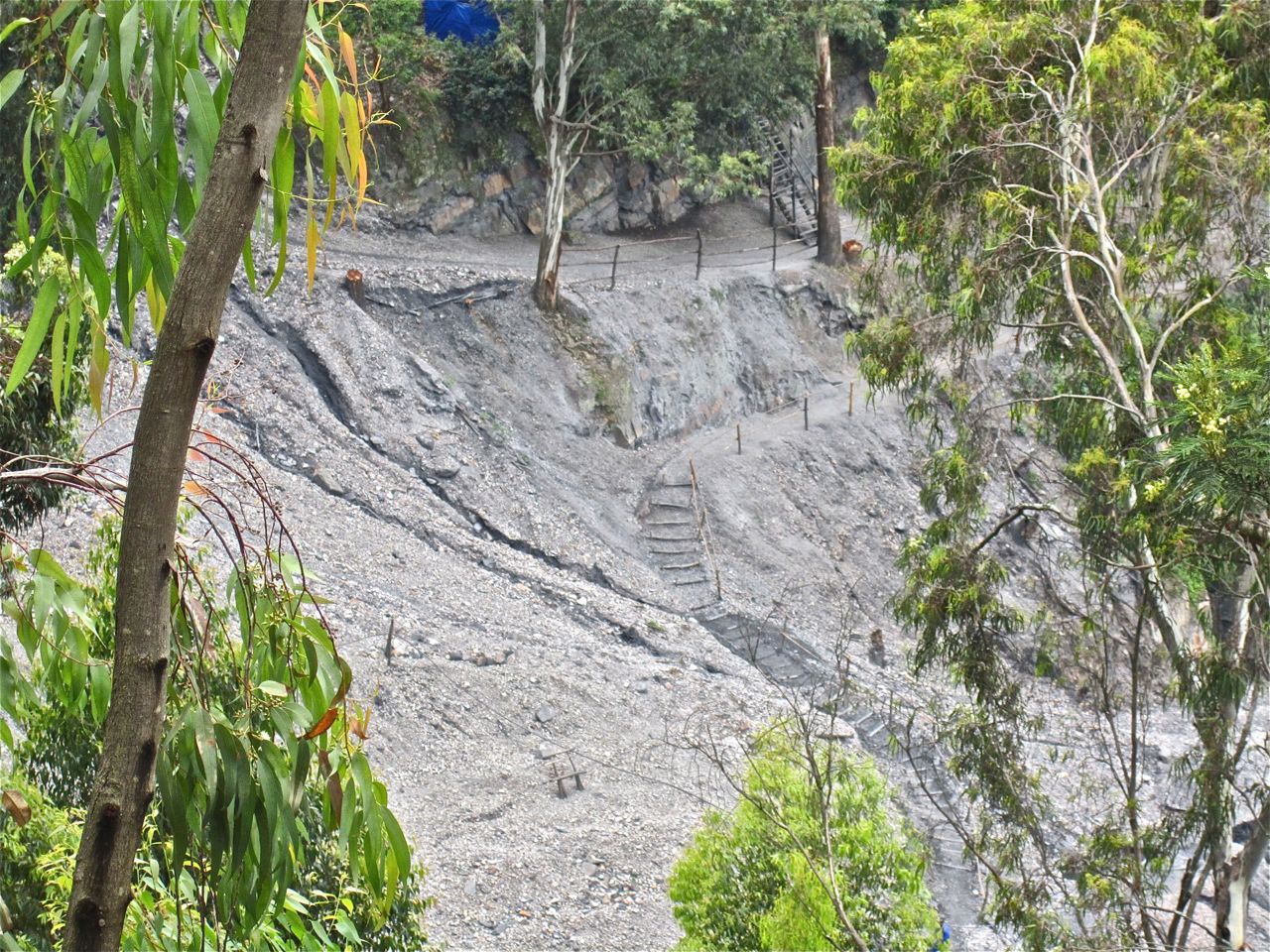
The farm in yesterday’s post overlooks the Nyakabingo tungsten mine, located about 10 kms. north of Kigali.
The mine was the first stop on a two-day bus trip organized by the Foreign Ministry for diplomats. We felt a little like we were on a school field trip — only one with a police escort and a press van.
While we were at Nyakabingo, I turned down the invitation to see the mine from underground and instead photographed it from an upper road.
Paths and steps descending the hillside of the mine. About 700 people work there removing tungsten, a chemical element used in incandescent light bulb filaments, x-ray tubes, and superalloys.
The Lodge is one of two “swishy” (as Bradt’s Travel Guide puts it) places to stay in the vicinity of the Parc National des Volcans and the mountain gorillas. The other one — the Virunga Safari Lodge — we toured last month. Both cost around $500 to $600 per night per person.
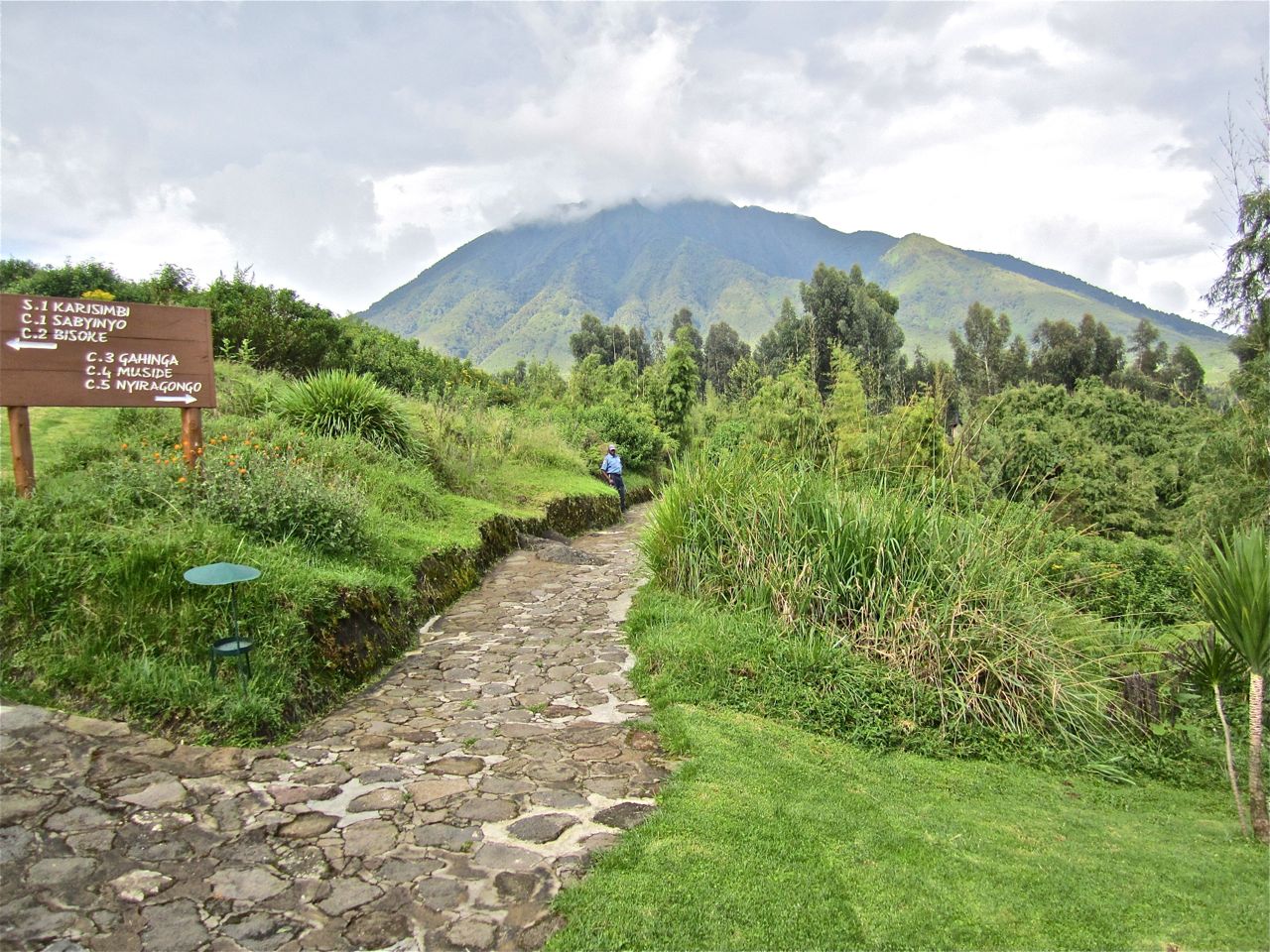
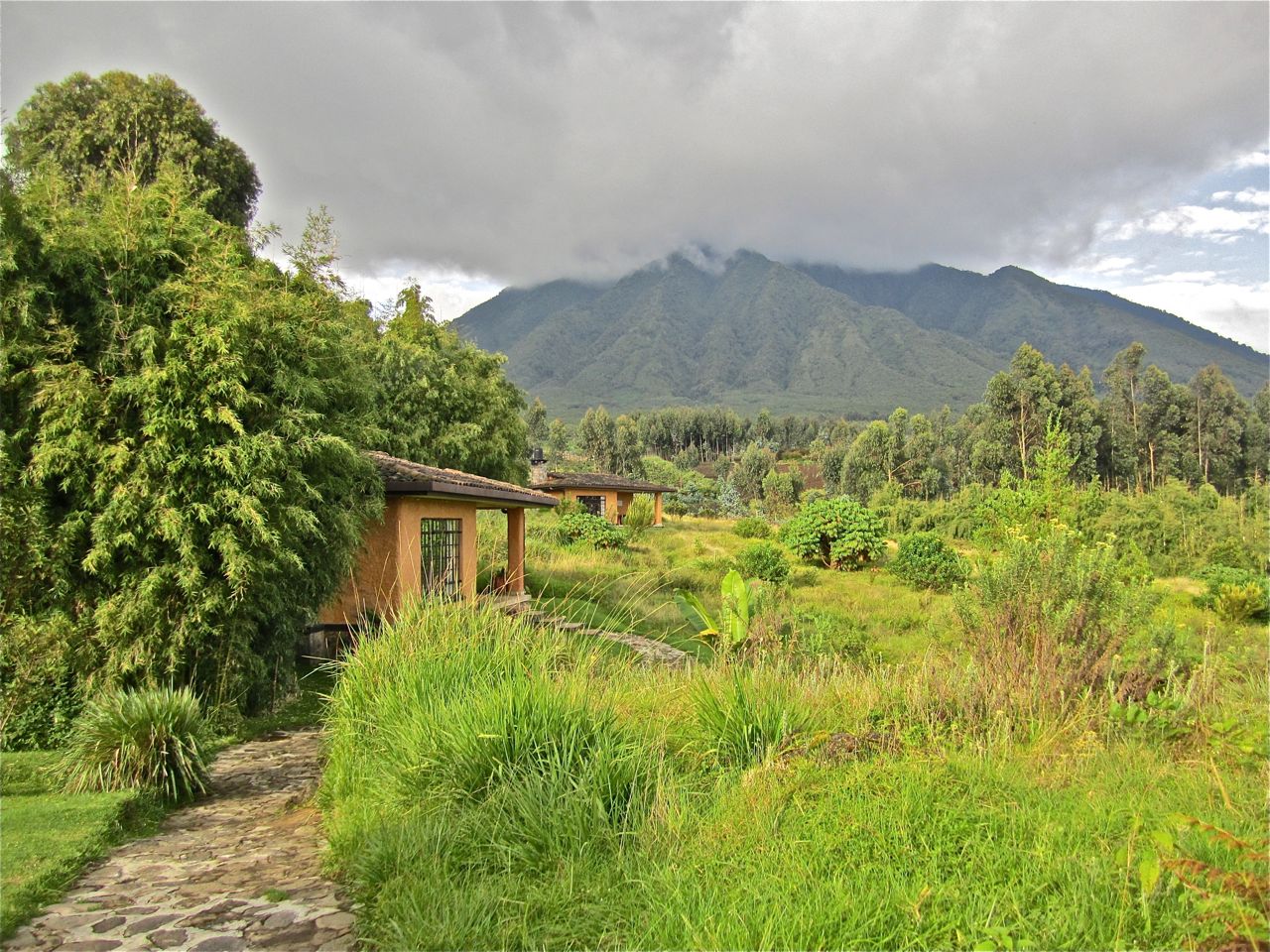
Paths to the five cottages, with the volcano in the background.
Sabyinyo has the advantage of being only 10 minutes drive from the entrance to the park headquarters. Like Virunga, it offers accommodation in individual cottages.
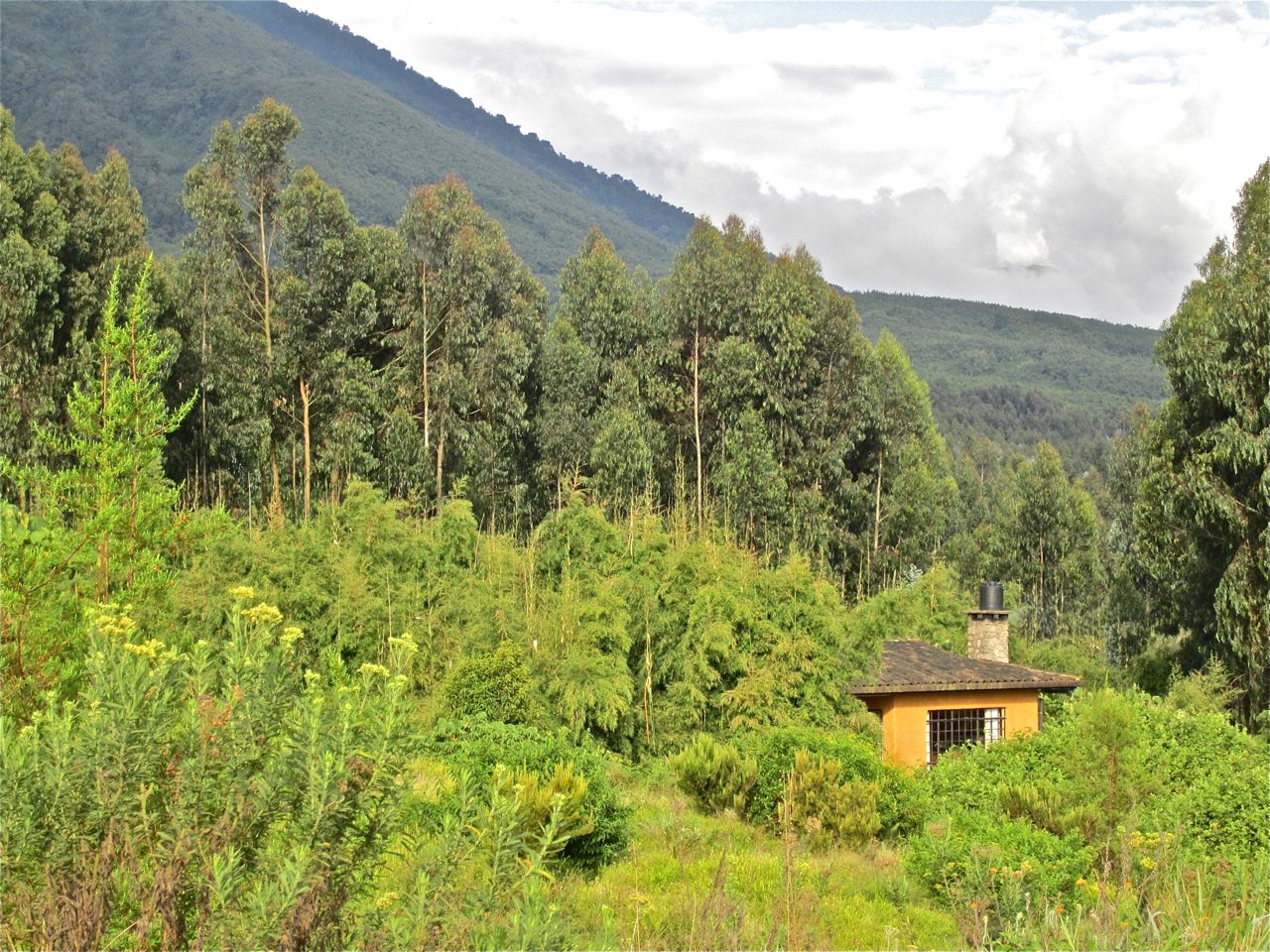
A Sabyinyo cottage. The lodge levies a $58 per person per night community fee, and the community also receives a 17% cut of the lodge’s profits.Two other cabins.
Also like Virunga Safari Lodge, the landscaping is kept simple so as not to compete with the gorgeous views.
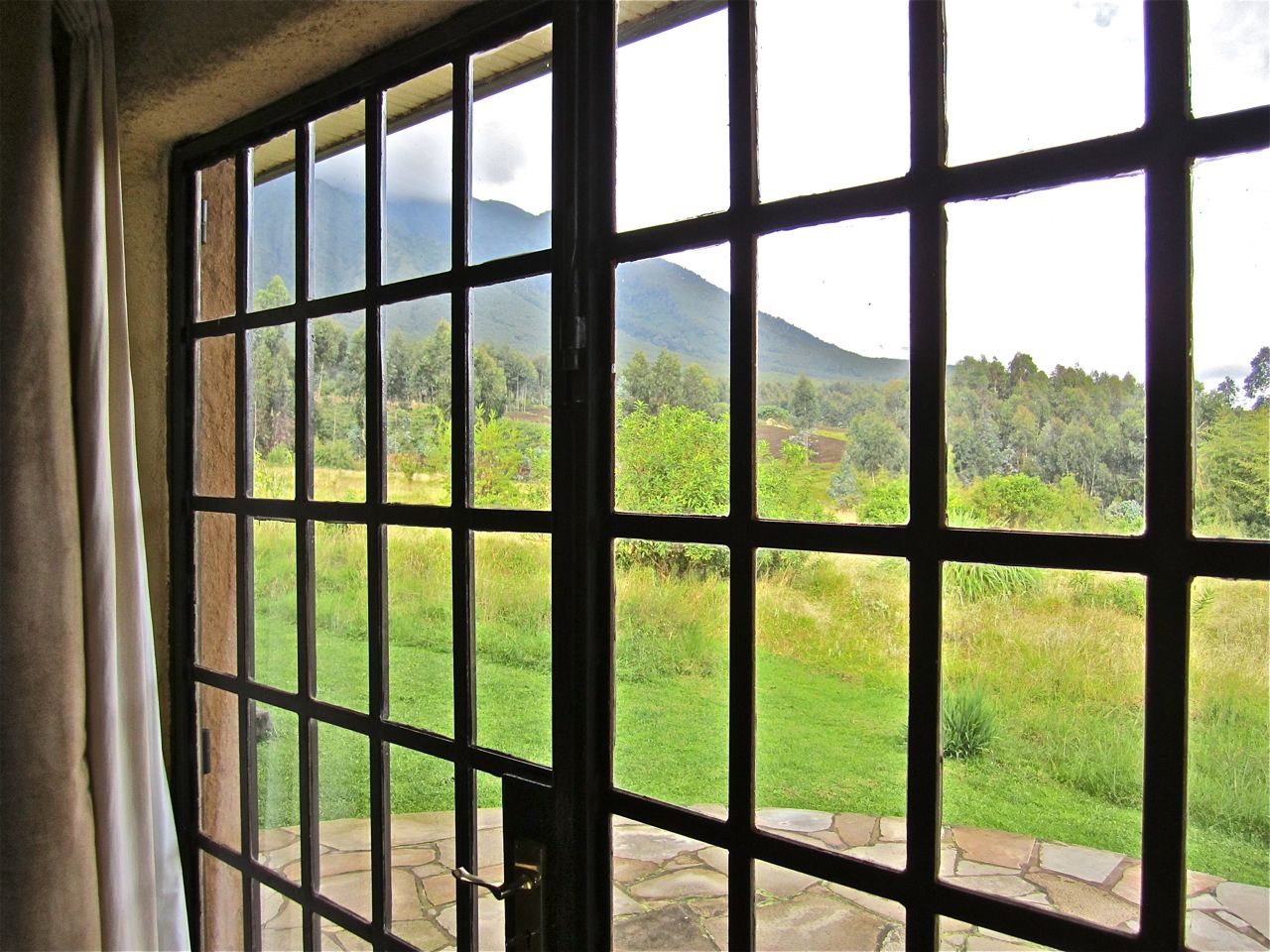
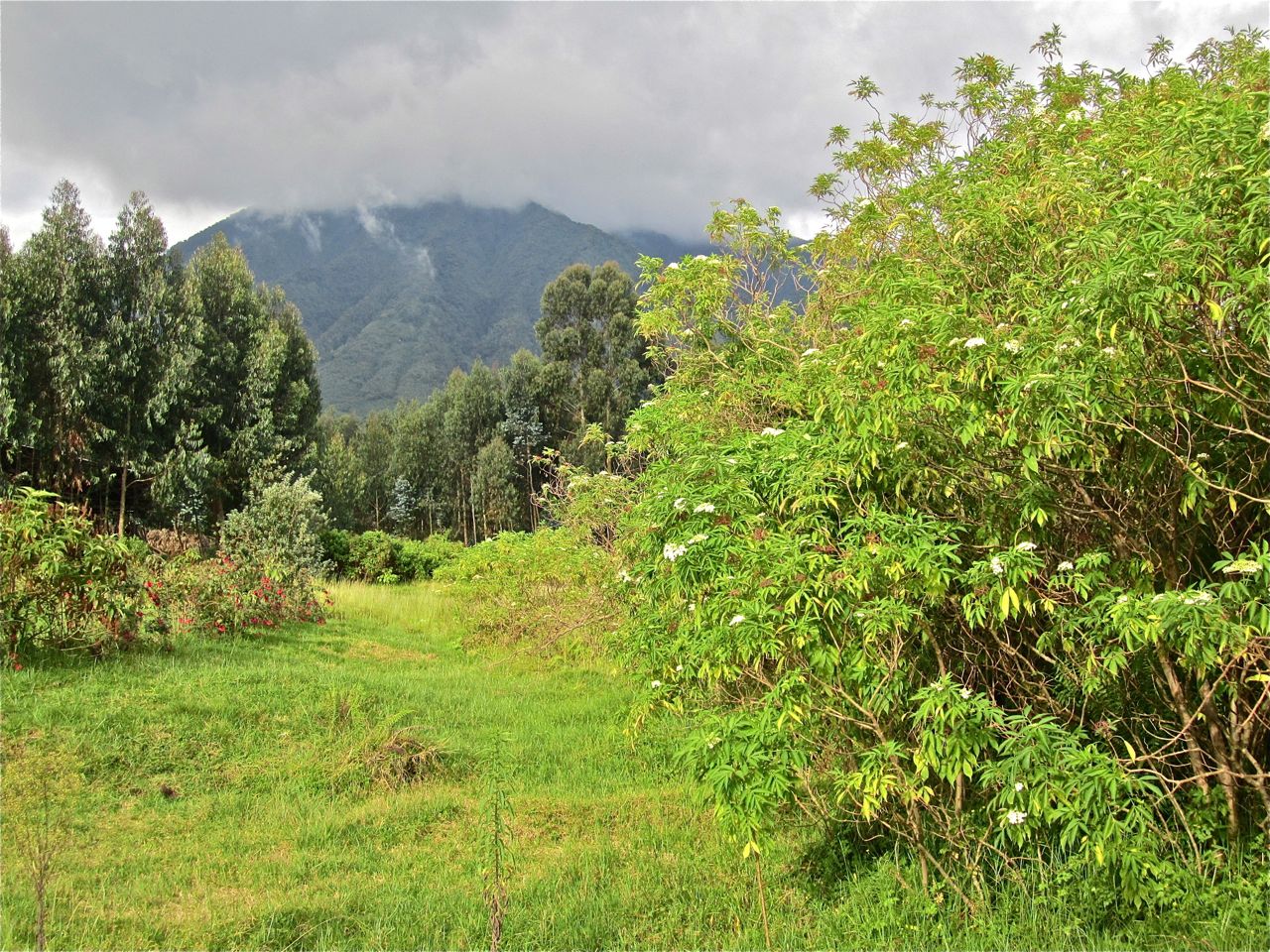
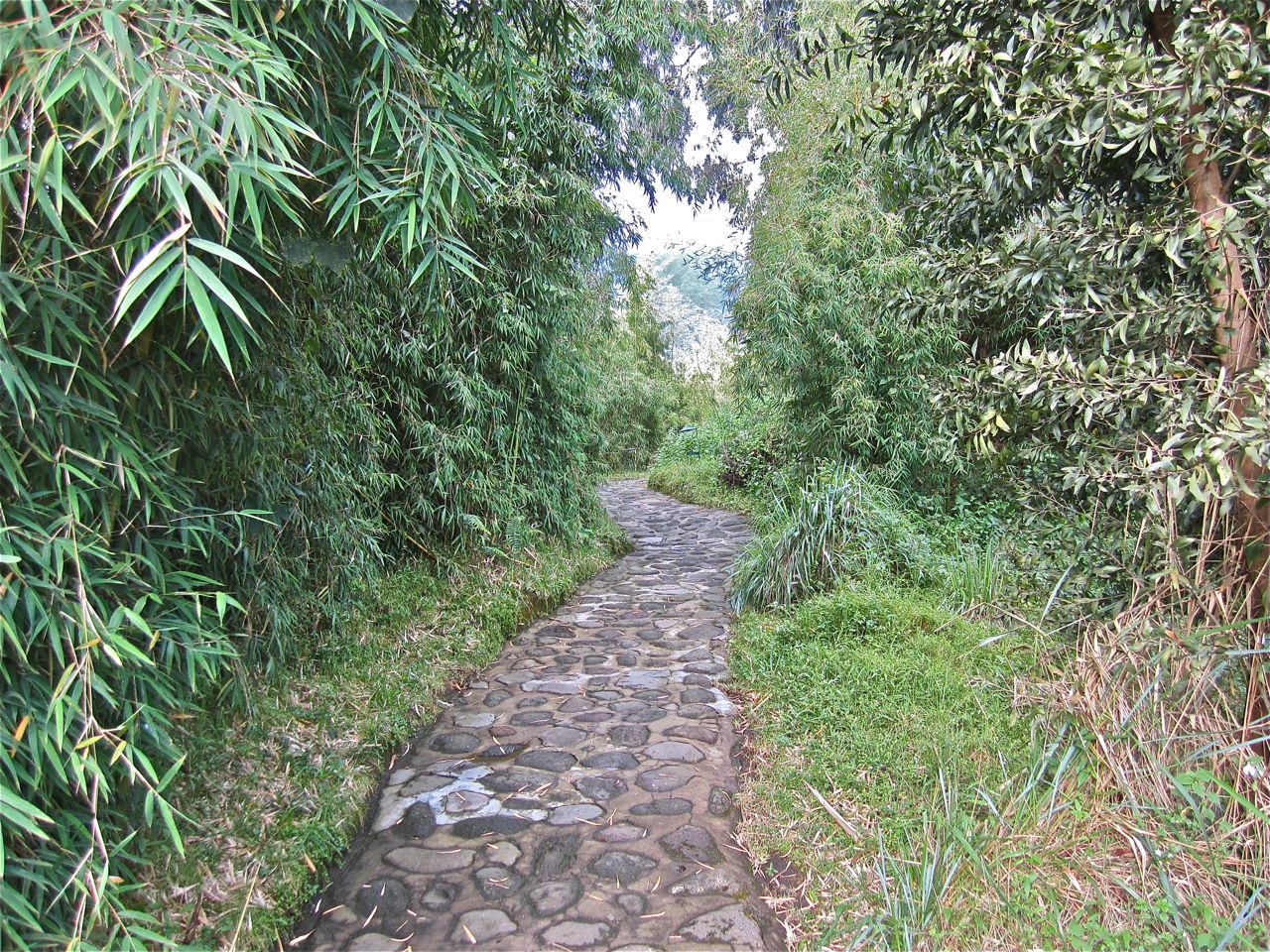
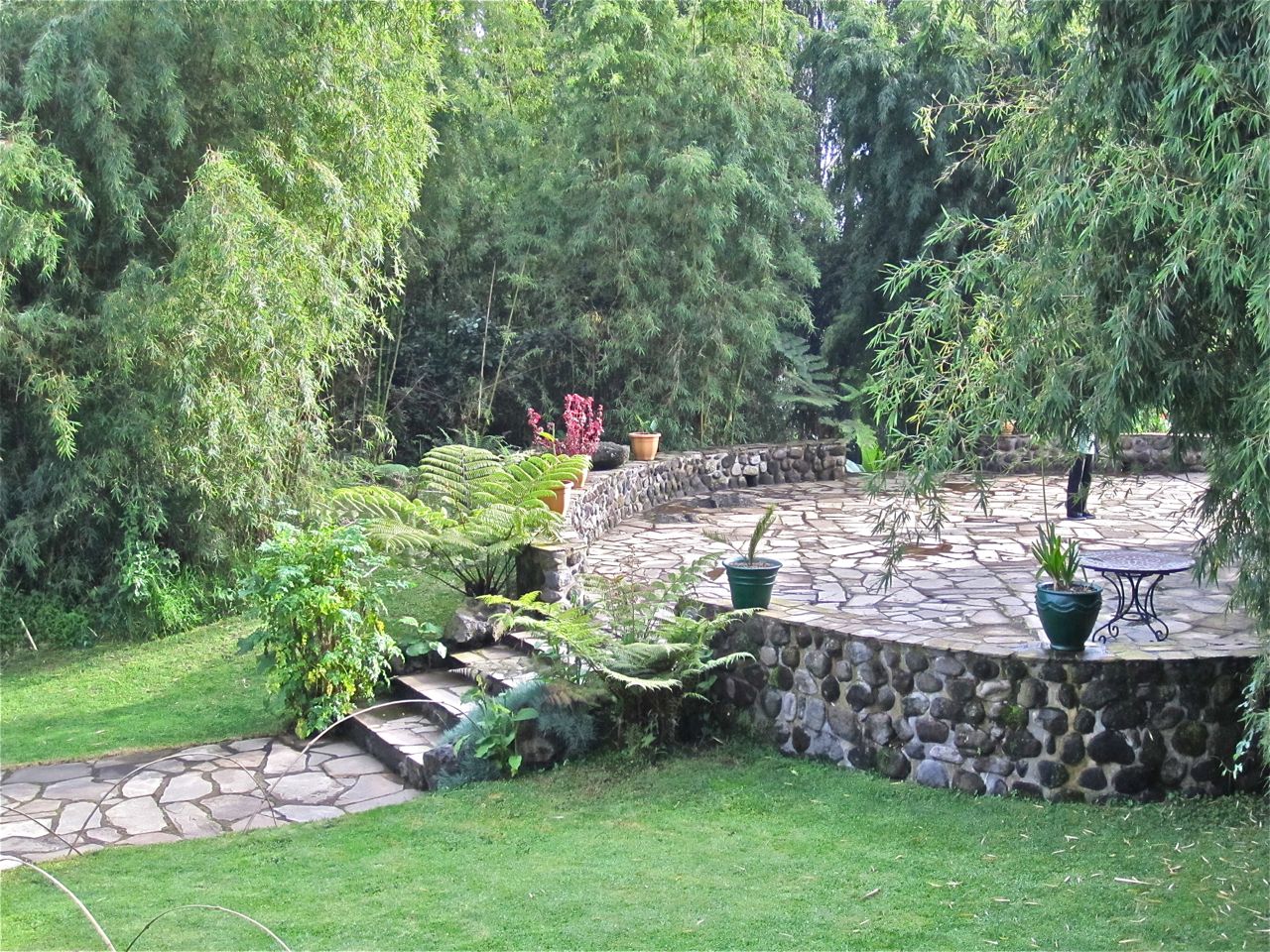
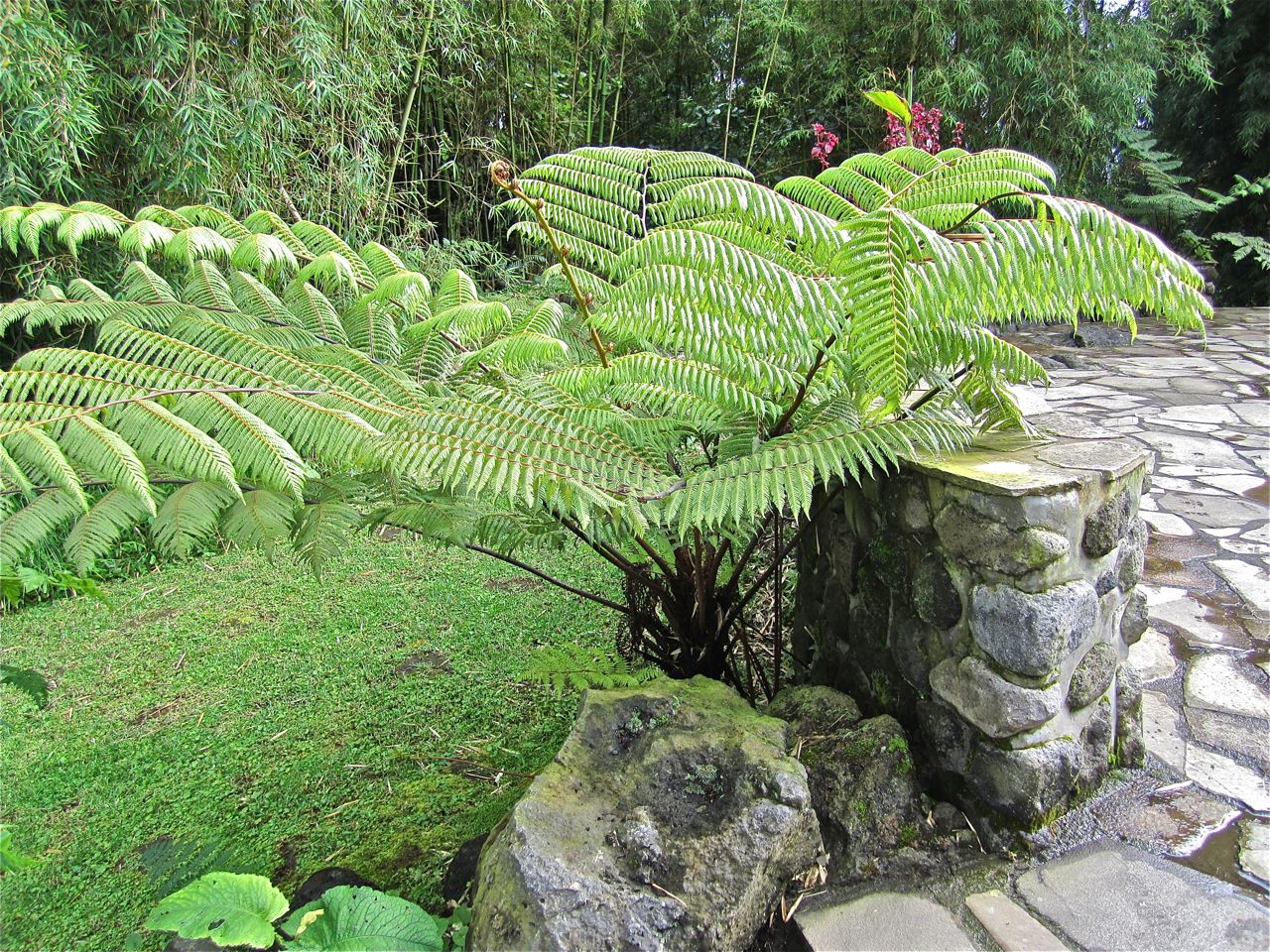
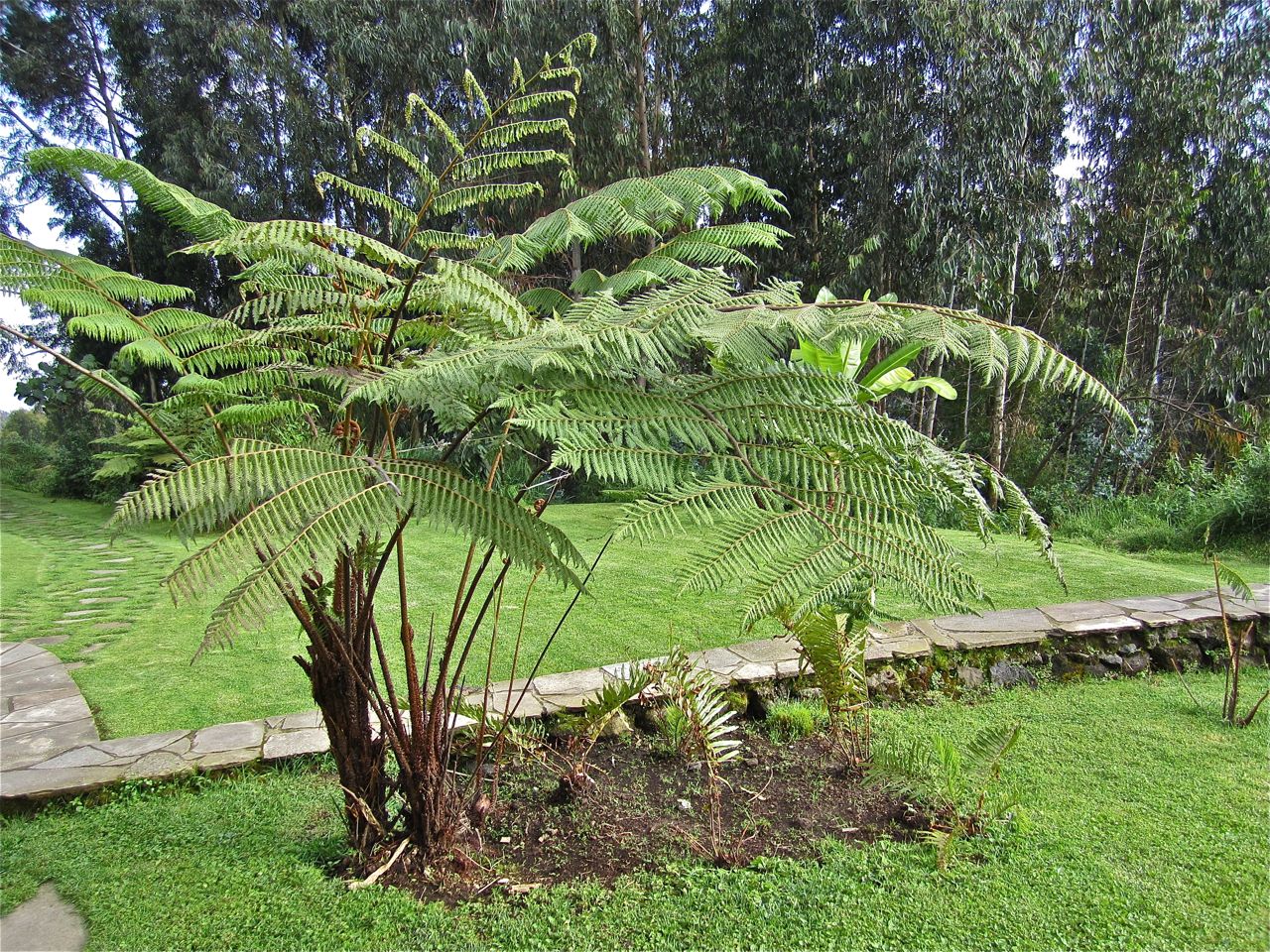
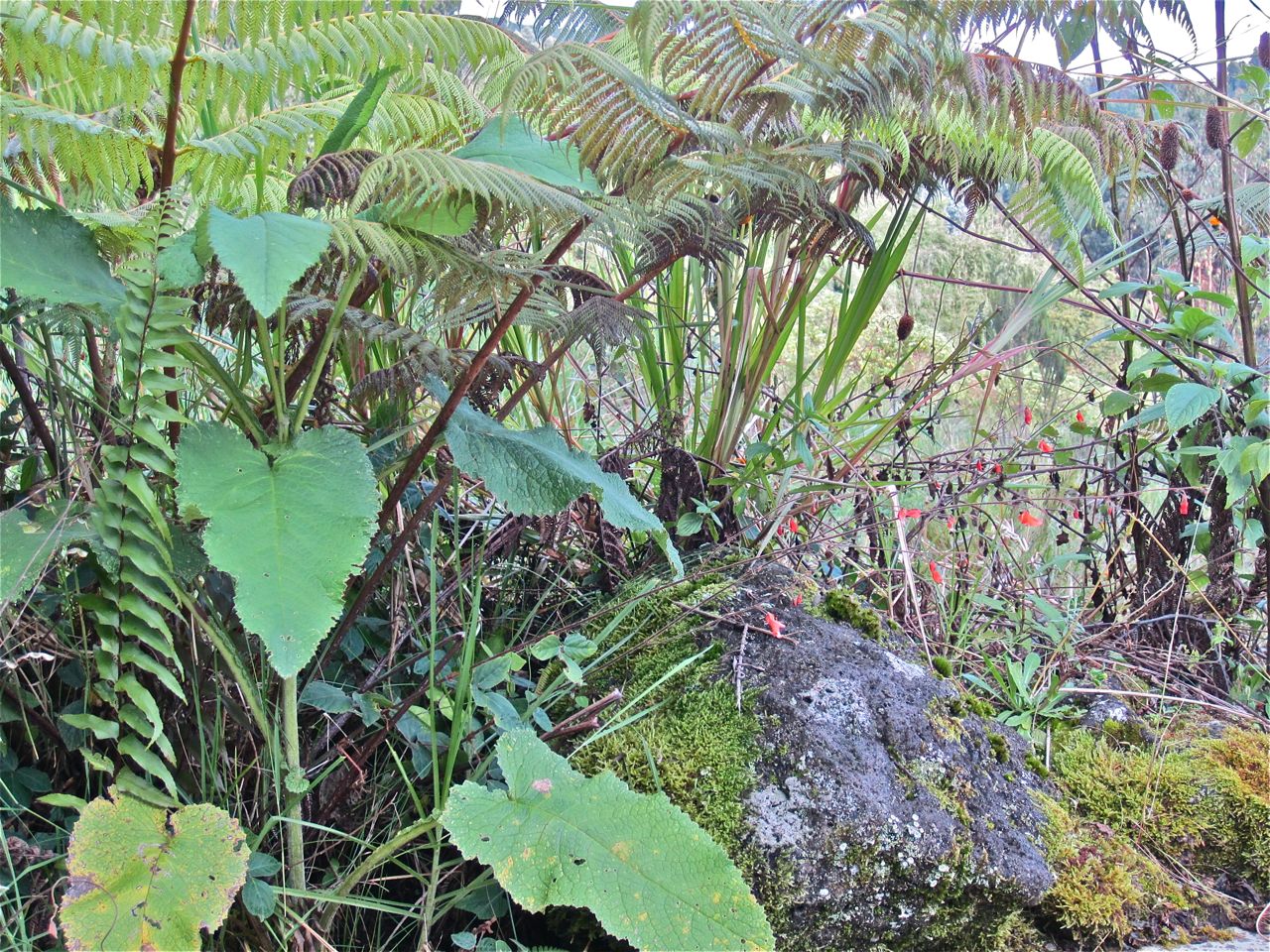
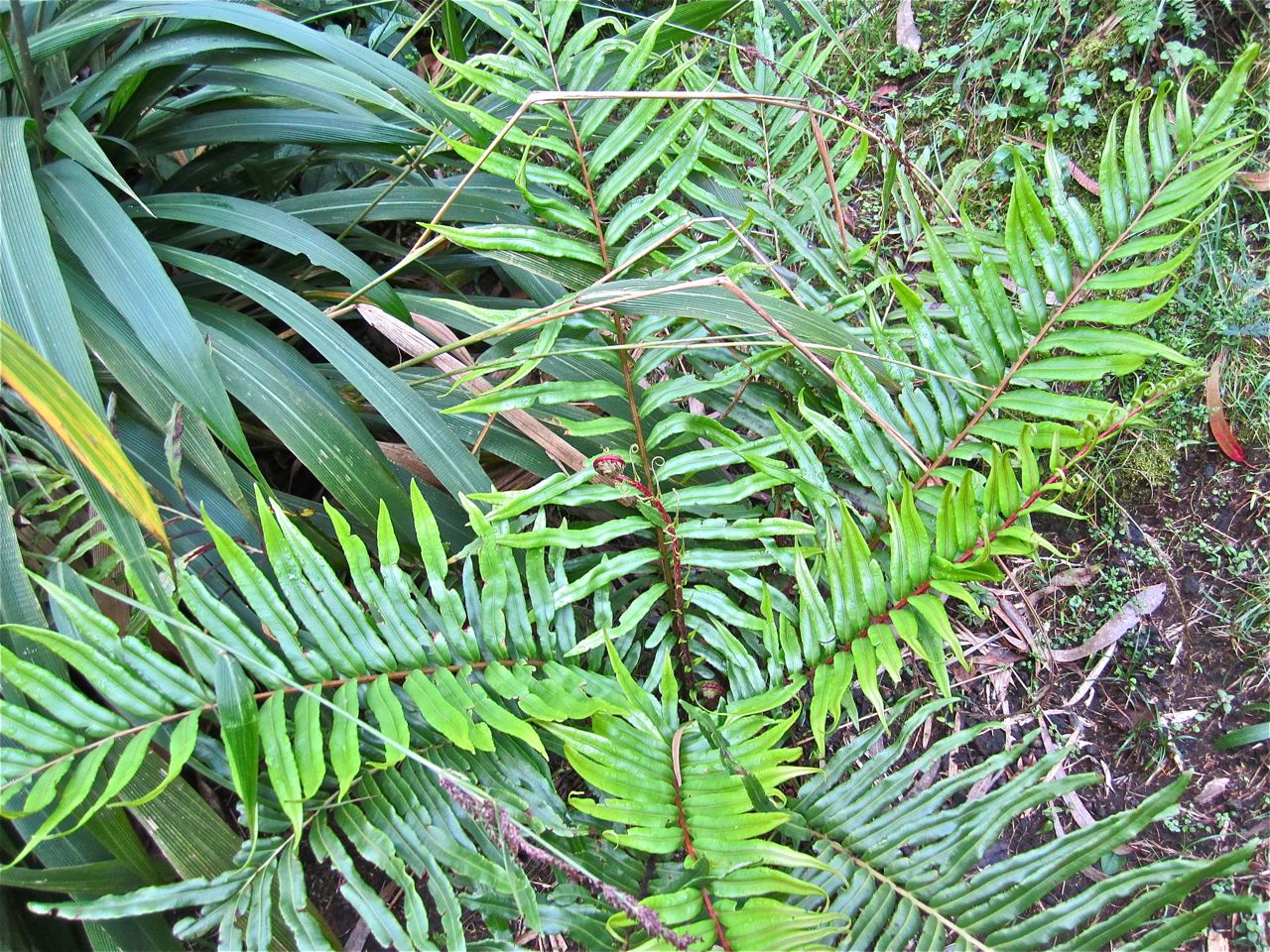
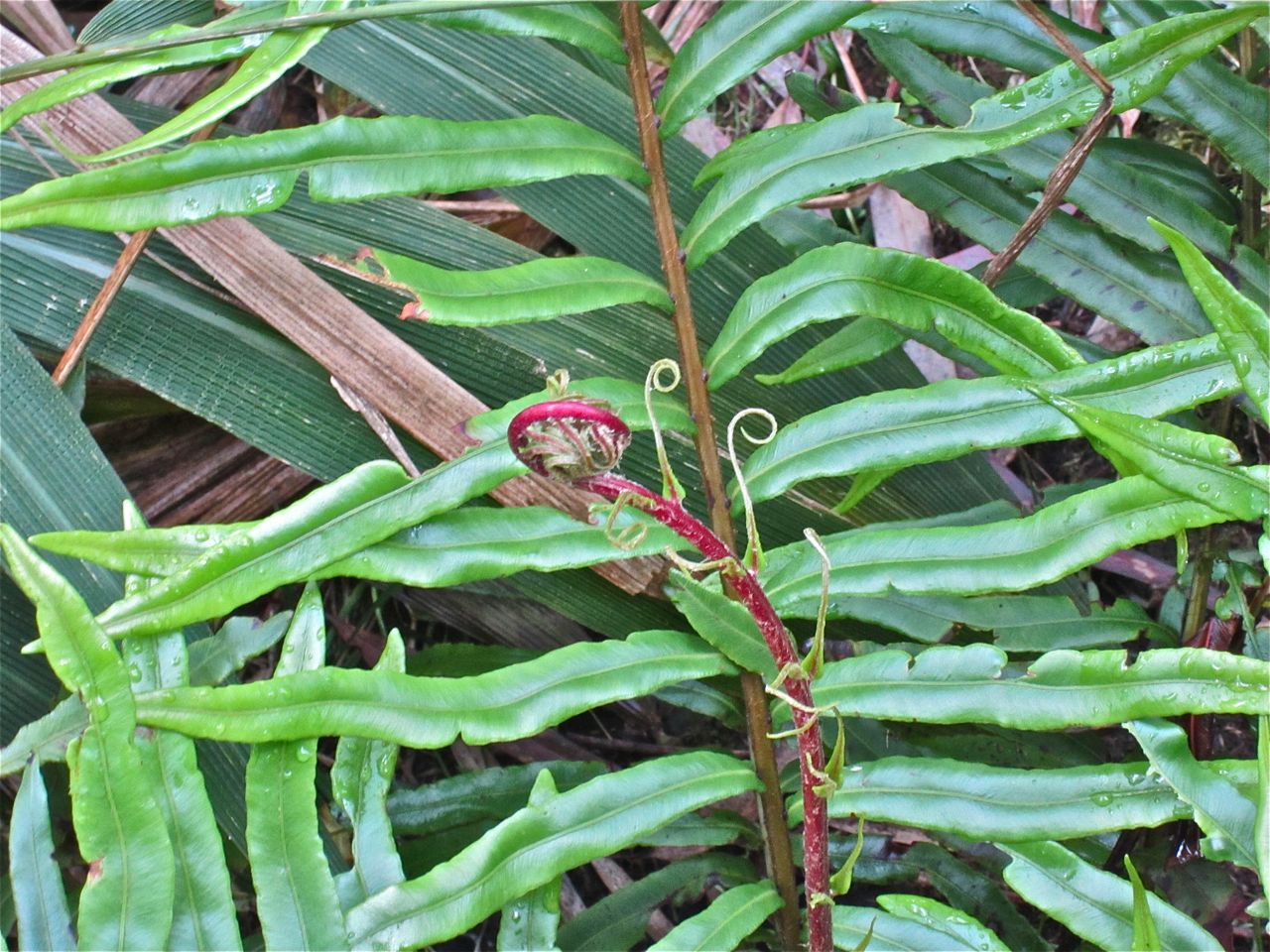
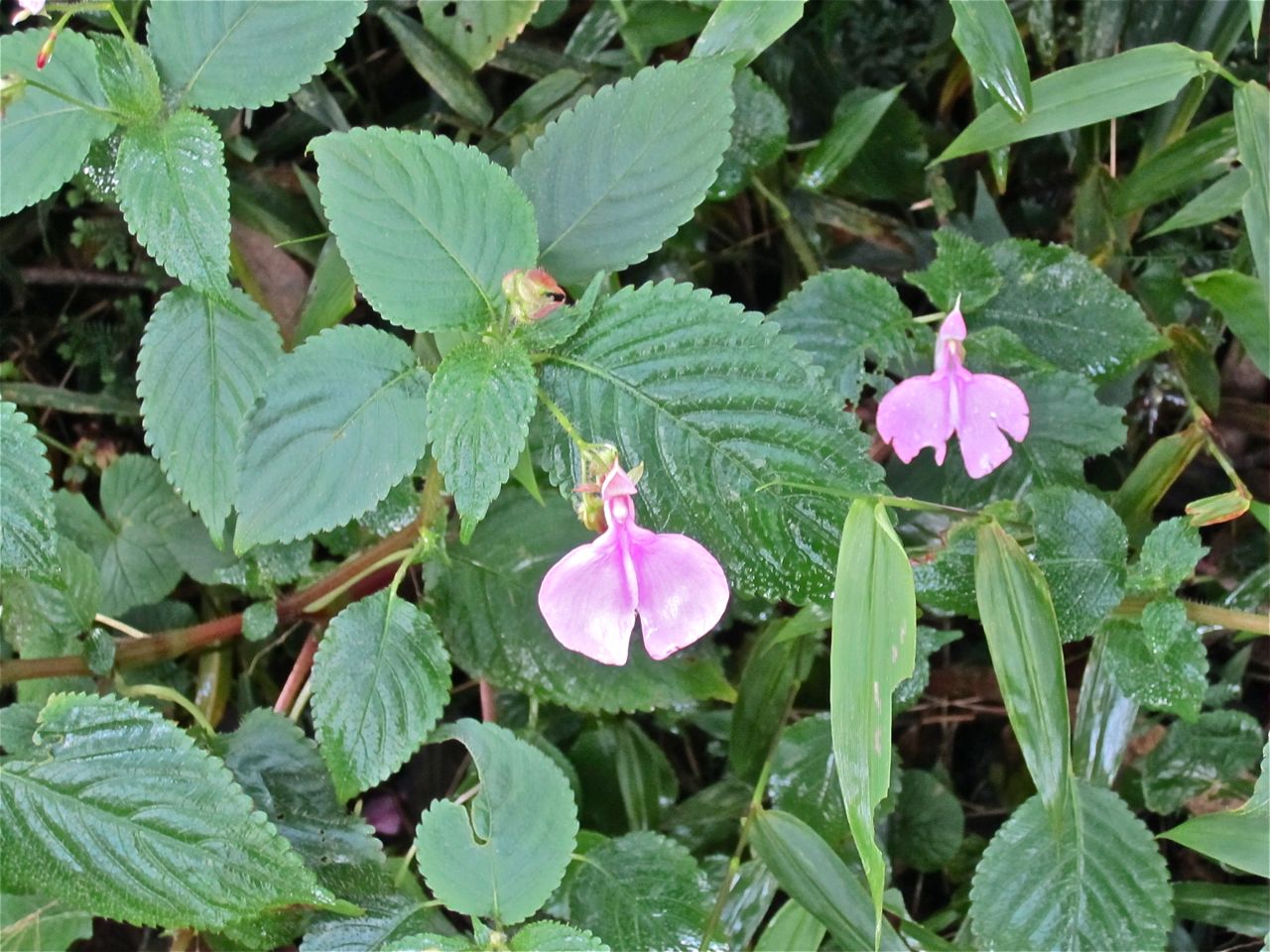
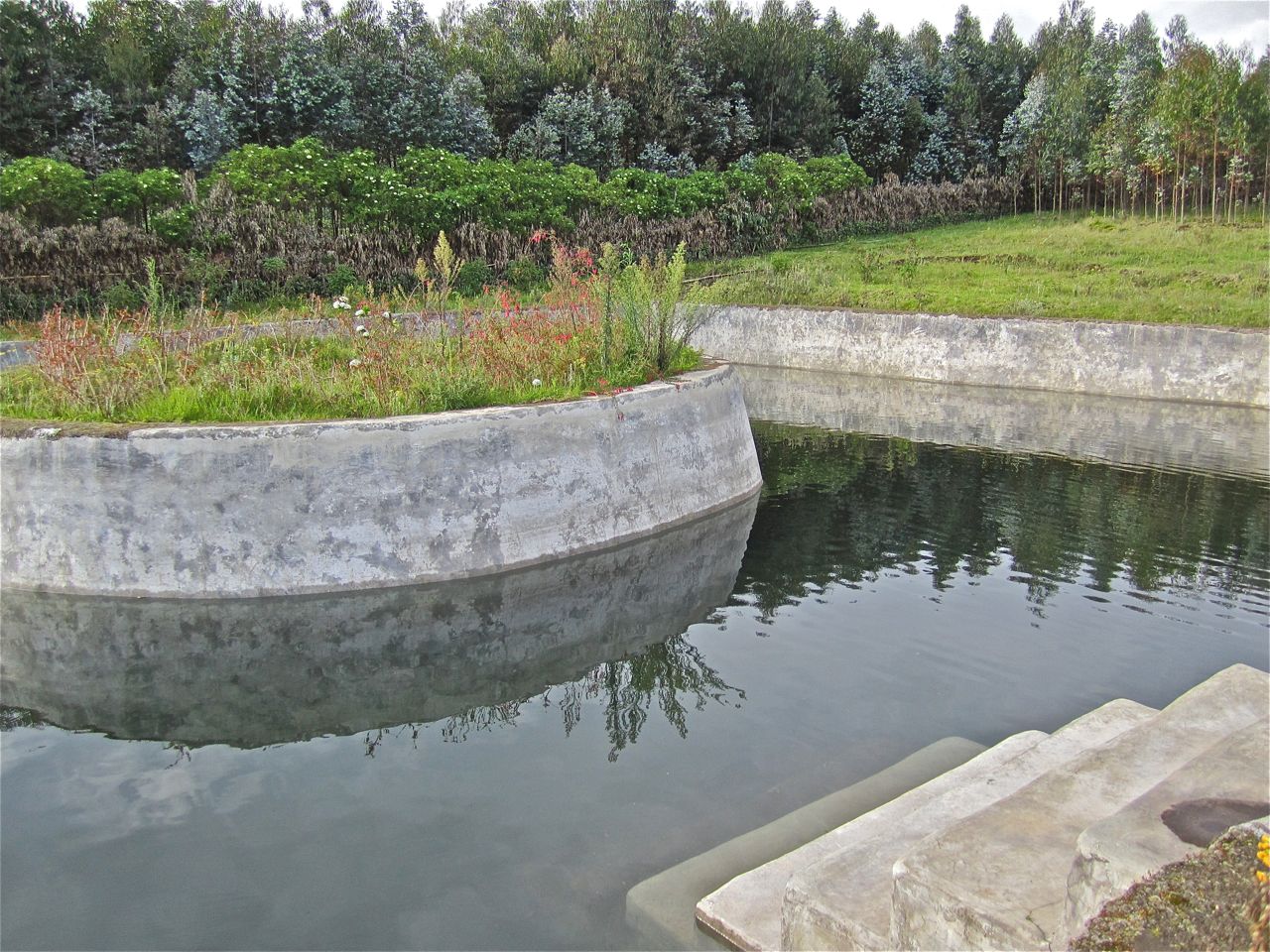
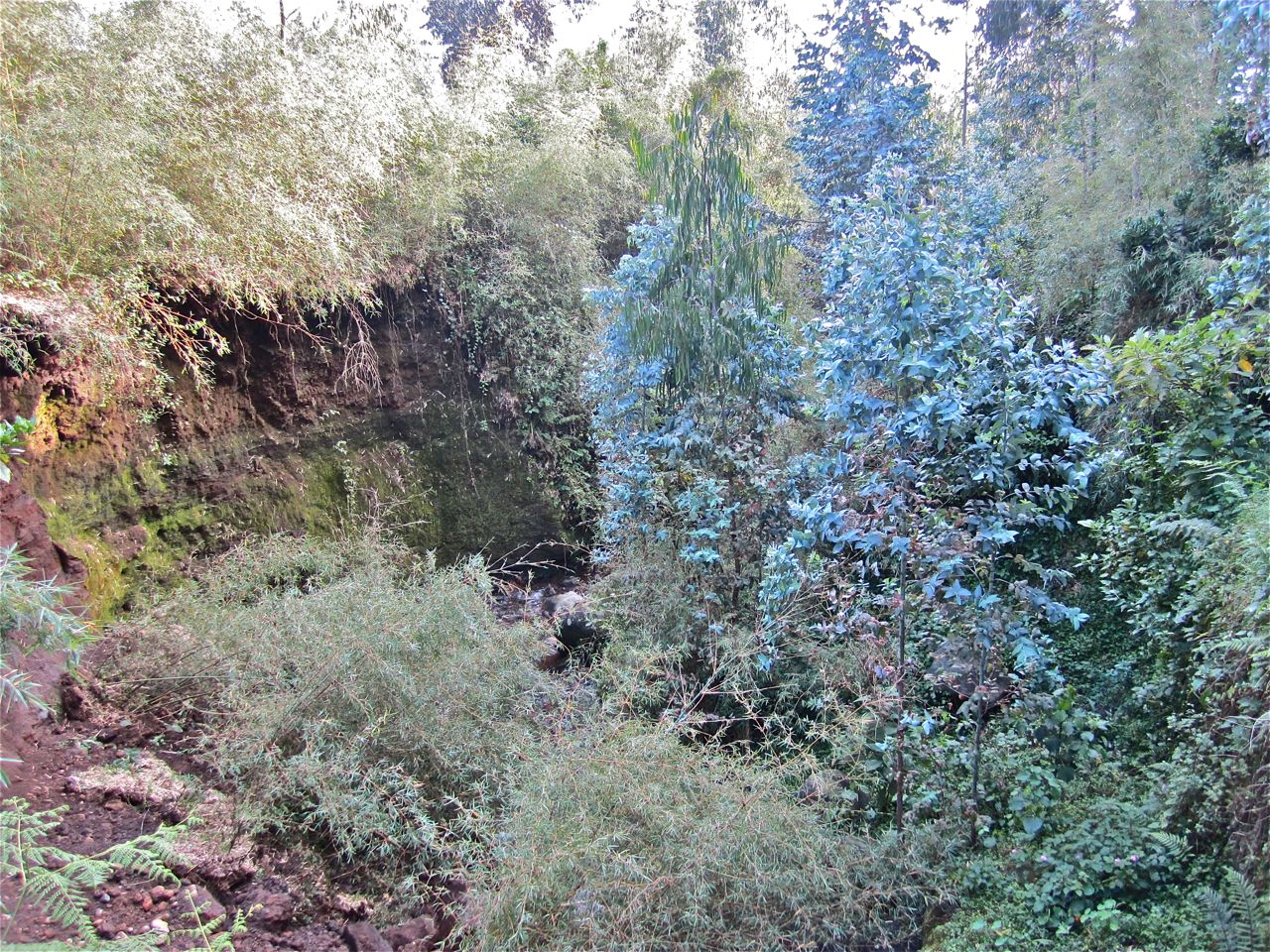
The view from a cottage window.One of the views at Sabyinyo, somewhat obscured by clouds.A path through the bamboo.Patio at the entrance to the main building.A large fern by the patio steps.Another very large fern near the main building.Ferns and other wild plants along the path.A smaller wild fernFern detail.Impatiens native to Rwanda.The water retention pool.Small stream gorge filled with bamboo and eucalyptus.
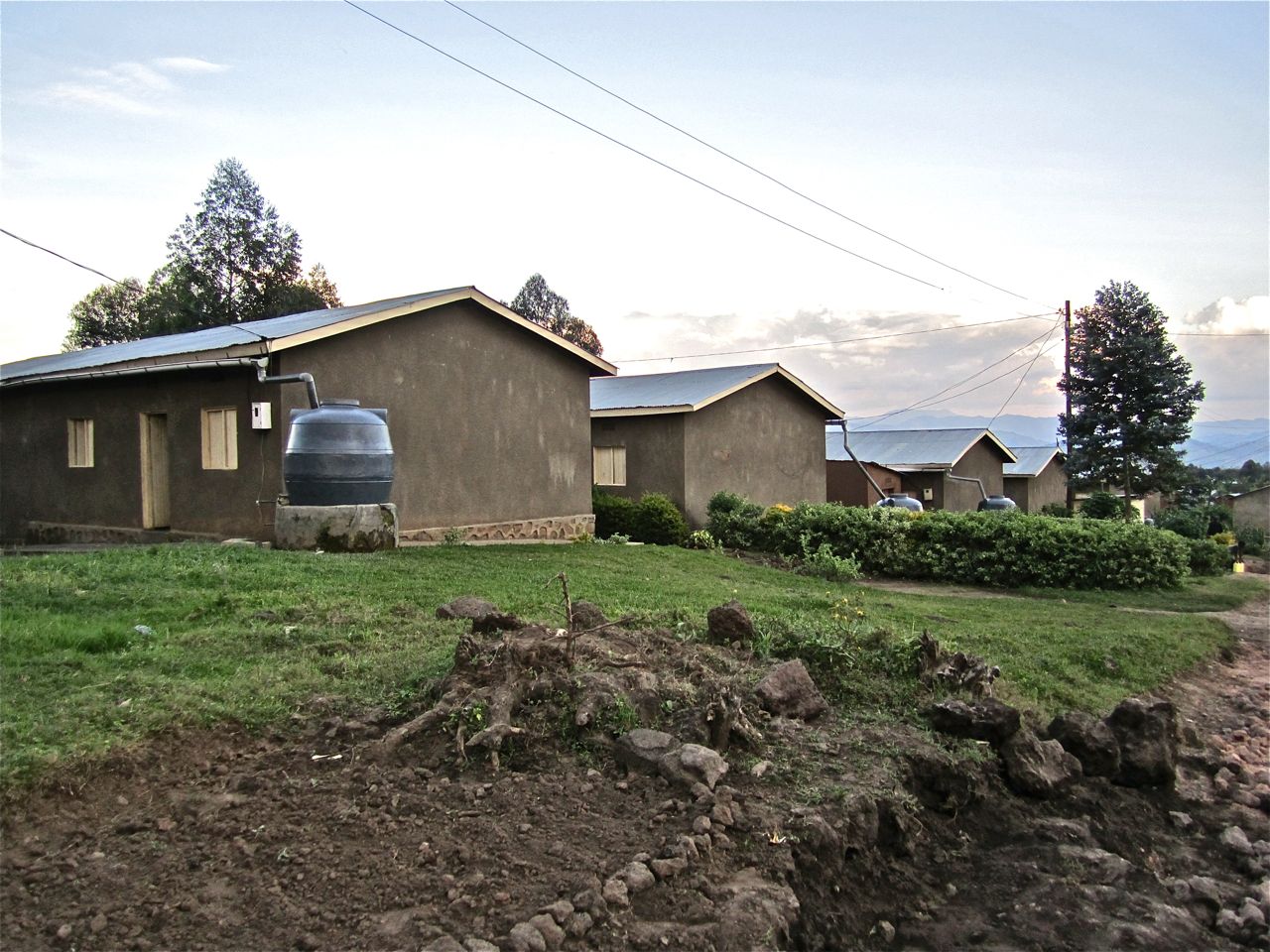
We ended our day in the village of Susa, largely made up of 96 homes built with the assistance of the Rwandan government. The people who live there include Genocide survivors, Batwa (pygmys), and Rwandans formerly living in exile in Tanzania.
Village homes with tanks that capture rainwater runoff from the roofs.
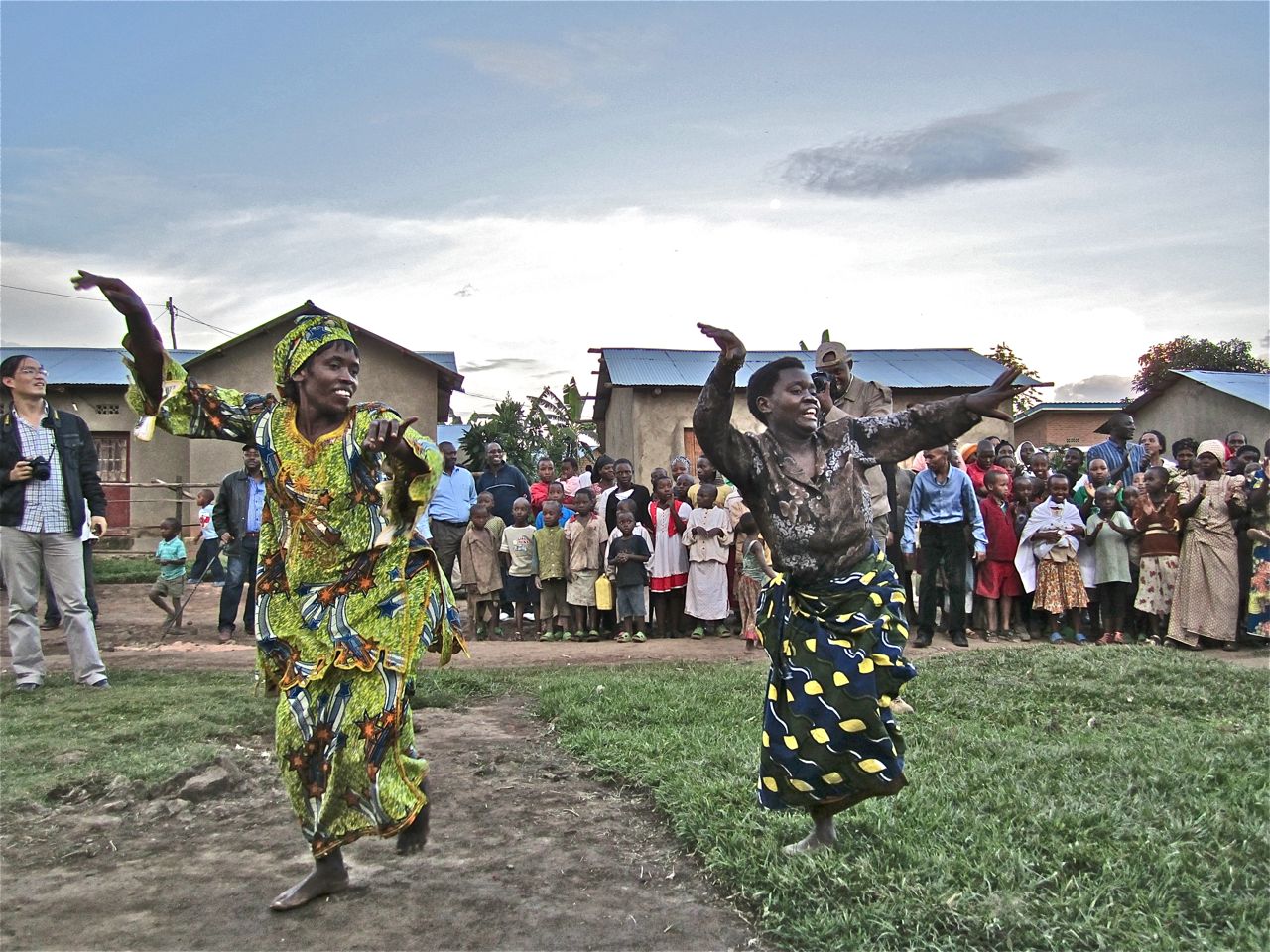
As the light began to fade, we were greeted by dancers.
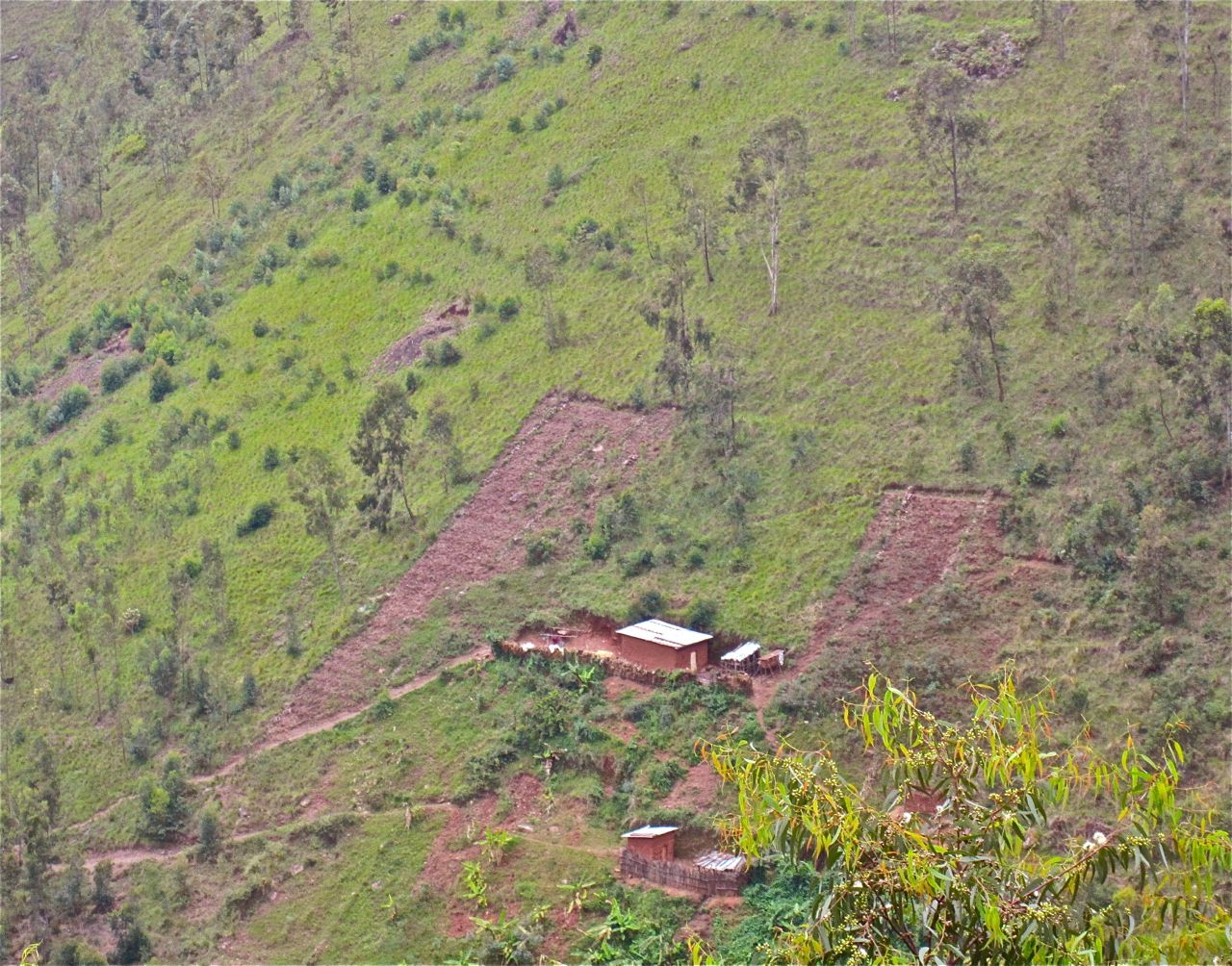
If you think your garden has some challenges with slope, consider this picture. This is quite a typical Rwandan farm. I put it at about 45 degrees.
Rulindo District farm. Click photo to enlarge.
The photo below is another view — rather hazy, I’m afraid — of the most common Rwandan landscape type, a patchwork of small farms on a hillside. This is in the northwest, in Rubavu District.
Typical Rwandan patchwork quilt of small farms.
Why all those people are walking down the road will be the subject of tomorrow’s post.
About halfway up the nearest volcano, you can see the line between cultivated fields and the park, where the mountain gorillas live protected.
The Lodge –near the Parc National des Volcans and the famous mountain gorillas — has extraordinary views. Guests can see two lakes and several volcanoes. But Page wrote that such a location is not ideal for the gardener.
“If I were to choose a site for a garden for myself,” he wrote, “I would prefer a hollow to a hilltop. A panorama and a garden seen together distract from each other. One’s interest is torn between the garden pattern with its shapes and colors in the foreground and the excitement of the distant view. Everything is there at once and one has no desire to wander to make discoveries. . . .”
If, however, one does have to have a view, he advised: “Above all avoid any garden ‘design’ or any flower color which might detract from the main theme, which in such a case must be the view. . . . If there must be flowers they should be close against the house or below a terrace wall and so only visible when you turn your back to the view. I would arrange the gardened part of the garden — flowers and shrubs — to the sides or far enough below, so that they and the view are not seen at the same time.”
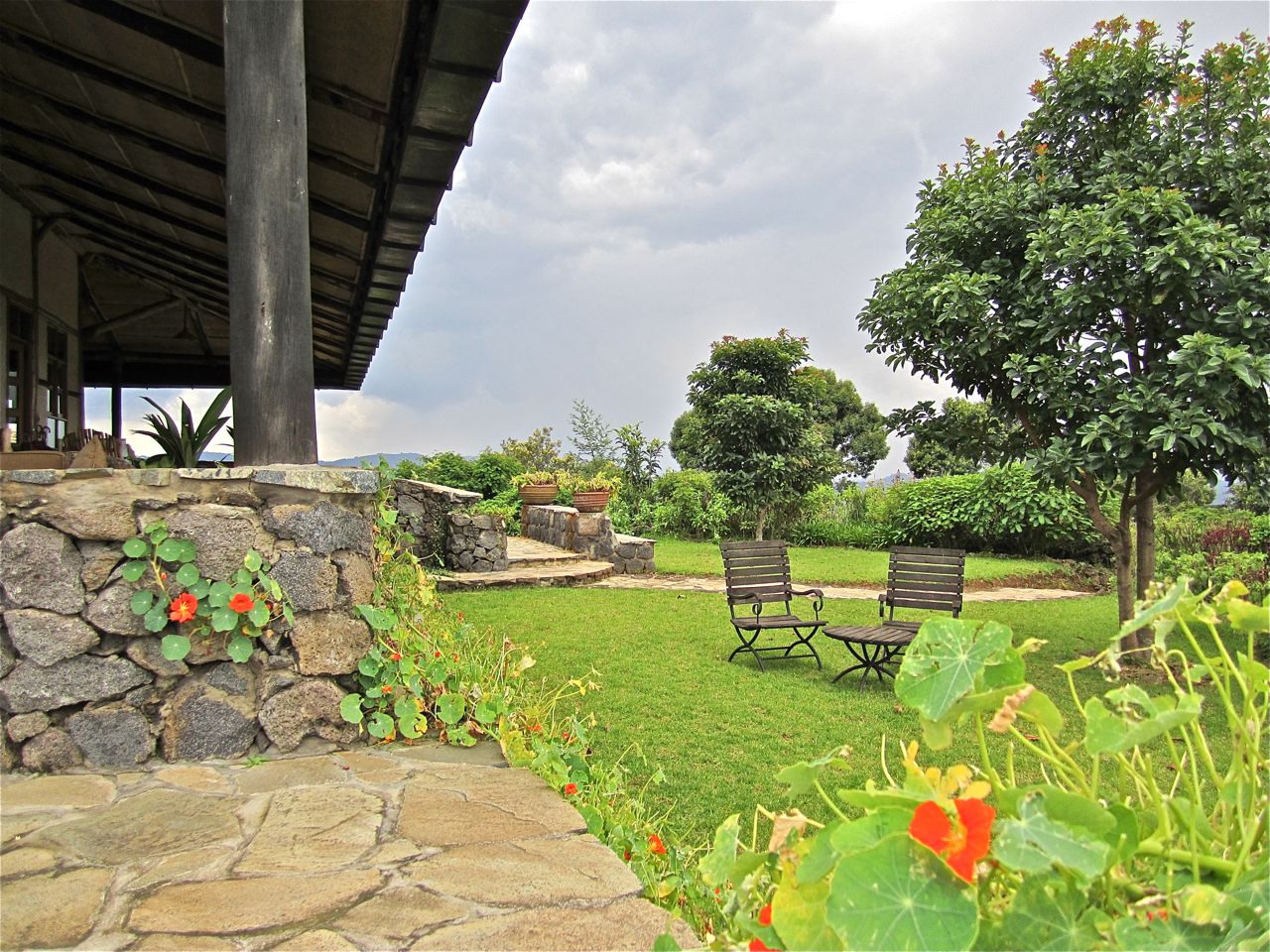
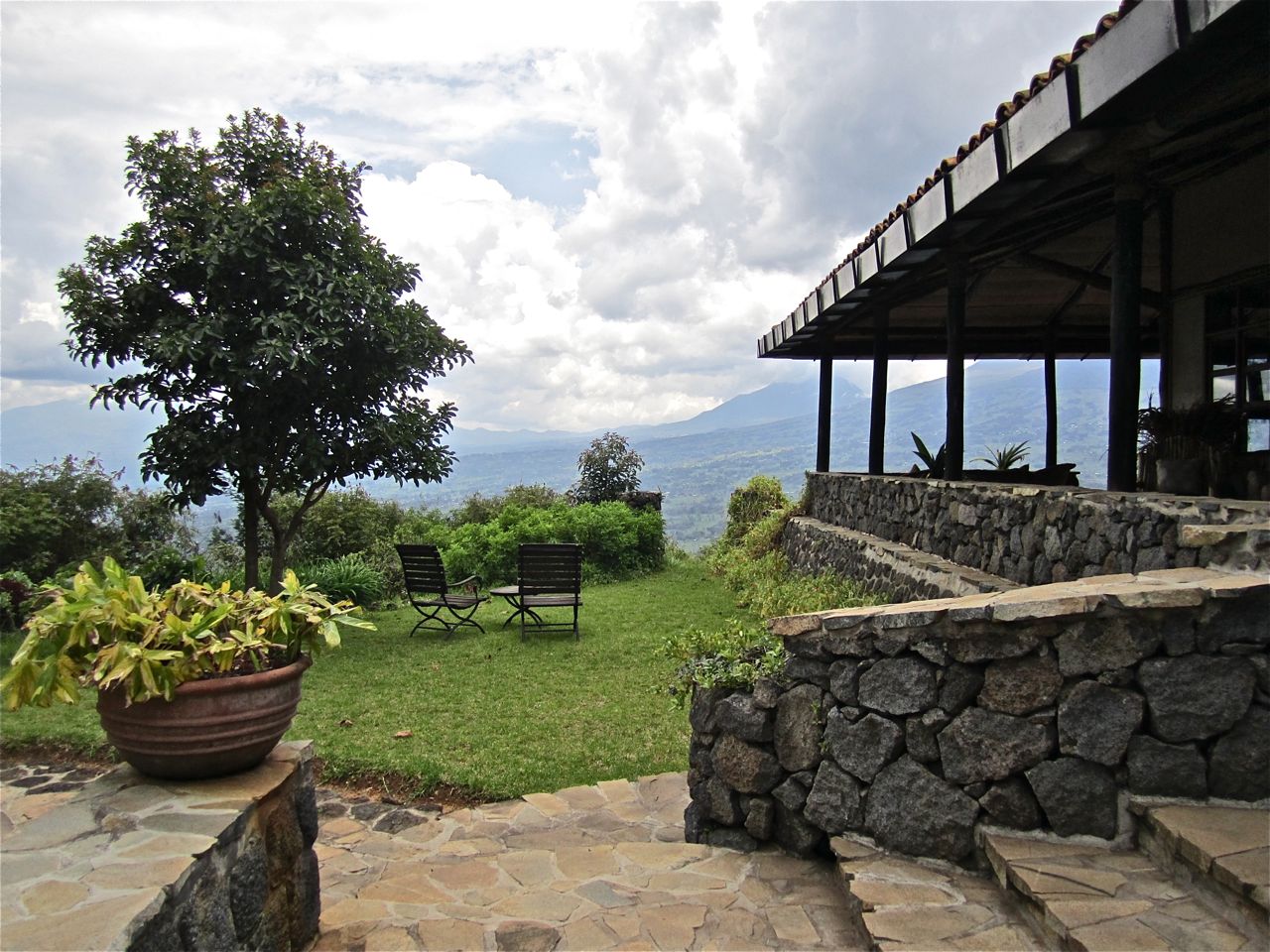
Landscaping around the dining hall and lounge is simple.
The landscape designer for Virunga Lodge seems to have worked right from the book, with beautiful results.
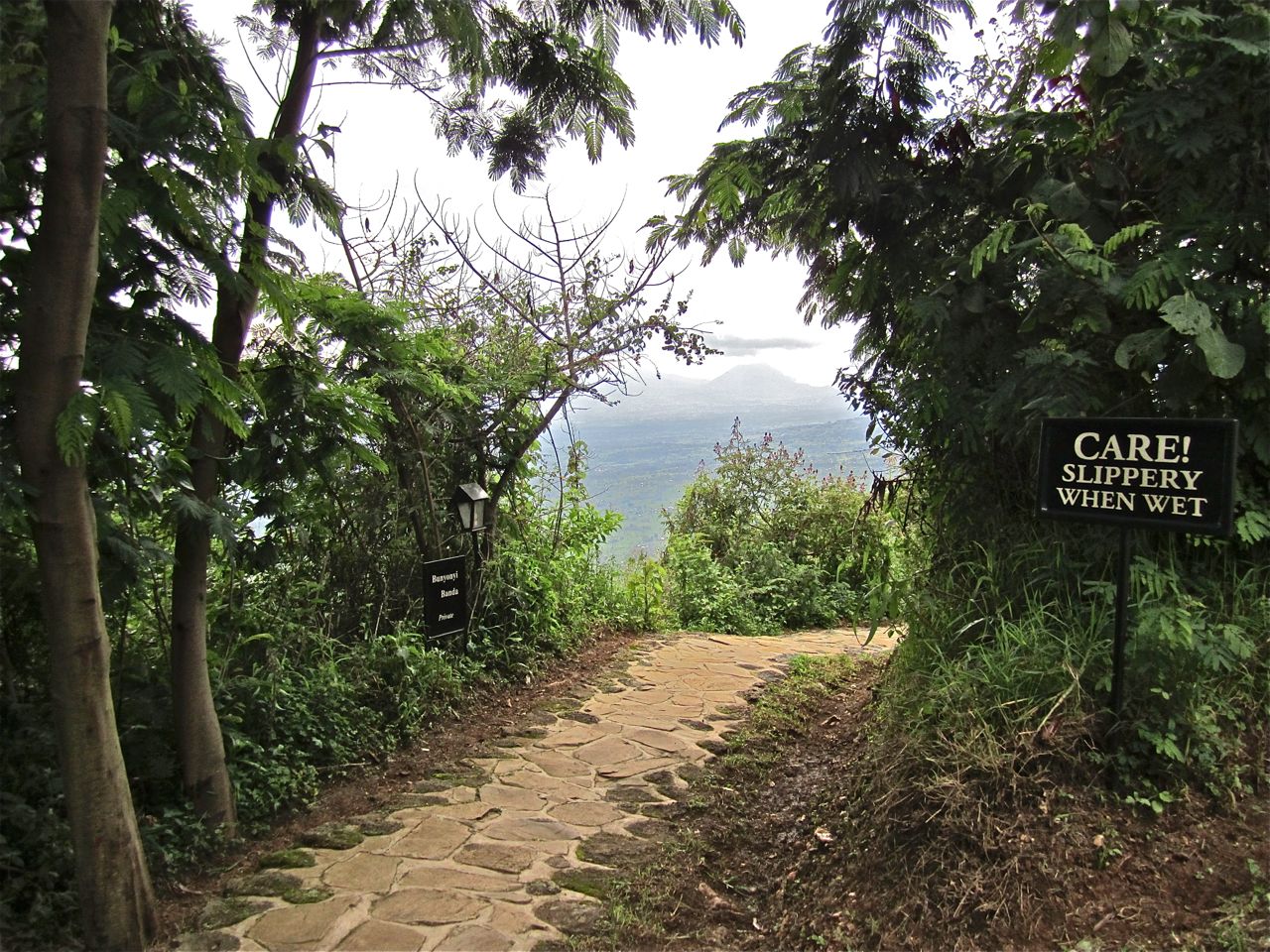
There are a few garden flowers and shrubs, but usually the existing wild brush has simply been cut back to allow for a few flat grassy areas and paved paths.The focus is on the gorgeous view of Lake Burera.Local volcanic rock was used in the construction of buildings and walls.A path to a banda or individual cabin.A trail to nearby villages. The lake is in the middle distance, topped by more hills and clouds.
About three hours drive from Kigali, the Lodge has eight “bandas” or individual cabins, which operate on solar power and use rainwater recovered from the rooftops. It is very expensive at $600 per person per night,* although this is inclusive of all food and drink (including alcohol). (We just stopped by for a look.)
This simple grass “room” sits along one of the main paths.The path crosses this room, which is outlined with a low wall.A long room with regularly spaced columns near the entrance to the Lodge.The bandas have stone terraces.
To get a better sense of the layout and location of the Lodge (and what it’s like to arrive by helicopter), you can watch this short YouTube video.
The same morning as our stop at the Lodge, we visited two local schools and a nearby village family. Our guide was an American businessman working with faith-based development endeavors in Rwanda. He took us to the site of a house he is building for himself. At the moment, it’s just a stone and concrete foundation set on the edge of a hill.
But again, the views were absolutely amazing. He wisely plans to leave the land surrounding the house (which is all sloping downward) very natural, hoping to attract as many birds as possible.