
As a follow up to Monday’s post on the Rwandan palaces, here are two photos of ordinary villagers’ homes from about 1950. I believe they are of the same village north of Lake Kivu near the Congo-Rwanda border.


Photos via flickr here.
As a follow up to Monday’s post on the Rwandan palaces, here are two photos of ordinary villagers’ homes from about 1950. I believe they are of the same village north of Lake Kivu near the Congo-Rwanda border.
Photos via flickr here.
Last Saturday, we hiked into the Volcanoes National Park to see the mountain gorillas.
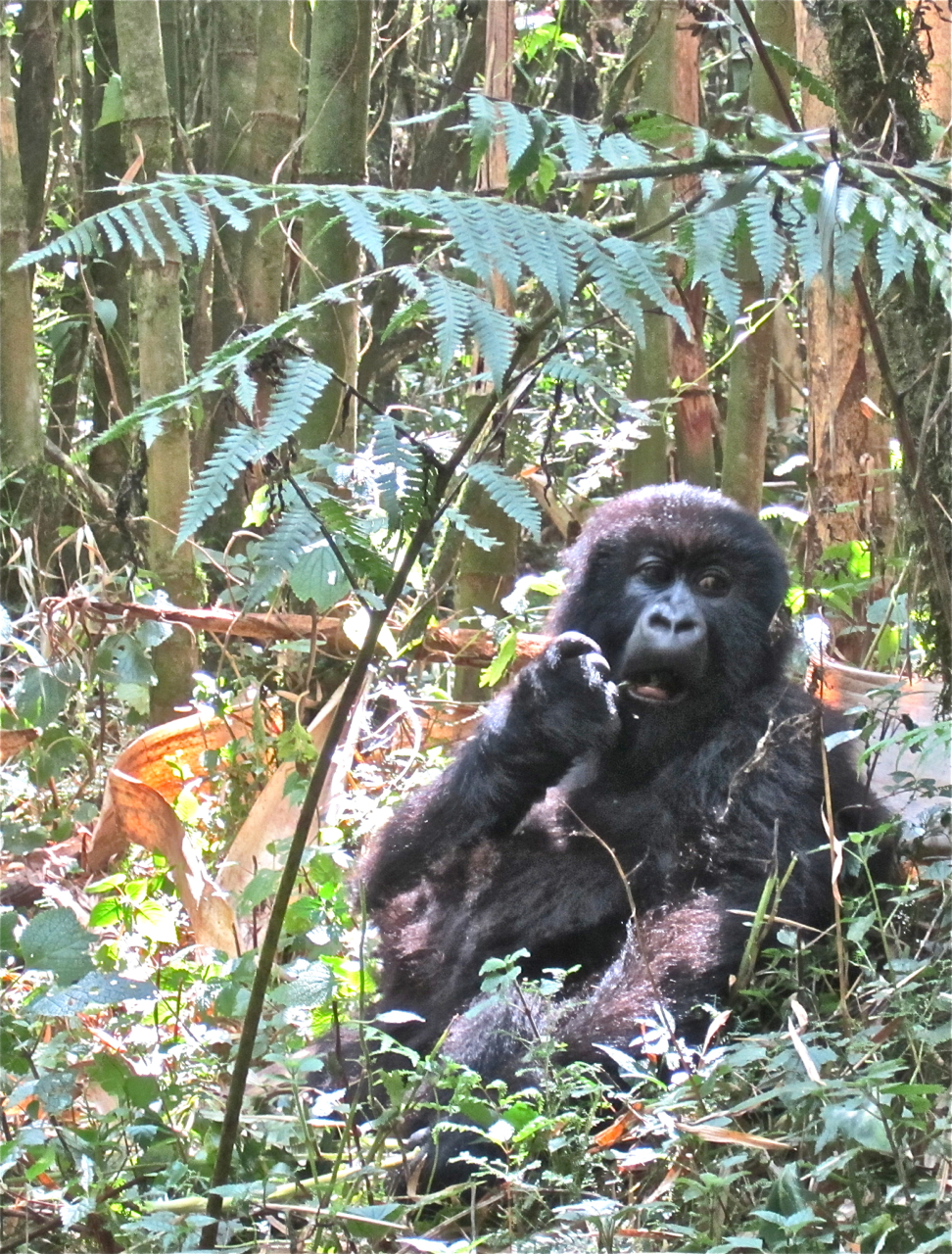
It was an amazing experience.
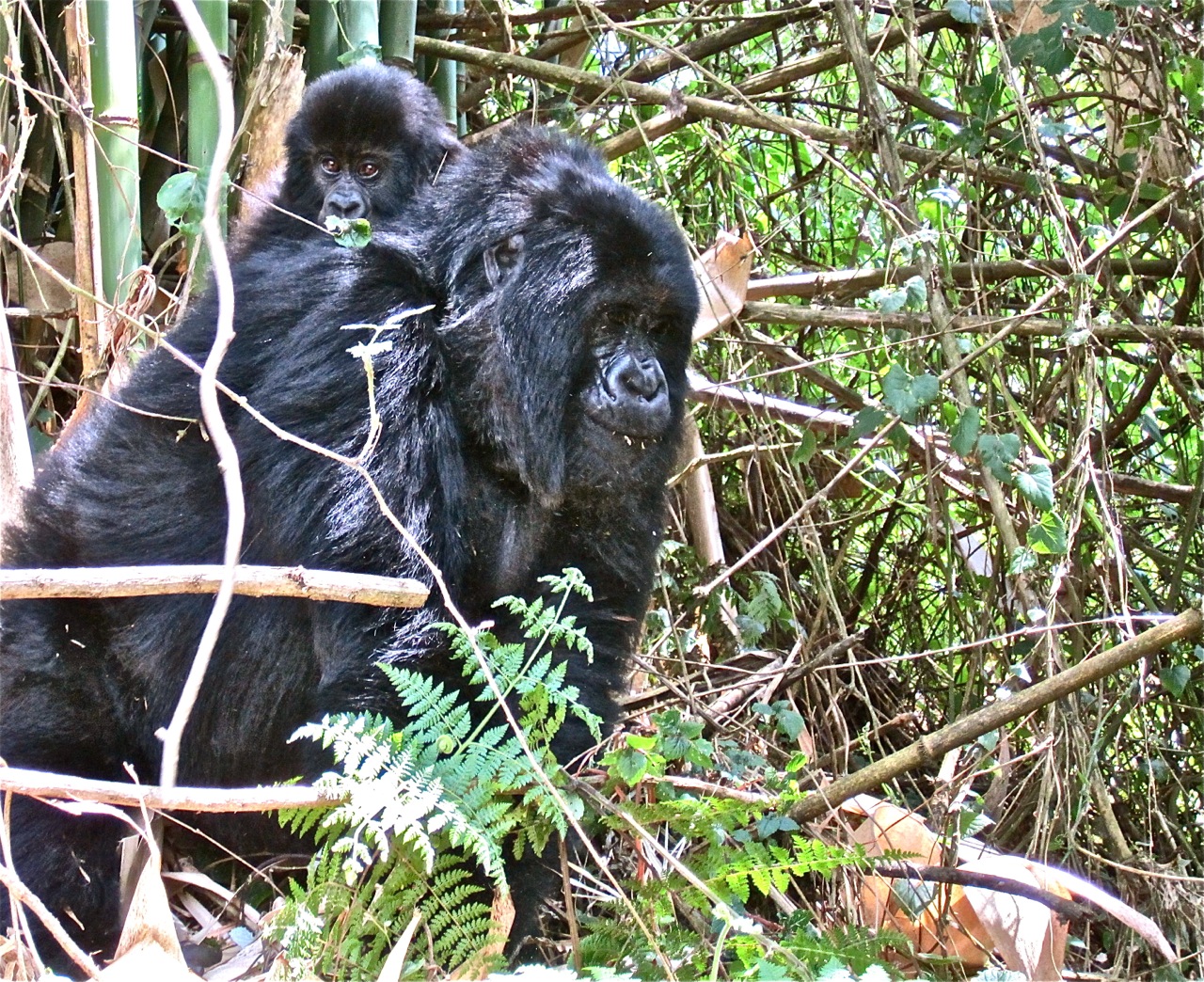
When we arrived at the park headquarters, we asked to see one of the gorilla groups who normally live closer to the edge of the park. We didn’t feel up to one of the really strenuous hikes. However, nothing is certain with wild animals, and we walked (and climbed) for 2 hours before we found our group (the day before, they had been right inside the wall of the park).
I would have liked to have taken some photos of us tackling the steeper parts of the trail (and skirting the edge of an old volcanic crater), but I was too busy trying not to die at the time.
Earlier — after the first (easy) 40 minutes or so — our guide had stopped and given us a Rwandan saying: if you kill a cow, you cannot stop eating until whole thing is gone, tip to tail (this obviously originated before the freezer). Then, he said that the trackers ahead of us had just radioed back that our hike would be 10 cows long, and that we had already eaten 4 cows. However, only the 6th cow would be a big one.
Holy cow! (An American saying.) I climbed up much of number 6 on my knees and came down it on my bottom. Thank goodness for our porter’s hand and my walking stick.
When we found the gorillas, though, it was well worth it. They were lovely — smaller and fluffier than I had expected. Their fur had a healthy sheen, and they seemed quite content to spend an hour with us. Throughout the visit, our guide made low “hrrmm hrrmm” sounds, asking the silverback’s permission to stay; sometimes he would rumble back similar sounds in return. Several times, the little ones showed off by beating their chests.

For more pictures and story, click on ‘Continue reading’ below and then on the first thumbnail to scroll through large photos and captions (and there are some travel tips afterwards). To see a short video that I made, go to this link. Continue reading “Among the mountain gorillas”
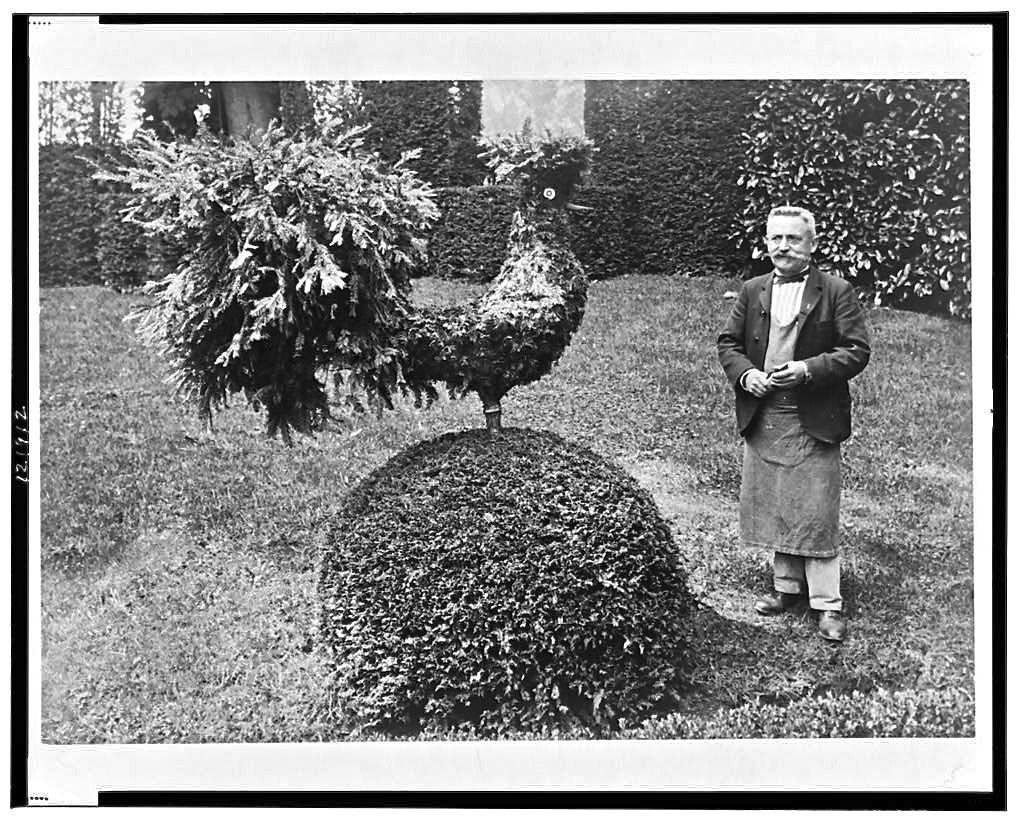
I have looked at a lot of photographs of topiary lately, but this one is particularly spiffy (beau, somptueux, resplendissant).
It’s from the Frances Benjamin Johnston Collection of the Library of Congress Prints and Photographs Division.
Frances Benjamin Johnston (1864-1952) was one of the first American women to achieve prominence as a professional photographer. After studying art in Paris, she returned home to Washington, D.C., in the 1880s and opened a photography studio about 1890. Her family’s social standing gave her access to the capital’s elite, including the First Family, politicians, and diplomats, and her business soon took off. In the 1910s, she turned to garden and estate photography.
I have been looking at vintage garden photos from the online catalog of the Library of Congress. These two — of 1943 victory gardens in northwest and southeast Washington, D.C. — are really charming.
This couple is heading home from their plot with their sailor whites still looking clean and sharp.

Below, Mrs. Carr seems to be present for moral support only, or perhaps she will take the next shift with the shovel.
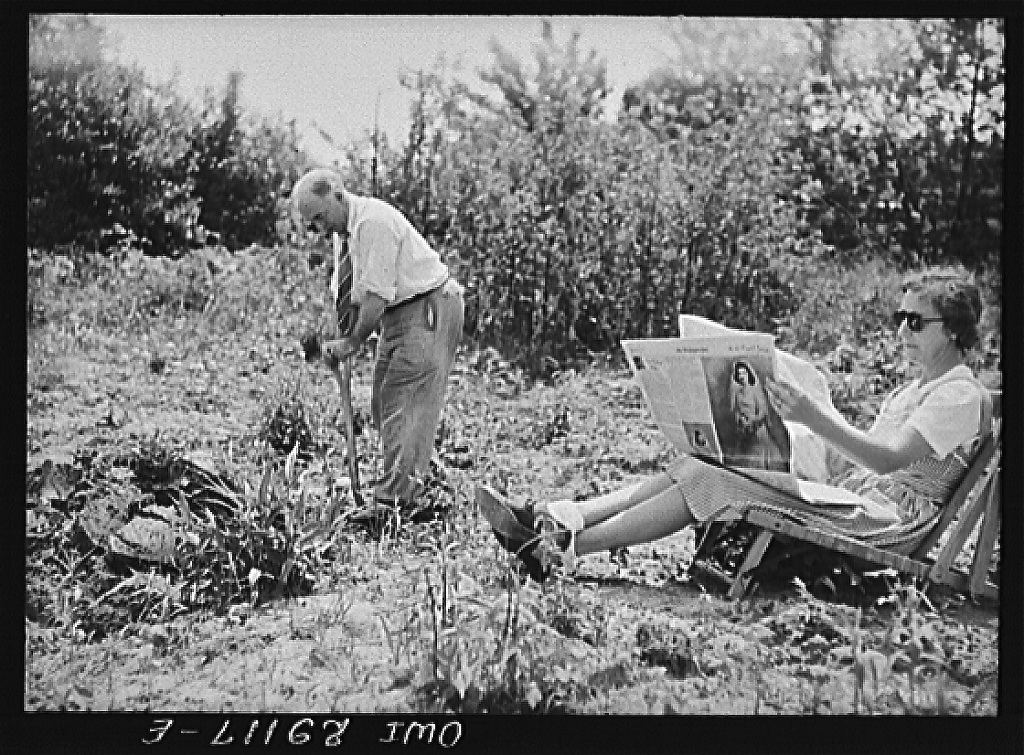
Louise Rosskam, who took the first photo above, was “one of the elusive pioneers of what has been called the golden age of documentary photography.” She took a number of pictures of the same group of northwest D.C. victory gardens in the spring of 1943. (Click on any of the photos to enlarge.)
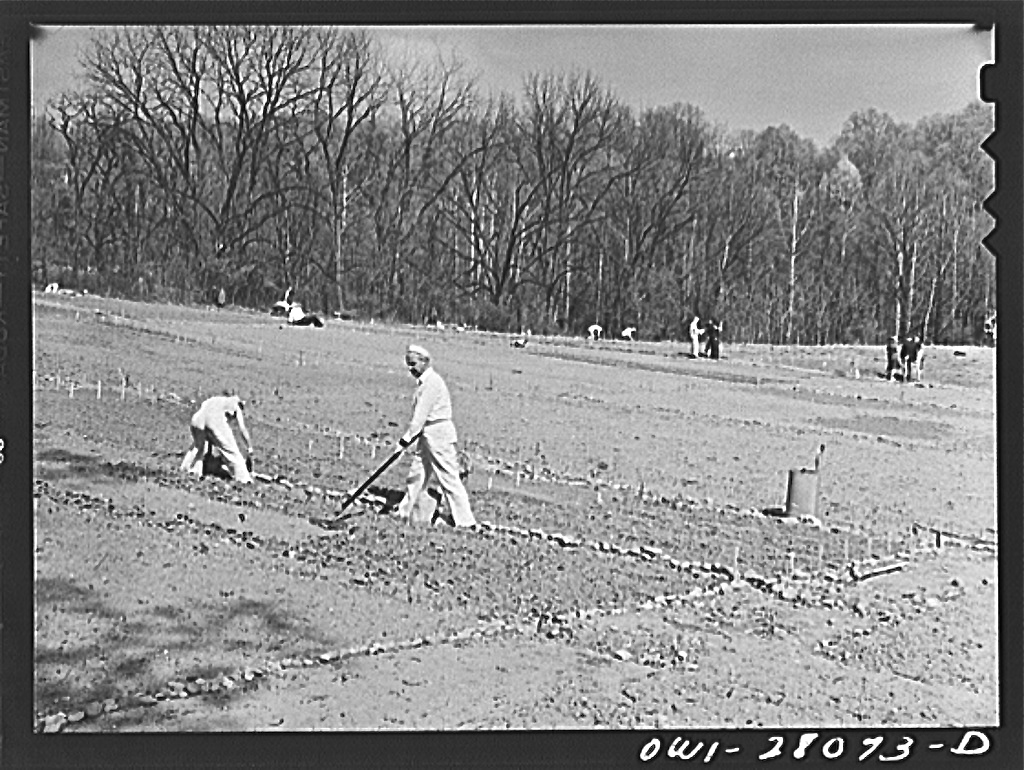


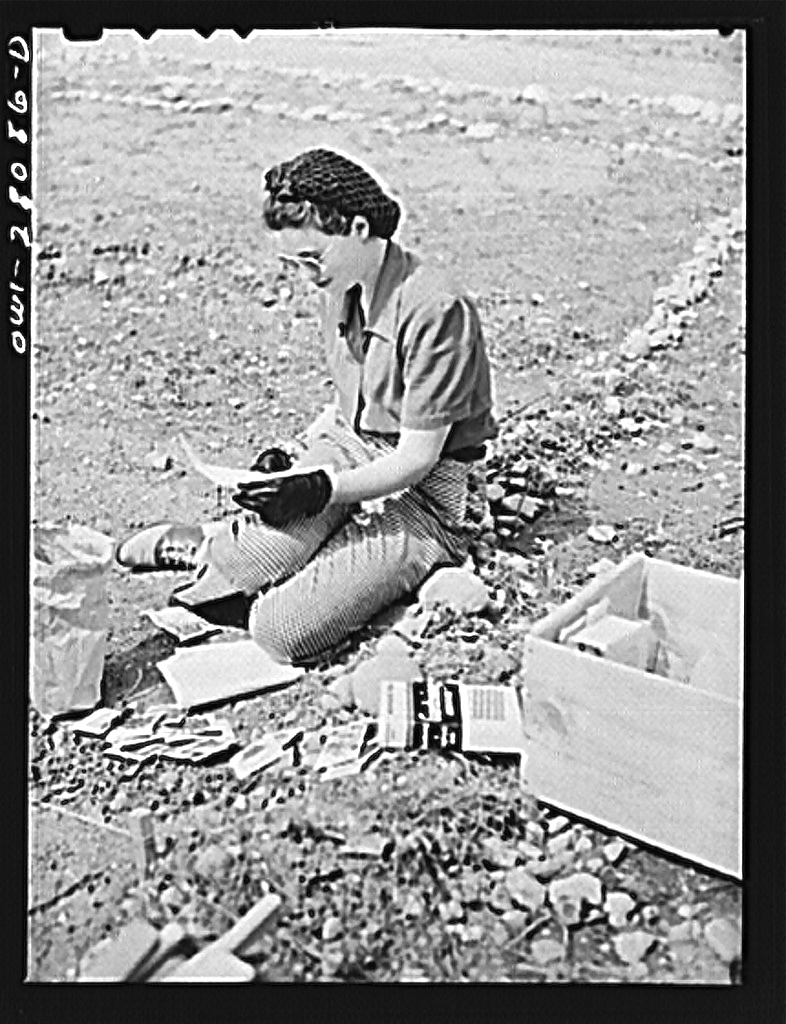


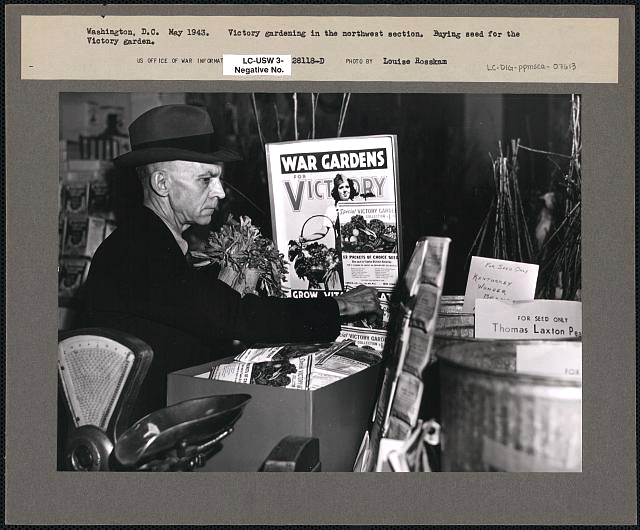
All the photos above (except that of the Carrs) are by Louise Rosskam, via the Prints and Photographs Division of the Library of Congress.
I believe these garden plots were in the neighborhood of Glover Park, where we have a house. According to the Glover Park Citizens Association, it established the first World War II victory garden in the city, at 42nd and Tunlaw Road. It still exists today as a community garden. (Alternatively, they may be of the Tilden victory gardens at Connecticut Avenue and Tilden Street, which Rosskam also photographed.)
This is a link to a short film made in the forties about how to prepare, plant, and harvest a 1/4 acre victory garden. It features a rural northern Maryland family and is an interesting look at home gardening advice and practices of the time.
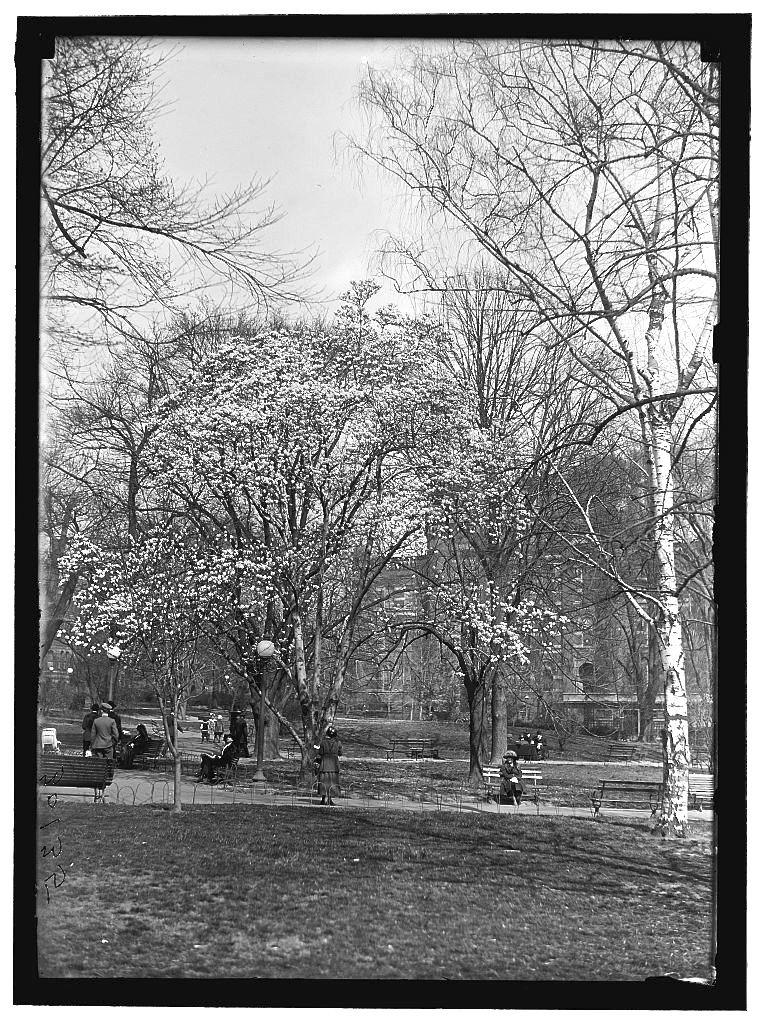
A peaceful view of a magnolia tree blooming in a Washington, D.C., park in 1919 — before any other trees have leafed out.
That winter seems to have been as mild as the preceding year’s was harsh. But the sweet scene may belie the real state of affairs. The influenza pandemic that began in the fall remained pervasive, and in the summer to come, deadly race riots would grip the city.
Photo by Harris & Ewing from the Harris & Ewing Collection of the Library of Congress. Click the photo to enlarge.

