Leicester Square

In London, in September, we went to TKTS at Leicester Square to buy discounted theater tickets.*

This slideshow requires JavaScript.

While there, I really admired this sinuous bench/hedge/fence combination, which enclosed the central garden areas of the square — particularly the use of highly polished steel for the railings.

(You can put your cursor over the slideshow to bring up a ‘pause’ button.)

The square was recently re-designed by Burns+Nice, with the installation completed in May of this year.

*We saw “Yes, Prime Minister,” which probably ought to have remained a half-hour sitcom, but was a lot of fun nevertheless.

Garden Bloggers’ Bloom Day: Celosia

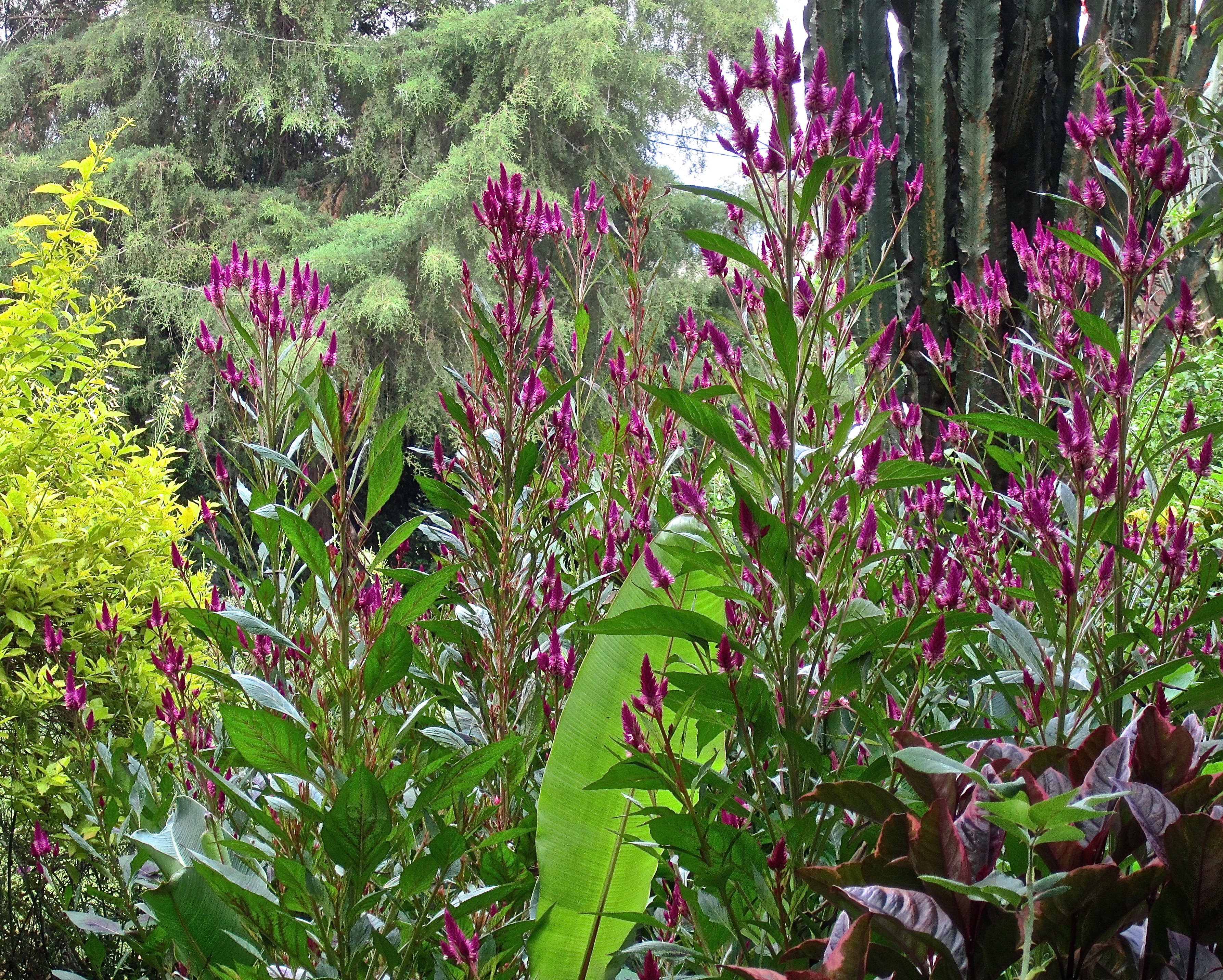
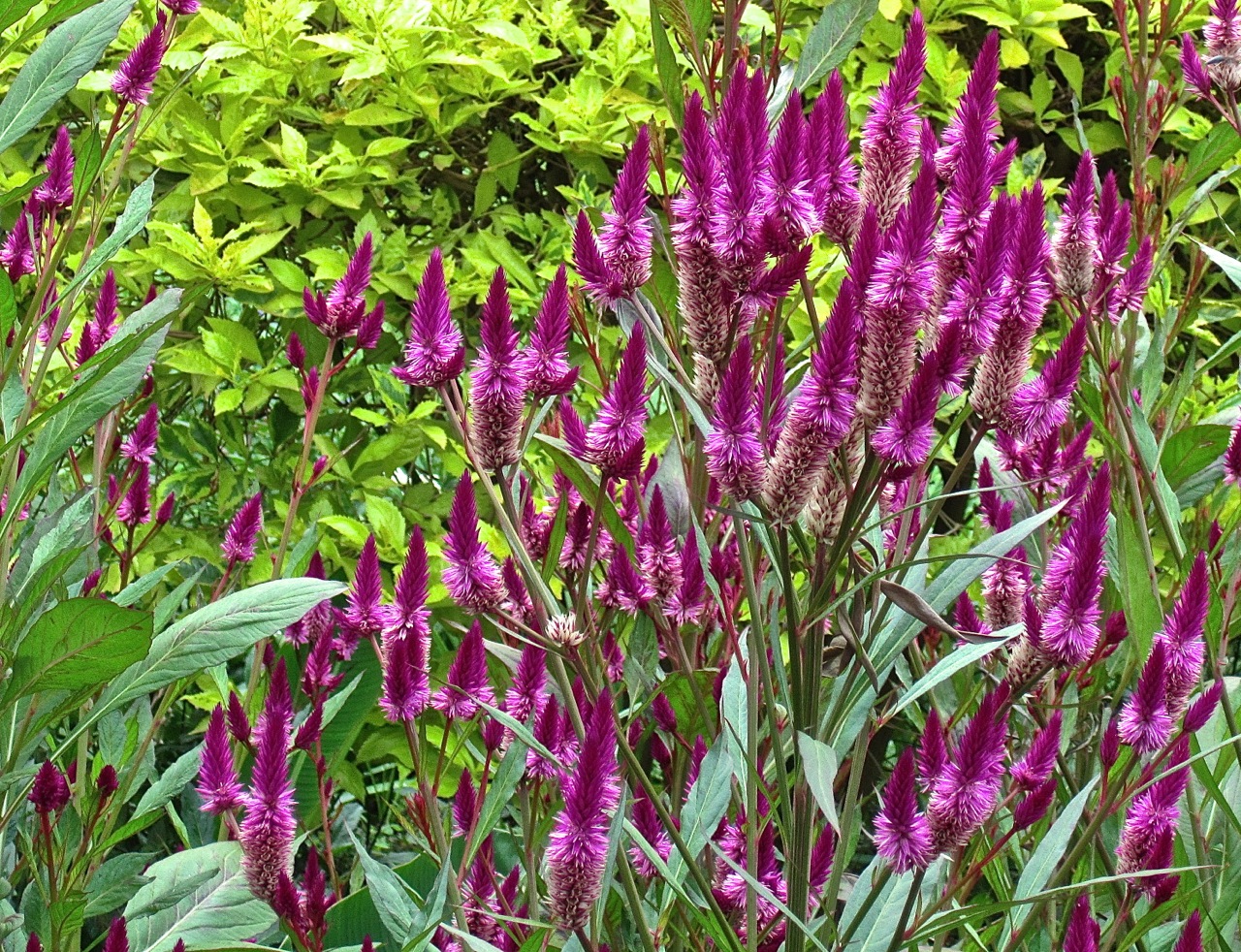
This Bloom Day, I’m most taken with this stand of Celosia argentea.  The annual self-seeded all over the garden, and we transplanted a number of the babies to this spot at the southeast end of the two parallel retaining walls (see garden plan here).
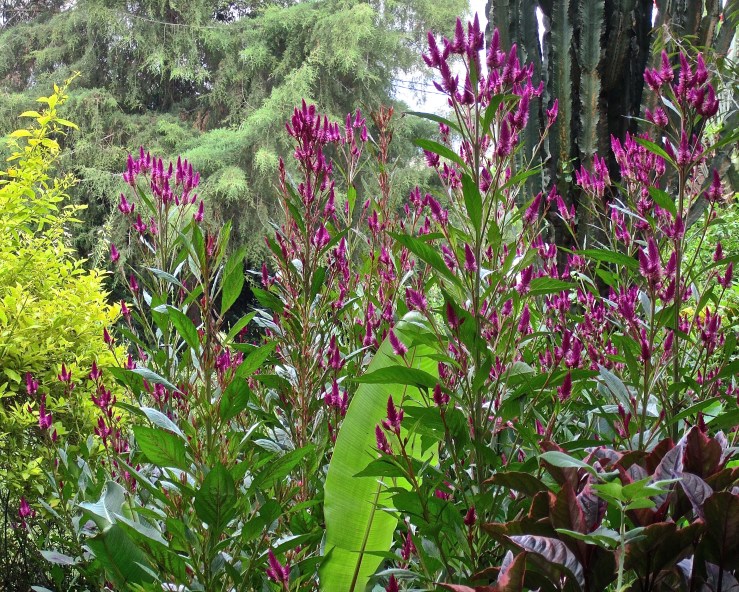
Eventually, some very tall Heliconia rostrata will grow up here (you can see one leaf in the front of the photo above), but this is a nice filler until the transplanted roots really take off.
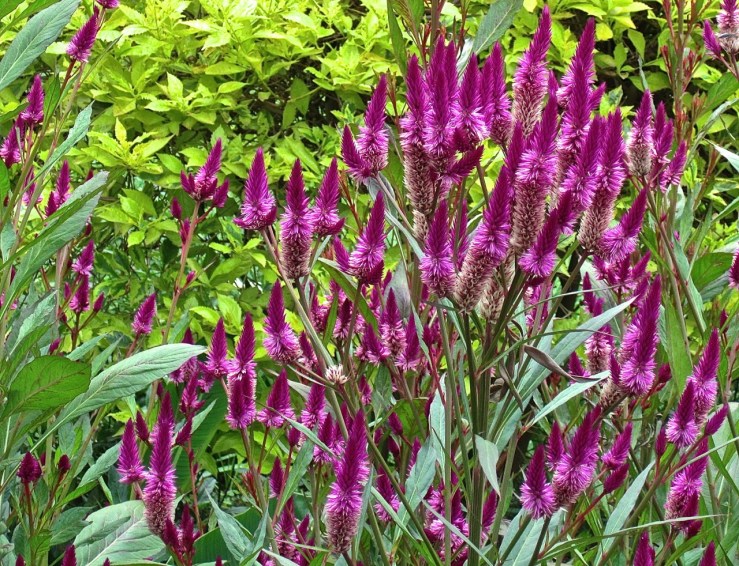
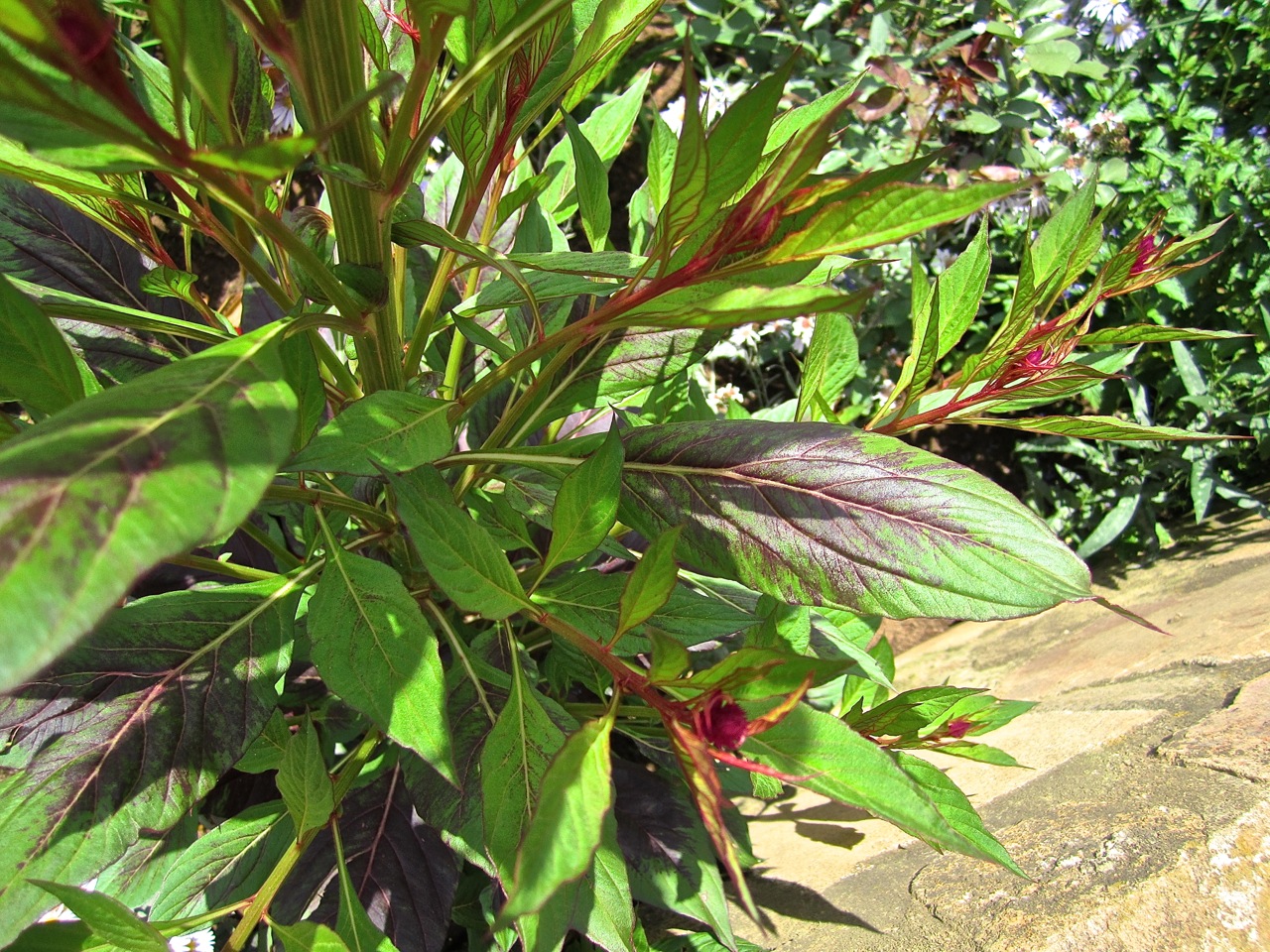
I believe my plants are a red-leafed Celosia argentea var. argentea, which is commonly know in Africa as Lagos spinach.  (Although I may have var. spicata, similar to ‘Flamingo Feathers.’)  Harvested before it flowers, the plant is an important leaf vegetable in tropical Africa and Southeast Asia.  In Nigeria, it is called soko yokoto, which means ‘make husbands fat and happy.’  In Swahili, it’s called mfungu.

To prepare it, boil (don’t steam) the leaves and tender stems for five minutes, and then drain away the cooking water (which eliminates the oxalic acid and nitrates).  It is said to taste like spinach and contains very good levels of protein, vitamins A, C, and E, calcium, and iron.
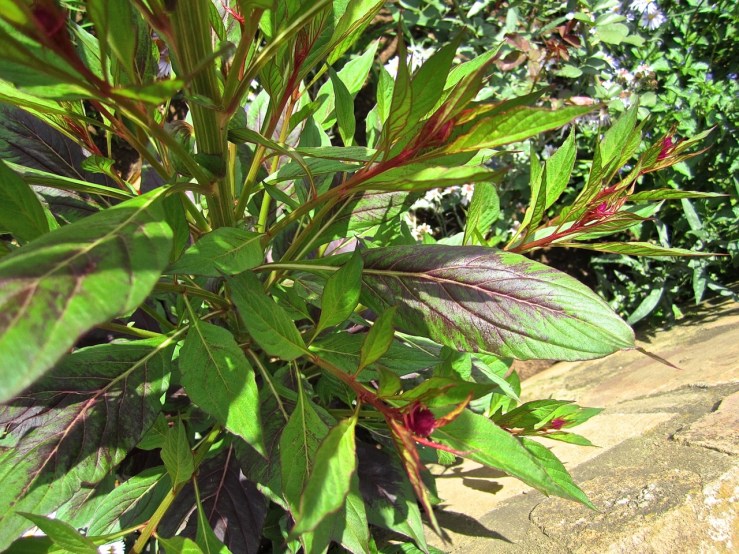
The genus Celosia is a member of the amaranth family.  The name comes from the Greek word kelos, meaning ‘burned’ — referring to the flame-shaped and colored blooms.  Most sources I looked at gave the genus’s probable origin as Africa.

To see what’s blooming in other garden bloggers’ gardens, check out May Dreams Gardens.

A-s-c-l-e-p-i-a—

I walked by the White House a few weeks ago to look through the fence at the famous vegetable garden. Then I took a further look around and realized that all of the ornamental beds and pots on public view, on all sides of the house, were planted out in red wax begonias.

Just wax begonias combined with dusty miller.

And I thought, “seriously?”

Yes, this — just this, all around.

I know they’re tough and look neat and give reliable color and my feet were hurting from too much walking, but how dull.

The kitchen garden looked fine and huge kudos, but next year, would it not also be educational for D.C. schoolchildren to learn to spell ‘Asclepias tuberosa‘ — as they tuck them in around the fountains with maybe some native switchgrass and goldenrod* — or even the family to which it belongs, ‘Apocynaceae‘ (formerly thought to be ‘Asclepiadaceae‘), and its subfamily, ‘Asclepiadoideae.’

Or maybe just the word ‘perennial,’ which I have to let spellcheck fix every time I write it.

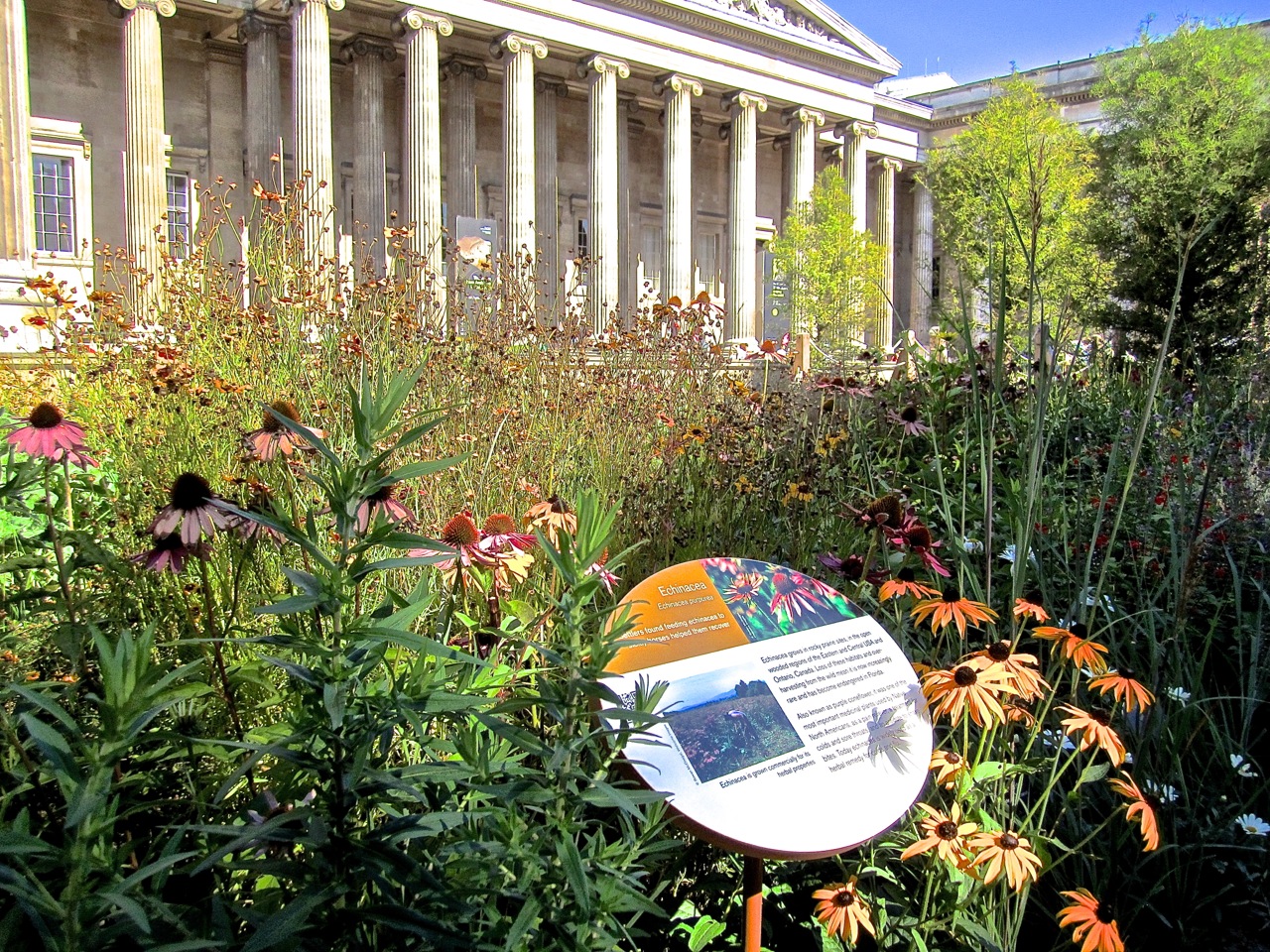
Why do we have wax begonias at the White House, while the British Museum currently has this?  (“North American Landscape:  Kew at the British Museum”)

* and even some scarlet rose mallow (Hibiscus c-o-c-c-i-n-e-u-s), which was planted at the Old Executive Office Building and looked great. (Addendum:  I’m now thinking it could have been this.)

A little more Bloomsbury

I didn’t make it to the Kew Royal Botanic Gardens on this trip*, but the British Museum was (and is, til November 25th) holding an exhibit, “North American Landscape: Kew at the British Museum” on its West Lawn. Admission is free.

The website, here, has a video of the installation and a slideshow of the plants featured.

I loved these flower finials atop a rather stately iron gate on Montague Street, not far from the British Museum.

Looking on Google’s satellite image for the street, the gates seem to be the entrance to a large shared garden on the inside of the entire block.

*and here and here.