A look back

This blog in 2012:*

I posted 173 times and received 39,923 views from readers from 147 countries.

(I do, however, take WordPress’s “My Stats” with a grain of salt.  A few mornings ago, it showed me with 10 views from 4 visitors in 6 countries.  Maybe one viewer was on an airplane?)

Posts with the most views: “Enclosures of the kings” and “A garden in the Virunga hills” — both in February and both after enclos*ure was featured on WordPress’s “Freshly Pressed” and Fine Gardening’s “Garden Photo of the Day.”

Most viewed individual photos:  Japanese Tea House (below)
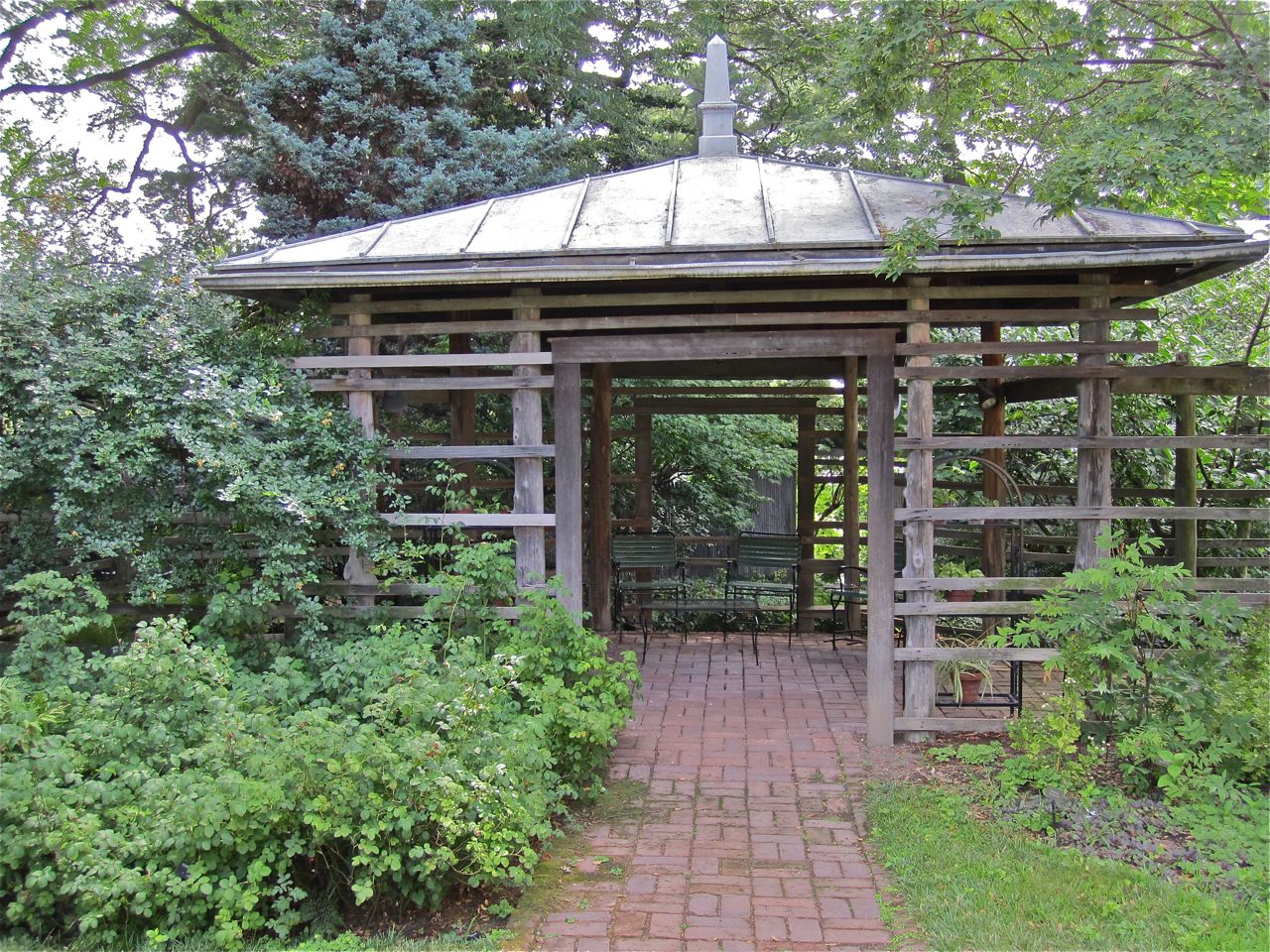
Japanese tea house with mid-century garden chairs.
The Japanese tea house at Tudor Place with mid-century garden chairs.

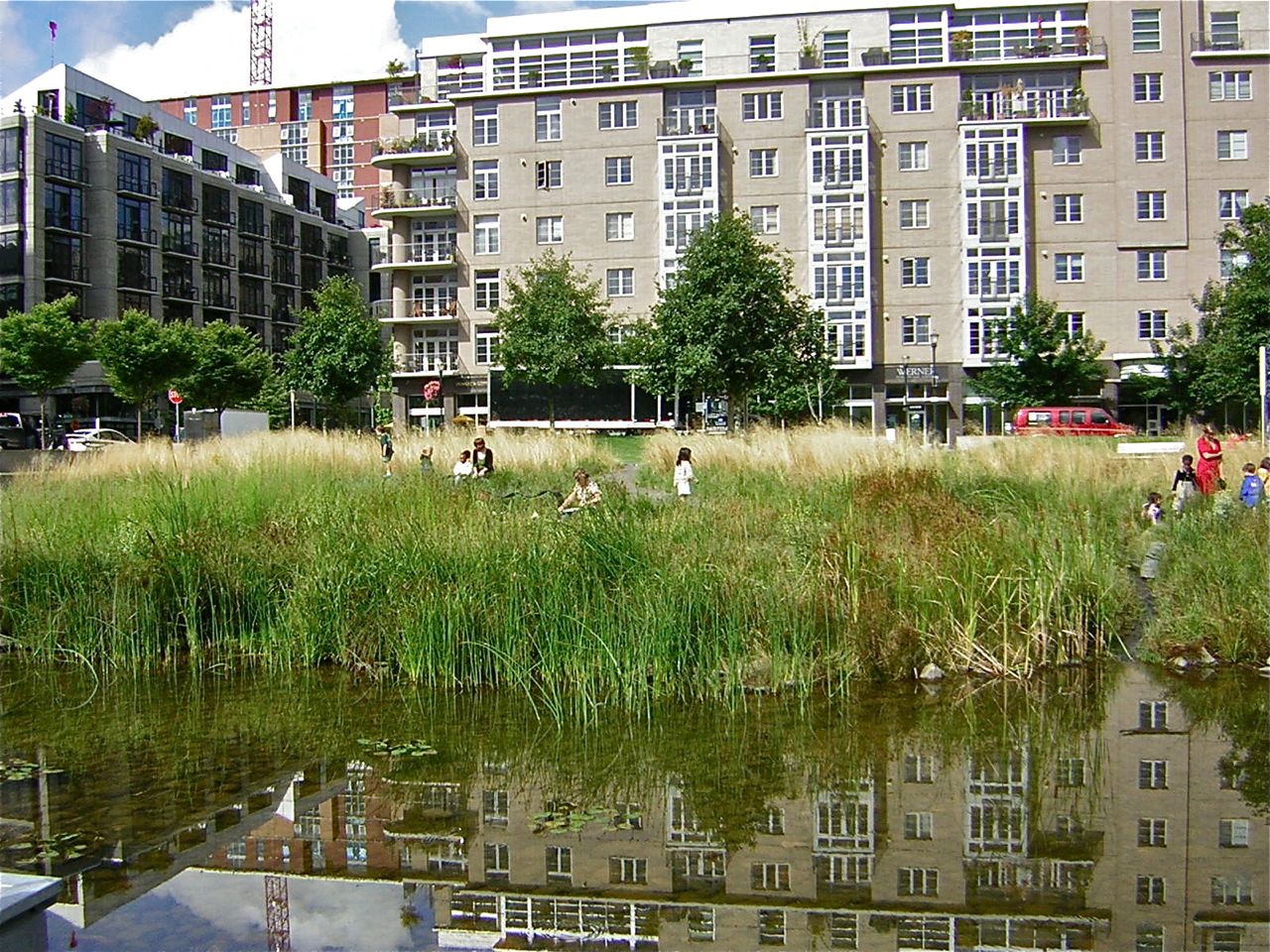
and Tanner Springs Park (below)

A summer camp visit to Tanner Springs Park in Portland, Oregon.
A summer camp visits Tanner Springs Park in Portland, Oregon.

Thumbnails of both are featured on pages one and two of Google Image Search for those topics.

Search term bringing the most views to this blog: “Chateau Gaillard.”  I have never posted about Chateau Gaillard.

Strangest search term bringing (2) views to this blog: “why would someone enclos [sic] a front porch and make their side entrance the main address.”  Please, I would never do that.

Best blogging lesson learned:  In a country where the power goes off several times a day, click on “save draft” constantly.

Most popular enclos*ure photo on Pinterest:

18 stick in compost pile

from “A visit to GOFTC.”    “A pole is placed in the middle of the [compost] pile so it can slide in and out. If it is pulled out warm and damp, the pile is in good shape.”

Most annoying WordPress feature:  a spellcheck that changes ‘enclos*ure’ to ‘enclose*ure.’   Also, quote marks are frequently facing the wrong direction — see just above.

My own favorite image this year: I really couldn’t pick one, but I did love the pouring teapot in the garden of the Sowathe Tea Factory last January (below).

Sowathe cup of tea

Thank you all for visiting enclos*ure in 2012.

I leave you with this interesting quote:

People often ask us, in an amazed way, “how do you possibly garden together?”. . . [O]ne person’s strengths fill in for the other’s weaknesses. The human eye contains two kinds of receptors: rods respond to light or darkness; cones are sensitive to color and detail. Men’s eyes have more rods, a thousand times more sensitive to light than cones, so men wait for low light, often seeing better in the dark. With a plethora of cones, women may stumble in the dark but are better able to respond to the subtle blush of a rose. It doesn’t stop there. Men and women process the information that comes in through their eyes differently. Women store visual information on both sides of their brains, men on one side only: this give men better depth perception, but at the price of color recall, which is easier for women. Ten percent of men are functionally color blind, and almost none have the selective capacity of a woman’s eye, well trained.

— Nori and Sandra Pope, from Color by Design:  Planting the Contemporary Garden


*according to my WordPress.com Annual Report and “My Stats.”
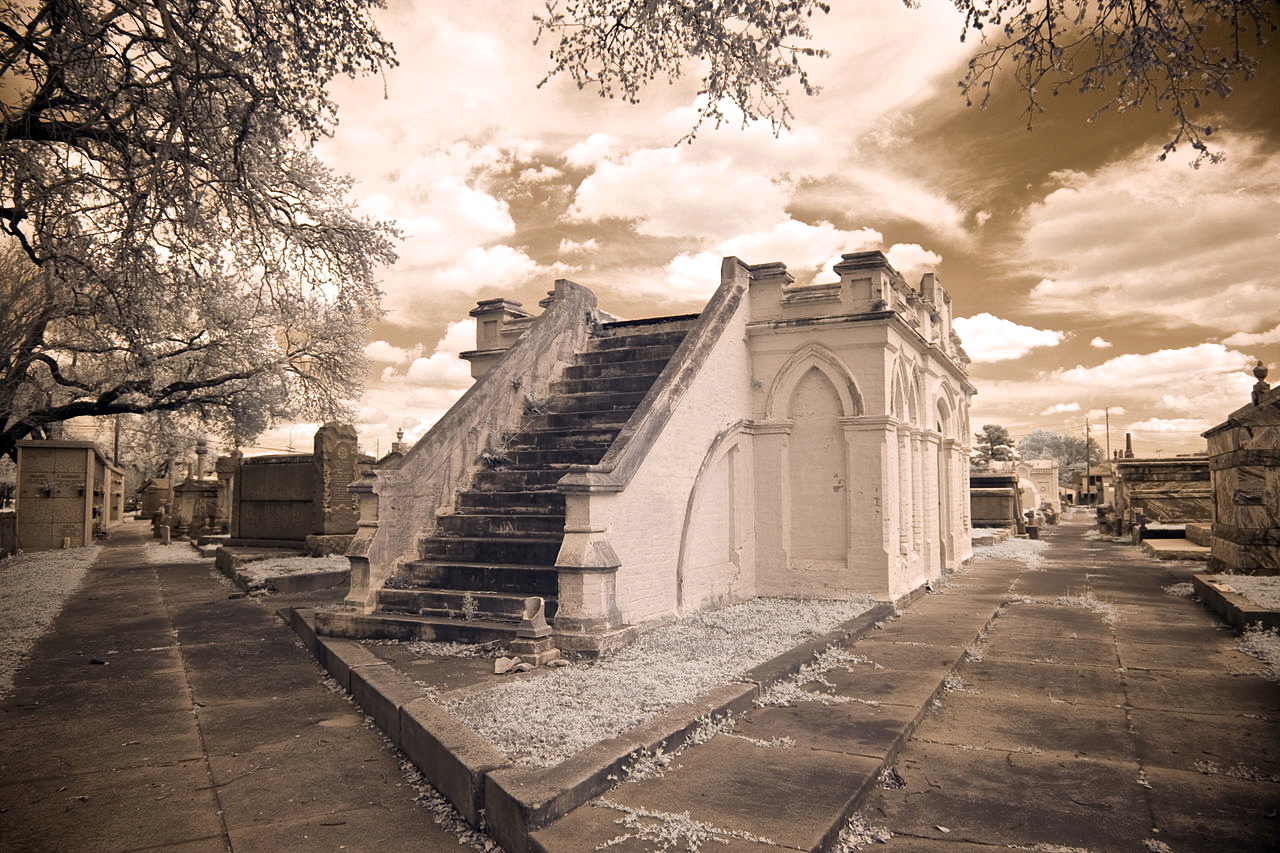
Cities of the Dead, New Orleans

And so, about this tomb of mine. . .

New Orleans cemetery, 2007, by C. Highsmith

Another beautiful photo by Carol M. Highsmith:  “Cities of the Dead Cemetery tombs, New Orleans, Louisiana,” 2007, via the Highsmith Archive, Library of Congress Prints and Photographs Division.

This tomb is in the Masonic Cemetery in Mid-City.

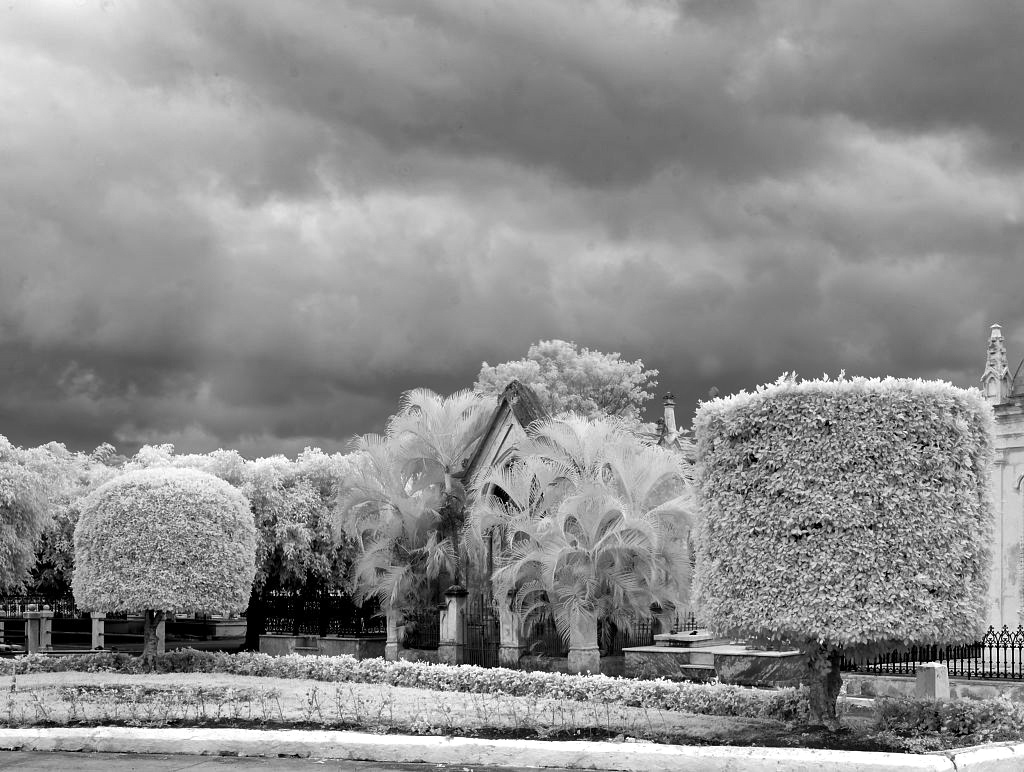
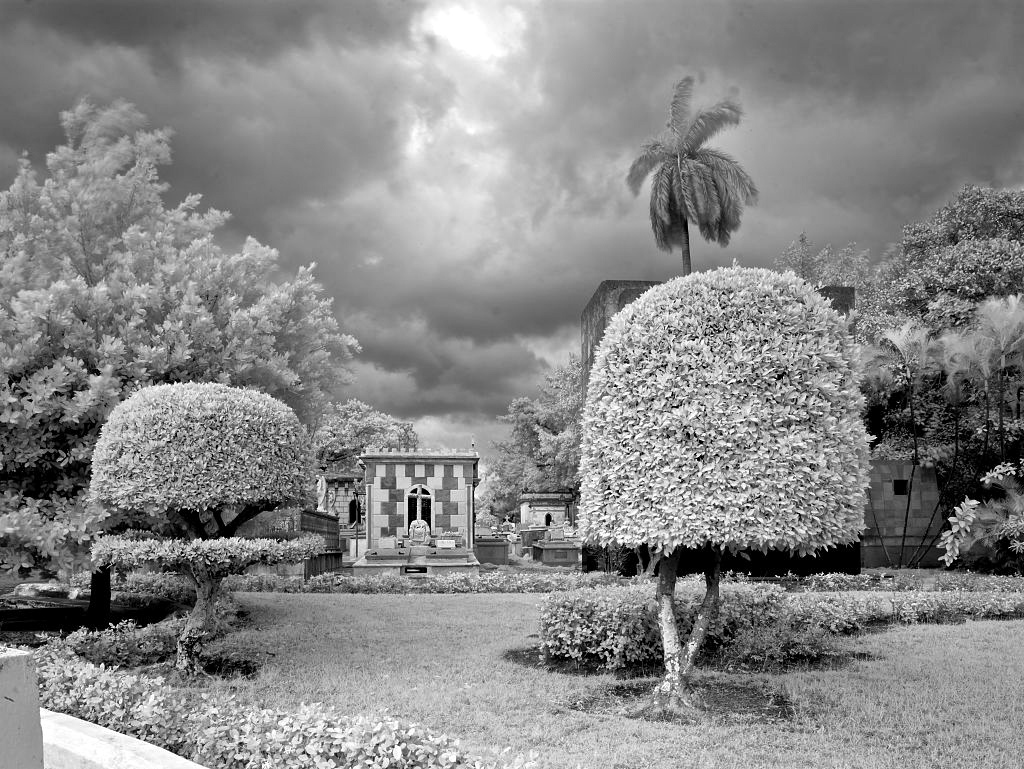
Necropolis de Colon, Havana

Necropolis de Colon, Havana, by C. Highsmith, 2010

“Necropolis de Colon, Havana, Cuba,” 2010, by Carol Highsmith, via the Highsmith Archive, Library of Congress Prints and Photographs Division.

Necropolis de Colon, Havana, by C. Highsmith, 2010.

The Cementerio de Cristóbal Colón [Christopher Columbus] was founded in 1876. The 140-acre cemetery is located in the Vedado neighbourhood of Havana, Cuba, and holds more than 500 family vaults, mausoleums, and chapels.

Carol M. Highsmith is a contemporary photographer who has specialized in documenting architecture and landscape — high and low — in all 50 American states.  Her influences are Frances Benjamin Johnston and Dorothea Lange. You can read more about her life here.

Highsmith is donating her life’s work — more than 100,000 images — copyright-free to the Library of Congress. Many of her images are printed in the distinctive black and white style shown here.

A garden should make you feel you’ve entered privileged space – a place not just set apart but reverberant – and it seems to me that, to achieve this, the gardener must put some kind of twist on the existing landscape, turn its prose into something nearer poetry.

Michael Pollan

Vintage landscape: Paul et Henri

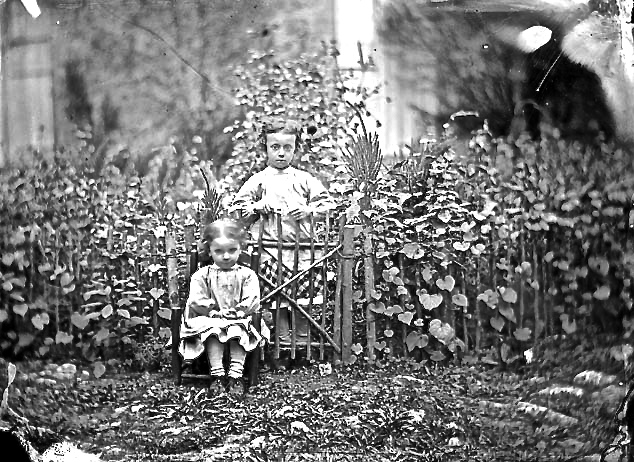
Paul et Henri

Paul and Henri at Cornusson, Parisot Commune, in the Pyrenees, France, ca. 1870, by Eugène Trutat, via the Bibliothèque de Toulouse Commons on flickr.

As from the house your mother sees
You playing round the garden trees,
So you may see, if you will look
Through the windows of this book,
Another child, far, far away,
And in another garden, play.
But do not think you can at all,
By knocking on the window, call
That child to hear you. He intent
Is all on his play-business bent.
He does not hear; he will not look,
Nor yet be lured out of this book.
For, long ago, the truth to say,
He has grown up and gone away,
And it is but a child of air
That lingers in the garden there.
Robert Louis Stevenson, “To Any Reader”

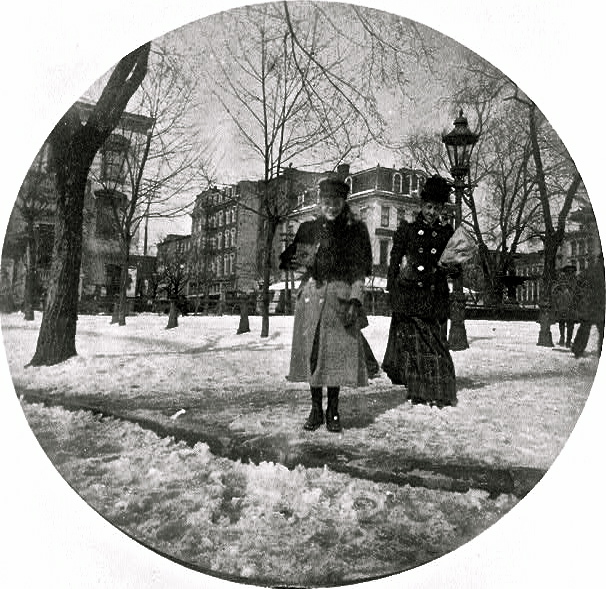
Vintage landscape: more snow in Washington, D.C.

Hunt photo of snowy Washington

“Woman and girl standing in icy square, Washington, D.C.,” 1889, by Uriah Hunt Painter, via Library of Congress Prints and Photographs Division.

Uriah Hunt Painter, 1837-1900, took a number of snapshot photographs of his neighborhood around Franklin Square and of downtown Washington using the first Kodak cameras.  Painter was a businessman and retired newspaper reporter.

“[The p]hoto shows a woman and a young girl posing mid-square with bundles. The two may be Painter’s wife, Melinda Avery Painter, and older daughter, Eleanor, returning from a marketing trip. Or perhaps Painter took their portrait because the girl is holding another Kodak – exemplifying the growing corps of amateur photographers who took advantage of Eastman’s simple box camera.”

— from the LoC online catalog

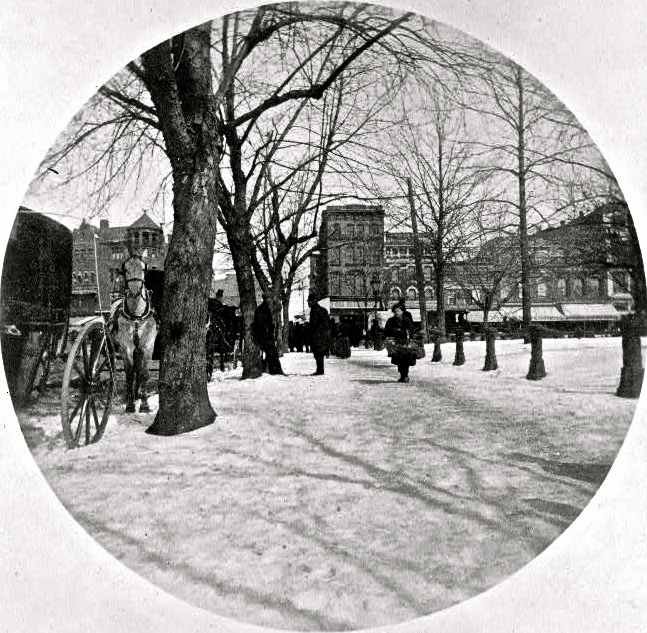
Washington market, 1989

Above: “Market scene, Washington, D.C., snow view,” 1889, by Uriah Hunt Painter. I don’t know which square is pictured in these photos.

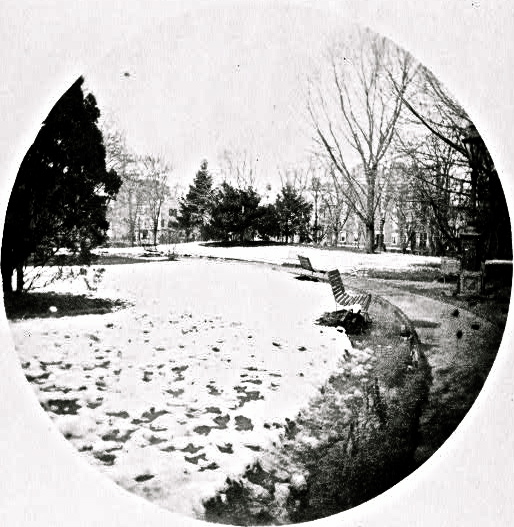
Franklin Square, 1989

Above: “Franklin Square, Washington, D.C., snow view,” 1989, by Uriah Hunt Painter.

Today’s quote

Pope’s famous lines, in his “Epistle to the Earl of Burlington,” on ‘the genius of the place,’ . . . surely evoke a conception of The Garden as an epiphany. For Pope, ‘the genius of the place’ does not refer, as it does for many later writers, to the ambiance or natural setting of a garden: rather, it is that which ‘Now breaks, or now directs, the intending lines’ and ‘Paints as you plant, and, as you work, designs.’ Palpable, here is a sense of The Garden as both a response to and an exemplification of something beyond the control and invention of human beings.

— David E. Cooper, from A Philosophy of Gardens
(Thanks to View from Federal Twist.)