A repeat post of 2013. . .
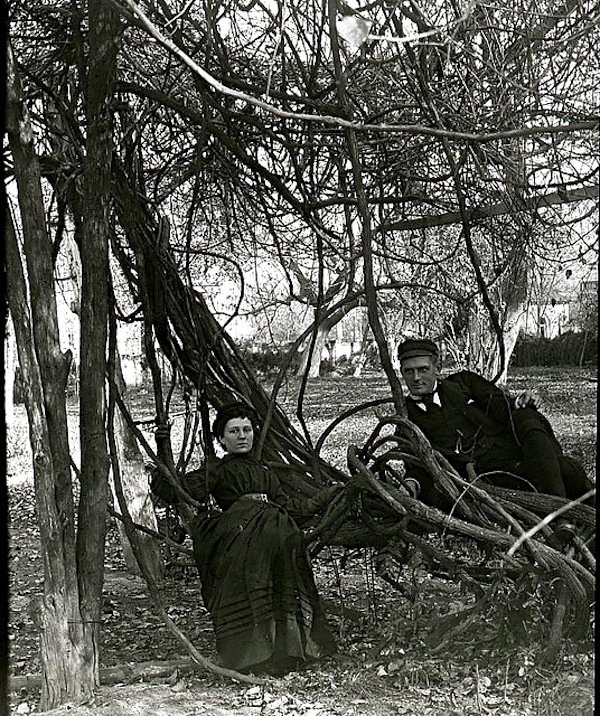 “Two people relaxing in Van Ness Park about 1880,” Washington, D.C., via D.C. Public Library Commons on flickr.
This park was not located in the present-day neighborhood known as Van Ness. The photo was taken in an area southwest of the White House near the corner of C and 18th Sts., N.W. — which was then known informally as “Van Ness Park.”
According to the Library’s notation on the photo, the building that can be seen in the middle of the far right side (above the man’s legs) is a “dependency of Van Ness Mansion.”
Van Ness House (Mansion) and its grounds were located on the block bordered by 17th and 18th Sts. and C St. and Constitution Ave. Built about 1816, the Greek Revival house was one of the finest in the city until the Civil War. But afterwards, it served as a “German beer garden, florist’s nursery, headquarters of the city streetcleaners, and in the end, for the Columbia Athletic Club,” according to the blog Lost Washington.
The college that became George Washington University bought the property in 1903 but later decided that its location was too unhealthy for campus facilities. At that time, the Potomac River and its marshes came up to B St., now Constitution Ave.
The State Department bought it in 1907, tore down the house, and built the Pan American Union (today OAS) Building.
I think the dependency in the photo is the old stable of the estate, which still exists at C and 18th Sts. If that’s so, the couple may be lounging in what is now Bolivar Park.
According to the blog DC Ghosts, the stables have a connection to a local ghost story in which six white horses “run wildly around the grounds” and then group together to walk to the P St. Bridge crossing to Georgetown and Oak Hill Cemetery. The full story is here.
It is good to be alone in a garden at dawn or dark so that all its shy presences may haunt you and possess you in a reverie of suspended thought.
— James Douglas, Down Shoe Lane

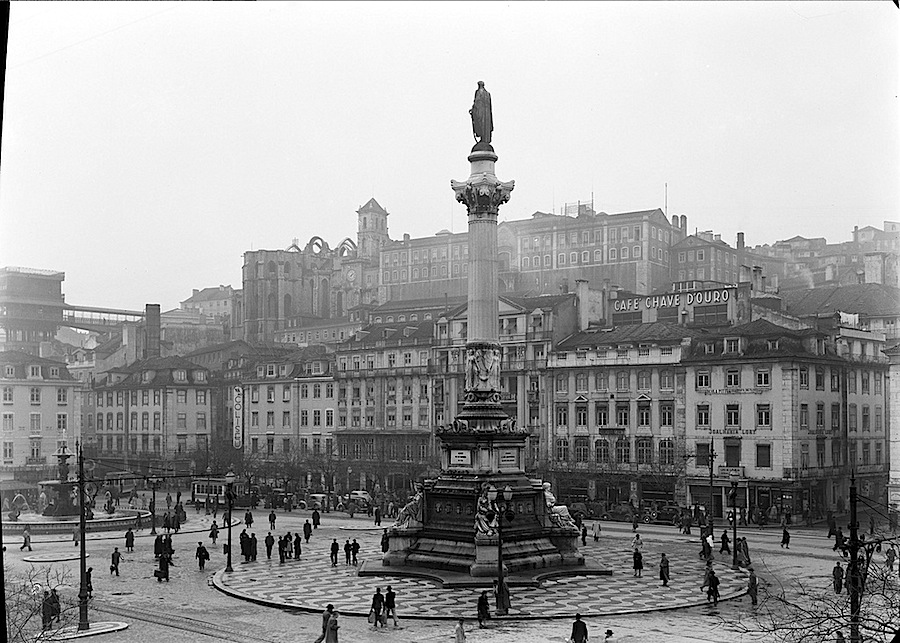
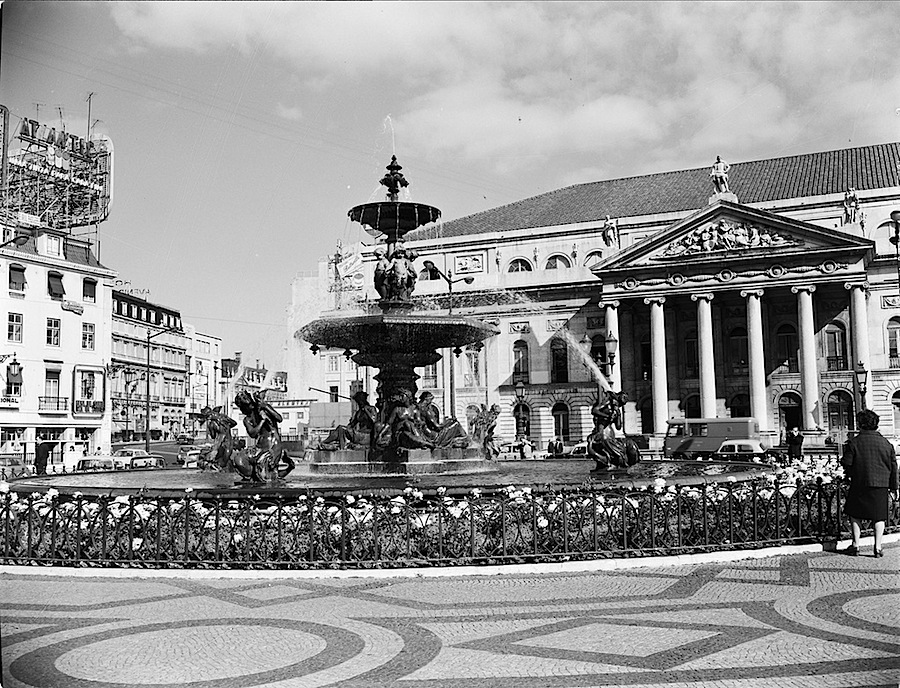 Rossio (or Pedro IV) Square, Lisbon, Portugal, ca. mid 20th c., by Estúdio Mário Novais, via Art Library of the Calouste Gulbenkian Foundation Commons on flickr (under CC license).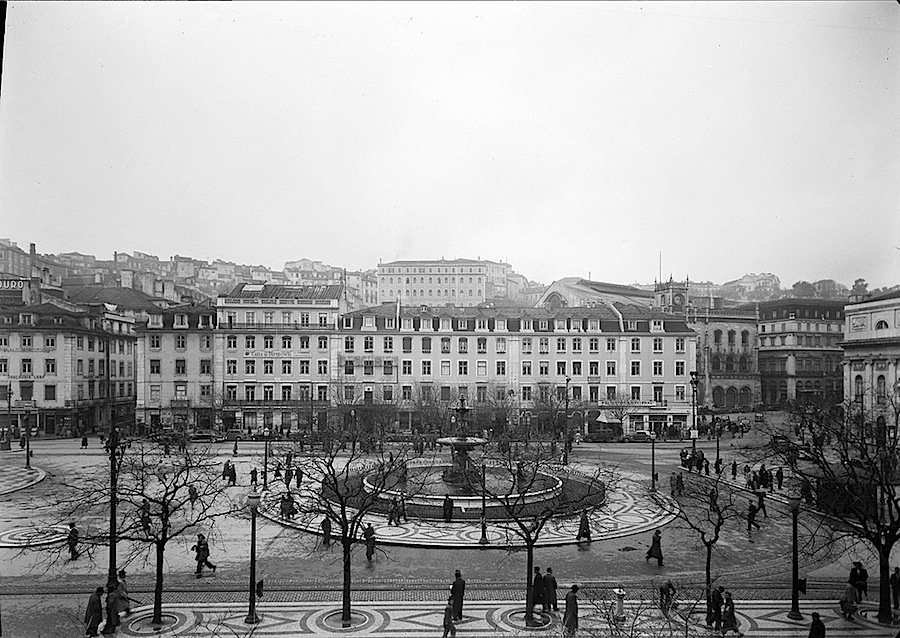


 enclos*ure