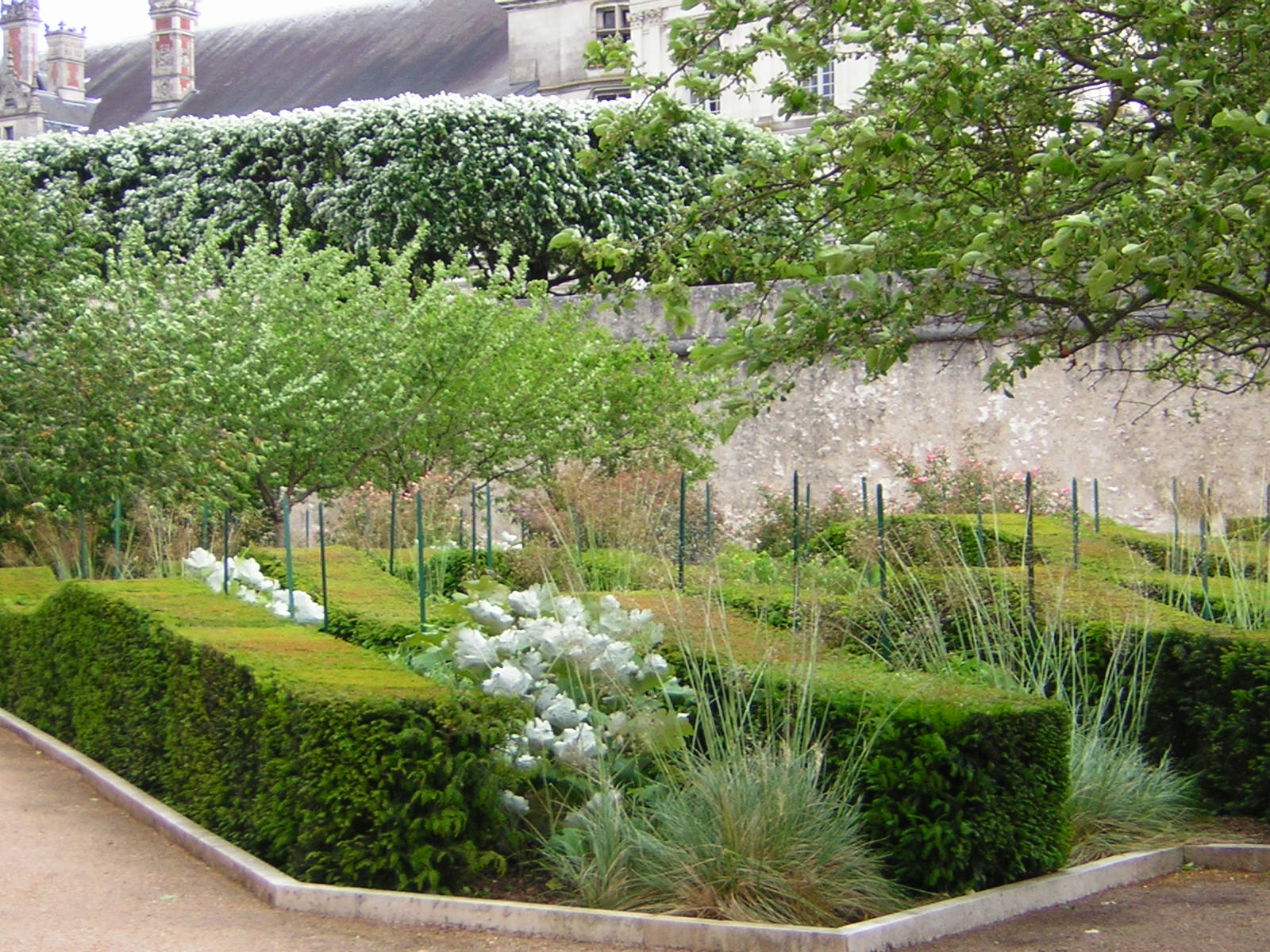
While transferring some old files to a new computer, I found these photos of a walled public garden near the château in Blois, France. I took them in the spring of 2007.
The garden was designed by Gilles Clément and was built in 1987. The section I photographed is a wonderful blend of the structured (hedges set in strict lines) and loose (grasses, large rosebushes, and tall perennials planted between).
The tops of the yew hedges are not level, but are sheared into rolling curves. With the grasses moving in the wind between them, you sense the motion of waves, even in this very formal garden layout.
I wish I knew the name of that grass.
You can read about Gilles Clément in a brief article from the February 2010 issue of Garden Design. He also designed the more well-known Moving Garden at the Parc André-Citroën in Paris.
Click on any thumbnail photo below to scroll through all the enlarged pictures.
The Royal Gardens, Blois. The central fountain.
I read that the garden sits over an underground car park.
I wish I knew the name of that grass. The hedges are yews.
From an upper garden section and with a view of the chateau in the distance.
The big rosebushes are Rosa mutabilis, if I remember correctly, which is such a great rose. I wish I had room for it.
Emerging plants. We were there in May.
An upper garden section with irises and grasses.
A view from the upper garden.
Another garden section with a more traditional park design.
I walked into Georgetown this morning and ended up at the Old Stone House garden, which is one of my favorites. I love the long, wide perennial bed on the east side, which has a path that takes you right up through the plantings and gives you a view from the inside. Continue reading “The garden at the Old Stone House”→
We arrived in Niamey, Niger, in August 2006. My husband worked at the U.S. Embassy there, and this house had been assigned to Embassy families for many years. It had always been much appreciated for its nice patio, flat rooftop (reached by spiral staircase), and large lawn for outside entertaining. However, by the time we took possession, there wasn’t much to the garden except grass.
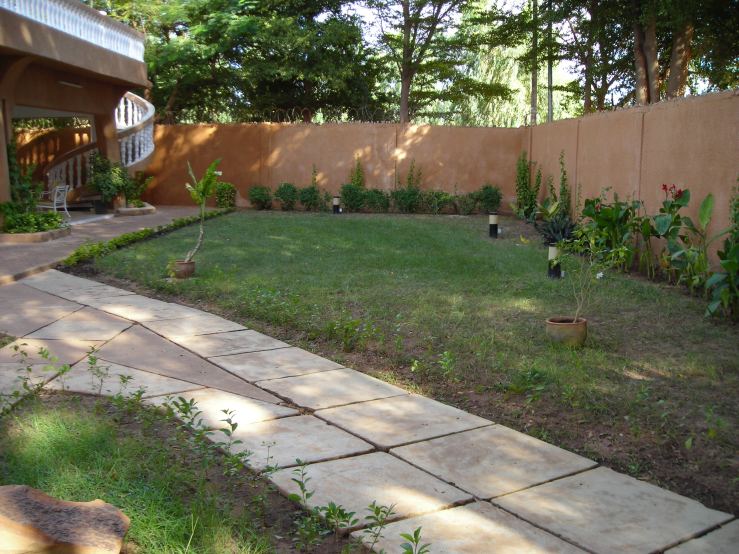
BEFORE: the side lawn
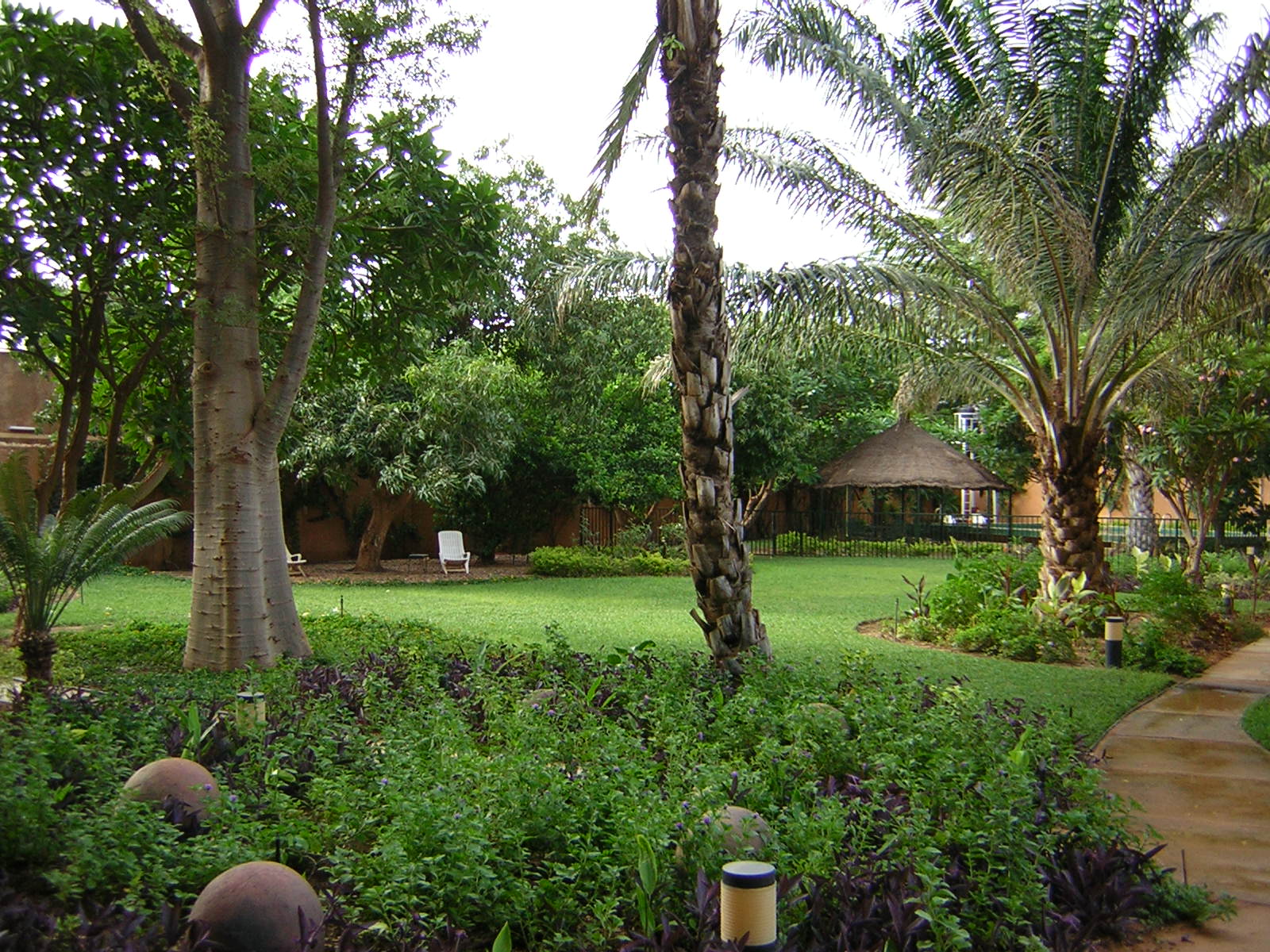
Very short, ragged hedges bordered the sidewalks that went around the house. You had to step over them to get on to the lawn. Most of the few other plants were lined up at the base of the front wall. The areas around the backdoor and the pool were bare dirt — except during the rainy season, when they turned to mud. On the plus side, however, there were mature palms, a baobab, mangoes, frangipanis, and some roses.
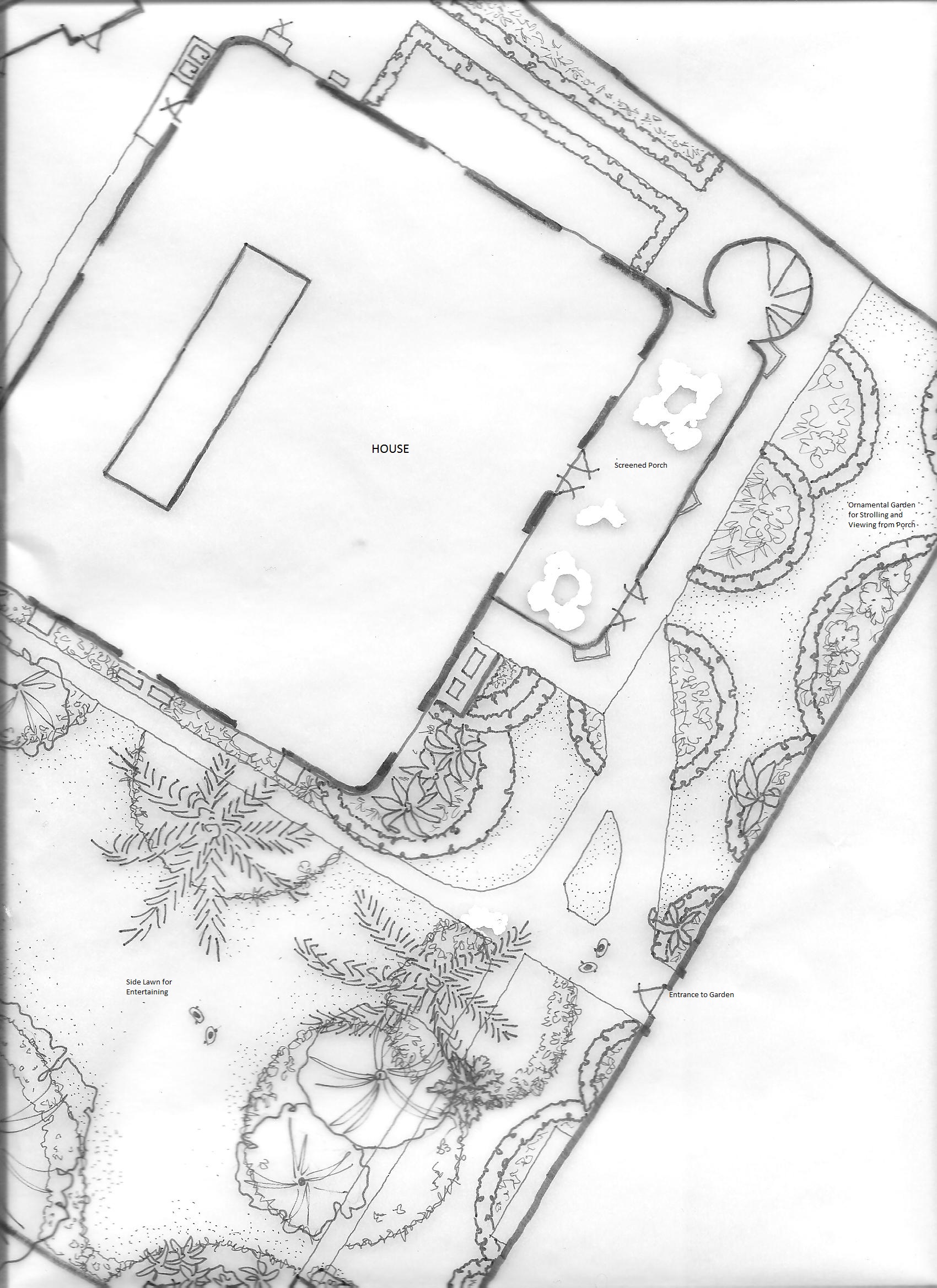
On the ground, I wanted curves to echo the circular outlines of the tops of the palms, the fanned out clusters of the frangipani leaves, and the spiral of a staircase leading up to the roof. I needed to link a small front garden (planned as an ornamental display of plants to be viewed while sitting on the patio), a large side lawn (an entertainment area for large groups), and a back fenced rectangular pool area. I played with various wavy planting bed shapes, but the various parts of the whole space weren’t merging smoothly.
Partial garden plan
Then I had a strange inspiration: I noticed the way the razor wire topping the 8 ft. walls looped round and round. This gave me a concept for form and organization. All the planting beds became loops — some circles, others a little more oval like a smushed roll of the wire. The loops overlapped, two or three in a set; the walls, walkways, and the house sliced through them. The loops were smaller in the front garden and got bigger as they led into the big side lawn. They passed through the open metal fence of the pool area, joining it to the lawn.
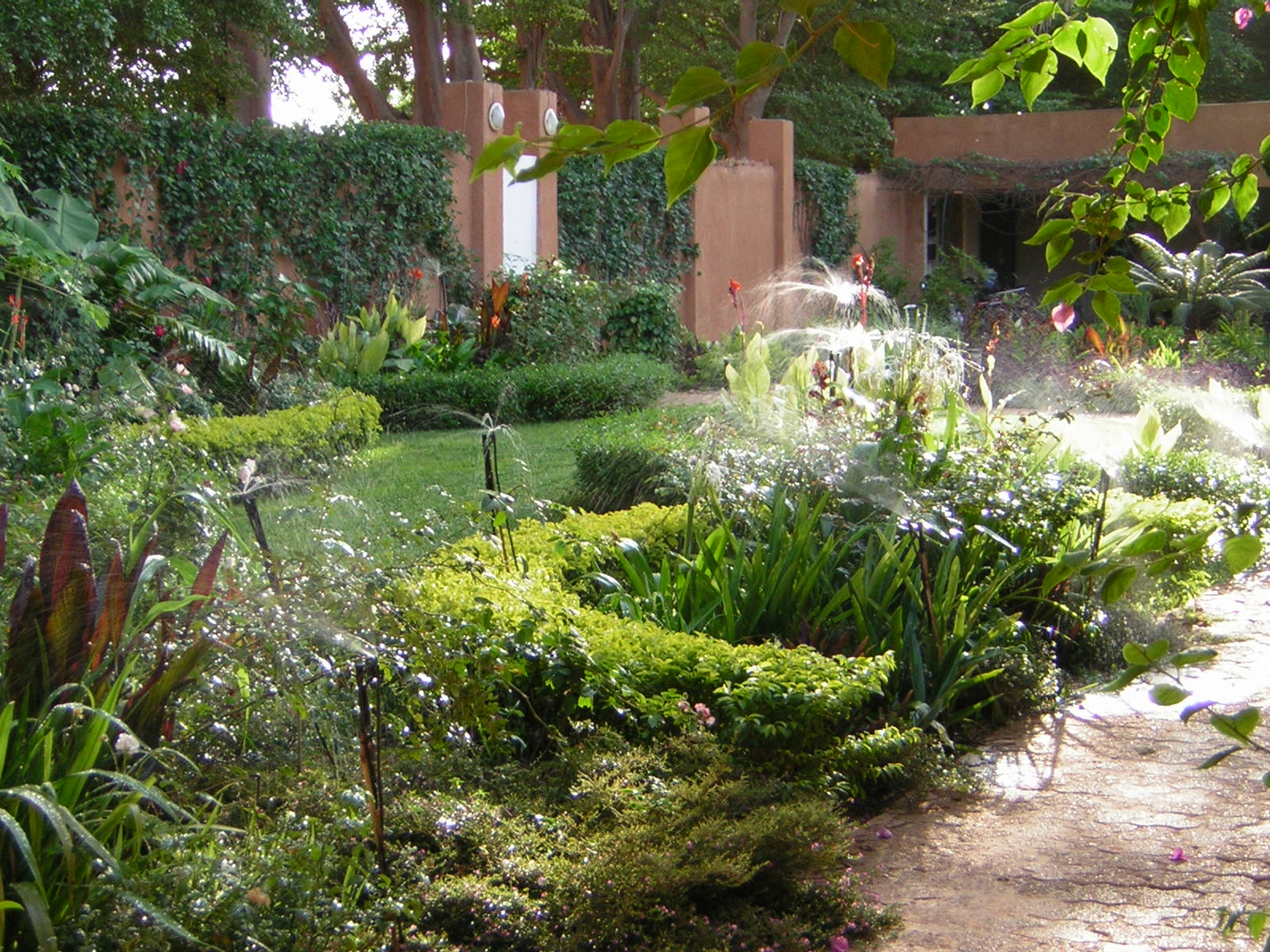
We rimmed all the edges of the smaller front beds with short hedges. Half the bushes had lime green leaves, half were darker, which set off the overlapping effect. We filled in the beds with a variety of tropical and temperate-climate flowers, as well as banana and papaya plants. The plantings in the larger circles on the side lawn were more freeform without hedges. Using the concept of loops of wire/flower beds, each area of the garden was defined, yet flowed into the other areas.
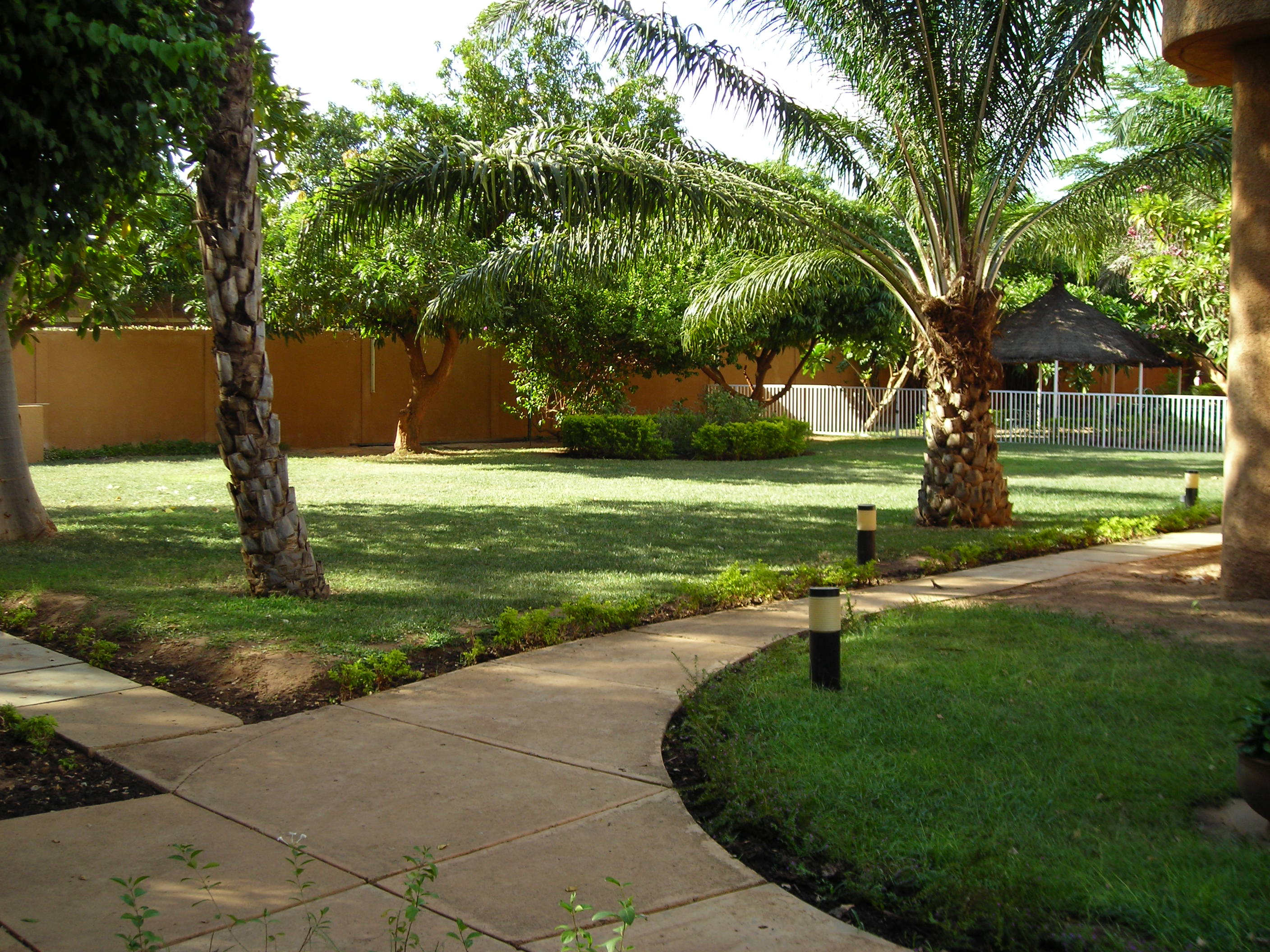
AFTER: early growth on the lawn
What my concept did not include, however, was a good plan for water, or rather the lack of it. It took a lot of watering to keep those beds looking lush (although much the same was true for the grass they replaced). We did let the grass and some of the bedding plants go brown at the height of the dry season and experimented with timed irrigation. Toward the end of our time there, I began to find more drought-resistant plants like agaves. (The local plant sellers farmed down at the river’s edge and generally catered to the expats’ desires for tropicals and for the flowers they knew from home, not to a need for dry-climate plants.)
AFTER: irrigating the front garden
If we had stayed longer, I would have consolidated the more water-greedy plants in the beds in the front garden and put more drought-resistant plants and maybe some gravel in the side lawn beds.
Click on the first photo below to scroll through a series of pictures of the garden. The time difference between BEFORE and AFTER was about 20 months. We lived in this country for 2 years.
BEFORE: the side lawn
BEFORE: the front garden
SOON AFTER: the lawn. The round ornaments in the left foreground are large local water pots buried bottom-side up.





 enclos*ure