Life in gardens: Ivy Cottage

E. von Seutter photo, 1869, Jackson, MS, via MS Department of Archives and HistoryThe garden of Ivy Cottage, residence of Elisaeus von Seutter, in Jackson, Mississippi,  via the E. von Seutter Photograph Collection of the Mississippi Department of Archives and History (MDAH) Commons on flickr.

Elisaeus, the youngest son of German aristocrats, emigrated to  New Orleans in 1848, hoping to explore the American west.  However, after a series of false starts, he ended up in Raymond, Mississippi, where he trained as a jeweler and later opened a successful jewelry shop.  He then travelled to Austria to marry and bring back an old love, Julia Hoch.

The von Seutters lost most of their business and property in Raymond after the Civil War.  They moved to Jackson for a fresh start, and Elisaeus built a two-story building for his new jewelry/watchmaking shop and photography studio.

He also built Ivy Cottage on North State Street, and the couple created an impressive garden there.

The above photo is dated c. 1869 by the MDAH, but that seems unlikely, as the house was only just completed at that time.  It may have been taken in the late 1870s or early 1880s.  From eight births, the von Seutters had only three children who lived past age eleven: Armine, b. 1854; Edward, b. 1860; and Carl, b. 1866.  The photo may show Julia standing with the youngest son and one of the older boys in the background.

MDAH’s E. von Seutter collection has 35 stereocards and 48 photographs of post-Civil War Jackson assembled by the von Seutter family. Most were taken by Elisaeus and his son, Armine.

There are more Ivy Cottage photos here.

Life in gardens: many pretty devises

Embroidering in the garden, via British Library“Ladies seated at their embroidery, including one engaged in lace-making, and another at the virginal, with a man beside her singing. Behind, a formal garden, with clipped hedges, parterres, and fountain.”  

The image  is from the Album Amicorum of Gervasius Fabricius, 1603-1637, (Würzburg and Salzburg) via The British Library Commons on flickr.

It’s hard to see how any of them could work over their ruffs.

Now for women instead of laborious studies, they have curious Needle-workes, Cut-workes, spinning, bone-lace, and many pretty devises of their own making, to adorne their houses, Cushions, Carpets, Chairs, Stooles, confections, conserves, distillations, etc. which they shew to strangers. . . . This they have to busie themselves about, household offices, etc. neate gardens full of exotick, versicoloure, diversely varied, sweet smelling flowers, and plants, in all kindes, which they are most ambitious to get, curious to preserve and keepe, proud to possesse, and much many times to bragge of.

Robert Burton, Anatomy of Melancholy, 1621

Life in gardens: Vancouver

This slideshow requires JavaScript.

Outdoor tea in North Vancouver, British Columbia, 1906, by Philip Timms, via the Vancouver Public Library Commons on flickr.

It takes a long time to grow an old friend.
― John Leonard

Glencar, Ireland

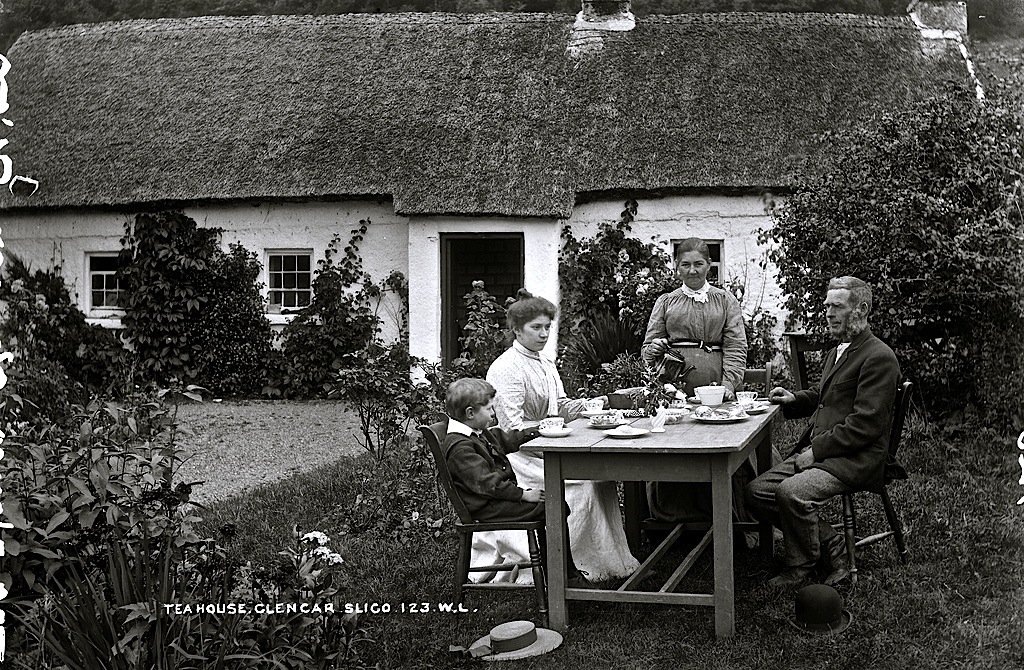
Tea House in Leitrim, Ireland via Nat'l. Library of Ireland, flickr Commons“[H]aving scones, butter and jam at the Glencar Tea House, Co. Leitrim (despite the fact that it says Sligo on the glass negative),” c. 1900, photographer not noted, via National Library of Ireland Commons on flickr.

A commenter on the flickr page pointed out that, from their looks, the two women might be mother and daughter, and, therefore, this could have been a publicity shot for the family’s tea house.

The women in the picture below may have been actual customers.

Glencar Tea House, c. 1890, Nat'l. Library of Ireland Commons on flickr“Tea House, Glencar, Co. Leitrim, circa 1890,” by Robert French, chief photographer of William Lawrence Photographic Studios of Dublin.

From the clothes and the way the vines are growing on the house, this photo appears to have been taken at almost the same time as the one above.  The mother from the top picture seems to be carrying the plate of scones here.

I wonder if the group being served was a ladies walking club who had been to see the Glencar waterfall, a local attraction?

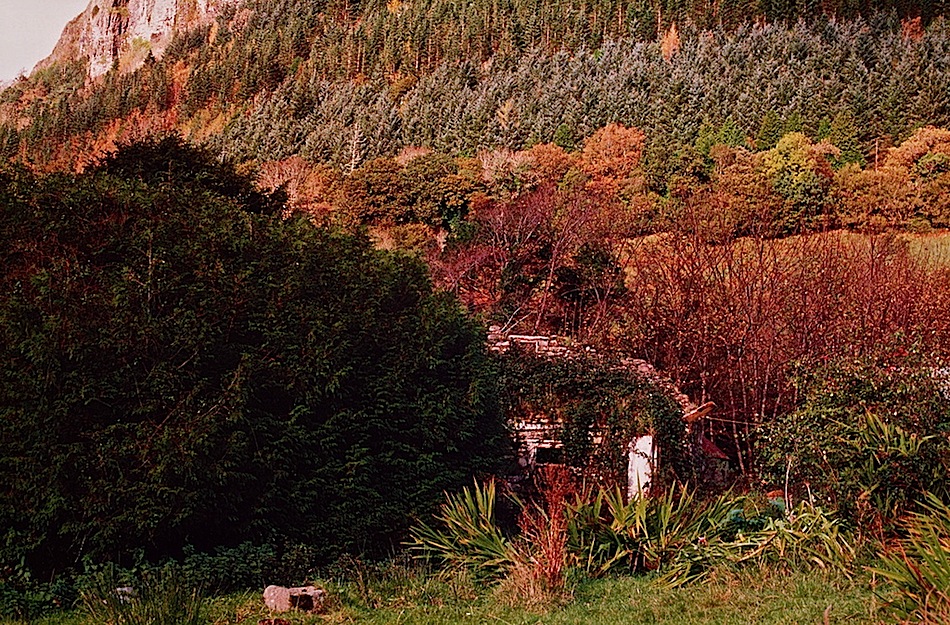
c. 1990 site of Glencar Tea House, via Nat'l. Library of Ireland Commons on flickr“Tea House, Glencar, Co. Leitrim, 1990,” by Mary Guckian for the Lawrence Photographic Project 1990/1991.

For the Project, volunteer photographers documented the sites of 1,000 100-year old photographs in the Lawrence Collection of the National Library of Ireland, “thereby creating a record of the changing face of the selected locations all over Ireland.”

For this picture, Guckian noted that a house on the site was “in  use until 1970s — Family Siberry not interested in re-opening at present, despite suggestions from local councillor that cottage be re-built in former style.”

You can read more about the Lawrence Photographic Project here.

Happy St. Patrick’s Day!

There’s an Isle, a green Isle, set in the sea,
Here’s to the Saint that blessed it!
And here’s to the billows wild and free
That for centuries have caressed it!

— Jean Blewett, from “St. Patrick’s Day


*All three photos here via National Library of Ireland Commons on flickr.

The Sunday porch: Oxford, Ohio

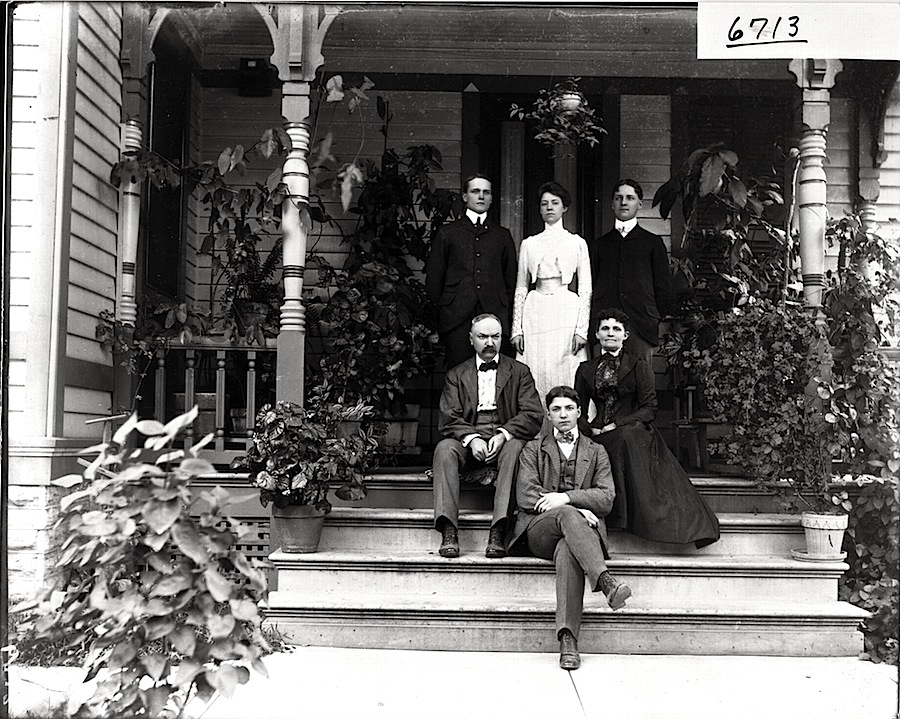
The Flower family, probably in Ohio, ca. 1905, via Miami University Libraries Commons on flickr“Flower family on porch, ca. 1905,” by Frank R. Snyder, via Miami University Libraries Commons on flickr.

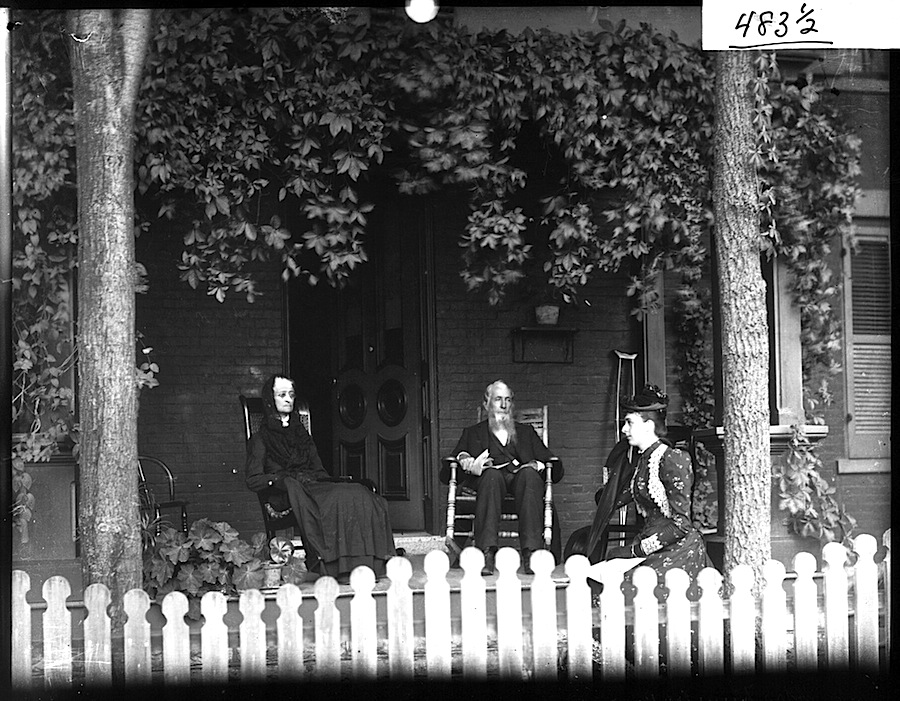
Impressive porch foliage . . . and in the photo below, by the same photographer.

Mrs. C.E. Kumler family on front porch, by Frank Snyder, via Miami University Libraries Commons on flickr“Mrs. C. E. Kumler family on front porch, not dated,” also by Frank R. Snyder, via Miami University Libraries Commons on flickr.

Snyder was a successful photographer working in Oxford, Ohio, in the early 20th century.  After his death in 1958, his family donated his archive of 4,000 negatives to Miami University.

Garden Bloggers’ Foliage Follow Up is the 16th of every month. Check out more beautiful leaves at Digging.