We crossed over to the right bank, and I saw this graffiti alongside the Louvre.
‘Regarde le ciel’ (look at the sky) is a rather common sight in Paris, as I learned from a Google search. I could not find the origin of this street art, but I thought it might refer to a song by Cortezia, which excoriates airplanes. (Apparently, Cortezia does not tour far from home.)
However, there seems to be a Romanian connection, as another common version of the graffiti is ‘priveste cerul,’ (look at the sky in Romanian).
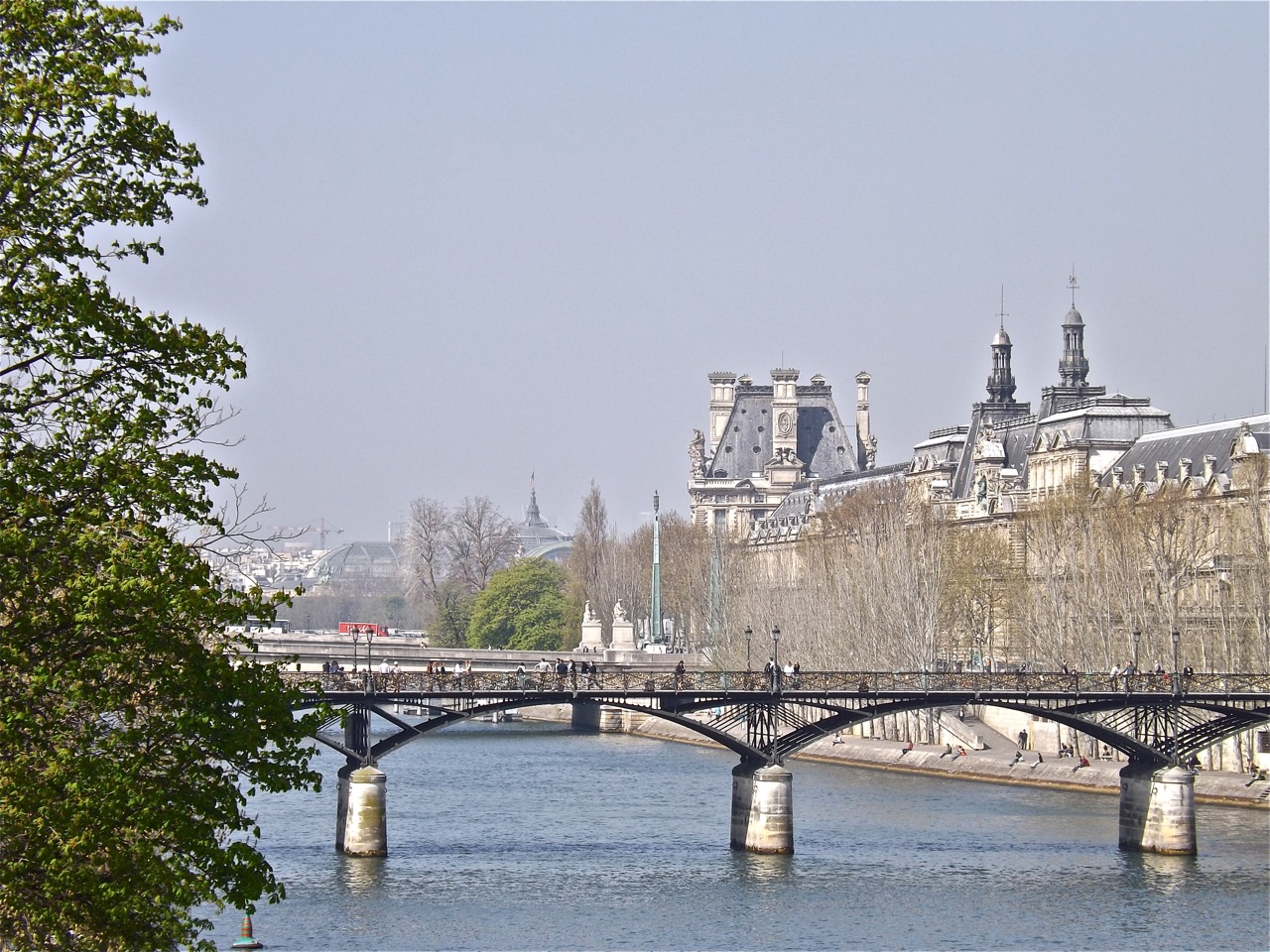
At any rate, the sky was just about perfect, as you can see from this photo of the Passerelle des Arts. If you click and enlarge it, you can see how the bridge glitters from hundreds of padlocks or ‘lovelocks’ (we also saw the beginning of this fad on a pedestrian bridge in Lyon).
Since this was Paris, I probably should throw in a restaurant recommendation. We ate dinner that night at the wonderful Café Constant, which is owned by “Top Chef” jury member Christian Constant. Located at 135, rue Saint Dominique, in the neighborhood near the Eiffel Tower, it is the first in a row of three restaurants owned by Constant, each a little more expensive (we were in the least expensive and most casual). The café doesn’t take reservations, so go early for lunch or dinner.
If you would like to see and read more about living in Rwanda, check out the charming blog A Year+ in Kigali, Rwanda by Helaina. I particularly liked her posts here (about the language) and here (culture) and here (food).
Her photo of this female mountain gorilla is one of the best that I have seen. (And, living here, I’ve seen quite a few.)
Also, here’s something I just found out: the smallest waterlily in the world, Nymphaea thermarum, was native to the hot springs of Mushyuza in southwest Rwanda. Unfortunately, it has not existed in the wild since 2008, when its habitat was disrupted by farming. However, in 2010, a scientist at Kew Royal Botanic Gardens was finally able to germinate its seeds (there were only 20 left). Its flowers, which are only about 1/4″ (less than 1 cm.) in diameter, are white/lavender with yellow stamens.
I have been looking at vintage garden photos from the online catalog of the Library of Congress. These two — of 1943 victory gardens in northwest and southeast Washington, D.C. — are really charming.
This couple is heading home from their plot with their sailor whites still looking clean and sharp.
“Washington, D.C. Victory garden in the Northwest section,” 1943, by Louise Rosskam. Via Library of Congress Prints and Photographs Division (all photos here).
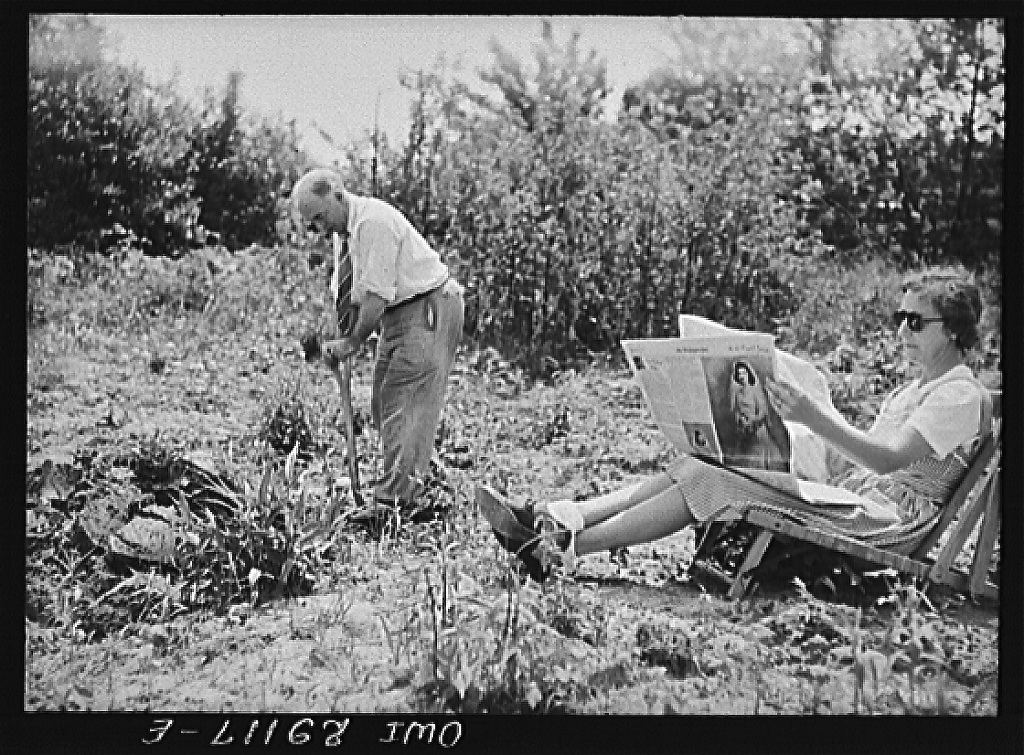
Below, Mrs. Carr seems to be present for moral support only, or perhaps she will take the next shift with the shovel.
“Washington, D.C. Leslie Edward Carr of the British Purchasing Commission with his wife at their victory garden on Fairlawn Ave., Southeast,” June 1943, by Joseph A. Horne.
Louise Rosskam, who took the first photo above, was “one of the elusive pioneers of what has been called the golden age of documentary photography.” She took a number of pictures of the same group of northwest D.C. victory gardens in the spring of 1943. (Click on any of the photos to enlarge.)
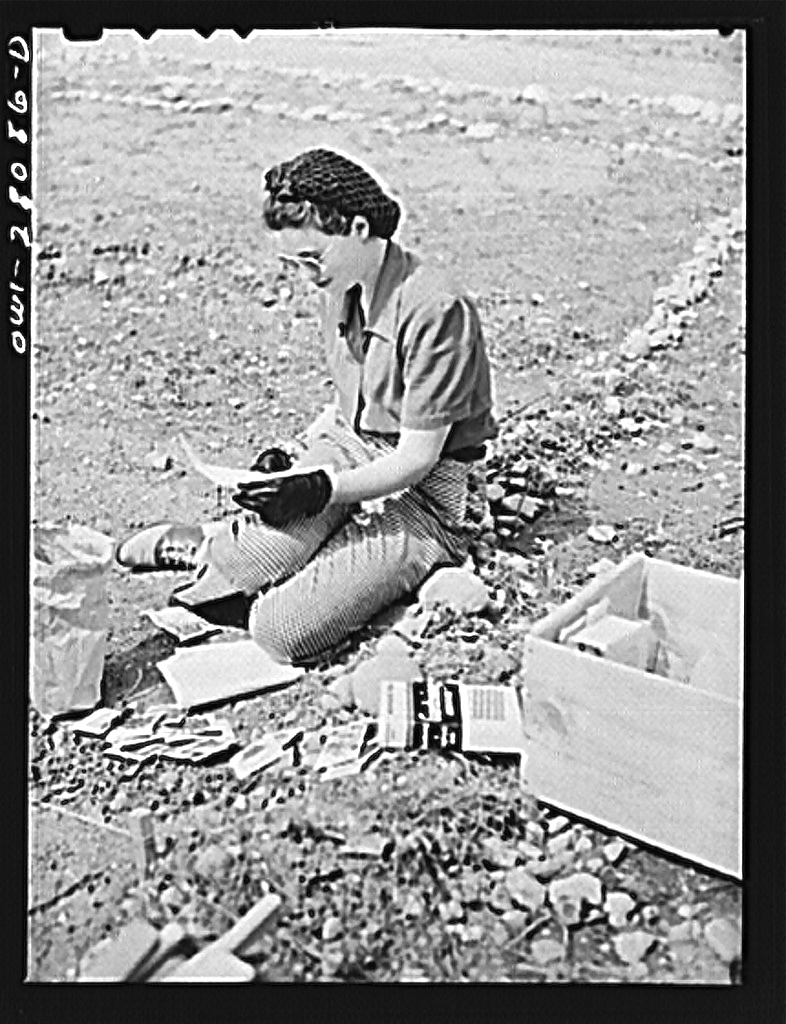
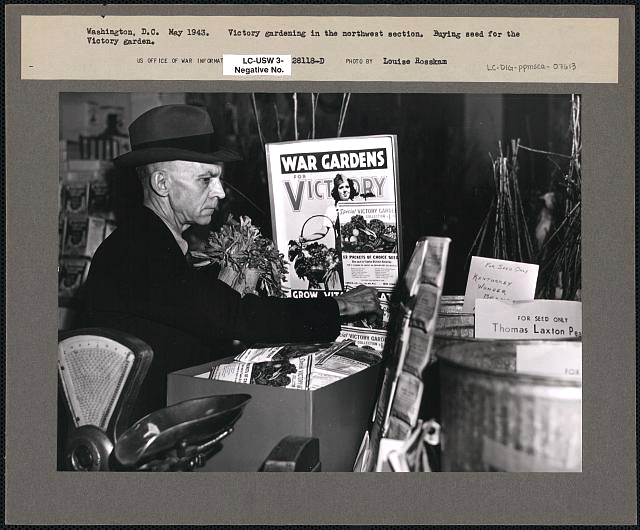
I believe this is the couple in the first photo above.Apartment buildings in the background.Another couple working. I love her high-waisted, wide-leg white pants.This lady also looks great in black gloves and snood and sunglasses.The individual plots were outlined with field rocks.Another gardener heading home by the same fence opening.Buying victory garden supplies.
All the photos above (except that of the Carrs) are by Louise Rosskam, via the Prints and Photographs Division of the Library of Congress.
I believe these garden plots were in the neighborhood of Glover Park, where we have a house. According to the Glover Park Citizens Association, it established the first World War II victory garden in the city, at 42nd and Tunlaw Road. It still exists today as a community garden. (Alternatively, they may be of the Tilden victory gardens at Connecticut Avenue and Tilden Street, which Rosskam also photographed.)
This is a link to a short film made in the forties about how to prepare, plant, and harvest a 1/4 acre victory garden. It features a rural northern Maryland family and is an interesting look at home gardening advice and practices of the time.
Photo by Russell Lee. Prints and Photographs Division, Library of Congress.
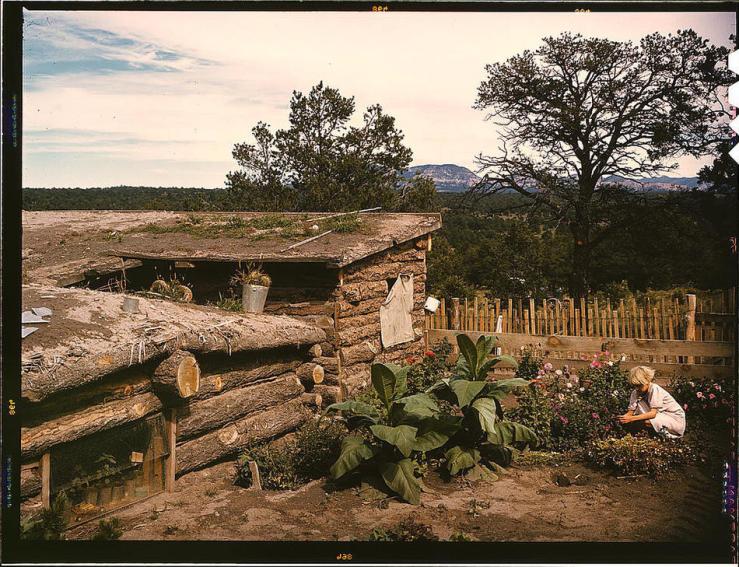
This photo of a homesteader’s garden in Pie Town, New Mexico, September 1940, was taken by Russell Lee, a photographer of the Farm Security Administration/Office of War Information. It was part of a 2006 Library of Congress exhibition of early color images taken between 1939 and 1943, “Bound for Glory: America in Color.” Thanks to links by Studio G and The Denver Post.
Click this link to see a larger version or to buy a print. Click here to see another view of the same homesteader’s garden.
Tea growing around Kinihira, Rwanda. Tea plantations are traditionally called ‘tea gardens.’
In late December, we were included in a Christmas season lunch at the home of the Director General of Sorwathe and his wife. Sorwathe is the Société Rwandais de Thé or, in English, the Rwanda Tea Company, and is located about 70 kms. north of Kigali.
Before the meal, we had a chance to tour the factory, which is the largest in Rwanda and produces over 6 million lbs. of made tea annually, almost all of it for export.
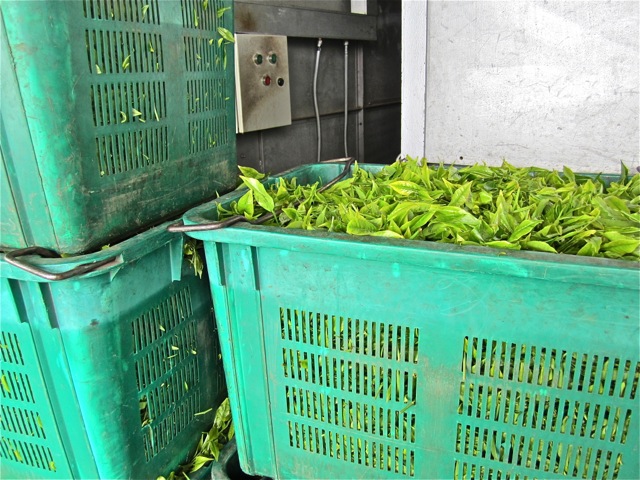
Fresh tea leaves about to go to the withering process, where they will lose excess moisture. The leaves have no scent while fresh.
Sorwathe was founded in 1975 by American Joe Wertheim. It remains 85% owned by Mr. Wertheim’s Connecticut-based company, Tea Importers, Inc. It cultivates 650 acres, mostly in drained swampland (marais). Click here to see some really nice photos of their tea gardens.
After coffee, tea is Rwanda’s most important export. Tea cultivation began here in 1952, and Sorwathe was the first private factory. Although the factory sustained serious damage during the genocide, it was also one of the first to reopen in the aftermath.
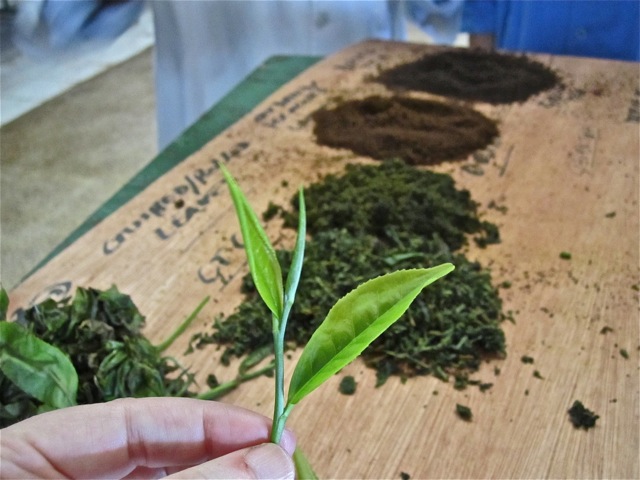
The stages of black tea processing. Only the terminal bud and 2 young leaves are plucked from the bush.These beautiful sacks will take most of the withered tea to the cutting stage, after which it will become green or black tea, depending on how long it is oxidized. Orthodox tea is not cut, but rolled whole leaf, which gives it a more nuanced flavor.The chopped tea is a vivid green.
Sorwarthe was the first tea factory in Rwanda to obtain ISO 9001:2000, ISO 22000:2005, and Fair Trade certification. It is also a participant in the Ethical Tea Partnership. The company was the first to manufacture orthodox (rolled, whole leaf) and green teas (also white). (They will proudly tell you that they export green tea to China.) It is also the first to start organic tea cultivation in Rwanda.
Sorwarthe creates 3,000 job opportunities for the surrounding Kinihira community. It also supports the local tea growers’ cooperative, ASSOPTHE.
[UPDATE: The U.S. State Department presented its 2012 Award for Corporate Excellence to Tea Importers, Inc., and SORWATHE, in recognition of their commitment to social responsibility, innovation, and human values. The award is given annually to two American businesses abroad.]
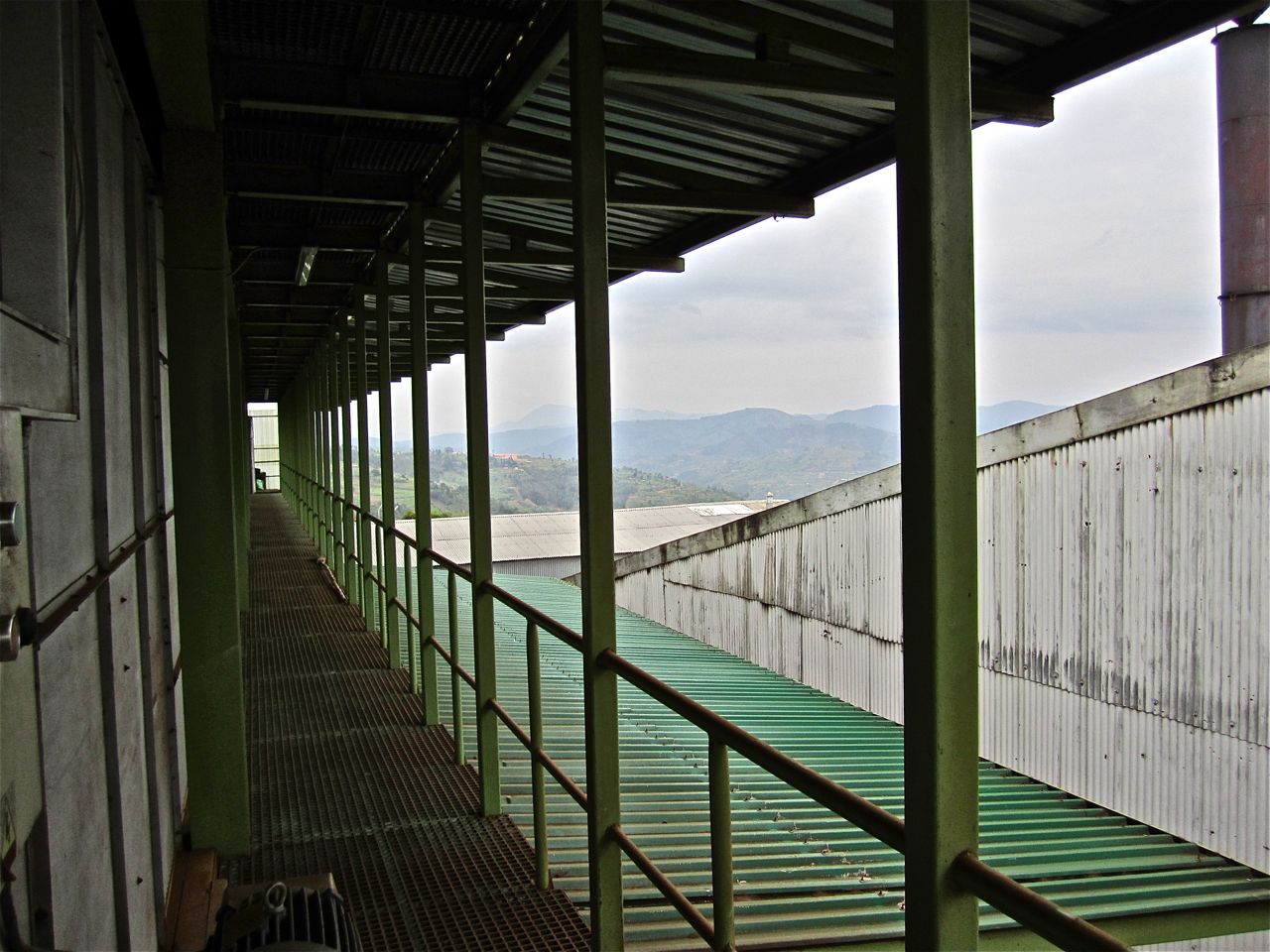
The factory’s buildings are detailed in shades of green, and its surroundings are friendly and sometimes rather whimsical.
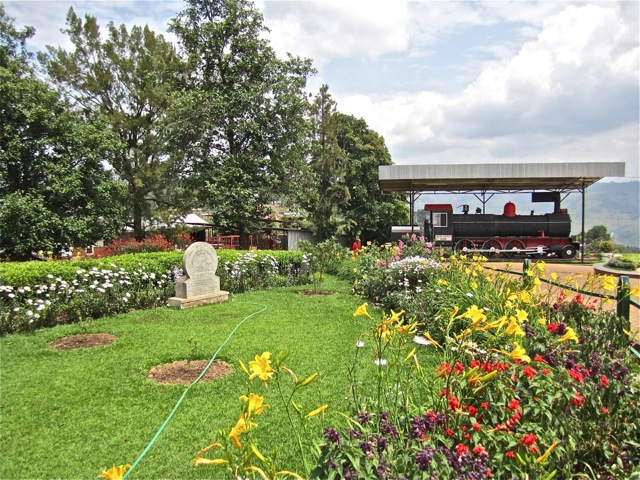
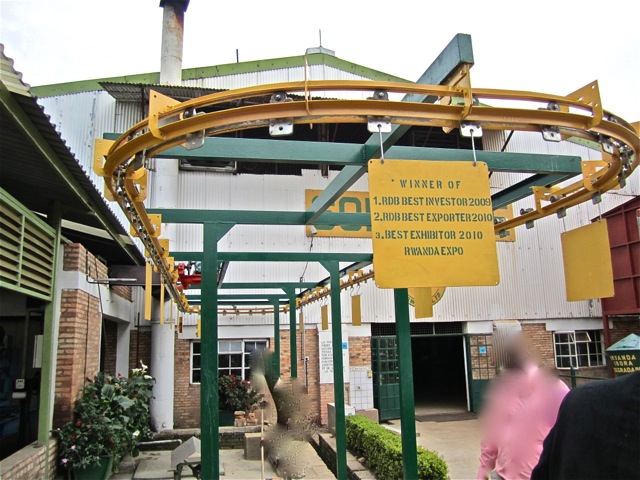
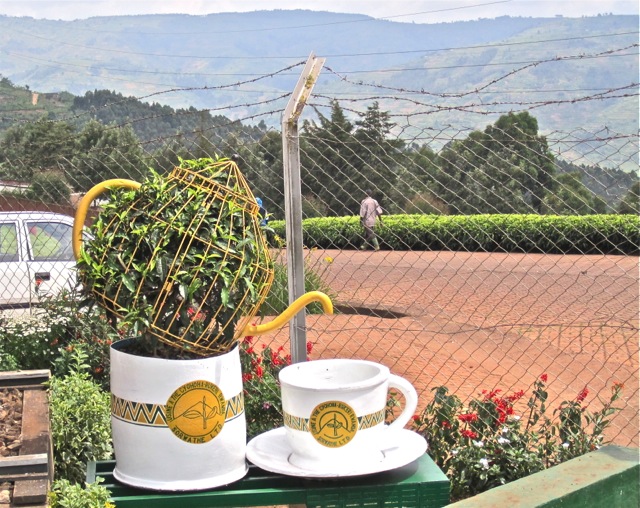
In the early days of the factory, old railroad steam engines were brought in to provide heat for the tea dryers (used after oxidation). To celebrate the 30th anniversary of Sorwathe in 2005, a 1920’s steam locomotive of the East Africa Railway Company was restored in Nairobi and installed in the factory garden.The company’s accomplishments are displayed on a sort of merry-go-round at the entrance.Sorwathe was an early large donor to the construction of Rwanda’s national public library, now almost complete.A topiary teapot at the entrance to the factory.The factory has beautiful views. In clearer weather, the Virunga volcanoes are visible.
You can order Rukeri Tea, Sorwathe’s garden mark, from Tea Importers’ website. The company also runs a guest house next to its factory.
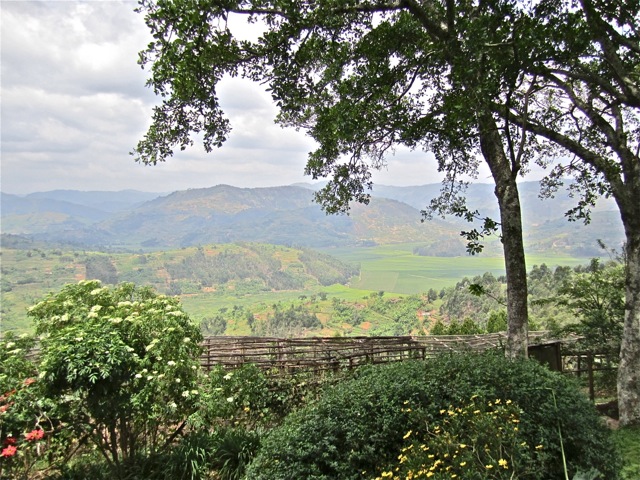
Our lunch was eaten on the patio of the couple’s house, which overlooks their lovely garden and a knockout view of the tea gardens in the valley below.
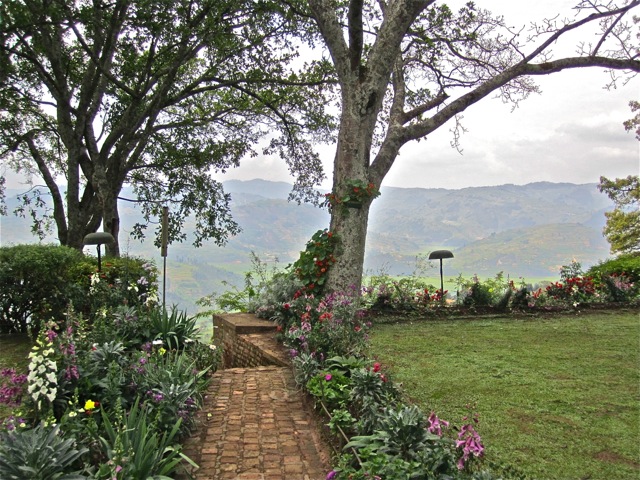
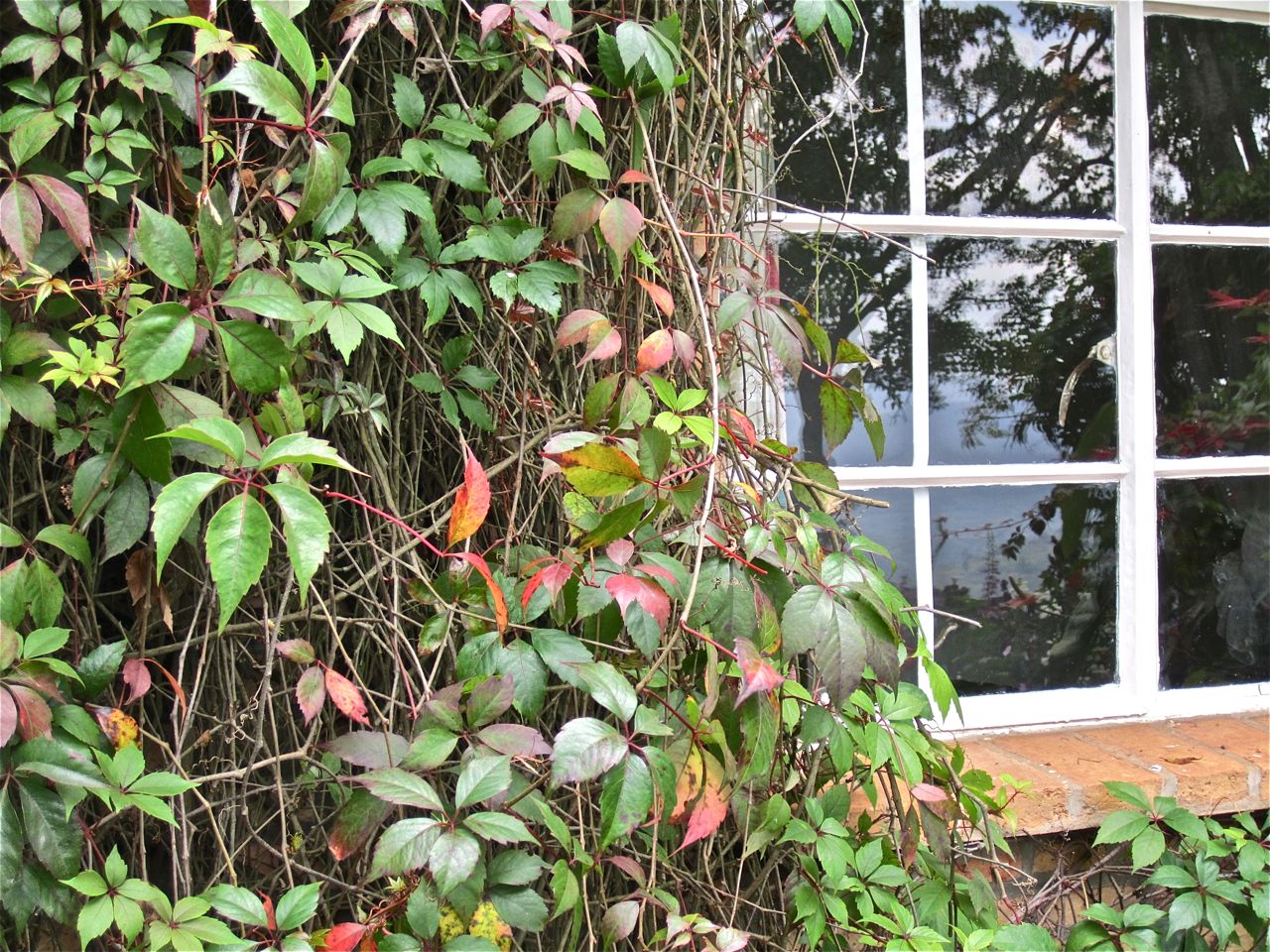
Cottage garden flowers and tea fields.Foxglove and stock are among the old-fashioned annuals in the garden.The tea fields and hills beyond a shaded garden.Virginia creeper vines on the house.The trees in the foreground are Ficus sycomorus or sycamore fig. They are native to much of central Africa and parts of the Middle East.
If you live in U.S. zone 7 or higher, you can try growing tea bushes (Camellia sinensis) at home. The plants like soil a little on the acid side and are drought tolerant. Pests can be treated with horticultural oil. If left unpruned, the plants will grow into small trees. You can buy them from Camellia Forest Nursery in Chapel Hill, N.C.

















 enclos*ure