Vintage landscape: comfort and joy

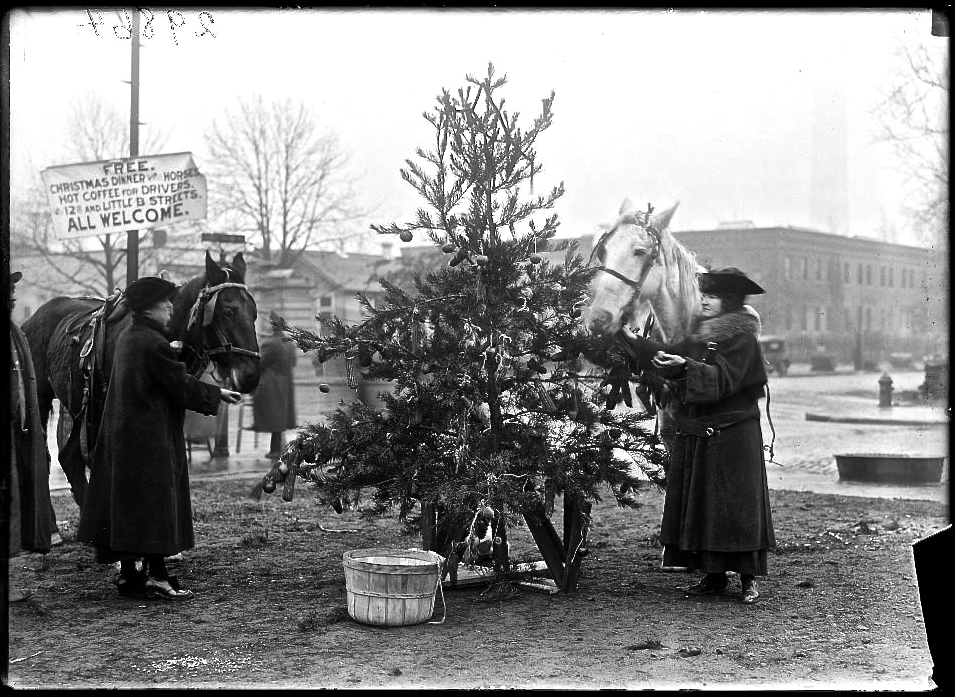
horse xmas tree 1918

In the first decades of the 20th century, horses toiled to move almost everyone and everything around the city of Washington, D.C.   But one December day a year, for several years at least, they were rewarded with Christmas trees hung with apples and corn and accompanied by troughs of grain.

“Christmas Tree for Horses” was sponsored by the Washington Animal Rescue League.  The 1918 gathering, shown in the photo above, took place at 12th and Little B Streets — the current site of the IRS offices at 12th St. and Constitution Ave., N.W.,  just south of the Old Post Office.  A 1909 map of the area shows a “Horse Fountain” at 11th and Little B Streets.

These holiday horse dinners also took place in other American cities in the early 20th century.

The photos below show the 1923 event in front of the League’s O Street, N.W., offices.
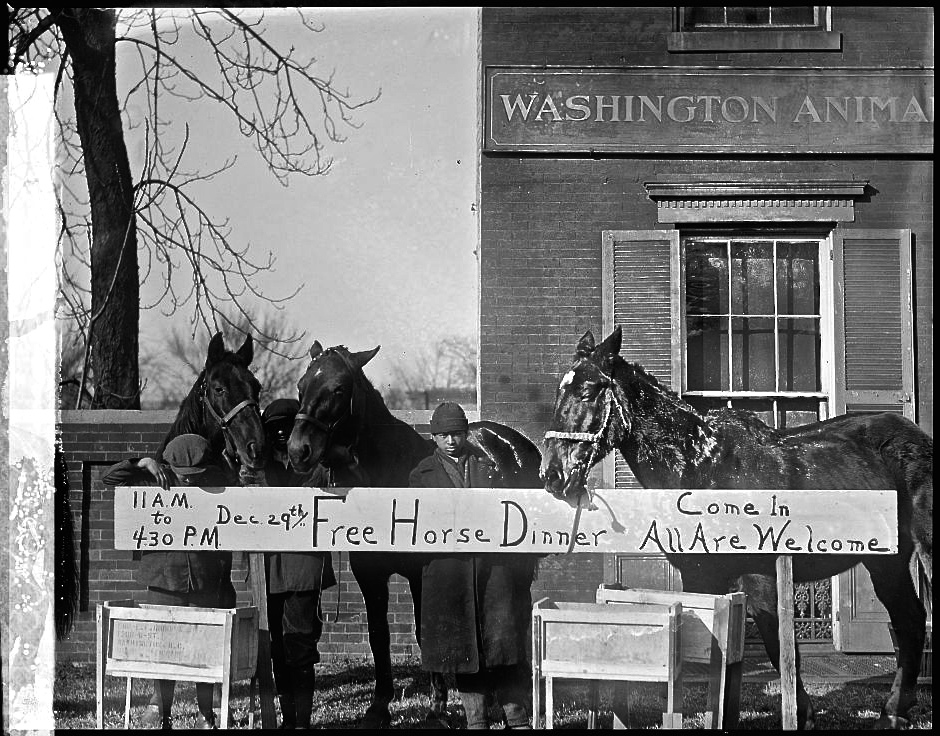
1923-1

The League was founded in 1914 and is the oldest animal shelter in Washington, D.C.  It is now located at 71 Oglethorpe Street, N.W.  (You can find out how to make a donation here.)
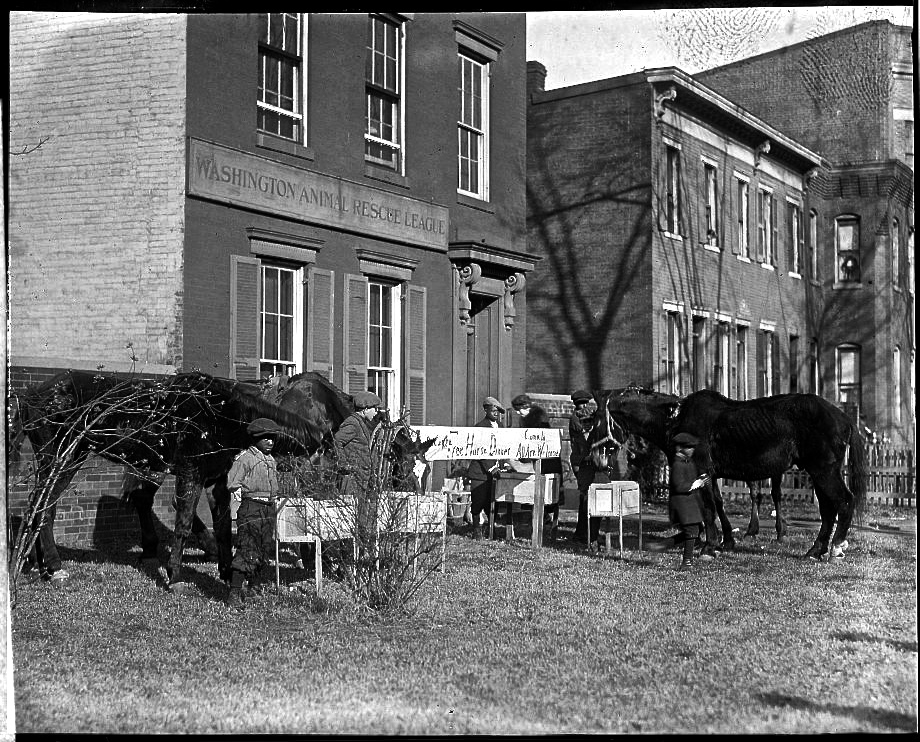
1923 -2

Another kind of antique seasonal cheer comes via this postal service truck liberally festooned with greenery.
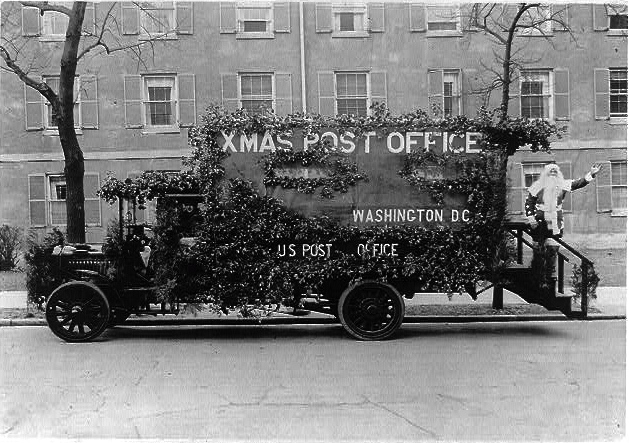
mobile post office, LoC

In early December of 1921, it drove around Washington urging residents to mail their Christmas packages early.

All photos via the Library of Congress Prints and Photographs Division.  The three photos  just above  are from the National Photo Company Collection.  The top photo is by Harris & Ewing.
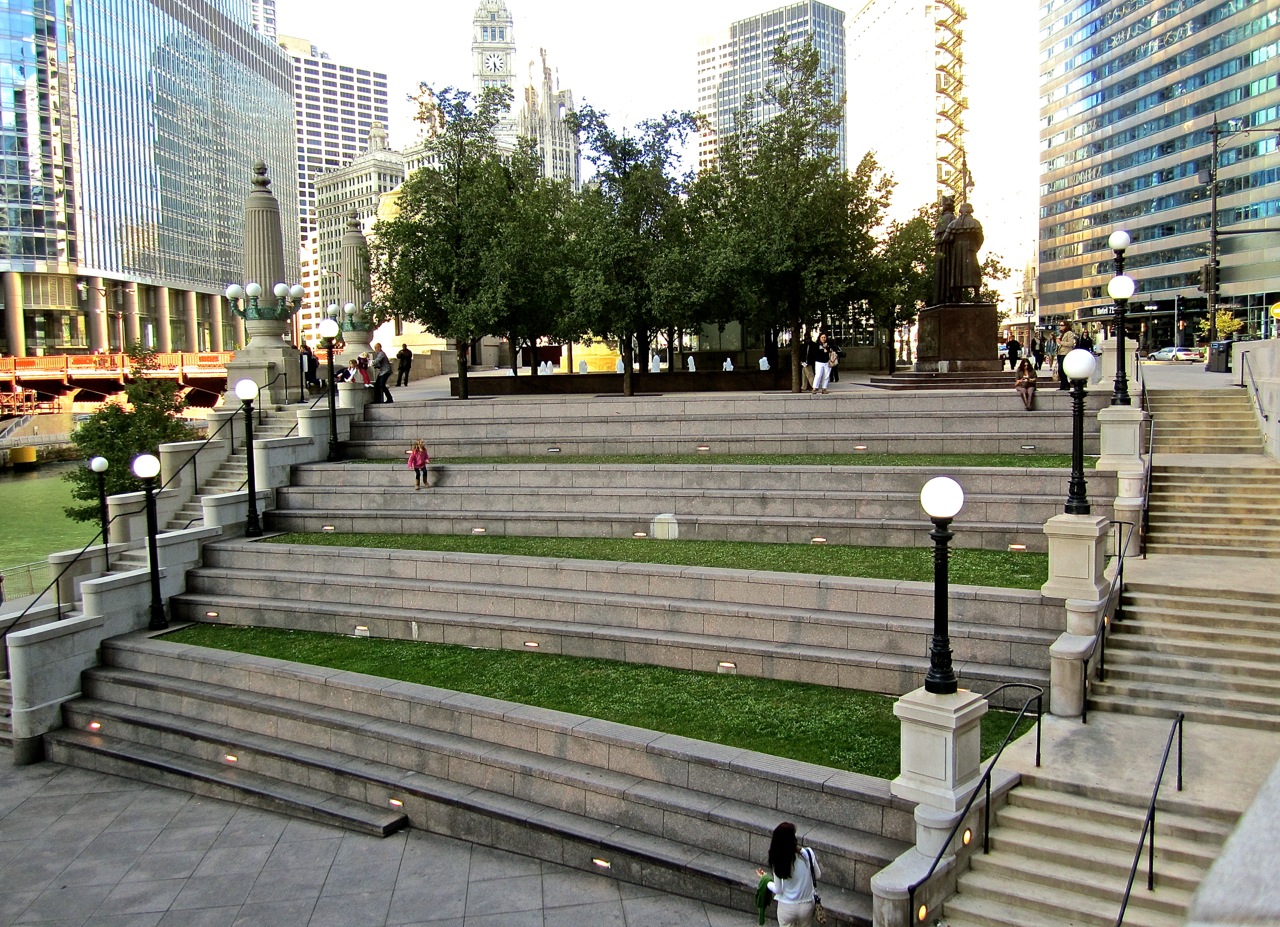
A study in steps (and more) in Chicago

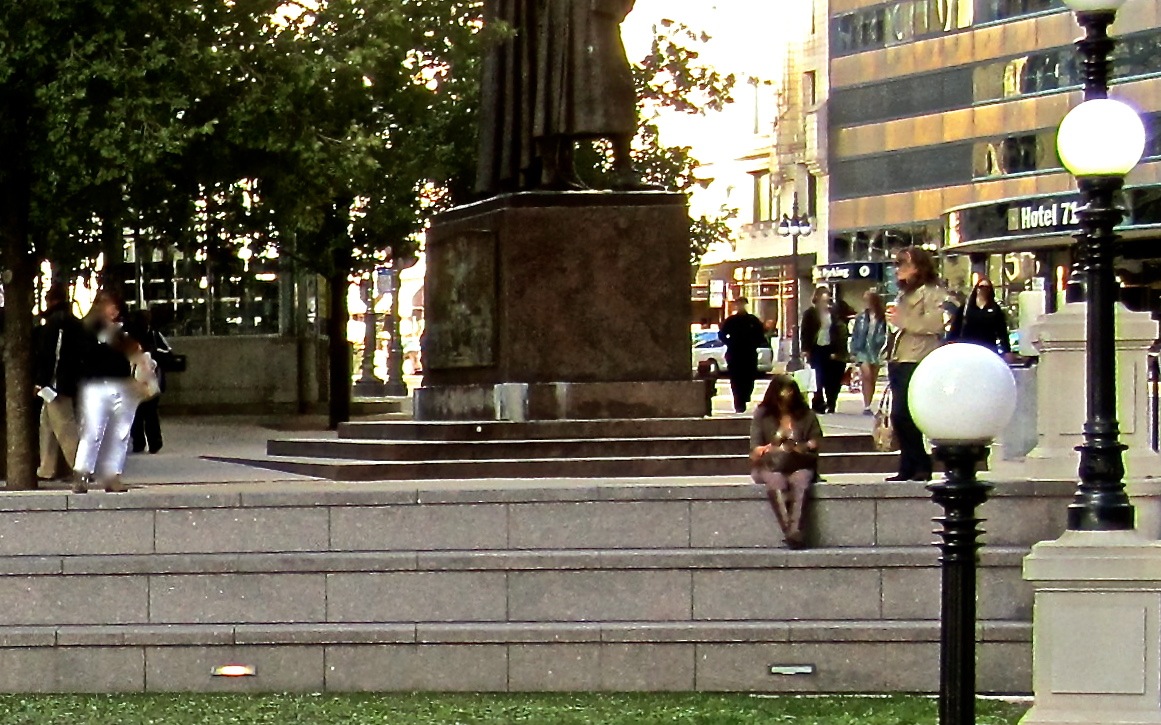
In September, we spent a weekend in Chicago.  These steps are located in its downtown, along the south side of the Chicago River.  Each rise is about 18.”

It was near here that I tripped on a single step off the sidewalk. My poor little camera took most of the force, but  happily still works.

Remember — all landscape design students say it with me — “a single step is a tripping hazard.” (I’ve personally proved it many times.)

The Chicago River, with its Riverwalk,  is the best landscape in the city.  I think the skyscrapers are thrilling.

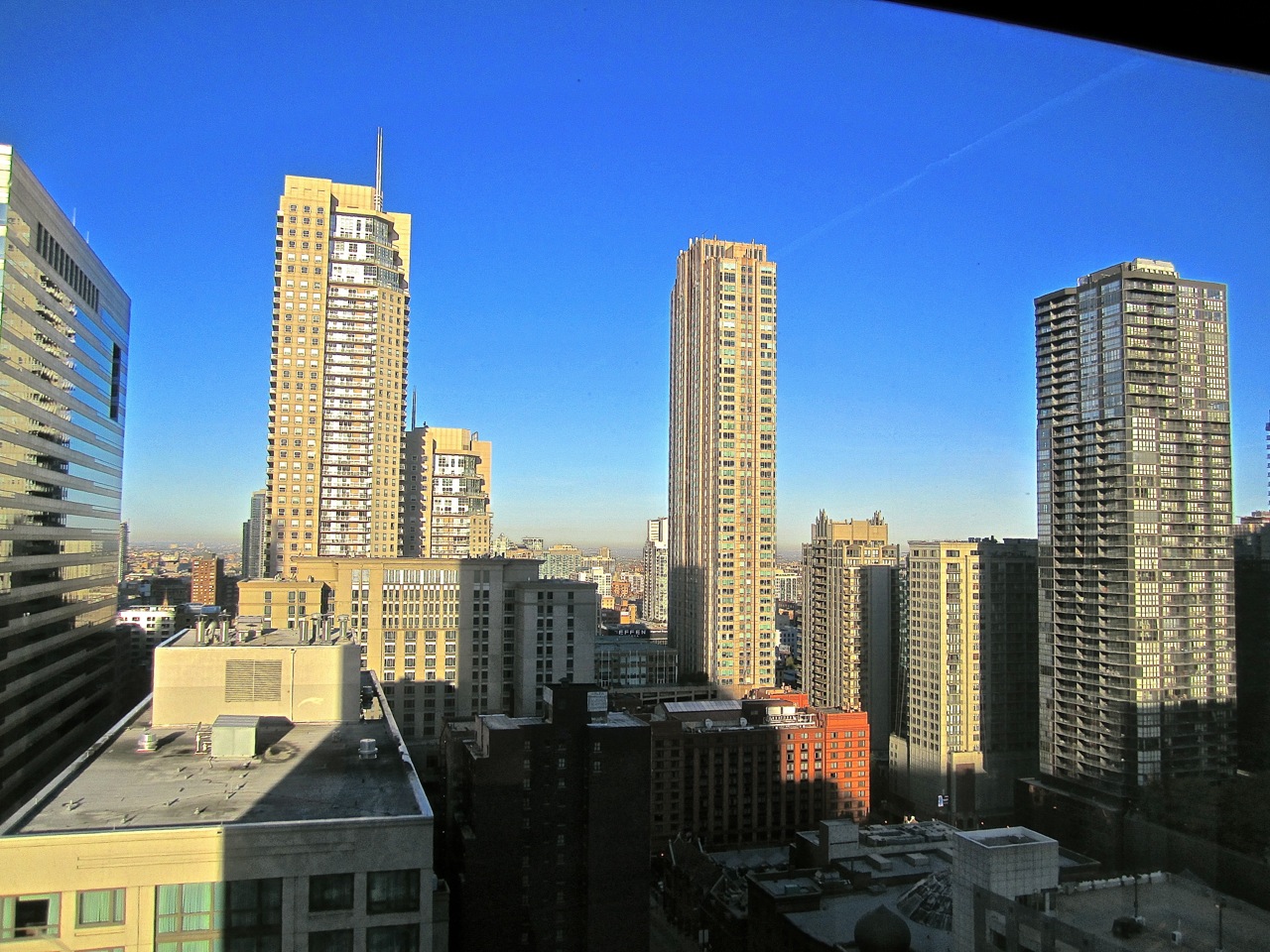
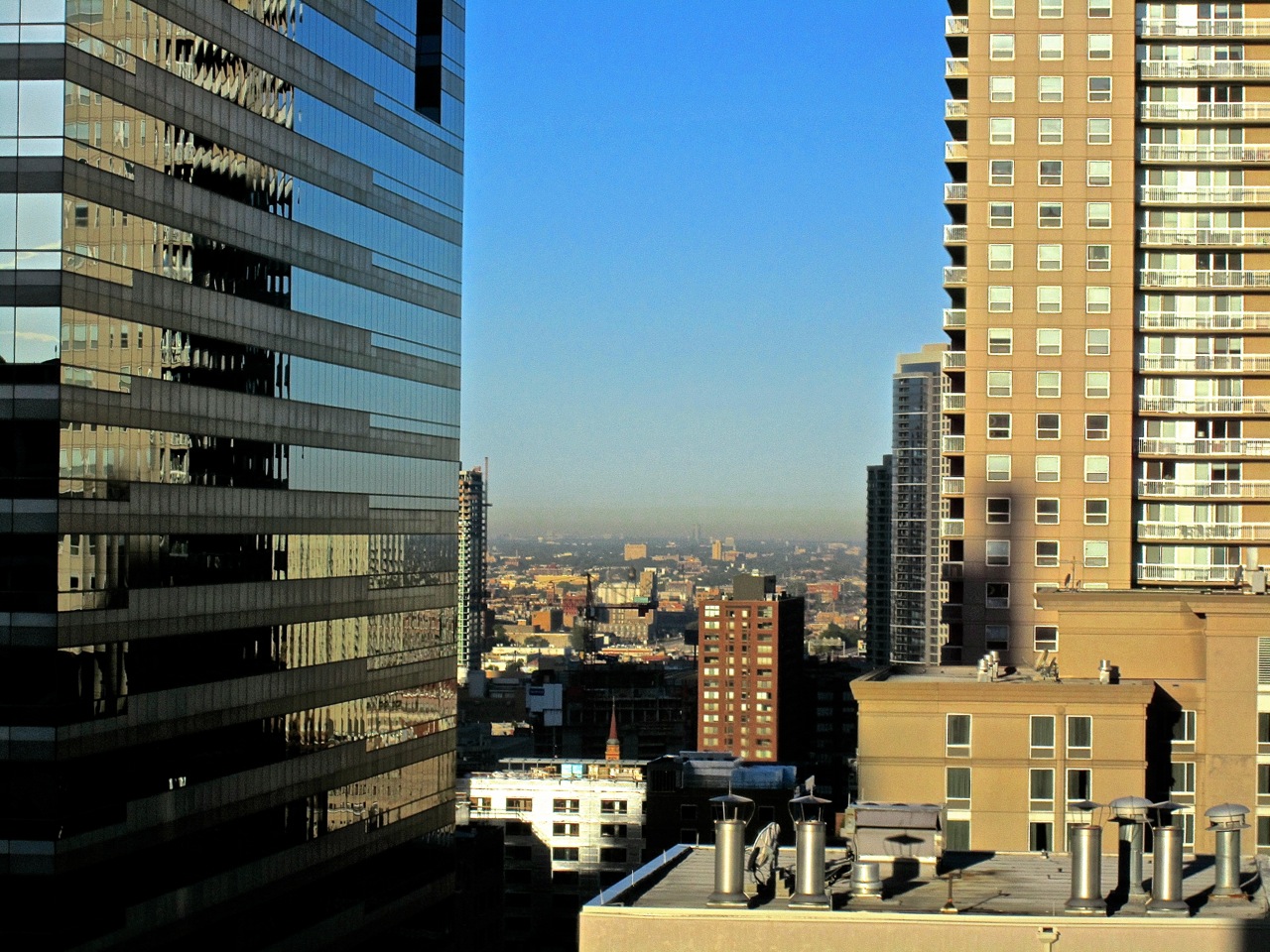
Below was the view from our hotel room.  A little dizzying.

I thought I could see back to Madison, Wisconsin, our previous destination.

After a skyscraper walking tour by the Architecture Foundation, I spent an afternoon at the Art Institute of Chicago and Millennium Park on South Michigan Avenue.

I loved these cabbages in the huge planters in front of the Art Institute. I’m so happy to see ornamental cabbages and kale having a moment again — I started gardening in the ’80s.

Millennium Park, which is just north of the museum and includes Lurie Garden, is remarkable.

I loved the “Cloud Gate,”

the way it reflected the surrounding skyscrapers,

and the way people interacted with it — including me, in the background with the yellow bag (below).

Where we ate

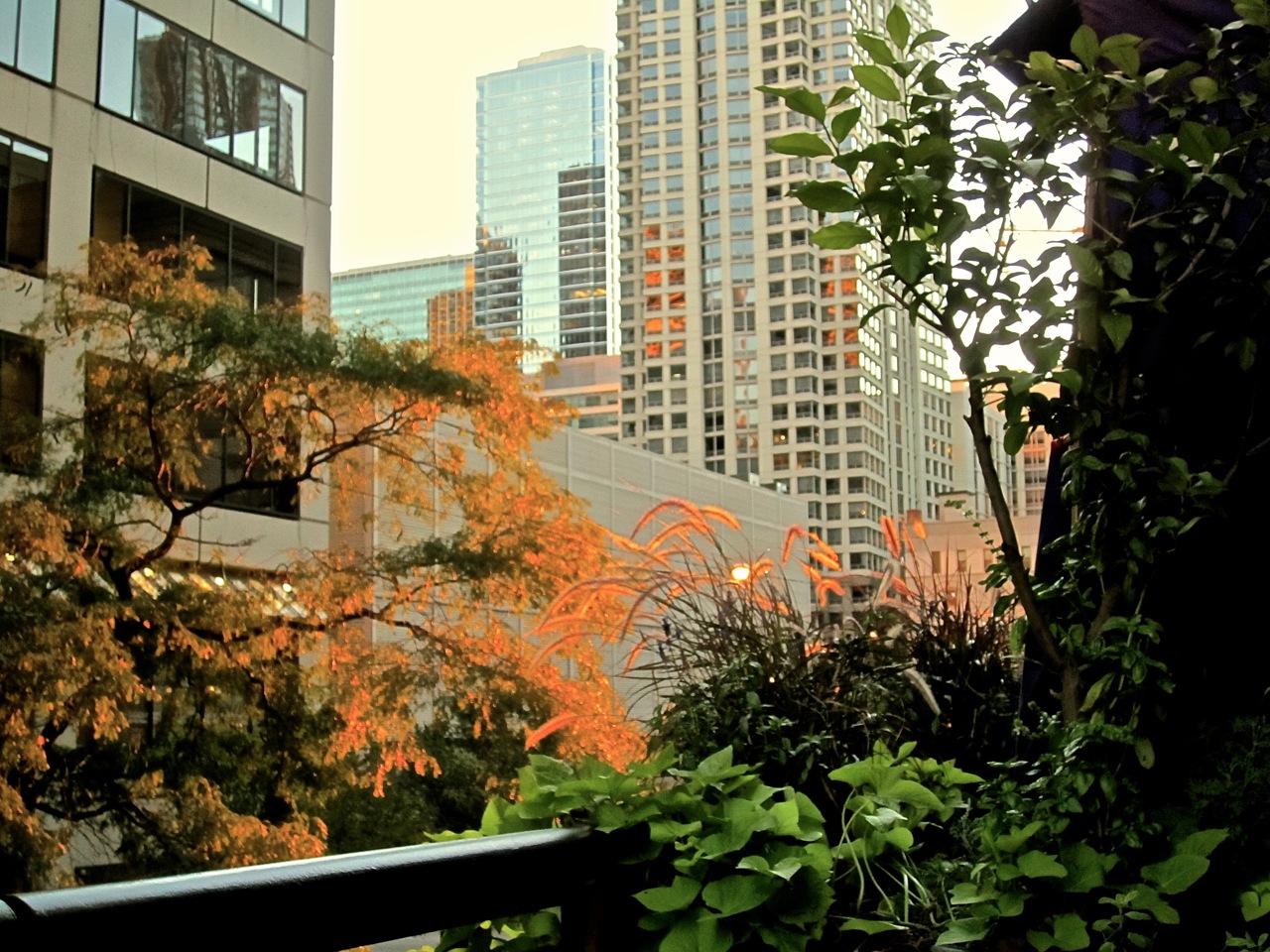
During our short visit, we ate twice at the great Purple Pig (their patio below at sunset) at 500 N. Michigan Avenue.  On the second night, our dessert was simply two slices of toasted artisanal bread spread in-between with Nutella, marshmellow cream, and sliced bananas.  Then the “sandwich” was liberally topped with powdered sugar.  It was wonderful.

If you have to be in Chicago’s O’Hare Airport — and we all will eventually — definitely eat at Rick Bayless’s Tortas Frontera.  We discovered it on our last trip in March, and this time we actually made a point of taking flights that would put us in Terminal 1 (go to gate B11) about lunchtime.

In which we learn some elegant French

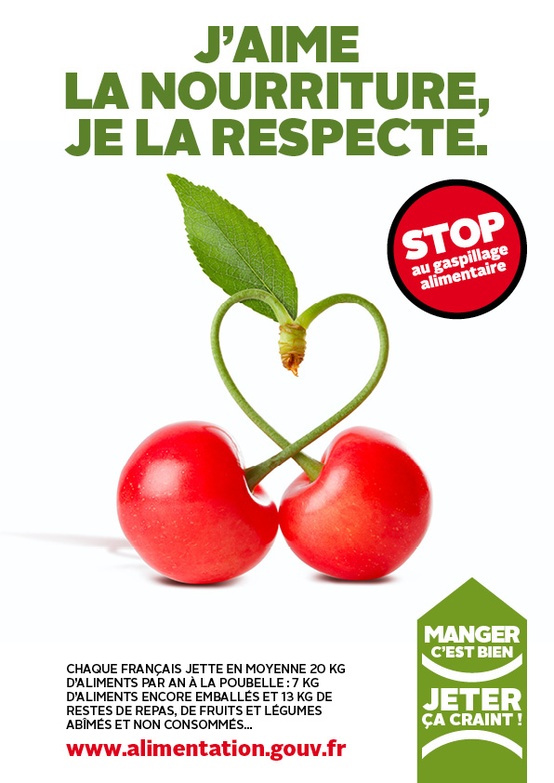
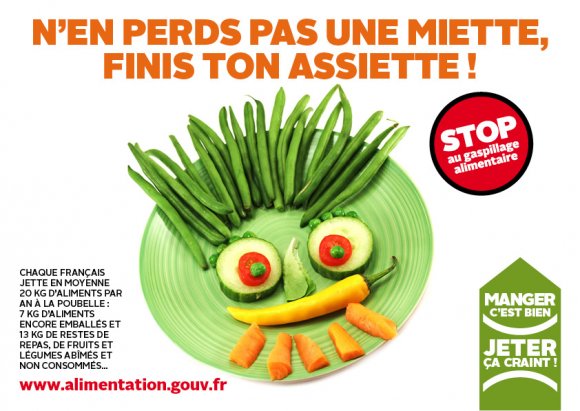
Well, maybe not, but this French government ad carries an important message.

Below, the tagline in the lower right corner roughly translates as ‘eating, that’s good; throwing away, that sucks (ça craint!*).’

“I love food, I respect it.”

Chaque Français jette . . . “Every French person throws an average of 20 kgs. of food in the trash can each year.”

According to the FAO,  a European generates 60-110 kgs. (130-240 lbs.) of food waste yearly; an American, 95-115 kgs. (210-250 lbs.); a person from a developing country, 6-11 kgs. (13-24 lbs.).

“Don’t waste a crumb, finish your plate.”

For more information, see the campaign webpages here and here.  And there’s more about French food at French Food in the U.S.

I spotted these posters on the wonderful blog about gardening in Paris, Paris coté jardin, by Alain Delavie.

*Also means ‘that’s dangerous.’  ‘That sucks’ can also be ‘c’est nul.’

Vintage landscape: supper in the grove

“Table in picnic grove set for St. Thomas church supper near Bardstown, Kentucky,” August 1940, by Marion Post Wolcott via the Library of Congress Prints and Photographs Division.

Vintage landscape: flowers and cabbages

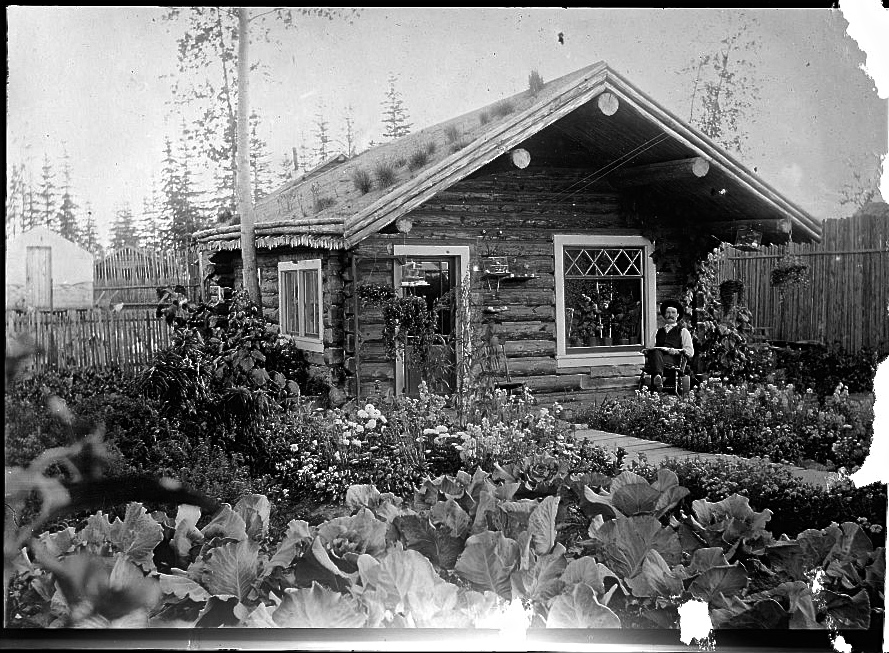
“A cottage & garden, Alaska,” ca. 1909-1920. By National Photo Company, via Library of Congress Prints and Photographs Division.

A similar photo of this cottage was labeled “a sourdough’s home.” The word ‘sourdough’ was slang in Alaska for an oldtimer, probably from the Klondike gold rush.  You can click on the image to enlarge it.

                        O cabbage gardens
summer’s elegy
                        sunset survived
Susan Howe, from “Cabbage Gardens