Both sides now

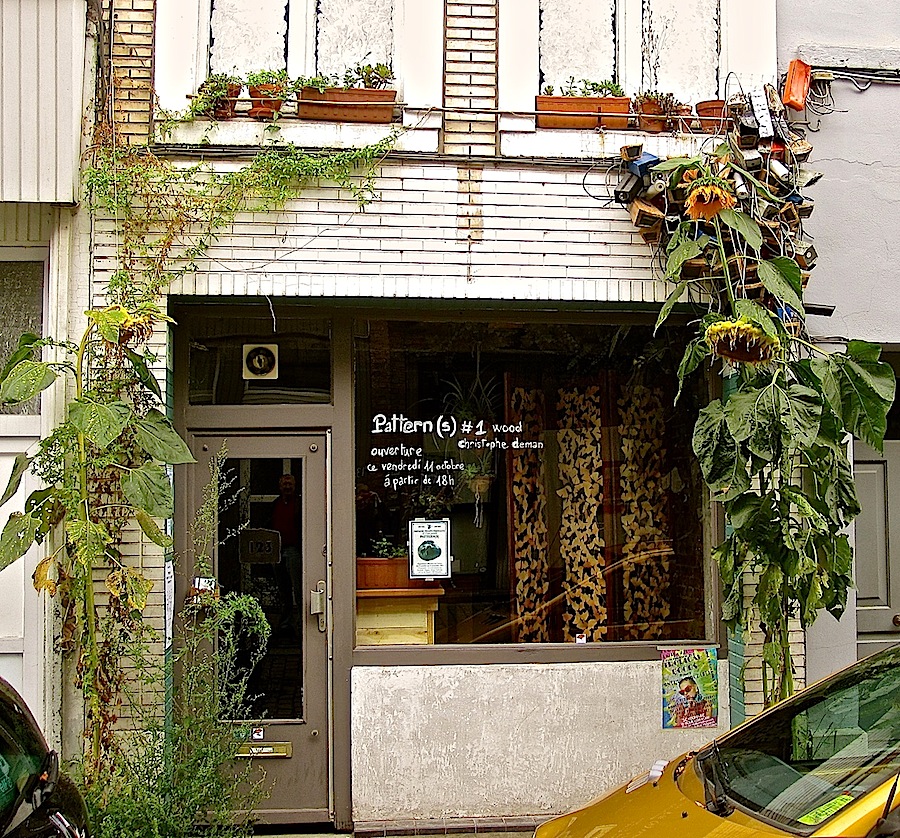
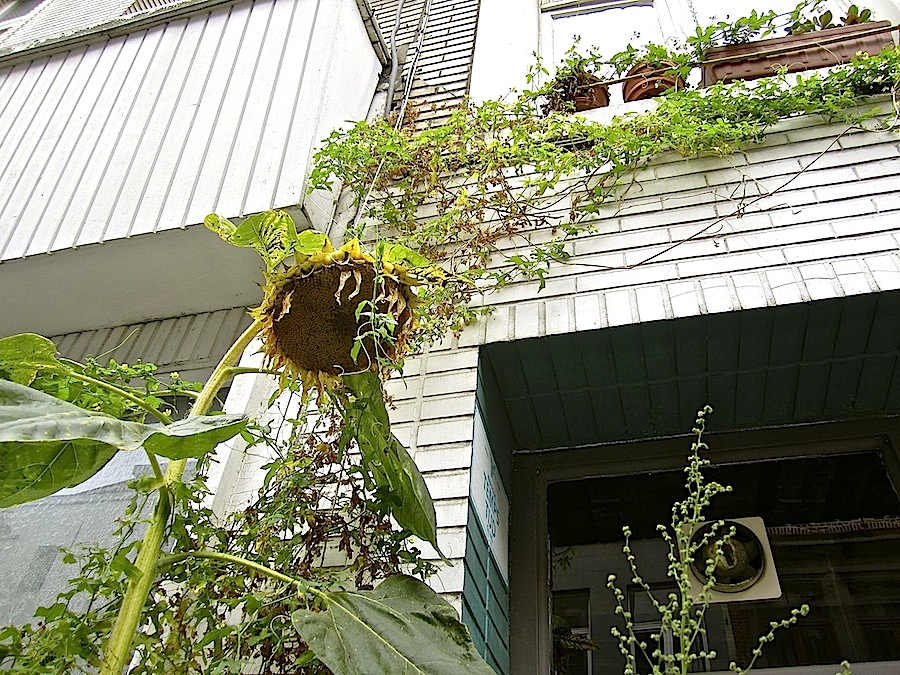
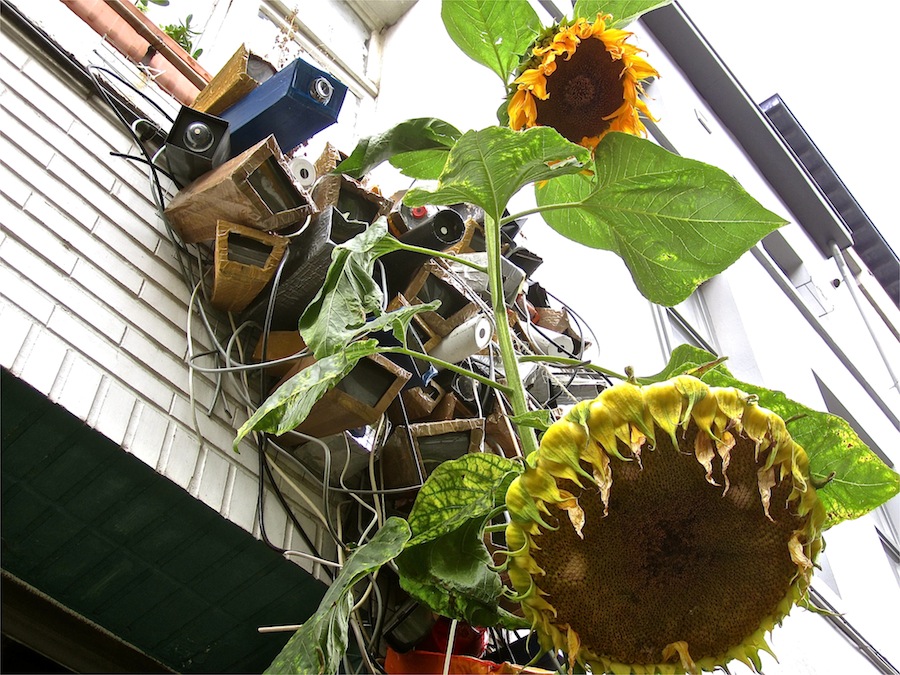
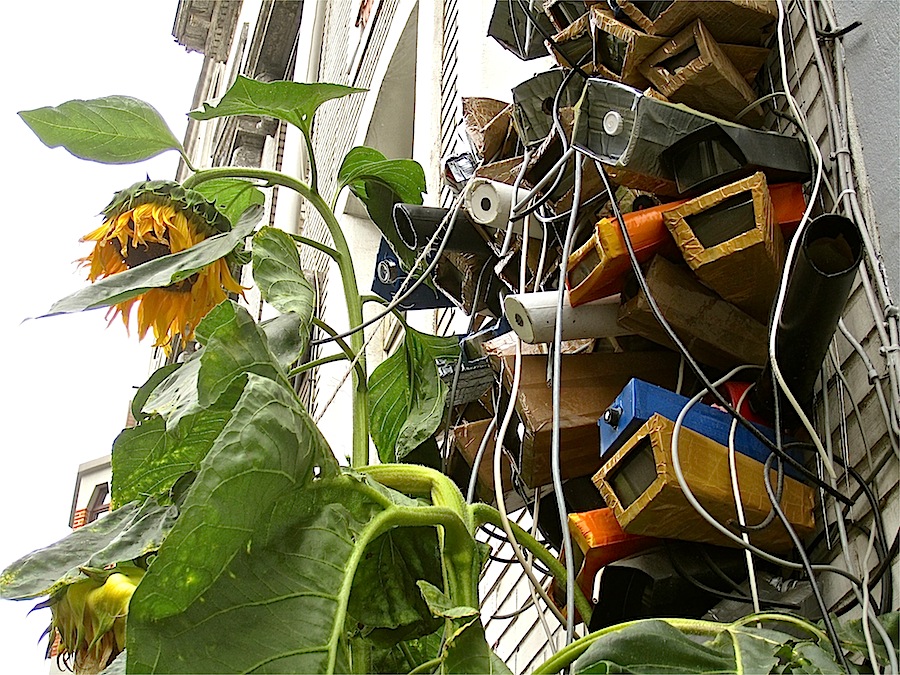
Gallery in Dansaert, Brussels/enclos*ureThe front of this small gallery on Rue de Flandre (or Vlaamsesteenweg) in Dansaert shows how Brussels can be both charming and a little grim at the same time.

Gallery in Dansaert, Brussels/enclos*ureI took these pictures a week ago yesterday.

Gallery in Dansaert, Brussels/enclos*ureThere’s a nice appreciation of the city on The Economist’s Intelligent Life website here.

Gallery in Dansaert, Brussels/enclos*ureThe neighborhood of Dansaert starts about four blocks northwest of the Grand’Place and is definitely worth exploring, especially if you are interested in Belgian fashion design and/or food.

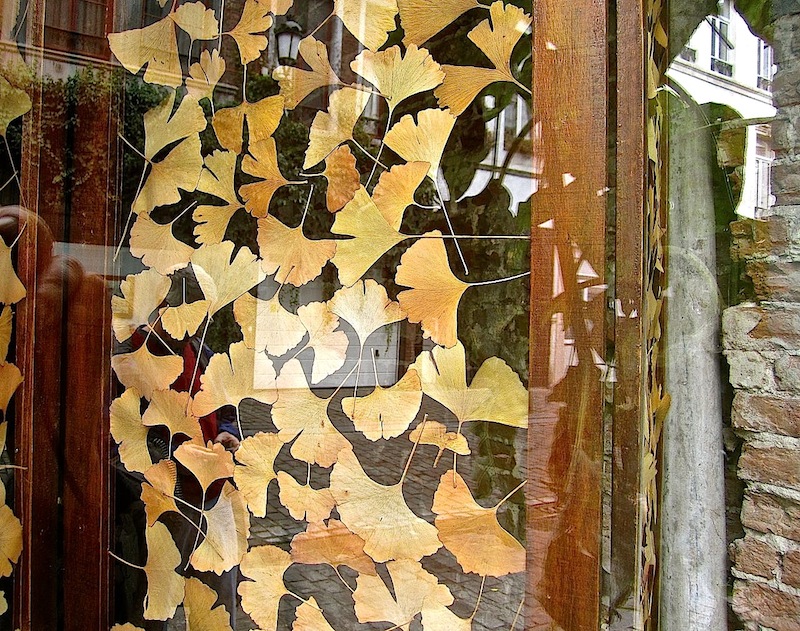
The gallery, Impasse Temps/Tijd Gang*, is staging a series of weekend exhibits on “Pattern(s)” between now and November 24.

Gallery in Dansaert, Brussels/enclos*ureIt is located at 123 Rue de Flandre.

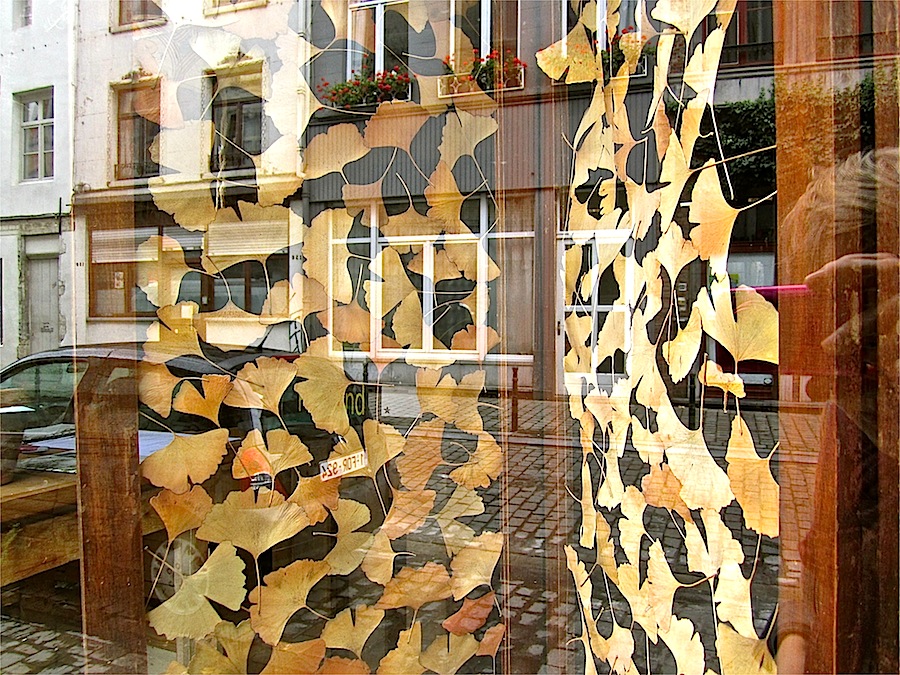
Gallery window in Dansaert, Brussels/enclos*ure

A Sunday in the streets of Brussels

On the first day of our recent travels, we were lucky enough to arrive in Brussels on its annual “Car Free Sunday.” The streets of the city were closed to “all traffic with an engine”* from 9:00 a.m. to 7:00 p.m.

The streets were full of happy bikers, skaters, skateboarders, and walkers — in about that order. In addition, stands devoted to regional food and drink, organic farming, and ecology were set up from the Grand’Place to the Royal Palace and Brussels Park.

This slideshow requires JavaScript.

I like this garden (above slides) at the Mont des Arts. Like so many outdoor spaces in Brussels, its design successfully encompasses many centuries.

Under the rows of pleached trees, there were booths selling food and wine from France, so, bien sur, we had fois gras sandwiches for lunch.

This slideshow requires JavaScript.

A little farther east, on the street between the Royal Palace (above slides) and Brussels Park, sod had been put down over the stone block paving, and people were picnicking on every kind of organic cuisine.

I also really like Brussels Park (below slides).  It has very formal wide gravel walkways laid out in the shape of the Free Masonry symbol of an architect’s compass. Two rows of espaliered trees surround its perimeter.  But inside, there are forest-style groupings of very tall trees, long berms planted in a natural way with a variety of shrubs, and some well-used grass.

This slideshow requires JavaScript.

In the afternoon, we went back to our hotel for a rest and found that the street under our window had been blocked off for children’s activities. A local radio station had set up a stage, and, for the length of our planned nap, it featured a teenage punk rock band. I must admit they sang and played (what seemed like) their one song over and over again with some proficiency (I guess).

We ended our lovely day of walking in the neighborhood of Dansaert, along Rue de Flandre (or Vlaamsesteenweg), where the shops and residents were having a street-long yard sale/block party. At no. 17, we ate traditional Belgian food at the restaurant Viva M’Boma** (long live grandmother), which we highly recommend — as long as you eat meat.

To scroll through larger versions of all the photos above, click on ‘Continue reading’ below.


*Except for buses, taxis, some delivery vans, police, and ambulance.  The event is always in September, to coincide with the  European Week of Mobility.  I found one webpage indicating that it will be on September 16 in 2014.

**But they are normally closed on Sundays — and Wednesdays.  Main courses are between 11€ and 18€.

 

A formal garden in Italy

The Formal GardenHow lovely.

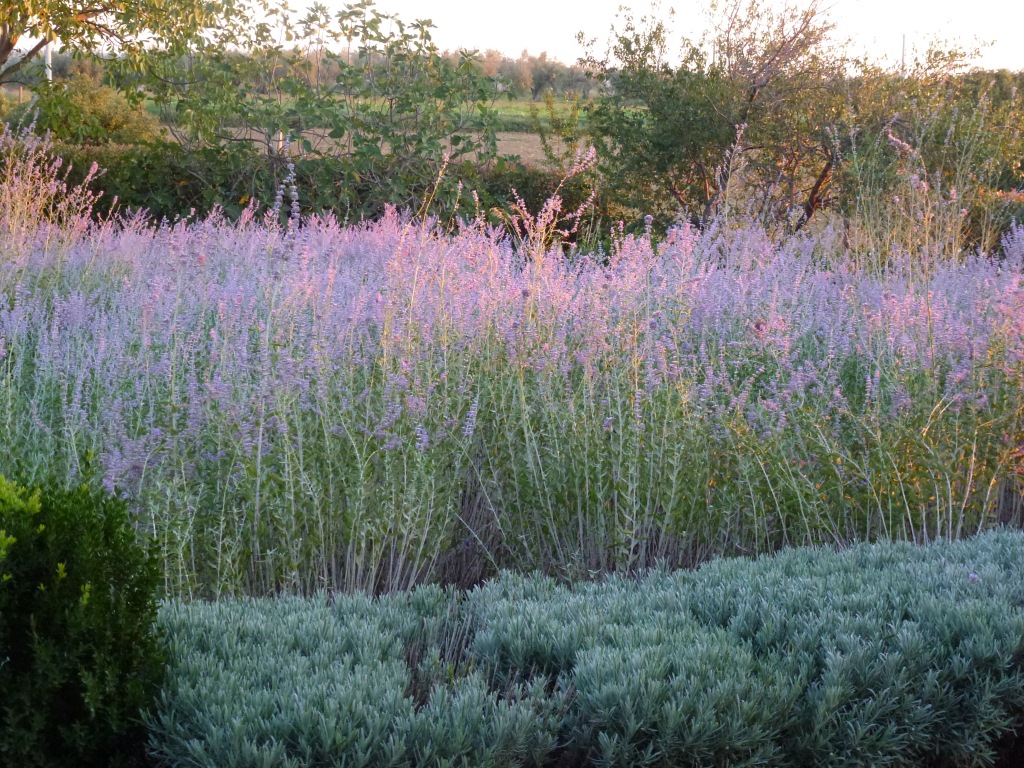
Just lavender (clipped), box, and Russian sage in September.
Just lavender (clipped), box, and Russian sage — in September.

Until recently, I had somehow missed the blog, Creating my own garden of the Hesperides.  I found it last week, via a picture on Pinterest.

The Formal Garden

I wrote to Christina, who gardens in Lazio, Italy, and asked her if I could share some of her pictures of her “Formal Garden,” which is so beautiful and simple.

The garden in October.
The garden in October.  All photos by Christina.

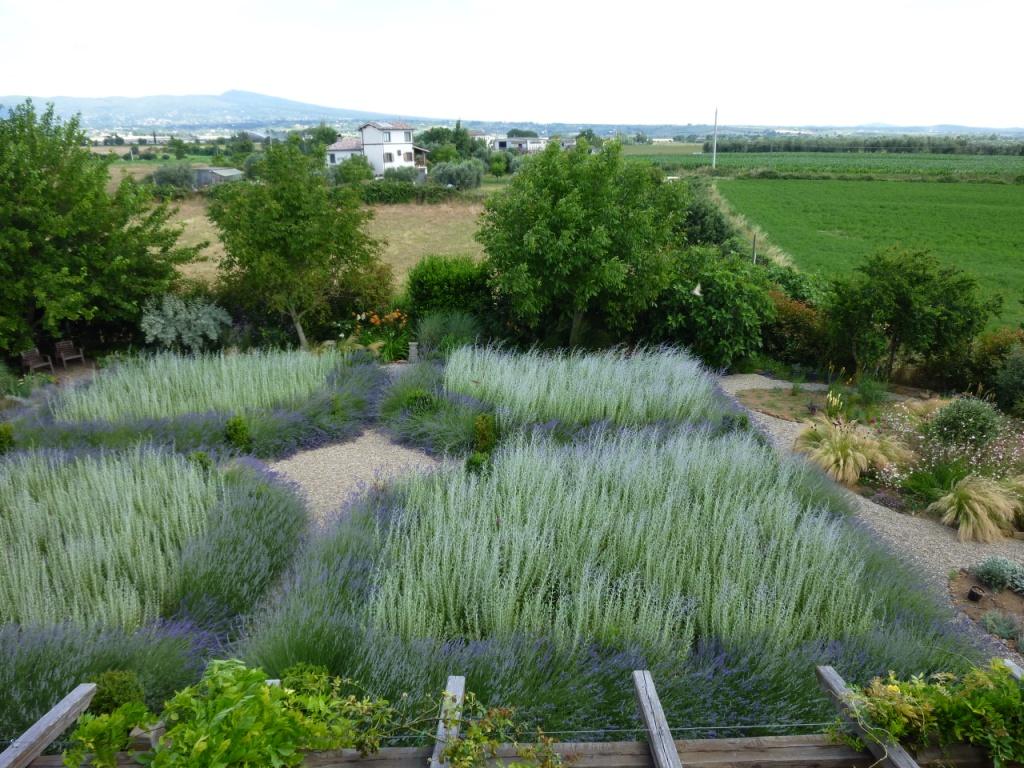
The garden was laid out and planted in 2008.  The soil is soft volcanic rock, which is fertile and free-draining.  The area usually receives no rain from June through August, and Christina does not irrigate.  In the winter, there is “bitingly cold” wind.

The garden in June.
The garden in June.

The four identical beds are planted with Perovskia (Russian sage), edged with lavender, and accented with boxwood cubes at the corners.  The two beds nearest the house are underplanted with tulip ‘White Dream‘ and allium.

The lavender borders are clipped before September.
The lavender borders are clipped flat later in the season.

Christina also has  large and small island-shaped borders with mixed plantings, many old roses, and a vegetable garden.  Here is how she explains the name of her blog:

The garden of the Hesperides was where Hercules had to go to find the golden apples, references to it  in Italian Renaissace gardens are a symbolic way of comparing the garden to paradise, a way of achieving immortality through hard work. So this garden is, for me, my paradise and certainly the hard work in achieving it will bring its own reward.

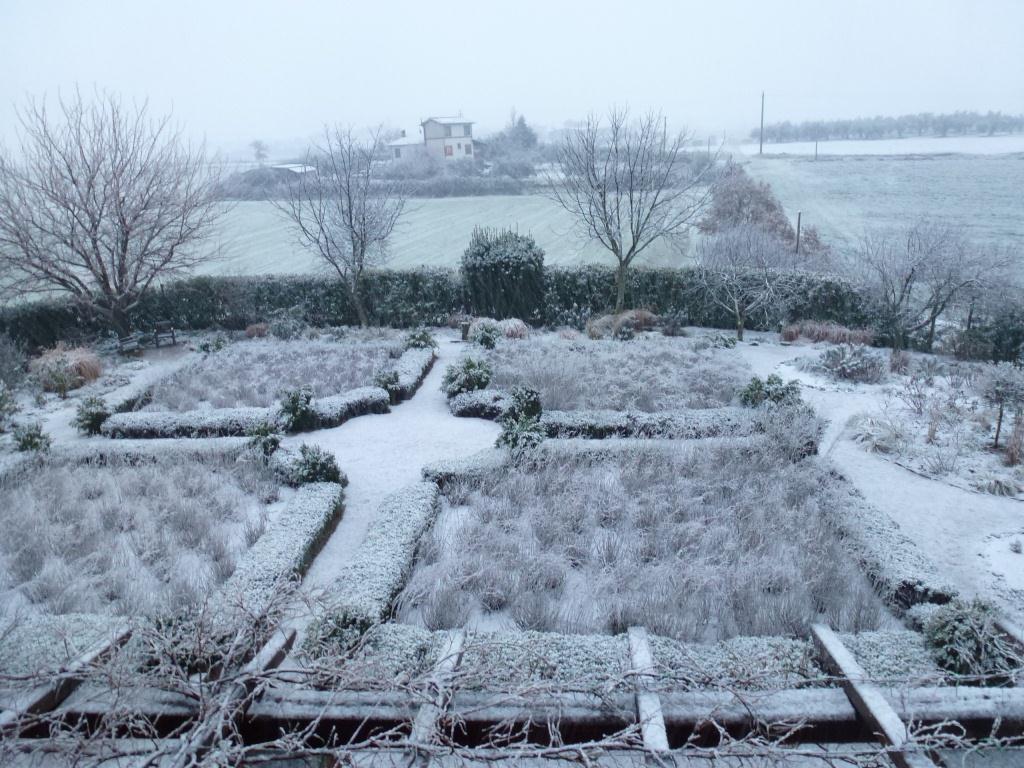
The garden after a January snow.

All photos above ©Christina at Creating my own garden of the Hesperides. Thanks!

How do you define ‘elegance’?
“Simplicity and imagination.”

— from an interview with actress Helen Mirren

A dachterrasse and Friday miscellany

I recently discovered the beautiful German blog Gartenblick  (Garden View) by Dusseldorf photographer Sibylle Pietrek.

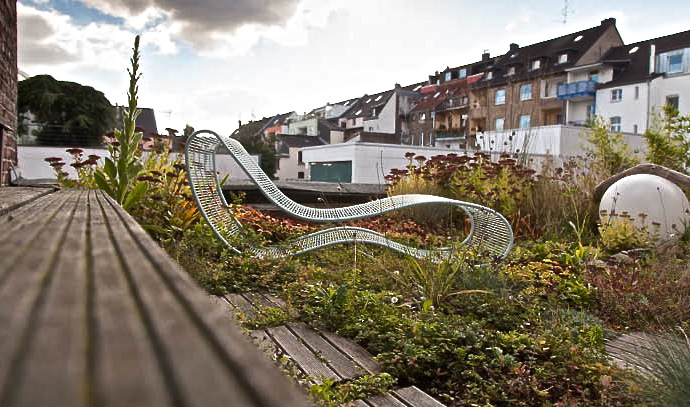
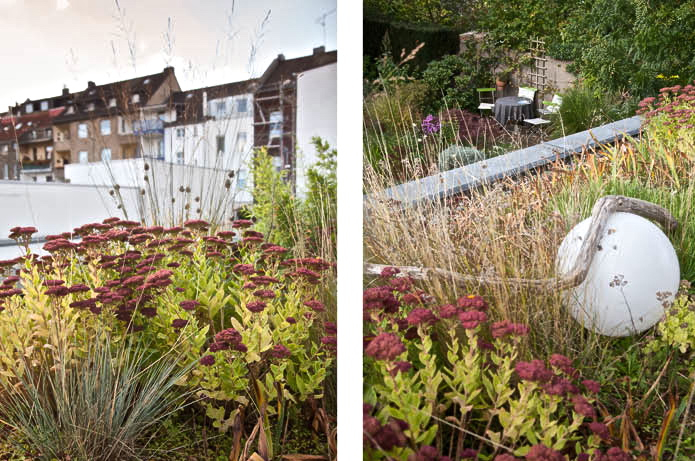
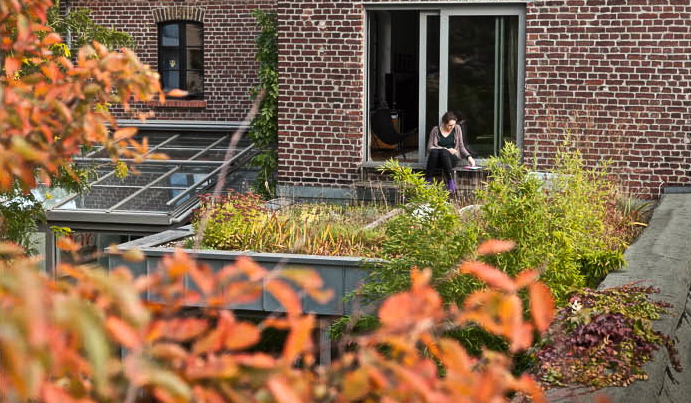
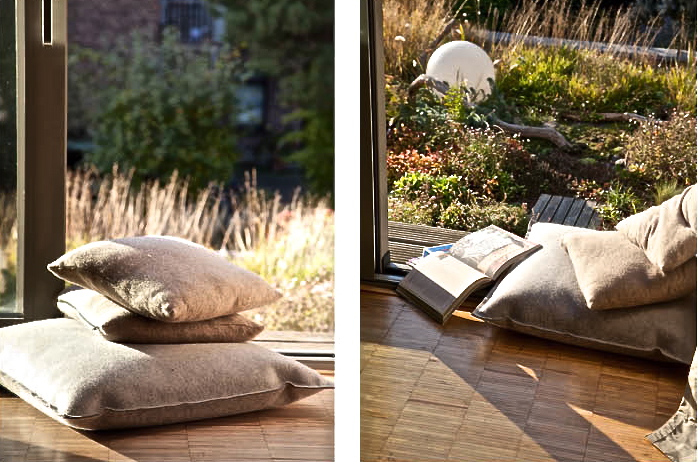
I particularly liked this post about her small, but really lovely, roof terrace (dachterrace).  I was impressed that the designer  — Karim Rashid — could achieve a real sense of an edge of a meadow (with a lounge chair) in so few square feet.

In her post, Sibylle writes that she uses the space for “early evening aperitif, photo shoots, painting, reading, and painting nails.” And to catch the long autumn afternoon sun.  What a nice refuge.

I’m starting to  think about the possibilities for the flat porch roof of our house back in D.C. . . .

All the above photos: ©Sibylle Pietrek, used here with permission.  Please check her blog before pinning or sharing.

Miscellany

Please check out Garden Rant’s review of October annuals at the Smithsonian Institution’s gardens.  Again, why are the S.I. gardens so wonderful and its neighbor, the White House, has this?

Have you seen the online Landscape Architect’s Guide to Washington, D.C., featuring write-ups by 20 L.A.s on 75 historic and contemporary landscapes?  I wish it were somewhat more opinionated (see above), but it’s useful for a visit to the Capital.

The Global Garden,” the weekly series of the Los Angeles Times’s home and garden blog, explores “multicultural L.A. through the lens of its landscapes.”  Now it has created a library of its posts, here. In the last year, the series has looked at sugar cane, shiso, loquat, purslane, moringa, sweet lemon, ice cream bean, and more. It will continue to update the archive with new material.

I really like this garden by the firm Covachita in San Pedro, Mexico (I believe it’s their studio).  It effectively combines edgy modern urban with antique farm.

The “Urban Jungle” columns by Patterson Clark in The Washington Post are always so interesting, especially this recent one about milkweed (Asclepias syriaca — the light pink one).  If yours left pods and white fluff all over your garden in September, consider how — during World War II — you (or your enterprising child) could have been paid about 15¢ a bushel for them.  The Japanese occupation of Java had cut off supplies of kapok — a fiber (then) needed to fill life vests.

ADDENDUM: I clicked on ‘publish’ and then found one more. I have to admit I love this sort of thing.