
 “Landscape, Rodin’s garden, Meudon, France,” 1905, by Gertrude Käsebier, via Library of Congress Prints and Photographs Division.
Category: European gardens
Wordless Wednesday: local color
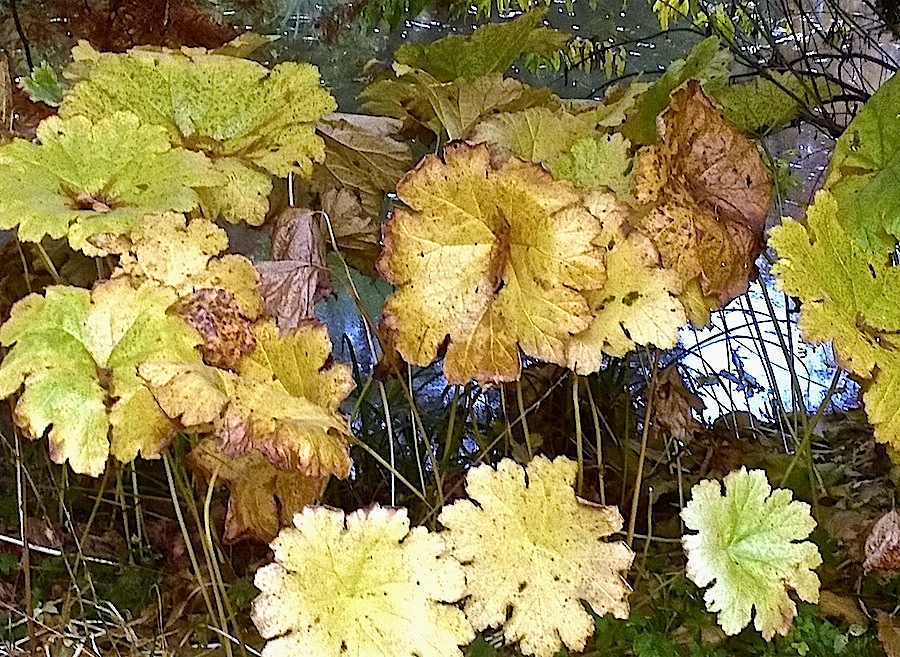
The Botanical Garden of the University of Hohenheim — once the 18th century “English Garden” of Hohenheim Palace — in Stuttgart, on November 1.
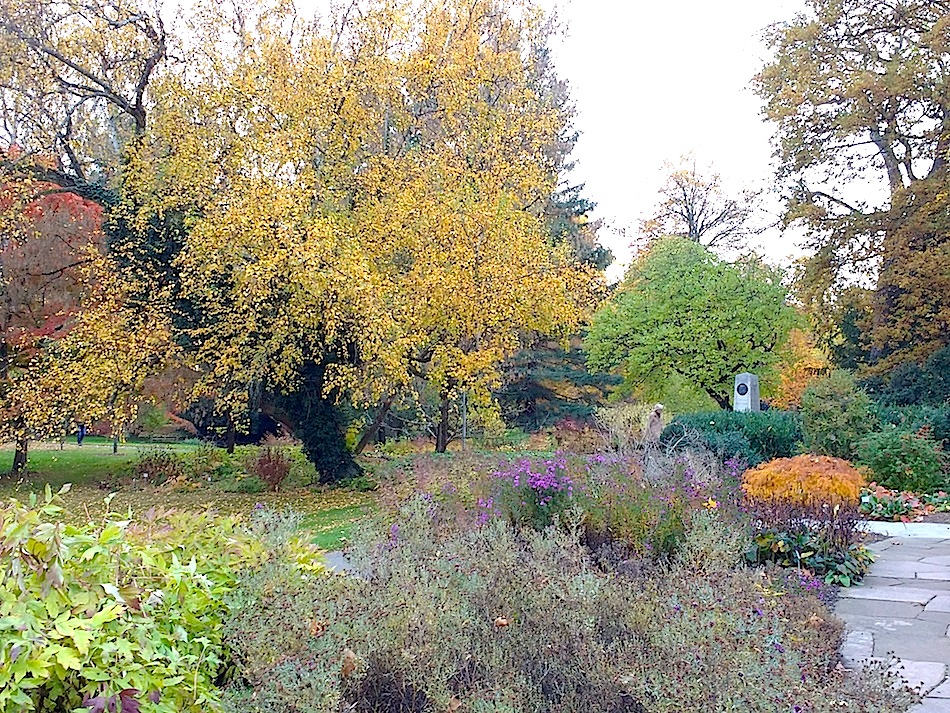
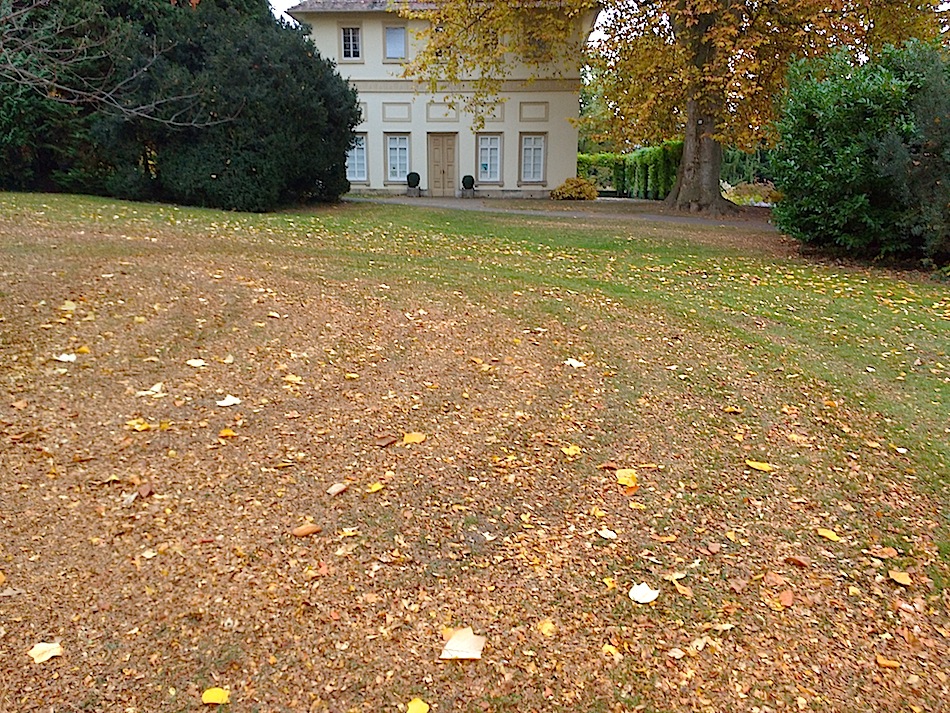
Click on any thumbnail in the gallery below.


Pale yellow and ivory leaves of Orixa japonica in the background on the left.


Astilboides tabularis.

Streifzug 7: Filderkraut festival
I’m sorry there was no Sunday porch yesterday. . .
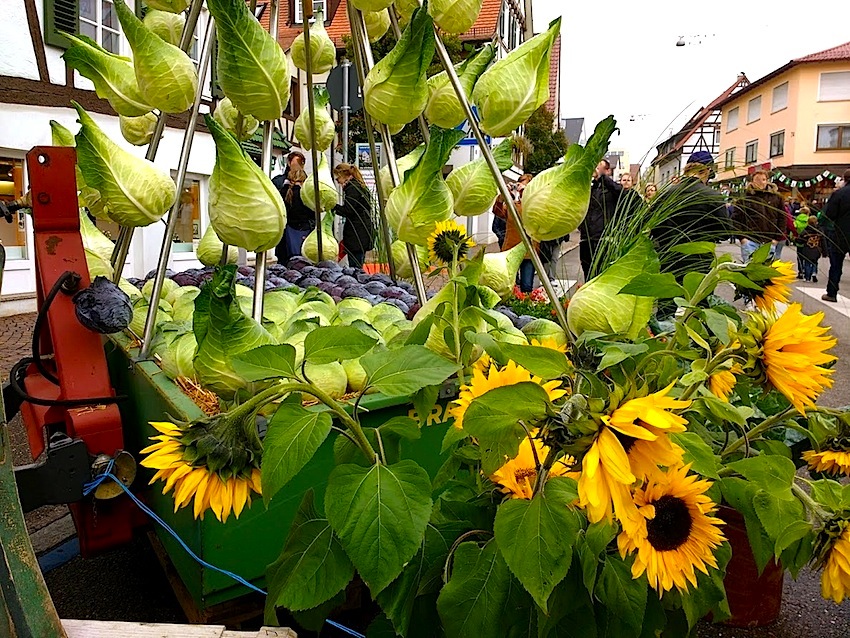
I was at the 37th annual Filderkraut-Fest in Leinfelden-Echterdingen, a town near the Stuttgart airport.
There are very few weekends in the Stuttgart area without a local fest celebrating some aspect of the season. Since the end of summer, we have celebrated the wine harvest, the potato harvest, the pumpkin harvest, and now that of the Filderkraut.
This very fine variety of cabbage has a distinctive pointy shape.* It grows particularly well in the rich loess-loam of the Filder plateau, which surrounds the airport.
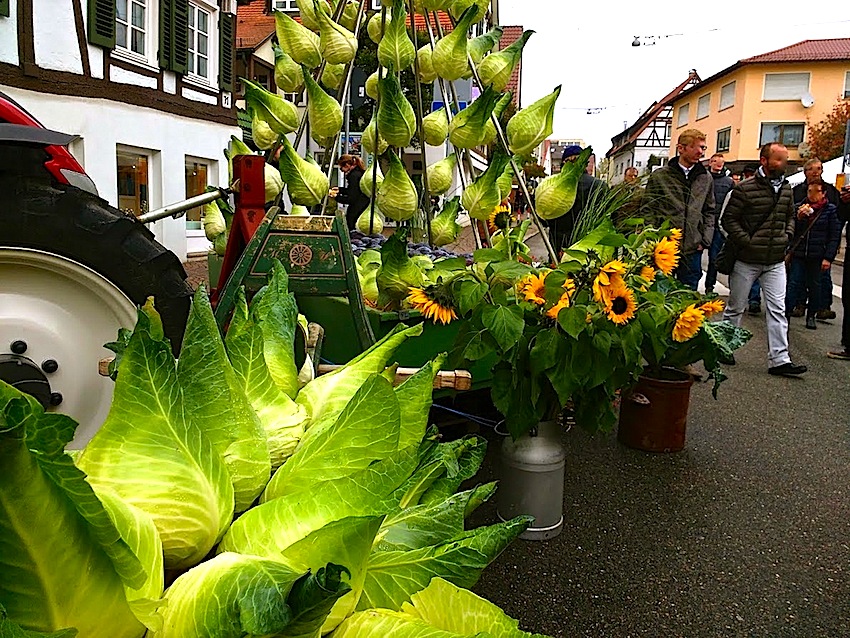
The fest was opened on Saturday by Mayor Roland Klenk, who tapped the first keg and, after about 40 taps, sprayed onlookers with beer. “That’s not my core competency,” he reportedly said.
Tapping the first keg seems to be the German equivalent of throwing out the first ball in the U.S. — an honor fraught with peril for a politician.

This was not an easy year for cabbage growers, according to an article in the Stuttgarter Nachrichten. It was too hot and dry, and the heads were smaller than usual.
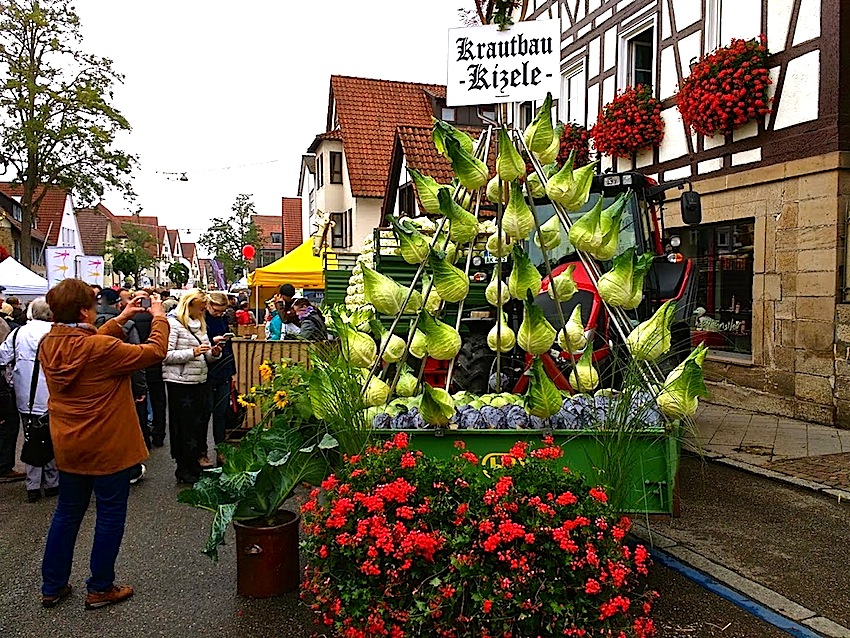 Above: “Kizele’s cabbage display.”
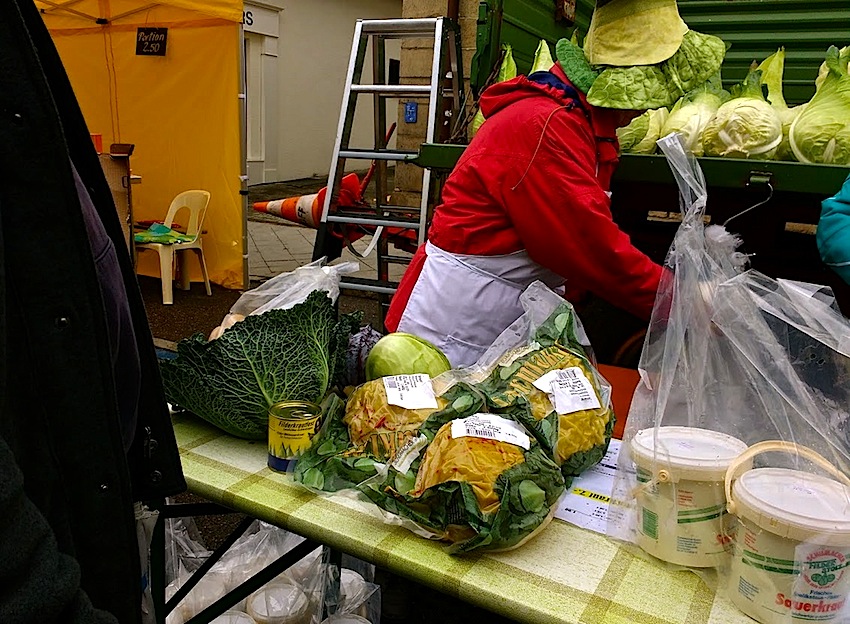 Above: whole heads of fermented cabbages on the table. Note her hat.
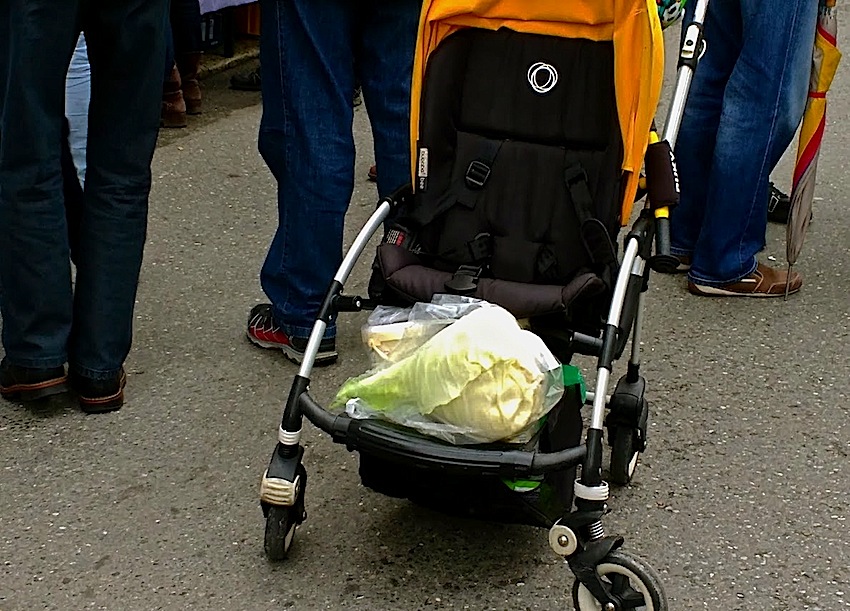
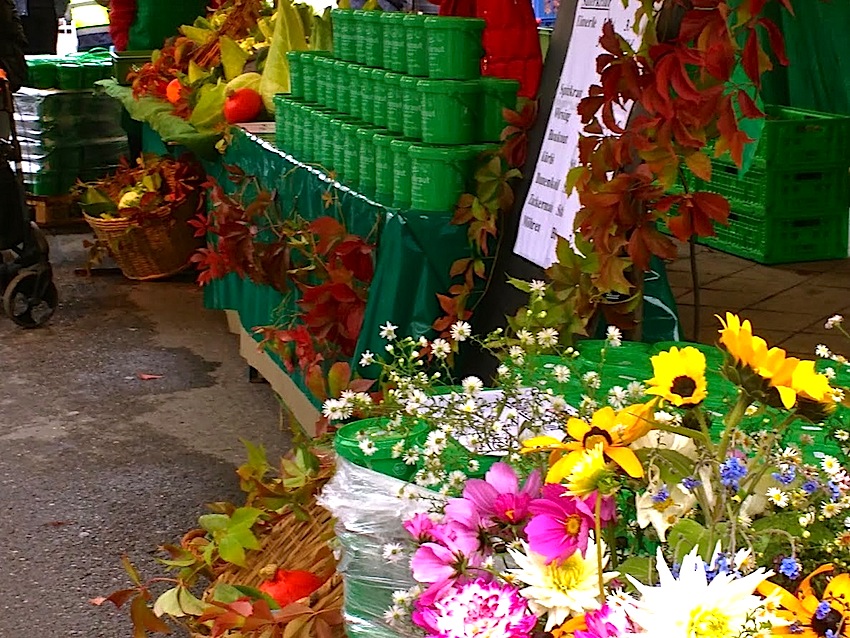 Above: tubs of sauerkraut to take home.
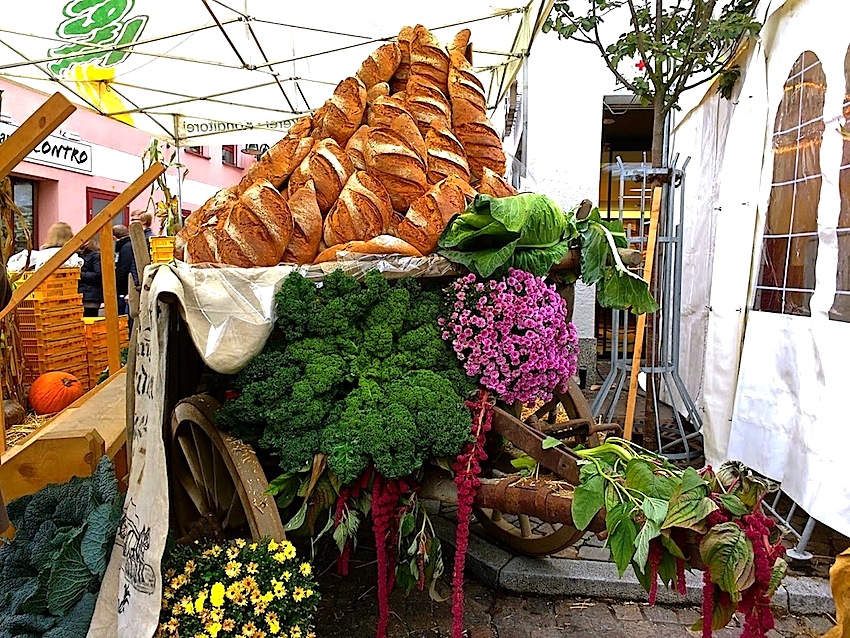 Above: a display of bread and cabbage.
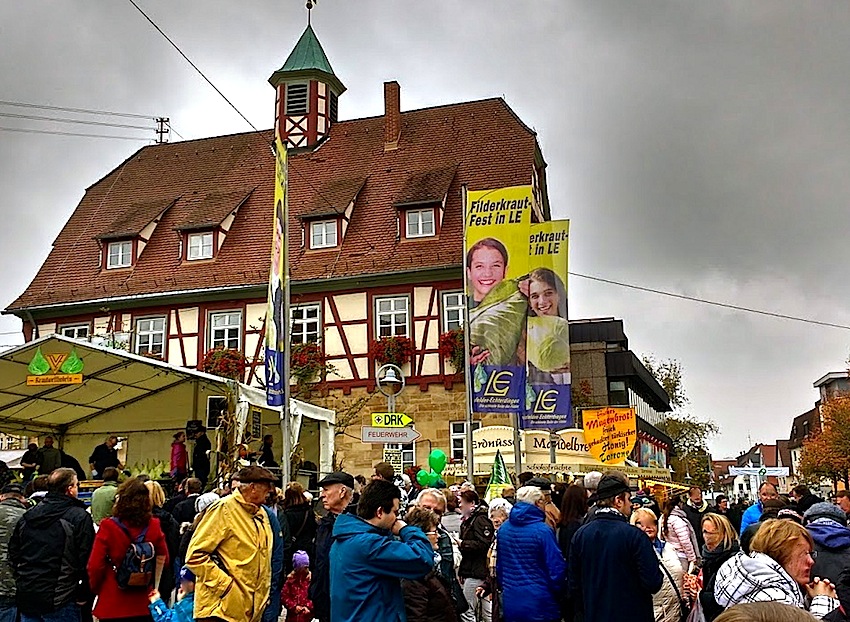 Above: the Rathaus or town hall of Echterdingen.
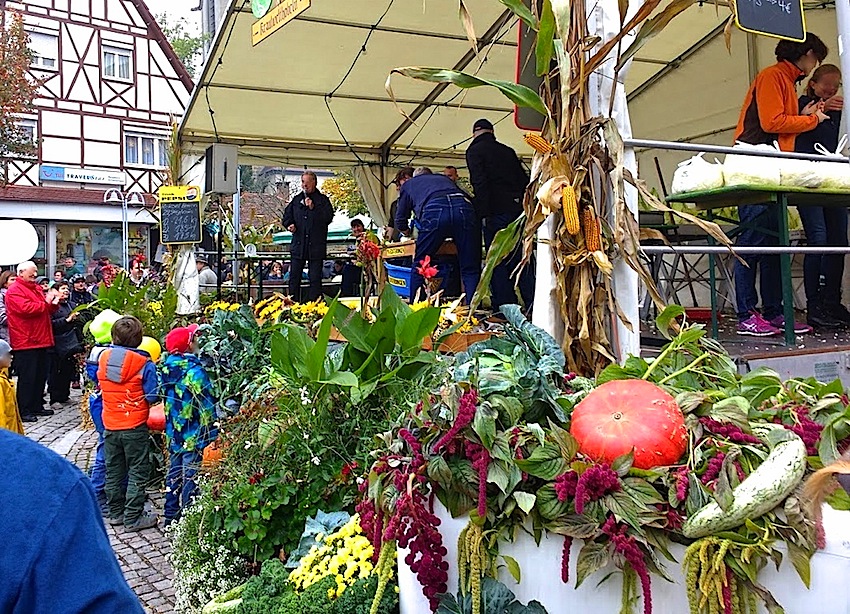 Above: a cabbage shredding race on the stage.
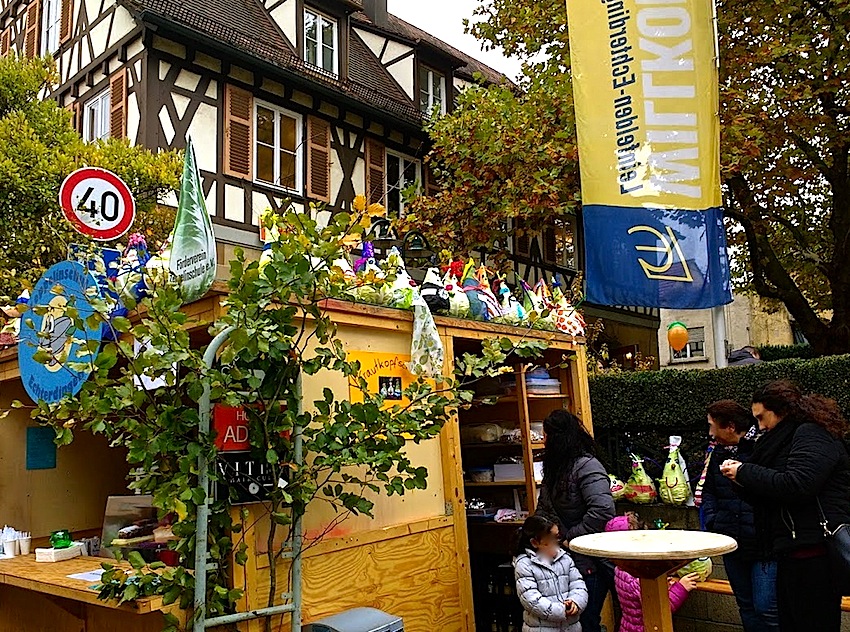 Above: a children’s activity booth in front of the town’s museum.
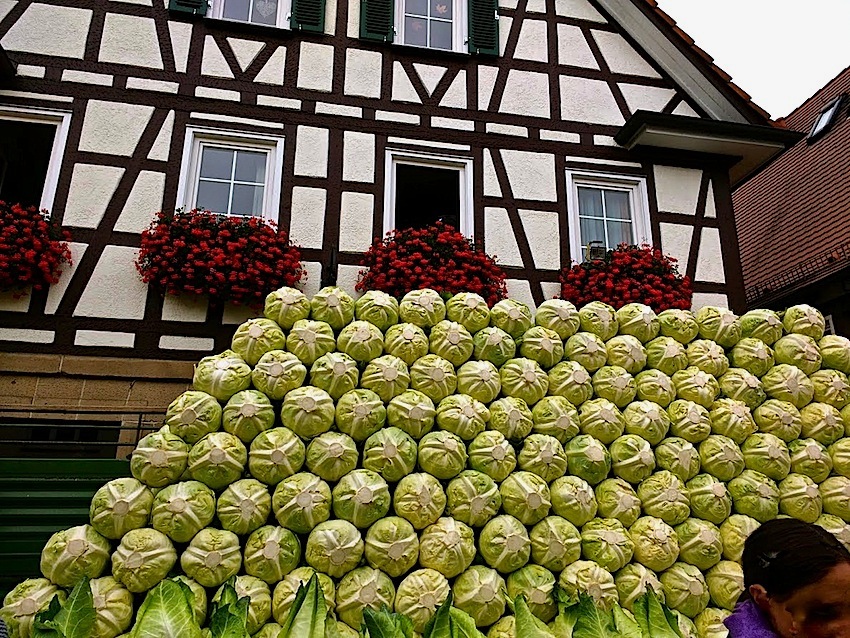
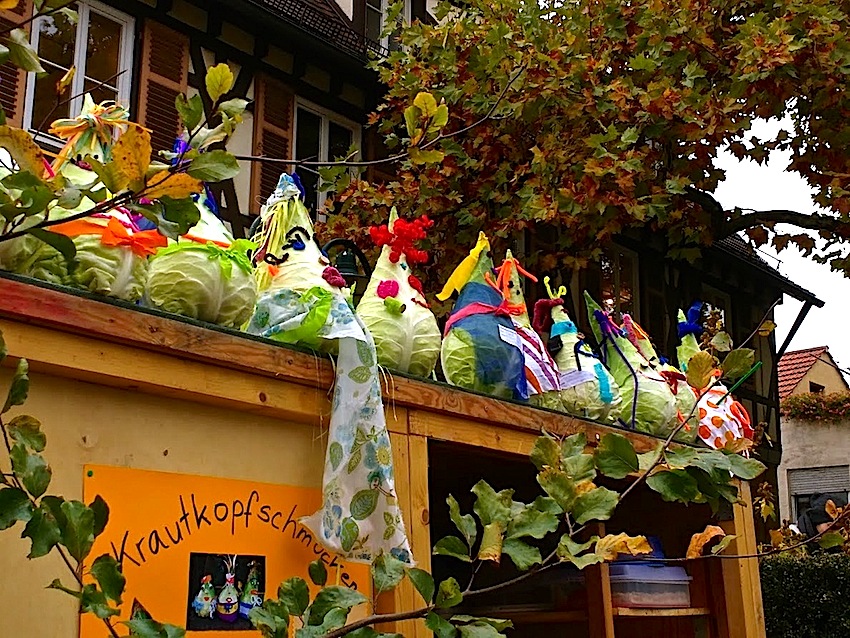 Above: “Pretty cabbage heads.”
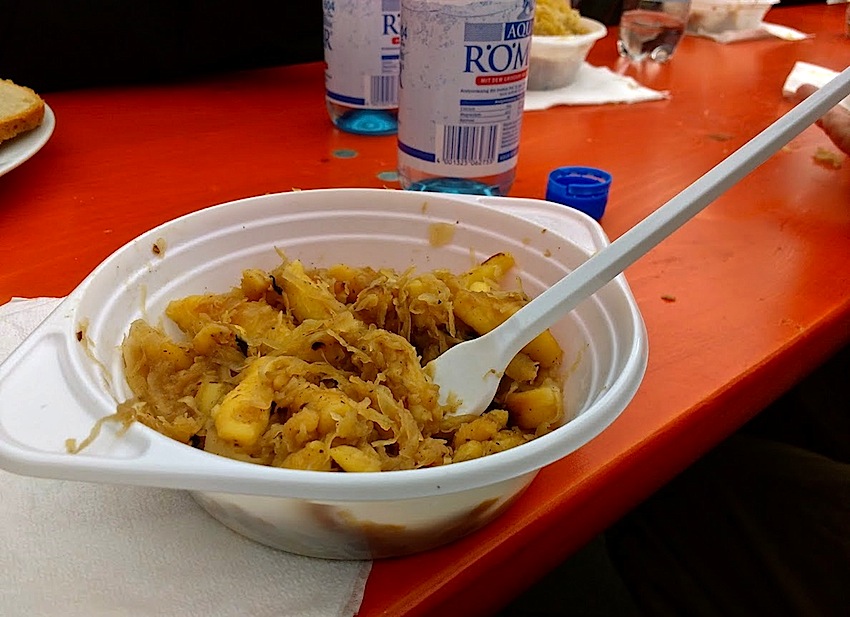 Above: my lunch, sauerkraut and potato dumplings (like gnocchi).
By the way, now is the time in Stuttgart to eat Zwiebelkuchen (bacon and onion flan) with Neuer Sußer or new wine — newly (barely) fermented grape juice.
Streifzug means ‘foray,’ ‘ brief survey,’ or ‘ramble.’
*I mentioned this fest to my mother, and she remembered that, back in Texas, my great-grandmother always told her that cabbages with pointed heads were the best. I don’t think I’d ever seen any until this August.
the moon moves over
the field of dark cabbage and an
exchange fills
all veins.— Jonathan Williams, from “Two Pastorals for Samuel Palmer at Shoreham, Kent”
The Sunday porch: Newport, R.I.
 Porch at the residence of Margaret Brugiere, Wakehurst, in Newport, Rhode Island, August 6, 1958, by Gottscho-Schleisner, Inc., via Library of Congress Prints and Photographs Division.
The house was built in 1887 by James J. Van Alen as an exact replica of 16th century Wakehurst Place in West Sussex, England.
Margaret, or “Daisy,” Brugiere was Van Alen’s daughter-in-law (widowed and remarried), and she kept the place going in a high style until her death in 1969.
At some point, the family must have wanted the comforts of an American porch and created one with awning. Its interior style seems inspired by Naples — both the city in Italy and the one in Florida.
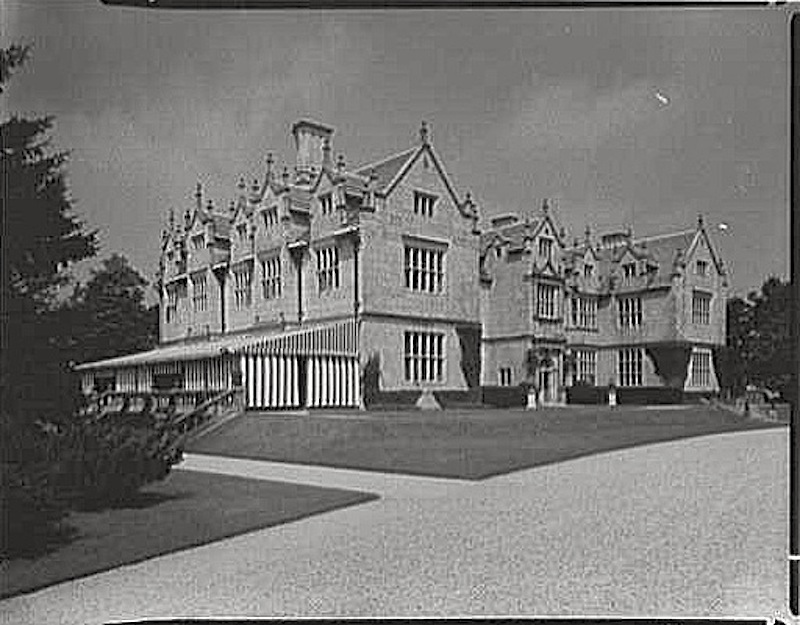
The property exists today as the student center for Salve Regina University.
La Vallée Suisse, Paris
The plants have taken over. The gardener has gone home.
— Gregory Ross, from Hidden Parks of Paris
The verdant, sunken Garden of the Swiss Valley is a true “hidden garden” of Paris. Unless you know to look for the little green gate just past the very large and silly memorial, “The Dream of the Poet,” on Avenue Franklin D. Roosevelt, you will walk right by it on your way to the Seine.
But if you do know to stop and then enter the gate, you’ll descend over a dozen faux bois steps to a “stone” arch (also constructed of concrete, as are all the other stones in the garden).
Stepping through the archway, you’ll cross an artificial pond fed by the Seine (and reputedly inhabited by carp) and look down the single path of the long narrow space. Mature trees, shrubs, and perennials cover and obscure the valley walls; some dip into the water, including a 100-year-old weeping beech.
Elaine Sciolino, writing in the The New York Times, called this garden “a tiny stage-set.” With its fake rock and old-fashioned common garden plants,* it is not really “naturalistic,” yet is like a little wilderness — its arrangement seemingly having moved beyond planting design and maintenance.
When I visited it one morning in early September, a slight haze of dust and seasonal decay hung in the air. The only other person there was a homeless man sound asleep on one of the benches, and I tried not to bother him as I walked back and forth taking pictures.
At one end of the path, a faux bois pedestrian footbridge crosses overhead. At the other, green doors signal the entrance to a Climespace plant, which — 30 meters further underground — cools the surrounding buildings with circulating chilled water.
The Swiss Valley is one of the many garden spaces along the Champs-Élysées credited to Jean-Charles Adolphe Alphand, an engineer who directed the construction of many Haussmann-era parks. Whether he actually designed it seems lost to history (on the internet, at least). I have read that the Valley was created for the Exposition Universelle of 1900, but perhaps it was the 1889 World’s Fair, as Alphand died in 1891. How Switzerland or a Swiss exhibit comes into it is also not really clear.
The little park is now called the Garden of New France because of nearby Place du Canada. At least half its 1.7 acres are above the valley garden, level with the street — an ordinary assortment of shrubs, grass, and gravel paths.
You can click on ‘Continue reading’ below to scroll through more (and larger) images.
*Including maple trees, bamboo, wavy leaf silktassel, Mexican orange, viburnum, nandina, lilac, jasmine, white hibiscus, ferns, ivy, roses, daylilies, smooth hydrangea, smokebush, Japanese anemones, and Persicaria ‘Red Dragon’.
 enclos*ure