The Sunday porch: South Dakota

South Dakota, 1940, J. Vachon, Library of CongressPierre, South Dakota, 1940, by John Vachon, via Library of Congress Prints and Photographs Division.

In the bleak midwinter, frosty wind made moan,
Earth stood hard as iron, water like a stone;
Snow had fallen, snow on snow, snow on snow,
In the bleak midwinter, long ago.

— Christina Rossetti, from “In the bleak midwinter

Waterford, Ireland

National Library of Ireland, 1929Christmas tree wagon of William Power & Sons, merchants of seeds and trees. Photo taken at Waterford, Ireland, courthouse on December 16, 1929, via National Library of Ireland Commons on flickr.

There’s another good photo of this little girl (possibly a Power) and another loaded company wagon here.

To be
Brought down at last
From the cold sighing mountain
Where I and the others
Had been fed, looked after, kept still,
Meant, I knew — of course I knew —
That it would only be a matter of weeks,
That there was nothing more to do. . . .

James Merrill, from “Christmas Tree

Hanging gardens, Basel

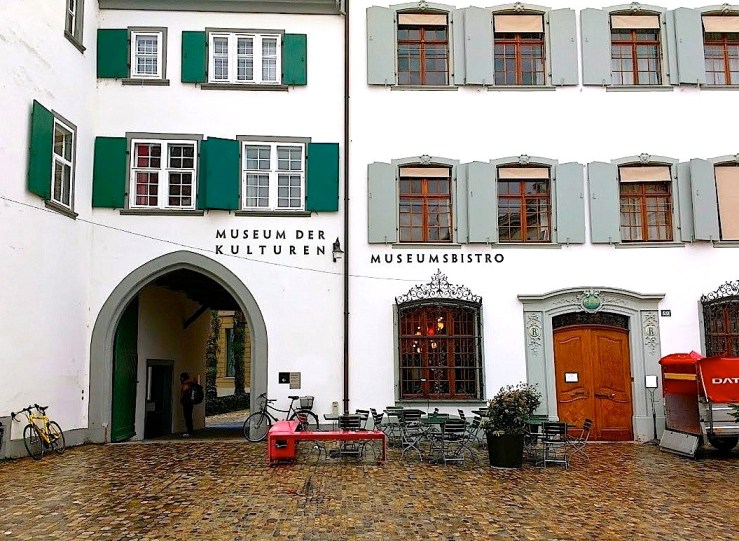
Street entrance, Basel Museum of Culture, 2015, enclos*ure

In Basel, Switzerland, the day after Thanksgiving, we went looking for lunch and ended up at the very pretty bistro of the Museum of Culture — located on the same square as the Münster.

The museum posters decorating the café were so interesting that we decided to go next door (above, left side) and take a look.

Given the quiet, very traditional appearance of the street entrance, we were completely surprised by what we found on the other side of the archway.

This slideshow requires JavaScript.

In an enclosed courtyard, seven, four-story tall columns of plants hang from the deep eave of an irregularly folded roof of glistening ceramic tiles.

The museum* is 166 years old and houses a current collection of over 300,000 ethnographic artifacts from around the world. The hanging columns were installed in 2011, part of an extensive renovation of the building by Herzog & de Meuron.

To scroll through larger versions of the photos (and several more), click on ‘Continue reading’ below and then on any thumbnail in the gallery.

Next: more about the Schürhof, the sloping courtyard below the columns.

*Admission to the Museum der Kulturen is about $16, but the last hour of the day (4:00 – 5:00 p.m.) is free.  This is plenty of time to see the large room of Medieval and Renaissance art displayed there until the prestigious Kunstmuseum Basel, currently being renovated, reopens in 2016.  (You can also see some of its late 19th century and early modernist art at the Museum für Gegenwartskunst or Contemporary Art until February 21, 2016.  The Gegenwartskunst also has a small exhibition of paintings and sculptures by Cy Twombly until March 13.  Admission is free.)

Continue reading “Hanging gardens, Basel”

The Sunday porch: Pleasant Hill, N.C.

Pleasant Hill, N.C. F.B. Johnston, Library of Congress

Pleasant Hill, Vance County, North Carolina, 1938, by Frances Benjamin Johnston for the Carnegie Survey of the Architecture of the South via Library of Congress Prints and Photographs Division.
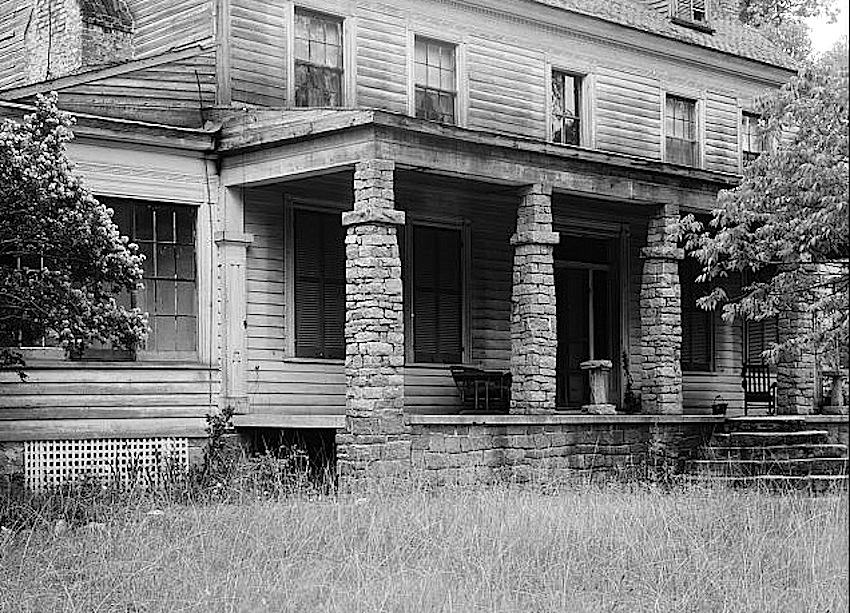
Pleasant Hill,cropped, N.C. F.B. Johnston, Library of Congress
Detail of photo above.

The plantation house, later known as Rivenoak, was built sometime between 1750 and 1780 by Philemon Hawkins, Jr.

A 2011 view of the house is here.  Unfortunately the stone columns are gone.

Münster gardens, Basel

This slideshow requires JavaScript.

The simple garden behind the Münster of Basel, Switzerland, features a bronze replica of the church and its cloisters.

The building — constructed from the 13th century to 1500 — was originally a Roman Catholic cathedral and is now a Reformed Protestant church.

To scroll through larger versions of the photos, click on ‘Continue reading’ below and then on any thumbnail in the gallery.

The harp at Nature’s advent strung
Has never ceased to play;
The song the stars of morning sung
Has never died away. . . .

The blue sky is the temple’s arch,
Its transept earth and air,
The music of its starry march
The chorus of a prayer.

So Nature keeps the reverent frame
With which her years began,
And all her signs and voices shame
The prayerless heart of man.

— John Greenleaf Whittier, from “The Worship of Nature
