
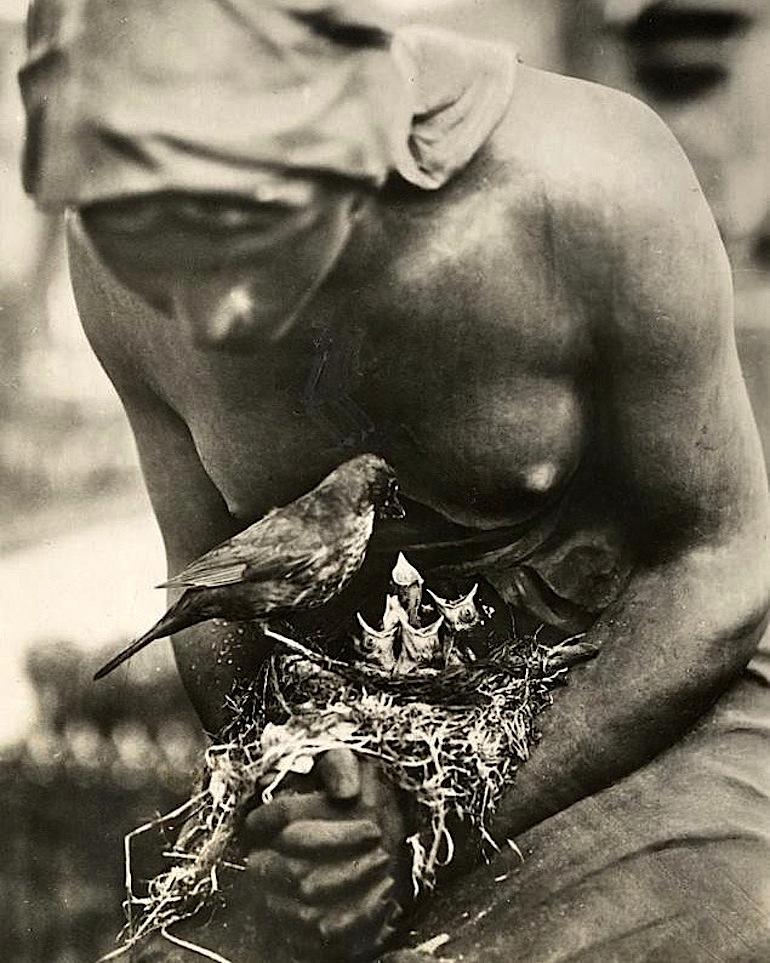
“Blackbird’s nest in the folded hands of a statue on a graveyard in Berlin, Germany,” 1932, Het Leven photographer, via Nationaal Archief (Netherlands) Commons on flickr.
Category: design
The urn

“Castle, possibly in Italy,” ca. 1900, by Queen Victoria of Sweden, via Tekniska Museet (Sweden) Commons on flickr under CC license.
Click on the image to enlarge it. There are three more enormous urns on the right and some very tall agave blooms/stalks to the left of the little gate just in front of the castle.
Victoria (or Viktoria) of Baden — Queen of Sweden after 1907 — was the daughter of the Grand Duke of Baden (south-west Germany). She married Crown Prince Gustaf in 1881, and they had three children, but it was not a happy marriage. From 1882, she spent almost every winter in Egypt and Italy, mostly in Capri. She was a good amateur photographer, as well as a painter and sculptor.
In a vase on Monday: red tulips, blue pot
I have a new old salt-glazed pottery crock from the Stuttgart Saturday flea market — just the right size for a supermarket bouquet of tulips.
The market always has a lot of these pretty blue and grey pots, which were made in the Westerwald* region of Germany and range in size from egg cup to several liters. They are very affordable: normally about €5 to €12 for those big enough to hold kitchen utensils. I haven’t found anything particularly useful online about how to assess their age. The woman who sold me this one pointed out the circular ridges on its bottom as an indication that it was “very old.” But I’ve seen other pots labeled “antique” (late 19th century) on websites that have smooth bottoms. I think you just have to look for a pleasing pattern and patina combination.
To see what other garden bloggers have put in vases today, please visit Cathy at Rambling in the Garden.
*between Bonn and Frankfurt.
The Sunday porch: East Hampton, N.Y.

Home of E.E. McCall, East Hampton, New York, between ca. 1910 and ca. 1915, by Bain News Service, via Library of Congress Prints and Photographs Division.
The house was a split level. You can see the two-story side here.
Edward Everett McCall was a Justice of the Supreme Court of New York. He also ran unsuccessfully for mayor of New York City as the Tammany candidate. He died in 1924, and his seaside house burned down three years later.
Under grass
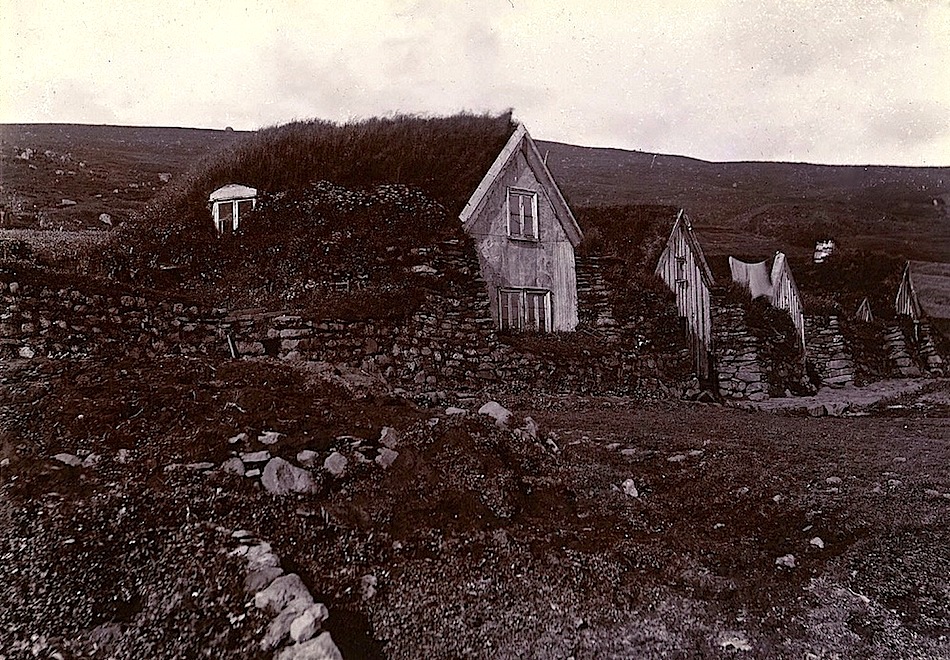 Turf farmhouse in Hlíðarendi, Fljótshlíð, Iceland, ca. 1900, by Frederick W.W. Howell, Cornell University Library, via Cornell University Library on flickr (both photos).
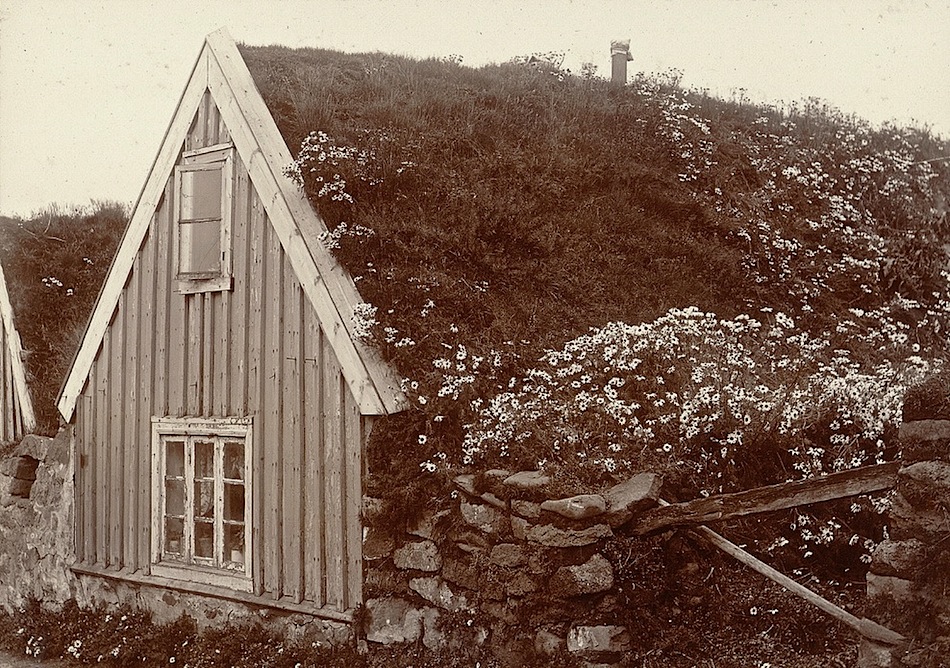 House covered with chamomile in Reykjavík.
 enclos*ure