In a vase on Monday: roses


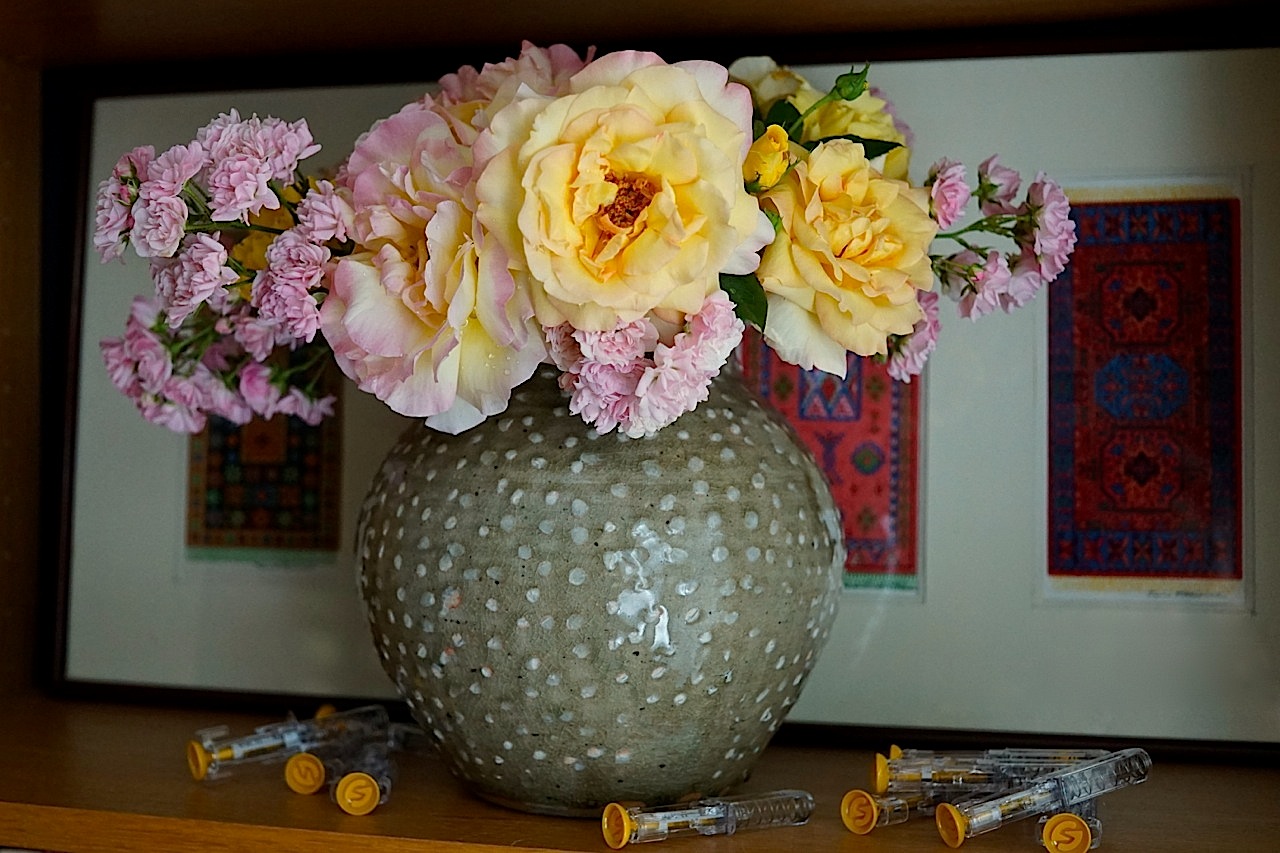
Not an arrangement for the ages, but I did manage this morning to hobble out into the backyard and cut these roses (re: foot surgery), so it represents progress.

The vase is from Gatagara Pottery in Rwanda. The “accessories” are some of my used Mono-Embolex syringes, which, strangely, I find appealing as design.*
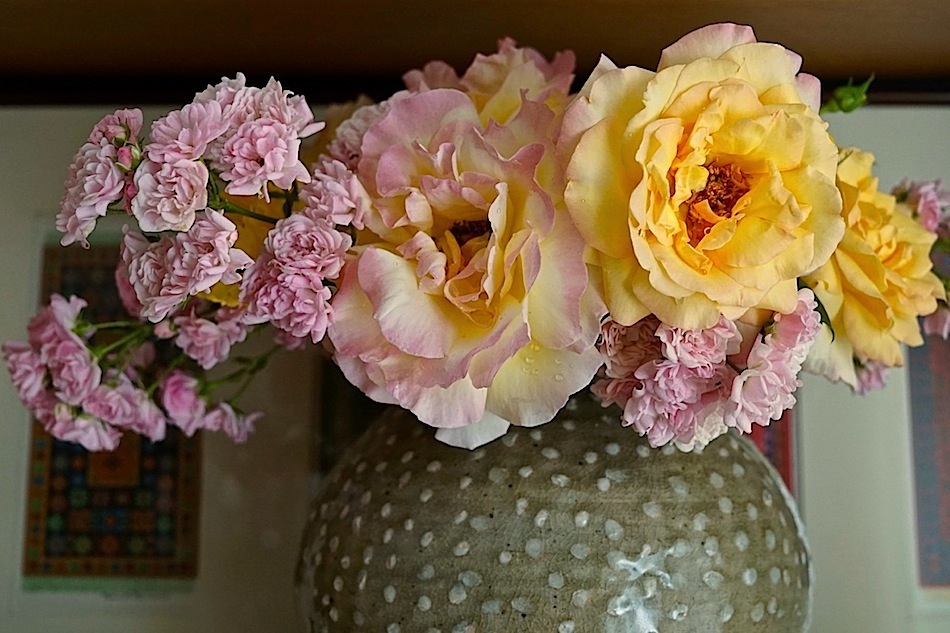
The big yellow and pink blooms are giving this end of the dining room a nice rosy smell.

To see what other bloggers have put in a vase today, please visit Cathy at Rambling in the Garden. She hosts this Monday theme.


*Also, I’m not sure how to throw them away — garbage/recycling sorting is a very serious business here in Germany. I still have a collection from my last operation.

The Sunday porch: Hill End


“Two women on veranda of rendered* cottage with shingle roof and front garden, Hill End, New South Wales, ca. 1872,” by Charles Baylissvia National Library of Australia Commons on flickr.

Hill End was a gold rush town. At the time of this photo, “it had a population estimated at 8,000 served by two newspapers, five banks, eight churches, and twenty-eight pubs,” according to Wikipedia. The rush was over by the early 20th century. In 2006, the town was down to 166 people.

The photographer came to Hill End as an assistant to a traveling photographer who had been contracted to take pictures of the area that could be used to advertise the mining colony and attract new residents.


*Render is stucco.

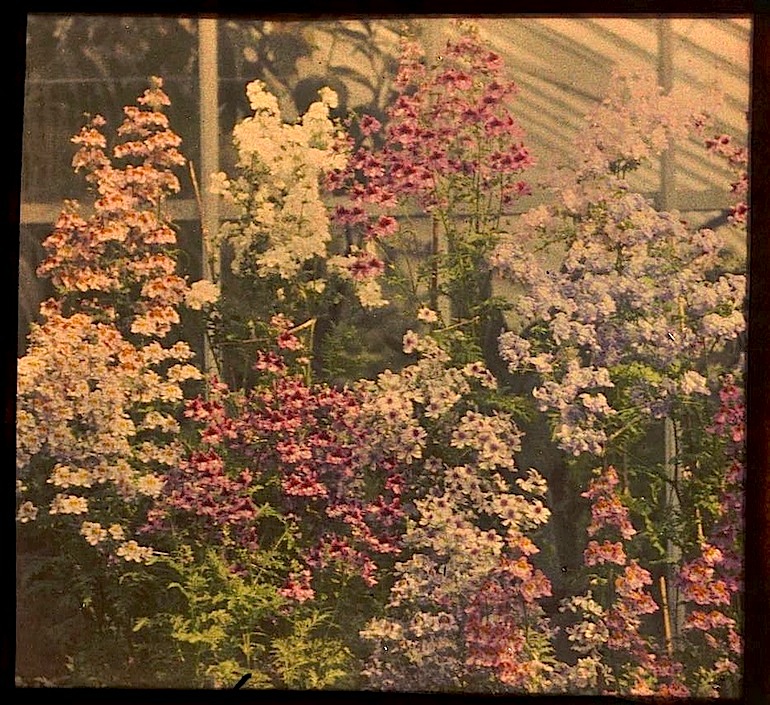
Orchids, not


“Syzanthus Butterfly Orchid,” ca. 1909, an autochrome by Charles C. Zoller, via George Eastman Museum Commons on flickr.

I believe these are Schizanthus pinnatus, an annual herbaceous plant native to Chile and a member of the Solanaceae or nightshade family. It is also called butterfly flower or poor man’s orchid.

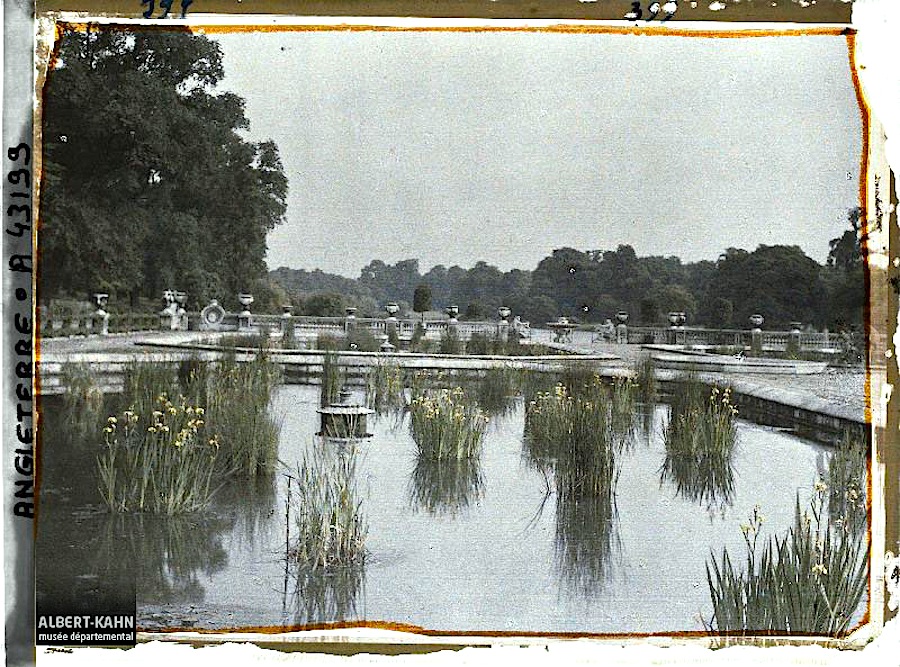
Kensington Gardens, London


Yellow flag iris (I. pseudacorus) in the basins of the Italian Gardens of Kensington Gardens, London, June 1924, by Roger Dumas, via Archives of the Planet Collection – Albert Kahn Museum /Département des Hauts-de-Seine.

These water gardens are over 150 years old and may have been a gift from Prince Albert to Queen Victoria.

This autochrome is one of about seventy-two thousand that were commissioned and then archived by Albert Kahn, a wealthy French banker and pacifist, between 1909 and 1931. Kahn sent thirteen photographers and filmmakers to fifty countries “to fix, once and for all, aspects, practices, and modes of human activity whose fatal disappearance is no longer ‘a matter of time.'”* The resulting collection is called Archives de la Planète and now resides in its own museum at Kahn’s old suburban estate at Boulogne-Billancourt, just west of Paris. Since June 2016, the archive has also been available for viewing online here.


*words of Albert Kahn, 1912. Also, the above photo (A 43 199) is © Collection Archives de la Planète – Musée Albert-Kahn and used under its terms, here.

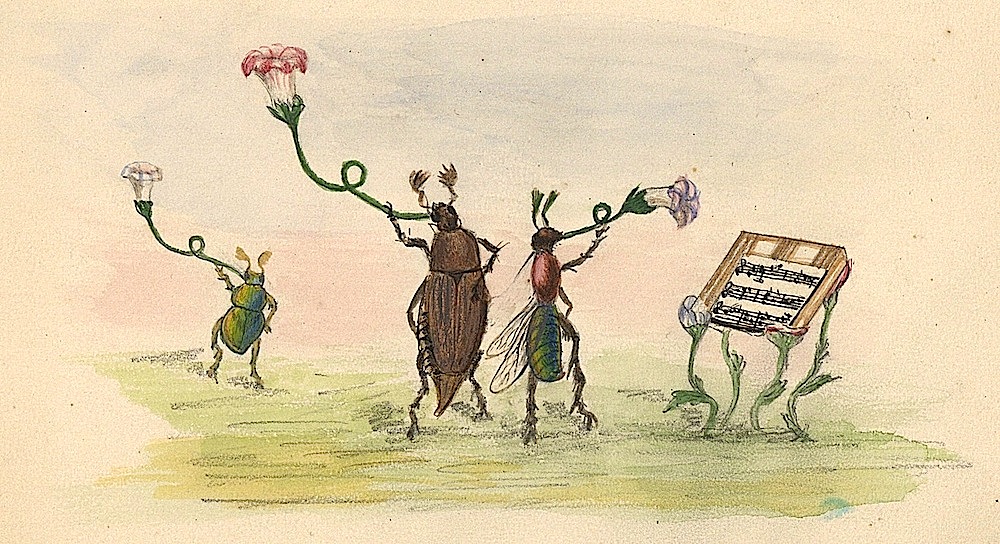
Põrnikate orkester

“Beetle orchestra,” artist and date unknown, via National Archives of Estonia Commons on flickr.

The pencil and watercolor drawing comes from an album of poetry and fanciful sketches of bugs and birds.  It was found in the 18th century manor house of the Saadjärve estate, which has belonged to several noble Baltic German families over the centuries. The album may be connected to the von Koskulls, who owned the property in the 19th century. There are more examples of the drawings here.

By the way, an Instagram post by @smithsoniangardens reminds us that although “[t]hey may be less elegant than other pollinators, . . . beetles have been providing their pollination services far longer than many of the well-known pollinators. Ancient and abundant in numbers, there are almost four times as many species of beetles as animals with backbones!” (This is Pollinator Week.)

As always, you can click on the image for a little better view.