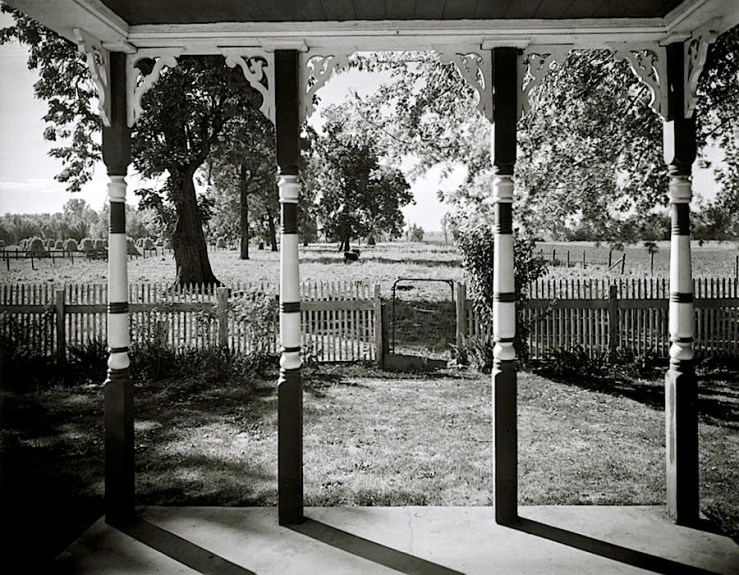
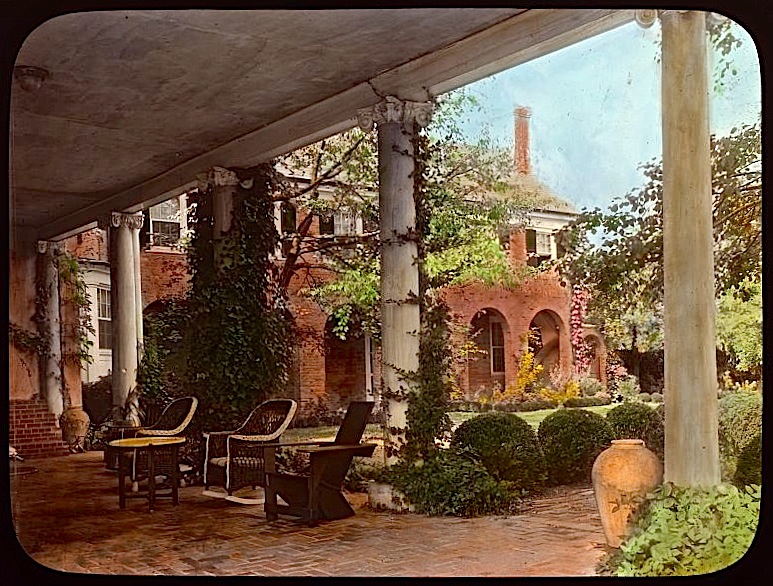
 Above: View from the porch of the Flanders Callaway House, Warren County, Missouri, 1938, by Charles or Alexander Piaget, working with Charles van Ravenswaay (later incorporated into a 1985 HABS).*
All photos here via Library of Congress Prints and Photographs Division.
This slideshow requires JavaScript.
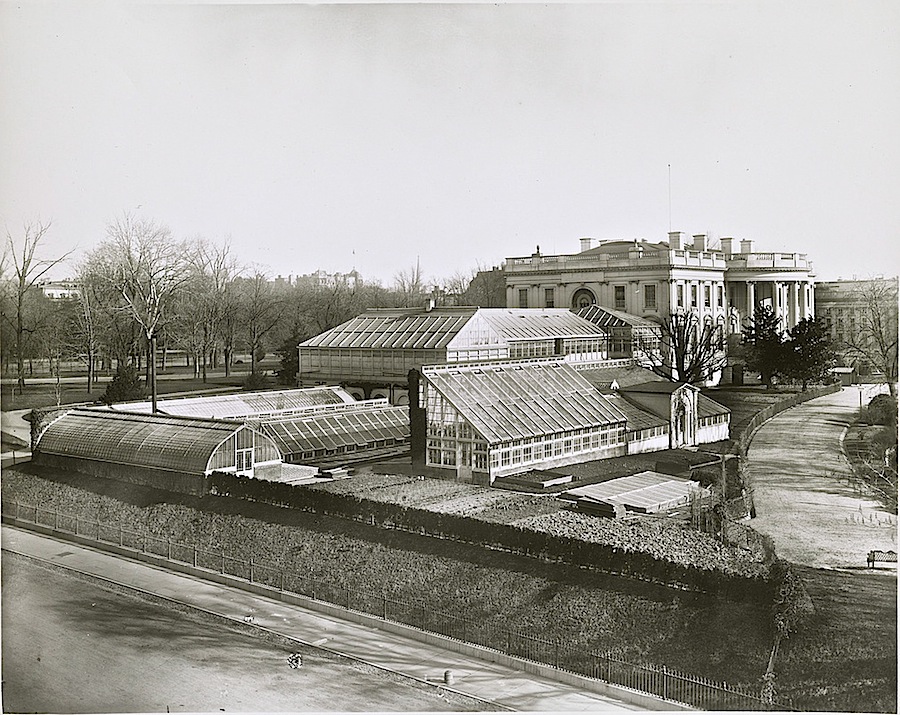
Above: “View from White House porch [looking north to Lafayette Park],” Washington, D.C., 1920, from National Photo Company Collection. President and Mrs. Wilson introduced sheep to the White House lawn. The wool went to the Red Cross.
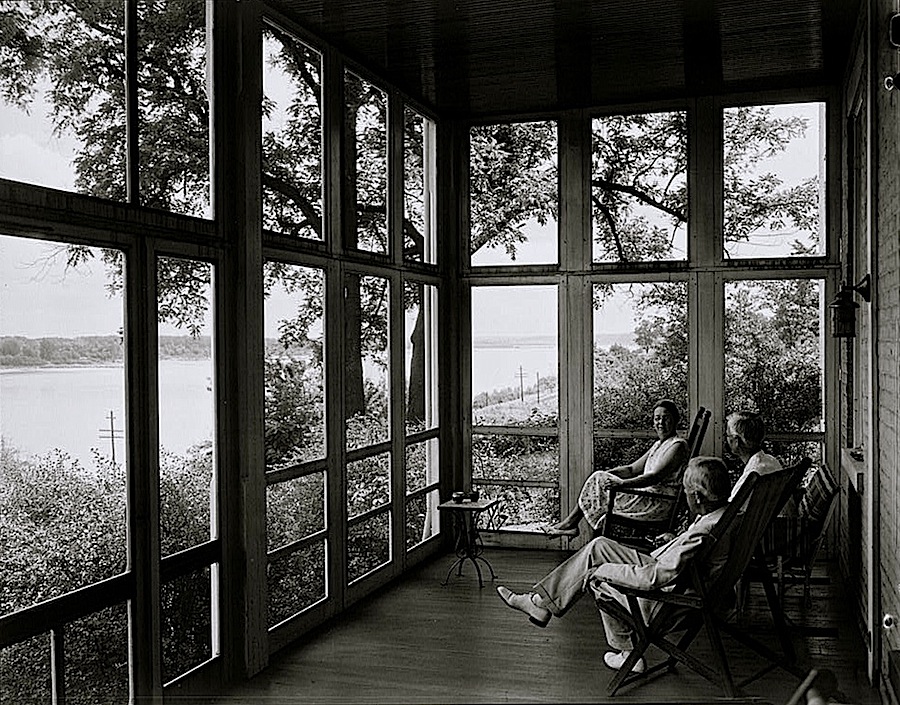
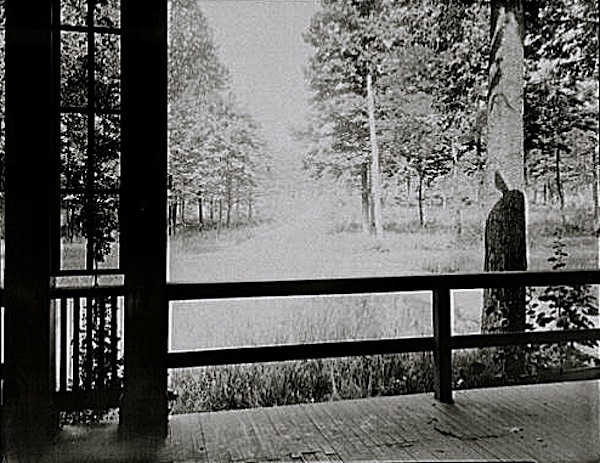 Above: View from porch at Shady Rest Sanatorium, White Heath, Illinois, ca. 1920 – 1950, by Theodor Horydczak.
This slideshow requires JavaScript.
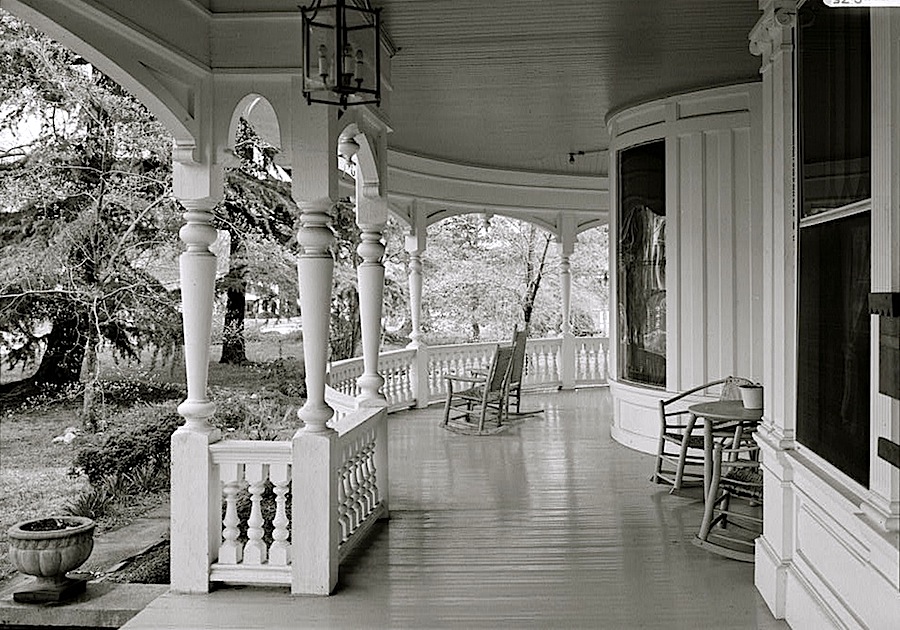
Above: Looking north from the porch of the Kolb-Pou-Newton House [or Boxwood], Madison, Georgia, June 1936, by L. D. Andrew for HABS.
This slideshow requires JavaScript.
Above: View of garden from the porch – Oakland Plantation, Natchitoches Parish, Louisiana, ca. 1988, by HABS.
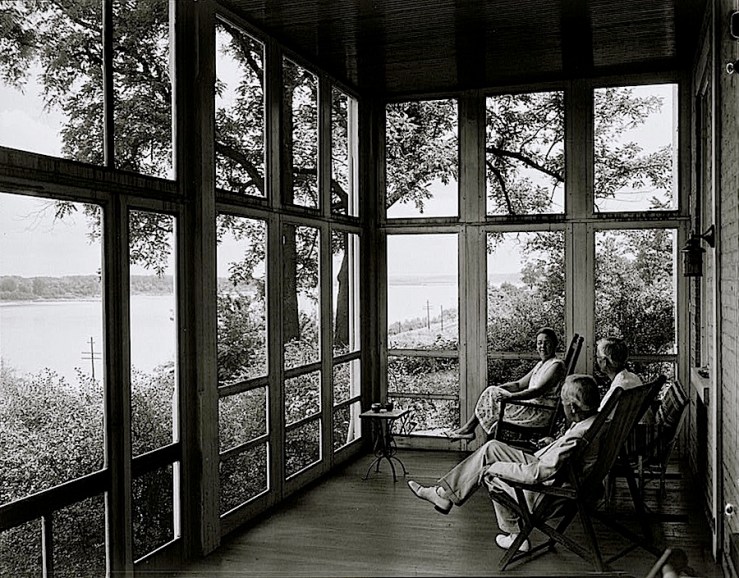 Above: Mr. and Mrs. J. H. Dickbrader and Mr. Arcularius on the porch of the Dickbrader House, Franklin County, Missouri, by HABS.
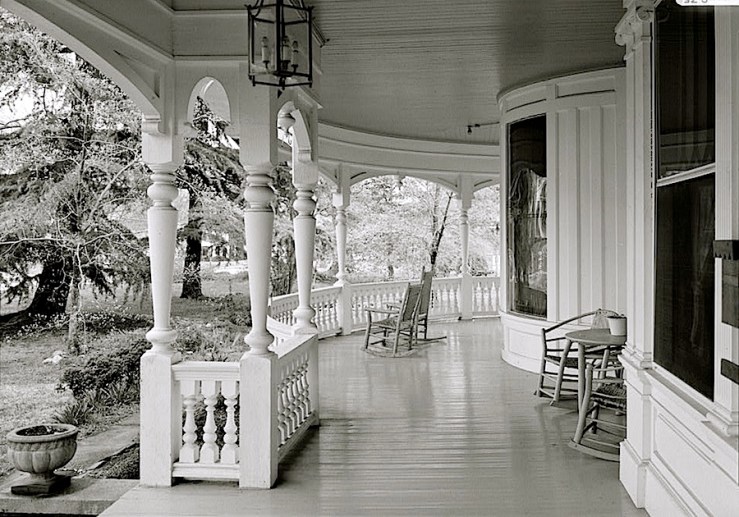 Above: John Calvin Owings House, Laurens, South Carolina, by HABS.
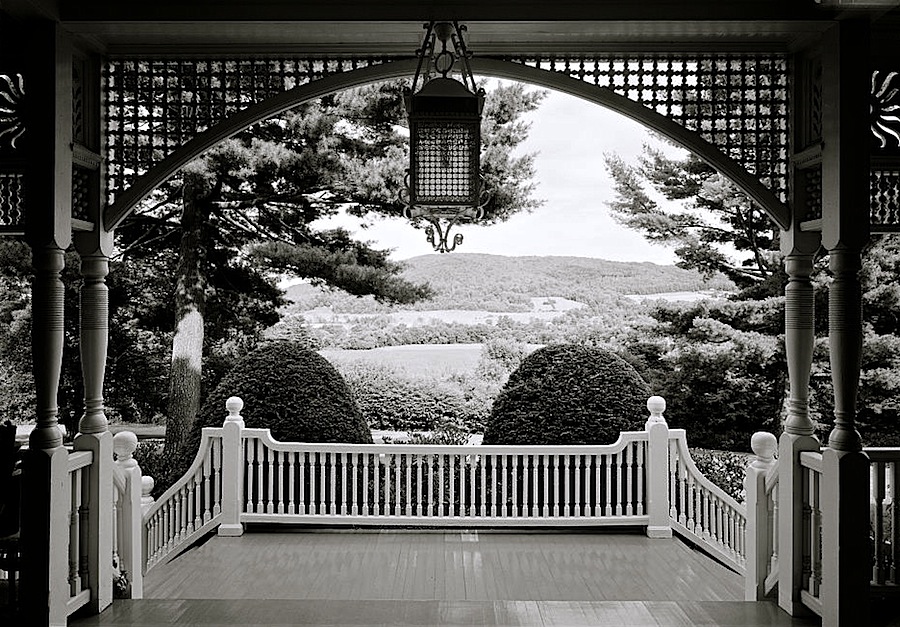
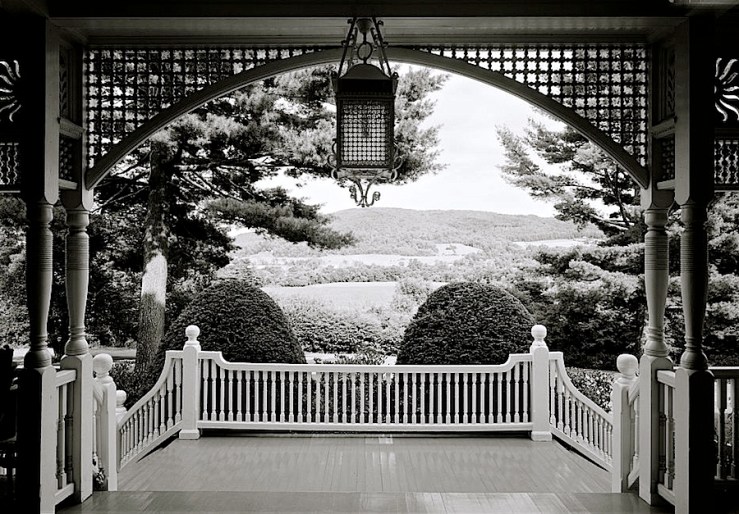 Above: View from the veranda of the Billings Farm and Museum to Blake Hill, Marsh-Billings-Rockefeller National Historical Park, Woodstock, Vermont, 2001, by David W. Haas for HABS.
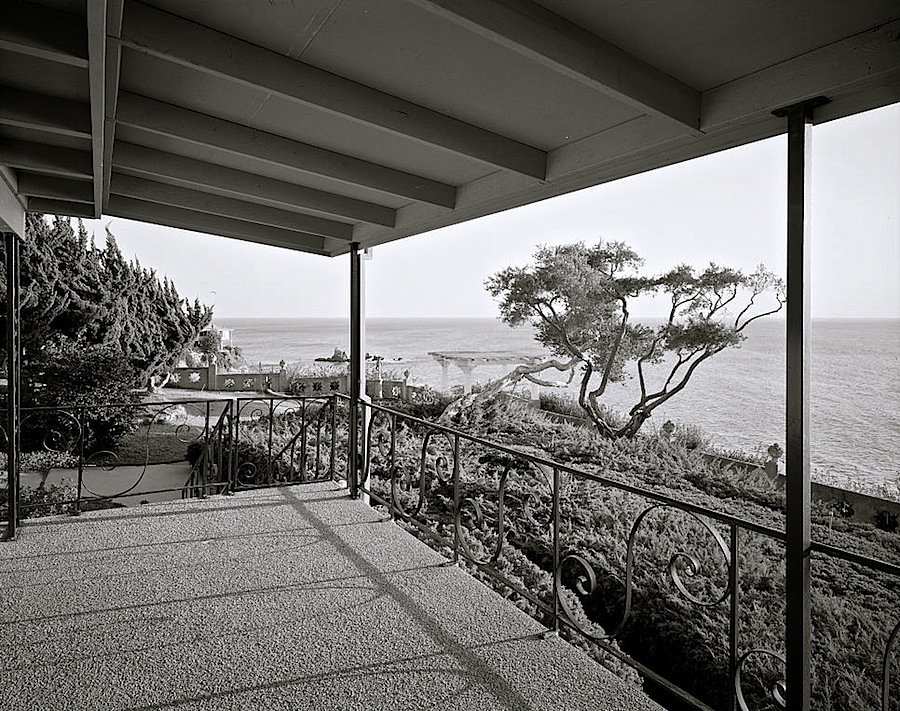
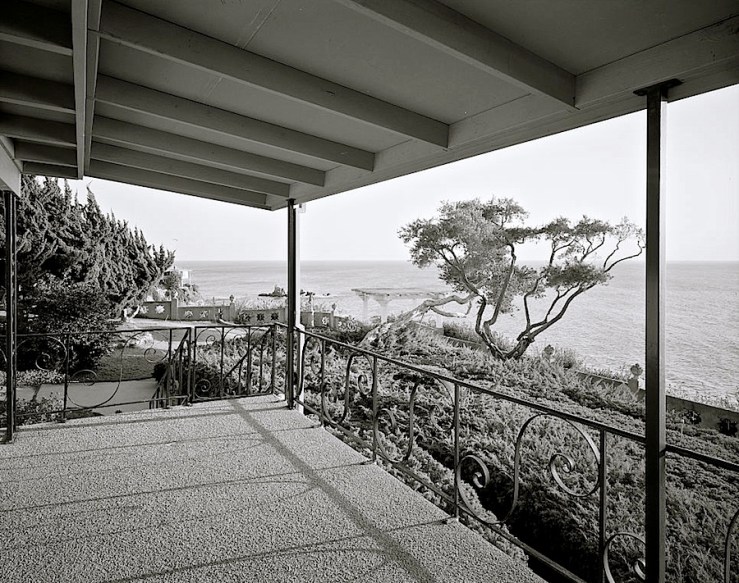 Above: Porch of Smithcliffs House, North Coast Highway, Laguna Beach, California, by HABS.
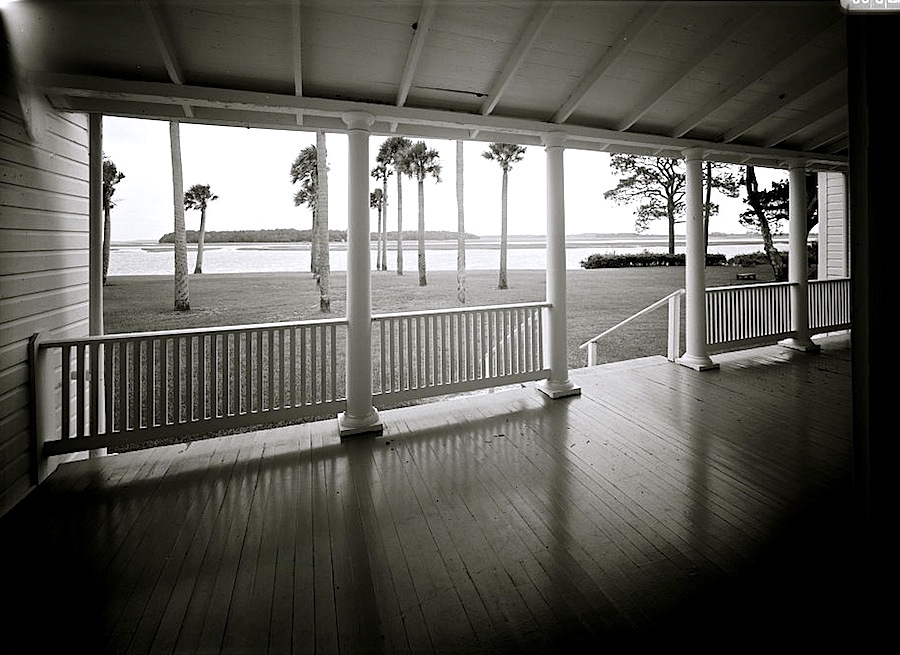
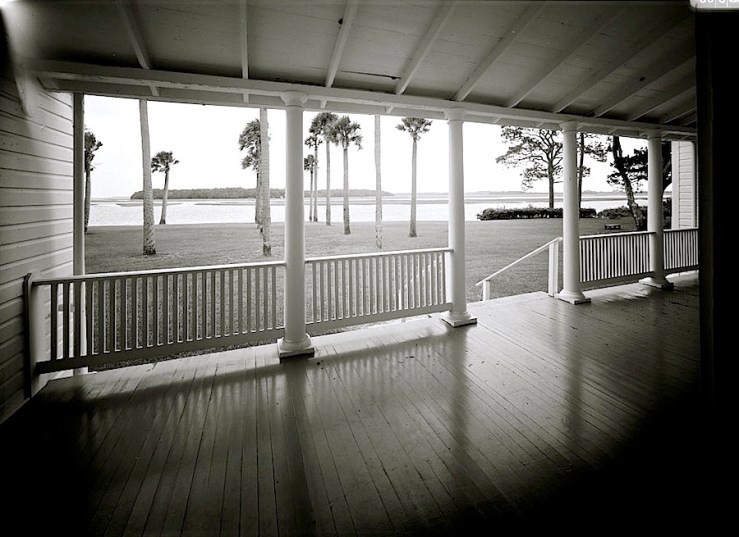 Above: “View from north porch, looking northeast toward Fort George River – Kingsley Plantation House,” Jacksonville, Florida, 1005, by Jack Boucher for HABS.
This slideshow requires JavaScript.
Above: “View from north porch looking south into Back Hall, with Reception Hall south door open [and closed] – Homewood (cropped slightly by me),” Baltimore, Maryland, 2005, by James W. Rosenthal for HABS.
*Historic American Building Survey

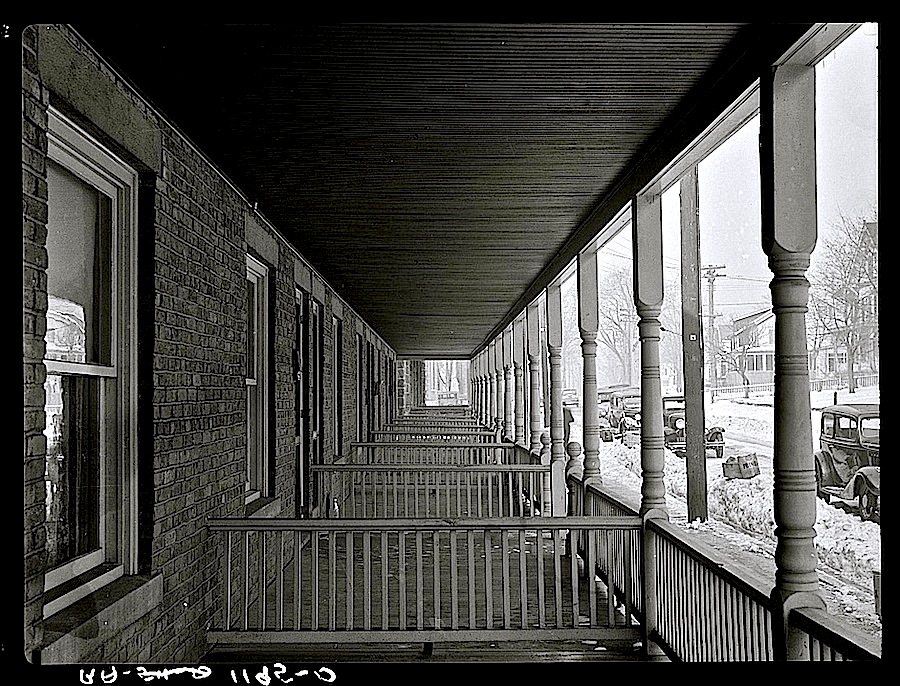 “Back [?] porches of a series of identical houses. Bound Brook, New Jersey,” February 1936, by Carl Mydans, via Library of Congress Prints and Photographs Division.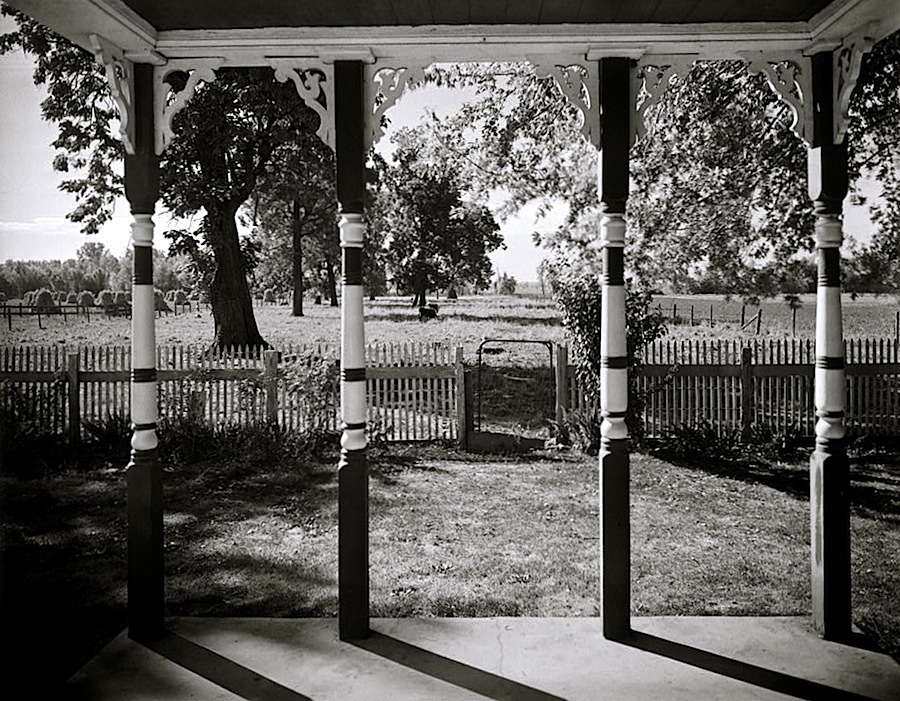

 enclos*ure