The Sunday porch: the hollows

Nicholson2
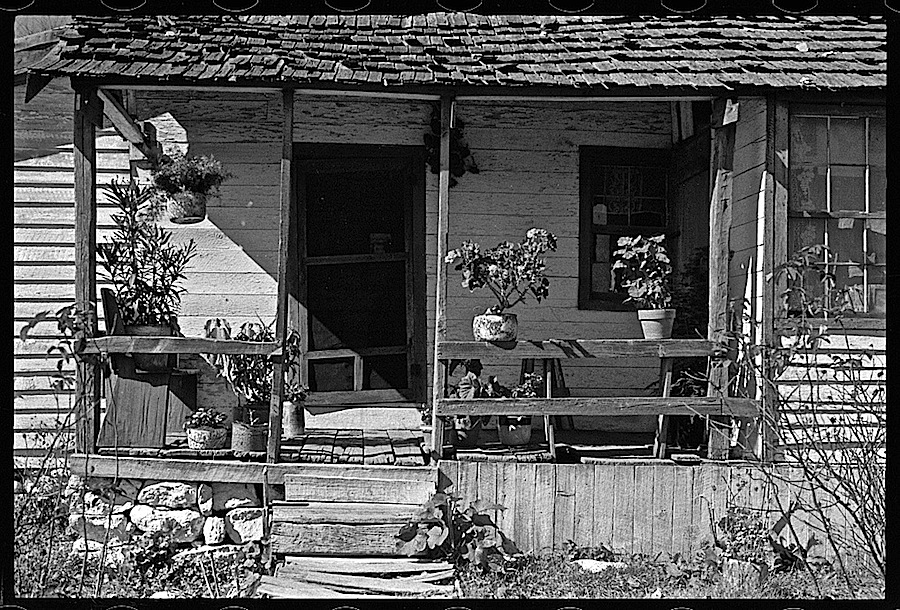
There seems to be a potted oleander on the left side.

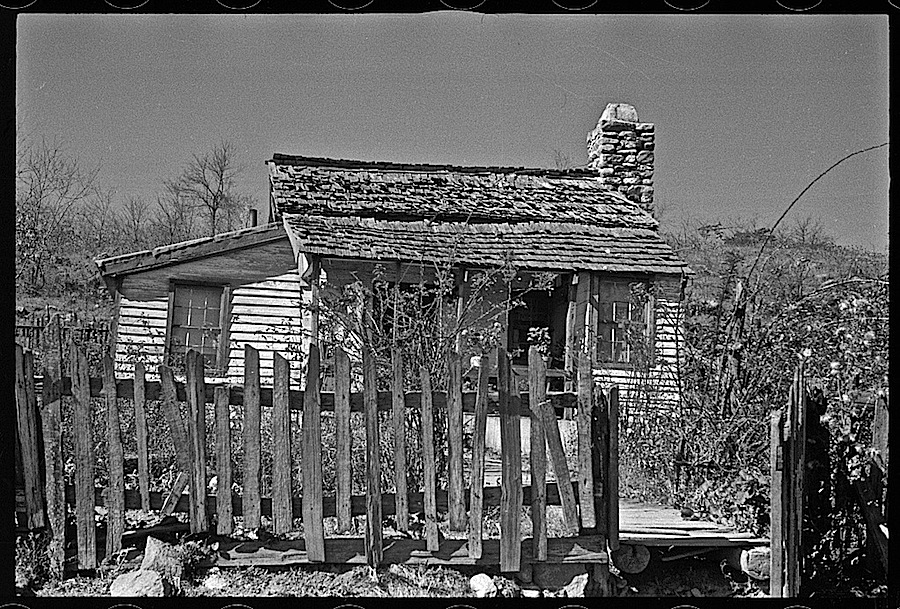
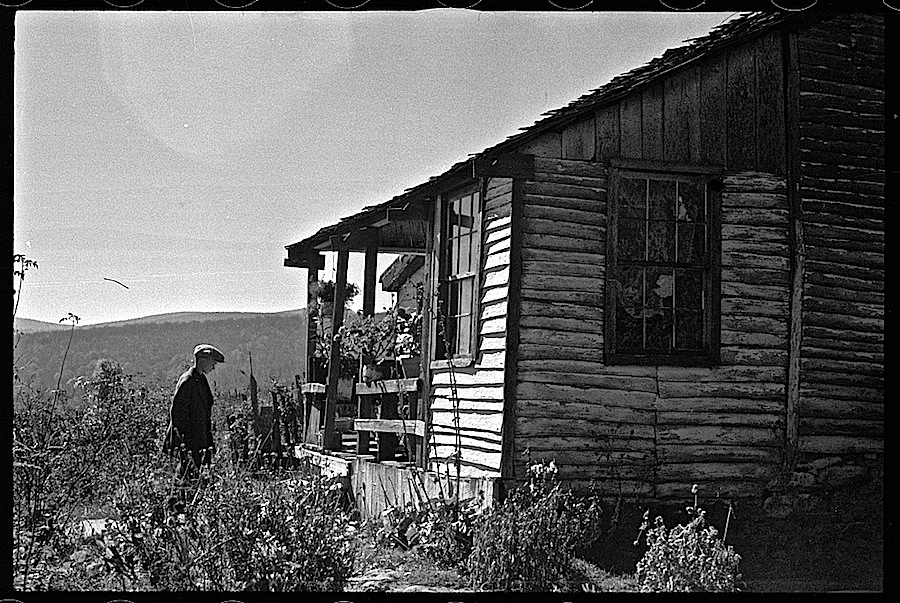
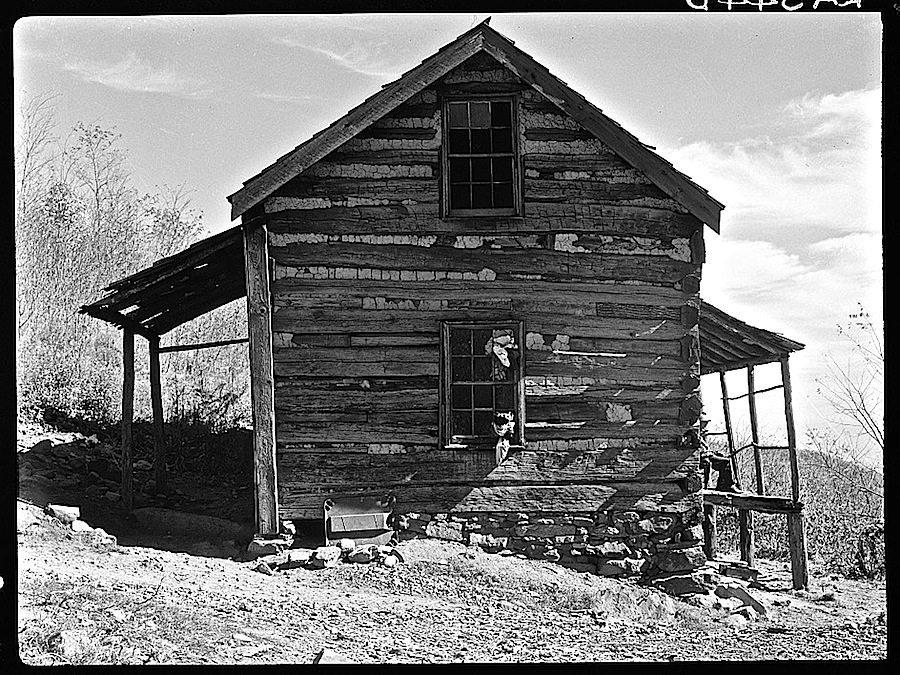
The front porch of a home of the extended Nicholson family of Nicholson Hollow (top three images) in Shenandoah National Park, Virginia, October 1935.*

The Shenandoah National Park is a narrow strip of supremely lovely wilderness along the edge of the Blue Ridge Mountains in Virginia. It begins at Front Royal, about 75 miles west of Washington, D.C., and ends west of Charlottesville.

The park was authorized by Congress in 1926 and fully established by the end of 1935 — two months after these pictures were taken by Arthur Rothstein for the U.S. Resettlement Administration (later the Farm Security Administration).

In order to create a fully “natural” environment, over 450 families were moved out of the park area under the process of eminent domain. Most were small farmers who had been portrayed in a widely publicized 1933 sociological study as desperately poor, primitive, and cut off from 20th century society.
Nicholson3

After they were gone, the Civilian Conservation Corps destroyed their homes and outbuildings. The only structures saved were some log houses and rail fences around Nicholson Hollow.
Nicholson

In the mid 1990s, the National Park Service sponsored an archaeological survey of 88 pre-park human settlements in Nicholson, Corbin, and Weakley Hollows.**

The findings of the study strongly refuted the earlier claims that the families (who were indeed often poor) were cut off the modern world. Researchers found china plates, mail order toys, 78 RPM record fragments, pharmaceutical bottles, and automobile parts.
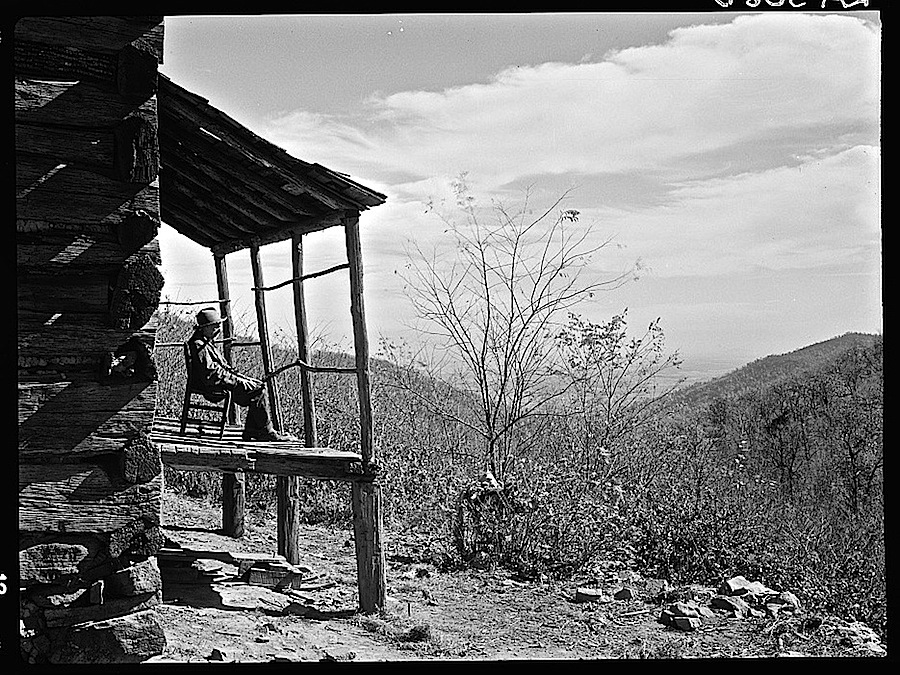
CorbinPorch view of Corbin Hollow from one house of the Corbin family (above and below).

The Corbins were very hard hit by the Depression-years decline of the nearby Skyland Resort, which had previously given them employment and a market for their crafts.
Corbin3

There are two very good papers on the displaced people of Nicholson and Corbin Hollows on the National Park Service website, here and here.
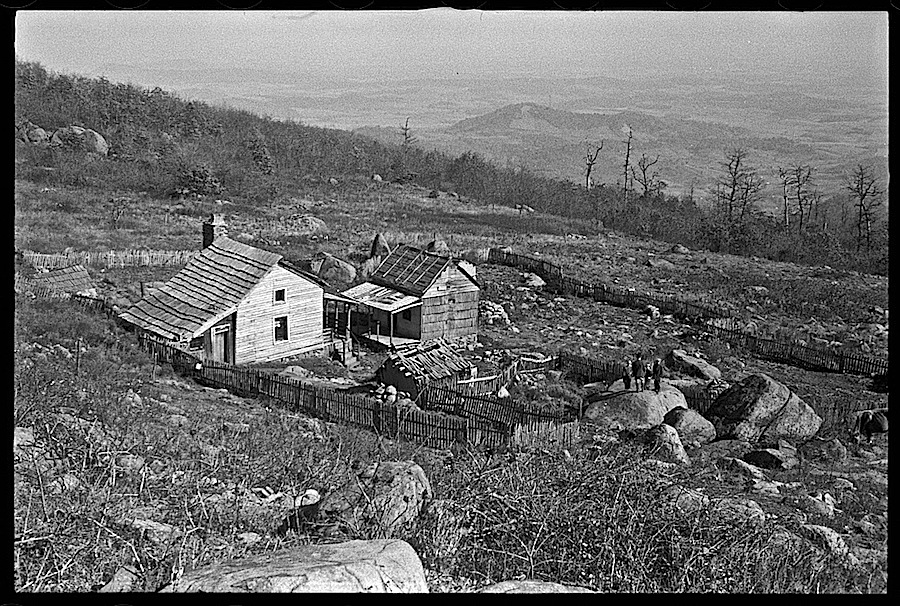
Corbin Hollow farm, Shenandoah Natl. Park, 1935, LoCAbove: another Corbin Hollow farm.

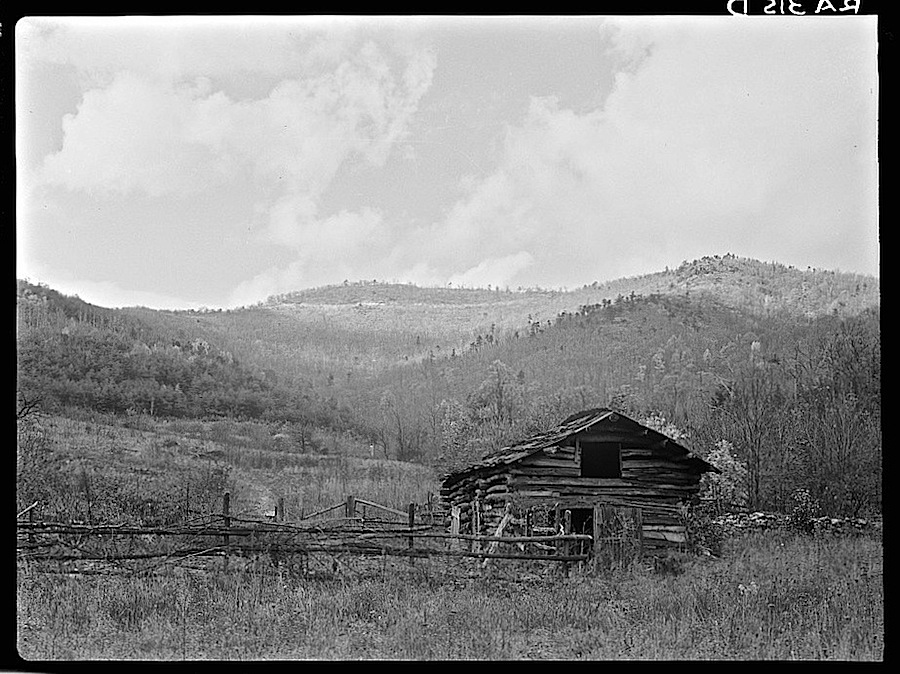
ViewAbove: an abandoned house in Nicholson Hollow.

More of Rothstein’s Shenandoah images are here. Recording the last days of the park’s human inhabitants was his first assignment with the Resettlement Administration.


*All the photos here by Arthur Rothstein, in 1935, via Library of Congress Prints and Photographs Division.

**In 2000, not long after the study was completed, a forest fire destroyed all but two of the remaining above-ground buildings.
Vintage landscape: boxwood path

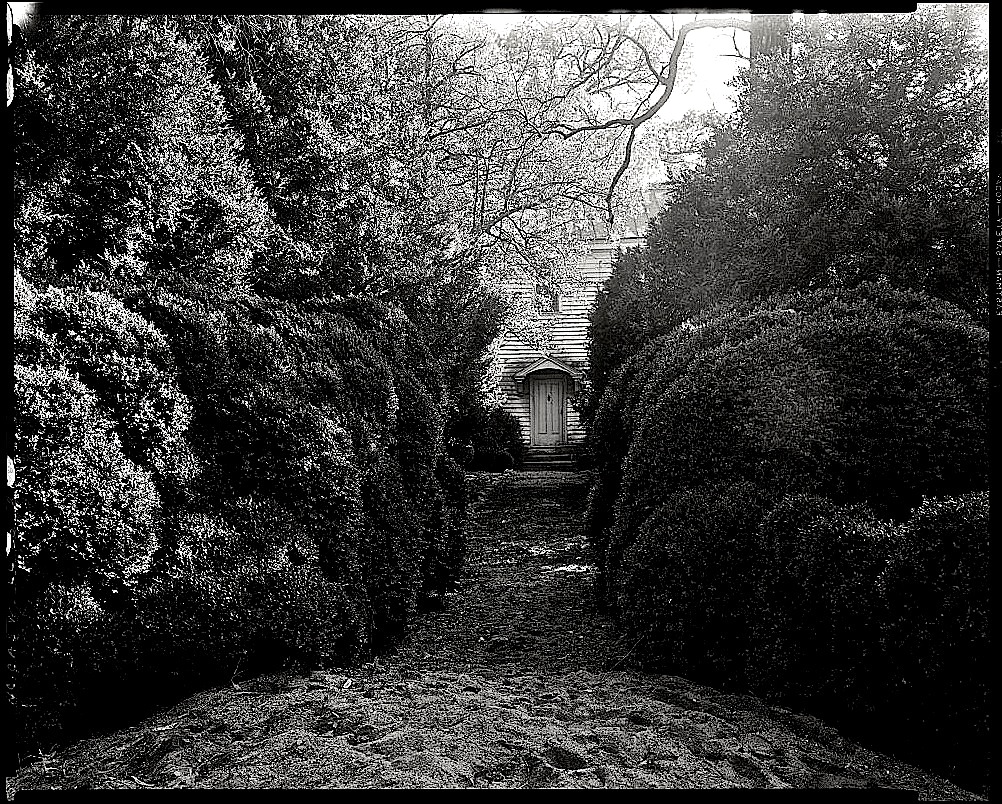
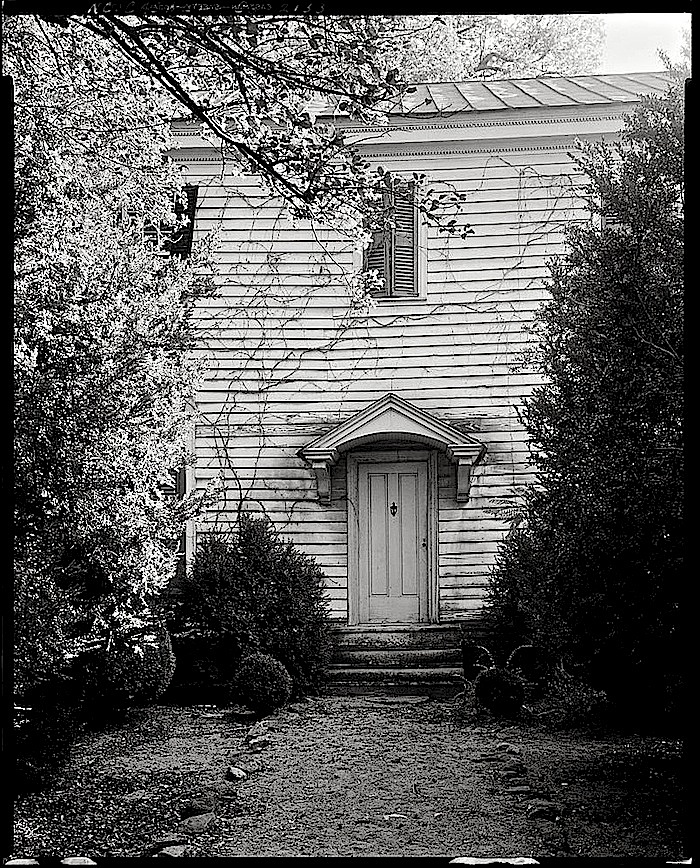
Rose HillRose Hill, Yanceyville, North Carolina, 1938, by Frances Benjamin Johnston, via Library of Congress Prints and Photographs Division.

Rose Hill, Library of Congress

I like to imagine that front door as yellow.

The house still stands and continues to be owned by the Brown family, who built it in 1800.

You can view larger versions of these photos by clicking on ‘Continue reading’ and then on either thumbnail in the gallery.

Nothing moves in boxwood
where gray soldiers lie.

Dave Smith, from “Winesaps

Vintage landscape: the bench

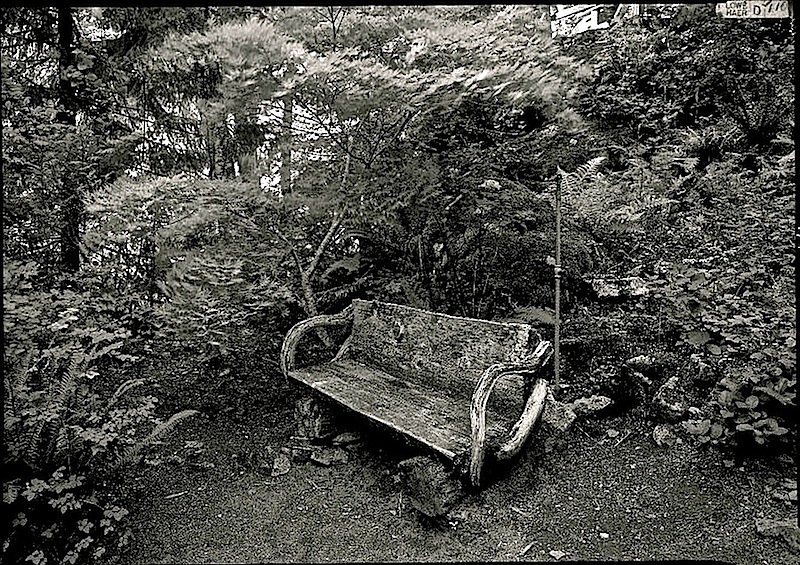
Vintage landscape/enclos*ure: bench at Ladder Creek Gardens, Washington, via HABS, Library of CongressRustic bench at Ladder Creek Gardens, Newhalem, Washington. Photo taken 1989 for an Historic American Buildings Survey (HABS), via Library of Congress Prints and Photographs Division.

The gardens, next to Ladder Creek Falls, were landscaped during the 1930s as a showcase for the Skagit Hydroelectric Project, which now provides power to the city of Seattle.

My husband and I were arguing about a bench we wanted to buy and put in part of our backyard, a part which is actually a meadow of sorts. . . . My husband wanted a four foot bench and I wanted a five foot bench. This is what we argued about. My husband insisted that a four foot bench was all we needed, since no more than two people (presumably ourselves) would ever sit on it at the same time. I felt his reasoning was not only beside the point but missed it entirely; I said what mattered most to me was the idea of the bench, the look of it there, to be gazed at with only the vaguest notion it could hold more people than would ever actually sit down. The life of the bench in my imagination was more important than any practical function the bench might serve. . . .

Mary Ruefle, from “The Bench

Life in gardens: June 14, 1944

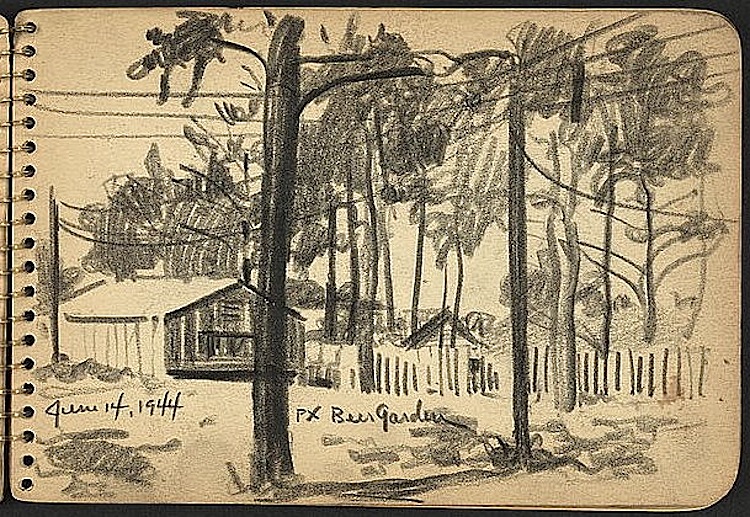
PX Beer Garden, June 14, 1944, via LoC

PX beer garden at Fort Jackson, South Carolina, June 14, 1944, by Victor Alfred Lundy, via the Library of Congress Prints and Photographs Division.

A beer garden is simply a shady outdoor area with tables and chairs where beer and sometimes food is served. The idea originated in the Bavaria region of Germany in the 19th century and soon came to America. There’s a brief history of beer gardens in the U.S. here.

Some American beer gardens were such pleasant, seemingly wholesome places that they rattled the resolve of the temperance movement. A woman on a committee investigating Chicago drinking spots wrote of one: “Isn’t it beautiful? Can it be, is it possible, that after all our ideas are wrong and these people are right?”

Beer gardens, like the one pictured above, were features of at least some homeland military camps and forts in the mid 1940s. Camp Mackall in North Carolina had six. I found a reference to one at Fort McClellan near Anniston, Alabama.  

During his U.S. Army service, Victor Lundy filled eight sketchbooks with scenes of his training at Fort Jackson, his life on a transport ship crossing the Atlantic, and his frontline duty in France.

After the war, he became an architect, admired today for “his sculptural sense of form” and  “innovative use of engineering technology,” according to the Smithsonian Institution.

Vintage landscape: summer shimmer

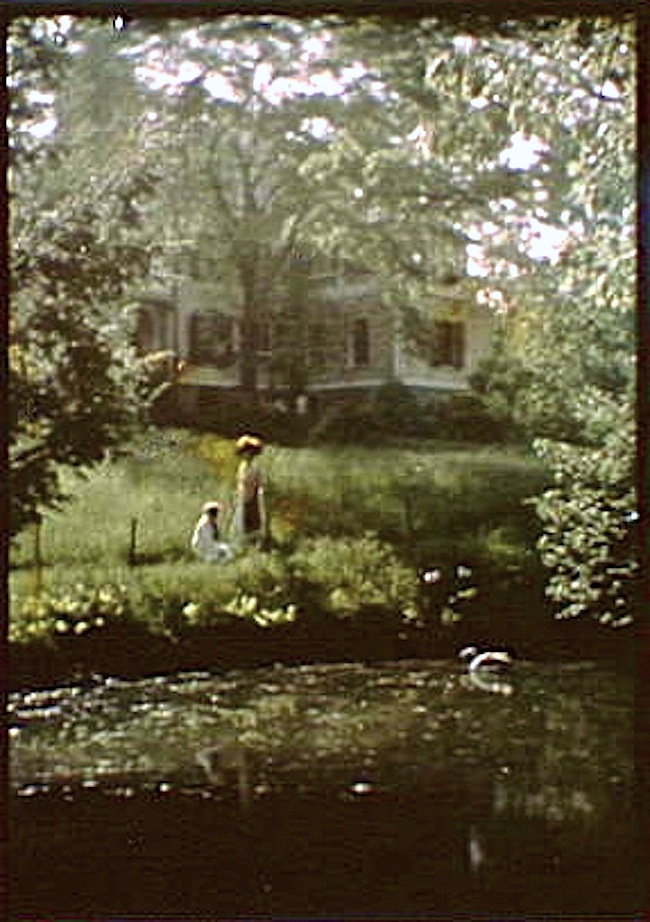
Vintage landscape/enclos*ure: woman and child, Arnold Genthe“Woman and child in a field in front of a white house,” an autochrome taken between 1906 and 1942, by Arnold Genthe, via Library of Congress Prints and Photographs Division.

“If an autochrome was well made and has been well preserved, color values can be very good,” according to the Wikipedia entry on this early color photography technique.

“The dyed starch grains are somewhat coarse, giving a hazy, pointillist effect, with faint stray colors often visible, especially in open light areas such as skies. The smaller the image, the more noticeable these effects are. The resulting “dream-like” impressionist quality may have been one reason behind the enduring popularity of the medium even after more starkly realistic color processes had become available.”

. . . The trees rustle
and whisper, shimmer and hiss.

Amy Gerstler, from “Bon Courage