Nature class

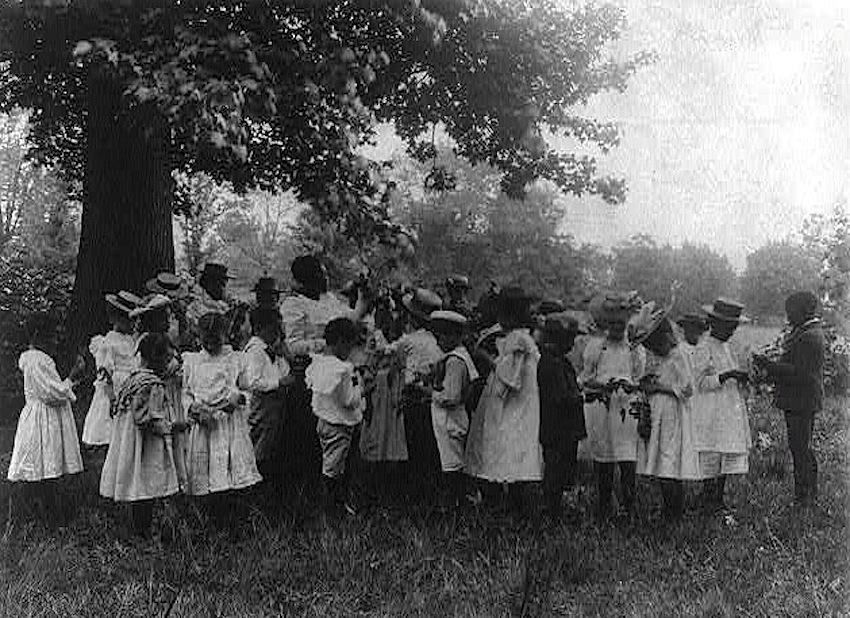
Schoolchildren in nature class, FB Johnston, Library of Congress

Seventh Division schoolchildren and teacher studying leaves out of doors, Washington, D.C., ca. 1899, by Frances Benjamin Johnston via Library of Congress Prints and Photographs Division.

In 1899, Johnston became interested in progressive education and made a photo survey of students at public schools in Washington, D.C.

The Sunday porch: Edgemont

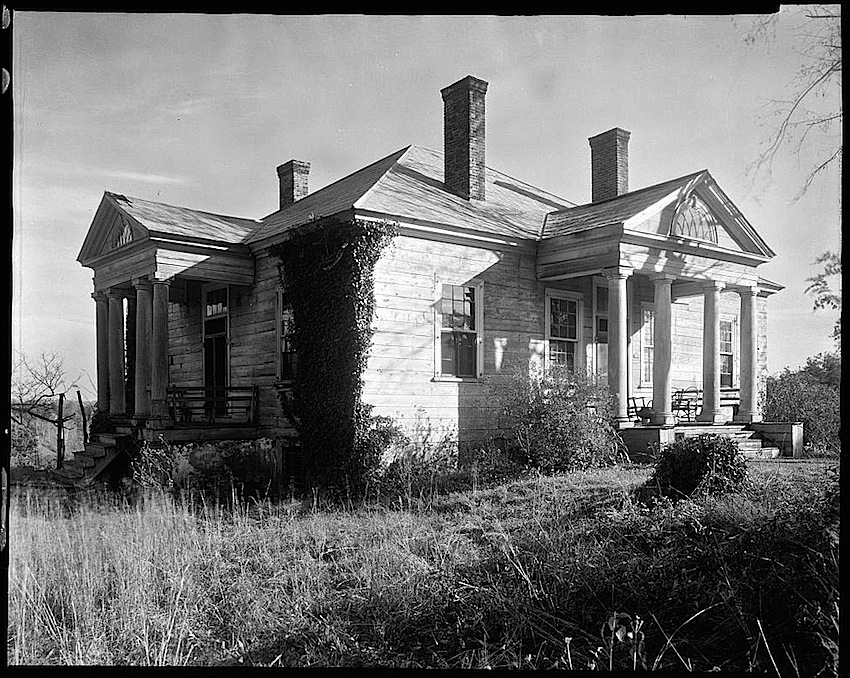
Edgemont, Covesville, VA, Library of CongressEdgemont (or Cocke Farm), Albemarle County, Virginia, 1935, by Frances Benjamin Johnston, via Library of Congress Prints and Photographs Division.

Built ca. 1796 for James Powell Cocke, Edgemont is significant as a very early example of a country residence in the combination Palladian and French manner promulgated by Thomas Jefferson. Although the design of the house has been credited to Jefferson for several decades, precise documentation of the authorship remains yet to be established. The character* of the compact and sophisticated dwelling is uniquely Jeffersonian, however, and exhibits the influence he had on the architecture of his region. . . .

from the 1980 nomination to the National Register of Historic Places

At the time of the photo, only two porticoes of the probable original four still existed. The house was restored and renovated in the late 1930s and 1940s. There are more F.B.J. photos here and 1996 photos here.

* “a formality and classical correctness devoid of monumentality. . .”

The Sunday porch: late afternoon

A repeat porch from June 2014. . .

A gathering on the south portico (or back porch) of the White House, probably between 1890 and 1910, photographer unknown, via the Library of Congress Prints and Photographs Division.

The portico was built in 1824, principally from an 1807 design by architect Benjamin Henry Latrobe, then Surveyor of Public Buildings.  Latrobe was appointed and supervised by Thomas Jefferson, who loved  neoclassical design and called Palladio’s books “the bible.”

The South of France

Roman temple
“simple and sublime”

Maria Cosway
harpist
on his mind

white column
and arch

Lorine Niedecker, from “Thomas Jefferson

Calculations

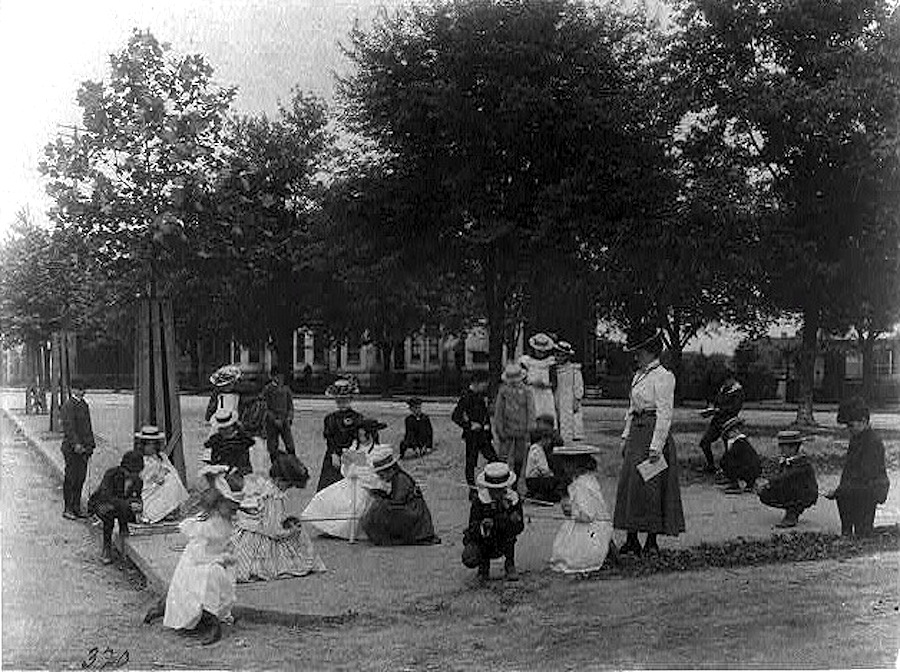
Paving problem, FB Johnston, Library of Congress“6th Division mathematics class on a street paving problem,” Washington, D.C., ca. 1899, by Frances Benjamin Johnston, via Library of Congress Prints and Photographs Division.

Before she became immersed in the work of photographing old houses and gardens, Johnston was a photojournalist and a portraitist. In 1899, she became interested in progressive education and made a photo survey of students at public schools in Washington, D.C.

Peace flower

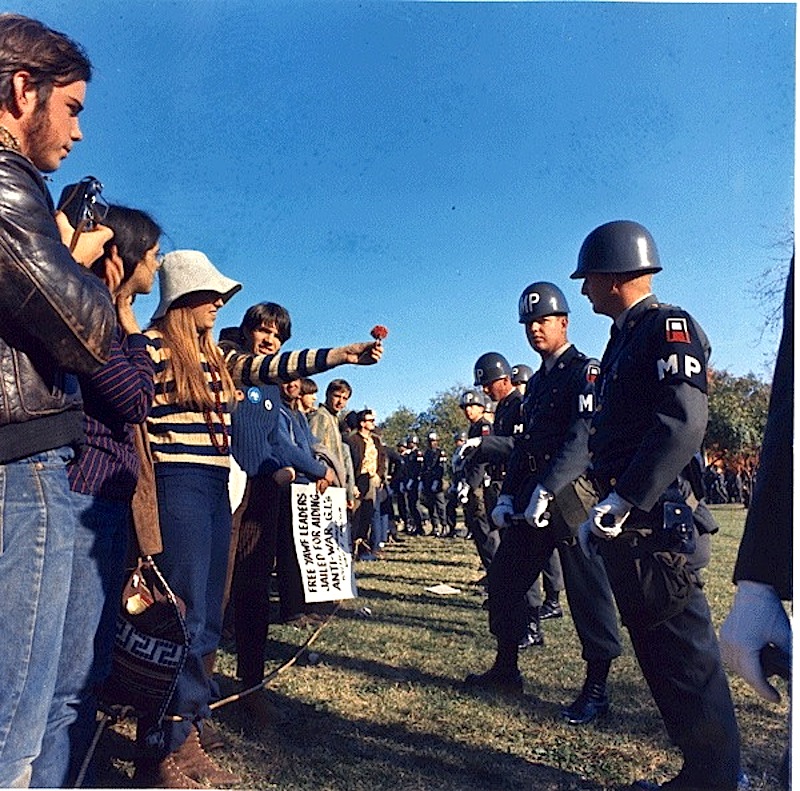
Anti-war demonstrators, National Archives on flickr“Female demonstrator offering a flower to a military police officer,” West Potomac Park or Pentagon grounds, Arlington, Virginia, October 21, 1967, by S.Sgt. Albert R. Simpson, via U.S. National Archives Commons on flickr.

Flower Power originated in Berkeley, California, as a symbolic action of protest against the Vietnam War. In his November 1965 essay titled “How to Make a March/Spectacle,” [Allen] Ginsberg advocated that protesters should be provided with “masses of flowers” to hand out to policemen, press, politicians and spectators. . . .

In October 1967, [Abbie] Hoffman and Jerry Rubin helped organize the March on the Pentagon using Flower Power concepts to create a theatrical spectacle. The idea included a call for marchers to attempt to levitate the Pentagon. When the marchers faced off against more than 2,500 Army National Guard troops forming a human barricade in front of the Pentagon, demonstrators held flowers and some placed flowers in the soldier’s rifle barrels.

Photographs of flower-wielding protesters at the Pentagon March became seminal images of the 1960s anti-war protests.

Wikipedia, “Flower Power