Dorothy and Shirley Hick playing with a sprinkler in their back garden, Northcote, Melbourne, Australia, 1949, by Emily Hick, via Museums Victoria Collections (under CC license).
Dorothy remembers on hot days they would put the sprinkler on and play, as there were no swimming pools. They wore “horrible knitted woollen bathers, they soaked up the water and got heavy and baggy.” The ladder against the tree was to pick apricots “which were so ripe and juicy the juice would run down your chin.”
The front porch of an inn* on the Avala road, Belgrade area, Serbia, April 1913, by
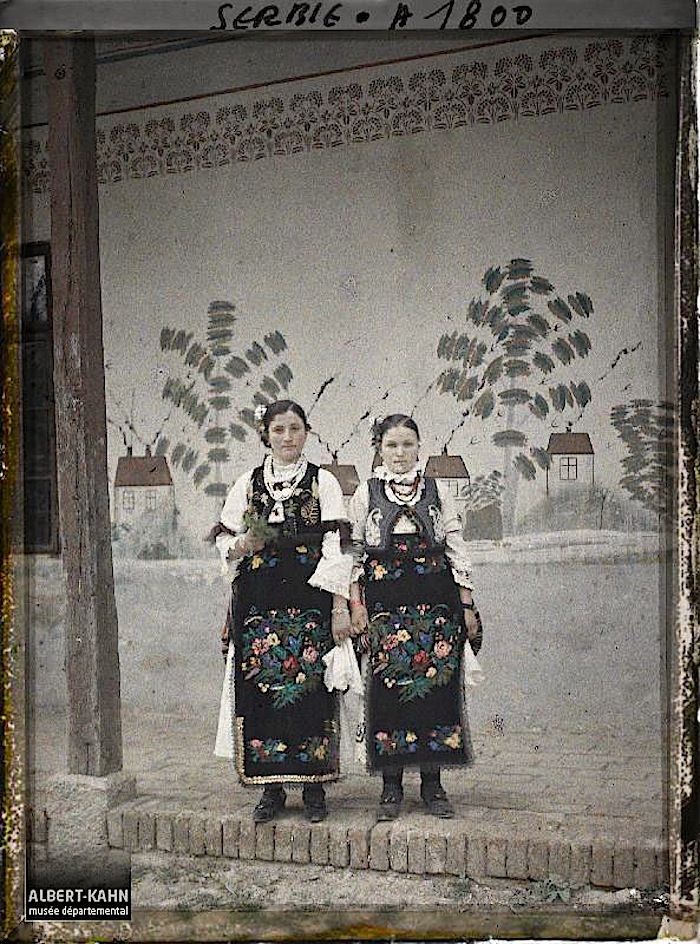
Auguste Léon, via Archives of the Planet Collection – Albert Kahn Museum /Département des Hauts-de-Seine (all three images here).
Two young girls in traditional dress.
These autochromes are three of about seventy-two thousand that were commissioned and then archived by Albert Kahn, a wealthy French banker who was committed to the ideal of universal peace and believed that “knowledge of foreign cultures encourages respect and peaceful relations between nations.”† He was also acutely aware that the 20th century was going to bring rapid material change to the world.
Accordingly, from 1909 to 1931, Kahn sent thirteen photographers and filmmakers to fifty countries “to fix, once and for all, aspects, practices, and modes of human activity whose fatal disappearance is no longer ‘a matter of time.’”†† The resulting collection is called Archives de la Planète and now resides in its own museum at Kahn’s old suburban estate at Boulogne-Billancourt, just west of Paris. Since June 2016, the archive has also been available for viewing online here.
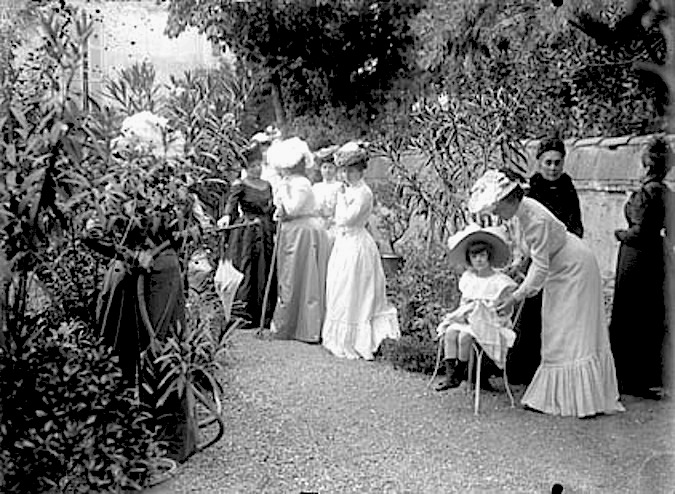
“Women and a child in a garden,” Tarn-et-Garonne, France, between 1880 and 1910, by Eugène Trutat, via Bibliothèque de Toulouse Commons on flickr.
Is the lady with the garden hose threatening the little girl with a shower if she doesn’t sit still for the photographer? An empty threat, almost certainly, since water would ruin those hats. (The young woman in the center does seem to be shrinking back a bit though.)
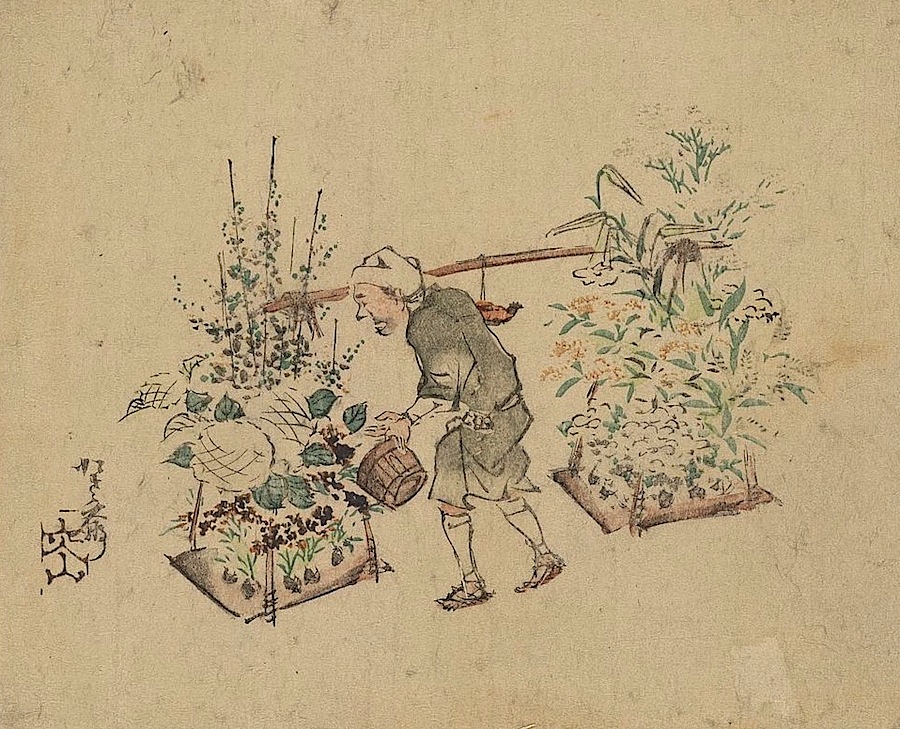
Hanauri (flower vendor), Tokyo, Japan, between ca. 1840 and 1866, a woodcut print attributed to Matsumoto Kōzan, via Library of Congress Prints and Photographs Division.
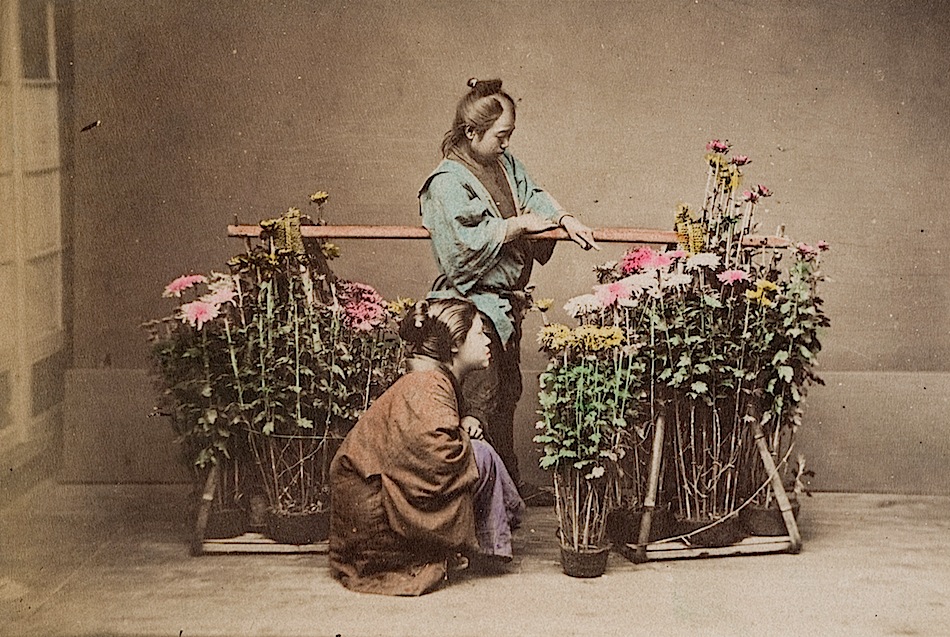
A chrysanthemum seller in Japan, ca. 1890, photographer unknown, via Photographic Heritage on flickr (under CC license).
“Portrait of four girls and a man on a verandah,” Dubbo area, New South Wales, ca. 1915, by Edward Challis Kempe, via National Library of Australia Commons on flickr.
I wonder if those are scented geraniums in the planter on the left?
The Rev. E.C. Kempe was an amateur photographer and principal of the Brotherhood of the Good Shepherd at Dubbo from 1912 to 1915. The Good Shepherd was one of several “Bush Brotherhoods,” Anglican religious orders that sent traveling priests to thinly populated rural districts. “They were described as a ‘band of men’ who could ‘preach like Apostles’ and ‘ride like cowboys’,” according toWikipedia. Kempe left behind an album of 157 photographs from his time in the bush.

 Dorothy and Shirley Hick playing with a sprinkler in their back garden, Northcote, Melbourne, Australia, 1949, by Emily Hick, via Museums Victoria Collections (under CC license).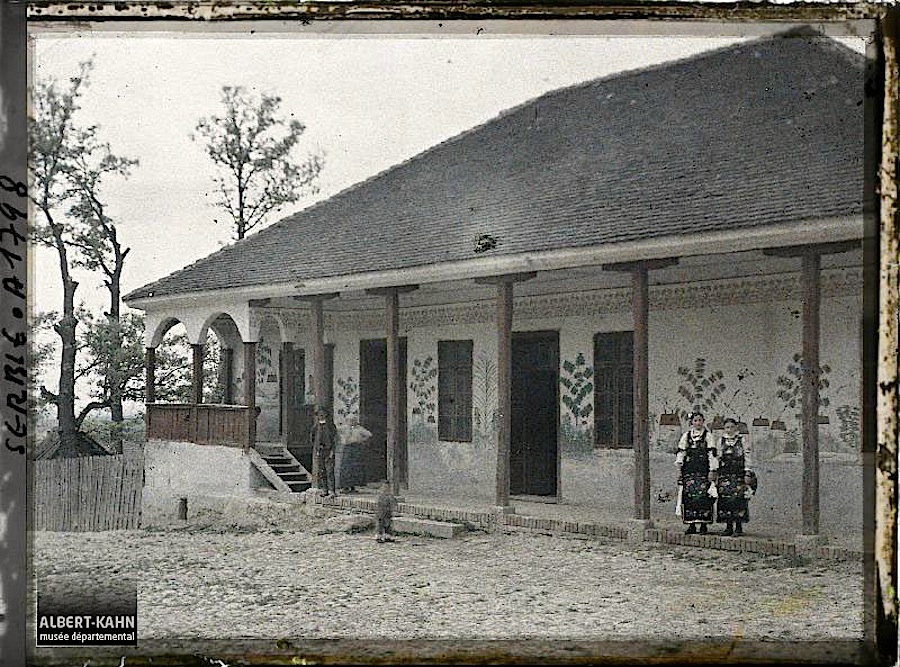


 enclos*ure