“Yūgao dana nōryō zu” (cooling beneath an evening glory canopy), 1880s, a woodcut print by Yoshitoshi Taiso, via Library of Congress Prints and Photographs Division.
The image “shows a couple in the country with a child and a teapot, sitting on a mat beneath a trellis covered with yūgao vines, enjoying the full moon,” according to the Library’s online catalogue.
Two women in a pavilion overlooking irises in Japan, between 1860 and 1910.
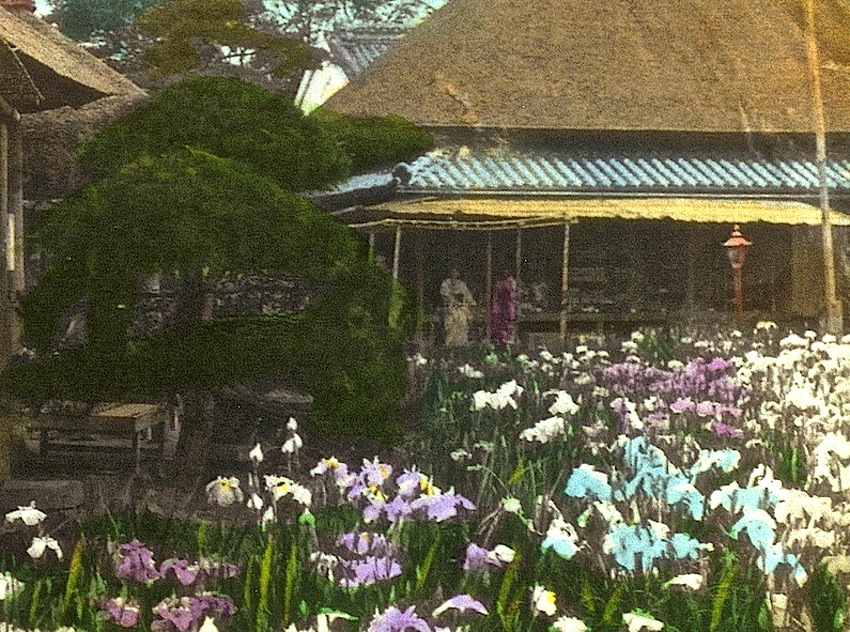
Detail of photo above.
This hand-colored photograph comes from the National Museum of Denmark Commons on flickr — part of a collection that belonged to journalist Holger Rosenberg.
Unfortunately, the museum does not have any additional information about it.
Detail of top photo. The flowers are probably growing in slightly sunken, wet or damp ground.
In Heian Period [794 -1185] Japanese gardens, built in the Chinese model, buildings occupied as much or more space than the garden. The garden was designed to be seen from the main building and its verandas, or from small pavilions built for that purpose. In later gardens, the buildings were less visible. Rustic teahouses were hidden in their own little gardens, and small benches and open pavilions along the garden paths provided places for rest and contemplation. In later garden architecture, walls of houses and teahouses could be opened to provide carefully framed views of the garden. The garden and the house became one.
“Street life in Yokohama park with blossoming cherry trees,” from the photo collection of journalist Holger Rosenberg, who traveled to Japan in 1903, via National Museum of Denmark Commons on flickr.
In Japan this week, the flowers are at their peak only in the most northern regions.
Click on ‘Continue reading’ below to scroll through larger versions of the images.
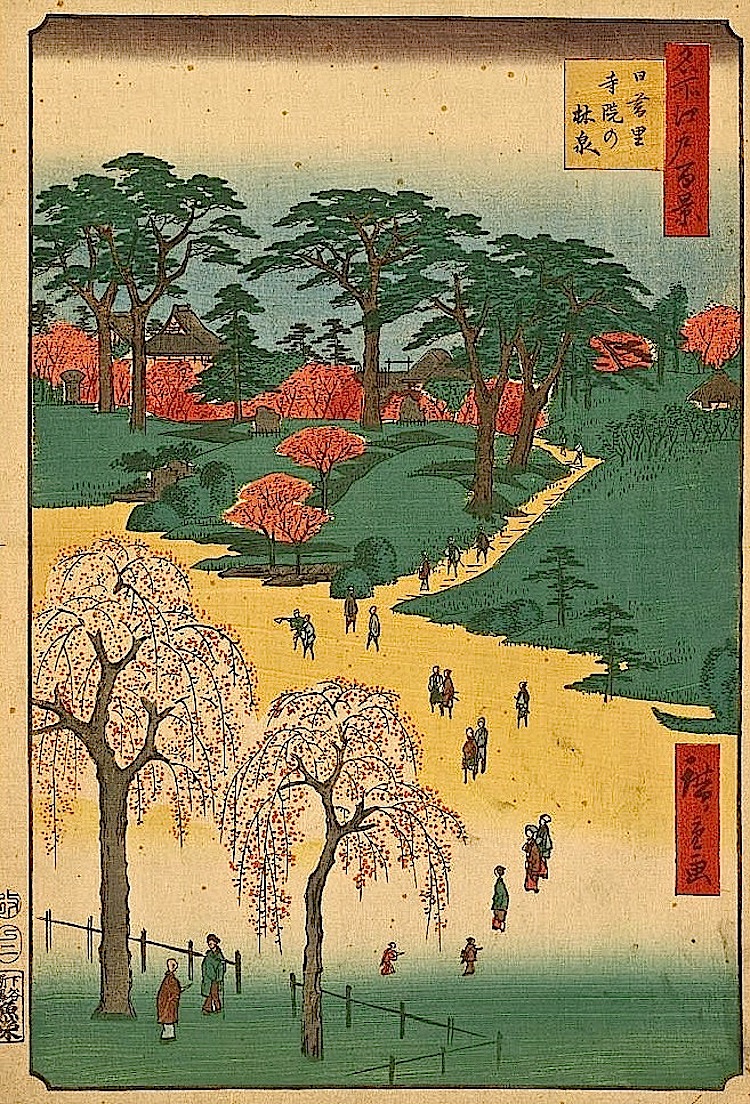
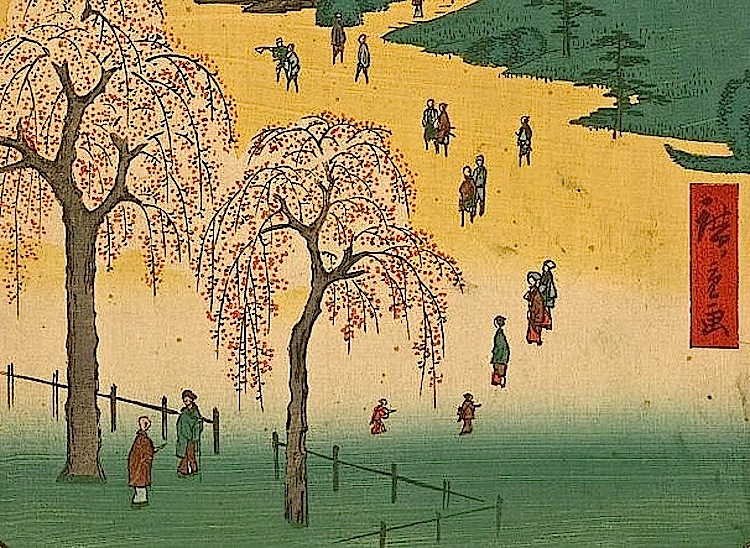
“Higurashi no sato jiin no rinsen” (Temple Gardens, Nippori), 1857, a woodblock print by Andō Hiroshige, via Library of Congress Prints and Photographs Division.
The view is from Ueno Hill of Shūsō-in, one of three Buddhist temple gardens known as Hanamidera or Flower-viewing Temples. This print is one of fifty in an album of Edo (present day Tokyo) by Hiroshige.
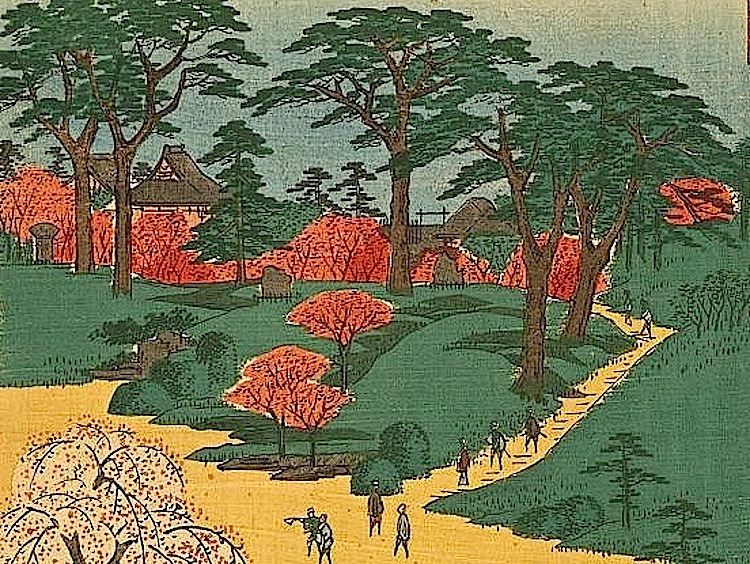
Detail of print above.
There’s a nice essay on cherishing the brief beauty of the cherry blossoms by Diane Durston in today’s Washington Post, here.
Detail of print above.The cherry trees in our neighborhood here in Stuttgart have just begun to bloom this week.

 “Yūgao dana nōryō zu” (cooling beneath an evening glory canopy), 1880s, a woodcut print by Yoshitoshi Taiso, via Library of Congress Prints and Photographs Division.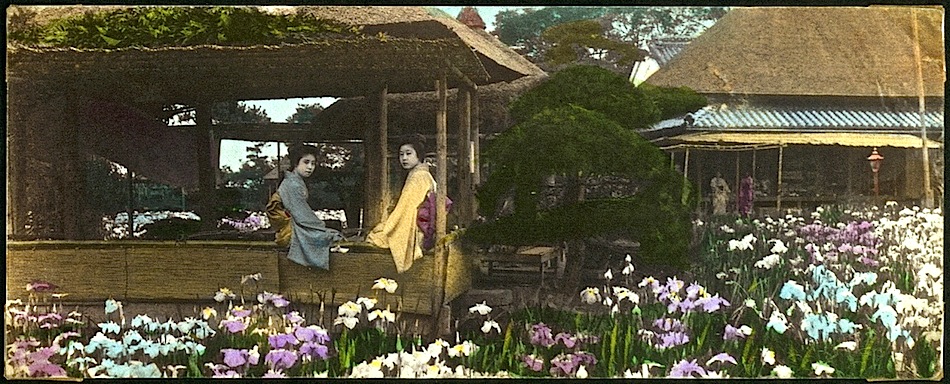


 enclos*ure