Vintage landscape: Tokyo

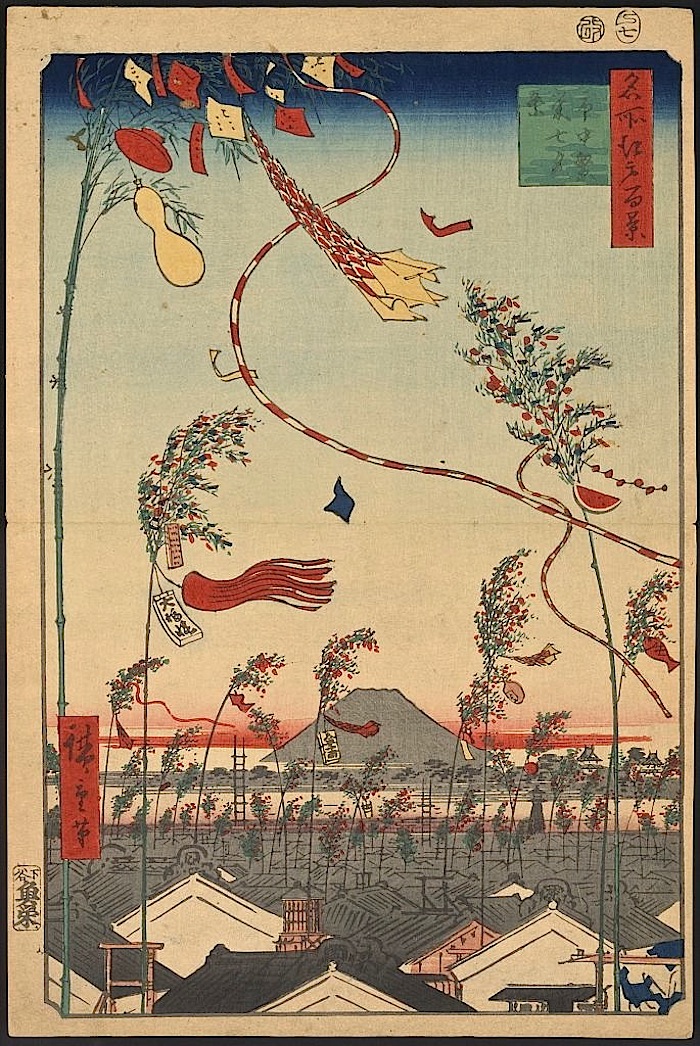
Japanese festival, Library of CongressShichūhan’ei tanabata matsuri (The city flourishing, Tanabata Festival), 1857, by Andō Hiroshige, via Library of Congress Prints and Photographs Division.

The print shows tall bamboo decorated with cutout ornaments and paper streamers bearing wishes above Tokyo’s rooftops during the festival, which begins on July 7. Tanabata, or “evening of the seventh,”  honors the yearly meeting of two deities/stars/lovers, Orihime (Vega) and Hikoboshi (Altair).
Vintage landscape: iris garden

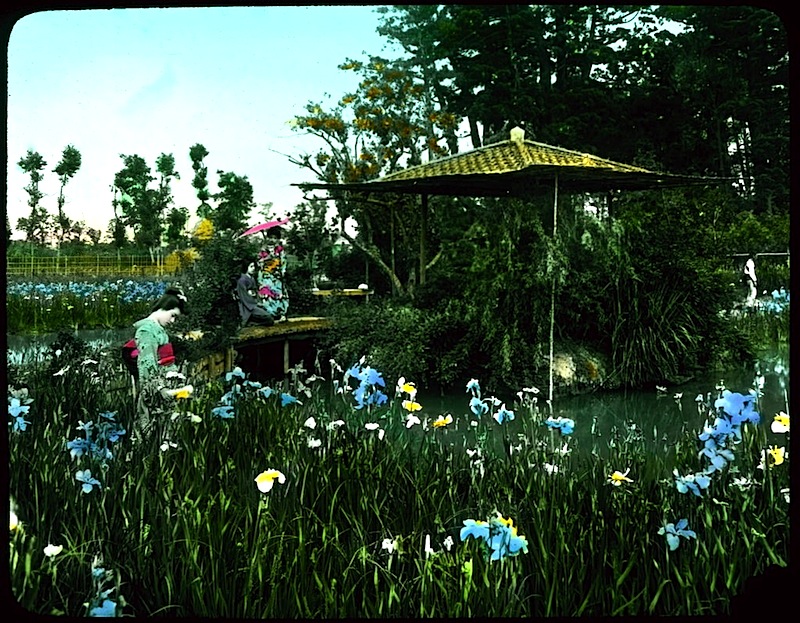
Iris garden, Japan, University of Victoria LibrariesIris garden beside water in Japan, probably Yokohama, ca. 1910, via University of Victoria Libraries Commons on flickr.

The hand-colored glass plate slide is from a collection of “Yokohama photographs,” sold to foreign tourists between about 1868 and 1912.

Vintage landscape: wisteria

Wisteria Japan

Women in the garden in Japan, late 19th to early 20th century, via Photographs of Japan Collection, The Miriam and Ira D. Wallach Division of Art, The New York Public Library.

Vintage landscape: three deer. . .

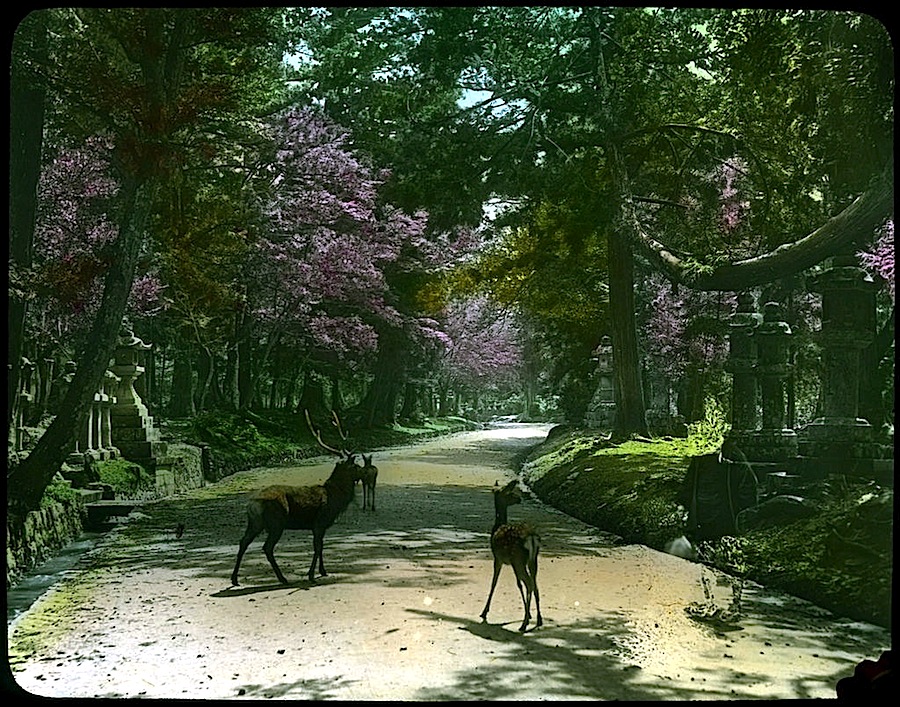
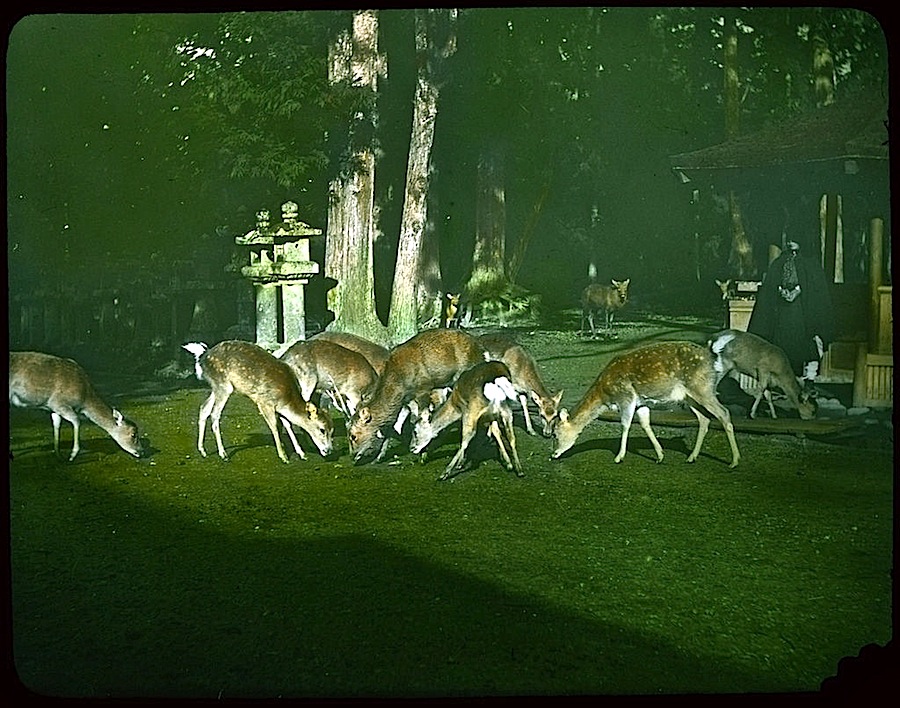
deer in cemetery garden, Japan, 1910, U.ofVictoria, flickr“. . . standing on road in (cemetery) garden [in Japan]; large flowering cherry trees, evergreens and stone monuments,” ca. 1910, a hand-tinted glass-plate slide, via University of Victoria Libraries Commons on flickr (both photos).

(Click on the images to enlarge them.)

A commenter on the flickr page thought this was the pathway to the Kasuga Shrine in Nara.

deer in cemetery garden 2, Japan, 1910, U.ofVictoria, flickr“Group of deer feeding on lawn in wooded garden; stone monuments and summer house in mid-ground.”

Life in gardens: blossom time

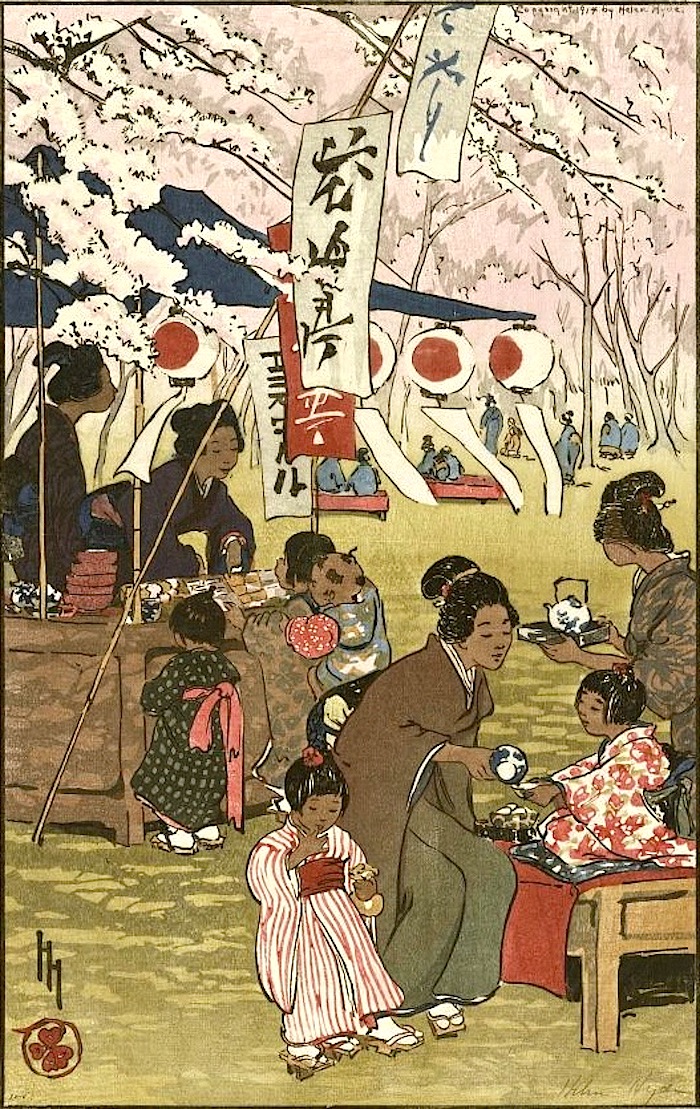
Under cherry blossoms, H. Hyde, via Library of Congress“Blossom time in Tokyo,” ca. 1914, a woodcut print by Helen Hyde, via Library of Congress Prints and Photographs Division.

Helen Hyde grew up in the San Francisco Bay area and studied at the California School of Design and in Europe. While in Paris, she was influenced by Mary Cassatt’s early works, which made use of  Japanese perspective and pattern and featured the intimate lives of women and children. In 1899, she moved to Tokyo, where she studied woodblock printing techniques. She lived there until 1914.