I found these early color slides of a 1939 community Fourth of July picnic on St. Helena Island, South Carolina, by Marion Post Wolcott.*
They’re rather shadowy, but still lovely — like old oil paintings.
To scroll through larger pictures, click on ‘Continue reading’ below and then on any thumbnail in the gallery. I lightened the images here a little, but those in the gallery are the original versions.
St. Helena Island is one of the Sea Islands and a center of African-American Gullah culture and language.
Here in Rwanda, the American Embassy held its Independence Day reception last night. This is because the 4th is Rwandan Liberation Day — when Kigali was liberated in 1994, and the genocide was effectively ended. July 1 is Rwanda’s Independence Day, celebrating the end of Belgian colonialism in 1962.
*via Library of Congress Prints and Photographs Division
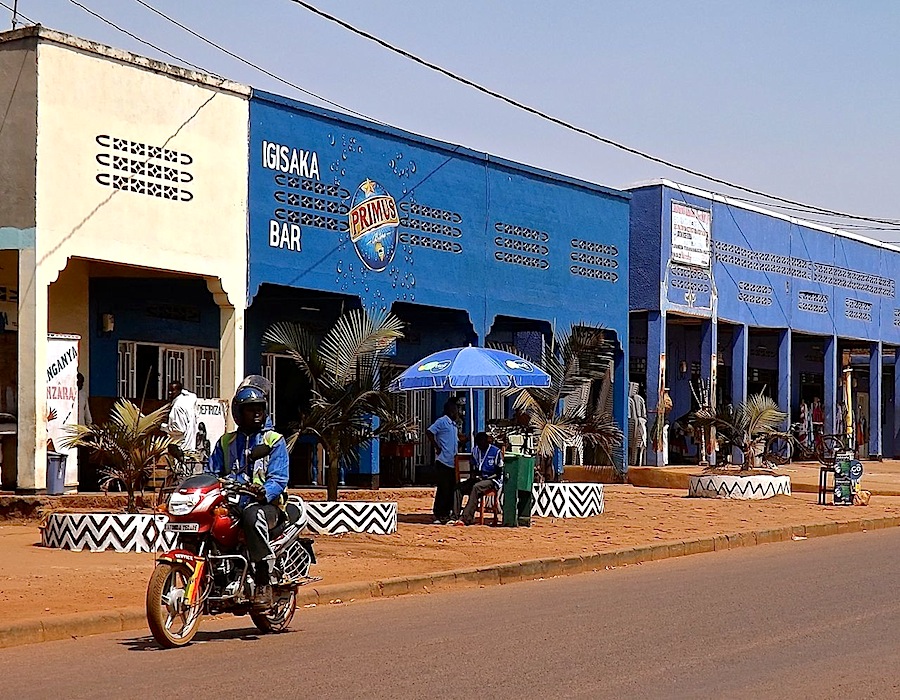
While traveling in southeastern Rwanda on Thursday, we stopped for lunch in Nyakarambi. I liked the town’s roadside planters, which are painted in the graphic patterns of imigongo art.
All the planters held rather dusty palm trees. We are in the middle of the long dry season, which will last until early September.
Imigongo paintings traditionally decorated the interiors of houses in this part of Rwanda. The raised designs are made with cow dung and painted with white kaolin clay and a black substance made from aloe plant sap and the ash of burned banana skins and Solanum aculeastrum fruit. Other natural colors — red, grey, and ochre — are also used, and today’s artists often add representations of people and houses.
Nyakarambi has a cooperative and shop devoted to imigongo. I added to my little collection with the piece below, which is about 12″ x 14″.
I didn’t take any photos of the cooperative while we were there; the women weren’t working and their stock of paintings was small. But, several months ago, we were at Nyungwe Forest Lodge, which has several walls in the lobby displaying imigongo.
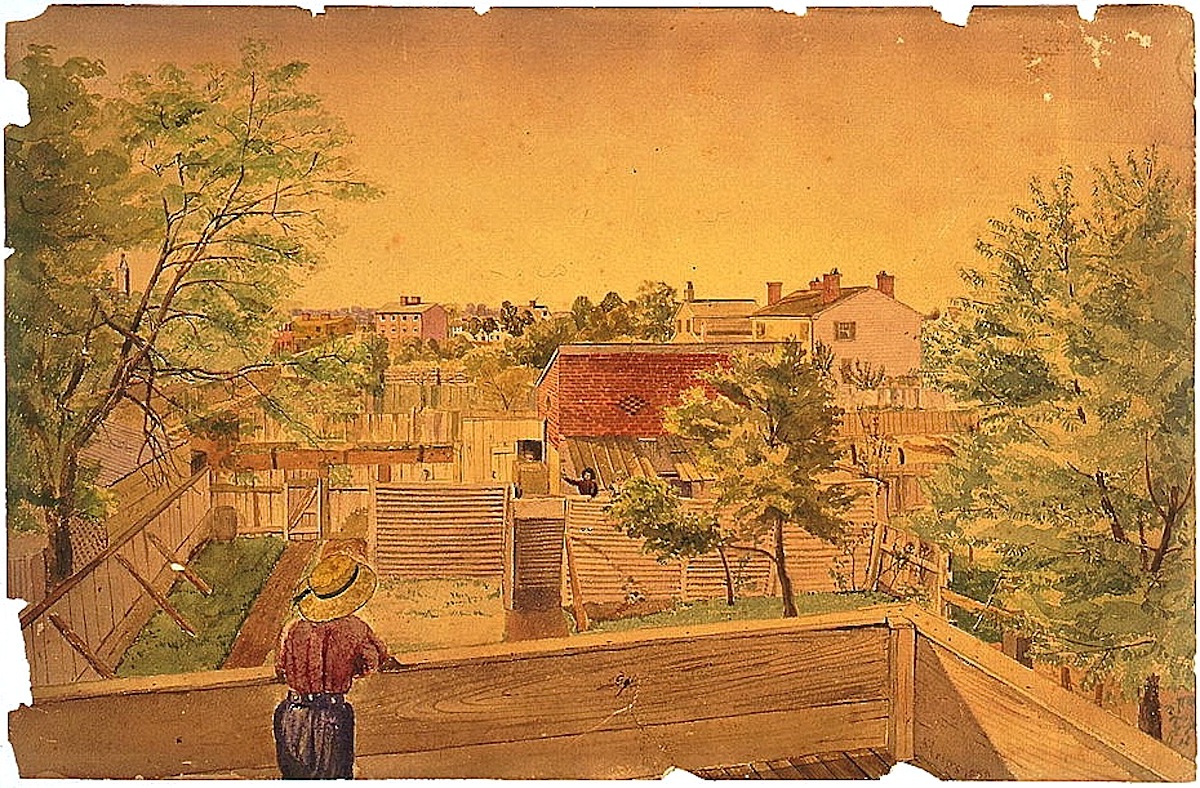
View from the second story of the home of Mrs. John Rodgers at Franklin Row, K Street, N.W., between 12th and 13th Streets, in Washington, D.C.
The watercolor* depicts the backyard and adjacent neighborhood and shows children standing on balconies.
It was painted by Montgomery C. Meigs. Mrs. Rodgers was Meigs’s mother-in-law and the widow of Commodore John Rogers, a naval hero.
Despite the modest appearance of the yard and surroundings, Mrs. Rodgers was wealthy and socially well-connected. Even well-to-do Washington in the 1850s seems to have had a somewhat ramshackle look.
You will need to click on the image to get a larger view. Here’s what the downtown city block looks like now.
As a military engineer, Meigs left his mark on the capital. In the 1850s, he supervised the building of the Washington Aqueduct and the Union Arch Bridge, as well as the wings and dome of the Capitol Building. He also played an important role in the early design of Arlington National Cemetery, and he designed and supervised the construction of the Pension Building (now the National Building Museum).
*Via Library of Congress Prints and Photographs Division.
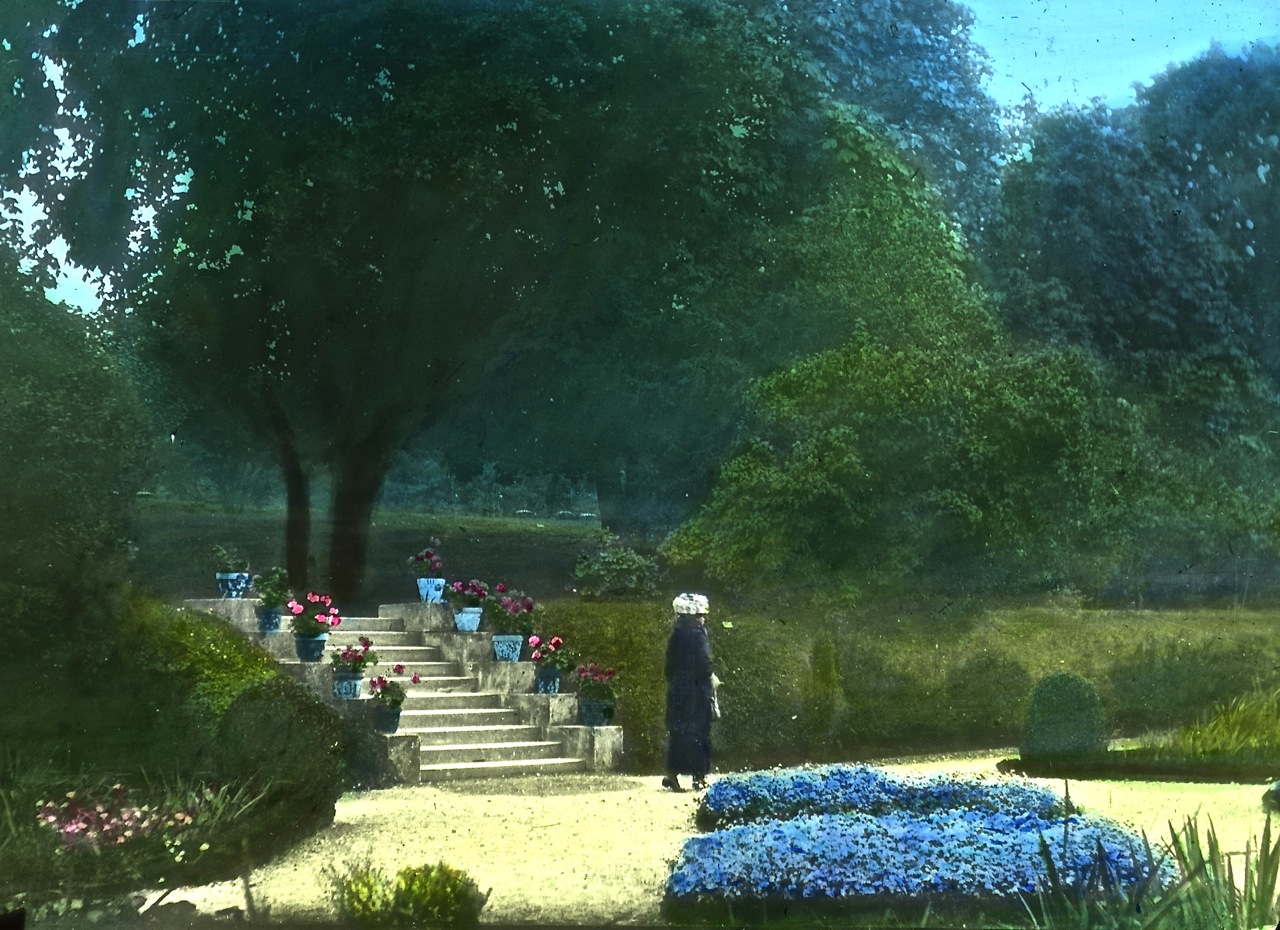
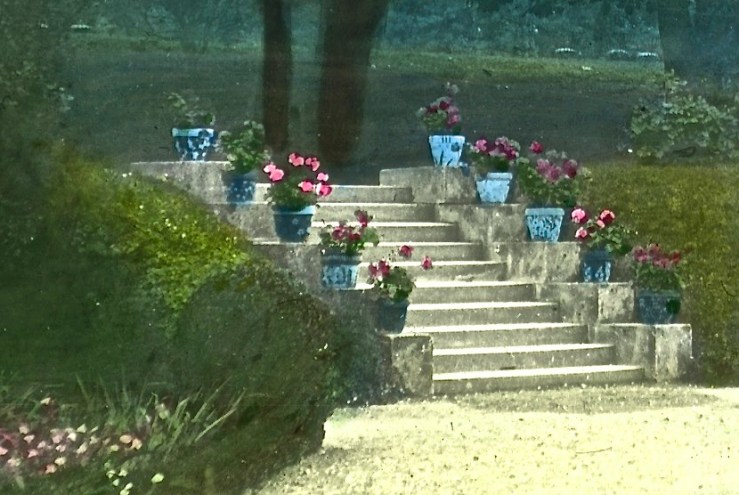
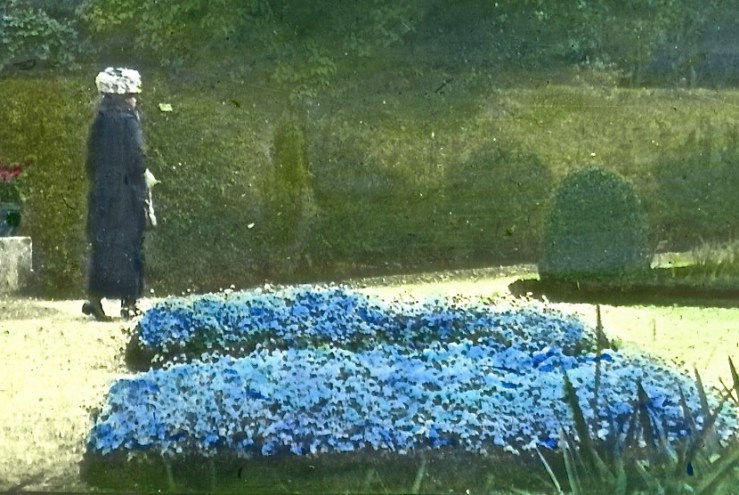
The Archives hold over 60,000 photos and records documenting 6,300 historic and contemporary American gardens. At its core are almost 3,000 hand-colored glass lantern and 35mm slides donated by the Garden Club of America.
Smithsonian Gardens maintains 11 gardens around the Smithsonian Institution’s grounds and also has a good blog here.
Chelsea Miscellany
It’s RHS Chelsea Flower Show time! Their website is here.
All The Telegraph’s Chelsea coverage is here; The Guardian’s is here; The Independent’s is here.
BBC coverage is here. You may need this to view it. (View episodes soon; some expire in four days.)
The New York Times reports on how gnomes will be allowed in the show this year (only), here. In the Herald (Dublin), “Diarmuid Gavin has branded the Chelsea Flower Show ‘dull’ and described Prince Harry’s garden at the centenary exhibition as ‘bad,'” here.
Studio ‘g’ has photos of the Best in Show winner — the Australian garden — here, and they promise more pictures to come. Also, check out The Galloping Gardener’s report, here (thanks to GD by CM) — Gardenista’s,here — and The Enduring Gardener’s, here. Anne Wareham of thinkinGardens comments on two of this year’s entries, here.
Sources for seeds for cow parsley — plant of the moment at this year’s show, according to Gardenista — here.
Instagram photos tagged #chelseaflowershow are here. GAP Photos has 103 photos of Chelsea, here. More photos, as well as plant lists, are posted on Shoot,here.
Where have you found good photos or reviews of the show?
The Dumbarton Oaks Park Conservancy is in the midst of a campaign to win $75,000 from the “Partners in Preservation” $1 million giveaway in the Washington, D.C., metro area. The giveaway is sponsored by the National Trust for Historic Preservation and American Express.
You can vote for the DO Park HERE*every day through midnight on May 10.
(And voting enters you in a contest to win a three-night stay at a Marriott hotel.)
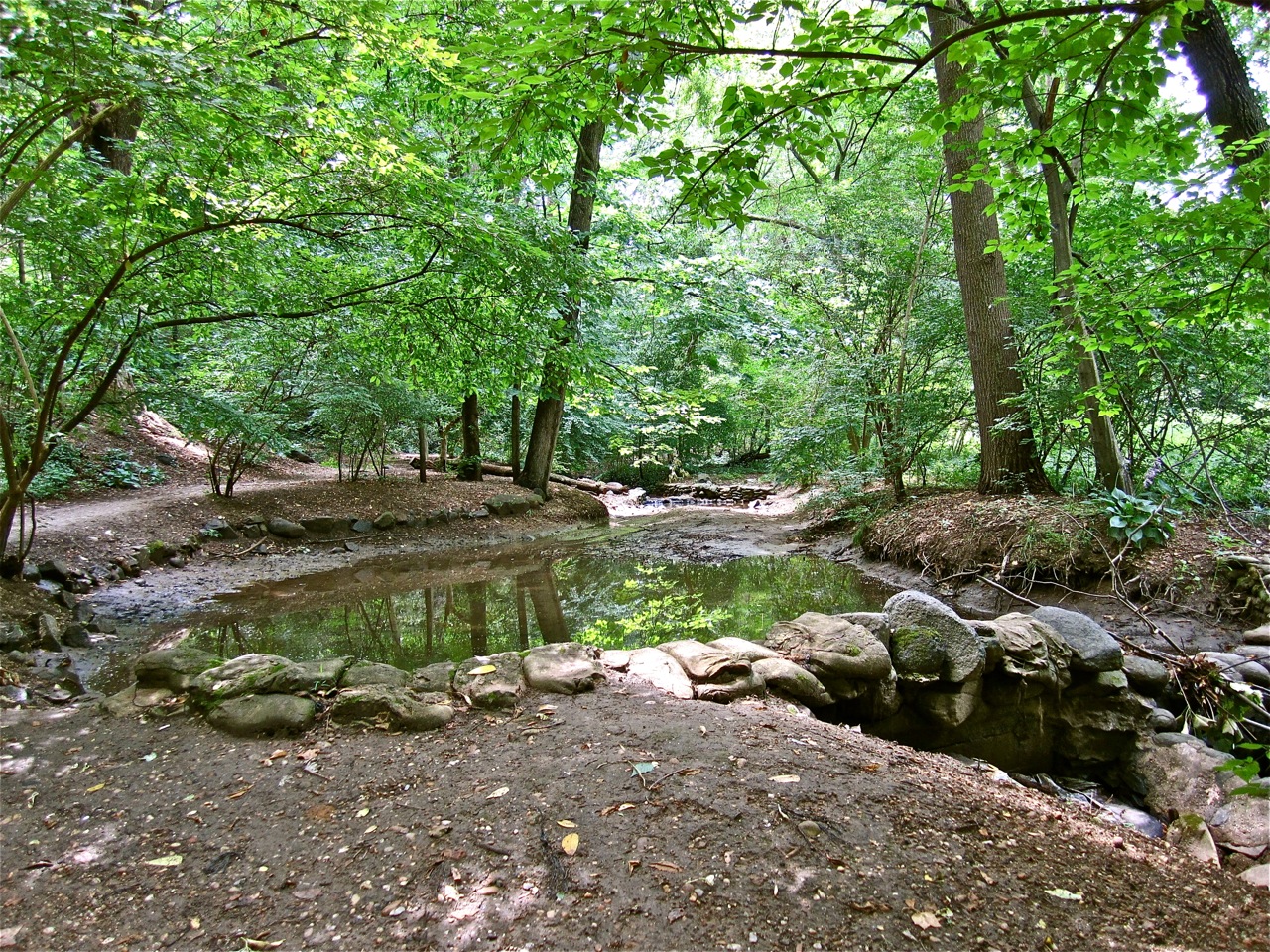
In 1928, she composed the park as a series of paths and meadows along a small tributary of Rock Creek and had them planted out with drifts of native and exotic wildflowers, bulbs, and woodland shrubs. Eighteen waterfall dams, two arbors, and several benches and footbridges were built in the rustic Arts and Crafts style.
Even with many years’ damage, the artistry of Farrand’s stonework shines through.
Sadly, the 27-acre park has suffered greatly from lack of sufficient resources since 1940, when it was turned over to the National Park Service. However, in 2010, the Conservancy was formed to restore the park to its former glory by raising money and fielding teams of volunteer “weed warriors.”
Beatrix Farrand was America’s first female professional landscape architect and one of eleven founding members of the American Society of Landscape Architects.
Participants at a recent conference on her work lauded her as a “scientific-minded experimenter, an early proponent of native plants, a leader in ‘pre-ecological design,’ an expert in stormwater management, and a flexible and innovative designer who mastered numerous styles,”reported The Dirt, the blog of the American Society of Landscape Architects.
Please vote and spread the word! The $75,000 will repair the park’s stonework at the east falls dam and viewing platform.
*The first time you go to the site, don’t click ‘vote’ right away. Go to ‘log in’ and register. Then, you’ll receive an e-mail asking you to confirm your address. Then you can log in and vote. It takes a couple of minutes, but you’ll be able to vote in seconds for the next five days. (You must be a legal resident of the U.S. to be eligible to win the free stay in a Marriot hotel.)

 I found these early color slides of a 1939 community Fourth of July picnic on St. Helena Island, South Carolina, by Marion Post Wolcott.*
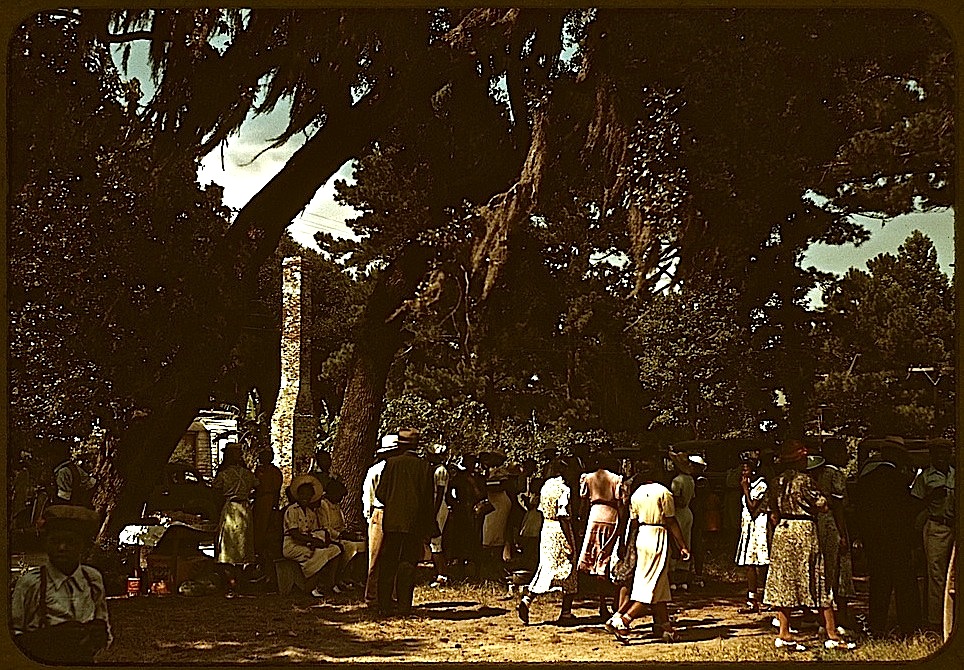 They’re rather shadowy, but still lovely — like old oil paintings.
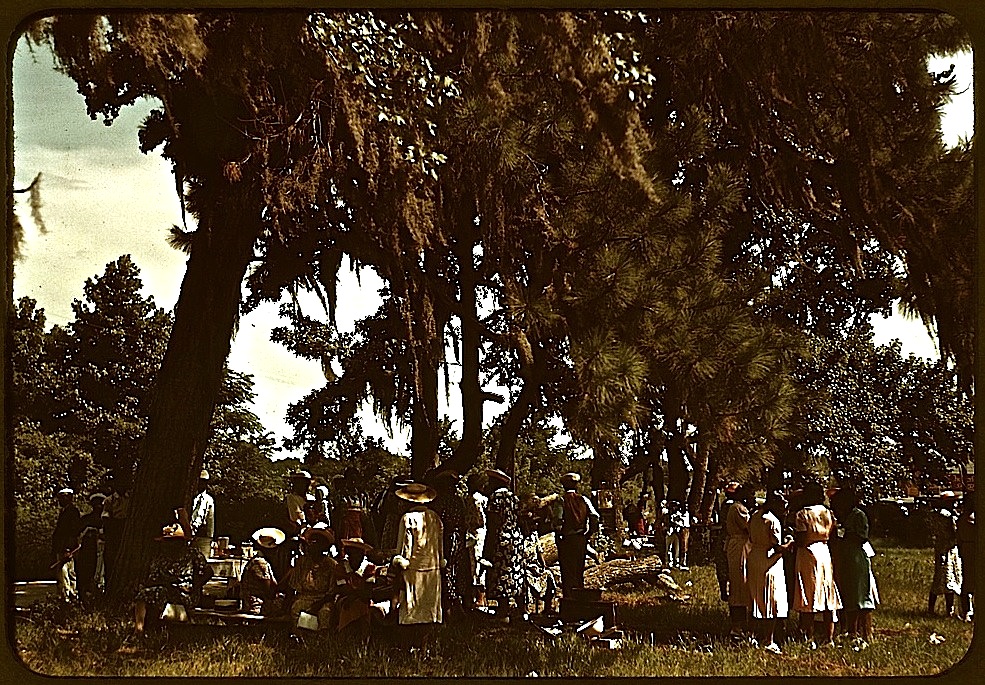 To scroll through larger pictures, click on ‘Continue reading’ below and then on any thumbnail in the gallery. I lightened the images here a little, but those in the gallery are the original versions.
 St. Helena Island is one of the Sea Islands and a center of African-American Gullah culture and language.
 Here in Rwanda, the American Embassy held its Independence Day reception last night. This is because the 4th is Rwandan Liberation Day — when Kigali was liberated in 1994, and the genocide was effectively ended. July 1 is Rwanda’s Independence Day, celebrating the end of Belgian colonialism in 1962.


 enclos*ure