Vintage landscape: brick walk

genthe autochrome, steps, via LoC
“Women on the steps of a multi-story white building with dark timbering,” between 1906 and 1942 (I think before 1920), an autochrome by Arnold Genthe, via Library of Congress Prints and Photographs Division.

The small size of the digital copy of this image makes it difficult to be sure whether the walk areas are brick (like the steps). But I believe they are. (They could be something like decomposed granite.) I love how the tree has been preserved as part of the space.

Life in gardens: Little Duck Key

Out of the cradle endlessly rocking. . .

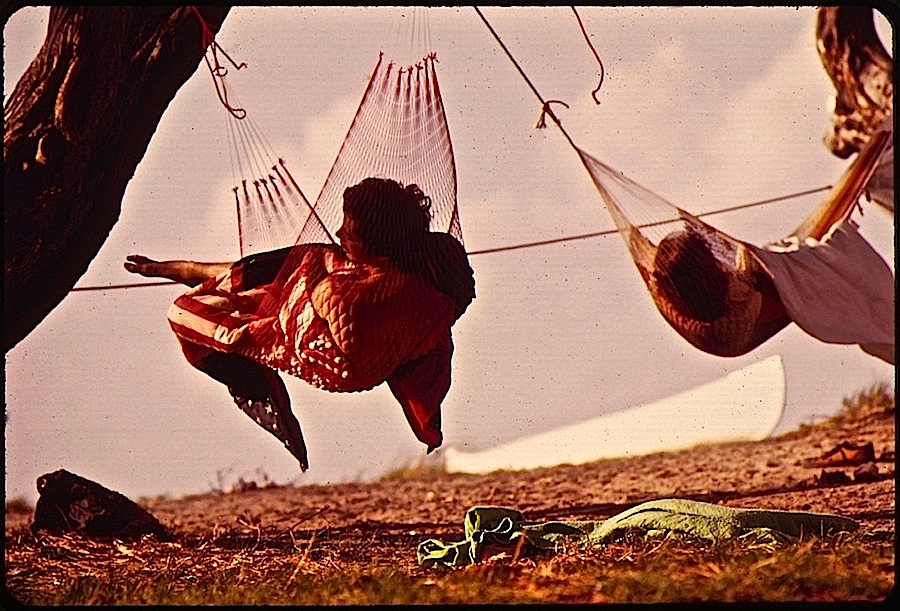
Little Duck Keys, 1975, via Natl. Archives“American dreams at Little Duck Key [– part of the Florida Keys]. Commercial camping sites and travel trailer courts have sprung up throughout the Keys. Even on the smaller Keys like Little Duck, where no facilities have yet been constructed, camping is permitted by local authorities,” ca. 1975.
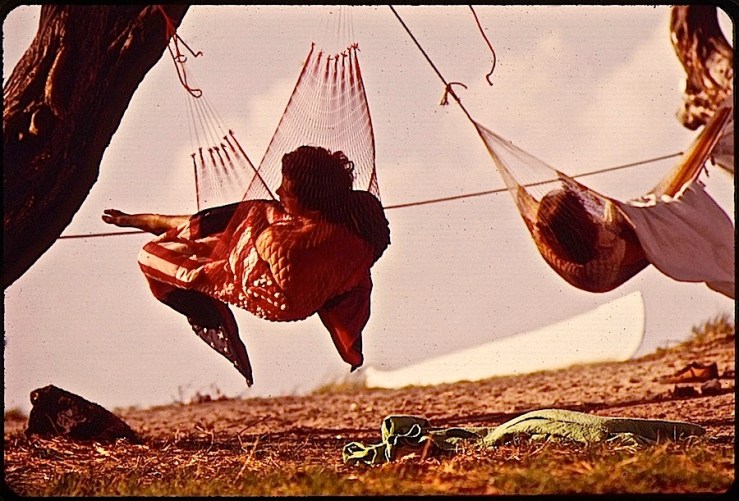
Little Duck Keys, 1975, via Natl. Archives“Campers on Little Duck Key sleep in their own hammocks,” ca. 1975.
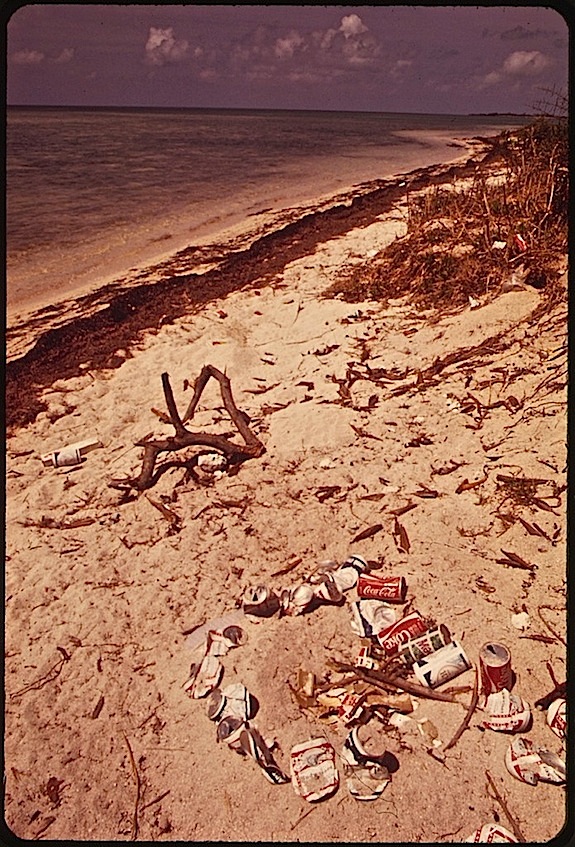
Little Duck Key, Fla., 1975, via National Archives“Beach at Little Duck Key. Little Duck, in the lower Florida Keys, is a tiny island which has not been commercially developed[;] the beach is open to visitors, who are not always careful to preserve its unspoiled appearance,” ca. 1975.

All three photos here were taken by Flip Schulke for DOCUMERICA, a 1970’s photography program of the U.S. Environmental Protection Agency.  They are shown with the original captions.

The EPA hired over 100 photographers to “document subjects of environmental concern.”  The work continued until 1977 and left behind an archive of about 20,000 images.

In addition to recording damage to the nation’s landscapes, the project captured “the era’s trends, fashions, problems, and achievements,” according to the U.S. National Archives, which held an exhibit of the photos, “Searching for the Seventies,” in 2013. 

There are more pictures from DOCUMERICA here.

Over the sterile sands and the fields beyond, where the child leaving his bed wander’d alone, bareheaded, barefoot . . . .

Borne hither, ere all eludes me, hurriedly,
A man, yet by these tears a little boy again,
Throwing myself on the sand, confronting the waves,
I, chanter of pains and joys, uniter of here and hereafter,
Taking all hints to use them, but swiftly leaping beyond them,
A reminiscence sing.

— Walt Whitman, from “Out of the Cradle. . .

Wordless Wednesday: the mural

U.S. Embassy-Rwanda LGBT Pride Mural, June 2014U.S. Embassy-Rwanda LGBT Pride chalk graffiti mural, created June 24, 2014.

This slideshow requires JavaScript.

Life in gardens: June 14, 1944

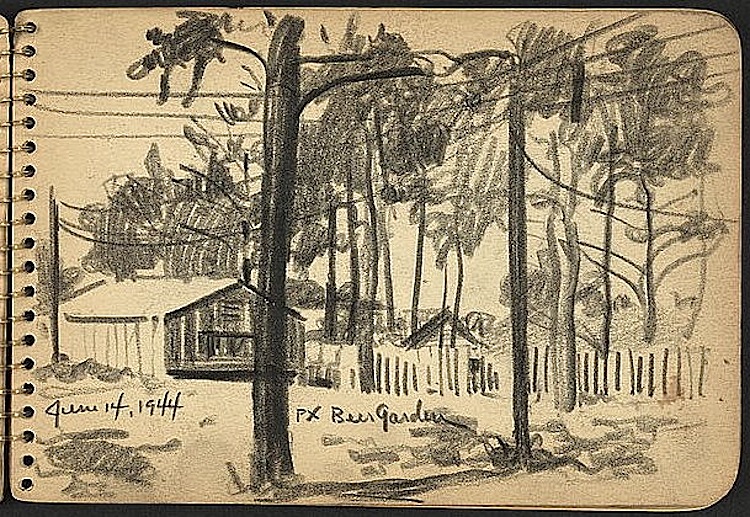
PX Beer Garden, June 14, 1944, via LoC

PX beer garden at Fort Jackson, South Carolina, June 14, 1944, by Victor Alfred Lundy, via the Library of Congress Prints and Photographs Division.

A beer garden is simply a shady outdoor area with tables and chairs where beer and sometimes food is served. The idea originated in the Bavaria region of Germany in the 19th century and soon came to America. There’s a brief history of beer gardens in the U.S. here.

Some American beer gardens were such pleasant, seemingly wholesome places that they rattled the resolve of the temperance movement. A woman on a committee investigating Chicago drinking spots wrote of one: “Isn’t it beautiful? Can it be, is it possible, that after all our ideas are wrong and these people are right?”

Beer gardens, like the one pictured above, were features of at least some homeland military camps and forts in the mid 1940s. Camp Mackall in North Carolina had six. I found a reference to one at Fort McClellan near Anniston, Alabama.  

During his U.S. Army service, Victor Lundy filled eight sketchbooks with scenes of his training at Fort Jackson, his life on a transport ship crossing the Atlantic, and his frontline duty in France.

After the war, he became an architect, admired today for “his sculptural sense of form” and  “innovative use of engineering technology,” according to the Smithsonian Institution.

Vintage landscape: summer shimmer

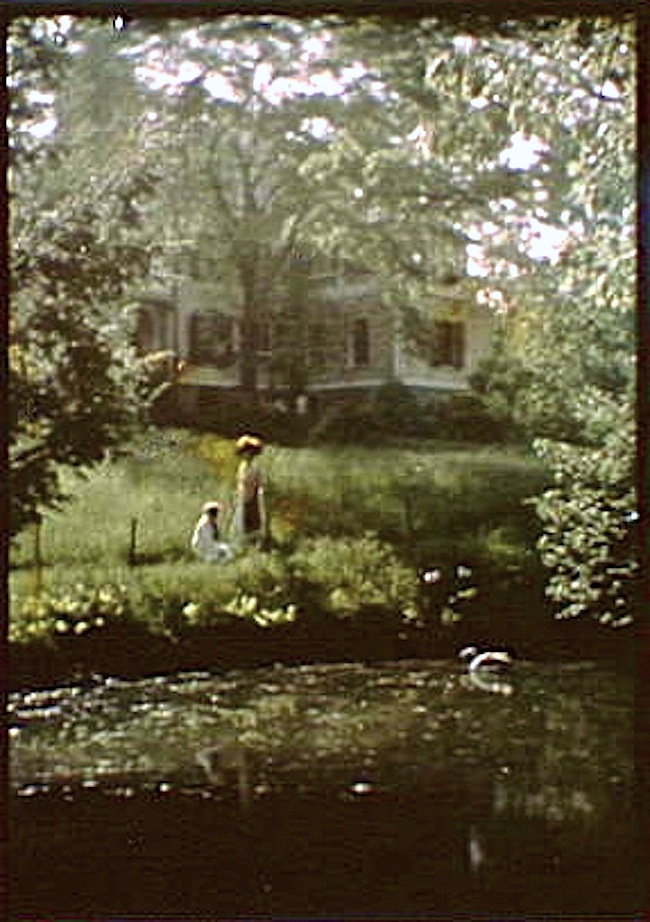
Vintage landscape/enclos*ure: woman and child, Arnold Genthe“Woman and child in a field in front of a white house,” an autochrome taken between 1906 and 1942, by Arnold Genthe, via Library of Congress Prints and Photographs Division.

“If an autochrome was well made and has been well preserved, color values can be very good,” according to the Wikipedia entry on this early color photography technique.

“The dyed starch grains are somewhat coarse, giving a hazy, pointillist effect, with faint stray colors often visible, especially in open light areas such as skies. The smaller the image, the more noticeable these effects are. The resulting “dream-like” impressionist quality may have been one reason behind the enduring popularity of the medium even after more starkly realistic color processes had become available.”

. . . The trees rustle
and whisper, shimmer and hiss.

Amy Gerstler, from “Bon Courage