Vintage landscape: Georgia Avenue gate

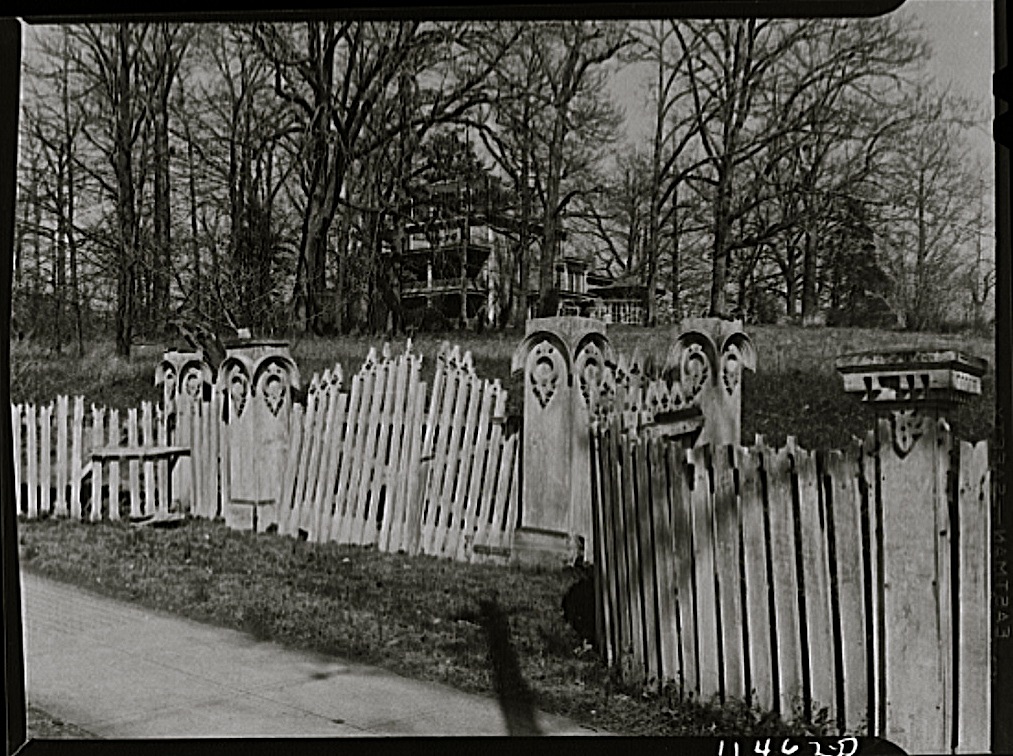
Vintage landscape/enclos*ure: Georgia Avenue gate, Library of Congress“Washington, D.C., gateway to an old house on Georgia Avenue, N.W.,” March 1942, by John Ferrell, via Library of Congress Prints and Photographs Division.

That was some gate, although it was in pretty bad shape at the time of the photo (click the image to get a larger view).  I think the style is gothic.

And some house too. Does anyone know if it’s still standing?

The Sunday porch: behind Randolph Street

This slideshow requires JavaScript.

Looking through a “slat screen” from the back porch of a house on Randolph Street (probably N.W.), Washington, D.C., May 1942, by John Ferrell, via Library of Congress Prints and Photographs Division.

OK, it’s possible that I’m easily amused.

Also, I have holiday shopping to do. . . and it’s Bloom Day.  (So more later.)

John Ferrell was a photographer for the Farm Security Administration when he took these photos.

Randolph Street, N.W., runs east-west through the Petworth neighborhood of Washington, D.C.

I’ve stayed in the front yard all my life.
I want a peek at the back.  .  .

— Gwendolyn Brooks, from “a song in the front yard


Vintage landscape: the homesteaders’ garden

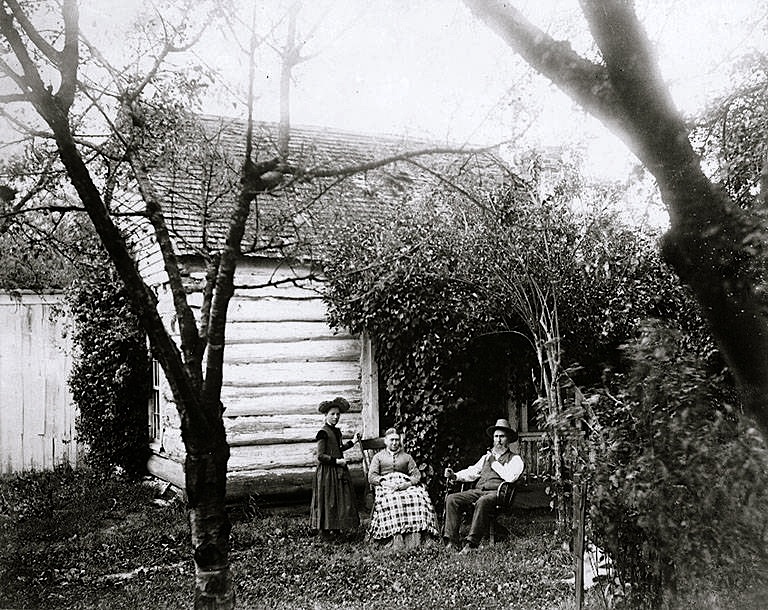
Vintage landscape/enclos*ure: family in garden via UW CommonsHomesteaders seated outside in garden surrounding house, probably [in] Washington State,” ca. 1905, by Albert Henry Barnes, via University of Washington Commons on flickr.

This photo was taken by the same photographer as Monday’s picture of repeating haycocks in an apple orchard.

There may be a little porch underneath the vines*, but it’s hard to tell. There is one fairly large window at the end of the house.   In order for settlers to acquire a homestead, “[t]he law stipulated that a domicile suitable for permanent residence of at least 10 by 12 feet with a minimum of one window must occupy the property,” according to the Center for the Study of the Pacific Northwest.


*It looks like English ivy, which is now terribly invasive in the state of Washington.

The Sunday porch: Georgia

While he was a professor of sociology at Atlanta University, W. E. B. Du Bois compiled 363 photographs of African American life in Georgia into several albums — which he displayed at the 1900 Paris Exposition Universelle.

The pictures* here, taken in 1899 or 1900, were part of his collection. Click on any thumbnail in the gallery to scroll through larger photos.

Du Bois’s exhibited albums particularly featured middle-class African Americans and their homes and institutions, and dozens of fine individual portraits were included.

“The photographs of affluent young African American men and women challenged the scientific ‘evidence’ and popular racist caricatures of the day that ridiculed and sought to diminish African American social and economic success,” according to the Library of Congress’s online catalogue.

In 2003, the Library of Congress published a book of 150 of the images, entitled A Small Nation of People.  You can listen to a good NPR interview with its co-author, historian Deborah Willis, here.  In it, she mentions porches being photographed for the exhibit, as places “central to family gatherings.”


*All via Library of Congress Prints and Photographs Division.

The Sunday porch: vine-covered, par excellence

On abandon, uncalled for but called forth. . . .*

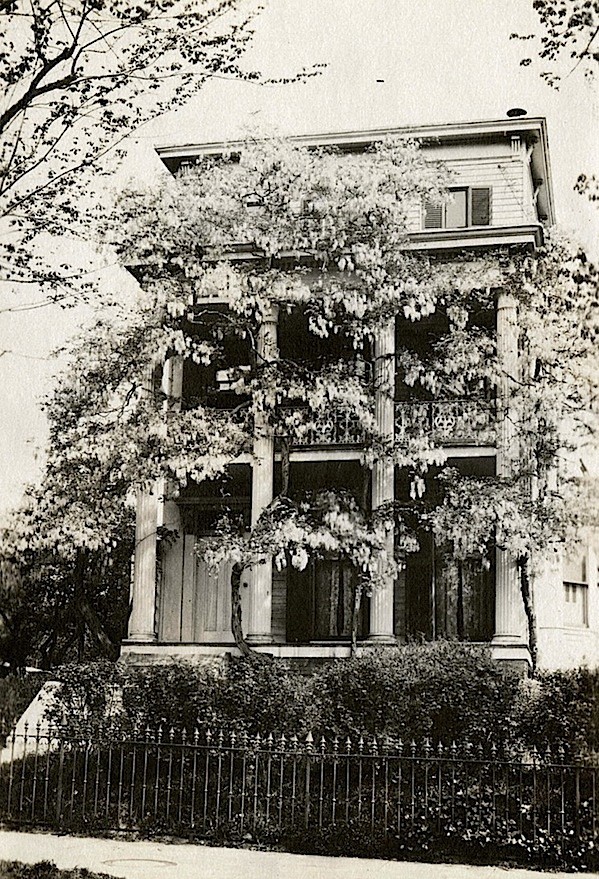
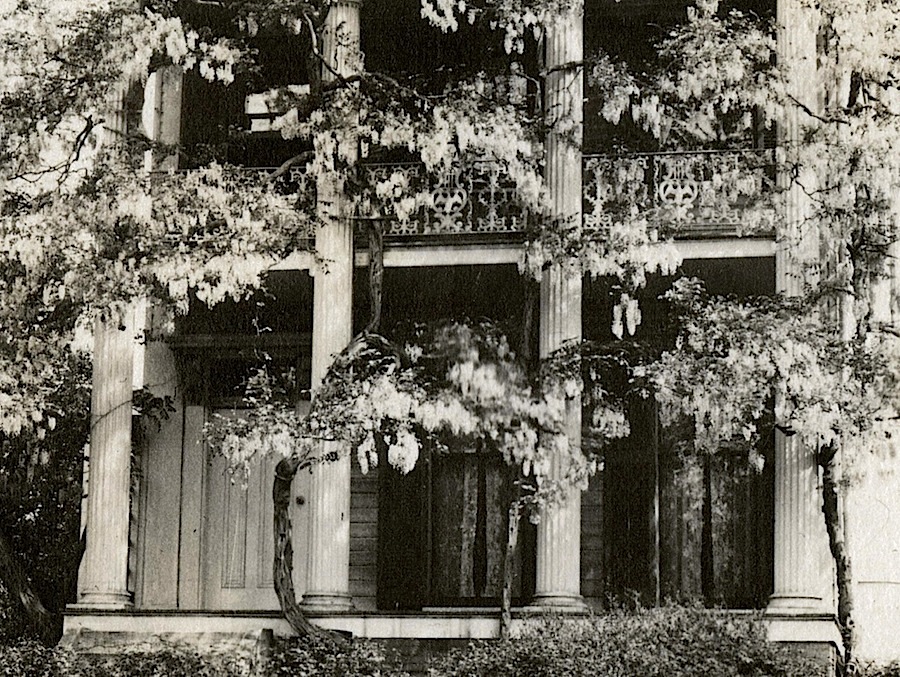
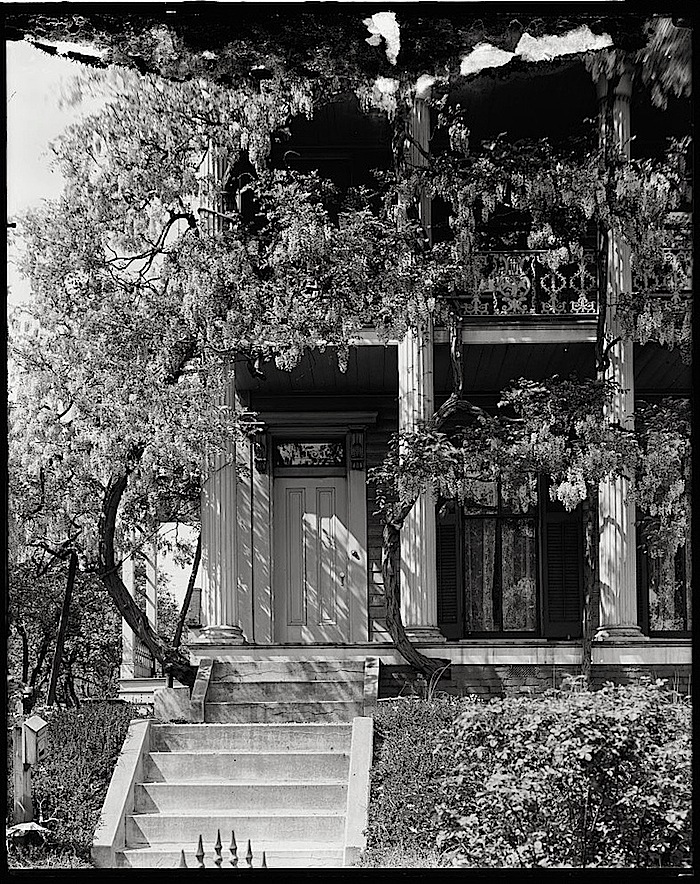
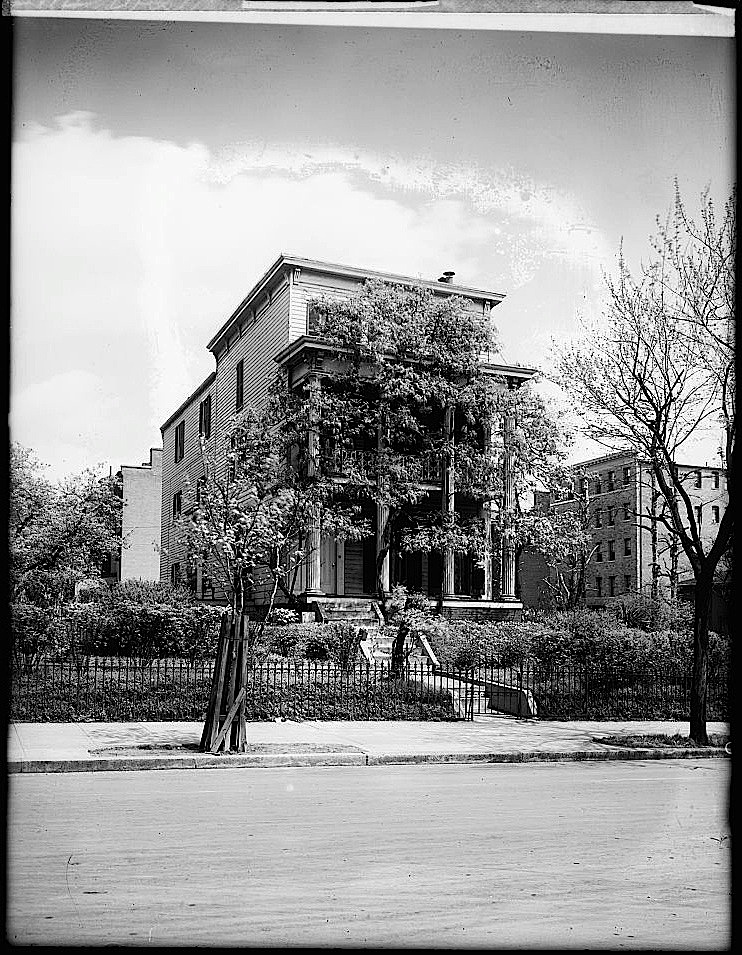
full croppedI think this is the loveliest wisteria I have ever seen.  It grew on the porch columns of “Wisteria House,” at Massachusetts Avenue and Eleventh Street, N.W., in Washington, D.C. The photo was taken in 1919, by Martin A. Gruber.**

The house was torn down in 1924 to make room for the Wisteria Mansion apartment building.

Wisteria House detail, 1919, via Smithsonian Institution CommonsA naval officer brought the vine from China and gave it to the owner of the house, probably during the 1860s, according to the blog Greater Greater Washington.

Wisteria House, Harris & Ewing photoThe Harris & Ewing** photo above, taken between 1910 and 1920, shows the trunks of the (one?) plant emerging through openings at the base of the porch.  The house was built in 1863, and the two-story portico was added in 1869 — so it looks like the wisteria was planted between those years and protected during the construction.

Wisteria House, LOC photoThe National Photo Company image above shows the house about 1920.


*Lucie Brock-Broido, from “Extreme Wisteria

**Top and second (a detail of the first) photos via the Smithsonian Institution Archives Commons on flickr.  Third and fourth photos via Library of Congress Prints and Photographs Division.