The Sunday porch: the hollows

Nicholson2
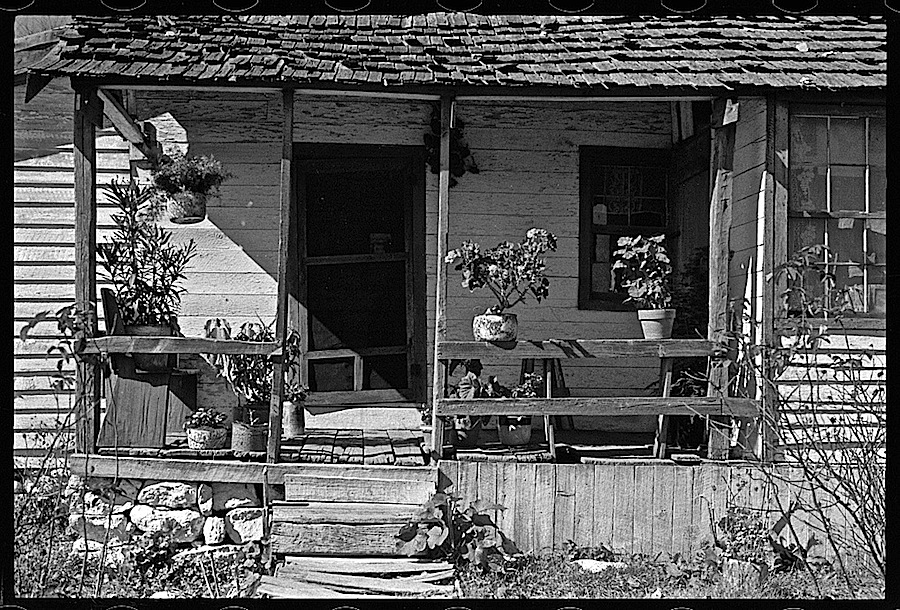
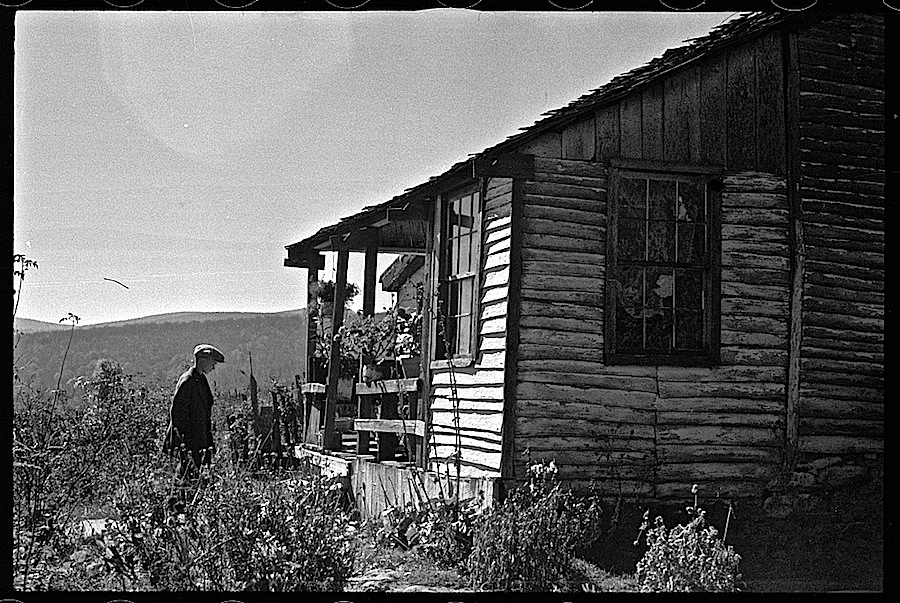
There seems to be a potted oleander on the left side.

The front porch of a home of the extended Nicholson family of Nicholson Hollow (top three images) in Shenandoah National Park, Virginia, October 1935.*

The Shenandoah National Park is a narrow strip of supremely lovely wilderness along the edge of the Blue Ridge Mountains in Virginia. It begins at Front Royal, about 75 miles west of Washington, D.C., and ends west of Charlottesville.

The park was authorized by Congress in 1926 and fully established by the end of 1935 — two months after these pictures were taken by Arthur Rothstein for the U.S. Resettlement Administration (later the Farm Security Administration).

In order to create a fully “natural” environment, over 450 families were moved out of the park area under the process of eminent domain. Most were small farmers who had been portrayed in a widely publicized 1933 sociological study as desperately poor, primitive, and cut off from 20th century society.
Nicholson3

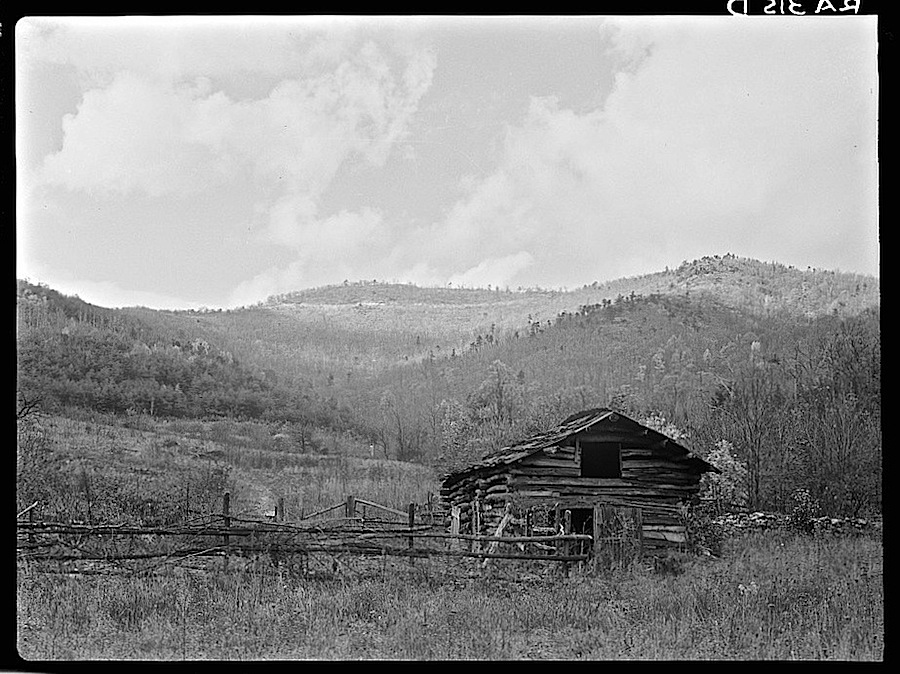
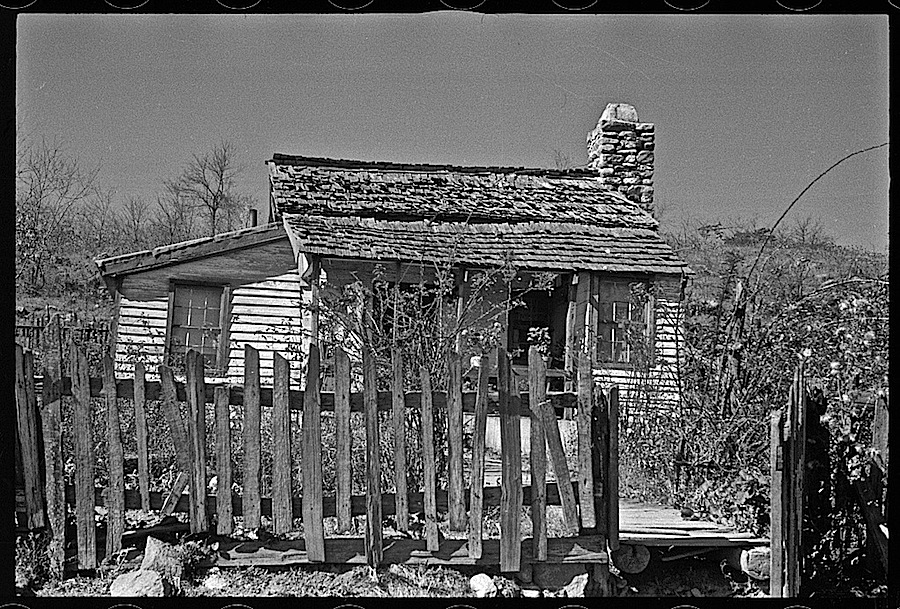
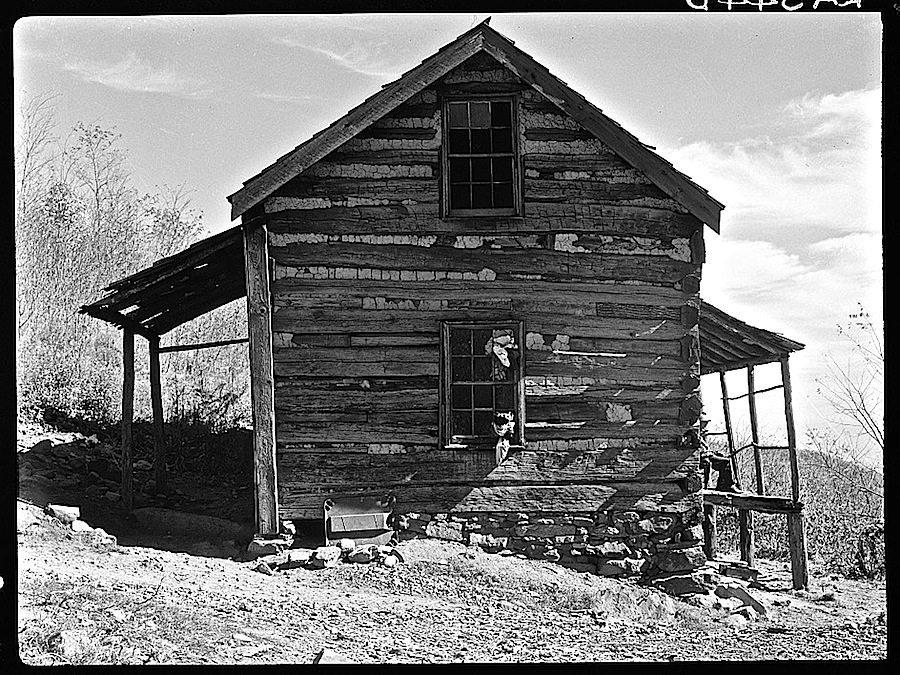
After they were gone, the Civilian Conservation Corps destroyed their homes and outbuildings. The only structures saved were some log houses and rail fences around Nicholson Hollow.
Nicholson

In the mid 1990s, the National Park Service sponsored an archaeological survey of 88 pre-park human settlements in Nicholson, Corbin, and Weakley Hollows.**

The findings of the study strongly refuted the earlier claims that the families (who were indeed often poor) were cut off the modern world. Researchers found china plates, mail order toys, 78 RPM record fragments, pharmaceutical bottles, and automobile parts.
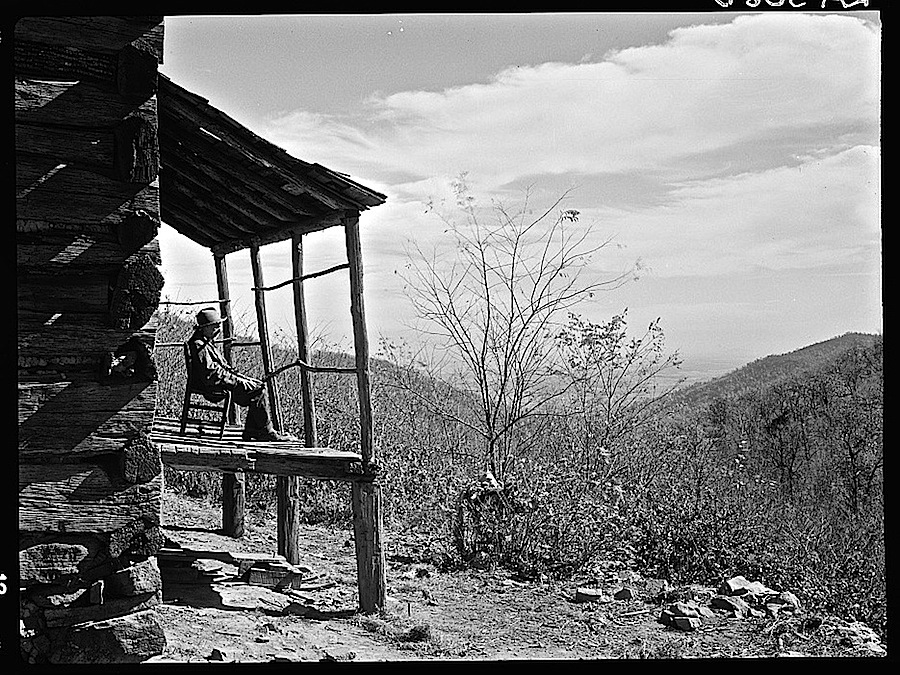
CorbinPorch view of Corbin Hollow from one house of the Corbin family (above and below).

The Corbins were very hard hit by the Depression-years decline of the nearby Skyland Resort, which had previously given them employment and a market for their crafts.
Corbin3

There are two very good papers on the displaced people of Nicholson and Corbin Hollows on the National Park Service website, here and here.
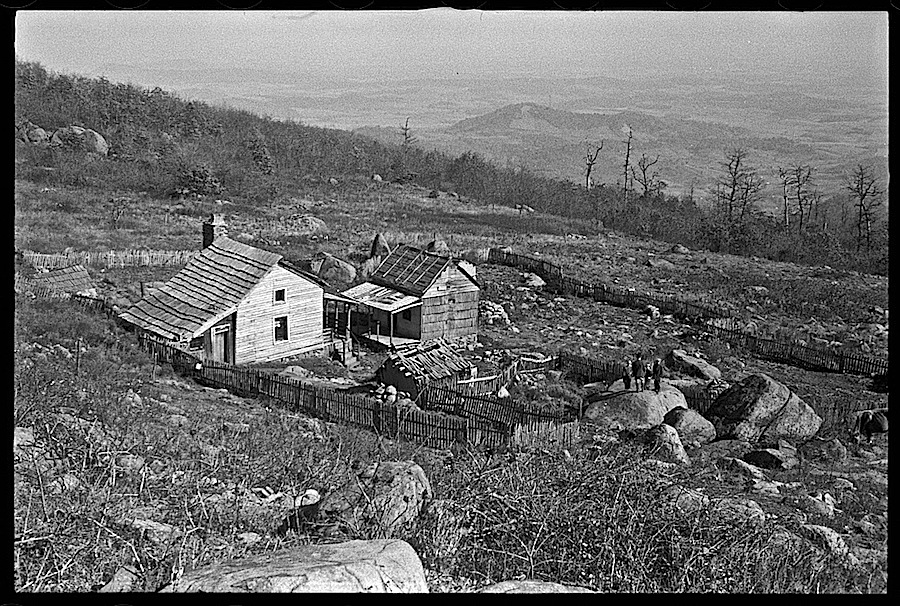
Corbin Hollow farm, Shenandoah Natl. Park, 1935, LoCAbove: another Corbin Hollow farm.

ViewAbove: an abandoned house in Nicholson Hollow.

More of Rothstein’s Shenandoah images are here. Recording the last days of the park’s human inhabitants was his first assignment with the Resettlement Administration.


*All the photos here by Arthur Rothstein, in 1935, via Library of Congress Prints and Photographs Division.

**In 2000, not long after the study was completed, a forest fire destroyed all but two of the remaining above-ground buildings.
Vintage landscape: boxwood path

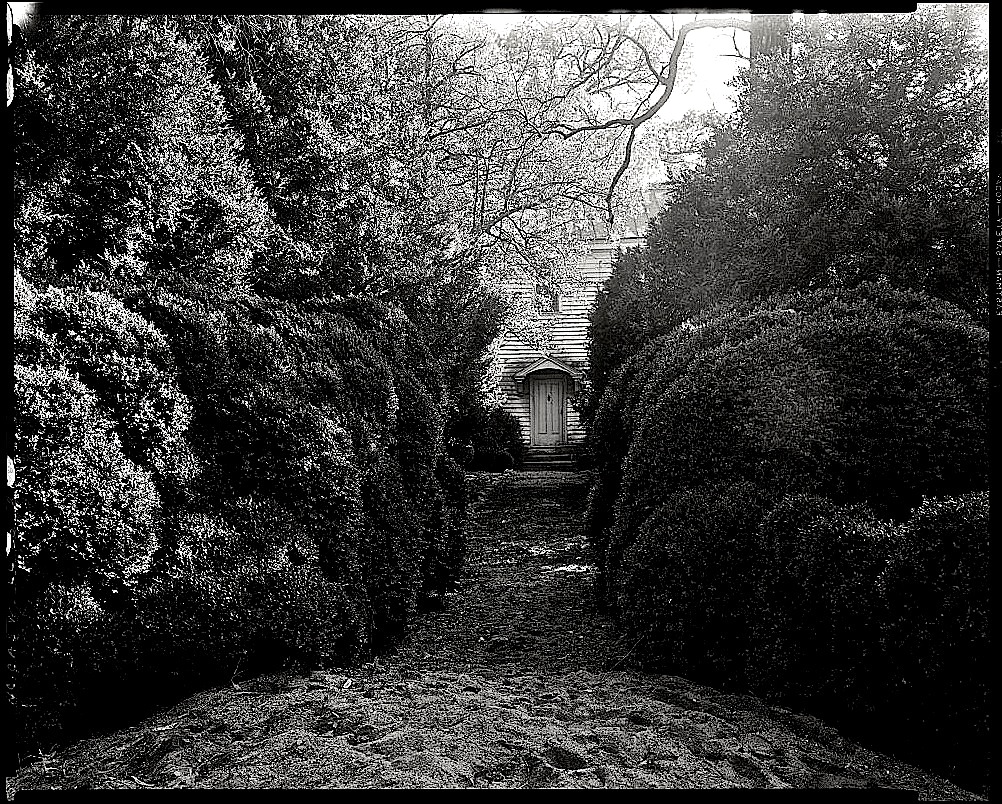
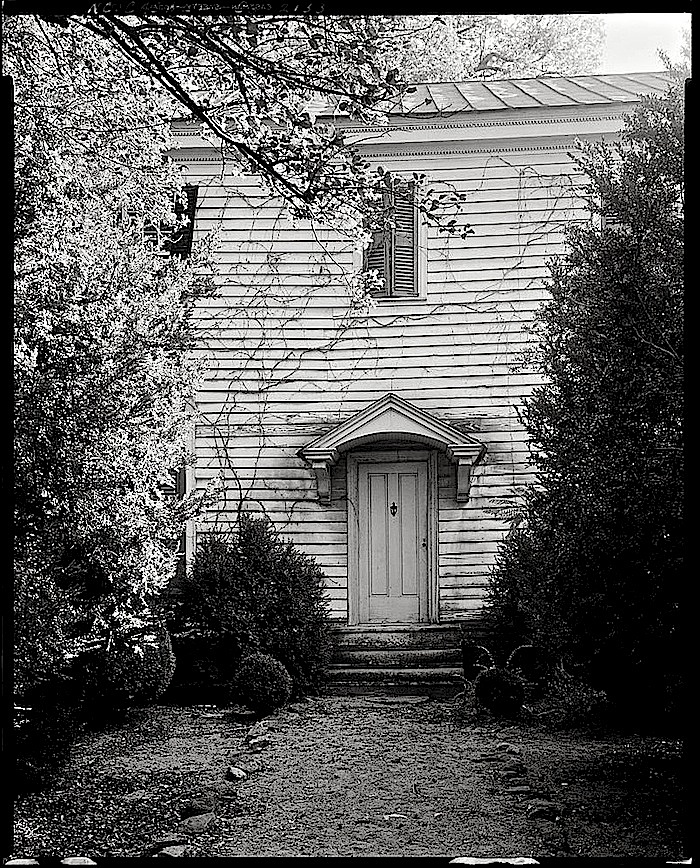
Rose HillRose Hill, Yanceyville, North Carolina, 1938, by Frances Benjamin Johnston, via Library of Congress Prints and Photographs Division.

Rose Hill, Library of Congress

I like to imagine that front door as yellow.

The house still stands and continues to be owned by the Brown family, who built it in 1800.

You can view larger versions of these photos by clicking on ‘Continue reading’ and then on either thumbnail in the gallery.

Nothing moves in boxwood
where gray soldiers lie.

Dave Smith, from “Winesaps

The Sunday porch: the portico

This slideshow requires JavaScript.

A late afternoon gathering on the south portico (or back porch) of the White House, probably between 1890 and 1910, photographer unknown, via the Library of Congress Prints and Photographs Division.

Encyclopedia Britannica defines ‘portico’ as a “colonnaded porch or entrance to a structure, or a covered walkway supported by regularly spaced columns. Porticoes formed the entrances to ancient Greek temples.”

The south portico of the White House was built in 1824, principally from an 1807 design by architect Benjamin Henry Latrobe, then Surveyor of Public Buildings.  Latrobe was appointed and supervised by Thomas Jefferson, who loved  neoclassical design and called Palladio’s books “the bible.”

The South of France

Roman temple
“simple and sublime”

Maria Cosway
harpist
on his mind

white column
and arch

Lorine Niedecker, from “Thomas Jefferson

Life in gardens: June 14, 1944

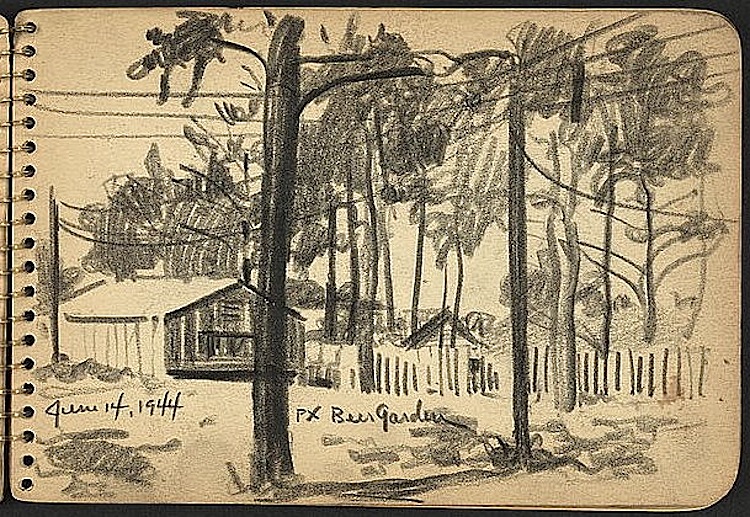
PX Beer Garden, June 14, 1944, via LoC

PX beer garden at Fort Jackson, South Carolina, June 14, 1944, by Victor Alfred Lundy, via the Library of Congress Prints and Photographs Division.

A beer garden is simply a shady outdoor area with tables and chairs where beer and sometimes food is served. The idea originated in the Bavaria region of Germany in the 19th century and soon came to America. There’s a brief history of beer gardens in the U.S. here.

Some American beer gardens were such pleasant, seemingly wholesome places that they rattled the resolve of the temperance movement. A woman on a committee investigating Chicago drinking spots wrote of one: “Isn’t it beautiful? Can it be, is it possible, that after all our ideas are wrong and these people are right?”

Beer gardens, like the one pictured above, were features of at least some homeland military camps and forts in the mid 1940s. Camp Mackall in North Carolina had six. I found a reference to one at Fort McClellan near Anniston, Alabama.  

During his U.S. Army service, Victor Lundy filled eight sketchbooks with scenes of his training at Fort Jackson, his life on a transport ship crossing the Atlantic, and his frontline duty in France.

After the war, he became an architect, admired today for “his sculptural sense of form” and  “innovative use of engineering technology,” according to the Smithsonian Institution.

In Rome

This slideshow requires JavaScript.

Everyone soon or late comes round by Rome.
— Robert Browning, from The Ring and The Book

As you might imagine, late May was a beautiful time to be in Rome.  Coming in from the airport — and later on the way to Naples — we saw swathes of red poppies blooming all along the train tracks.  In the city, there were jasmine flowers everywhere.  The temperatures were in the seventies, and the crowds of tourists weren’t yet (too) bad.

We continued our rather unfocused wanderings in this city as well. But I did spend about two hours in the Museo di Palazzo Doria Pamphilj* (or Pamphili), which was recommended in a 2013 New York Times article, “Three Quiet Museums in Rome.”  It’s a family art collection in what is still the family’s palace home.

Prince Camillo Pamphilj and his brother Pope Innocent X began buying the paintings and sculptures in the 17th century.  In the 18th, the palazzo became the dynasty’s principal residence, and it is now mostly presented as it was at that time.

It is quiet, and you can see masterworks by Bernini, Caravaggio, Memling, Titian, and Rubens, among others.  Admission is €11 and includes a good audio tour by a current Pamphilj prince.

The extended family lives in other parts of the building (you can get a peek at their private courtyard garden just as you enter the museum).  We think my husband, who met up with me later in the gift shop, may have been directed around the corner to the entrance by two of its members — older Italian ladies who told him he would “have a lovely time” in perfect British English.  The audio guide tells you that English is the first language of the family today (a legacy of a 19th century English peeress ancestress).

This slideshow requires JavaScript.

We were also able to visit the beautiful grounds of the American Academy of Rome on Janiculum Hill (photos above).

Miscellaneous tips for Rome

Reserve your hotel room as early as possible. I started looking about six weeks before our trip, and all of my first and second choices were booked up.

The two (casual) restaurants we particularly liked were:

  • the pizzeria Panattoni, Viale di Trastevere 53/57 (dinner only, cash only, closed Wednesdays) in Trastevere — for thin Roman-style pizza.
  • L’Antica Birreria Peroni, near Piazza Venezia — serving lunch and Peroni beer to local businesspeople. (The menu they gave us was only in Italian, but you can see a translation here.)

I liked the Kindle guidebook Revealed Rome by Amanda Ruggeri (and her blog of the same name) for culture, restaurant, and shopping tips.  I also consulted the blogs Parla Food Aglio, Olio e Peperoncino, and The Guardian’s city guide for Rome.

I also liked Italian Survival Guide (on Kindle and paper) by Elizabeth Bingham for a good explanation of Italian pronunciation, numbers, and basic phrases, as well as culture tips.

Not Built in a Day by George H. Sullivan is an interesting guide to Roman architecture, but don’t buy the Kindle version, as I did.  The maps are tiny and fuzzy, making it very difficult to follow his walking tours.  


*It is not part of the large park, Villa Doria Pamphili. The Palazzo is just northwest of the Piazza Venezia in the historic city center.  The entrance is on Via del Corso.

Continue reading “In Rome”