Where happiness dwells. . .

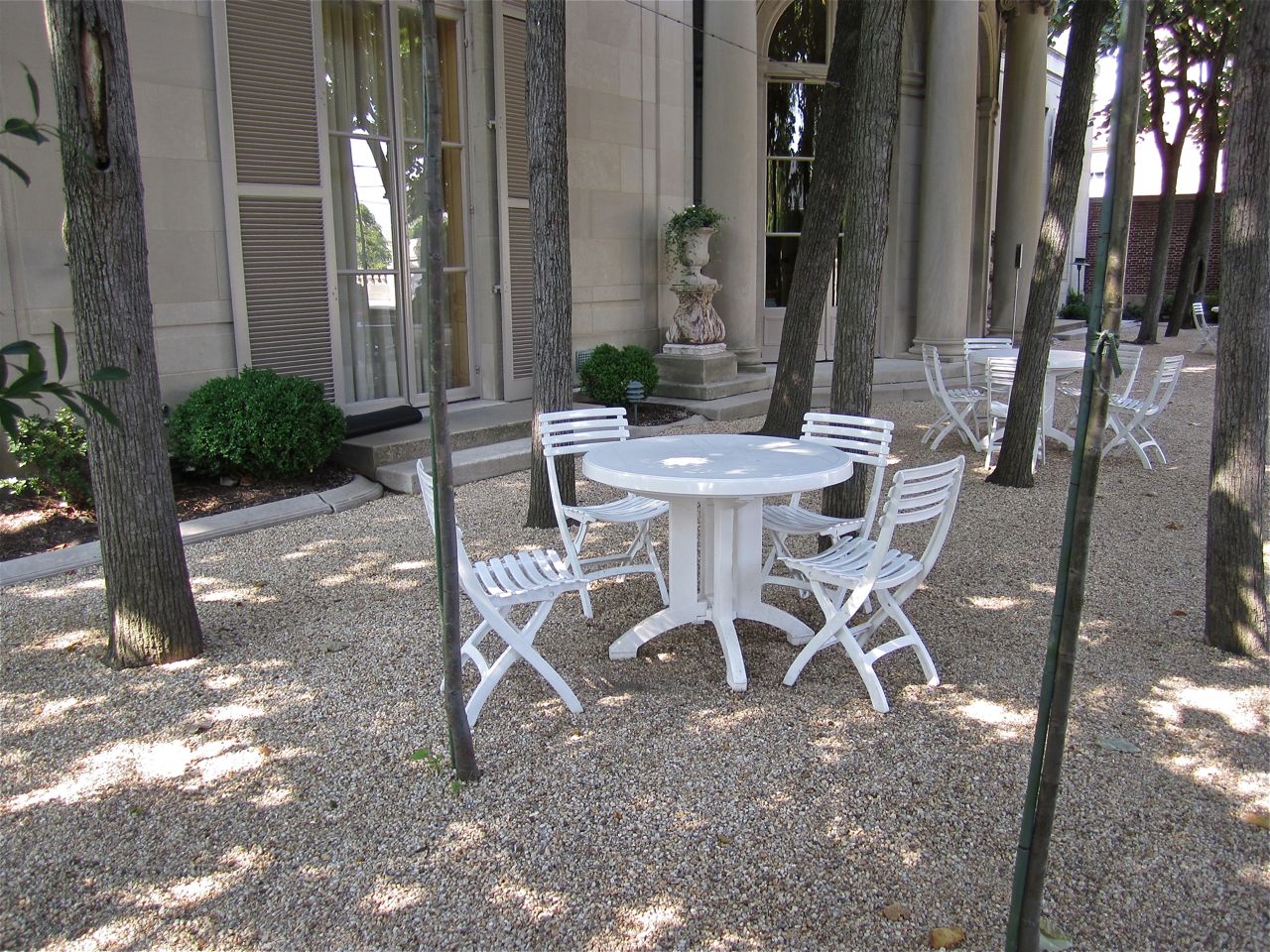
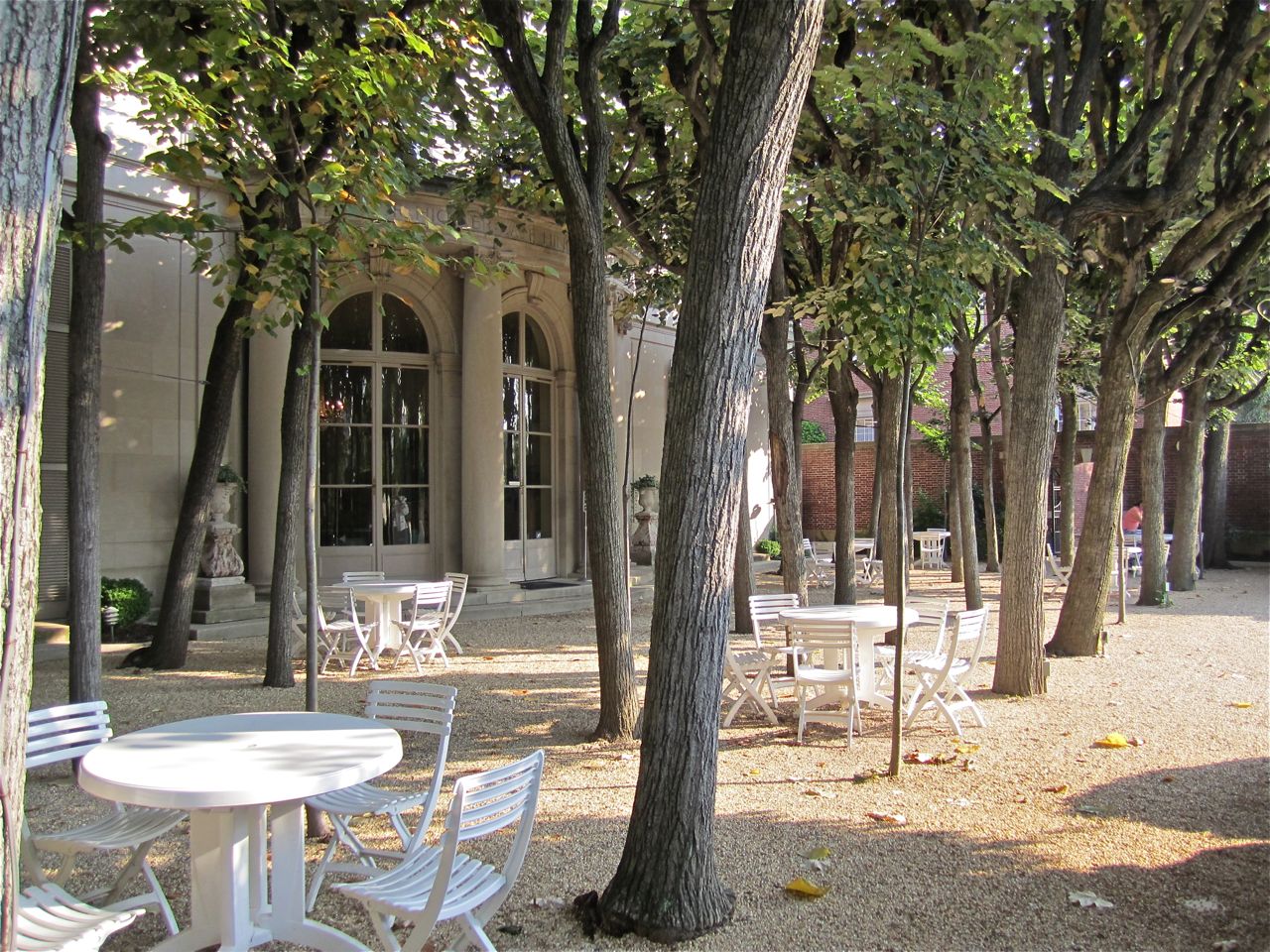
The courtyard.  The original linden trees were imported from Europe when the house was built.

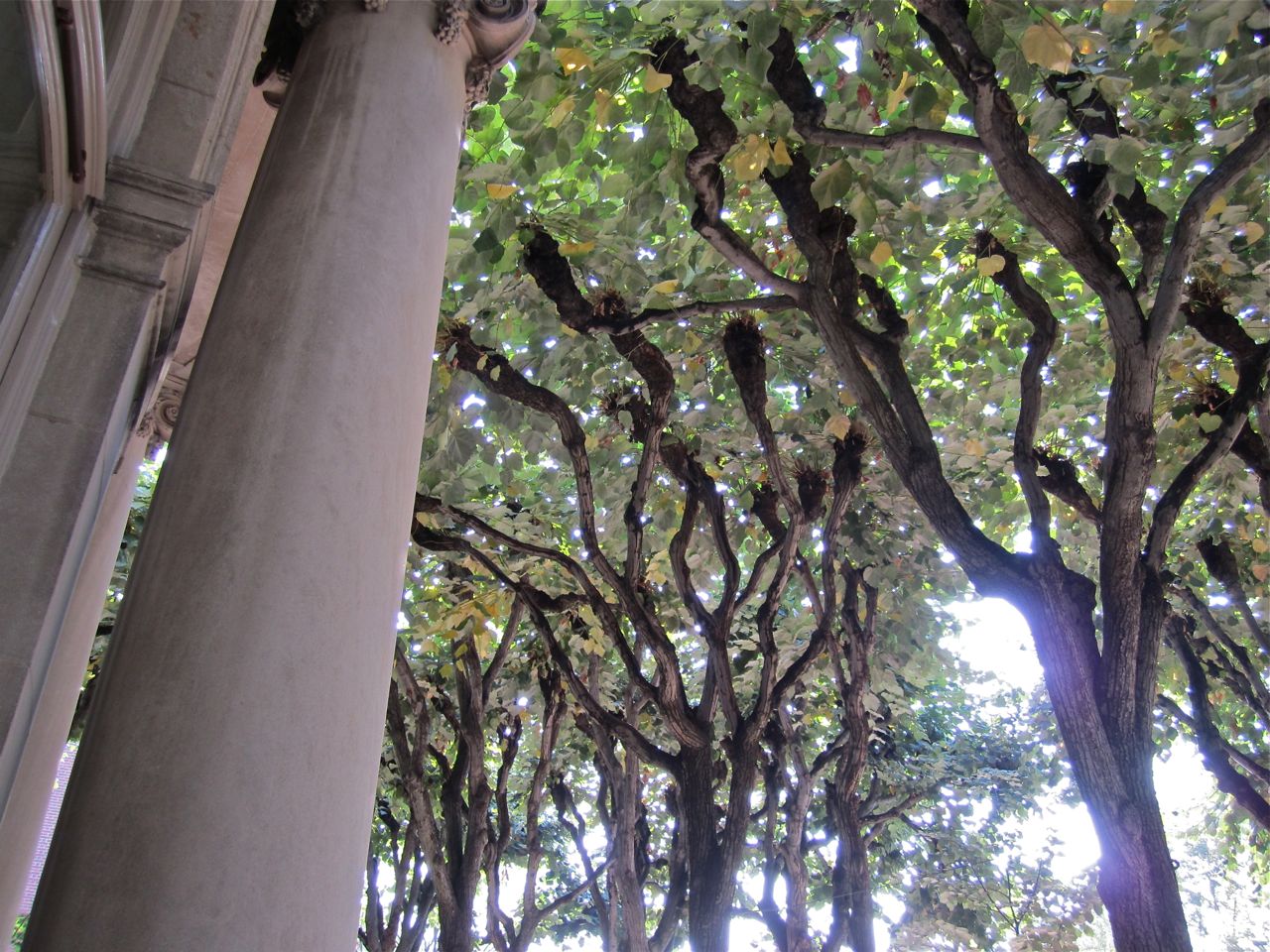
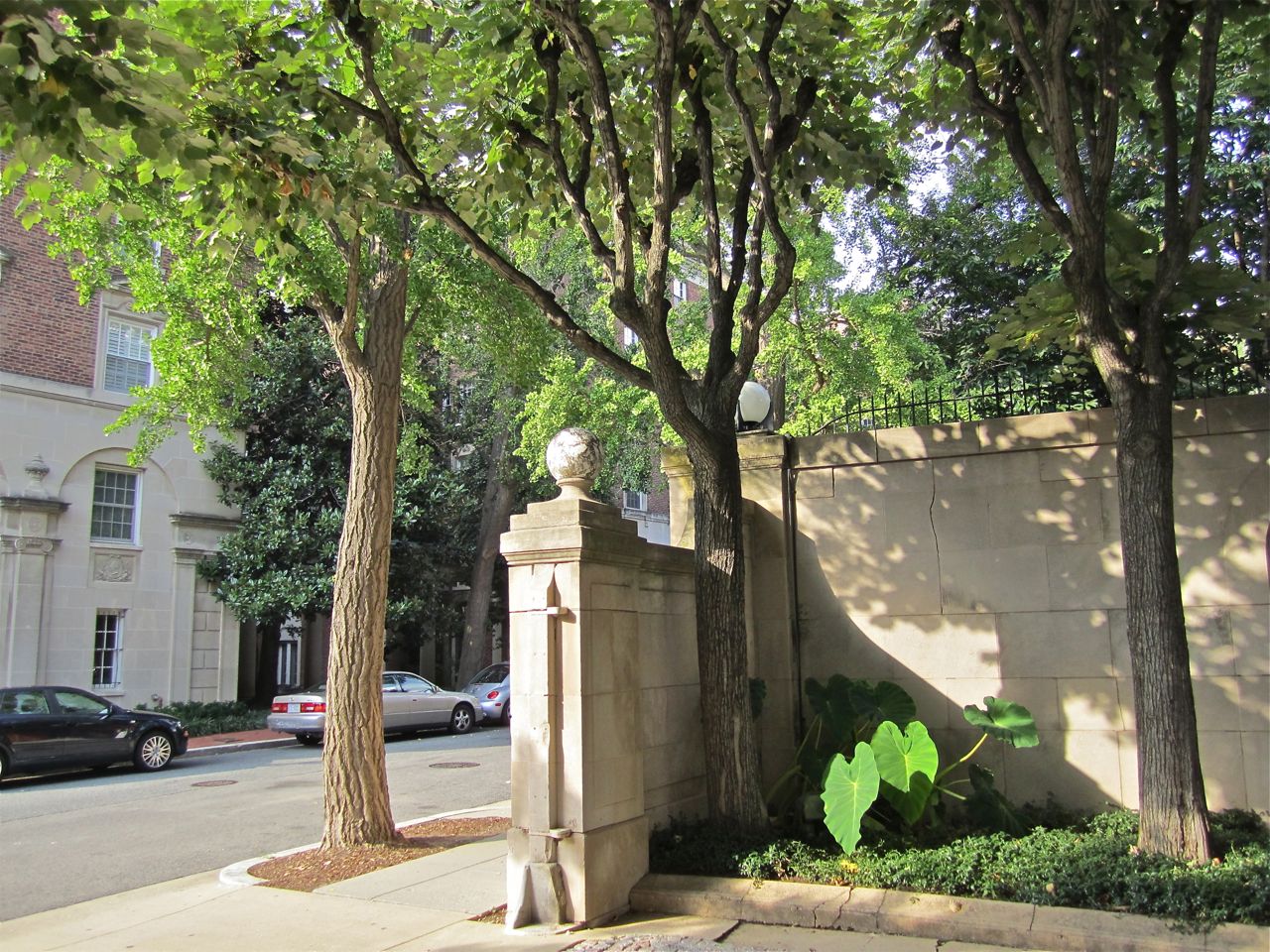
I love to see rows of  pollarded trees in French squares and courtyards. The quality of light and shade they produce, the formal rhythm of their trunks, and the sculptural qualities of their branches and old “knuckles” have a timeless beauty for me.

Pollarded trees aren’t common in the United States, so I was surprised and delighted when I walked into the lovely, serene courtyard of Meridian House on Friday morning.

Meridian House in Northwest D.C. (just a stone’s throw from Meridian Hill Park on 16th Street) is home to the Meridian International Center.  Since 1960, the Center’s mission has been to advance American public and cultural diplomacy efforts.  It manages international visitor exchanges, holds cultural exhibitions, and hosts conferences and seminars.

I was able to see it — and the garden — last week, when I attended a seminar on Rwanda.

The house, built in 1920 as the home of diplomat Irwin Boyle Laughlin, was designed by architect John Russell Pope, who also designed the Jefferson Memorial, the National Gallery, and the National Archives.  The style of the house, both inside and out, is neoclassical and French.
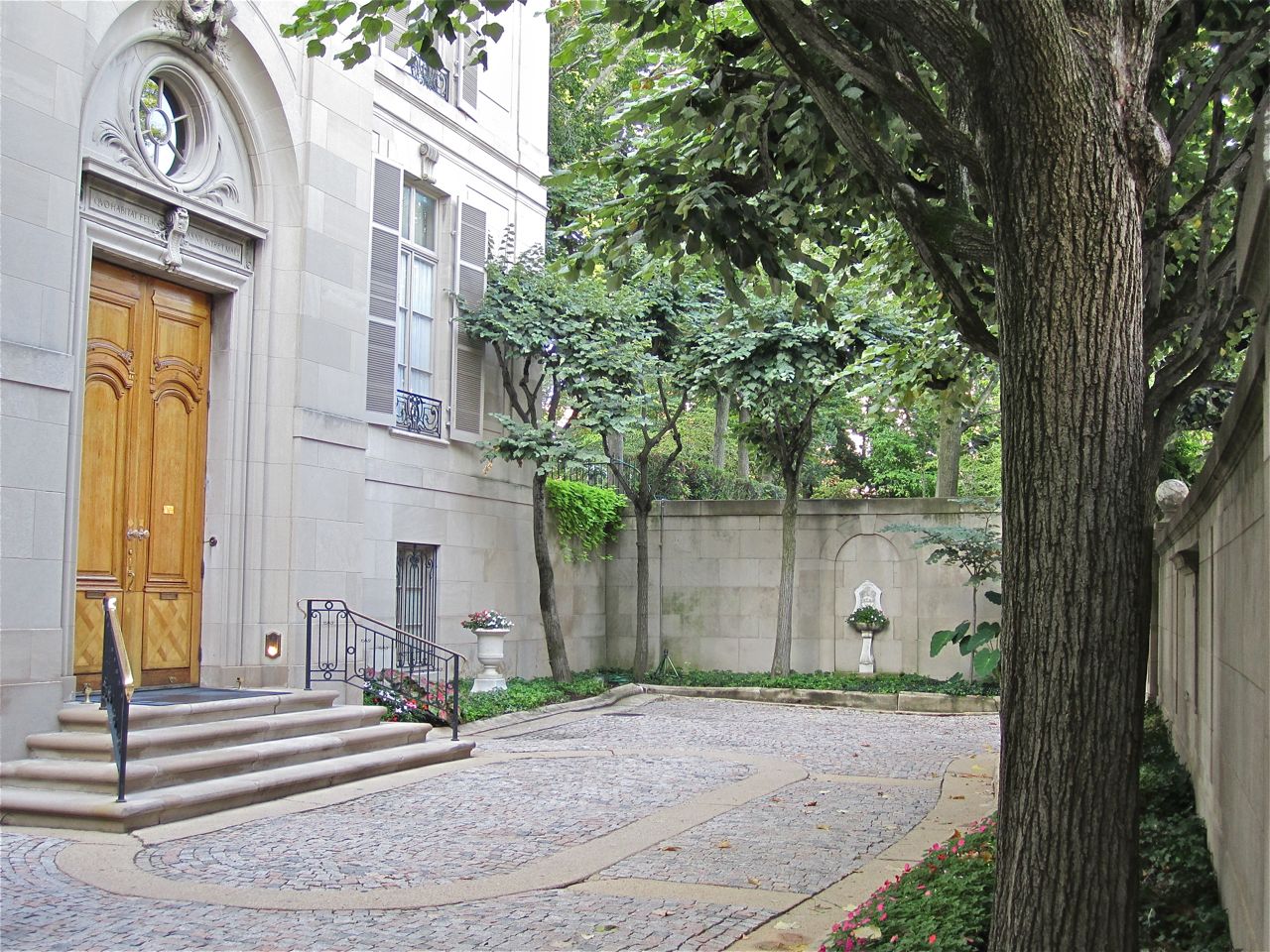
The front of the house. The inscription over the door reads “Quo habitas felicitas nil intreat mali” —  “Where happiness dwells, evil will not enter.”

The rectangular courtyard just outside the house’s reception rooms is paved in pea gravel and canopied by 40 pollarded linden trees, which were imported from Europe when the house was built (more links on pollarding are here and here and here).

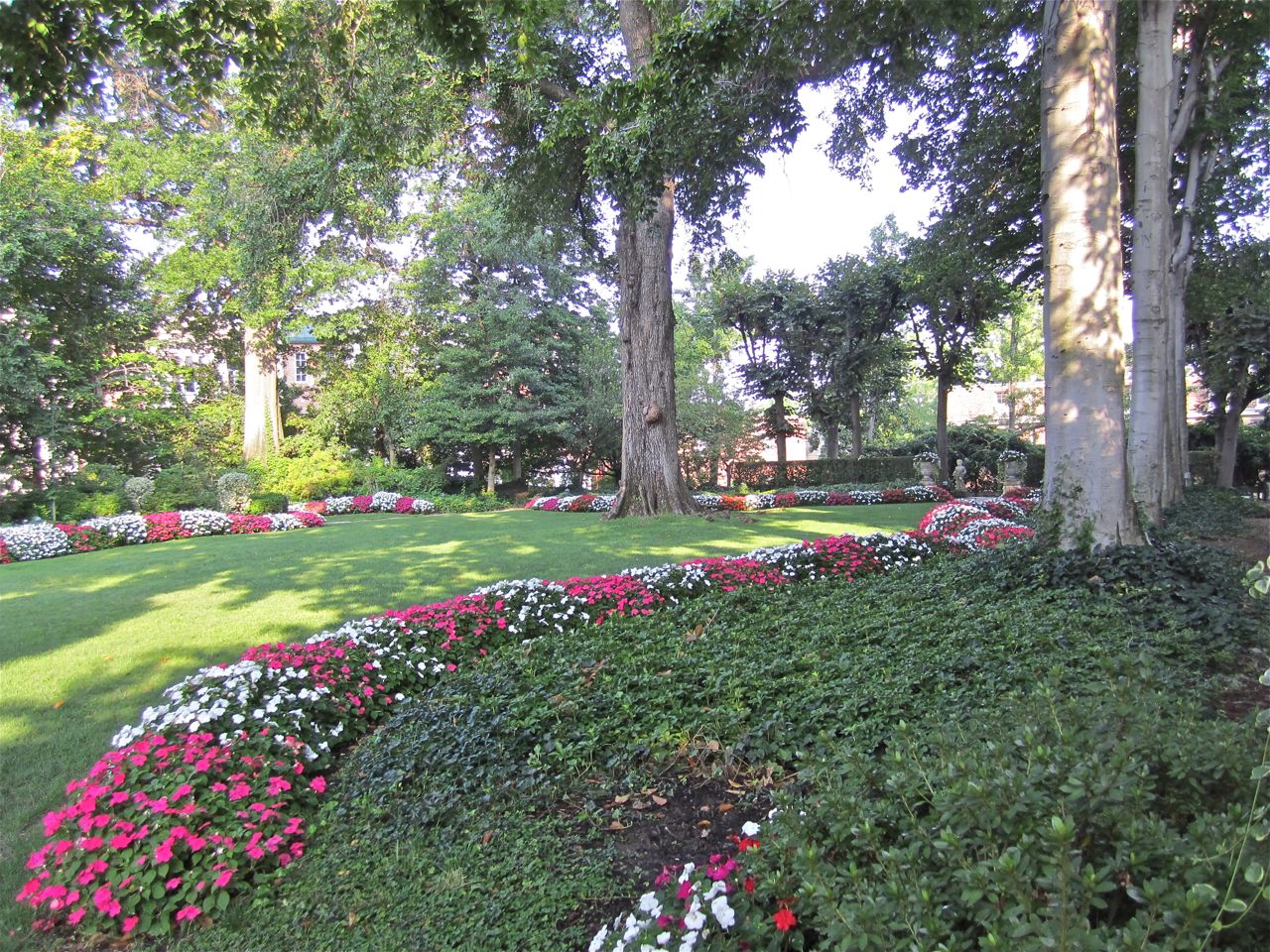
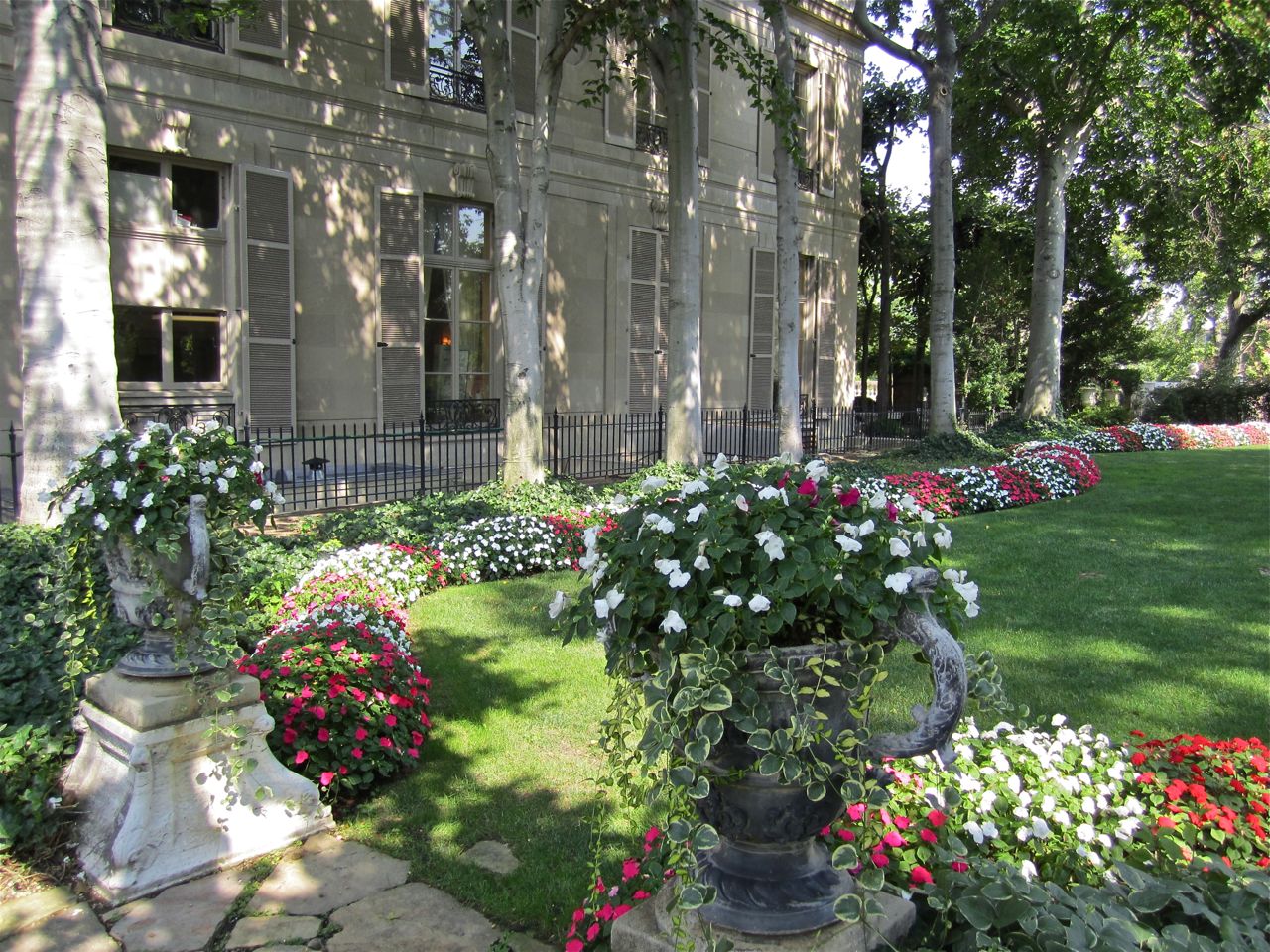
The side garden has a large lawn and planting beds bordered in pink and white impatiens.  The design of both areas is largely original to the house.
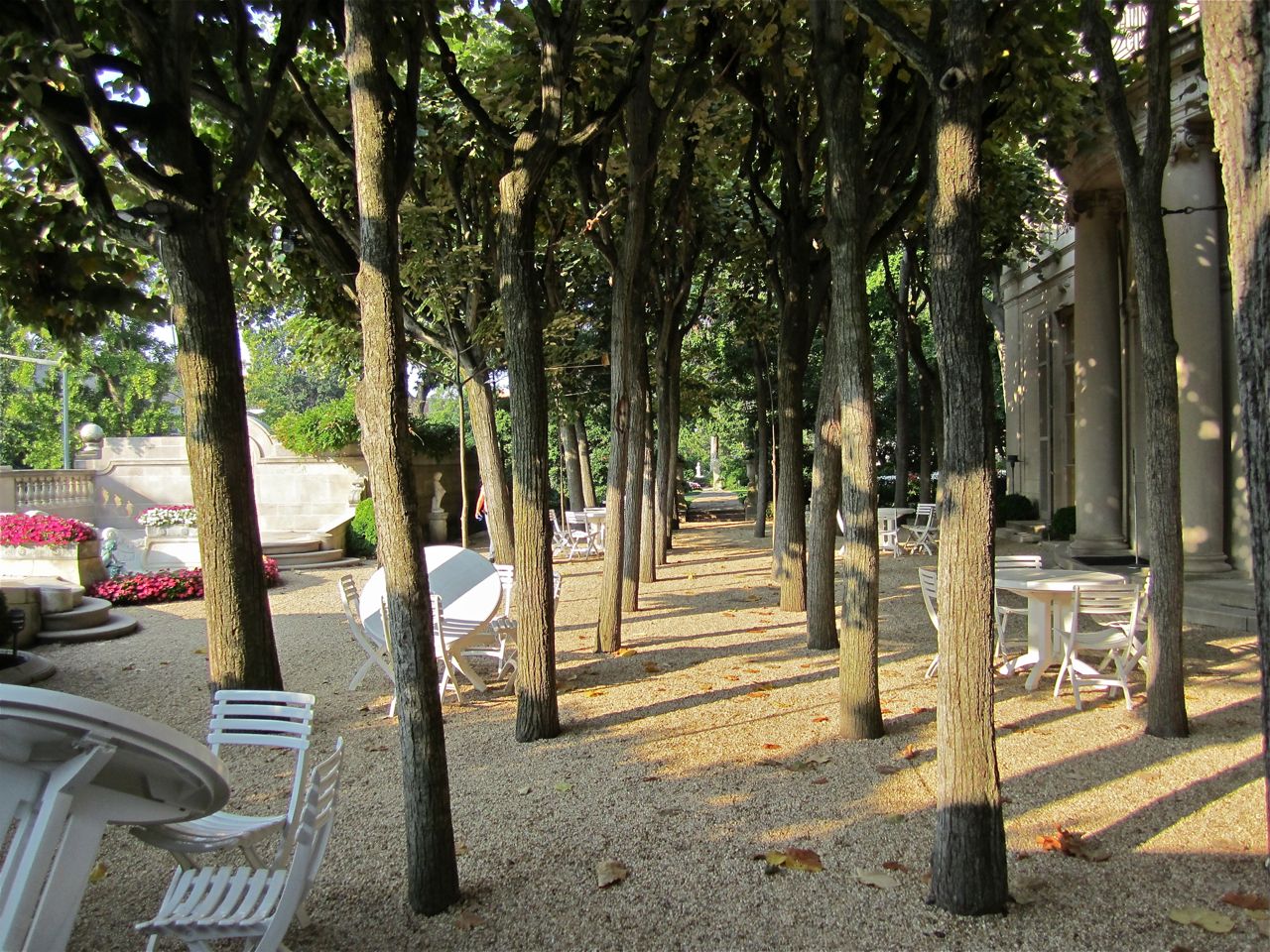
The courtyard in early morning.  Click on the photos to enlarge them. 
Young trees the size of poles have been planted to replace the old.
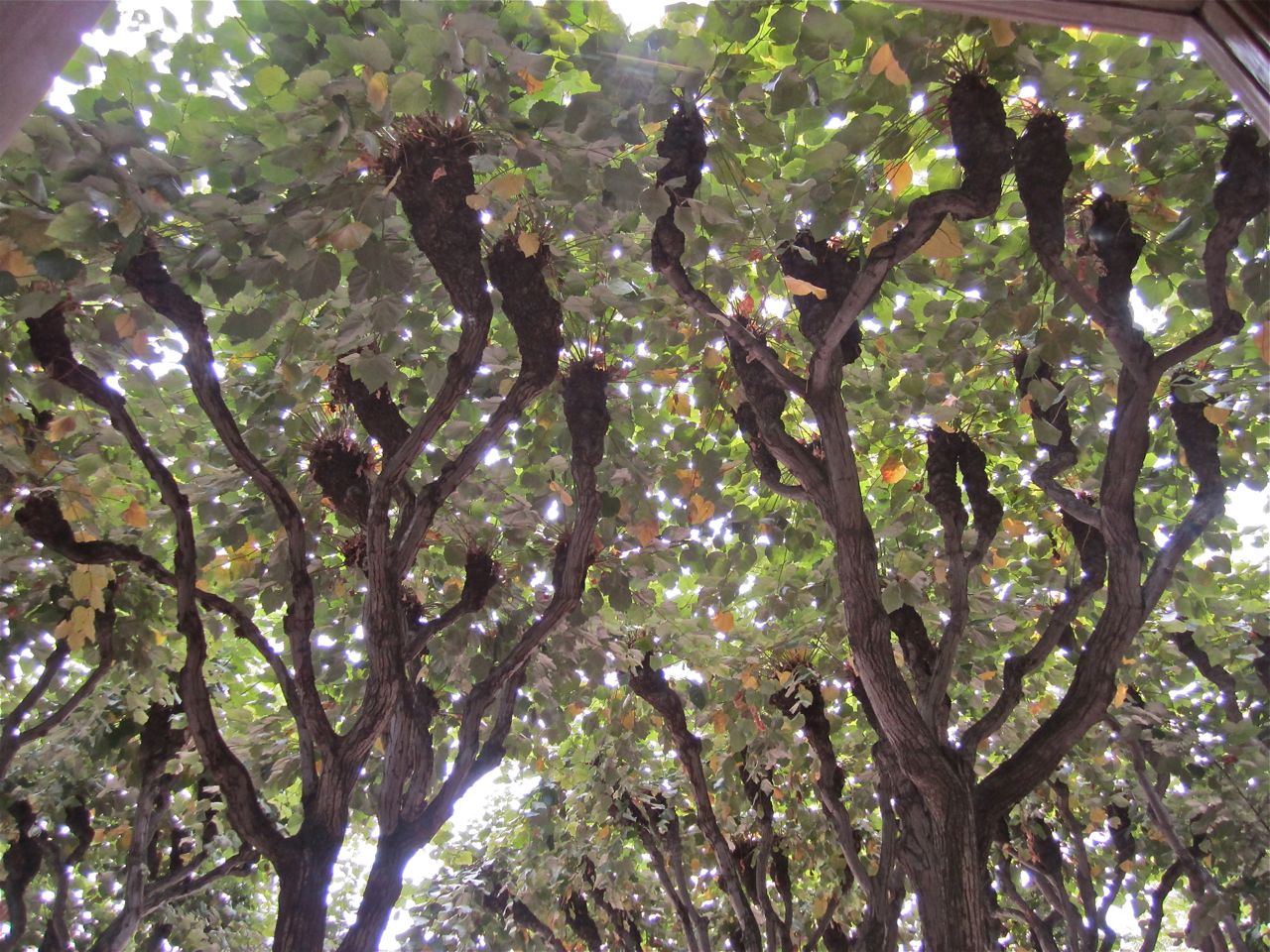
The umbrella-like canopy of the pollarded linden trees.
The old “knuckles” of the trees.
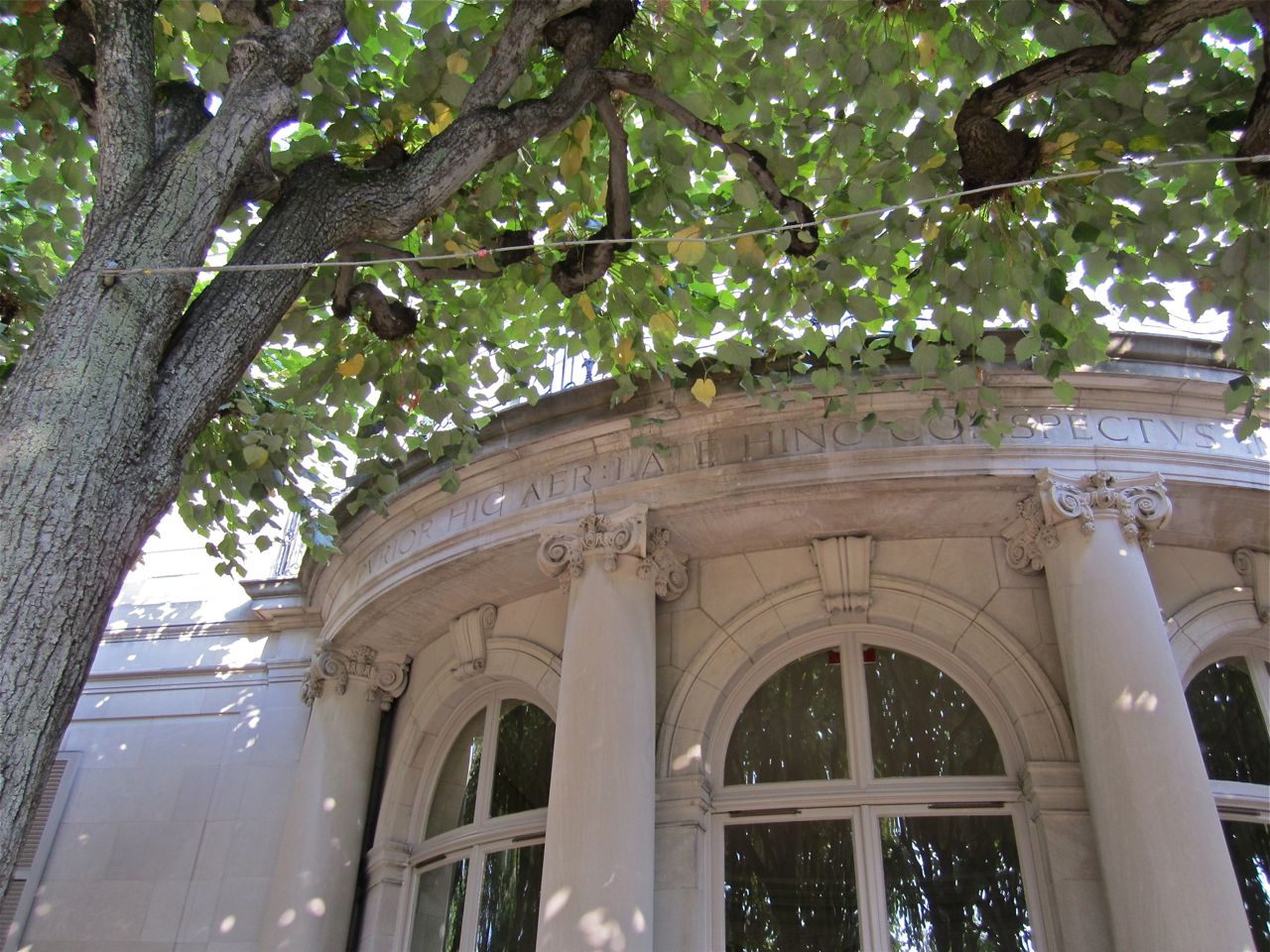
On the south side of the house, the inscription reads, “Purior hic aer: late hinc conspectus in urbem” — “Purer here the air whence we overlook the city.”
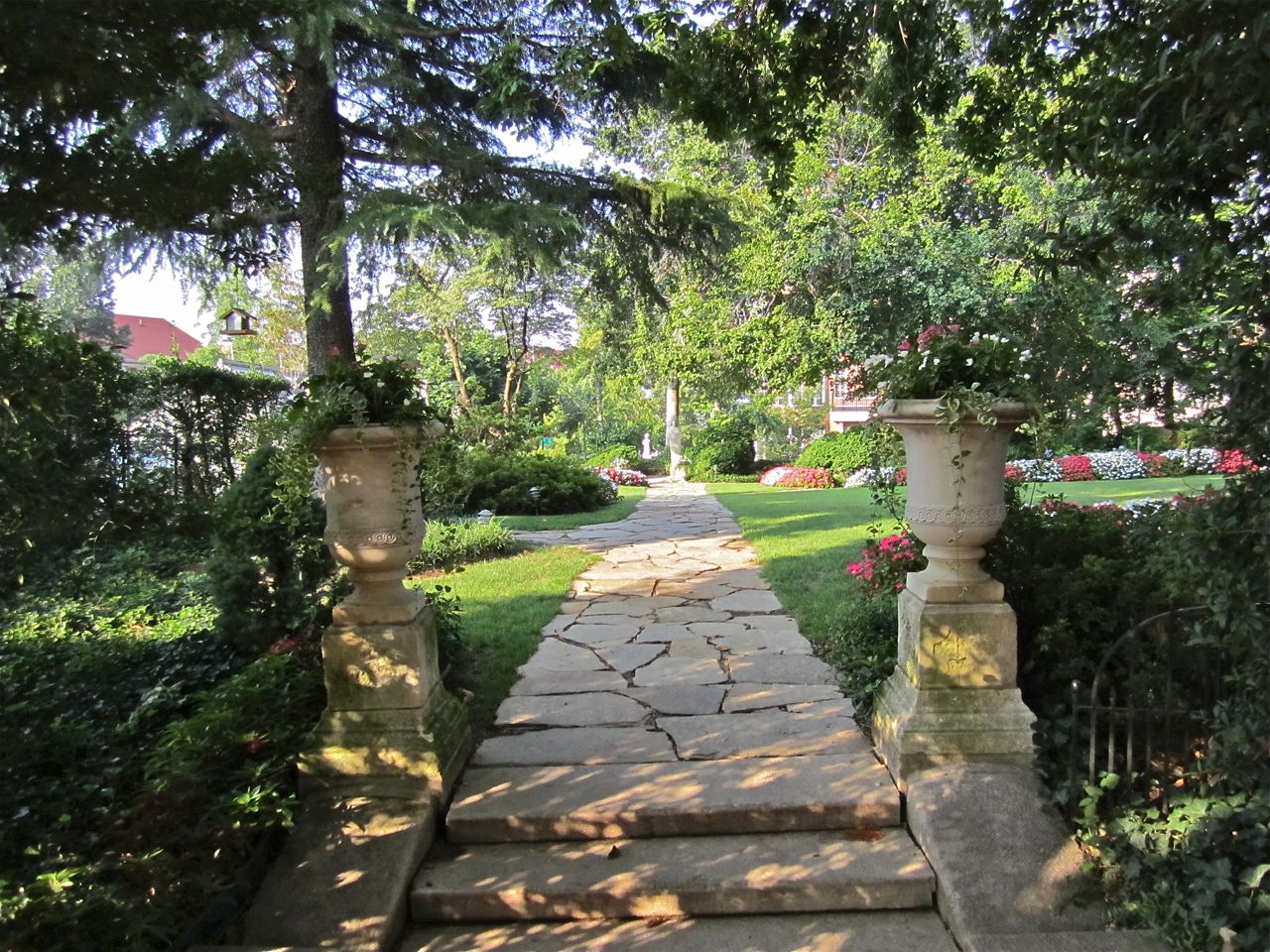
Moving from the courtyard to the side garden.
Looking to the right.
An old oak in the center of the lawn.  Its roots are protruding into the grass.
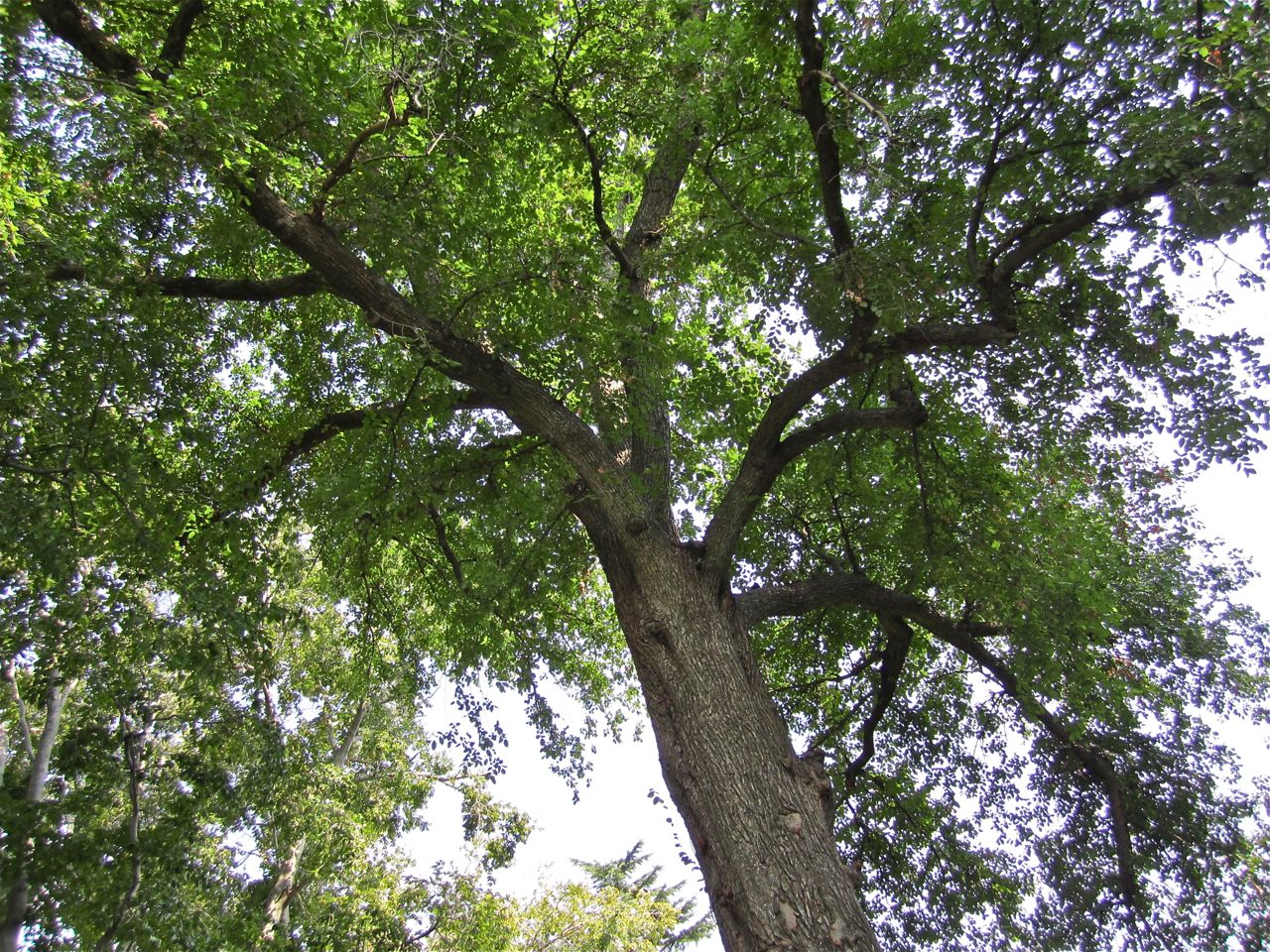
Looking up into the oak.
Looking to the south.
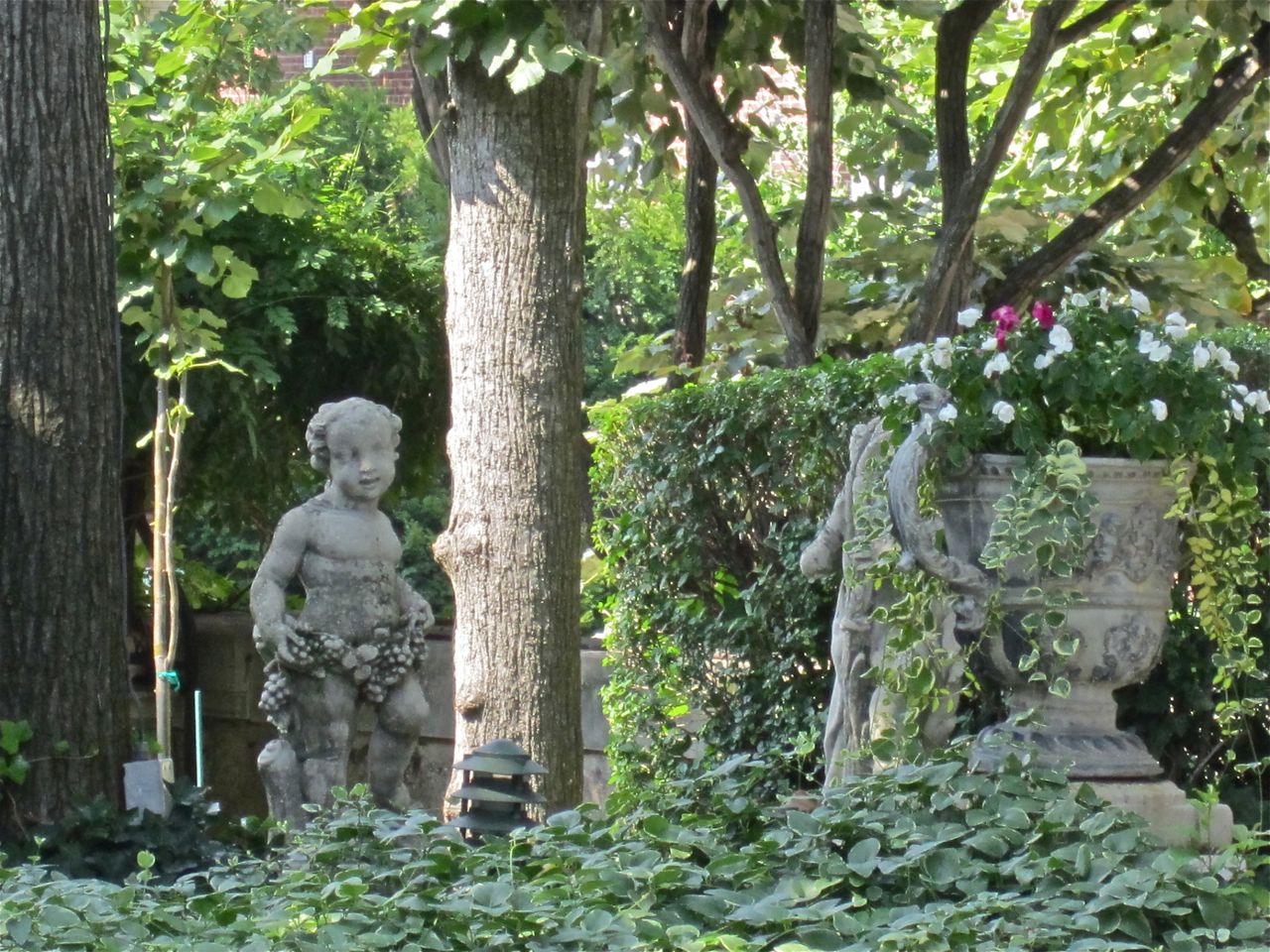
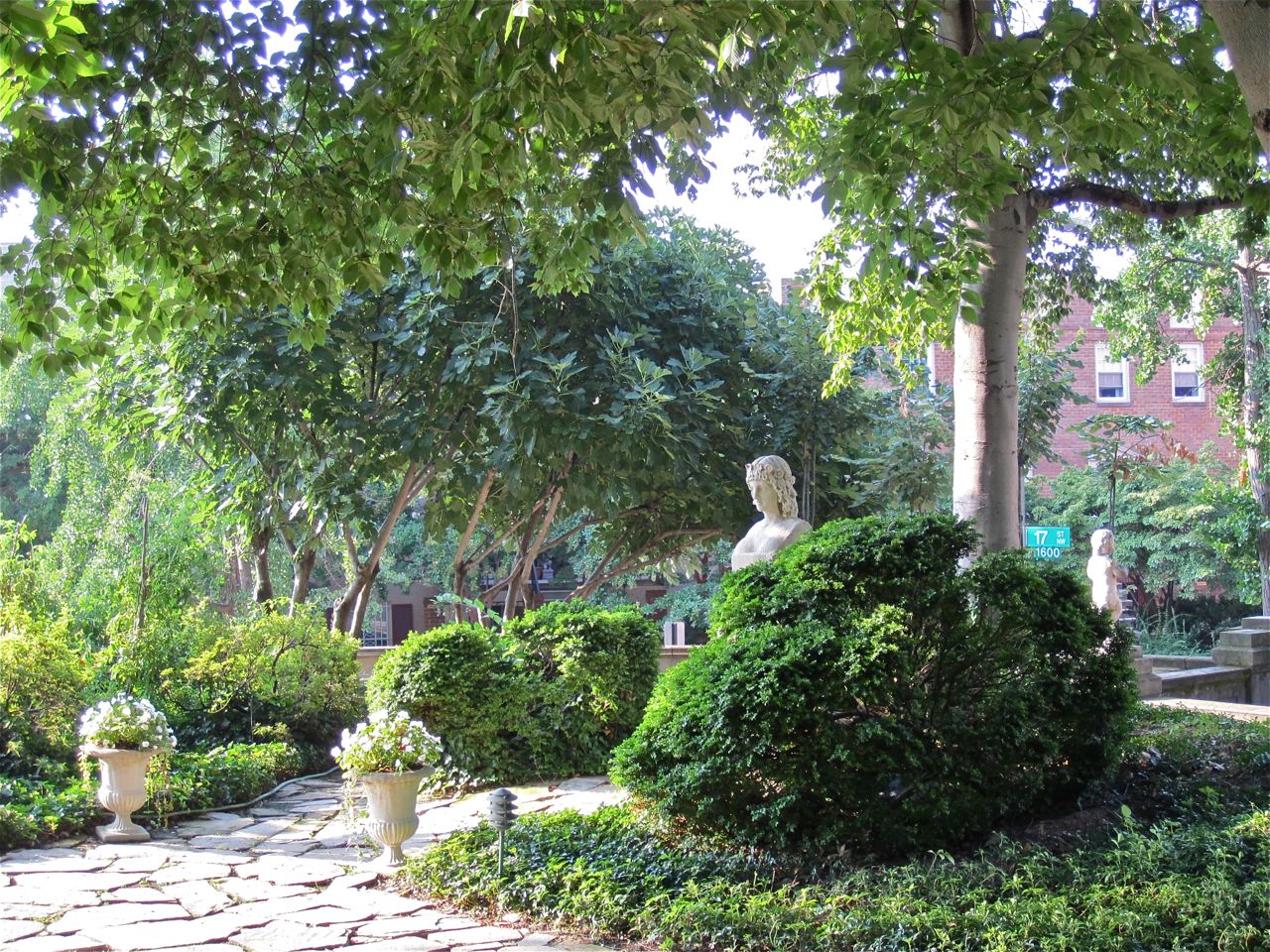
The statues throughout the garden are original to the house.
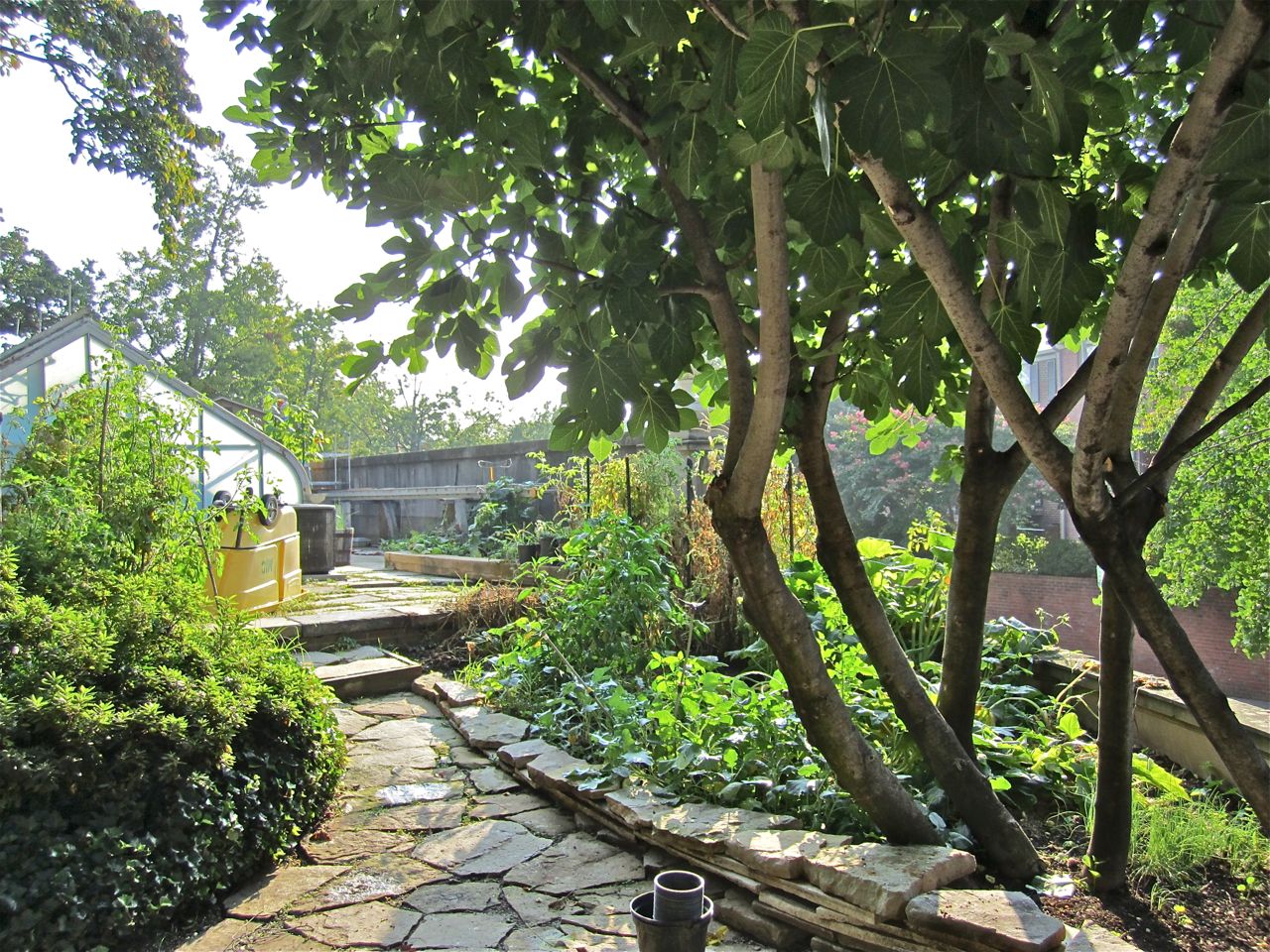
Several limbed-up fig trees in the southwest corner.
The staff have planted some vegetables around the greenhouse on the south side.
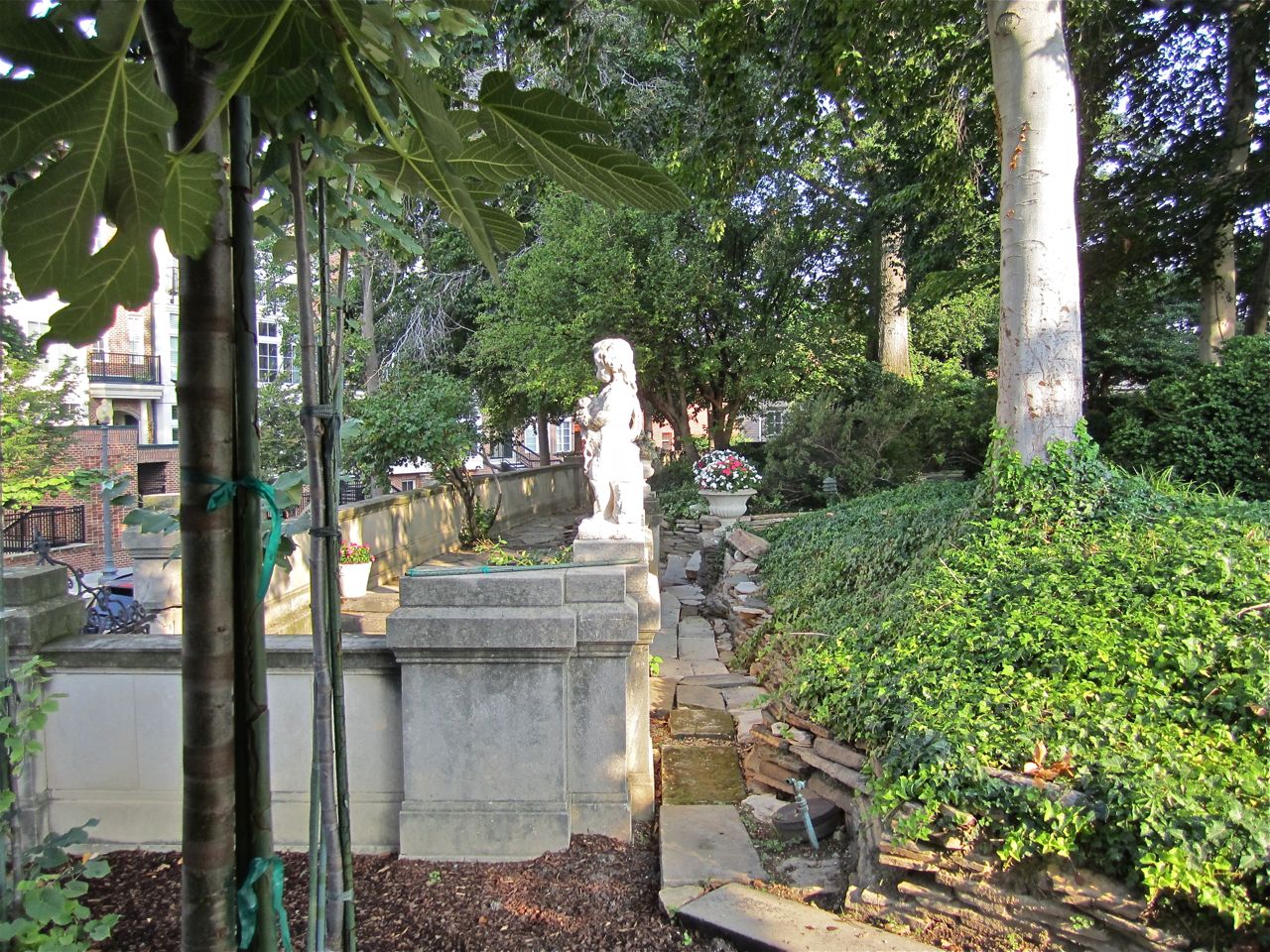
A walkway along the west perimeter of the garden.  
Leaving the house at 1630 Crescent Place.

Not surprisingly, Meridian House is one of the outstanding wedding venues of Washington, D.C.

To see more photos of the courtyard and garden, click on “Continue reading” below and click on the thumbnails in the gallery to enlarge them.
Continue reading “Where happiness dwells. . .”

A “natural force” at Dumbarton Oaks

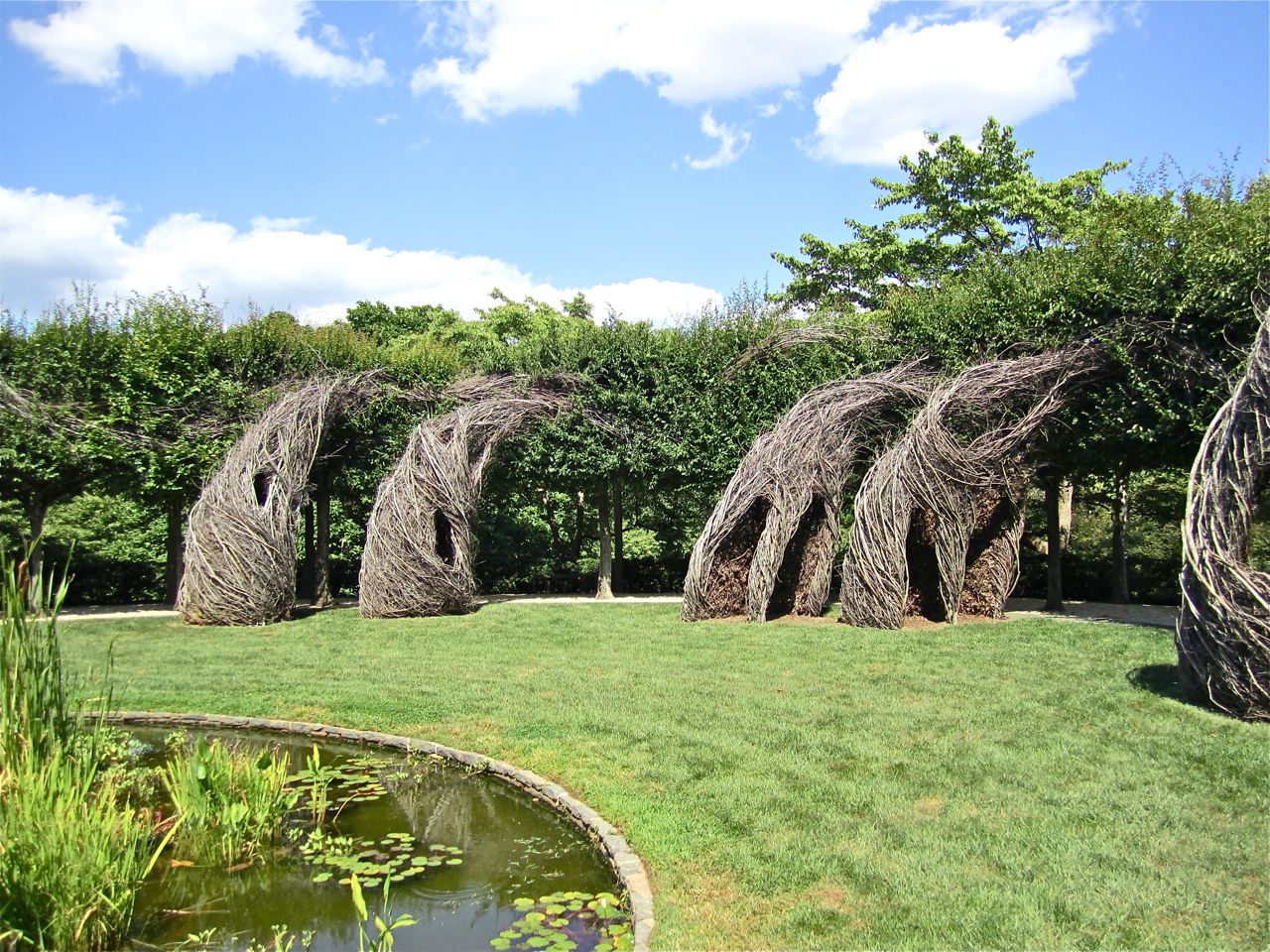
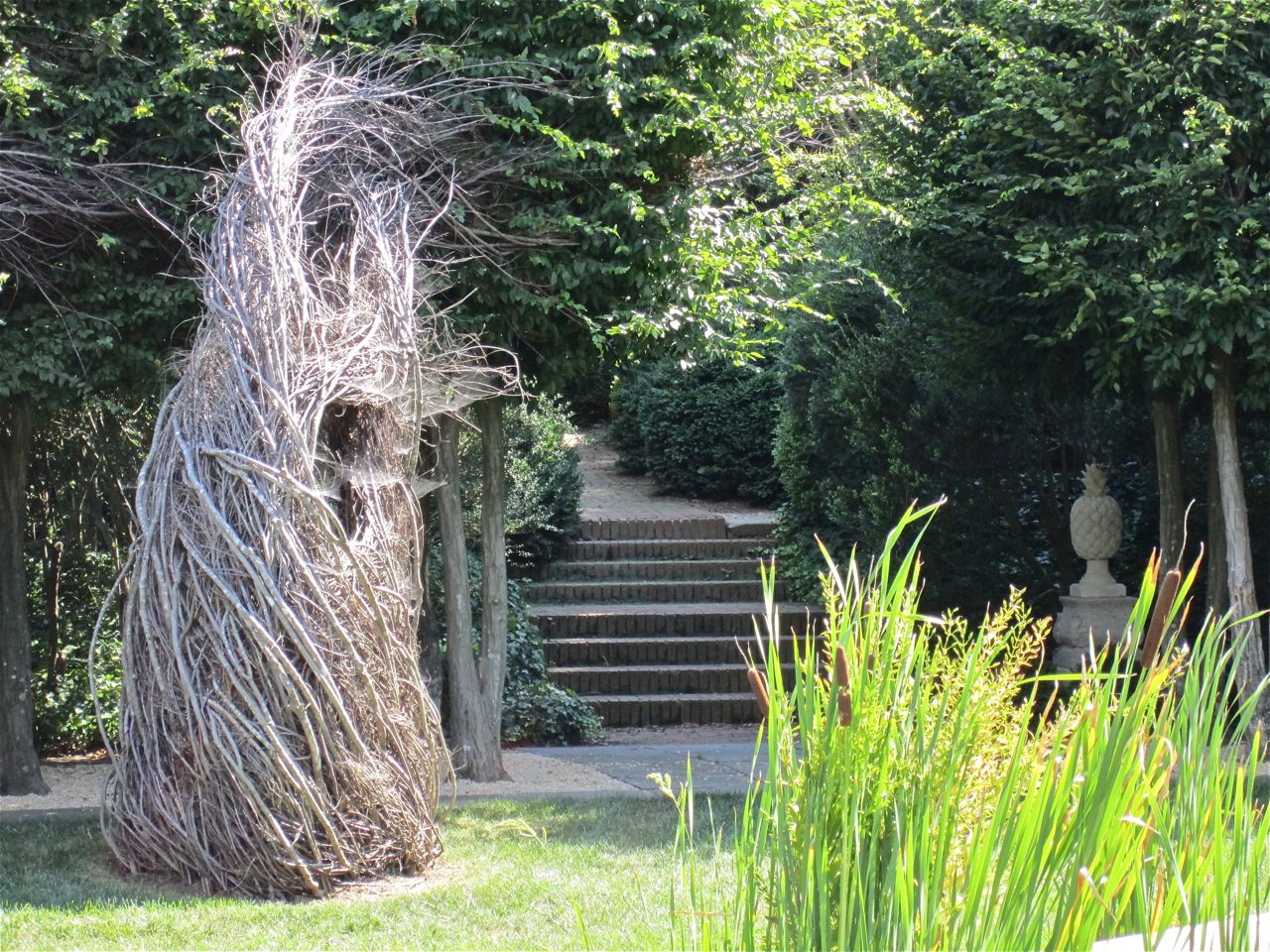
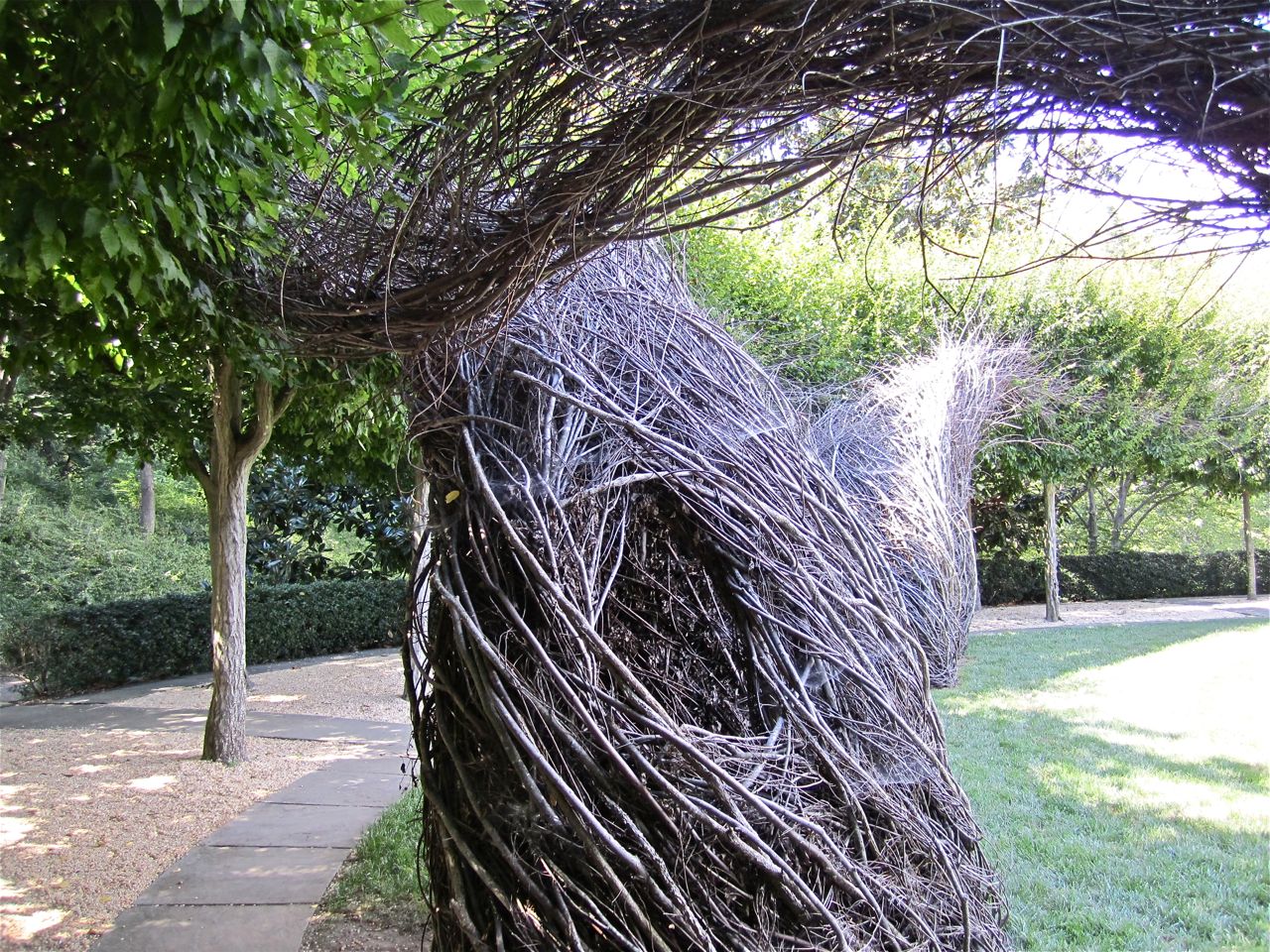
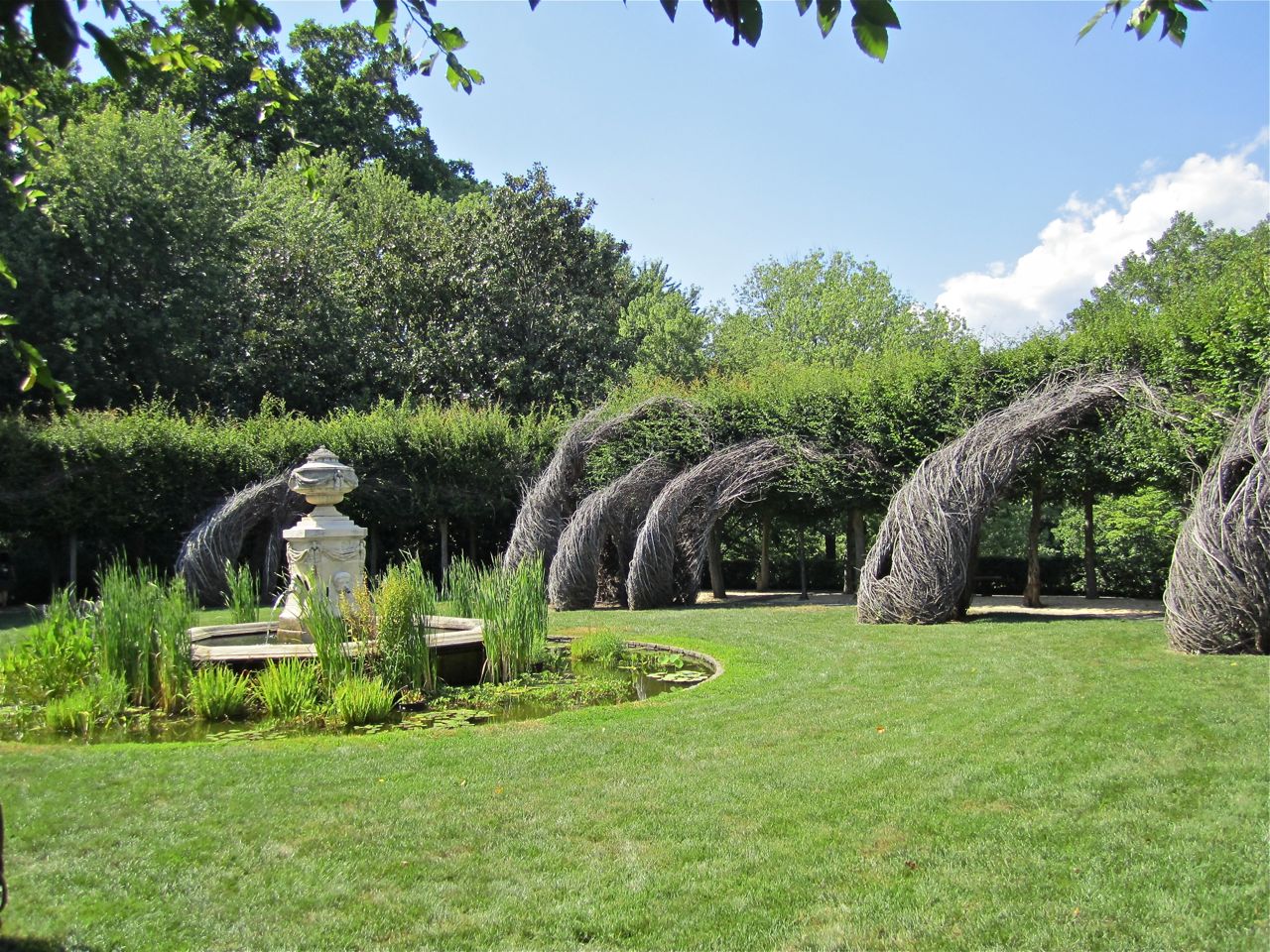
Easy Rider by Patrick Dougherty.  Click the photos to enlarge.

Dumbarton Oak Gardens is currently hosting  Easy Rider by the sculptor Patrick Dougherty. The installation is in the Ellipse, a large oval space rimmed by an aerial hedge of pruned hornbeams and anchored by a center Provençal fountain.

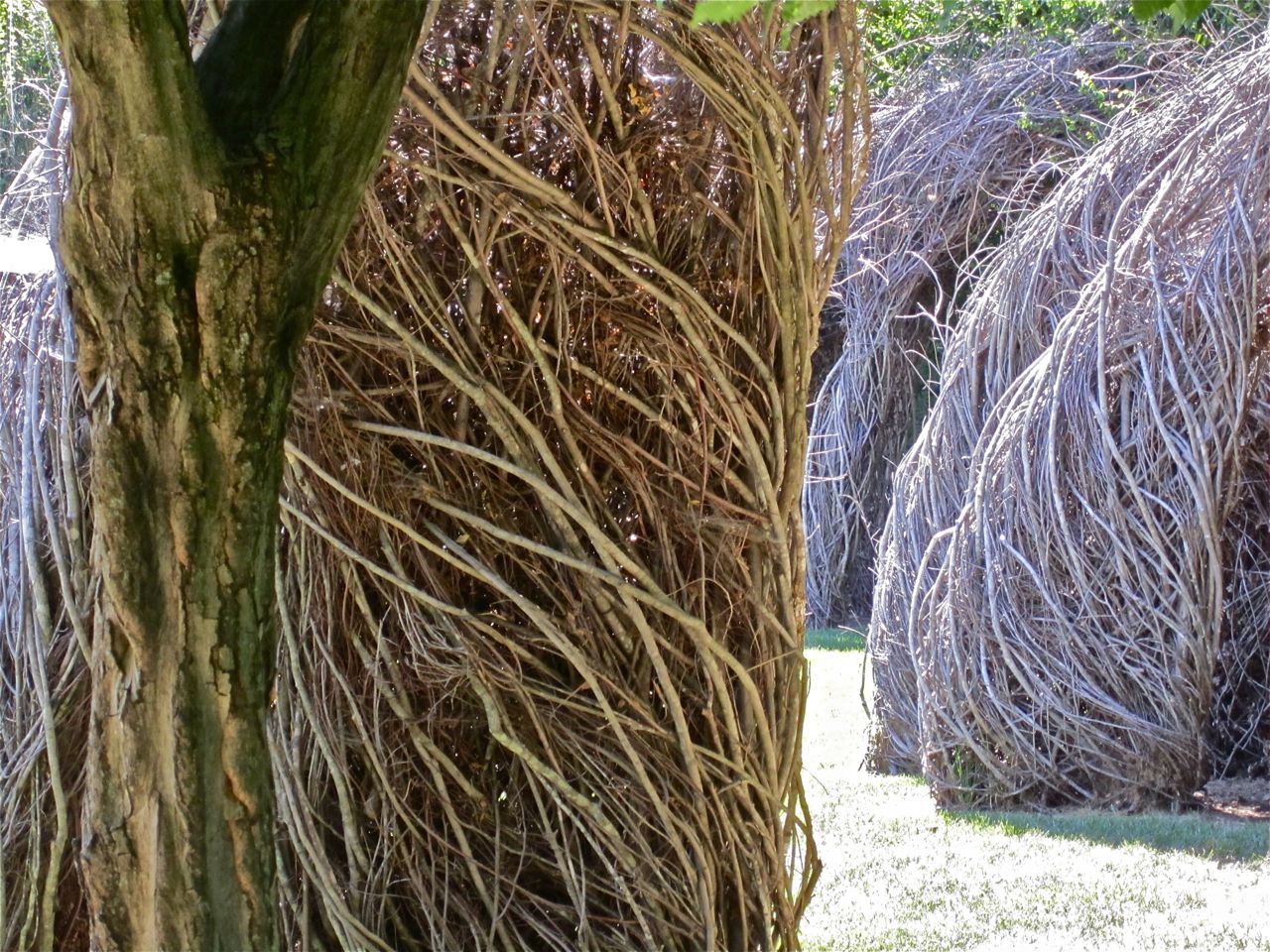
Dougherty works in woven saplings, and his sculptures evoke ancient rustic architecture, as well as nests, haystacks, and baskets.

He describes the Dumbarton Oaks work “as ‘running figures,’ or twisted architectural elements, that rise into the trees and pursue each other actively and gracefully around the Ellipse.”*

The “‘running figures’. . . rise into the trees and pursue each other . . . around the Ellipse.”
The elements of the sculpture can be seen as architectural or human-like.
The figures twist into the hornbeam.

Each element can be seen as a building or house with a doorway and window.  Each is just wide enough for an adult to stand in.  They are like sentry or guard houses.  If I anthropomorphize them, as the artist does himself, I would say they make me think of storybook soldiers running or even dancing.  They also seem to reference magical landscapes a la Lord of the Rings, yet they are not twee.

Looking at the center fountain from a window.

In an interview with The Washington Post last August, Dougherty said, “I was really thinking about how the natural world has been conscripted as manmade architecture. You don’t think about nature as being staid or over-organized, you think of it as having a life of its own. But there, they’re pruning it and fixing it up like a big living room. My idea was to throw that off kilter and bring in a natural force.”

The figures evoke “a natural force.”
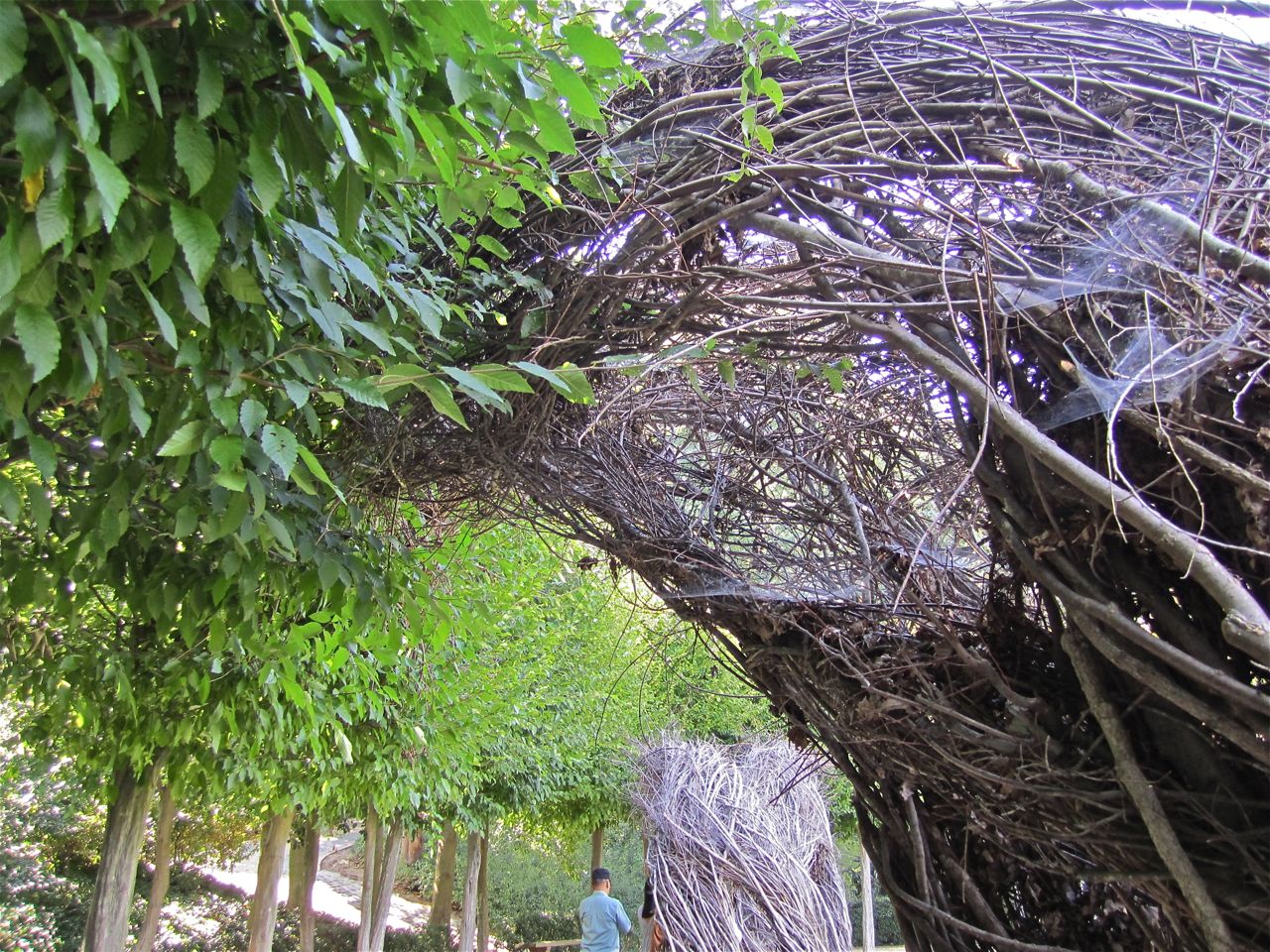
The “house” reaches into the trees.
The saplings and the tree leaves merge.

While the Dumbarton Oaks Gardens are primarily the work of Beatrix Farrand, Alden Hopkins, who worked on the gardens at Williamsburg and the University of Virginia, also contributed to the design of the Ellipse.  The admittedly formal, rather static space is a nice blend of old and modern forms.  With “Easy Rider,” the contrast between the brown sapling branches and the green leaves is striking.  I imagine that it will be lovely in October when the leaves start to turn.

The double row of hornbeams.  The lower, outer hedge is clipped holly.
Steps leading away from the Ellipse.
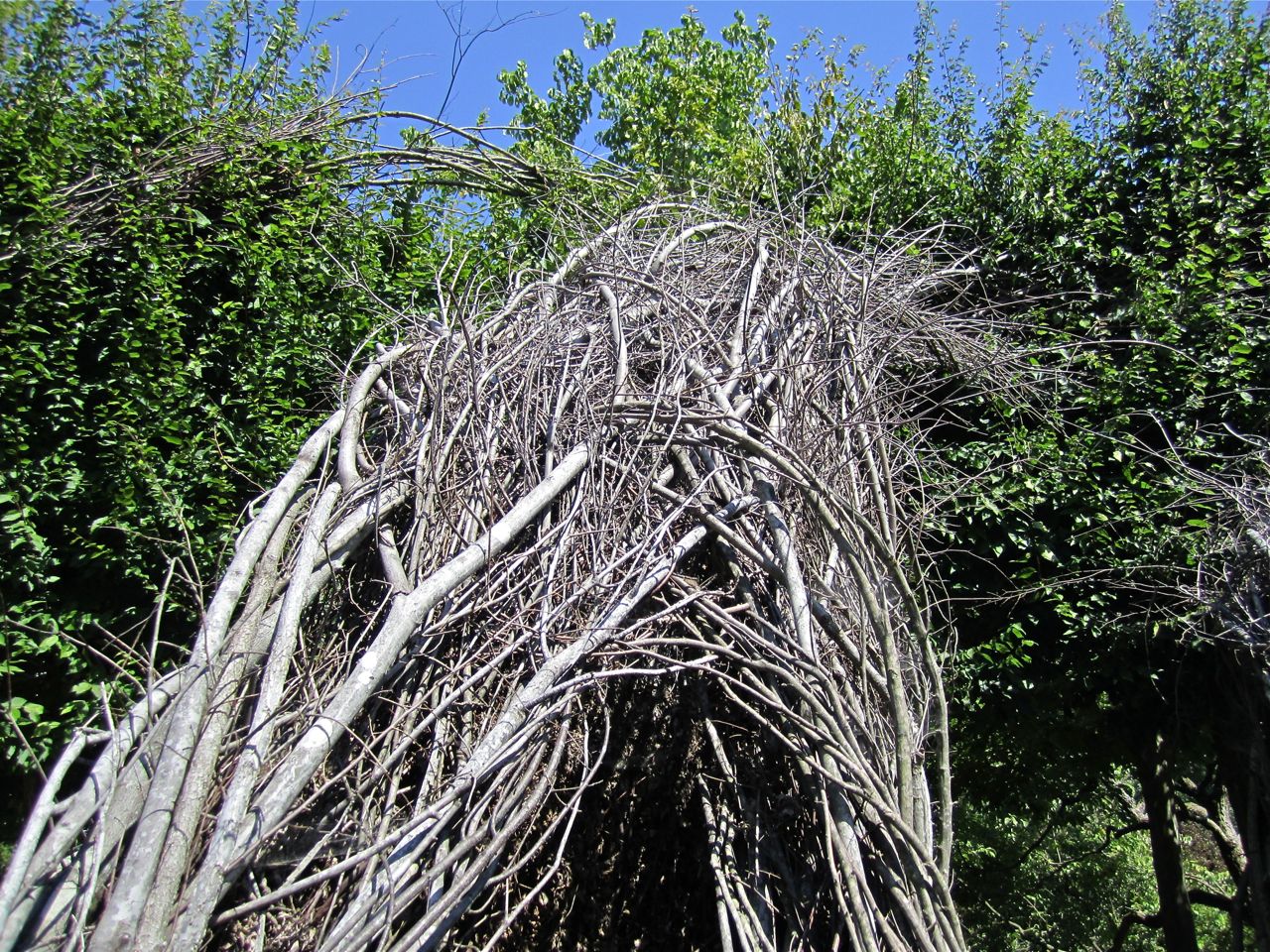
Volunteers worked 21 days using a variety of saplings, chiefly maple.
The outside texture of a figure.
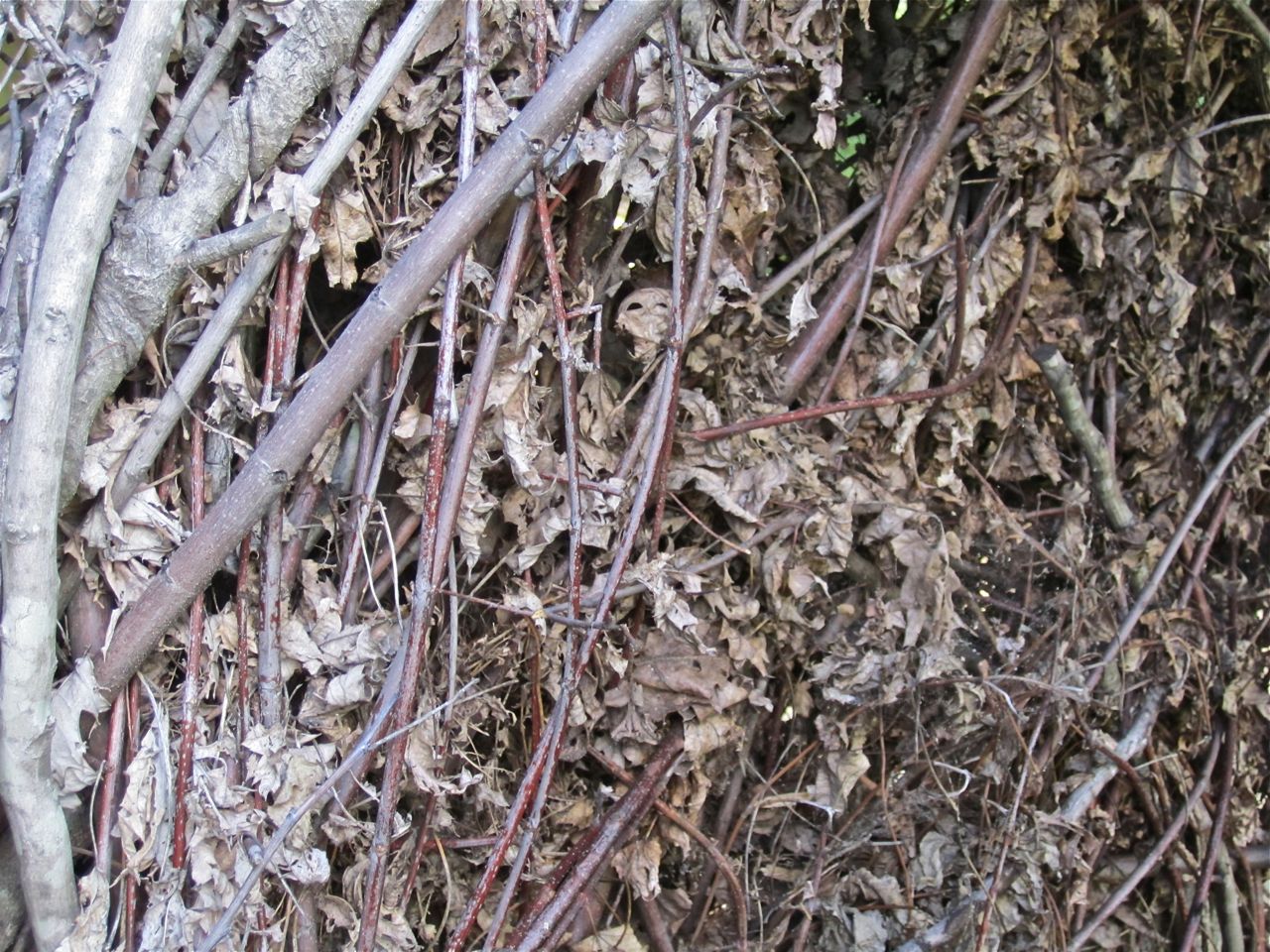
The inside texture. The saplings’ leaves dried in place.

The Dumbarton Oaks installation took a team of volunteers 21 days and a variety of saplings (chiefly maples) to complete.  You can see volunteers working on a similar installation at DePauw University at this link.  Dougherty has built over 200 of these large works all over the world.

Melissa Clark, in her blog, Garden Shoots, wrote about the Easy Rider installation last September and posted some pictures of its construction.  Her blog also has a post about another Dougherty sculpture, The Summer Palace.

Easy Rider will remain through Fall 2011 (the brochure does not give an end date).  The gardens (at R and 31st Streets, N.W.) are open daily (except Mondays) from 2-6 p.m.  General admission is $8.


*Installation brochure.

To see more photos, click on “Continue reading” below and then click on any of the thumbnails in the gallery to enlarge. Continue reading “A “natural force” at Dumbarton Oaks”

Drive-by observation

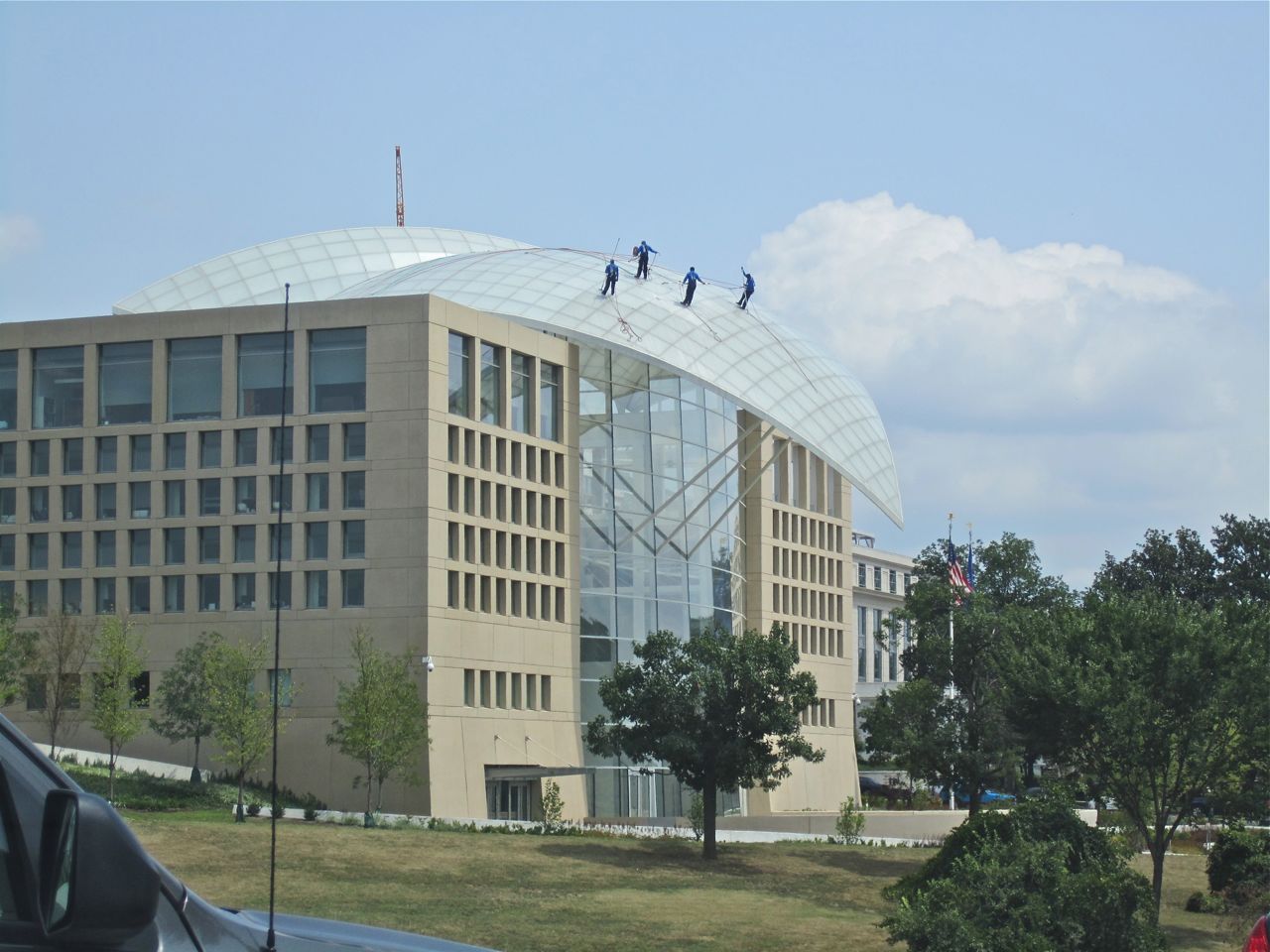
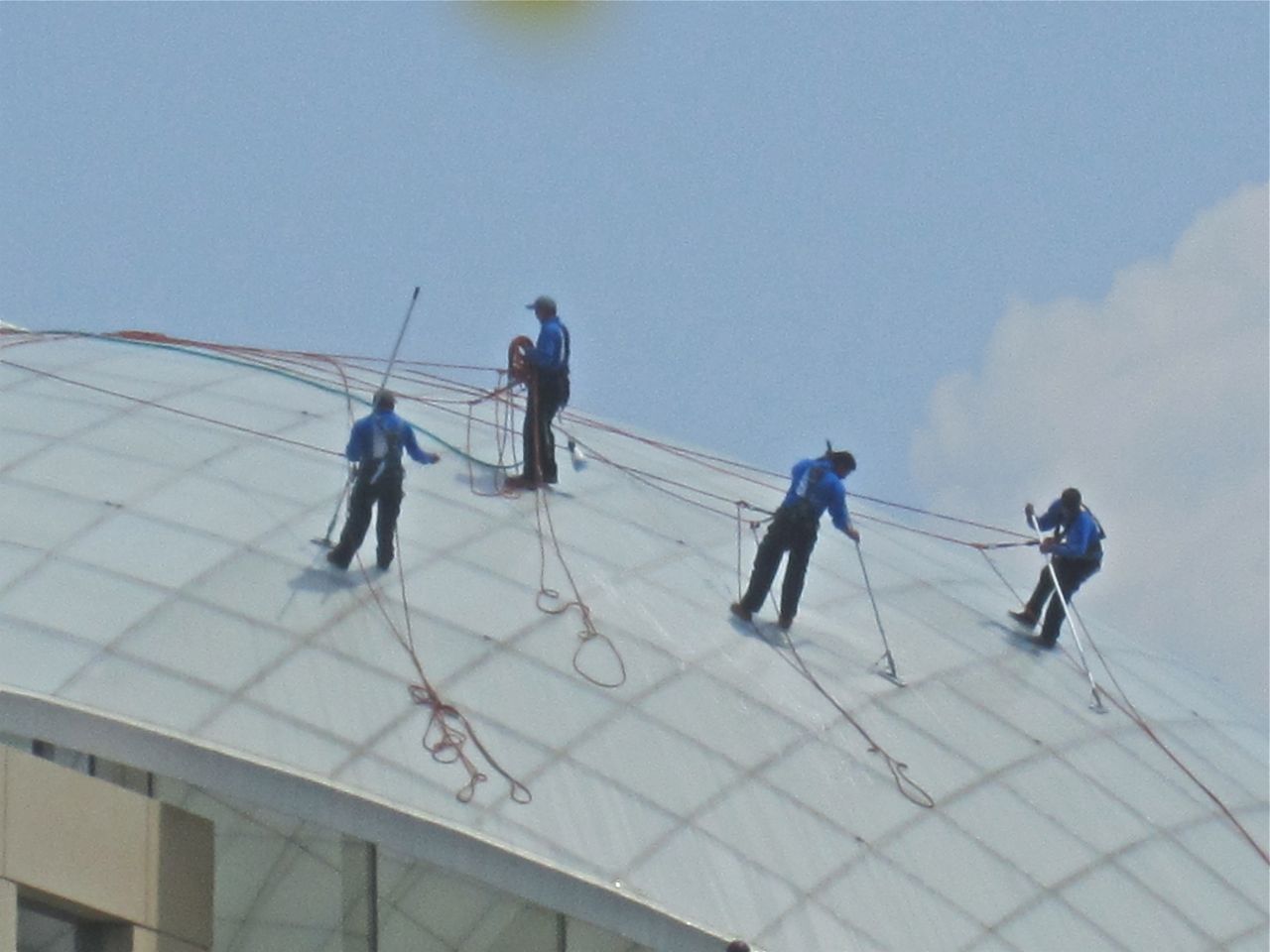
After the design and installation are complete, maintenance is everything.

This is the United States Institute of Peace, located at 2301 Constitution Avenue, N.W. The building was designed by Moshe Safdie Architects and completed in March 2011. It will open to the public in October 2011.

I wish I could have remained in this spot long enough to see how they would handle the very tip.

Tracery

What a lovely spare garden, which I found on the blog Defiant Gardens. [Please click on the link.]

This chapel was built by Italian prisoners of war held at Lamb Holm, on the Orkney Islands, Scotland, during World War II.  It has been preserved and can be visited today, but lawn has replaced the simple parterre.

Read more at the website Undiscovered Scotland, which has photos of the interior of the chapel.