Thomsoniae who?

In a comment, Diana of Elephant’s Eye asked me about Rwandan native plants. I had to say that I wasn’t sure how many, if any, of the plants in my garden are native to this country or region. It’s amazing how many common ornamental plants in East African gardens are of South American or Asian origin, brought here by colonists or other travelers.

Other plants originate from north, west, or southern Africa, but may have traveled to Rwanda via sojourns in European collectors’ conservatories.

To help me work it all out, I just bought The Illustrated Field Guide to the Plants of Nyungwe National Park  which covers, with color photos, 650 species native to Rwanda.

It has already helped me identify two flowering vines in the garden that were unfamiliar to me, Clerodendron thomsoniae and Clerodendron thomsoniae var. delectum. They also go by the common names of Beauty Bush, Bleeding Glory-Bower, or Bleeding Heart Vine.

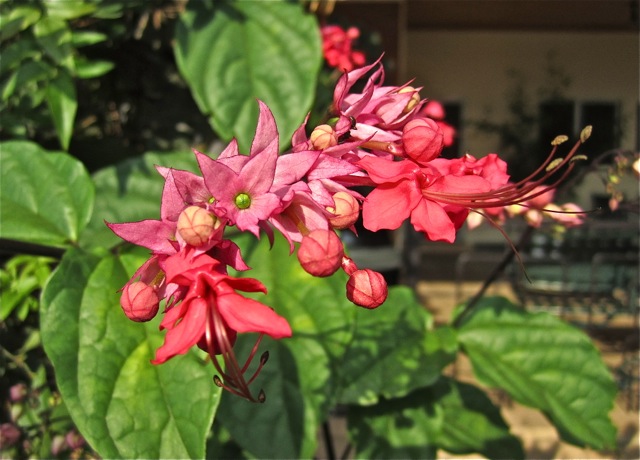
Cleodendron thomsoniae with white calyx and red flowers. Photo via Wikipedia, taken at the U.S. Botanic Garden.
C. thomsoniae var. delectum with mauve calyx and dark rosy pink flowers.

I found that the species is native to tropical West Africa, from Cameroon to Senegal. But a very similar-looking cousin, Clerodendron fuscum, is native to Rwanda and other parts of East Africa — as are two much less showy species, C. johnstonii and C. bukobense.

They are all lianas — long-stemmed, woody vines that use trees as a means of vertical support to reach the light.
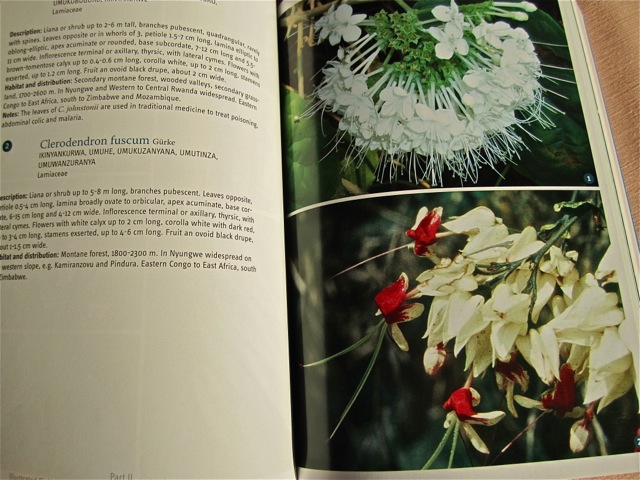
A photo of C. fuscum, a Rwandan native, in my book. The flowers are white, blotched with red.

Clerodendron thomsoniae has just the sort of exotic, showy blooms that would have been very desirable to the Victorians. Wikipedia said its 19th century popularity eventually declined, however, because “its root system must be partially submerged in water most of the time and it wants very good light.” Other sources did not indicate that it needs to grow in particularly damp ground. Mine does not. But in the U.S., it probably will not be hardy outside of Florida or California.

Wikipedia also said the species was named in honor of “Rev. William Cooper Thomson (fl. 1820’s-1880’s), a missionary and physician in Nigeria.” However, a further Google search turned up a Rev. Thomson who was a linguist, not a doctor, with the Church Missionary Society in Sierra Leone.   He was a man of zeal in the propagation of the gospel and the crusade against slavery.  In 1841, he led an ultimately fruitless expedition to make treaties with the Muslim Fulani people in what is now Guinea. He died during the journey in 1843.

That much is confirmed by other articles and a copy of his journal posted on the internet. There is no indication, however, of how this William Cooper Thomson might have come to have a popular hothouse plant named after him.

A French website said that the species was named for surgeon-botanist Thomas Thomson (1817-1878), co-author of the first volume of Flora Indica and eventually Superintendent of the botanical garden in Calcutta, India.  Swedish Wikipedia also says that Thomas T. is origin of the name. But Thomas T. never served in Africa.

The source for the English Wikipedia entry is the CRC World Dictionary of Plant Names by Umberto Quattrocchi, which unfortunately is not on-line and costs £204. If any reader does have access to this book, maybe you could let us know what it says. Other sites also give a William Cooper Thomson. as the origin of the name, but they are obviously just quoting Wikipedia.

Regardless of the source of its name,  it is really a lovely African plant.

ADDENDUM: Please see KAMCDONALD’s comment below for more about the source of the name, which was given in honor of the first wife of William Cooper Thomson, a missionary in Nigeria and son of the William Cooper T. discussed above.
On the road, part two

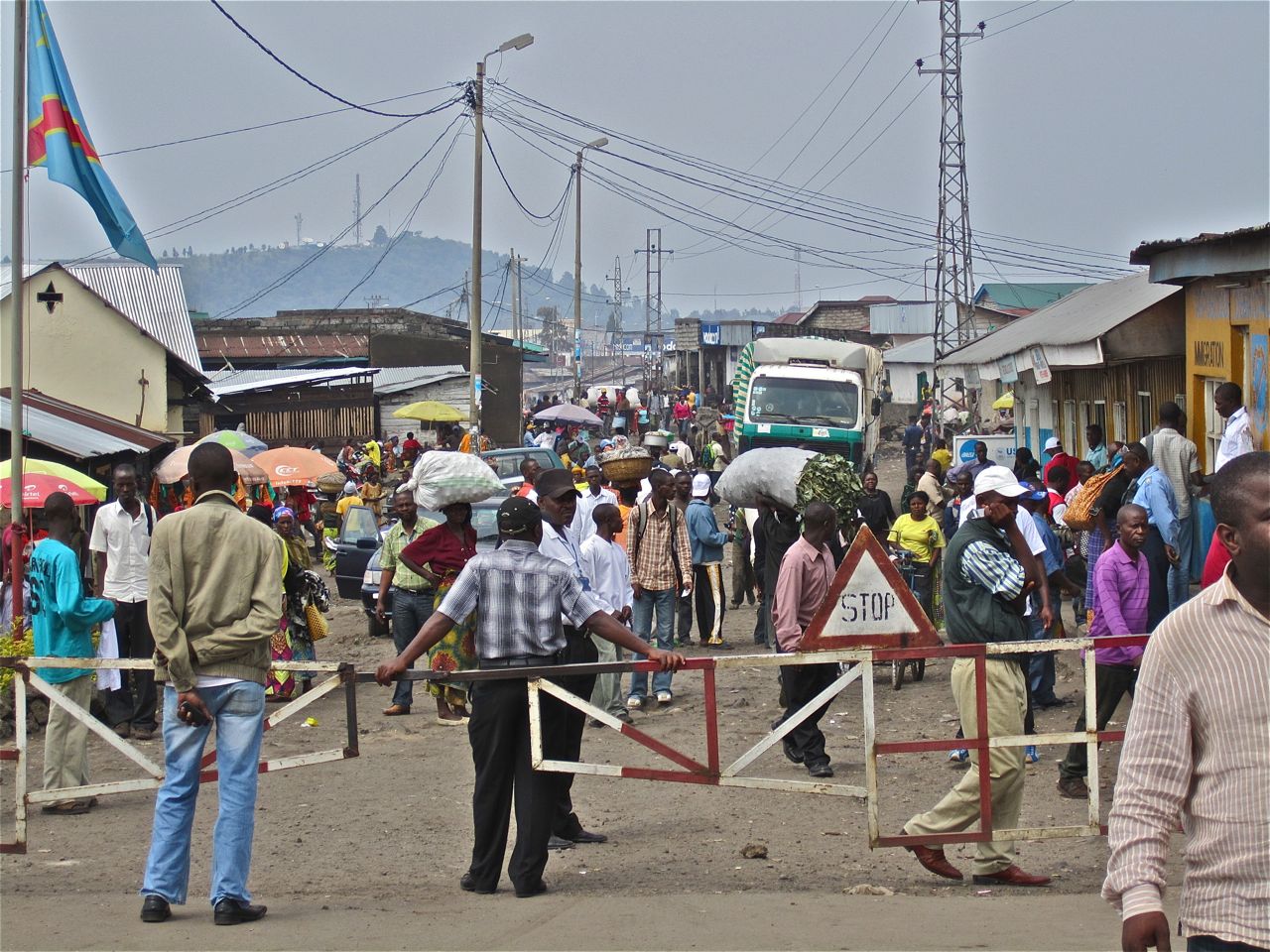
On the second day of our recent trip to the north of Rwanda, we visited a border crossing with the Democratic Republic of Congo (DRC), this one located between the otherwise contiguous cities of Gisenyi (Rwanda) and Goma (DRC).

Looking over the barrier to a street in Goma, DRC.

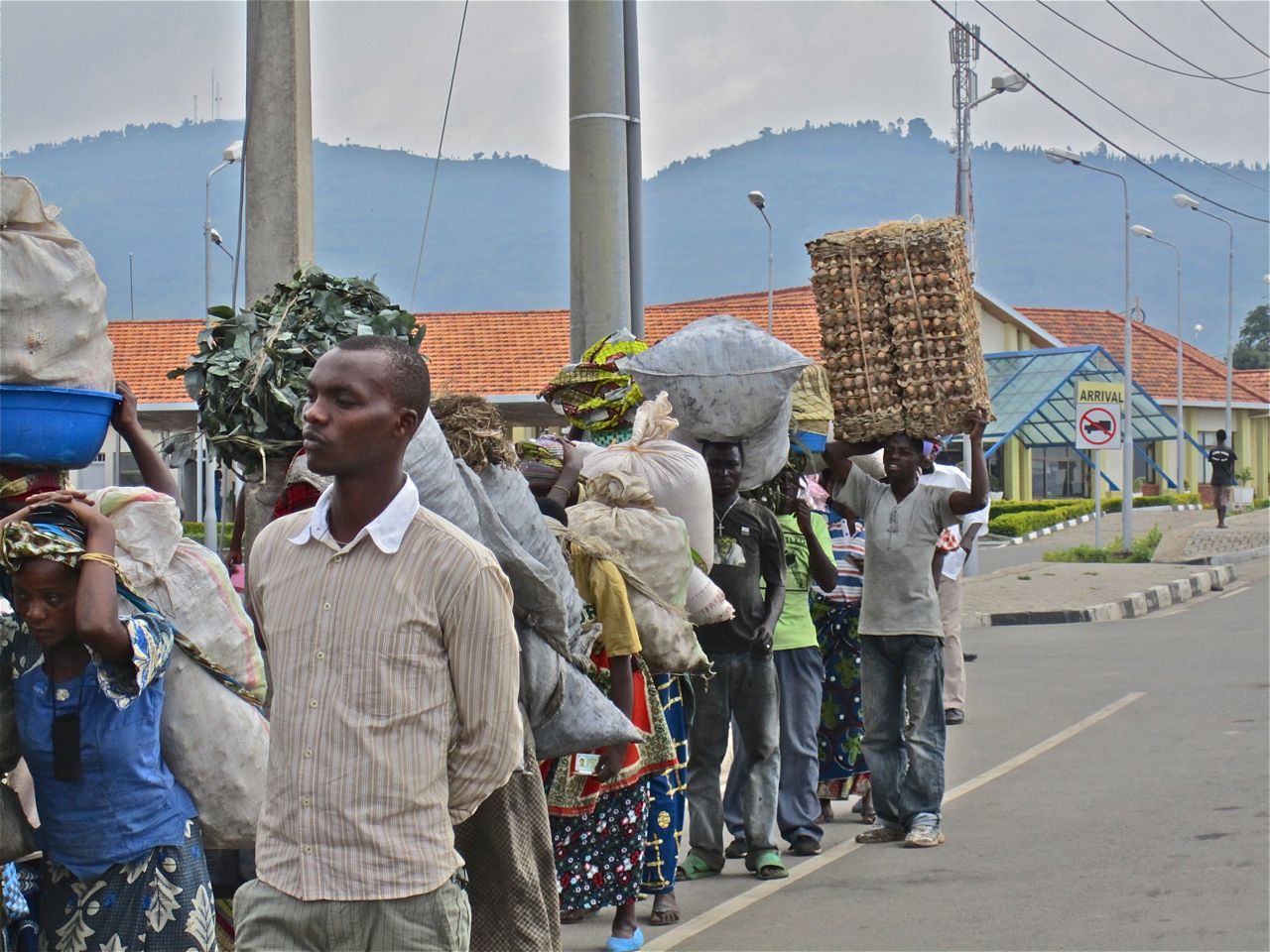
We watched a line of people, almost all carrying large parcels of food, waiting to enter  eastern Congo.

People laden with food to sell in the DRC.
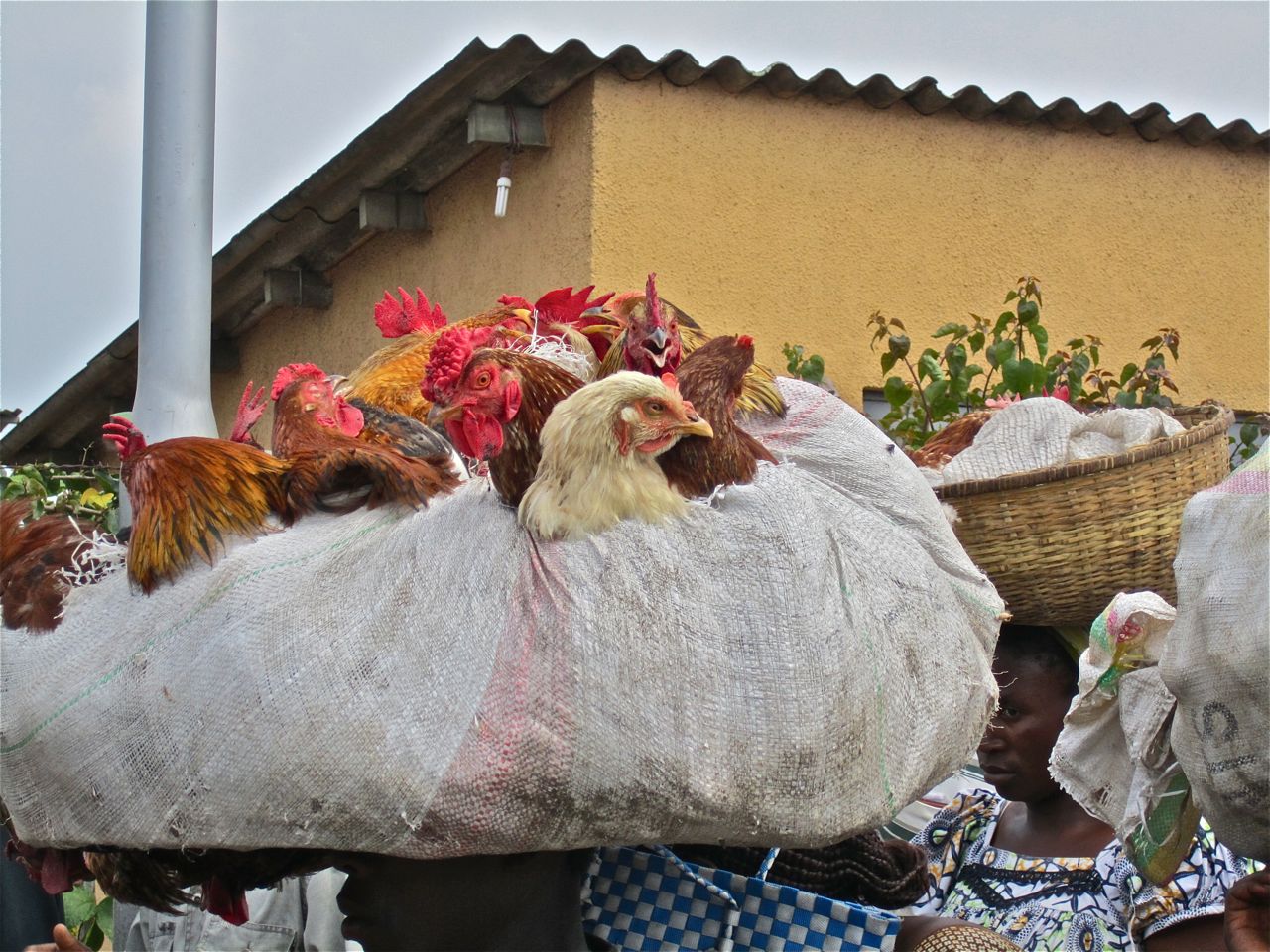
I believe these chickens (who are traveling on someone’s head) would be called non-intending immigrants.  Nevertheless, they are destined for pots in the Congo.

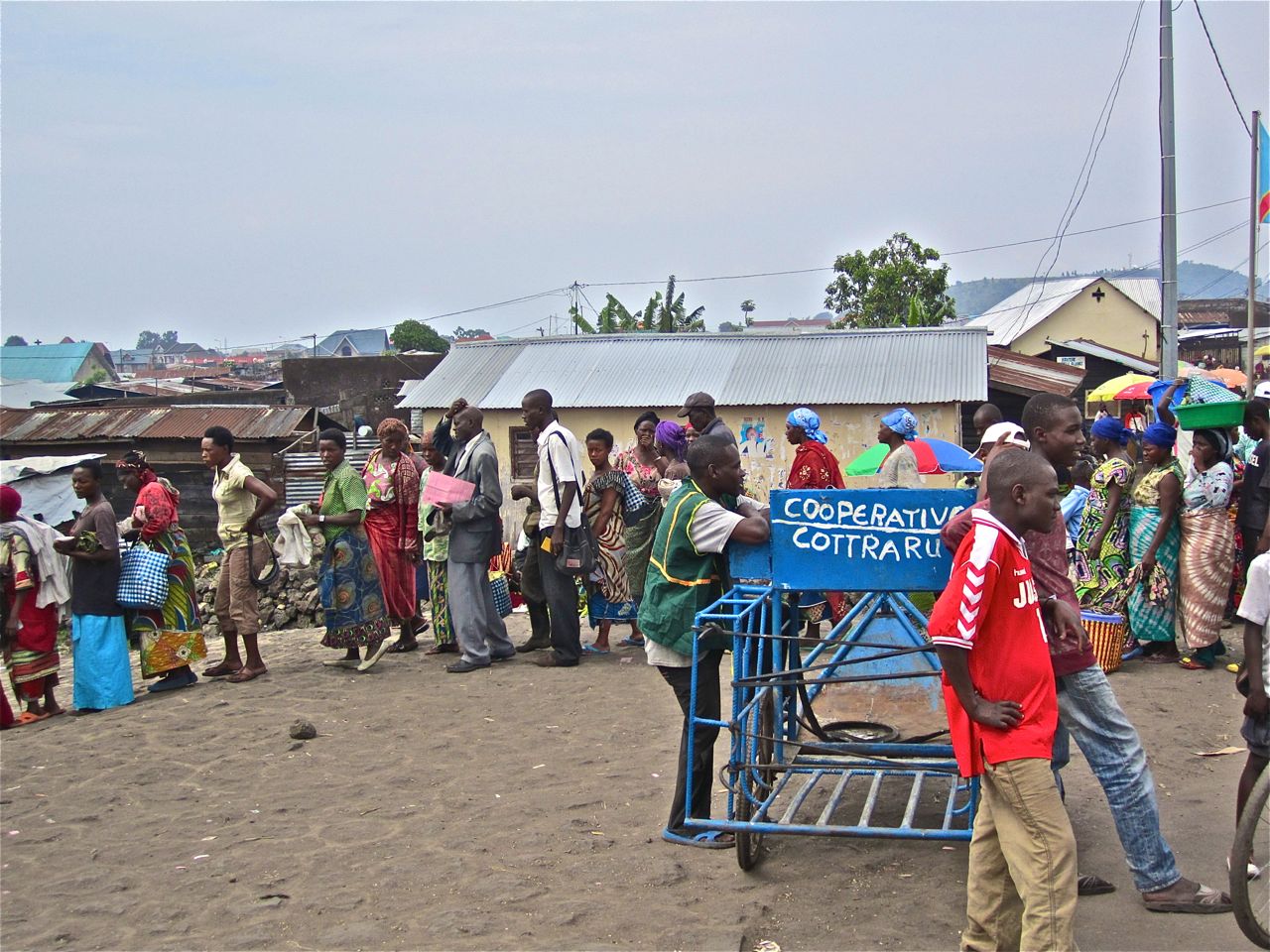
We watched another line of people, now almost empty-handed, coming back into Rwanda.

The line to leave the DRC.

Afterwards, we headed about 10 miles east to visit a small hydro-electric plant.  The unpaved road to the plant was too rough for the bus, so we had a walk through the neighboring village.

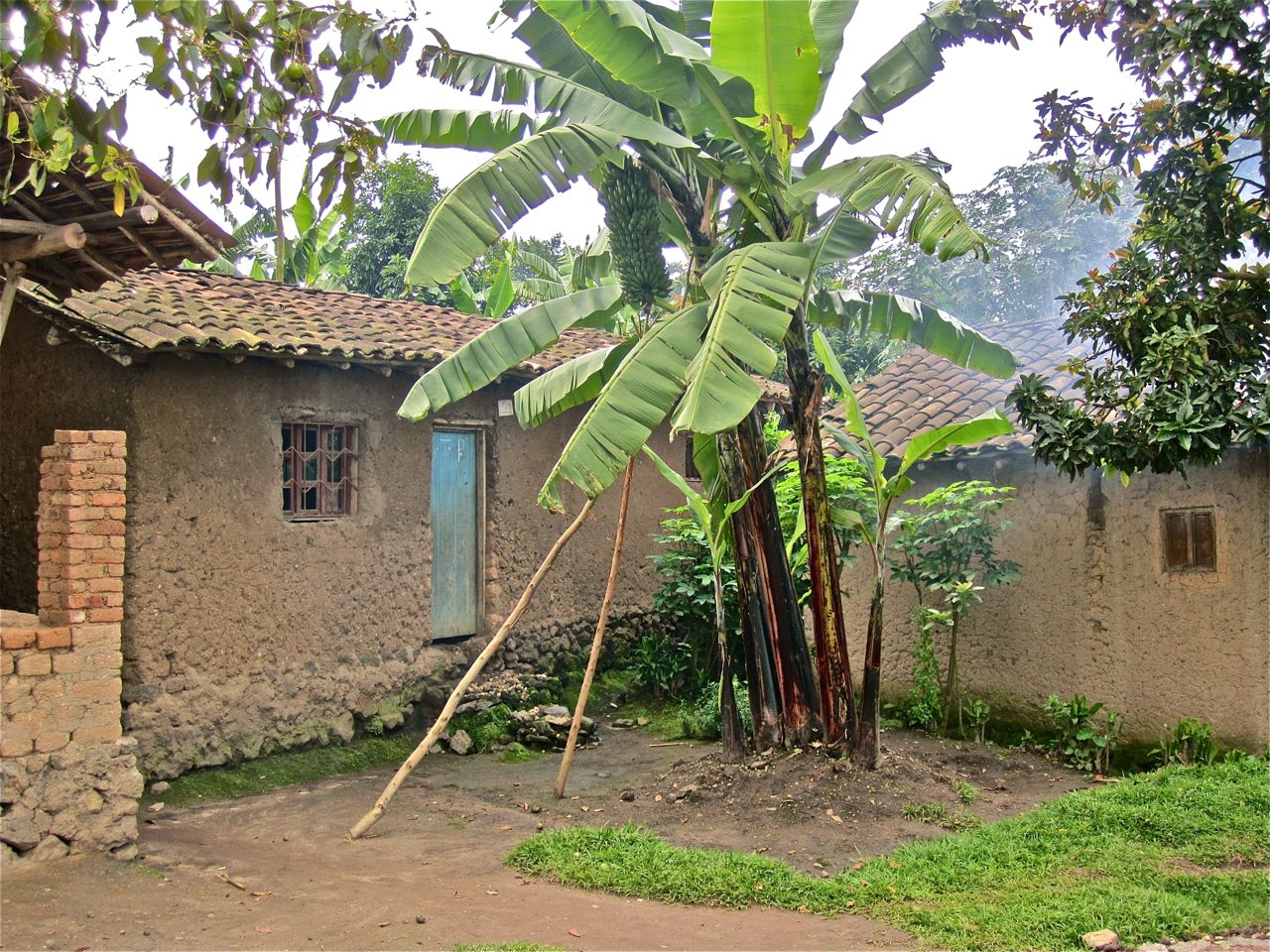
Bananas outside a village house.
House door with a blue patch.  Cassava (aka manioc) plants and beans grow in the foreground.
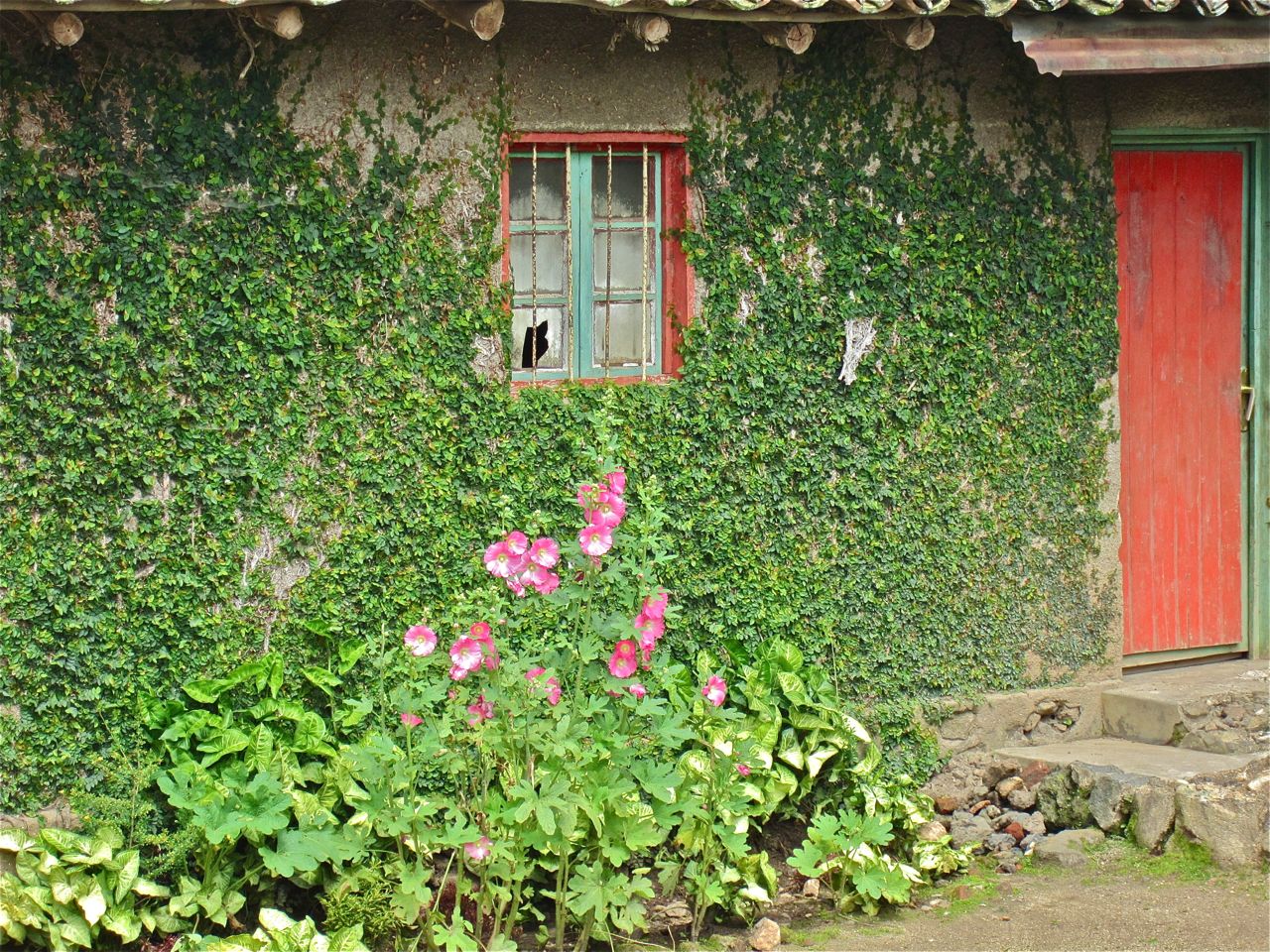
Hollyhocks by a doorway.
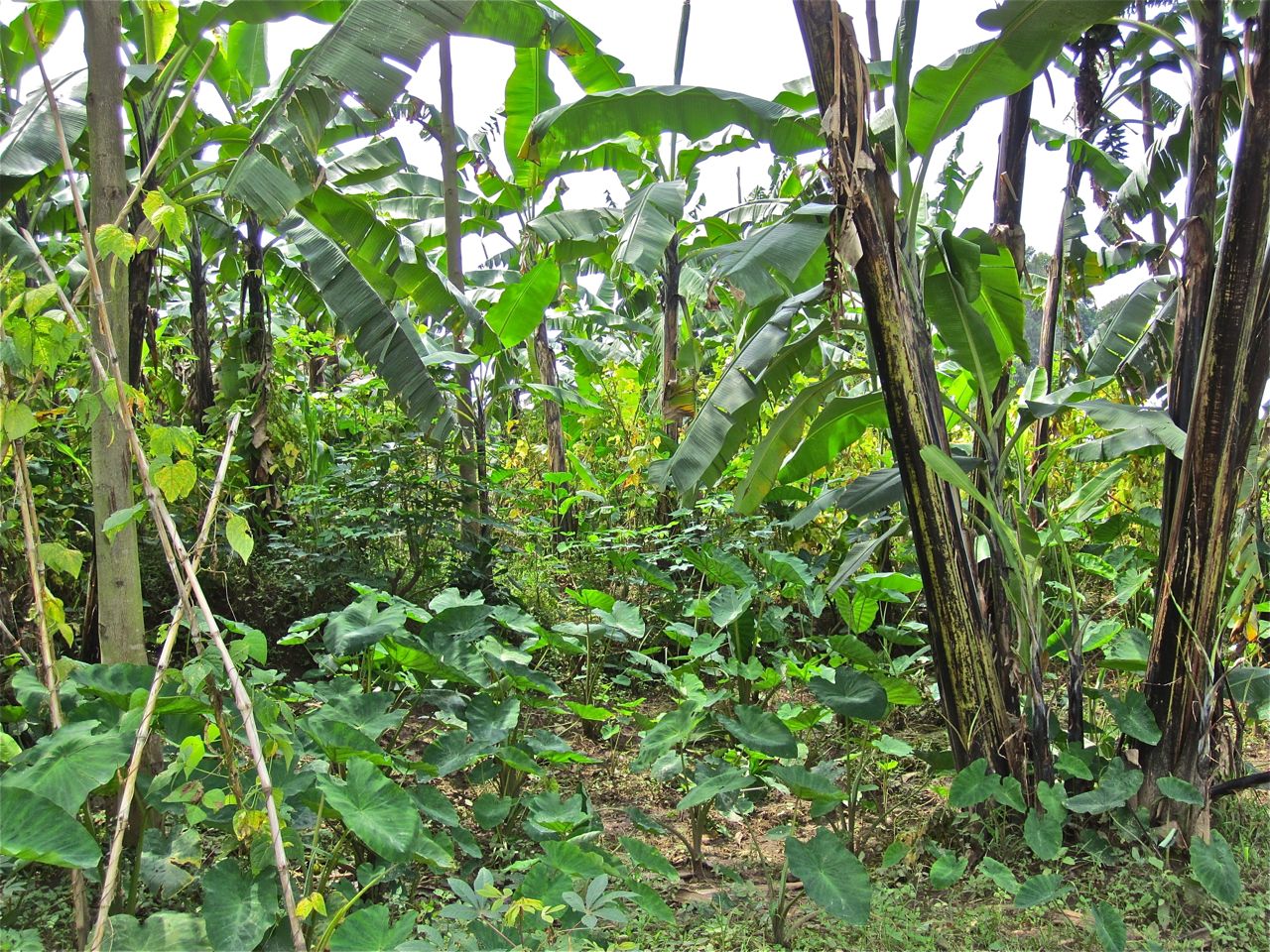
A typical garden of bananas, taro, cassava, and beans.
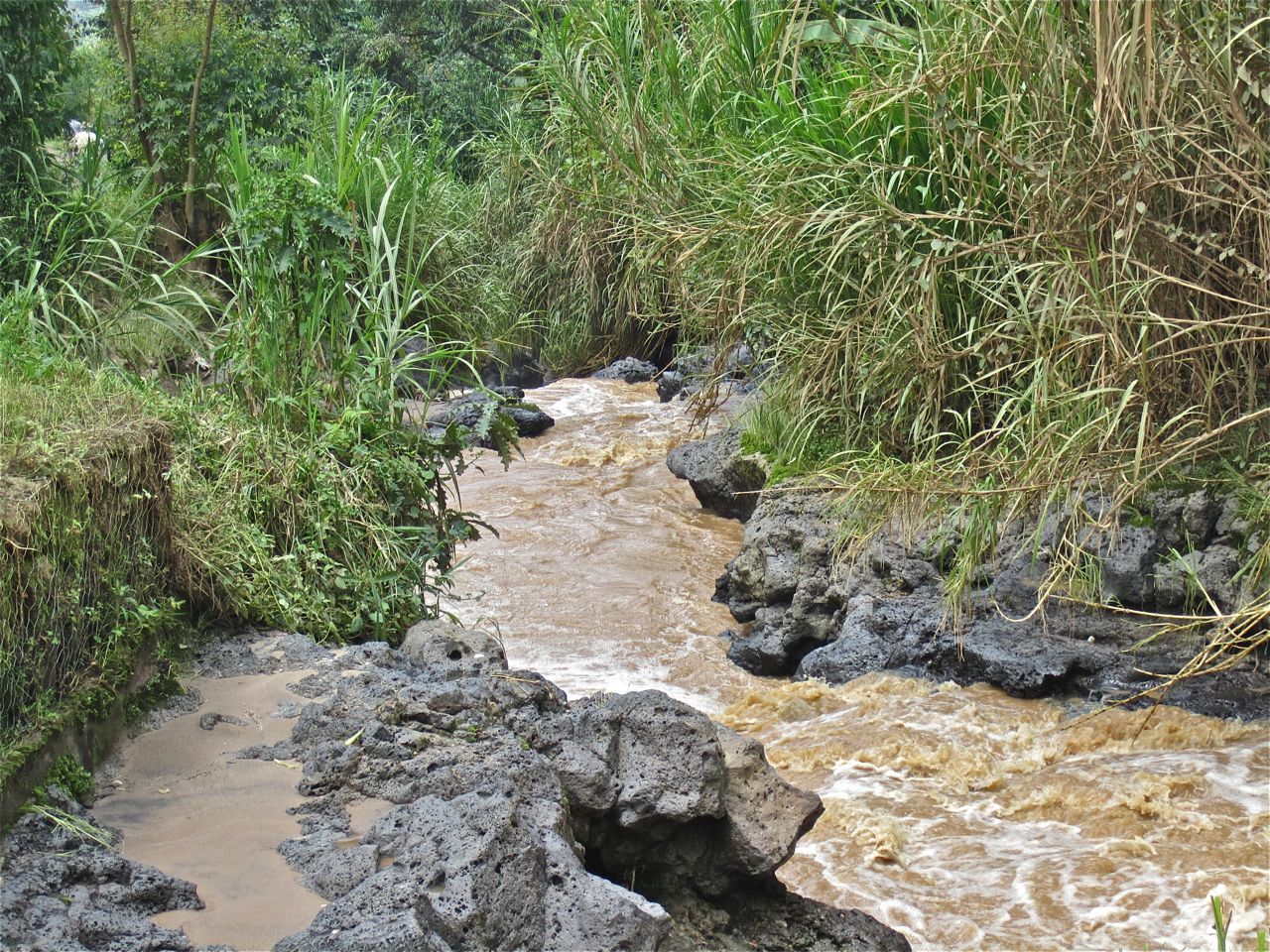
A stream bordered by long-hardened volcanic lava. The fast-moving water runs approximately parallel to the water pipe supplying water to the hydro-electric plant.
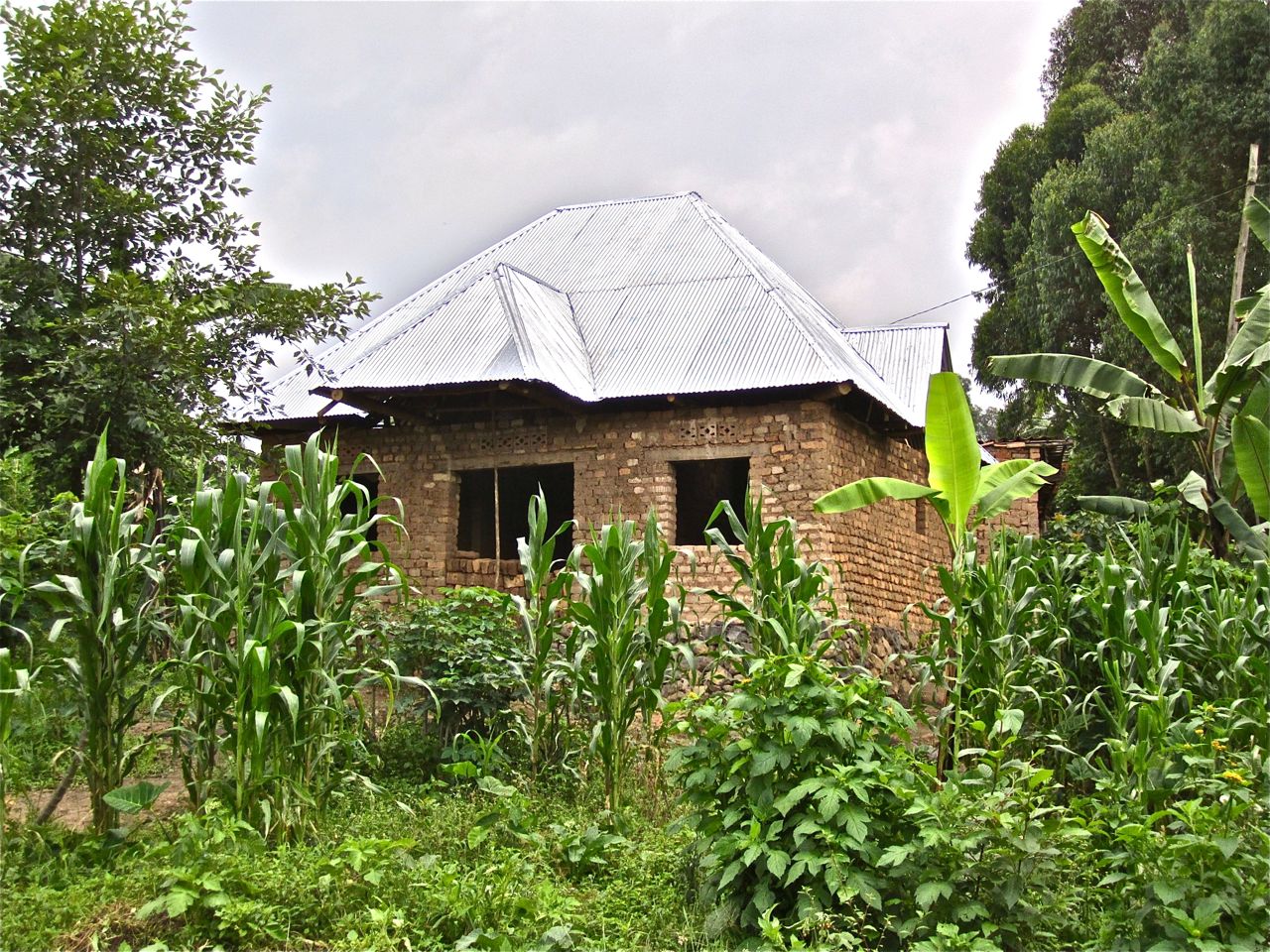
A house under construction with a roof-line typical of the Rubavu District. It seems to echo the surrounding hills and nearby volcanoes.
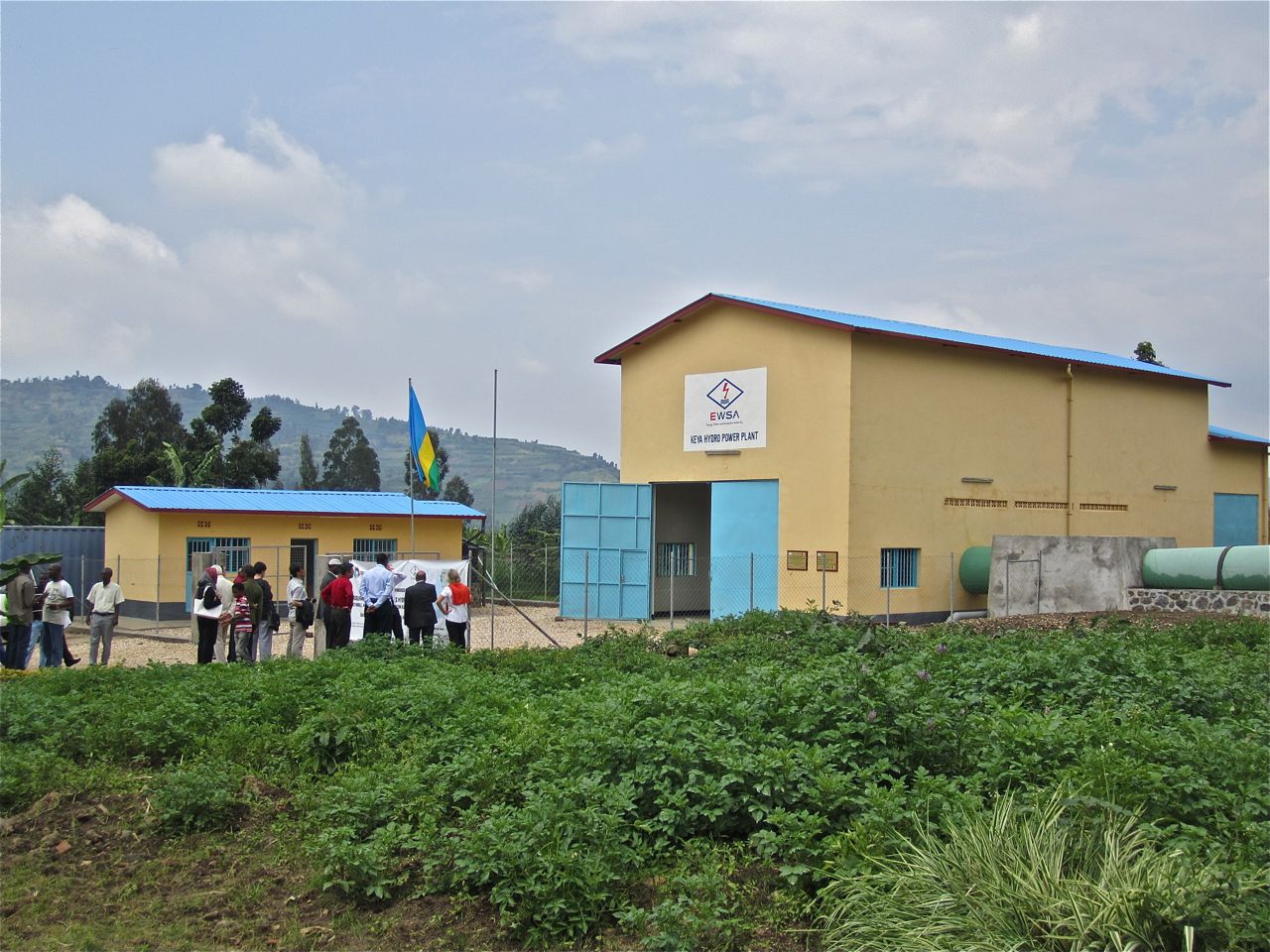
The Keya hydro-electric power plant. The water enters from the blue pipe on the right.  Built by the Rwandan government with the support of Belgium, it provides 2.2 megawatts of power.
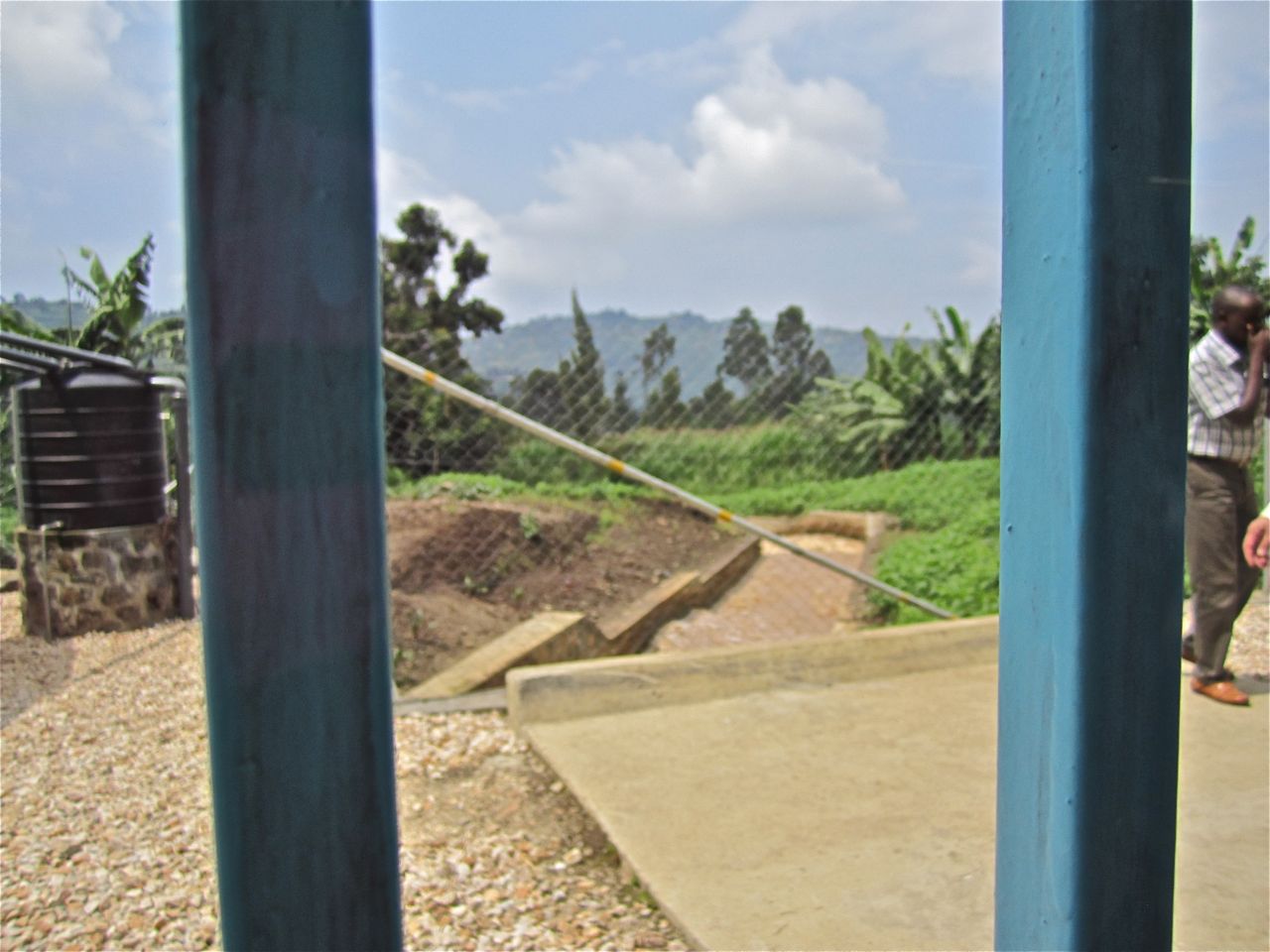
Water runs out the other side of the plant, beans planted right up to the edge. On the far left is a tank capturing rainwater from the roof of the plant’s office.

We ended our trip at the Pfunda Tea Company factory. Two thousand people work on the Pfunda Tea Estate, and the company also runs a cooperative for area tea farmers. All the tea is raised without pesticides, and, in February 2011, Pfunda Tea Company became the first company in Rwanda to obtain Rainforest Alliance certification.

One hundred and fifty people work 8 hours shifts in the tea factory, day and night. They will produce over 4.4 million lbs. (or 2 million kgs.) of black tea this year. The climate, altitude, and soil of the area is excellent for growing high-quality tea.

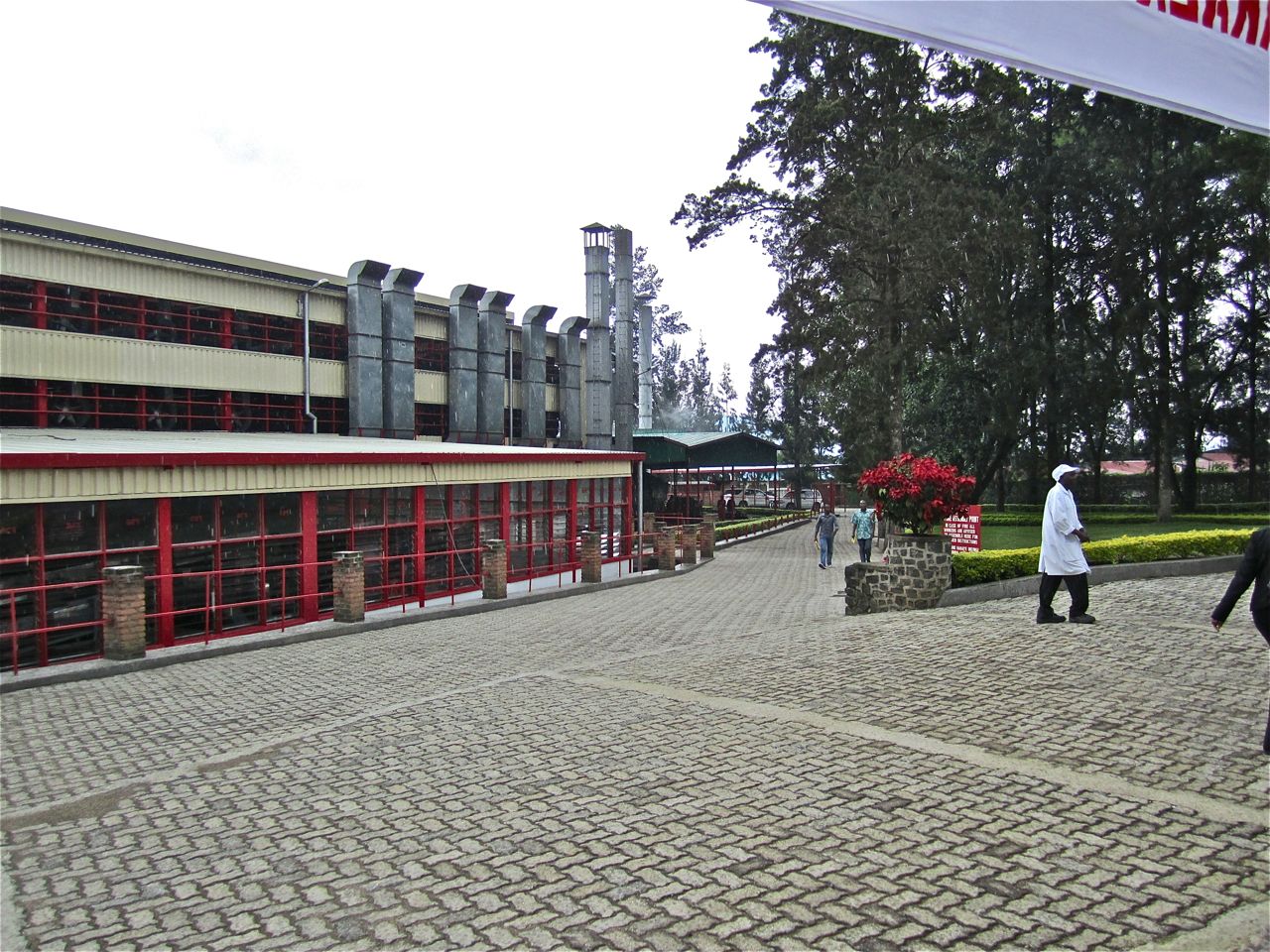
The Pfunda Tea Factory

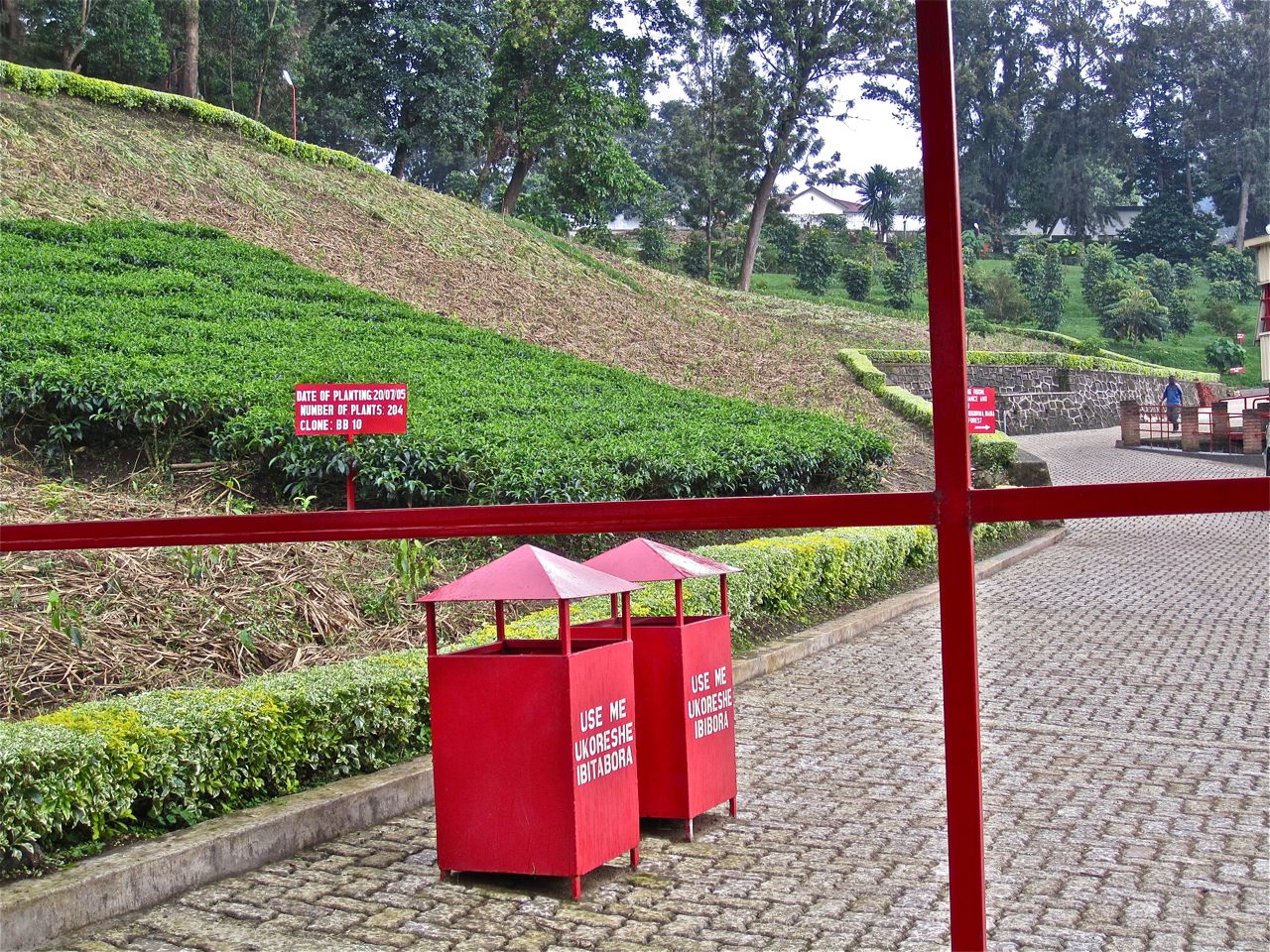
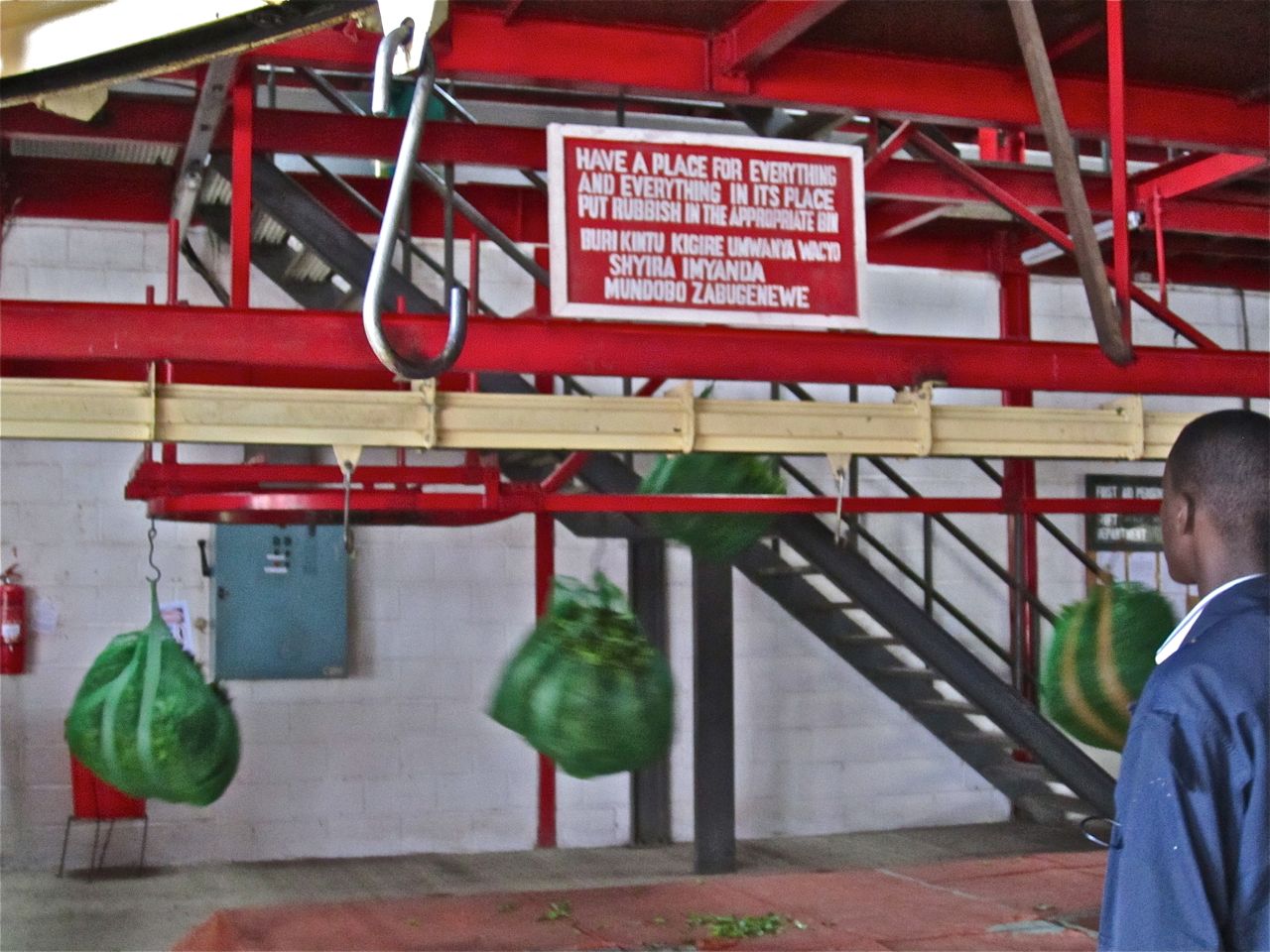
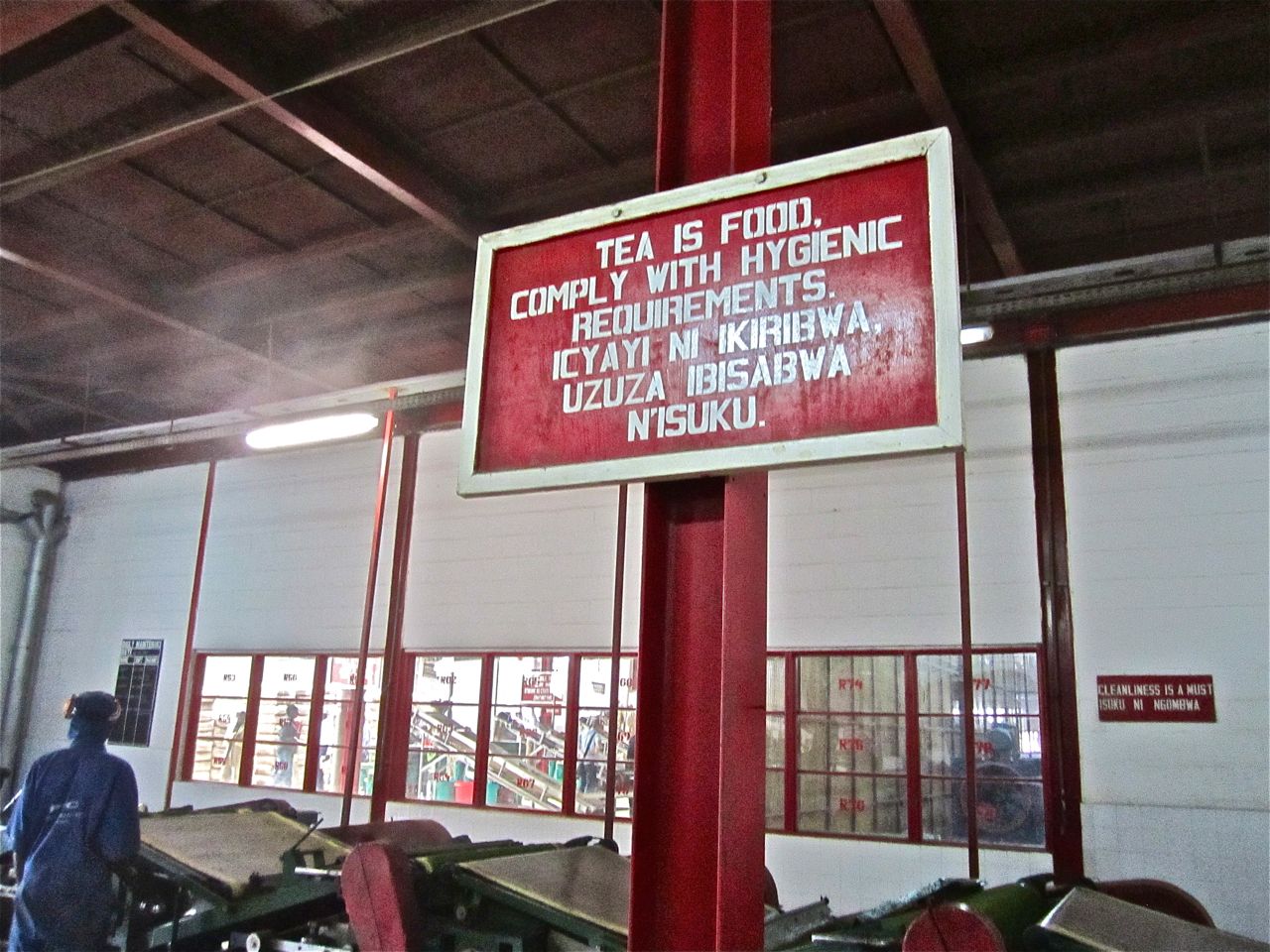
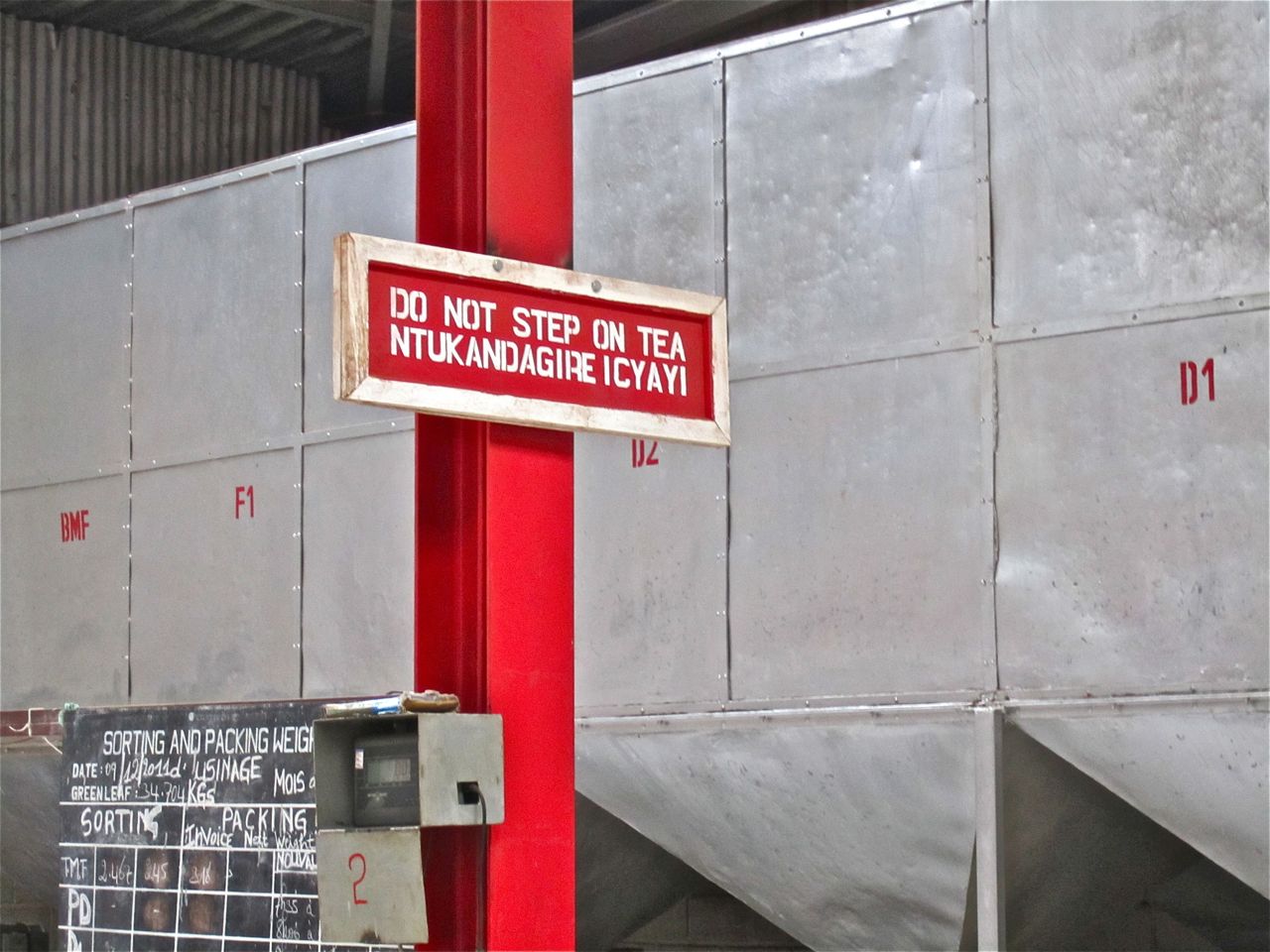
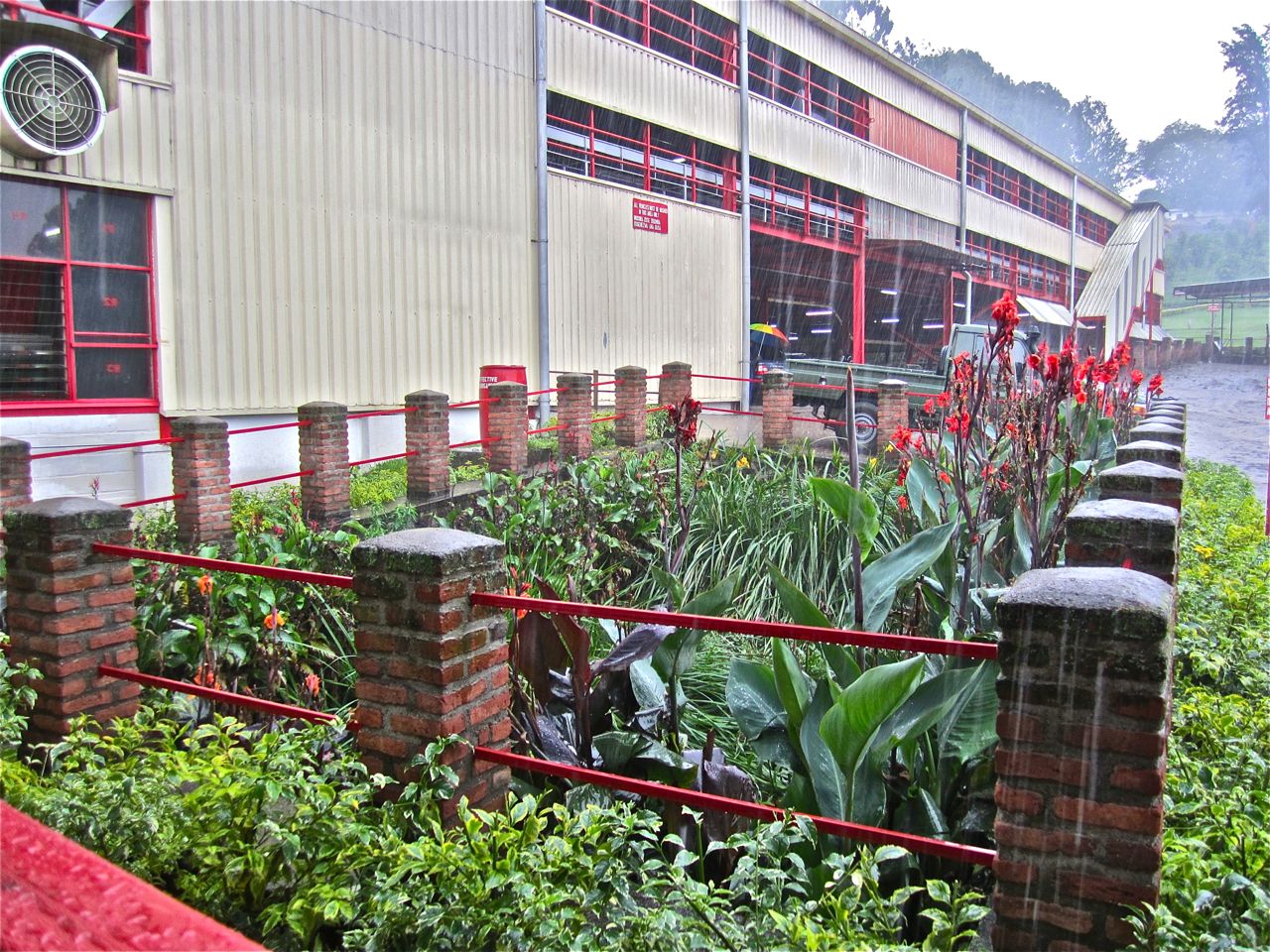
The design of the factory and its surrounding grounds — even its signage — struck me as remarkably consistent, orderly, and pleasant.  Lots of straight, clean lines in red paint and low hedges.

A test plot of tea bushes.
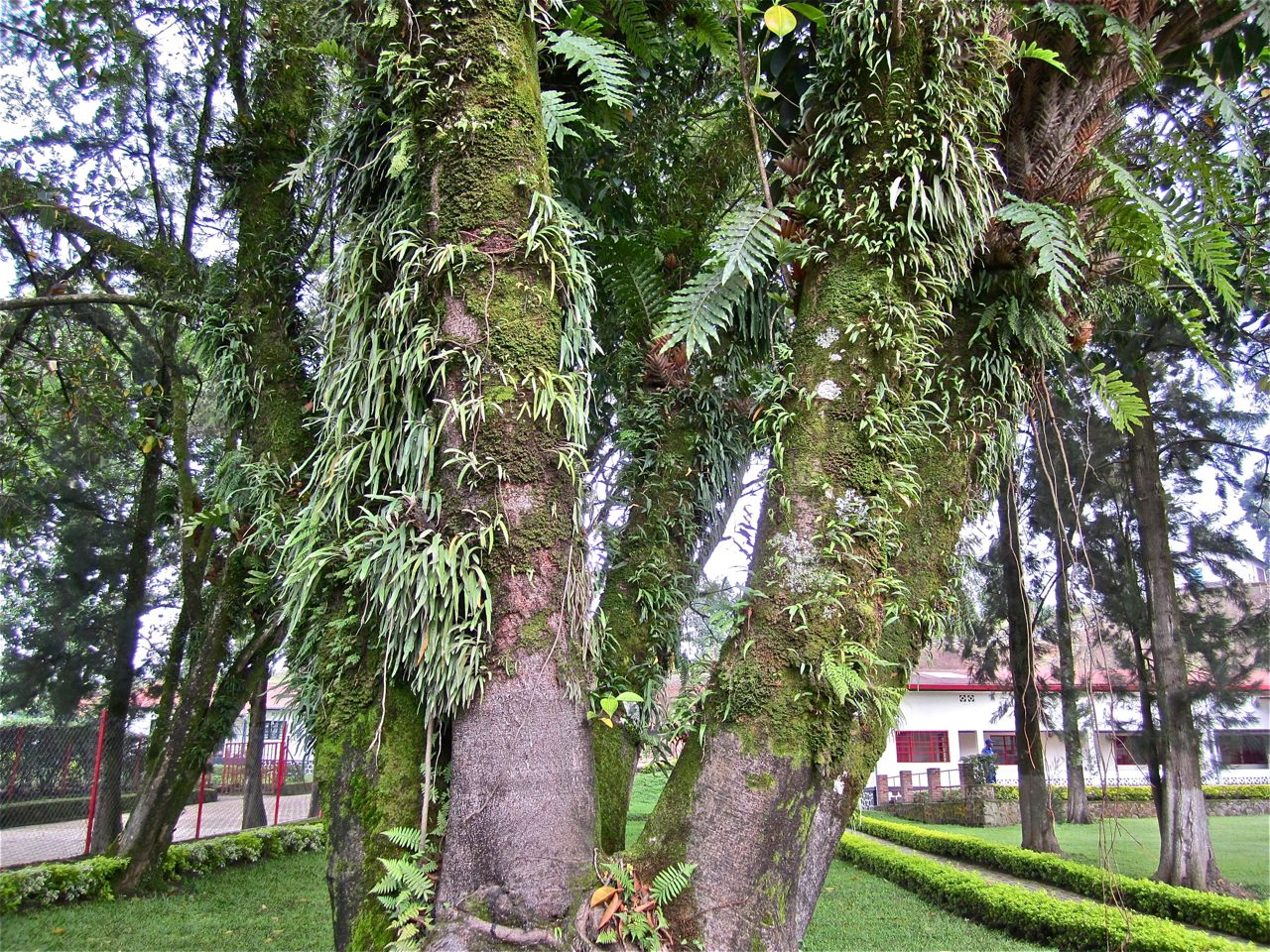
A factory tree laden with moss and ferns.
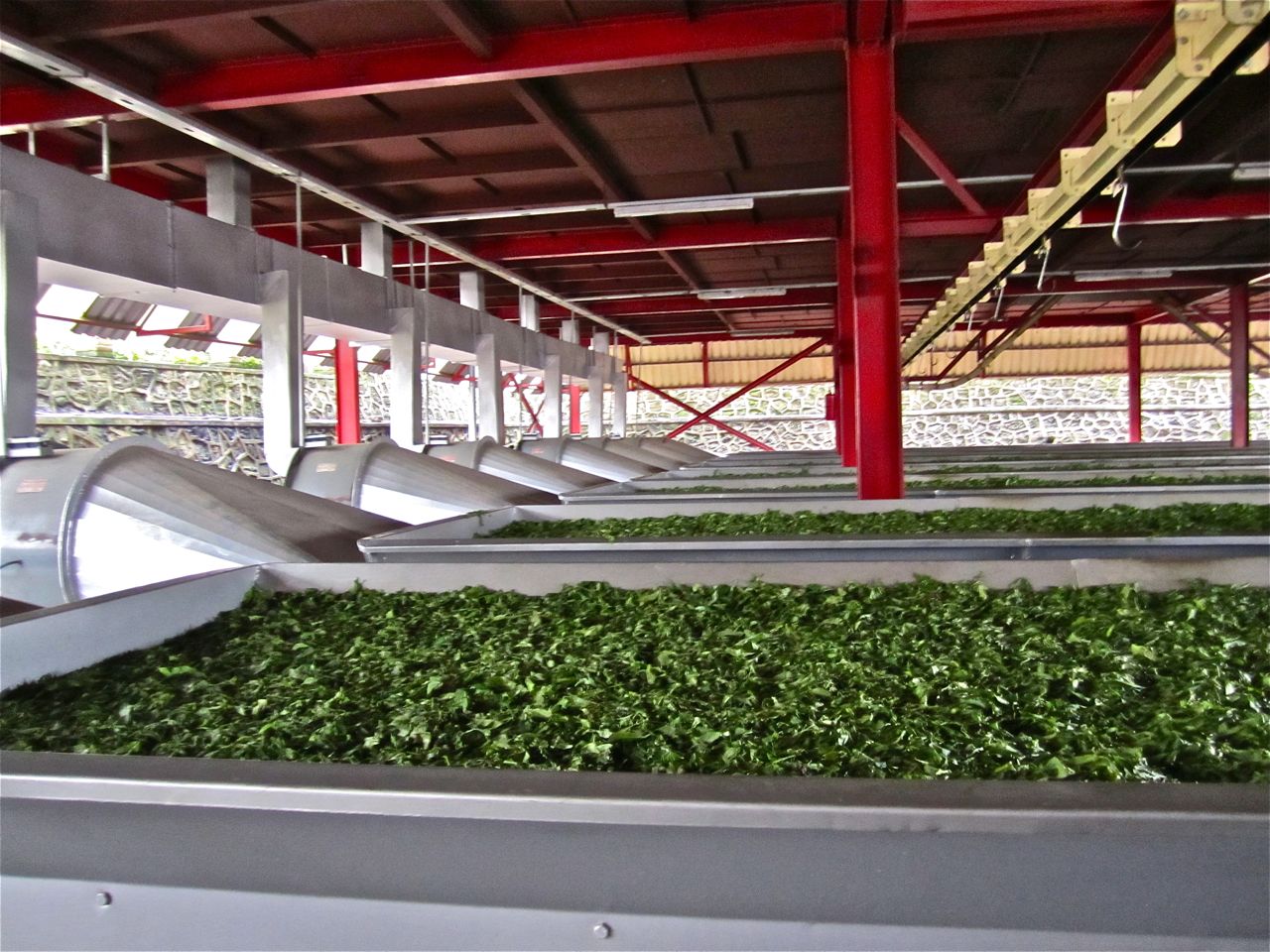
The green tea leaves dry here for approximately 15 hours. The factory smells like a combination of cut grass and brewed tea.
Dried leaves on their way to be processed. 
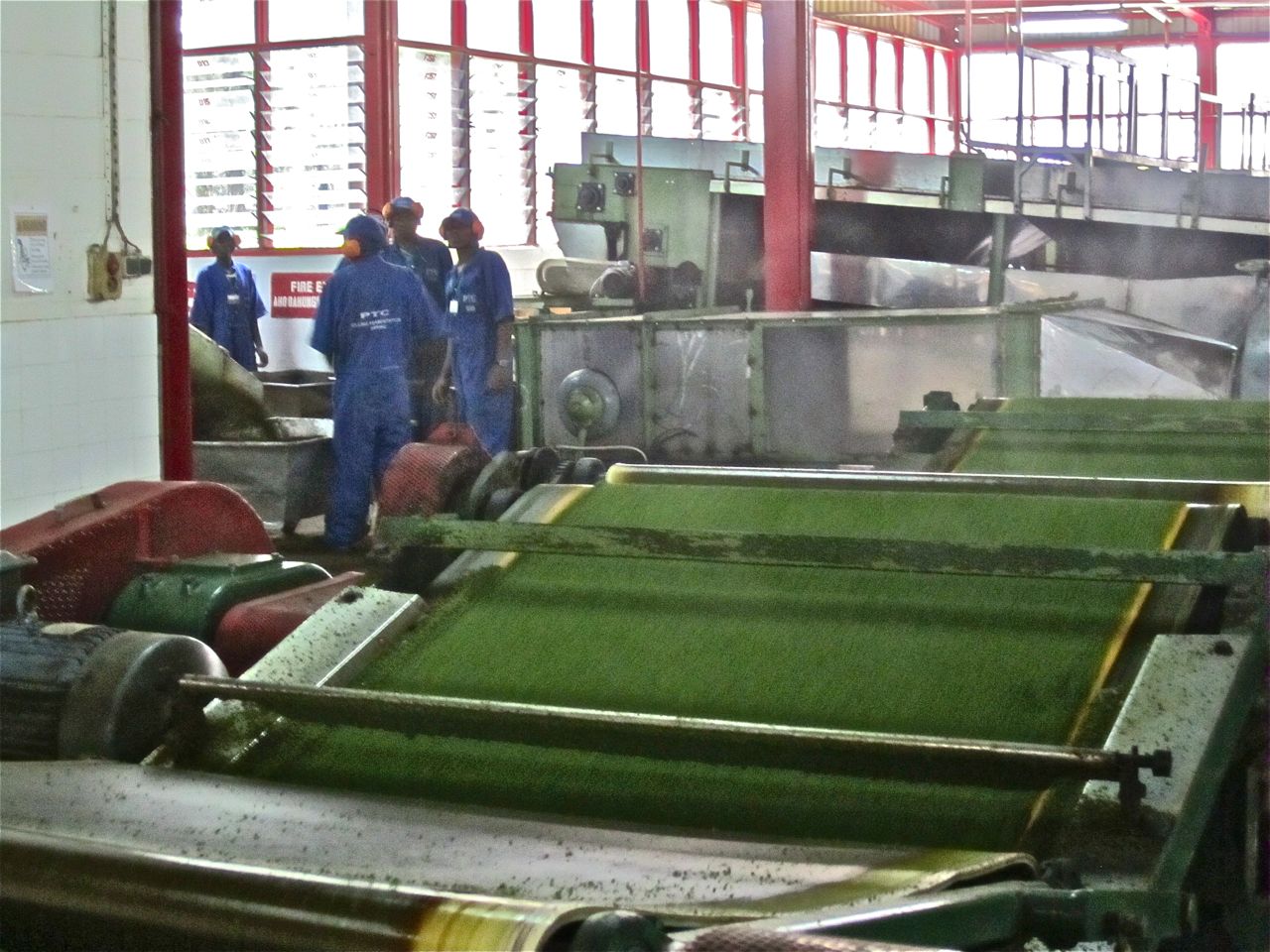
The leaves are finely chopped.
After the oxidation process, the now-black tea rolls off the belt and into buckets.
And put in piles before being bagged.
The factory is very orderly and clean.
A relief to tea drinkers.
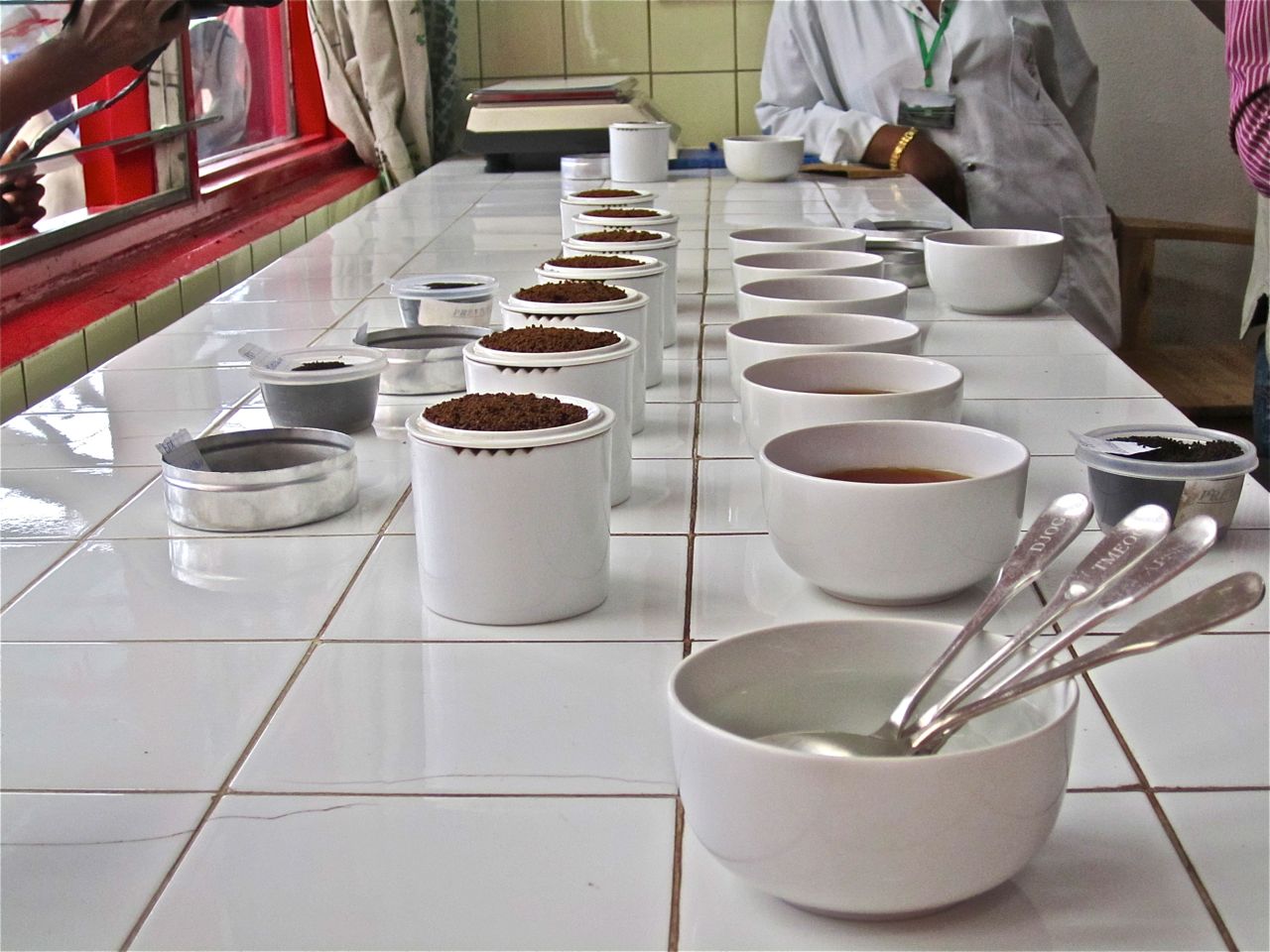
The testing and tasting room.

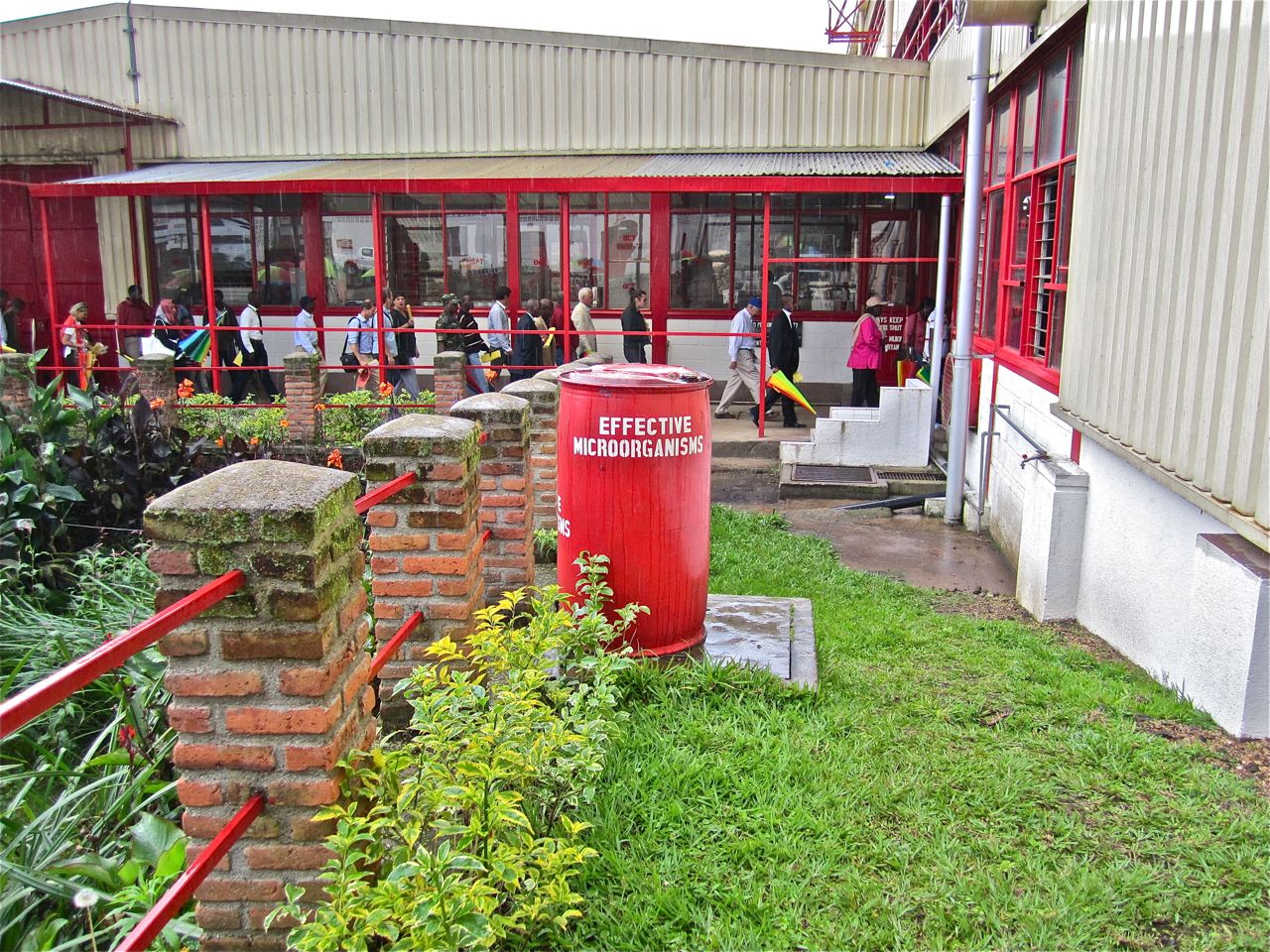
Waste water from the tea processing is diverted to a garden pool and treated with “Effective Microorganisms,” a product that cleans water and eliminates bad odors with a combination of microorganisms that were collected and cultivated naturally.

A barrel of Effective Microorganisms.
A waste water garden pool in the rain.

As we travel, I am always looking for recurrent elements in the landscapes and urban surroundings through which we pass, as well as in the architecture and craft.  I am trying to grasp what Rwanda really looks like, what it cares about, how it experiences its environment (and how I experience its environment) and how I can interpret at least some of  that in a garden design.

Bloom Day in December

Today, I took a closer look at my Abutilon or Chinese Lantern bushes.

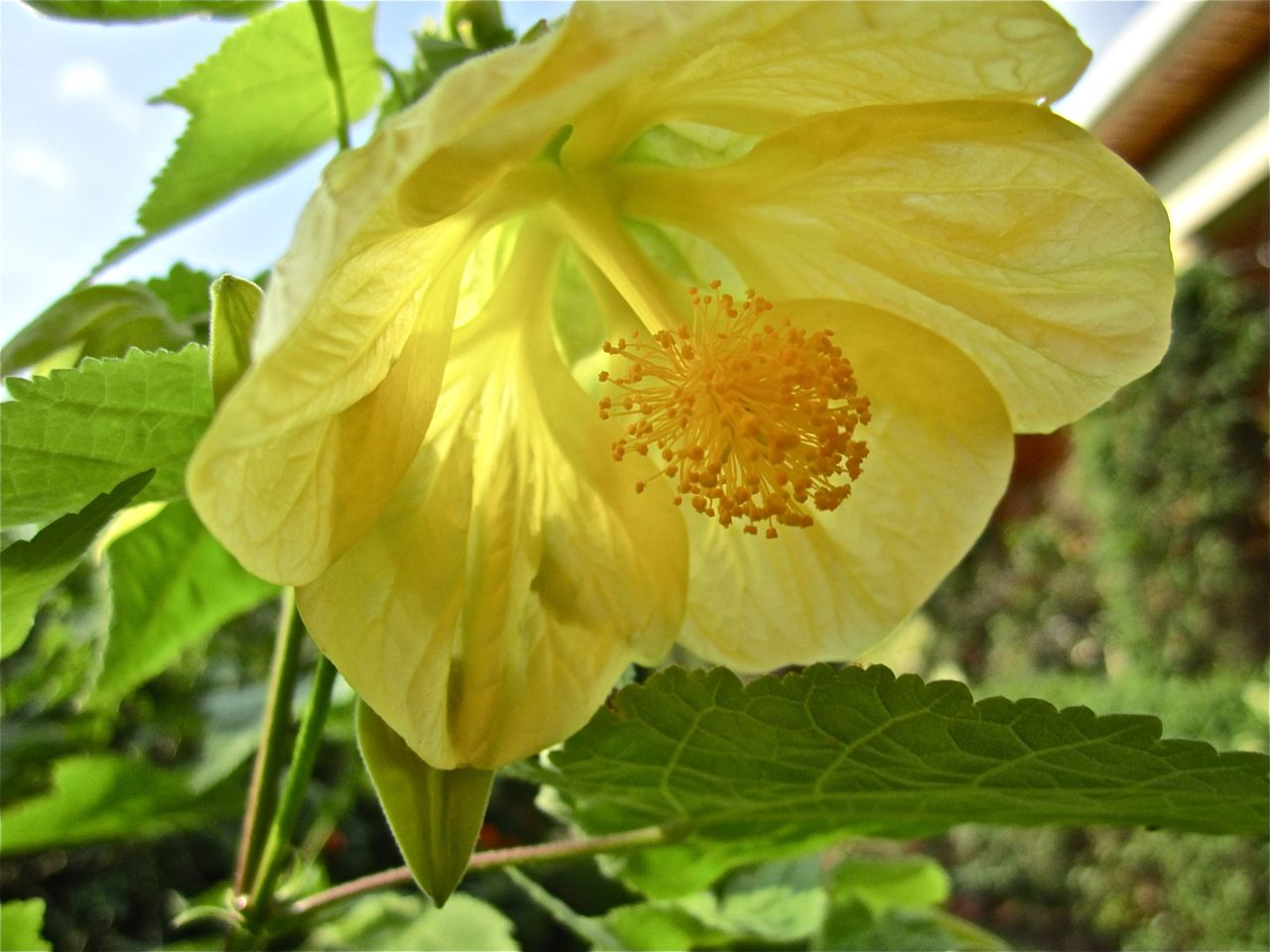
Closeup of yellow Abutilon.

Compared to many of the other tropical or semitropical plants in the garden, the Abutilon are rather quiet.  The flowers are neat and smallish and hang down like bells.

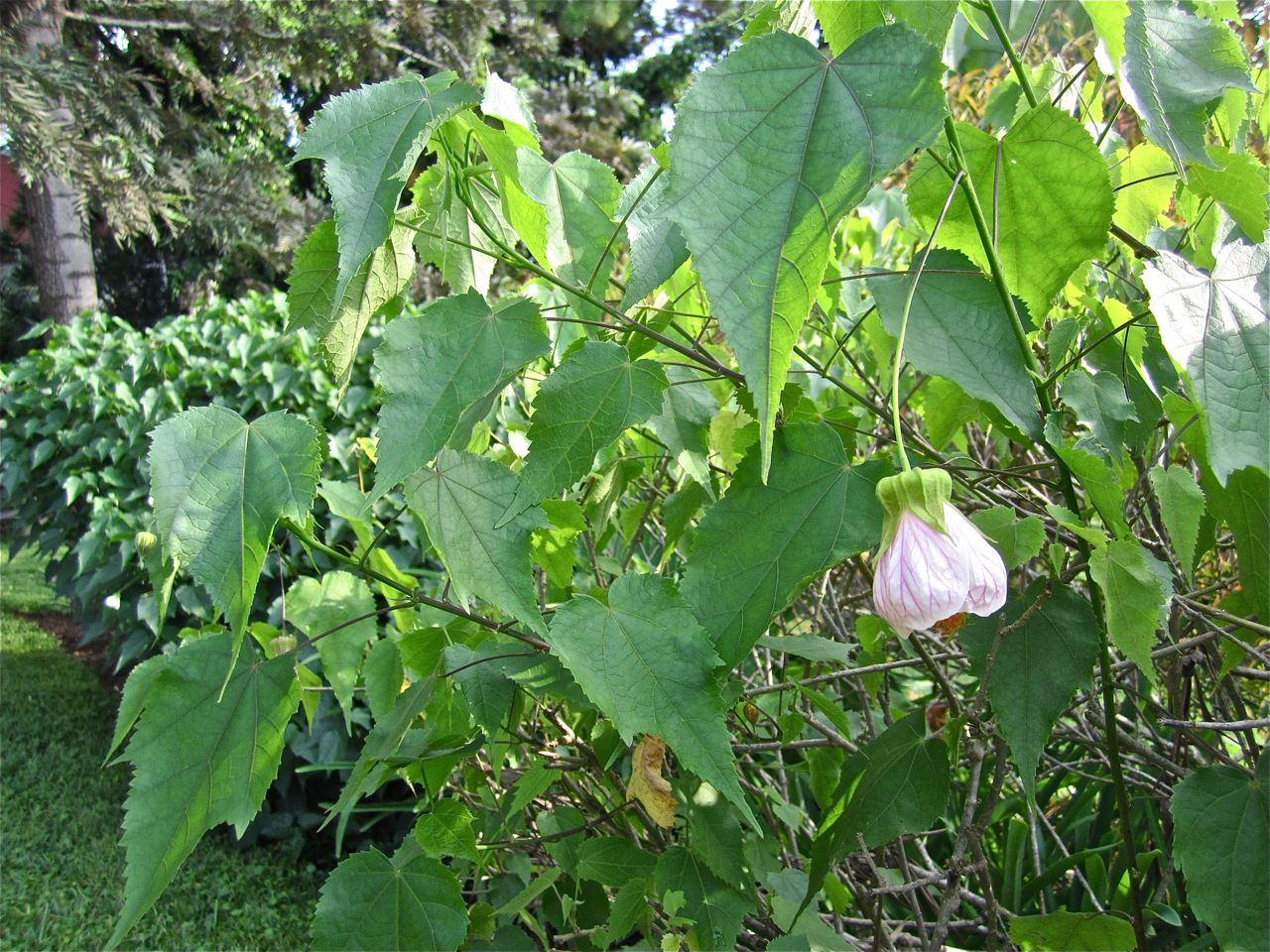
Abutilon are also sometimes called Flowering Maples because of their leaves.
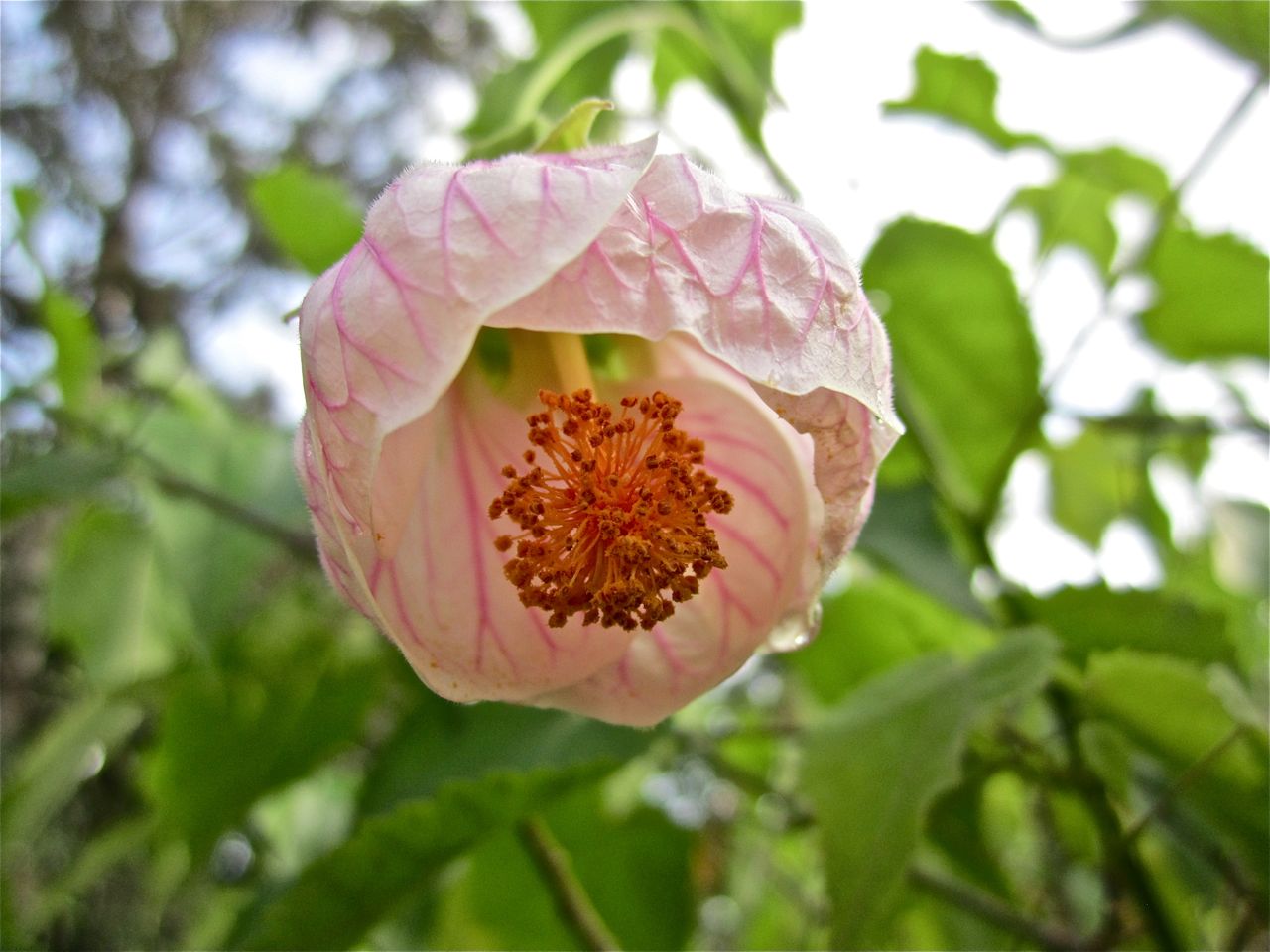
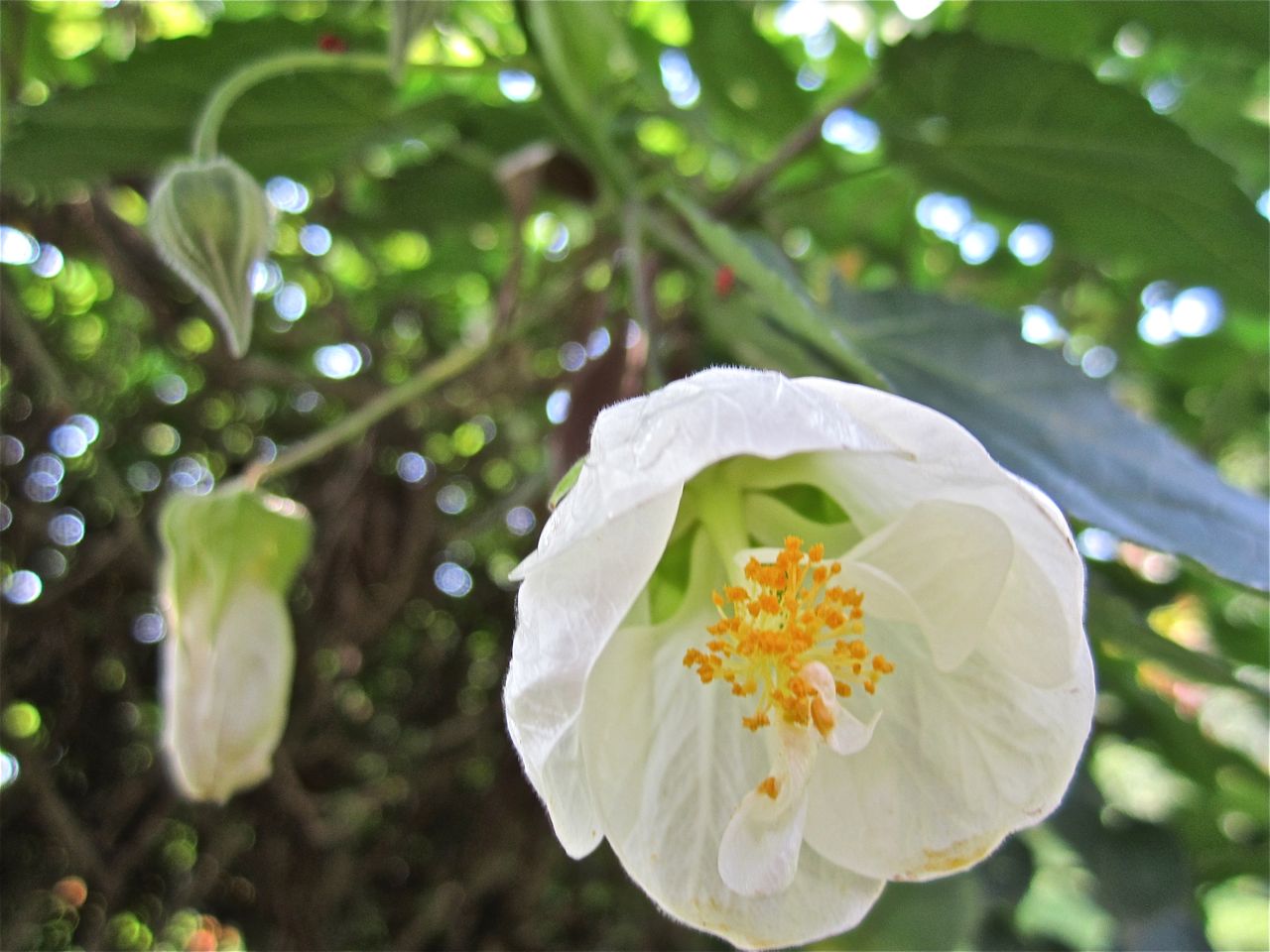
This variety has white blooms with pink veins.
A closeup.
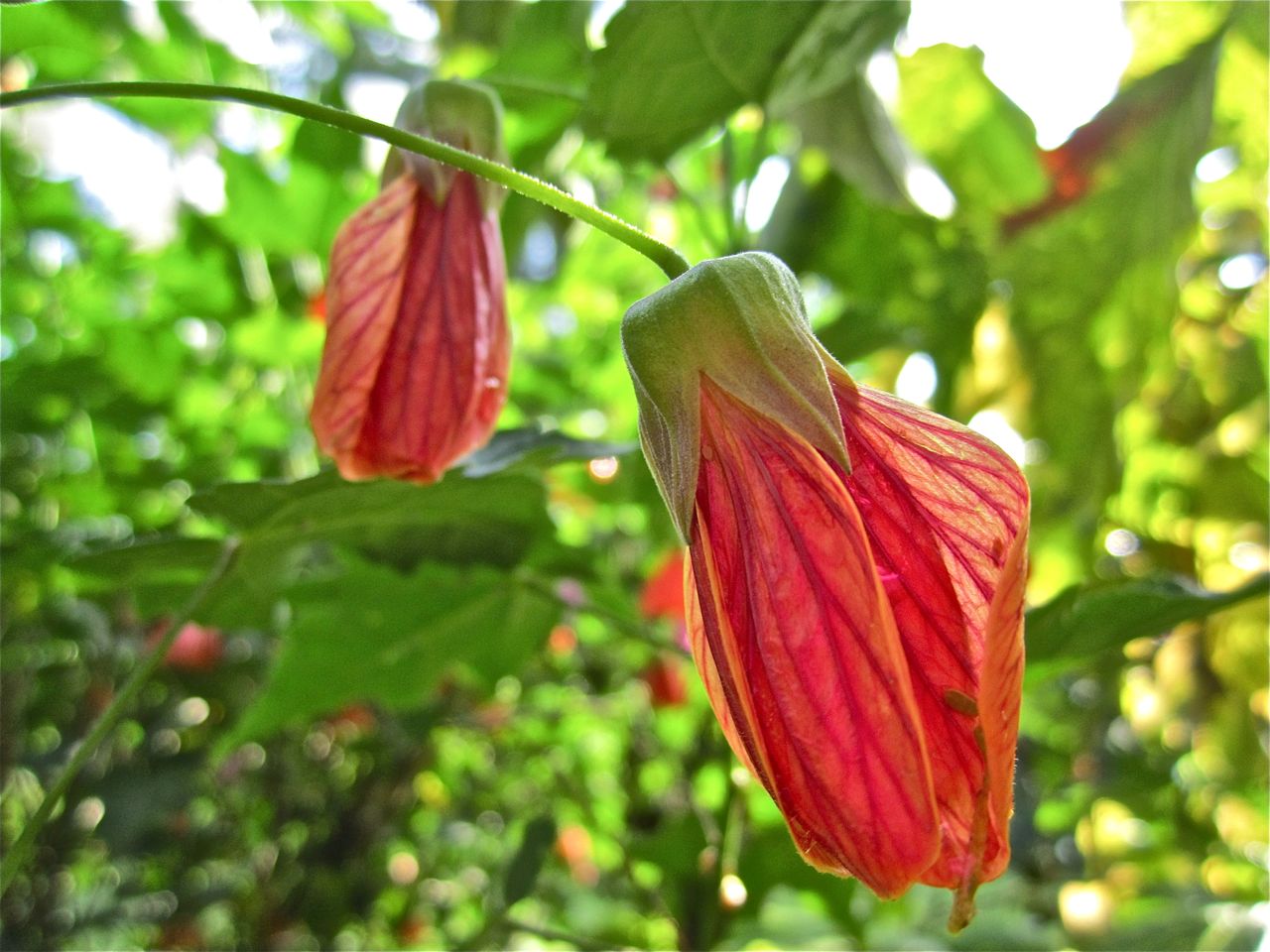
A showier bush with reddish-orange blooms.
A reddish-orange bloom.
Closed blooms.
A white flowered Abutilon.

This bush has variegated leaves and is rather overshadowed by a pink Brugmansia or Angel’s Trumpet.

An Abutilon with variegated leaves beside a Brugmansia.
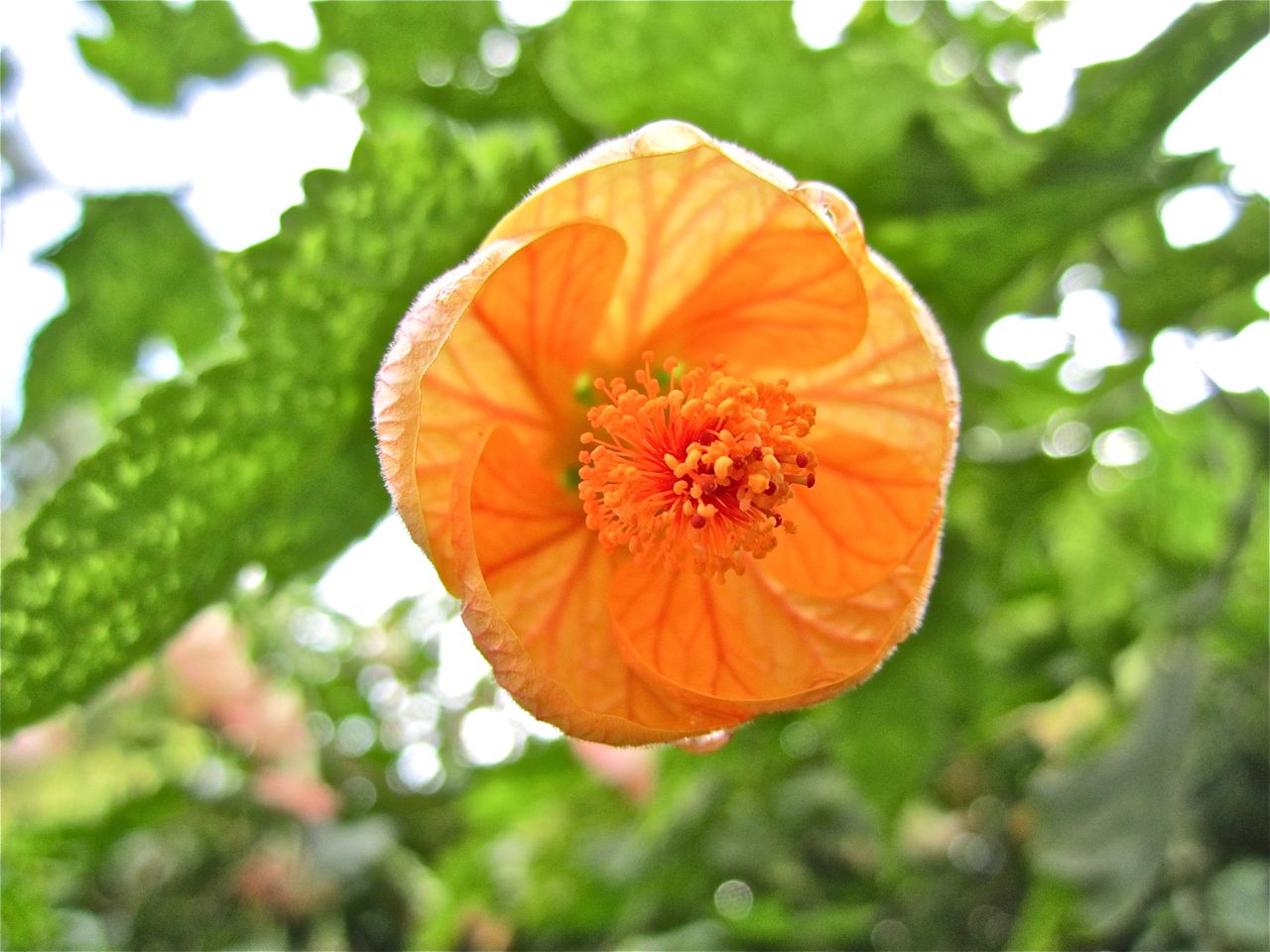
A coral bloom.  Another name for the bush is Chinese Bell Flower.
Closeup of a coral flower.

I think my bushes are Abutilon x hybridum, descended from South American varieties and brought here by expats.  Rwanda has one native variety, Abutilon bidentatum Hochst. ex A. Rich., which is not very showy.

Abutilon bidentatum.  Photo via http://westerndesertflora.geolab.cz.

Another species, Abutilon longicuspe, with purple flowers, is also native to east and central Africa.

Please visit May Dreams Gardens for more Bloom Day postings (the 15th of every month).

Abutilon longicuspe.  Photo via http://database.prota.org.

On the road

The farm in yesterday’s post overlooks the Nyakabingo tungsten mine, located about 10 kms. north of Kigali.

The mine was the first stop on a two-day bus trip organized by the Foreign Ministry for diplomats. We felt a little like we were on a school field trip — only one with a police escort and a press van.

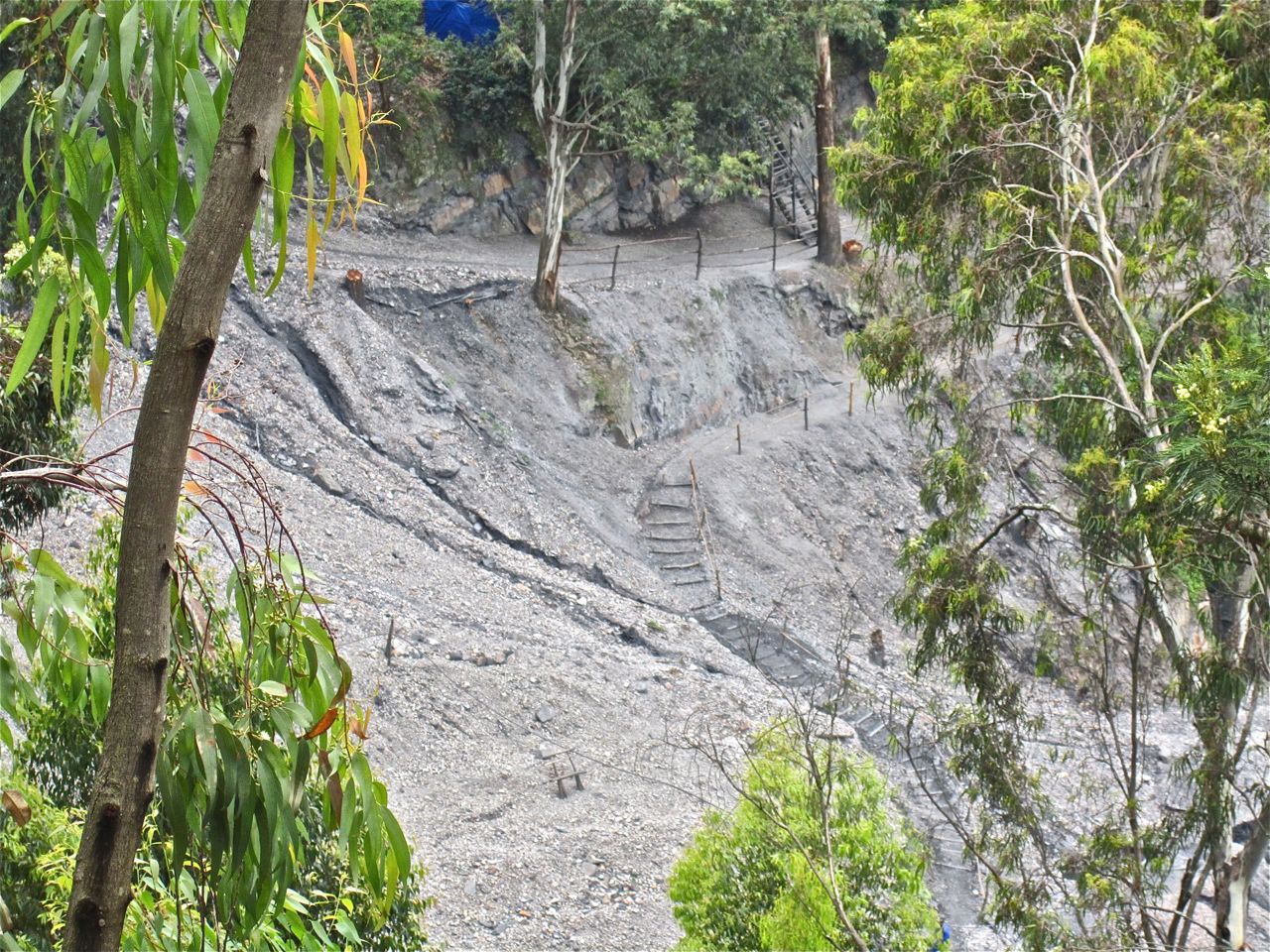
While we were at Nyakabingo, I turned down the invitation to see the mine from underground and instead photographed it from an upper road.

Paths and steps descending the hillside of the mine. About 700 people work there removing tungsten, a chemical element used in incandescent light bulb filaments, x-ray tubes, and superalloys.

The afternoon itinerary included a stop at the Sabyinyo Silverback Lodge.

The Lodge is one of two “swishy” (as Bradt’s Travel Guide puts it) places to stay in the vicinity of the Parc National des Volcans and the mountain gorillas. The other one — the Virunga Safari Lodge — we toured last month. Both cost around $500 to $600 per night per person.

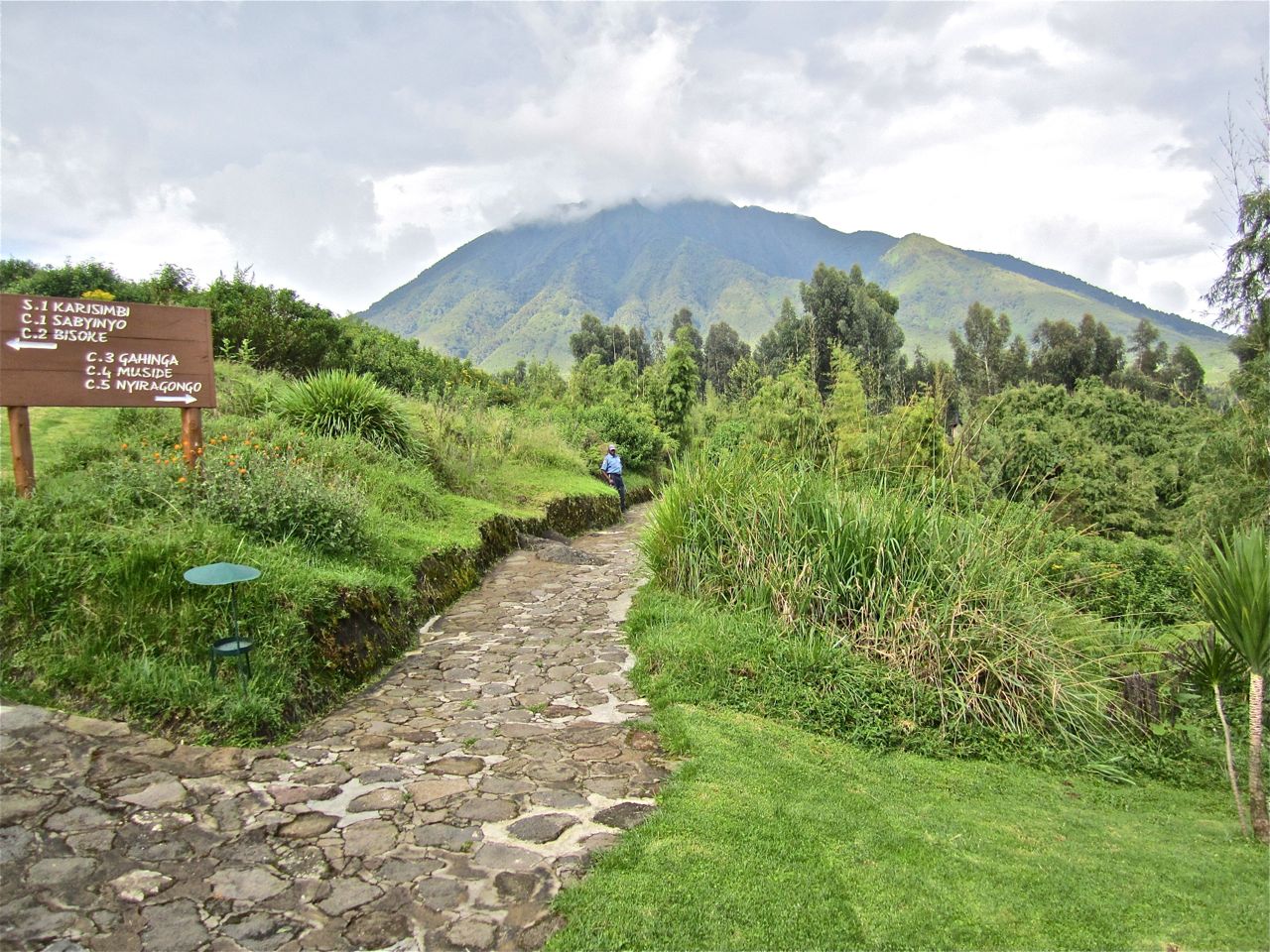
Paths to the five cottages, with the volcano in the background.

Sabyinyo has the advantage of being only 10 minutes drive from the entrance to the park headquarters. Like Virunga, it offers accommodation in individual cottages.

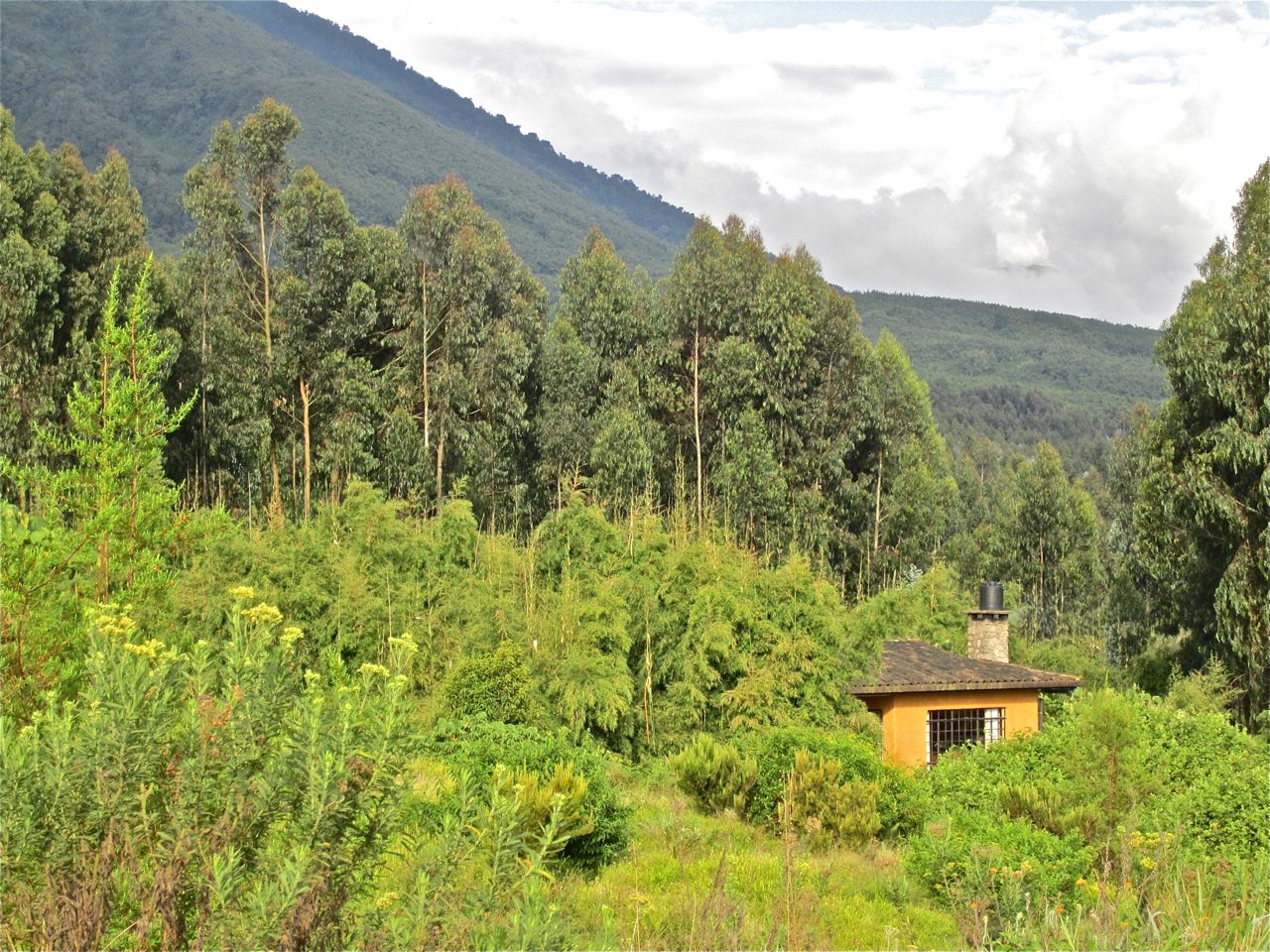
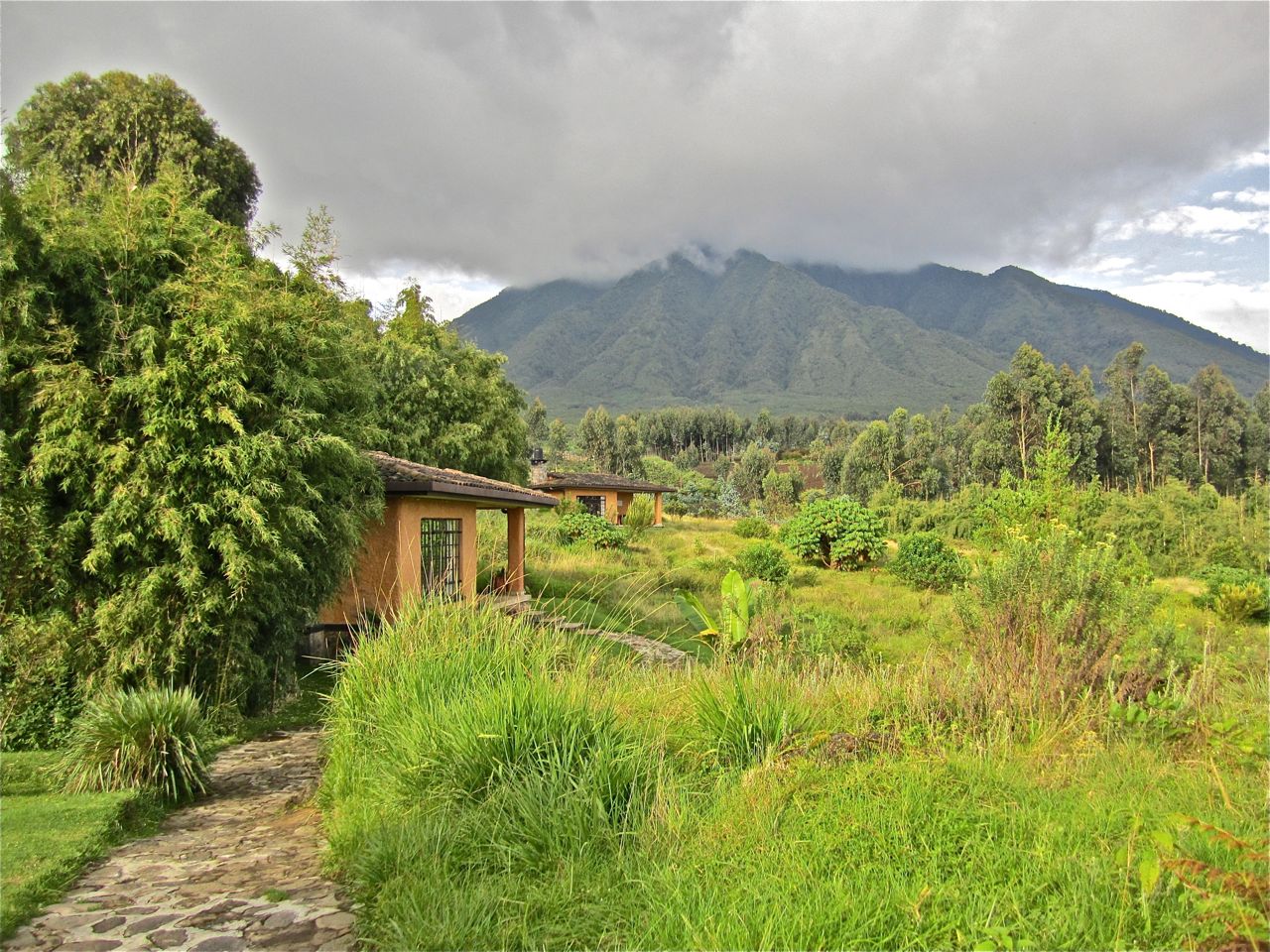
A Sabyinyo cottage. The lodge levies a $58 per person per night community fee, and the community also receives a 17% cut of the lodge’s profits.
Two other cabins.

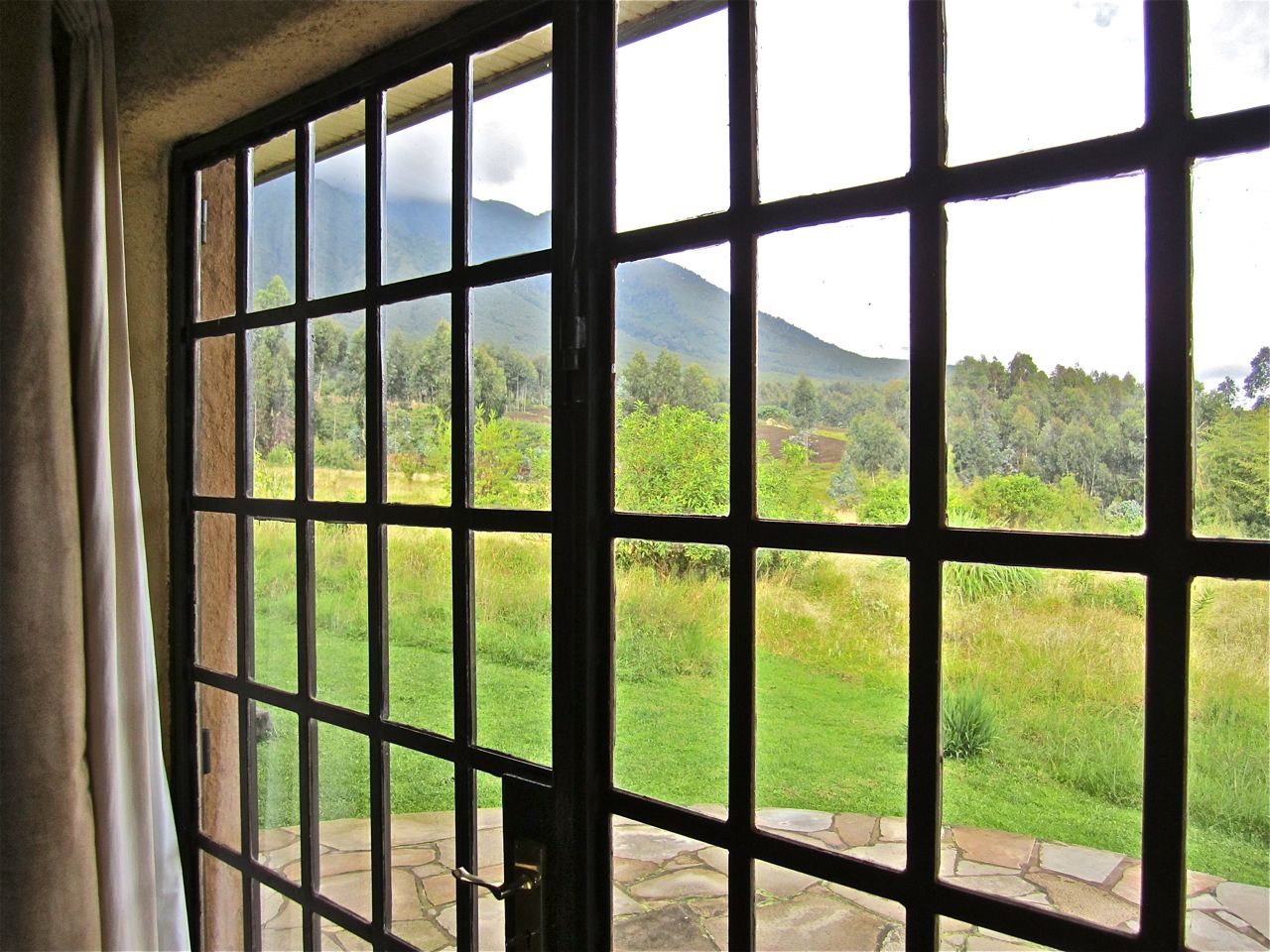
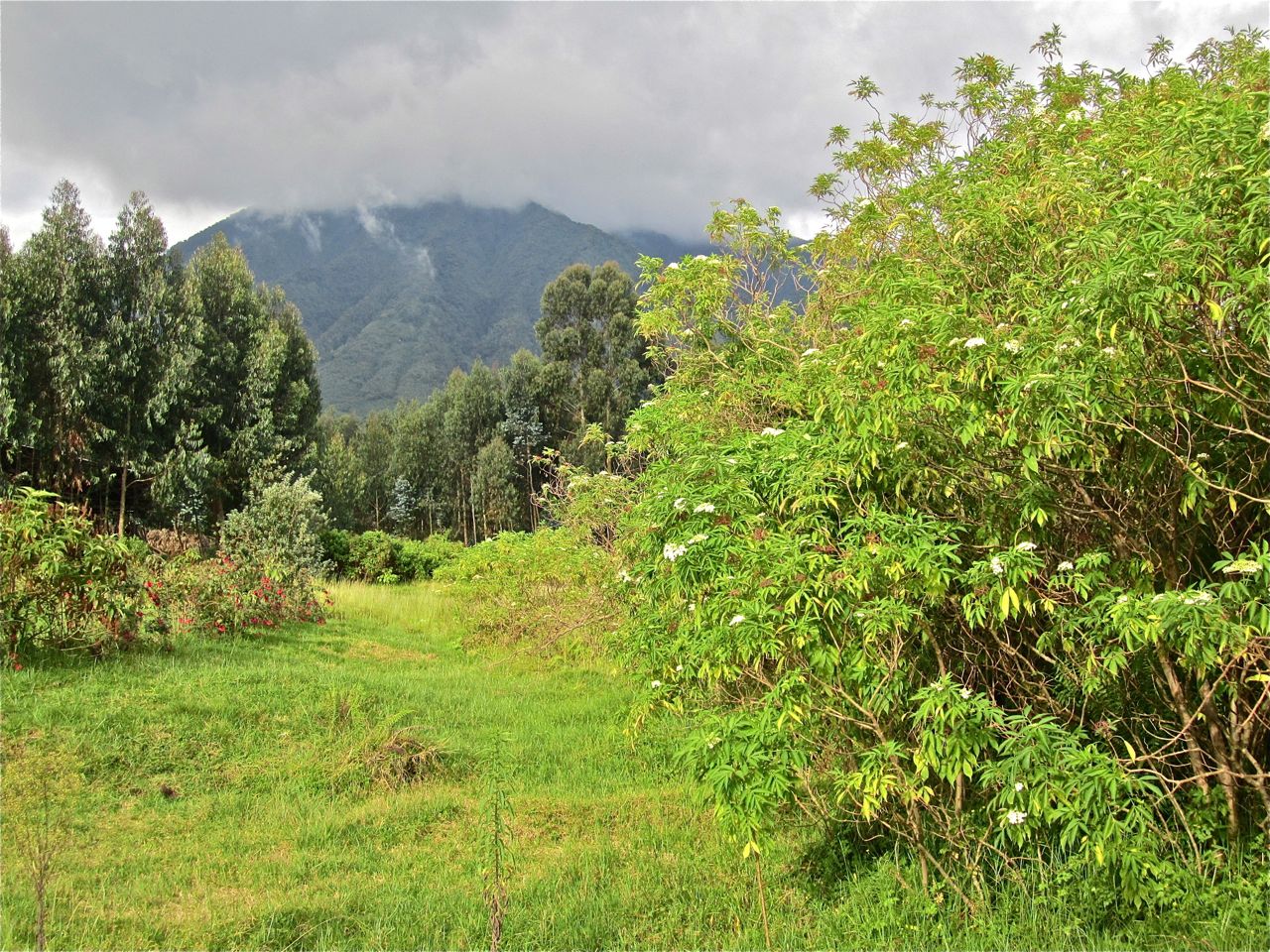
Also like Virunga Safari Lodge, the landscaping is kept simple so as not to compete with the gorgeous views.

The view from a cottage window.
One of the views at Sabyinyo, somewhat obscured by clouds.
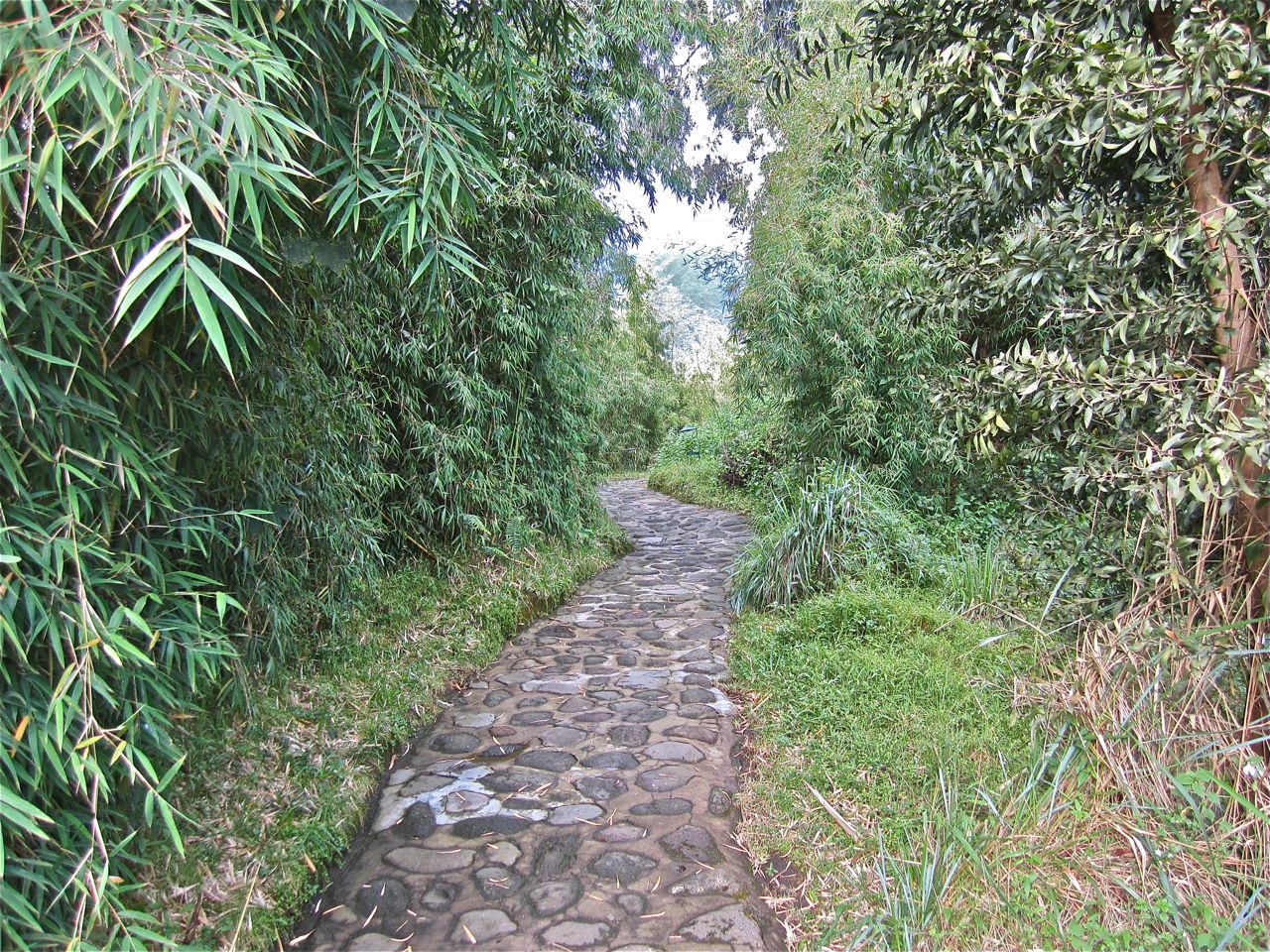
A path through the bamboo.
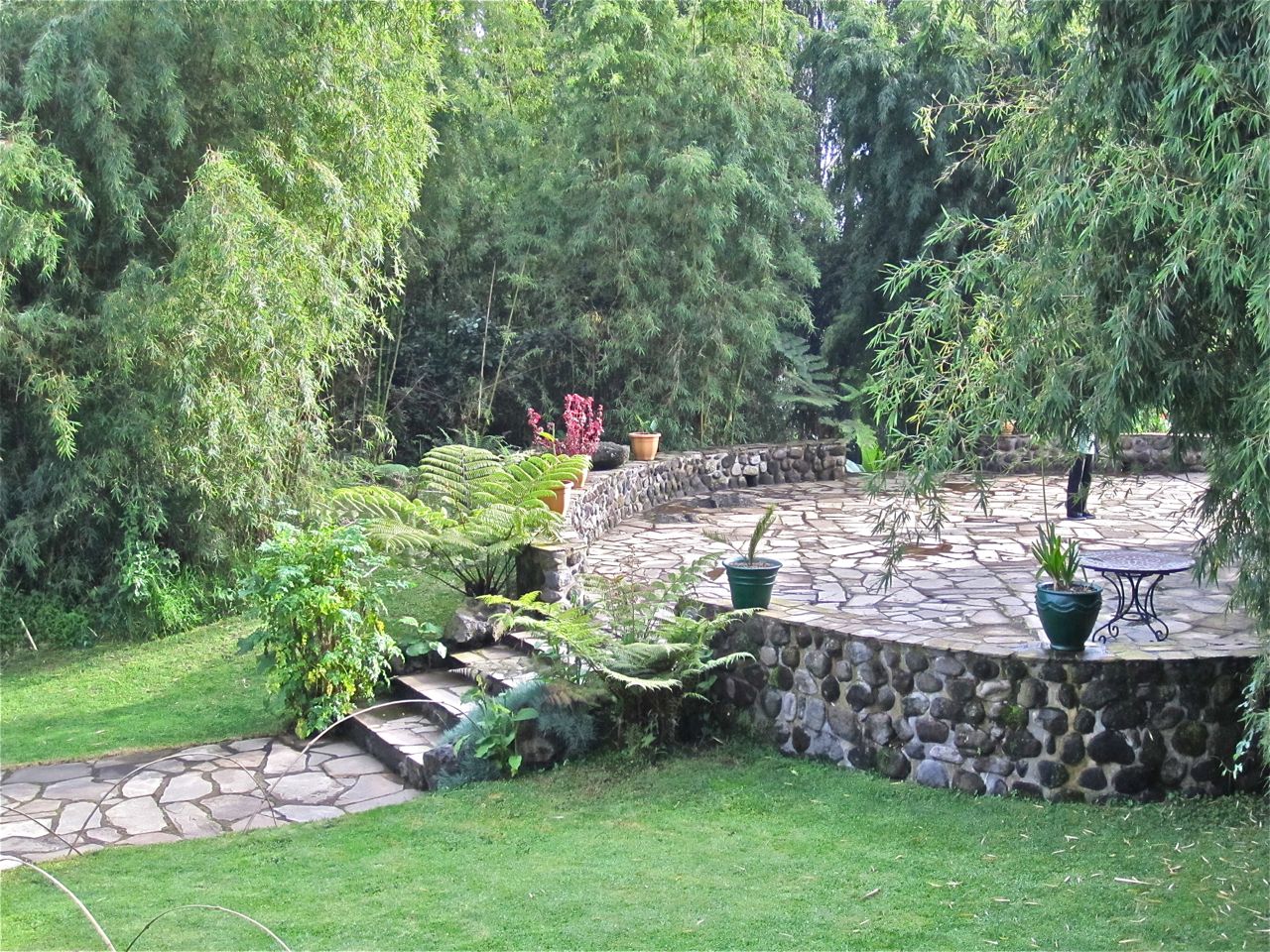
Patio at the entrance to the main building.
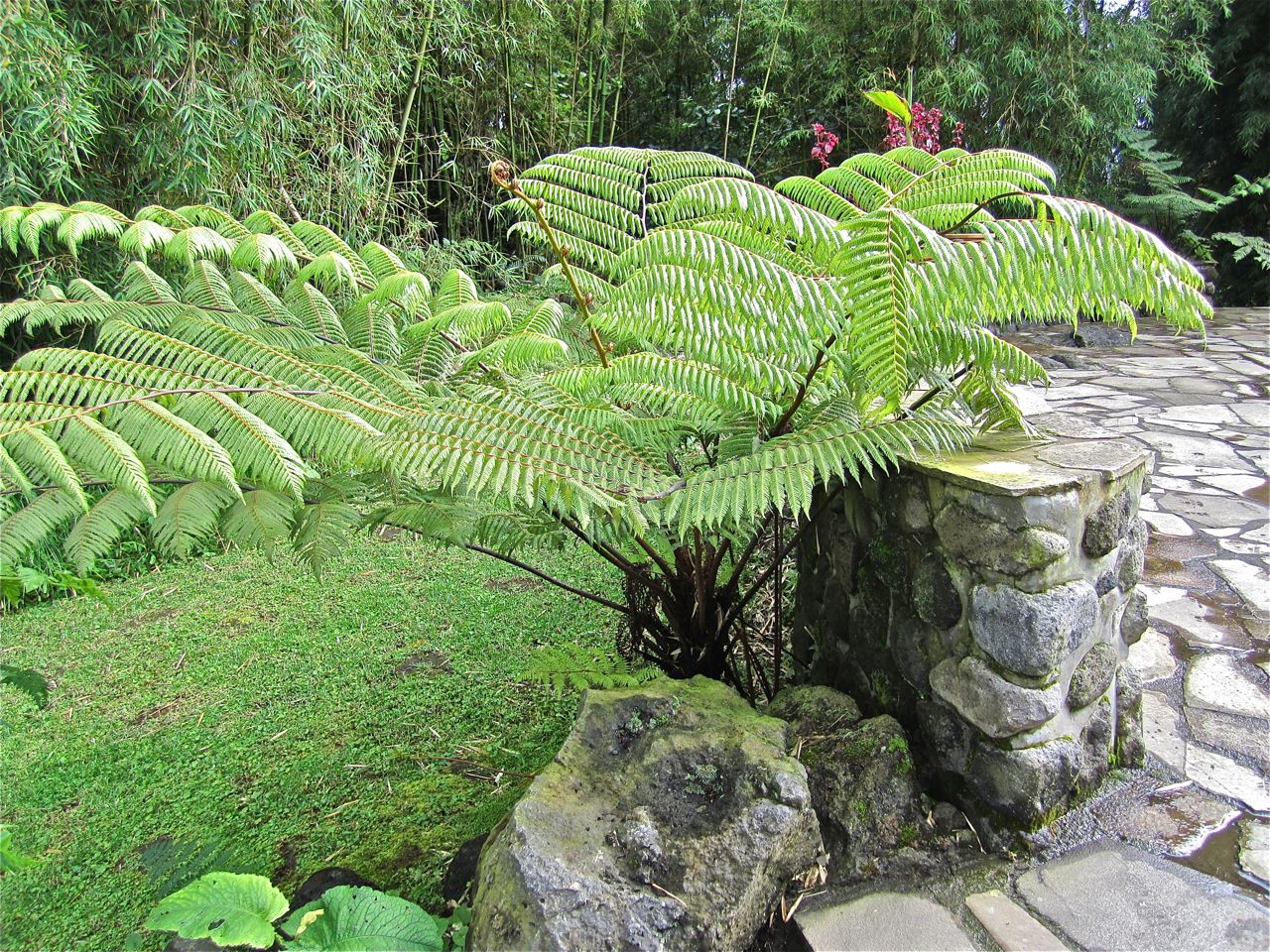
A large fern by the patio steps.
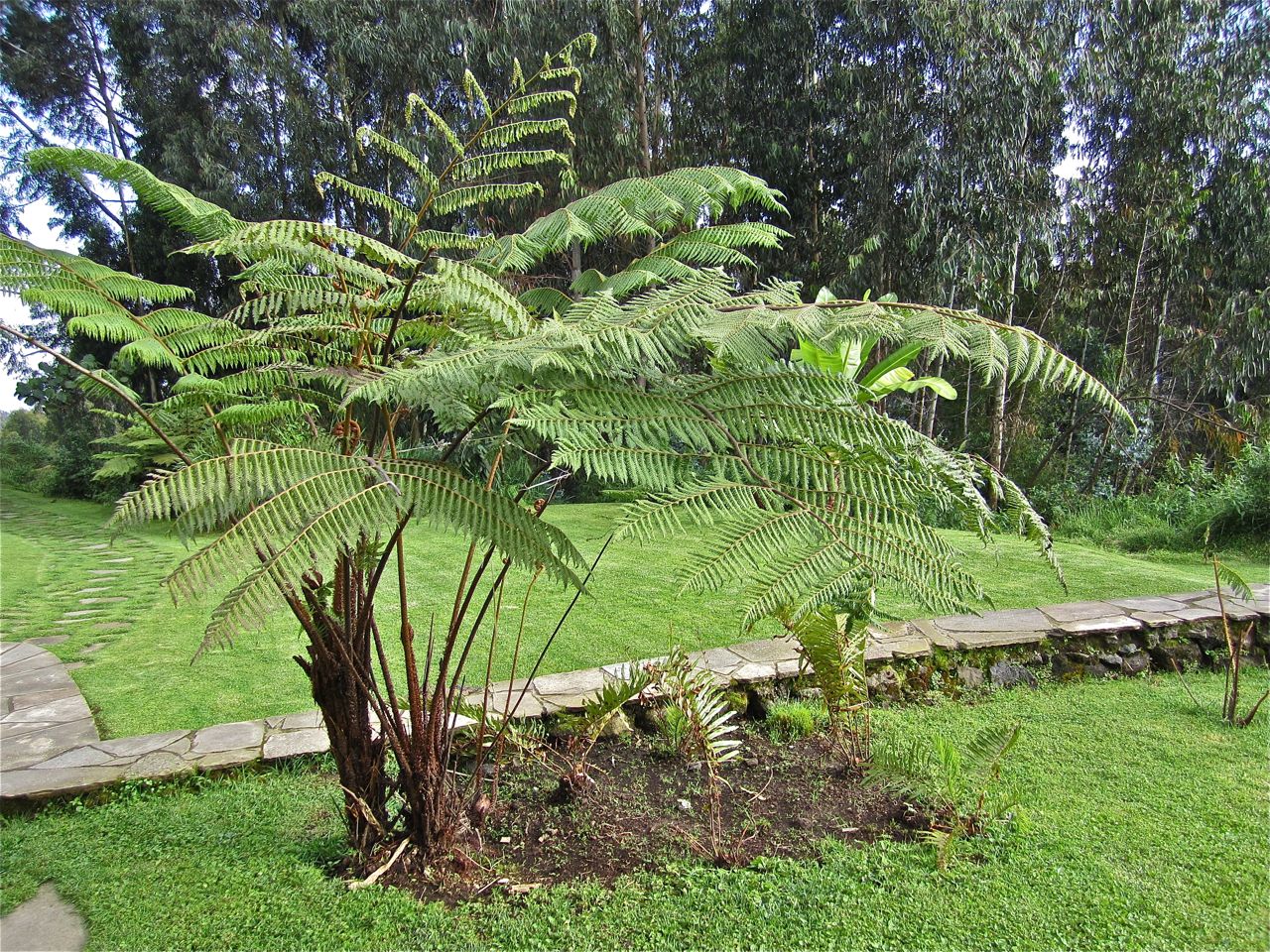
Another very large fern near the main building.
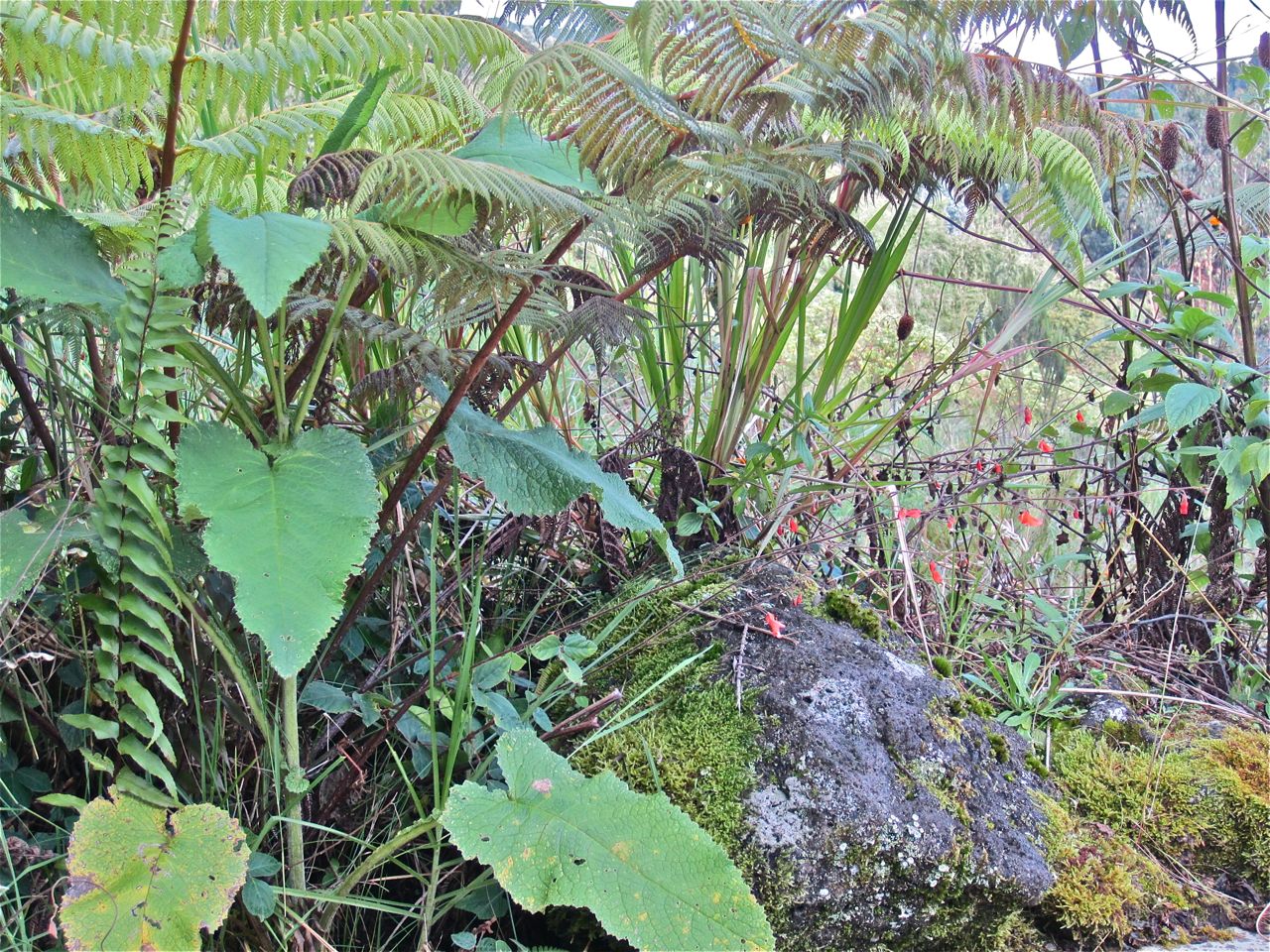
Ferns and other wild plants along the path.
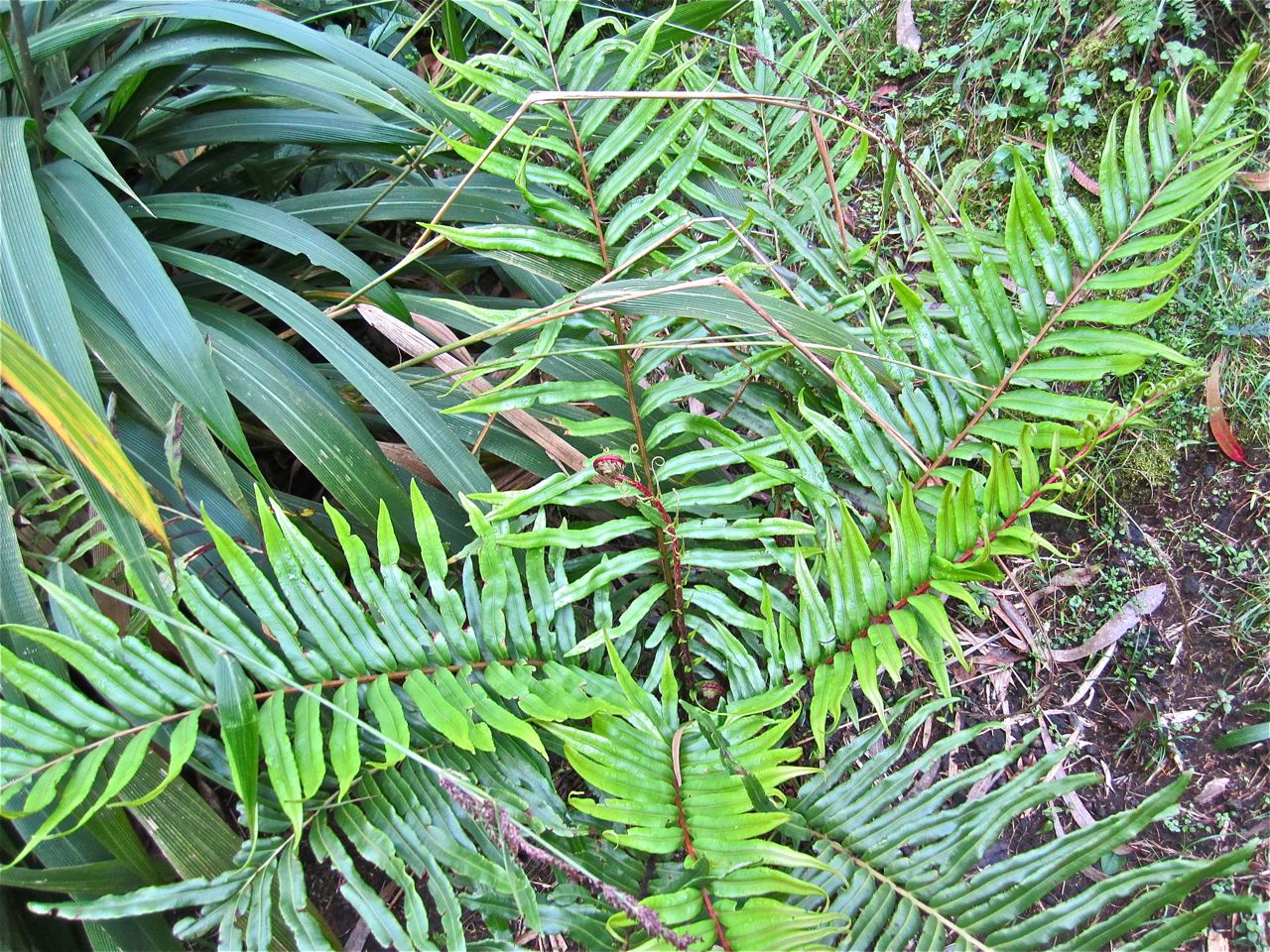
A smaller wild fern
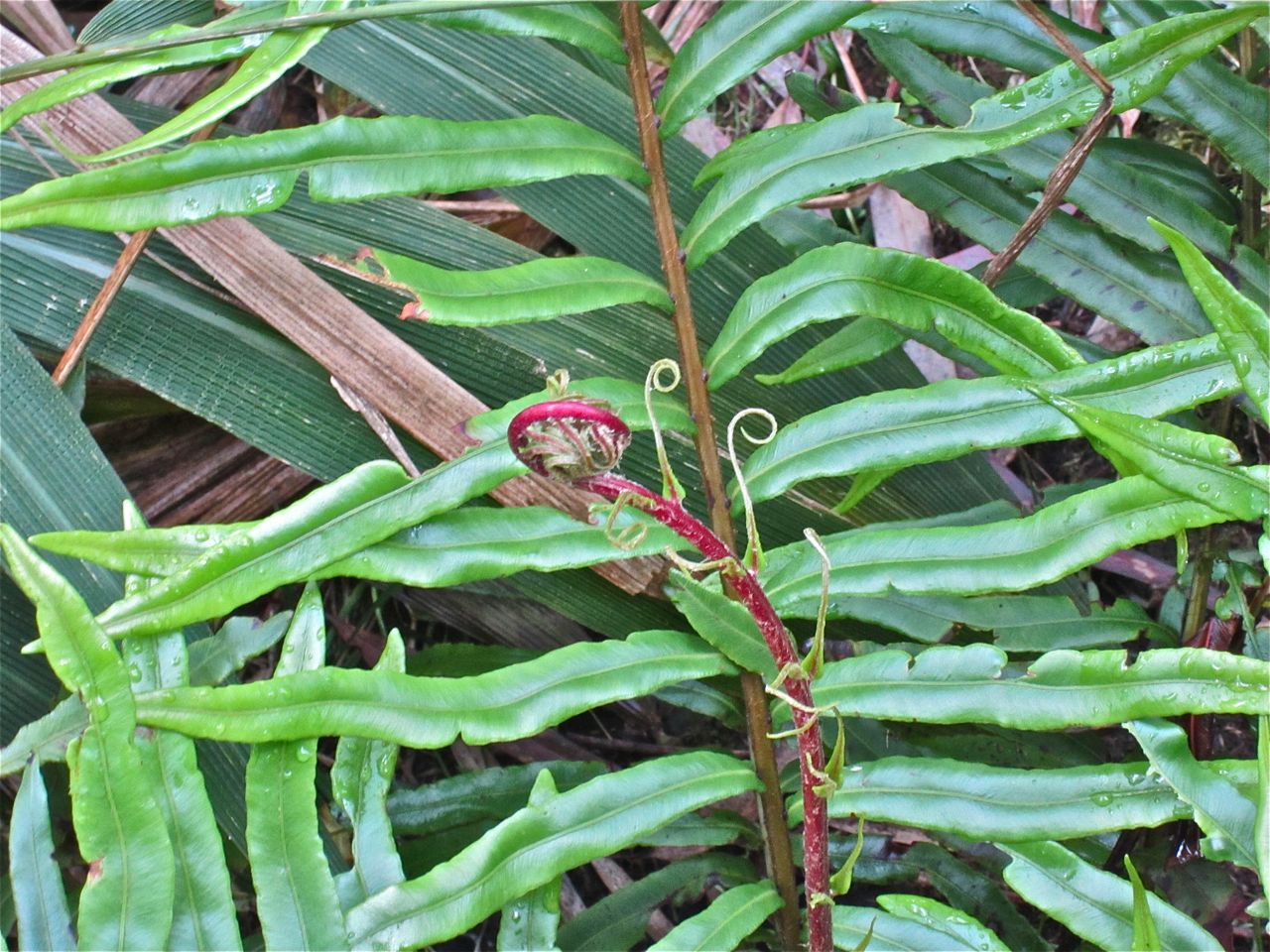
Fern detail.
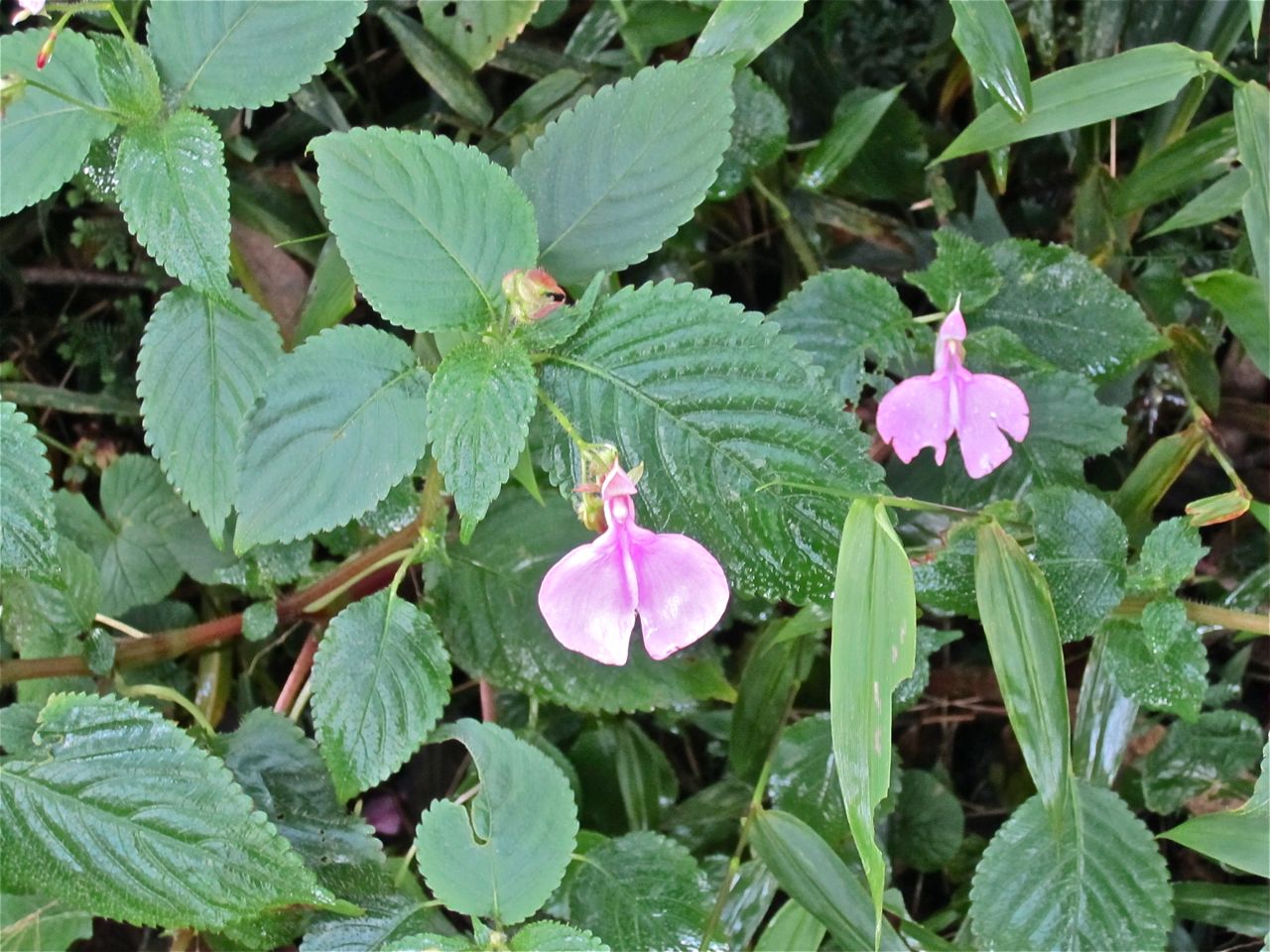
Impatiens native to Rwanda.
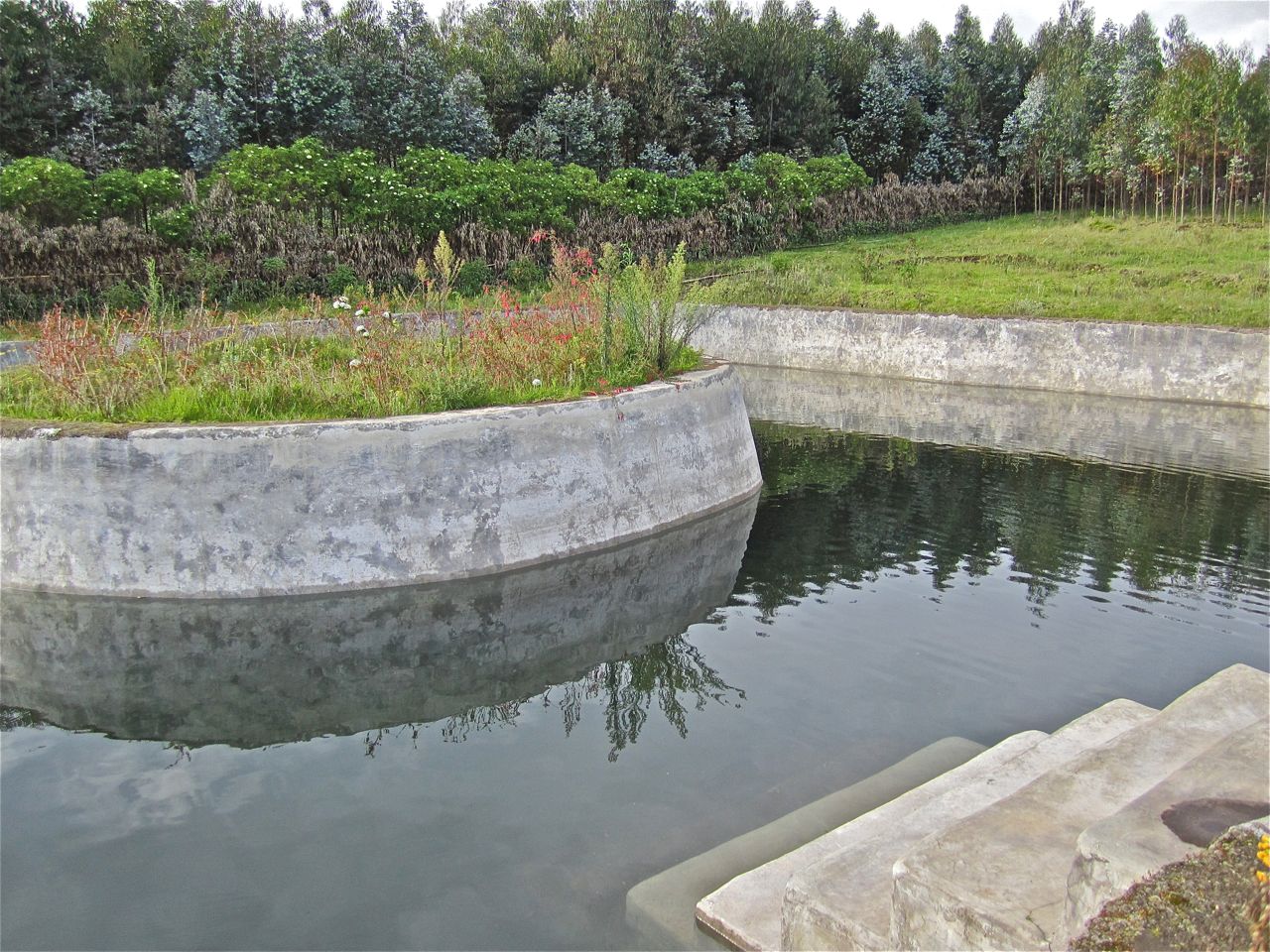
The water retention pool.
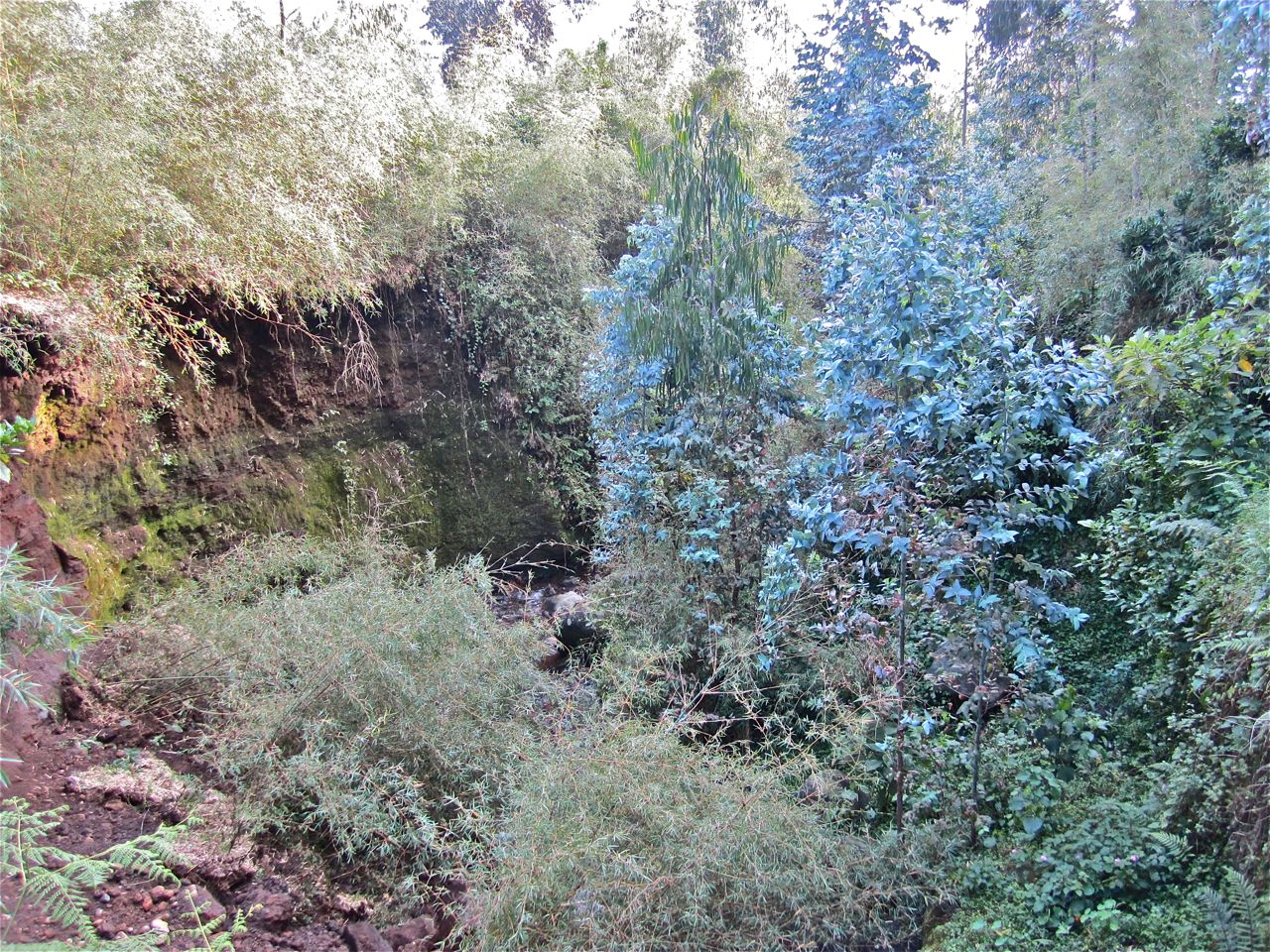
Small stream gorge filled with bamboo and eucalyptus.

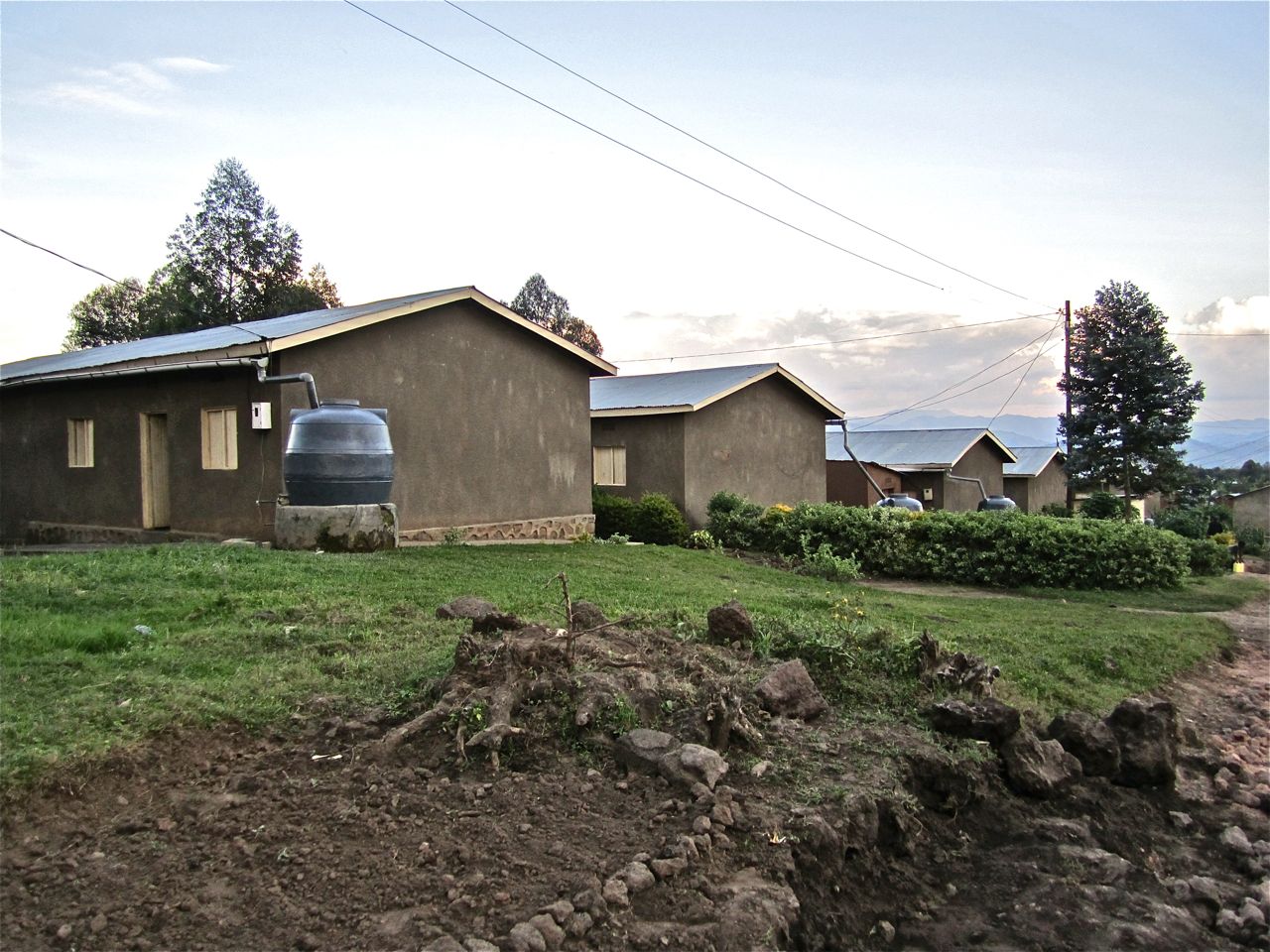
We ended our day in the village of Susa, largely made up of 96 homes built with the assistance of the Rwandan government.  The people who live there include Genocide survivors, Batwa (pygmys), and Rwandans formerly living in exile in Tanzania.

Village homes with tanks that capture rainwater runoff from the roofs.

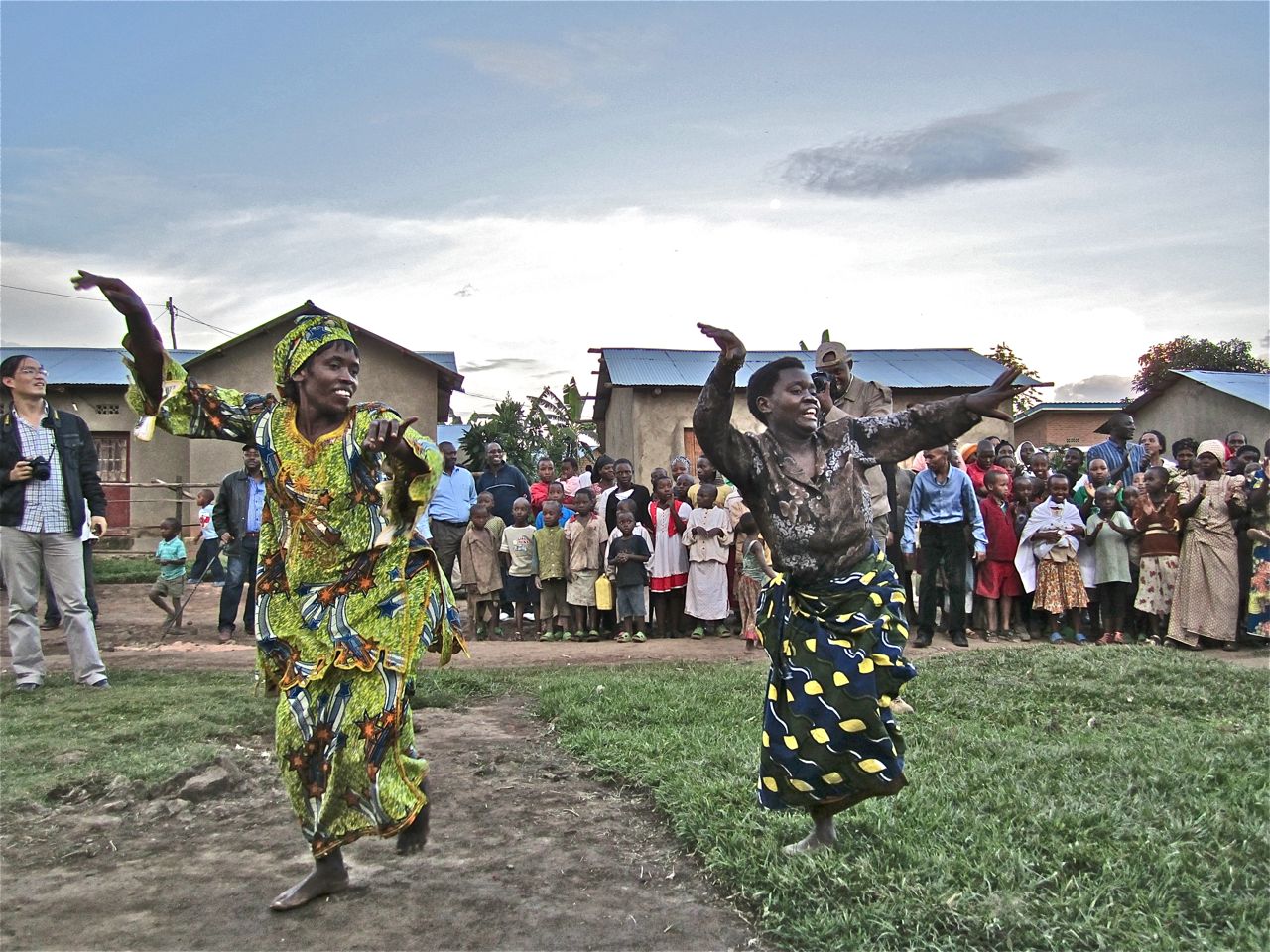
As the light began to fade, we were greeted by dancers.

Susa village dancers.

Gardening at an angle

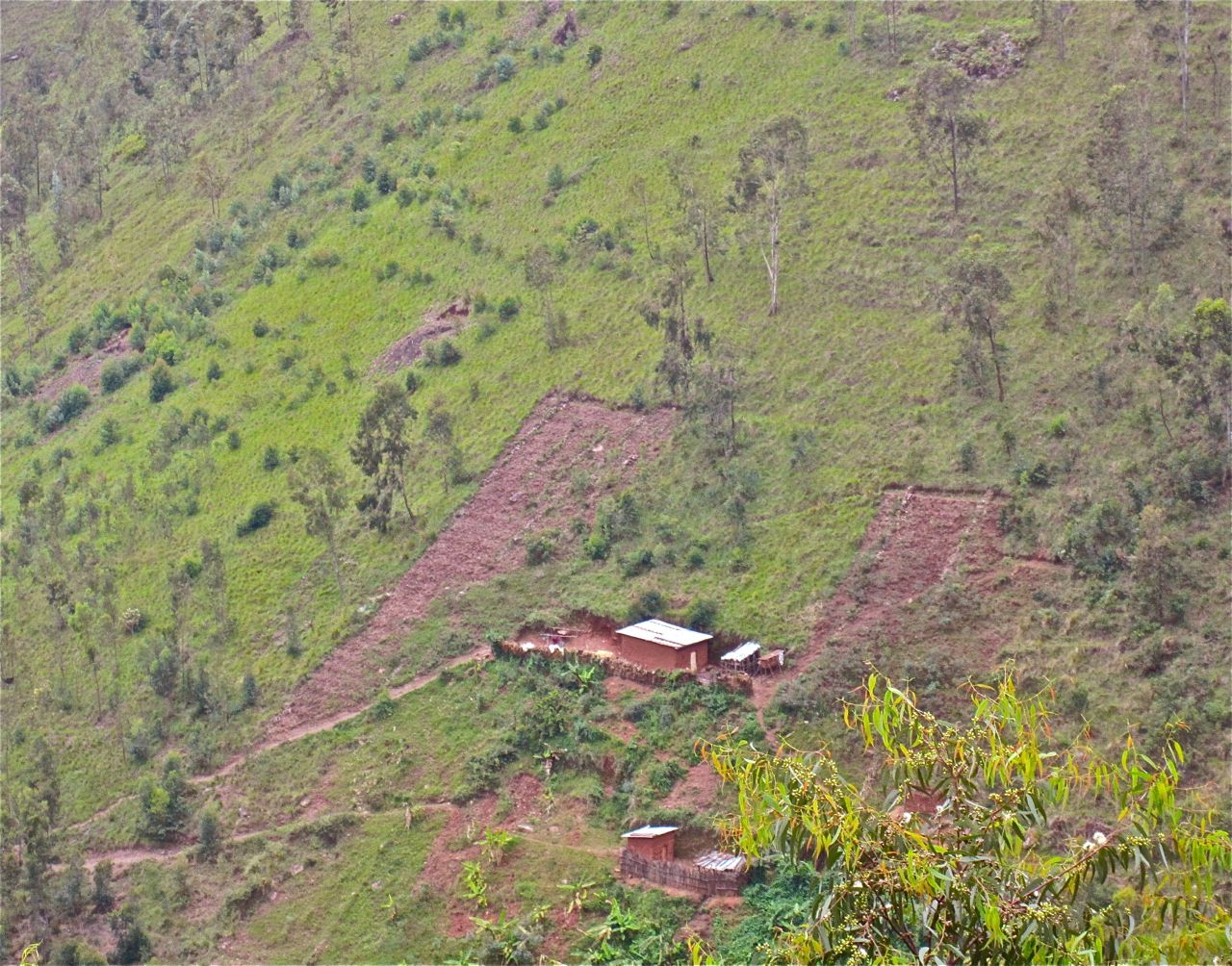
If you think your garden has some challenges with slope, consider this picture. This is quite a typical Rwandan farm. I put it at about 45 degrees.

Rulindo District farm. Click photo to enlarge.

The photo below is another view — rather hazy, I’m afraid — of the most common Rwandan landscape type, a patchwork of small farms on a hillside. This is in the northwest, in Rubavu District.

Typical Rwandan patchwork quilt of small farms.

Why all those people are walking down the road will be the subject of tomorrow’s post.