Mount Vernon’s garden and a Wednesday miscellany

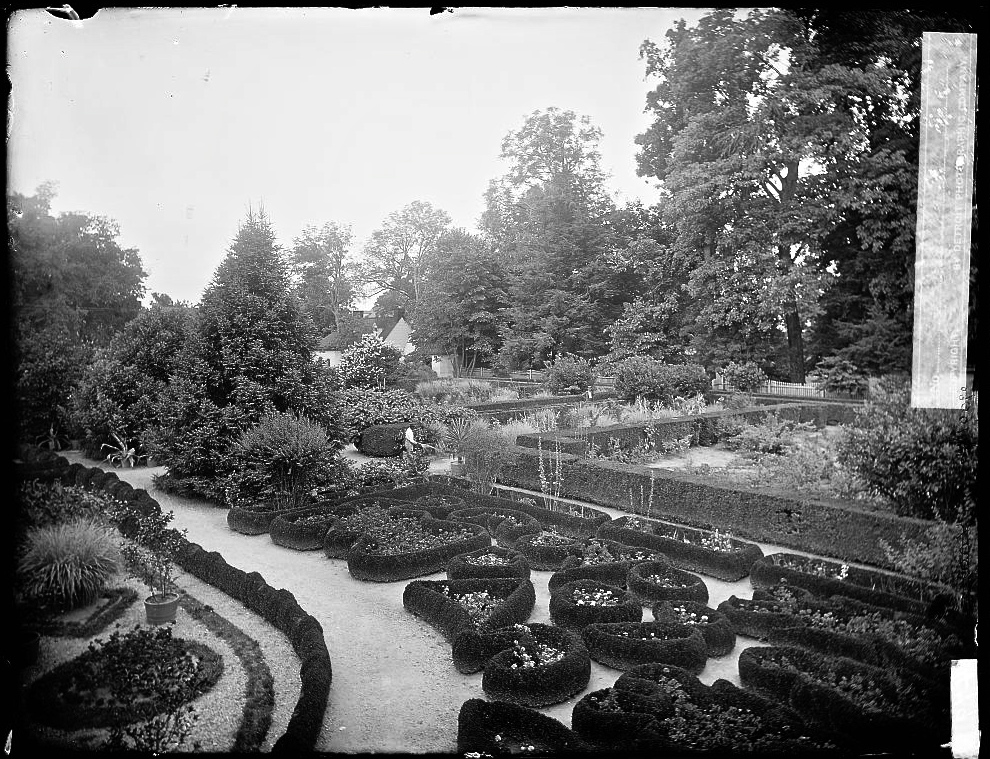
I love this 1902 photograph of the Upper Garden at George Washington’s home, Mount Vernon. It’s so high Colonial Revival.

Early American Gardens has a post this week,  “Mount Vernon after George Washington’s death,” with images from the 19th century.  While looking at them I remembered the picture above and the two below.
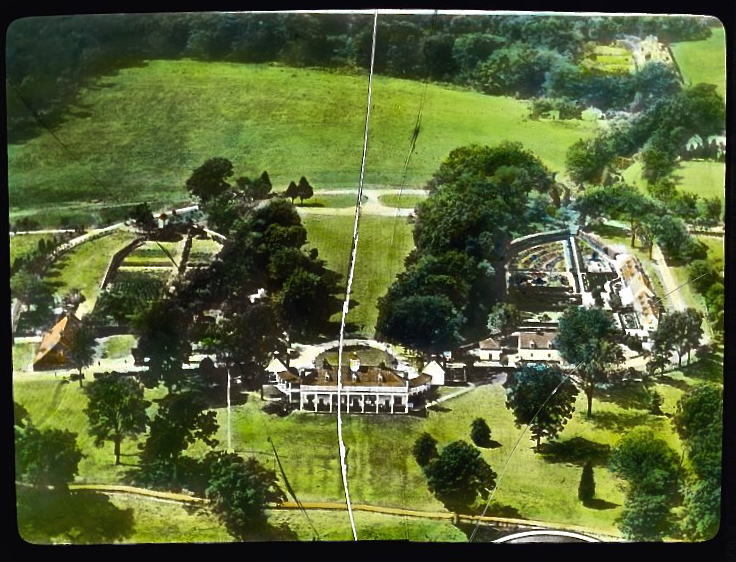
Above is a hand-colored slide from a 1929 aerial photo, part of the lantern slides collection of Frances Benjamin Johnston.  The Upper Garden is on the right side.
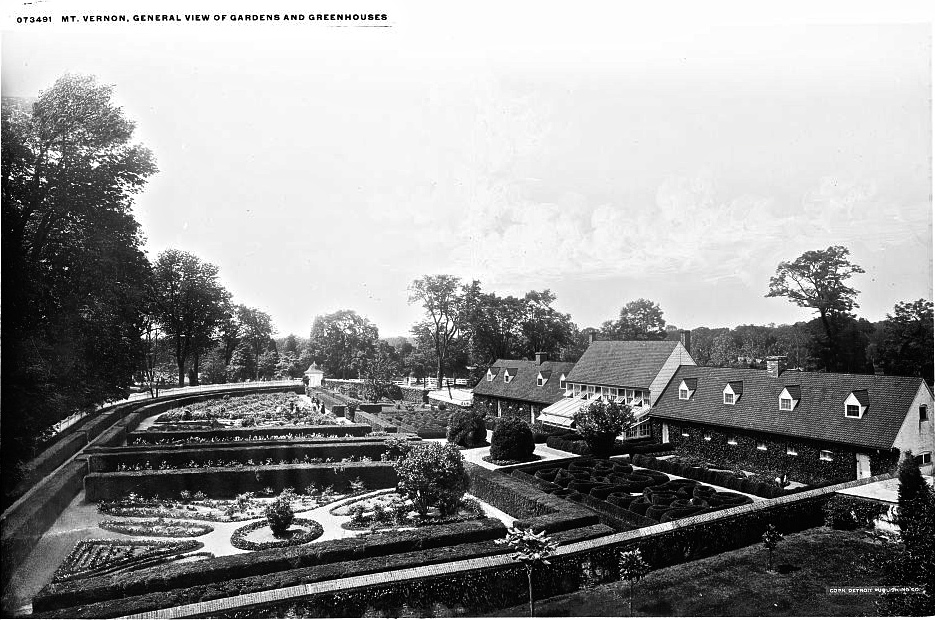
And here is a general view (c.1910 – 1920) of the the Upper Garden by the Detroit Publishing Co.  All three images above via the Library of Congress Prints and Photographs Division.

The 20th century photos are pretty, but they don’t accurately represent the Upper Garden of Washington’s time.  In the late 19th century, restorers thought that the boxwood parterres (many filled with hybrid tea roses) were original to Washington’s time, but research in the 1980s found that they were actually planted in the 1860s or 70s (although they may have been rooted from Washington’s boxwood).

The garden was substantially re-worked in 1985 (the greenhouse was restored in the 1950s), but such is the romantic power of a boxwood hedge that they were largely “kept in place by their own mythology and the mythology they supported of Washington as American royalty,” according to The History Blog, here.

By the early 2000s, the boxwoods were dying, so the Mount Vernon Ladies’ Association, which owns the estate, decided to make an extensive (six-year) archaeological dig on the site.  This culminated in a “new” (1780s) design in 2011.  The area now holds large open beds of vegetables and flowers.  They are bordered by low boxwood hedges and centered by a 10′ wide gravel walkway.

You can read about the restoration in this Washington Post article, here.  However, I really recommend watching this very interesting 30-minute C-Span video about the research and archaeology that informed it.

Miscellany

I’ve almost finished reading the excellent Gardens and Gardening in the Chesapeake, 1700 – 1805, by Barbara Wells Sarudy (aka Early American Gardens).  You can read its first chapter, about the 18th century garden of Annapolis, Maryland, craftsman William Faris, here.

For Anglophiles: thousands of aerial photos of Great Britain have recently been made available online; read about it here.

I recently found this 2010 (inside) art installation by Beilu Liu, which I think is just lovely, here.  It’s called “Red Thread Legend.”  (My Pinterest page — link on the right — is red today.)

In 2011, artist and former urban planner, Kathryn Clark, made a series of map quilts, shown here, representing neighborhoods that have had high foreclosure rates in recent years. Earlier this year, she gave an interesting interview with The Atlantic blog, Citieshere.

I also recently found the blog Miss Design Says, about “all good things Danish.”  It currently has a post about Rabalder Parken, a park that combines a street skate area  with an overflow water drainage system, here.
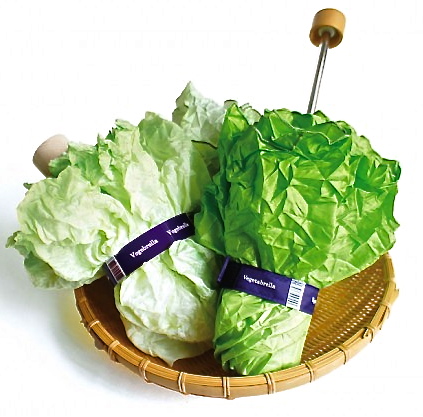
Of course I saw this on Pinterest: an umbrella that looks like a head of lettuce, here.  It’s from Japan, but the link will help you order it from other countries.

I liked this Q & A  information on rose hips in the New York Times,  here.  And I have recently been looking for some good flower frogs, and I found them here, from a tip from Gardenista.

Finally,  O-Dark-Thirty, the online literary journal of the Veterans Writing Project, launched in August.   The VWP is a 501(c)(3) non-profit based in Washington, D.C.  It provides no-cost writing seminars and workshops for veterans, service members, and military family members. Please visit them here.

ADDENDUM:  Today, Thursday, Washington Post garden columnist Adrian Higgins discusses boxwood blight, a disease that comes from Europe and has infected shrubs in nine states, here.
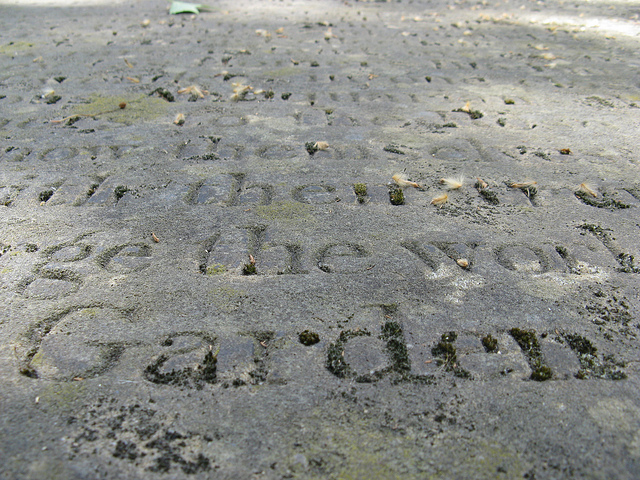
Just because. . .

I’ve been working full-time in the garden this week instead of working on new posts.

And because we’re thinking about a London vacation.  Any ideas?  I haven’t been there in about 15 years.

Photo by Kevan Davis under CC license, via flickr.

This is the grave of John Tradescant the elder (c. 1570s – 1638) and of John Tradescant the younger (1608-1662) and his young son (and two wives).  Naturalists, botanists, gardeners — they introduced American plants to the (then) wider world.

The grave is at the Garden Museum at St. Mary’s at Lambeth (London).  The epitaph by John Aubrey reads, in part,

Transplanted now themselves, sleep here & when
Angels shall with their trumpets waken men,
And fire shall purge the world, these three shall rise
And change this Garden for a Paradise.

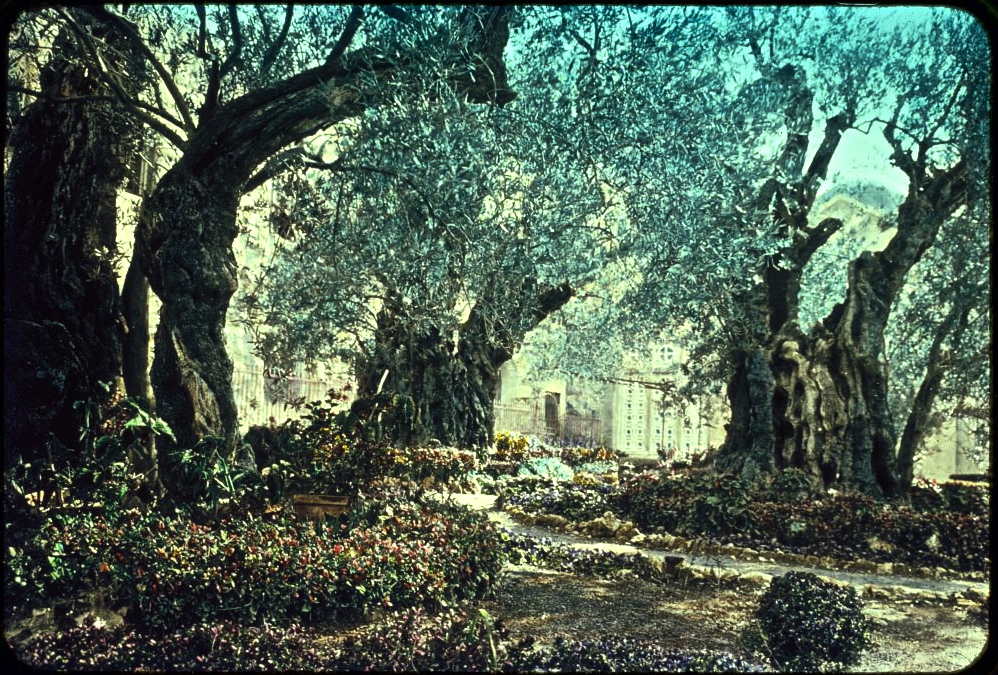
Vintage landscape: Gethsemane

I’ll take one more pass at the interesting photographs of the Library of Congress Matson Collection  (American Colony of Jerusalem).

“Garden of Gethsemane in snow,” February 28, 1938.

The American Colony photographers took many pictures of the Garden of Gethsemane during the first half of the 20th century. Presumably, they were big sellers in the Colony’s tourist shop near Jaffa Gate.

“Garden of Gethsemane semi-distant with overhanging olive branch,” c. 1898-1946.  The garden is in the middle of the photo.  Click the image to enlarge it.

‘Gethsemane’ is a Greek word derived from an Aramaic word for ‘oil-press.’ The Roman Catholic-administered garden is located at the foot of the Mount of Olives. It is one of four locations in the area currently claimed by different religions as the place where Jesus prayed the night before the crucifixion.

“Jerusalem. Gethsemane from convent roof showing city wall and Golden Gate.” Image hand-colored c. 1950 – 1970, but original black and white photo was probably taken earlier.

In the gospels of Matthew and Mark, it is called by a word meaning ‘place,’ ‘property,’ or ‘estate.’ In the gospel of John, the Greek word ‘kepos’ is used; it can mean ‘garden,’ but also ‘cultivated tract of land.’

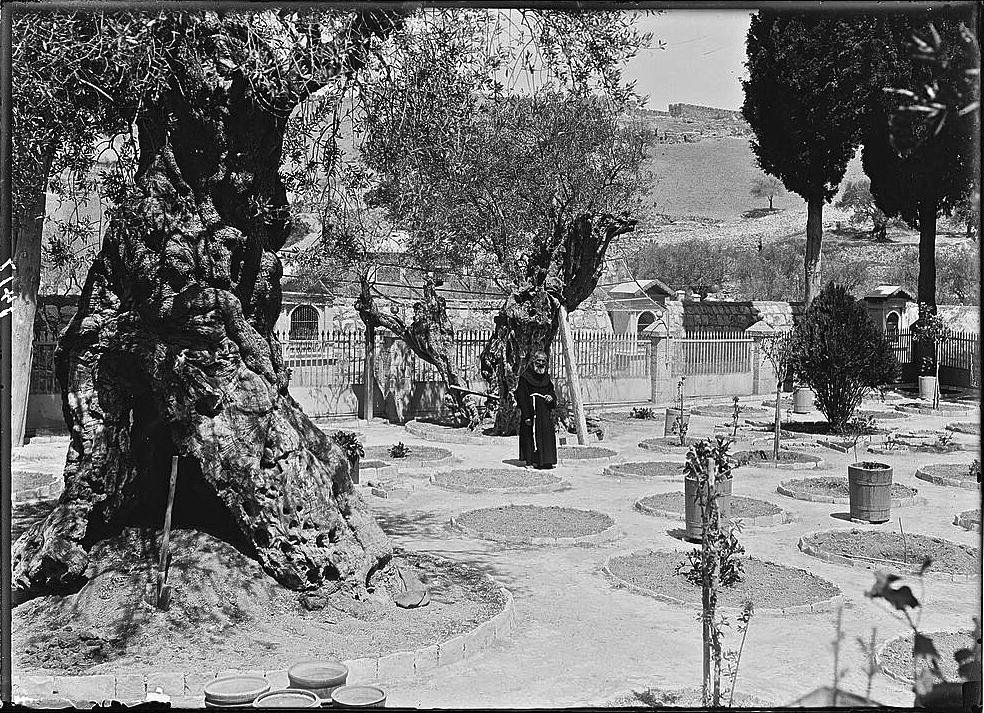
“Garden of Gethsemane, inside enclosure.”

The first recorded pilgrimage to the site was made in 333 A.D. by the anonymous “Pilgrim of Bordeaux,” who recorded his travels in the Holy Land in Itinerarium Burdigalense.

“Jerusalem (El-Kouda, Garden of Gethsemane, interior),” c. 1898-1914.

The building attached to the garden, the Church of All Nations, was built in the 1920s. The garden’s olive trees are said to be 2,000, 1,000, or 900 years old, depending on the source.

“The terrible plague of locusts in Palestine, March-June 1915. The same garden after visitation by the locust.”

In 1915, a plague of locusts swept through Palestine, stripping areas — including the garden — of all vegetation. The American Colony was asked to photograph the devastation, which caused food shortages, by the Ottoman-Turkish governor for “Syria and Arabia.”

The Garden of Gethsemane remains a popular tourist and pilgrimage destination today.

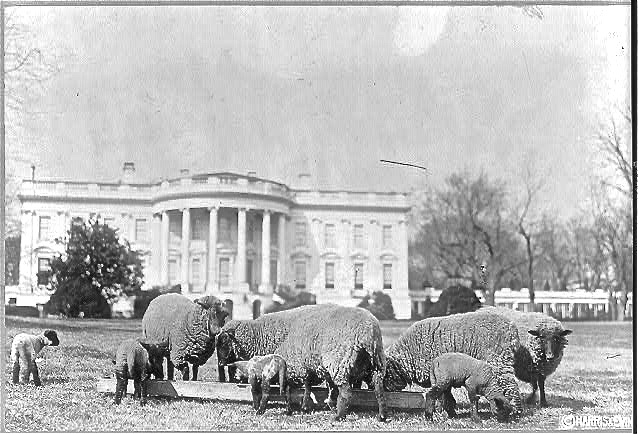
An earlier March

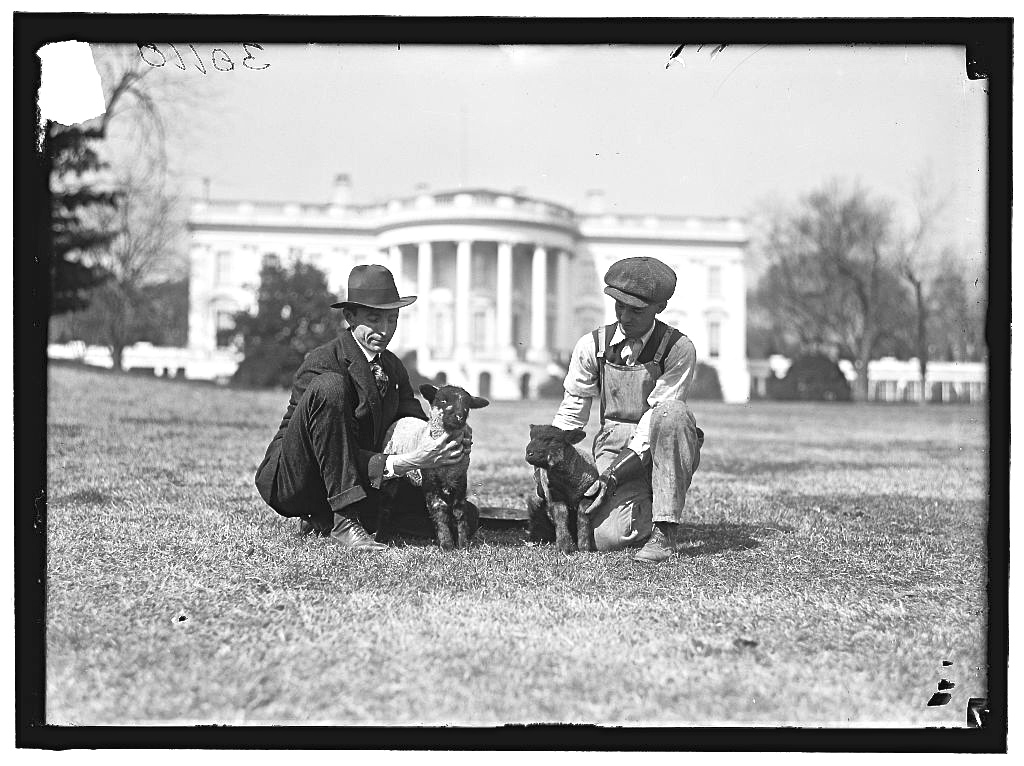
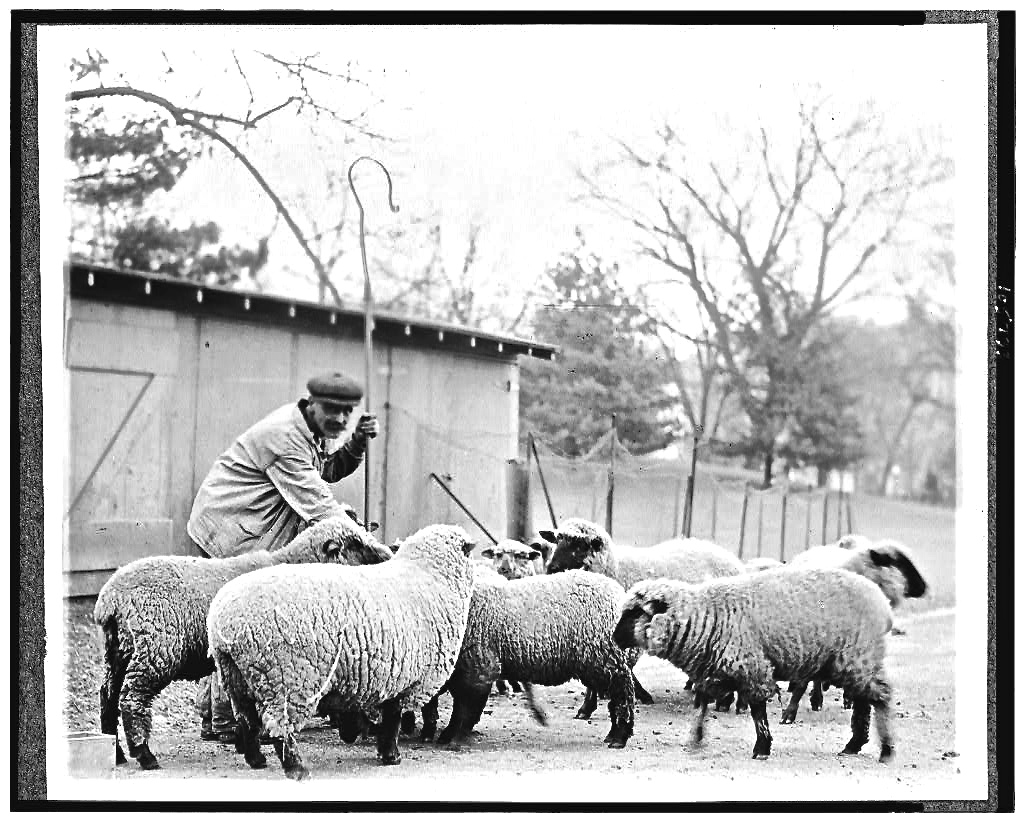
Sheep grazed on the White House lawn during the Wilson administration (1913-1921) as part of an effort to cut down on groundskeeping costs (and here and here).  The photo above was taken by Harris & Ewing. Since there are lambs, I believe this is early spring.

The below photos were taken by the National Photo Company (all images via the Library of Congress Prints and Photographs Division).

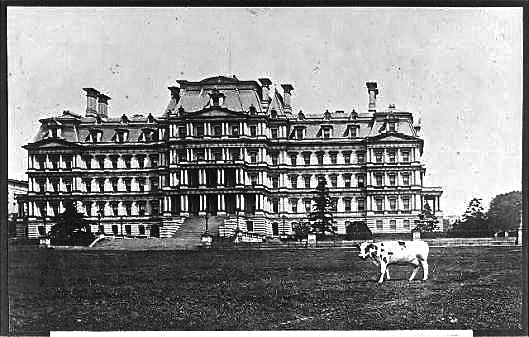
Earlier, from 1910 to 1913, President Taft’s cow, Pauline, had grazed on the lawn. She is shown here in front of the Old Executive Office Building, then the State, War, and Navy Building.

In which I discover a new word and an old garden

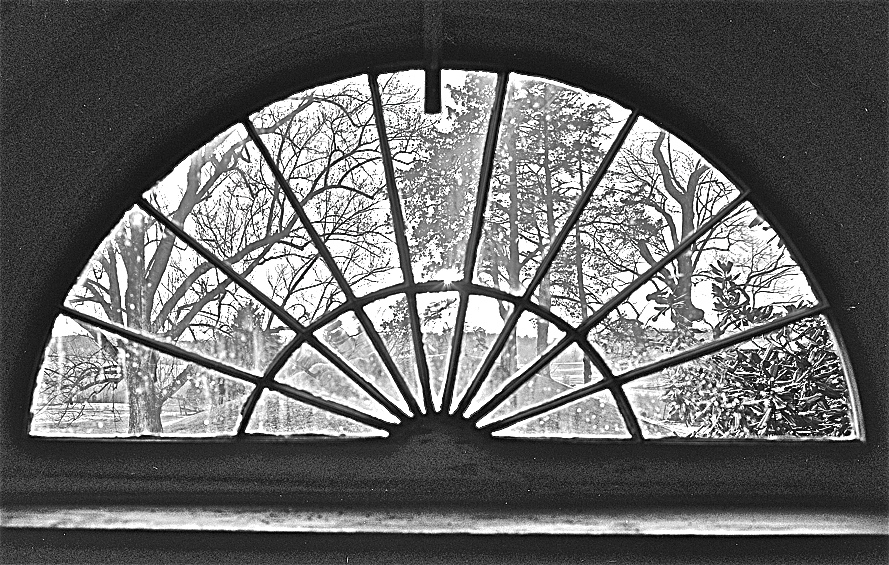
A west window of Thomas Jefferson’s Poplar Forest revealing a view of the curtilage. Photo by Jack E. Boucher, via Library of Congress Prints and Photographs Division.

Curtilage –a piece of ground (as a yard or courtyard) within the fence surrounding a house.  Origin: Middle English, from Anglo-French curtillage, from curtil garden, curtilage, from curt court.  First known use: 14th century. — Merriam-Webster Dictionary

A bit more: a cortil was ‘little yard’ in Old French: cort + il (diminutive suffix).  A ‘cortile’ (in English, in architecture) is an internal courtyard of a palazzo.

As a legal term, curtilage means the land immediately surrounding a residence that “harbors the intimate activity associated with the sanctity of a man’s home and the privacies of life.” In U.S. law, it is important for dealing with cases involving burglary, self defense, and unreasonable searches and seizures under the Fourth Amendment.

I came across the word while reading the website of Poplar Forest, Thomas Jefferson’s second home and getaway (I remembered something about it after Apartment Therapy posted a slideshow of presidential retreats).  Its curtilage originally included an octagonal house (possibly the first in America), orchards, ornamental and vegetable gardens, and slave quarters. It was surrounded by a ‘snake’ or ‘worm’ stacked-rail fence, as well as fields of tobacco and wheat.

Because little visual evidence of Jefferson’s plantings remain, the 61-acre area is being reconstructed through archeology and research of his papers. Letters do indicate that a sunken garden behind the house contained “lilacs, Althaeas, g[u]elder roses, Roses, and clianthus.”

At Poplar Forest, Jefferson was working from a concept of “an ornamental villa retreat within an isolated agricultural setting.” He was thinking of ancient Roman villas, as they were reinterpreted in the 16th century by Andrea Palladio.

The estate is located in Forest, Virginia, near Lynchburg.

The top photo was taken as part of a 1985 Historic American Buildings Survey.