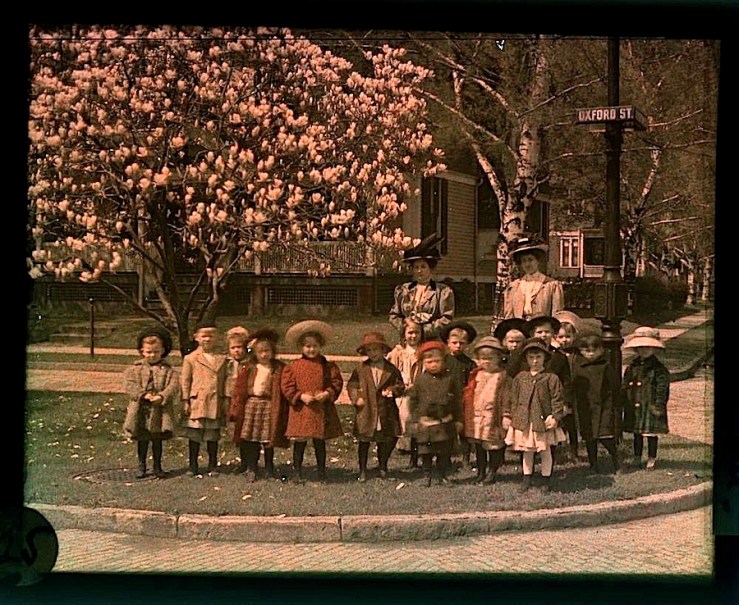
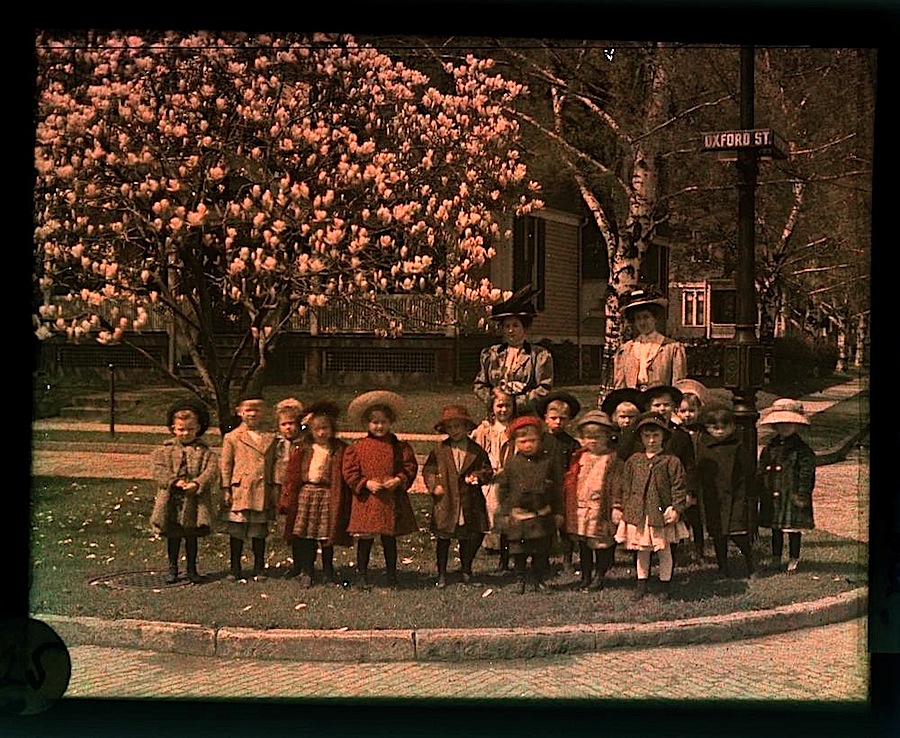
 “Schoolchildren with teachers under Magnolia trees on Oxford* Street,” c. 1910, an autochrome by Charles C. Zoller, via George Eastman House Collection on flickr.
Click on the photo to get a better look. I like the outfits, particularly that of the little girl on the far right.
The Collection describes the process of making an autochrome like this:
After decades of wishing for a practical color process, photographers were thrilled when Auguste and Louis Lumière announced the invention of the autochrome process. . . in 1904. The process used a screen of tiny potato starch grains dyed orange-red, green and violet. Dusted onto a glass plate, the dyed grains were covered with a layer of sensitive panchromatic silver bromide emulsion. As light entered the camera, it was filtered by the dyed grains before it reached the emulsion. While the exposure time was very long, the plate could be processed easily by a photographer familiar with standard darkroom procedures. The result was a unique, realistic, positive color image on glass that required no further printing.
*Commenters on the image’s flickr page thought the cross street in the picture was either Harvard St. or Brighton St.

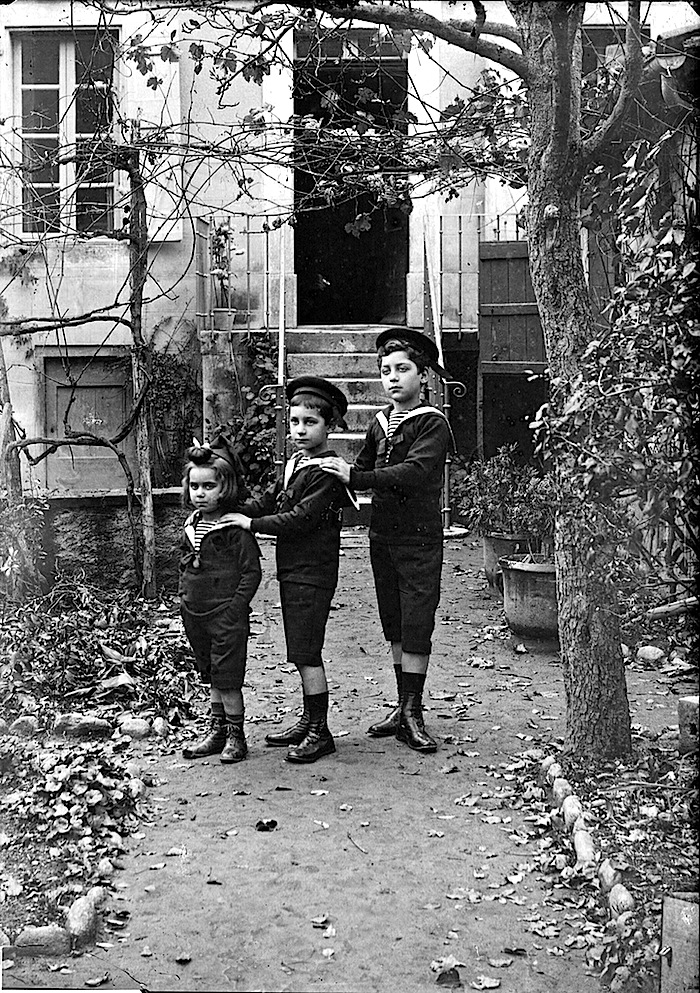 “Three children in sailor suits,” between 1859 and 1910, in the Pyrénées, by Eugène Trutat, via Bibliothèque de Toulouse Commons on flickr.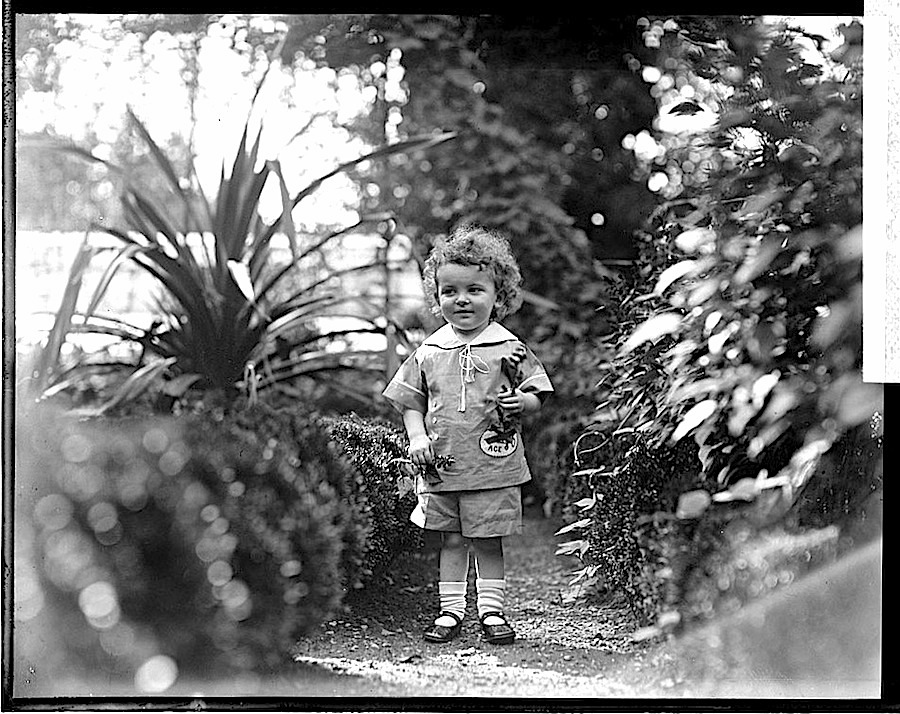
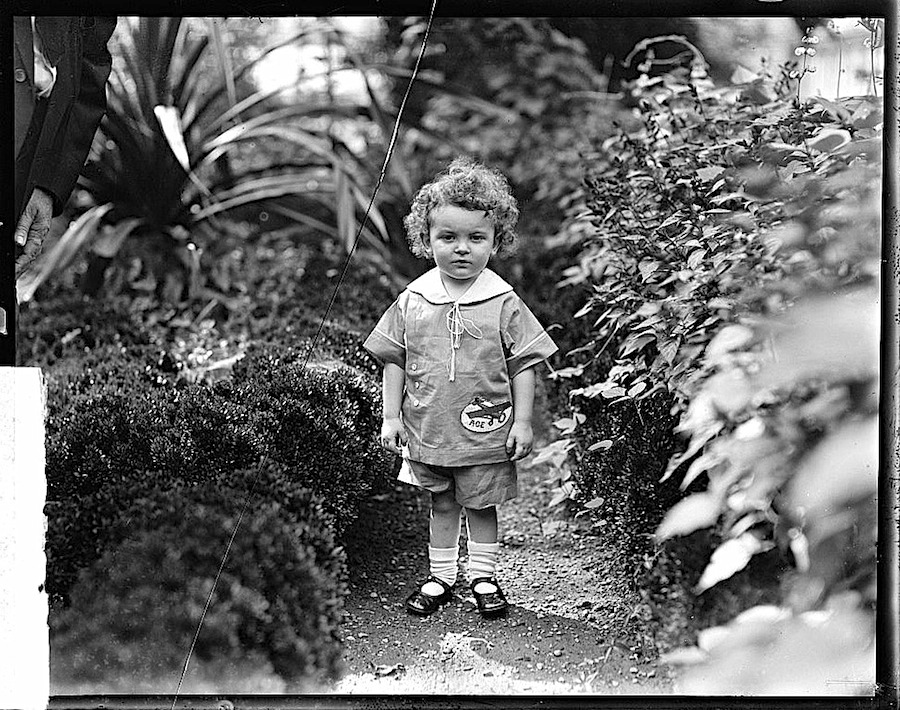
 enclos*ure