Ferntree Gully

A forester’s cottage, Ferntree GullyDandenong Ranges, Victoria, Australia, ca. 1900, a glass lantern slide by Archibald James Campbell, via Museums Victoria Collections.
I like the two log pillars at the bottom of the steps, each topped by a potted plant.

During the 19th century, the forests of the Dandenong mountains were a major source of timber for Melbourne.

Madison, Georgia

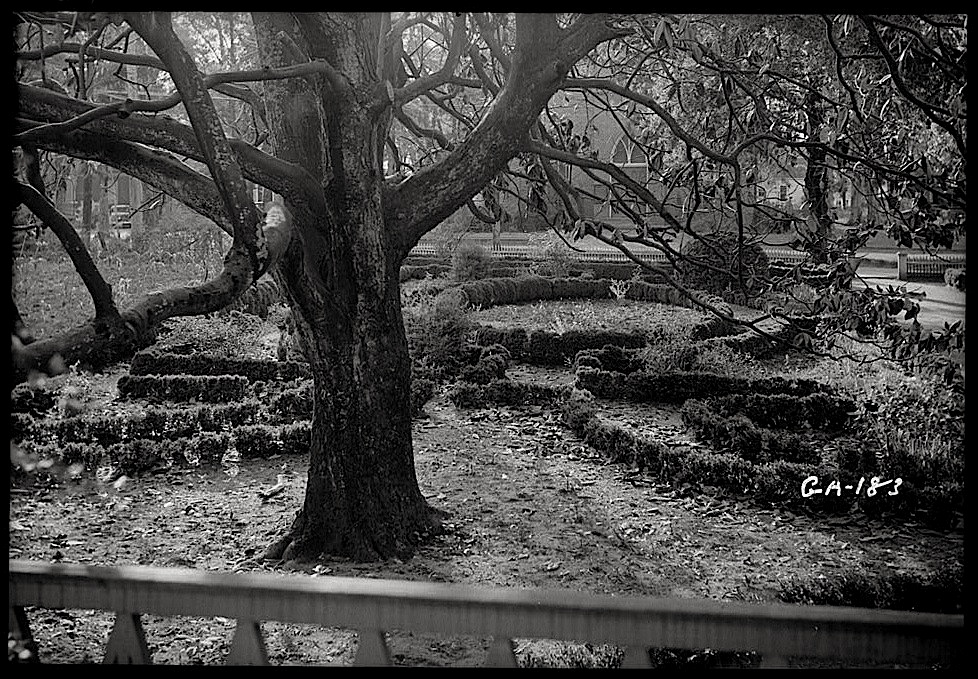
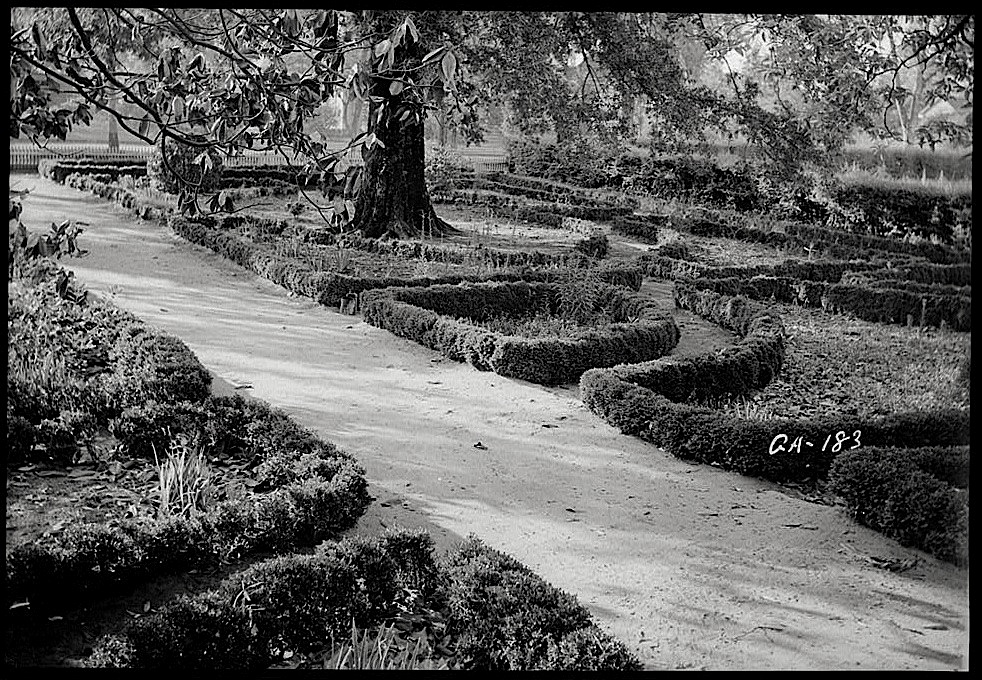
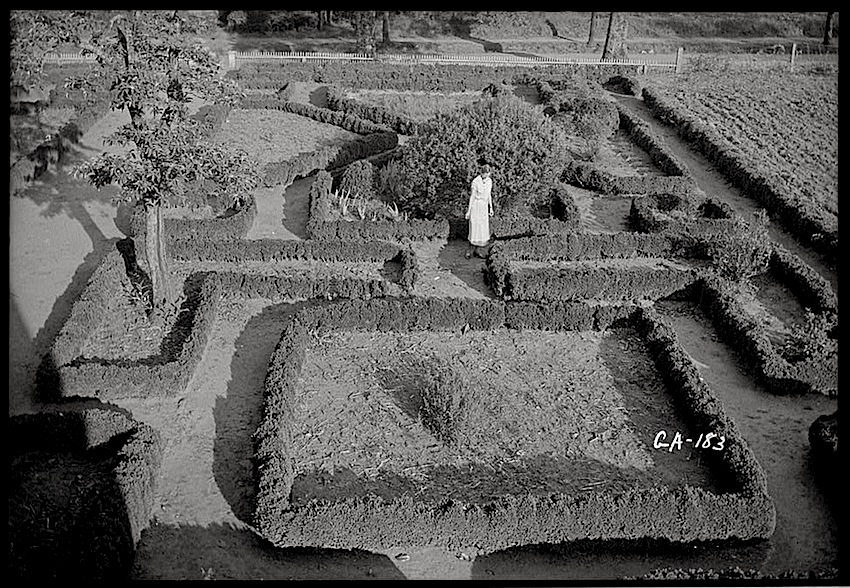
The parterre, viewed from the porch of “Boxwood” (Kolb-Pou-Newton House), Madison, Georgia, June 1936, by L. D. Andrew for an Historic American Building Survey (HABS), via Library of Congress Prints and Photographs Division (all three photos).

‘Parterre’ means ‘on the ground’ (par terre) in French.

The other side of the house, looking down from second-story window.

A parterre is a garden of planting beds laid out on level ground, typically in geometric patterns, often outlined in clipped boxwood.

This house was built about 1845; its garden was laid out about 1854. A 1935 HABS drawing of its parterres, front and back, is here.

There are more photos of the garden in this 2007 article in Garden and Gun.

King’s College, Cambridge

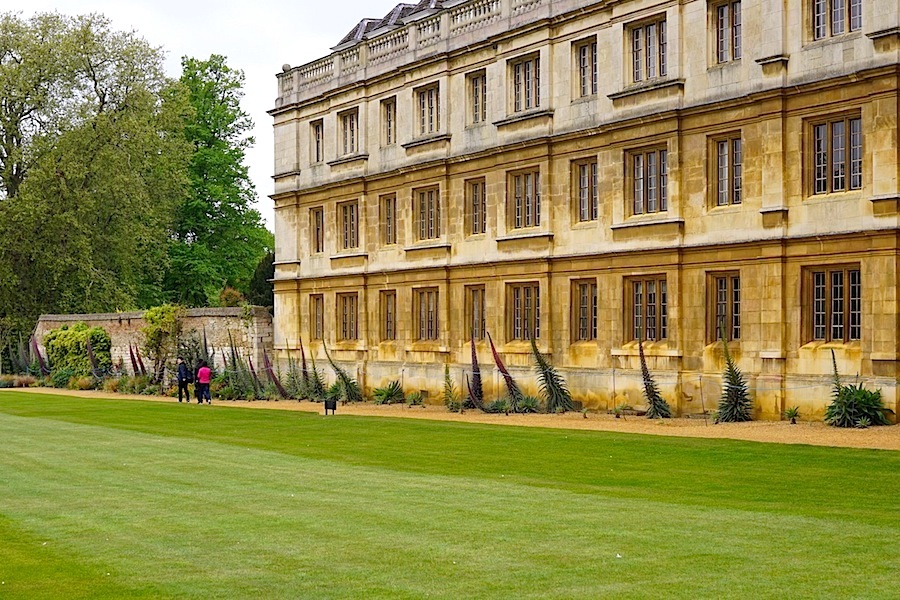
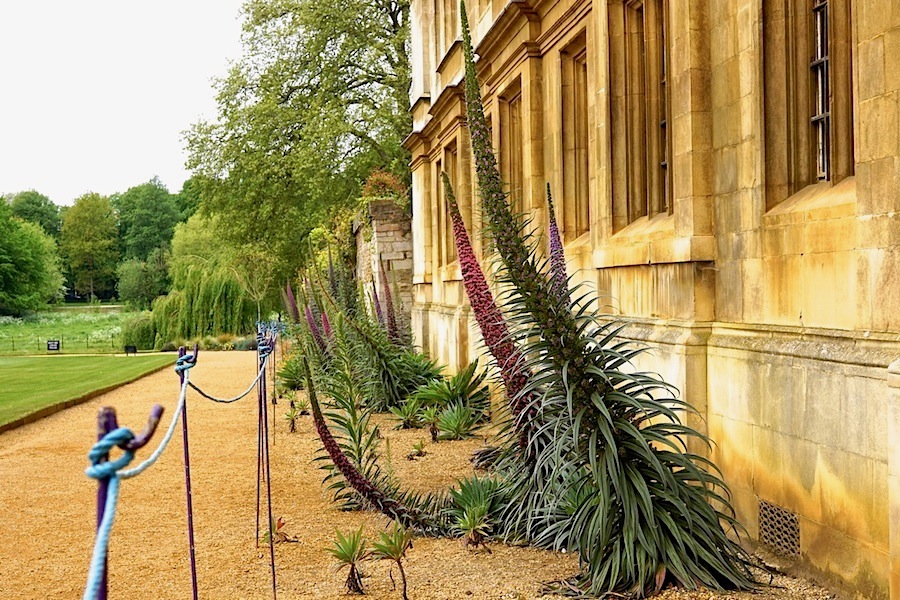
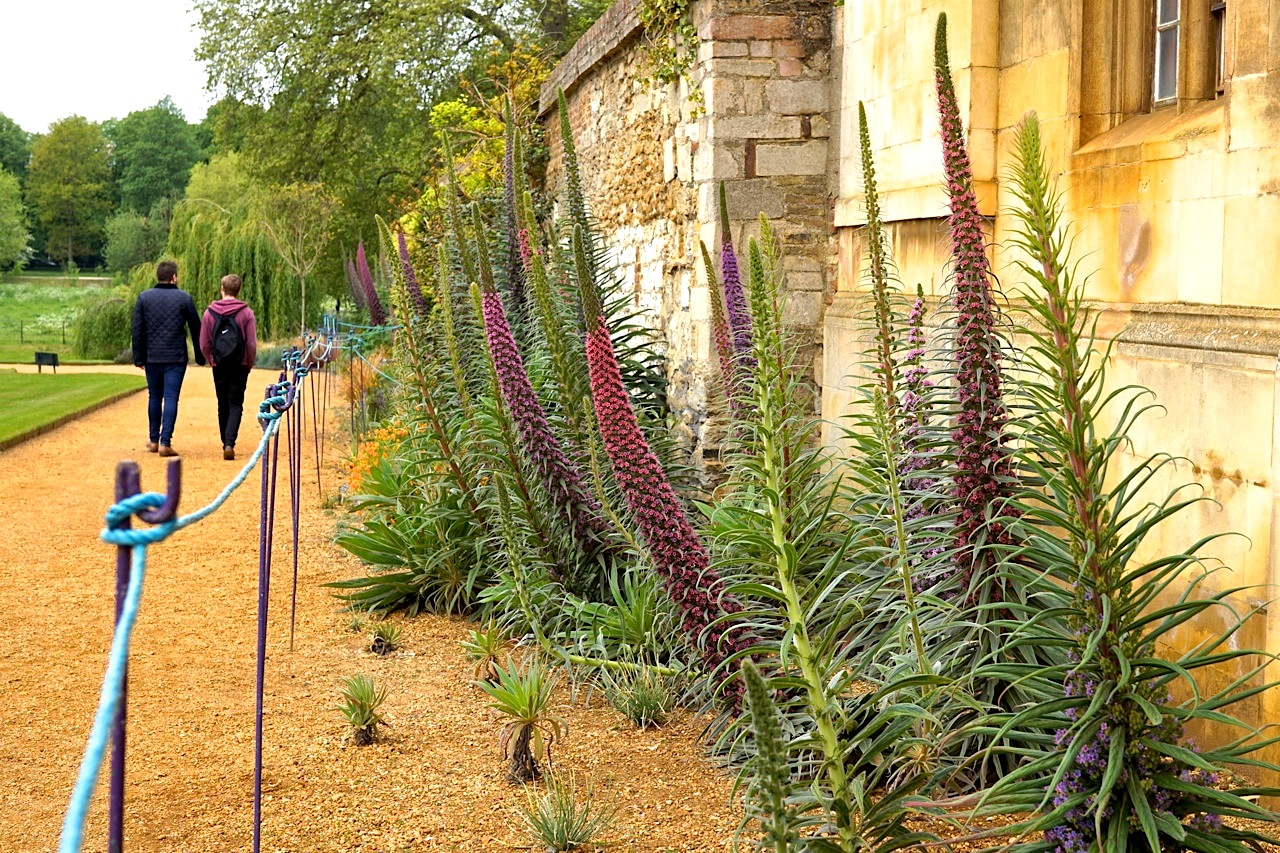
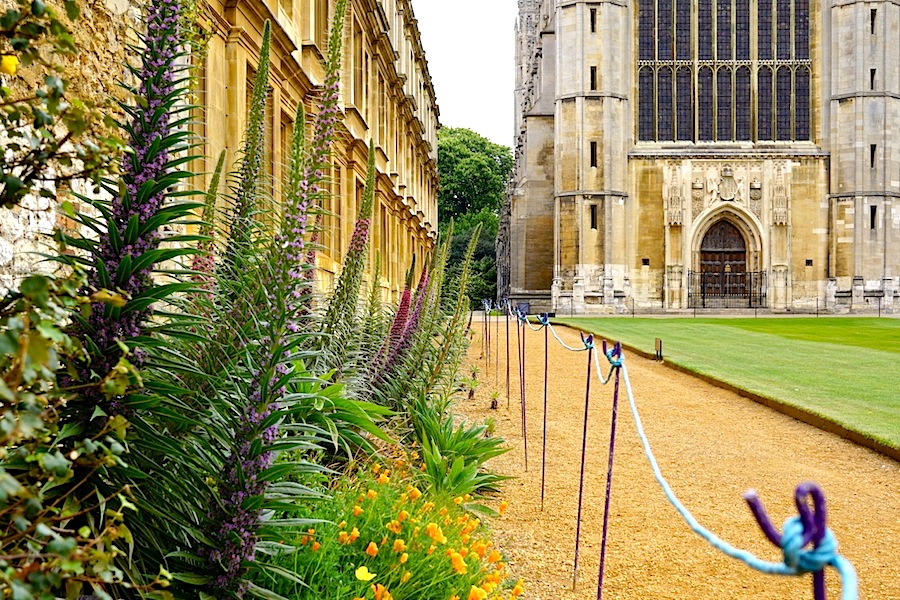
On a quick trip to Cambridge last week, I really liked this border of Echium pininana (or giant viper’s bugloss) along the lawn behind King’s College, here. (The building is actually part of Clare College.)


A different kind of foundation planting.


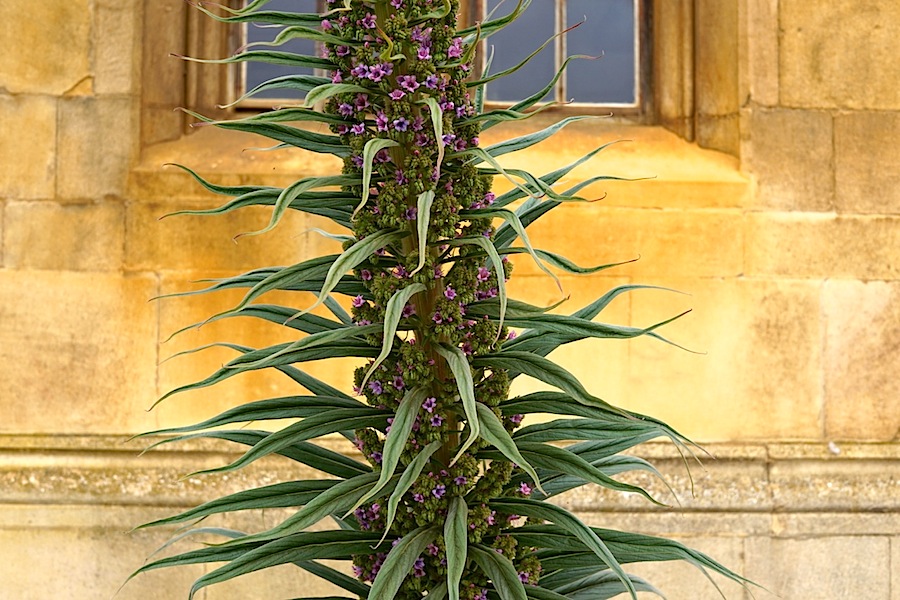
The biennials, which are native to the Canary Islands, can grow as tall as 13′ (or 4 m.). They want well-drained soil, full sun, and shelter from wind.

They are also called tower of jewels.
Looking back to the King’s College Chapel.

Trinity College

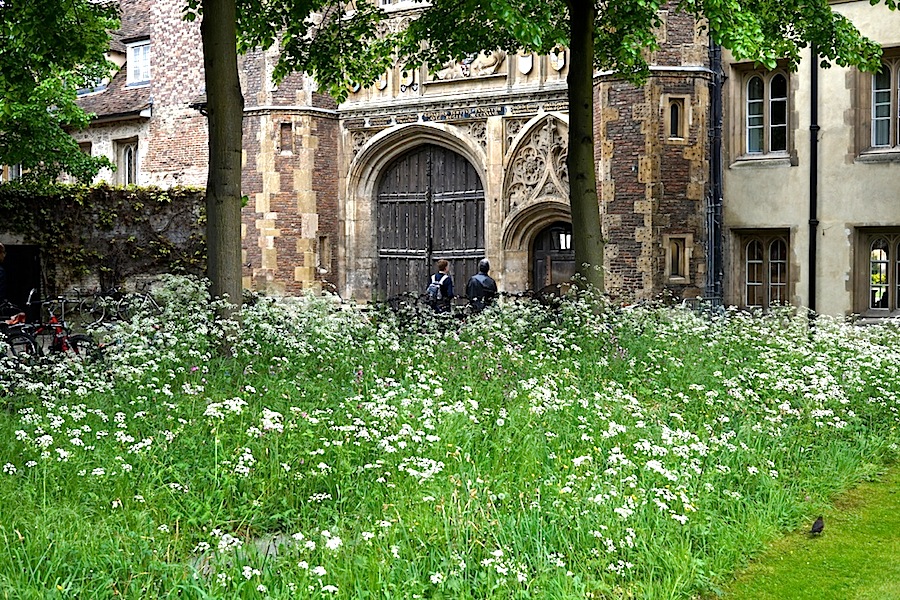
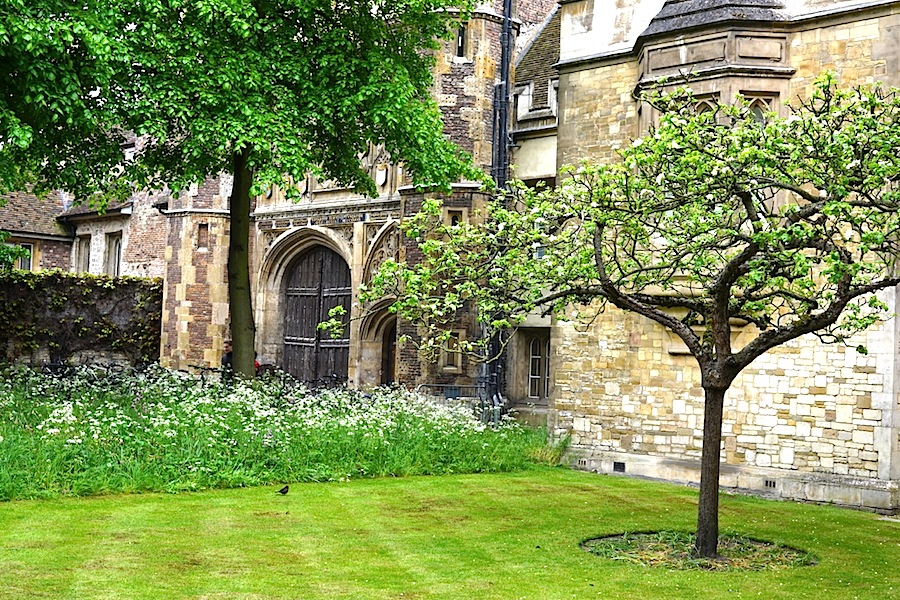
I also liked this wide walkway border of Queen’s Anne lace and long grass at the entrance to Trinity College.


The tree on the right is a grafted descendant of the apple tree that inspired Isaac Newton.

The front walk

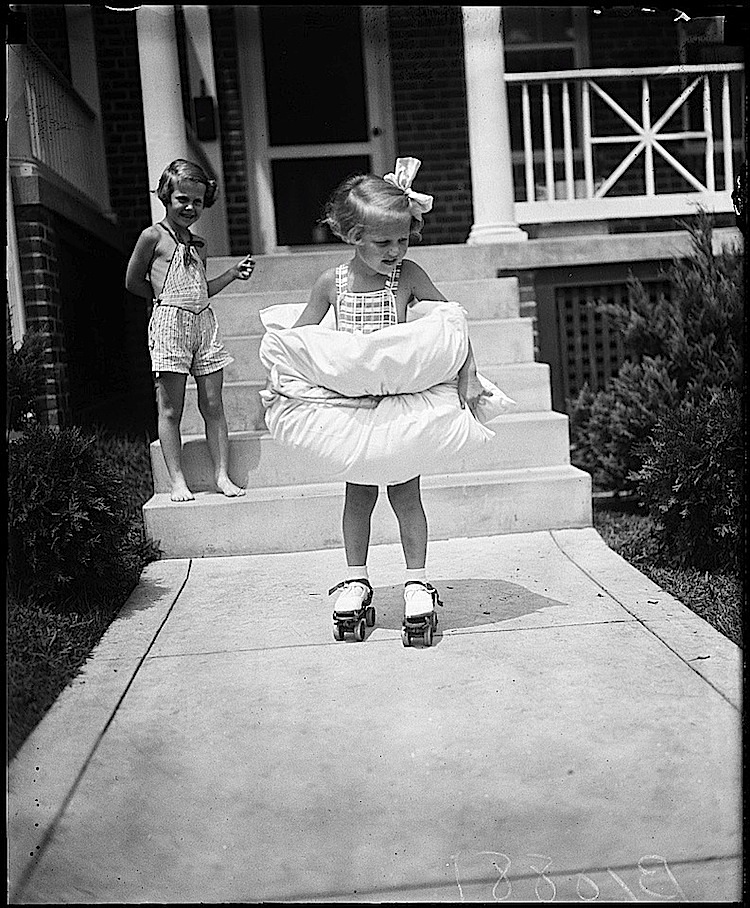
new-rollerskates-washdc-1936-harrisewing-library-of-congress“Safety first for this Miss, Washington, D.C.[,] August 8[, 1936]. Equipped with bumpers fore and aft, 4-year-old Betty Buck is taking [no] unnecessary chances as she tries her first pair of roller skates.” Photo and caption by Harris & Ewing, via Library of Congress Prints and Photographs Division.

The Hague, Netherlands


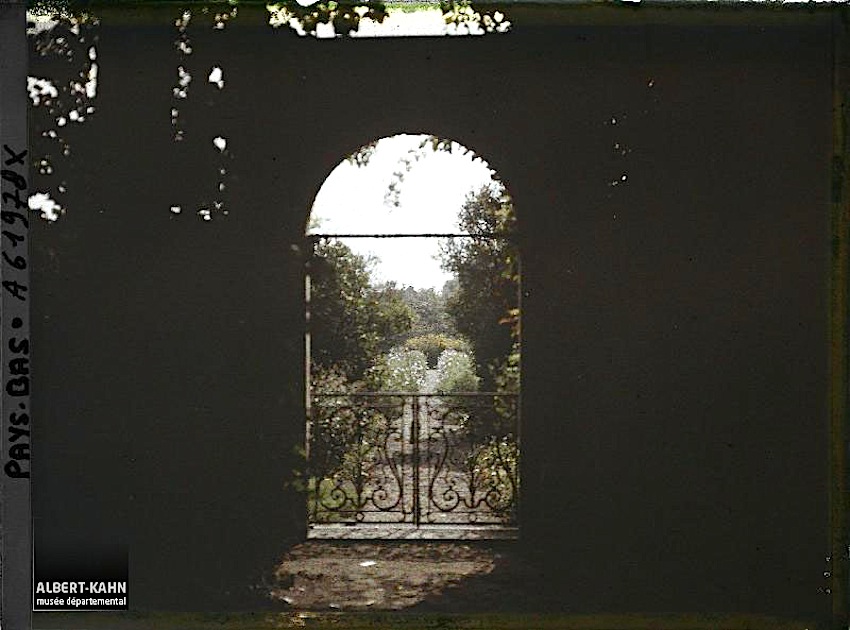
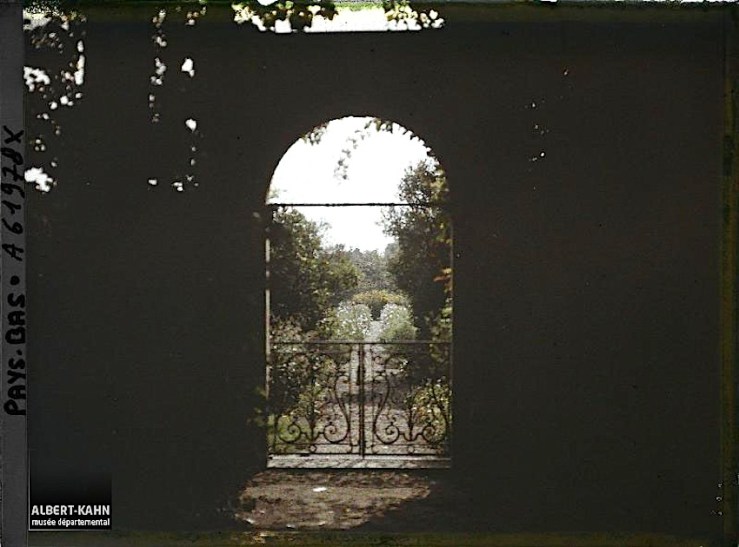
Palace Garden, The Hague, Netherlands, August 1929, by Stéphane Passet, via Archives of the Planet Collection – Albert Kahn Museum /Département des Hauts-de-Seine.

The autochrome above is one of about seventy-two thousand that were commissioned and then archived by Albert Kahn, a wealthy French banker, between 1909 and 1931. Kahn sent thirteen photographers and filmmakers to fifty countries “to fix, once and for all, aspects, practices, and modes of human activity whose fatal disappearance is no longer ‘a matter of time.'”* The resulting collection is called Archives de la Planète and now resides in its own museum at Kahn’s old suburban estate at Boulogne-Billancourt, just west of Paris. Since June 2016, the archive has also been available for viewing online here.


*words of Albert Kahn, 1912. Also, the above photo (A 61 978 X) is © Collection Archives de la Planète – Musée Albert-Kahn and used under its terms, here.