Coffee County, Alabama

A repeat post from January 2014. . .
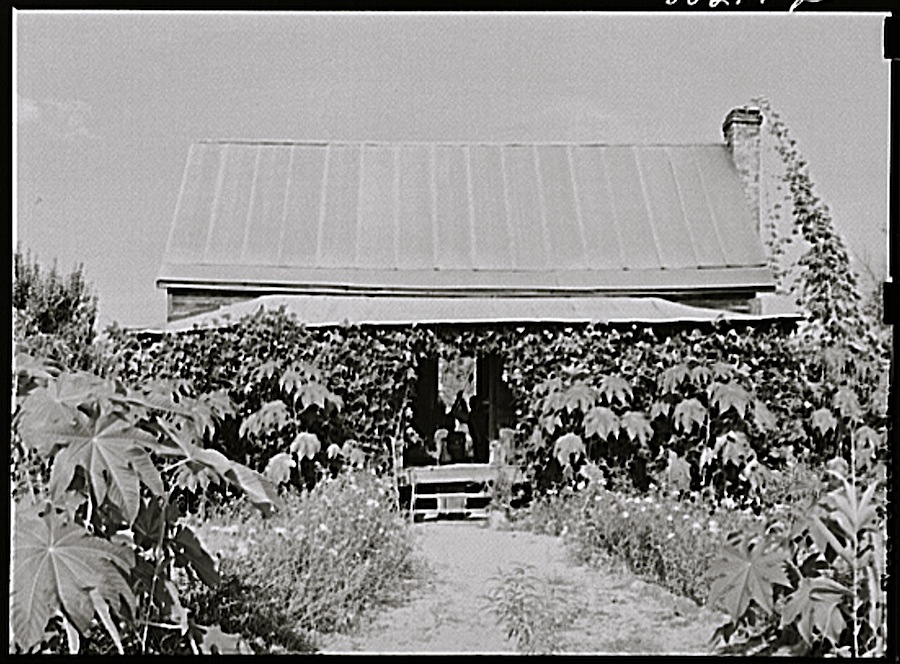
Drigger home, 1941 Coffee Co., Alabama, via Library of Congress“James F. Drigger’s farmhouse. Coffee County, Alabama,” August 1941, by John Collier, via Library of Congress Prints and Photographs Division.

The large plants in front of the vines and along the walk are Ricinus communis  or castor beans.

They and the flowers make a nice approach to the lined-up open front and back doors.

John Collier was working for the Farm Security Administration when he took this photo. The Drigger family was receiving assistance to raise chickens under the “Food for Defense” program.

Poppies, Sweden


A young woman and two little girls in front of a row of double poppies, Gagnef, Sweden, August 1910, by Auguste Léon, via Archives of the Planet Collection – Albert Kahn Museum /Département des Hauts-de-Seine (both photos).

Another woman and her two daughters in Gagnef. What are those pink flowers next to them?

The autochromes above are two of about seventy-two thousand that were commissioned and then archived by Albert Kahn, a wealthy French banker, between 1909 and 1931. Kahn sent thirteen photographers and filmmakers to fifty countries “to fix, once and for all, aspects, practices, and modes of human activity whose fatal disappearance is no longer ‘a matter of time.'”* The resulting collection is called Archives de la Planète and now resides in its own museum at Kahn’s old suburban estate at Boulogne-Billancourt, just west of Paris. Since June 2016, the archive has also been available for viewing online here.


*words of Albert Kahn, 1912. Also, the above photos (A 436 and A 425) are © Collection Archives de la Planète – Musée Albert-Kahn and used under its terms, here.

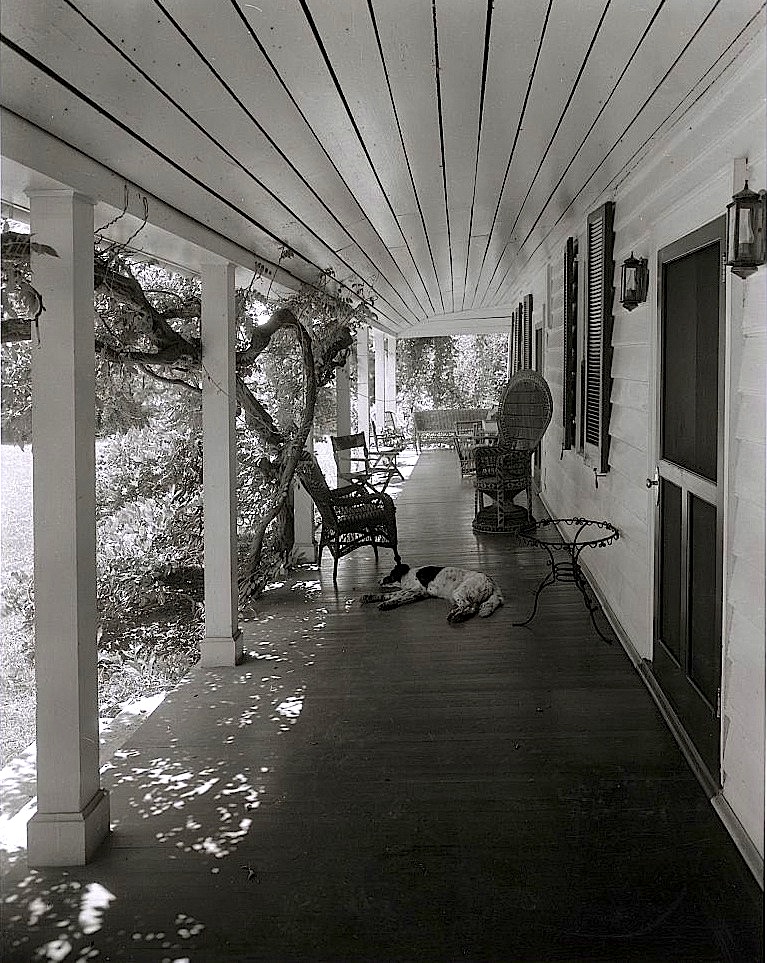
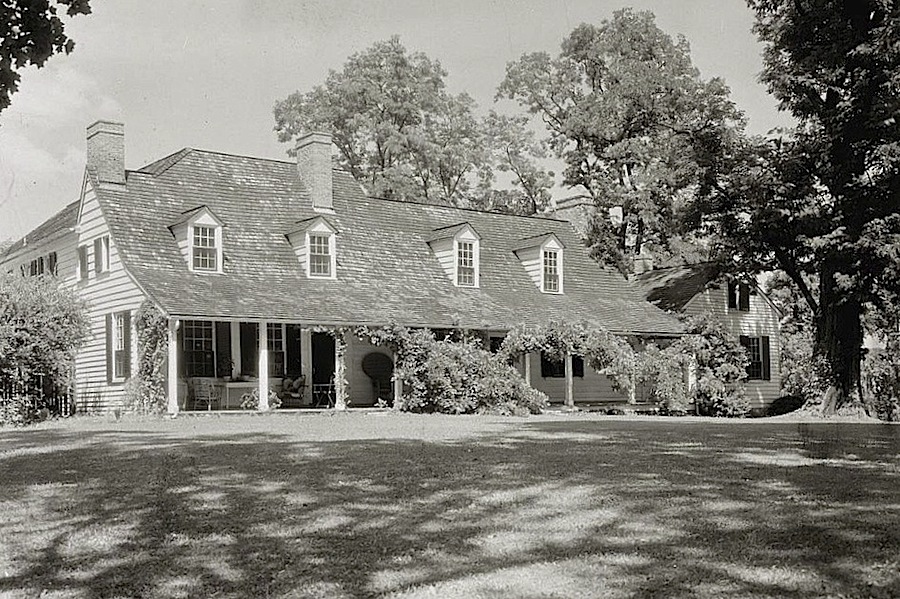
The Sunday porch: shade

Owings Mills, near Baltimore, Maryland, July 1933, by Frances Benjamin Johnston, via
Library of Congress Prints and Photographs Division (both photos).

Cropped slightly by me.

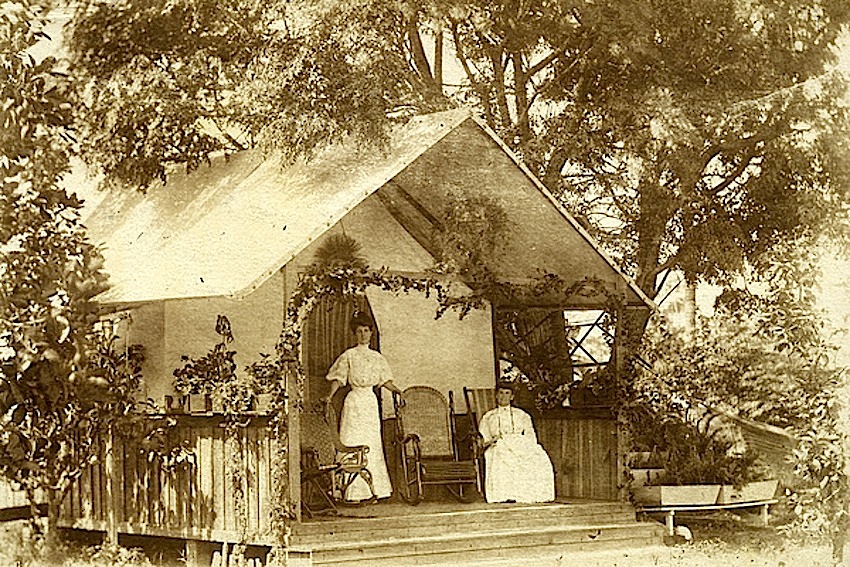
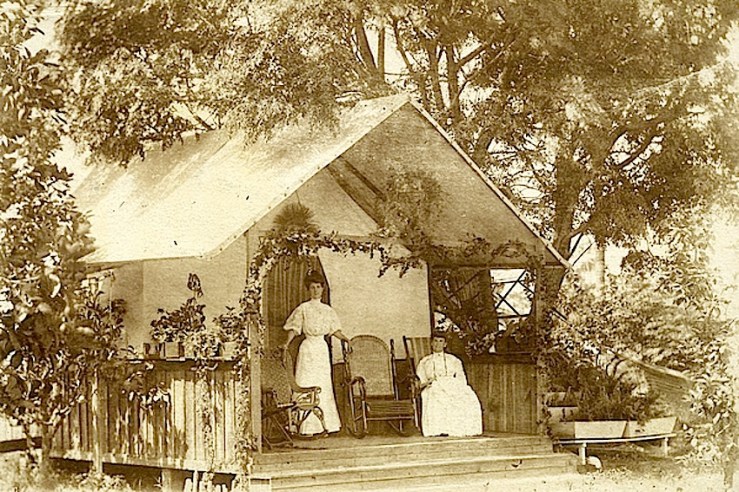
The Sunday porch: Estero, Florida


“Tent house on Koreshan property in Estero, Florida,” 1895, via Koreshan Unity Collection, Florida Memory Commons on flickr (State Library and Archives of Florida).

The Koreshan Unity was a late 19th and early 20th century utopian community whose members believed in a god that was both male and female, as well as in reincarnation, celibacy, collectivism, equality of the sexes, and cellular cosmogony.* It was founded by Cyrus Teed in upstate New York in the 1870s, and later there were also followers in Chicago and San Francisco. In 1894, the community began moving to a donated 320-acre property in Estero, Florida. During the next decade, it purchased over 5,000 additional acres and began building a settlement that “included a sawmill, cement works, bakery, machine shop, general store, art gallery, symphony, theater troupe, plant nursery and more,” according to USA Today. Its population peaked at 250 residents between 1903 and 1908; the majority were well-educated middle-class women, seven of whom managed the day-to-day affairs of the commune.

When Teed died in 1908 — and his body was not resurrected as he had promised — the commune began to decline; there were 10 members left in 1948. The last Koreshans deeded the site of its village to the state of Florida in 1961. It is now a state park.


*”Among the most interesting beliefs of Koreshan Unity was the cellular cosmogony, or the hollow earth,” according to Florida Memory.  “According to the cellular cosmogony, the earth was not a convex sphere but instead a hollow, concave cell containing the entire universe with the sun at its center and Earth’s populace living on the inside surface of the hollow cell.”

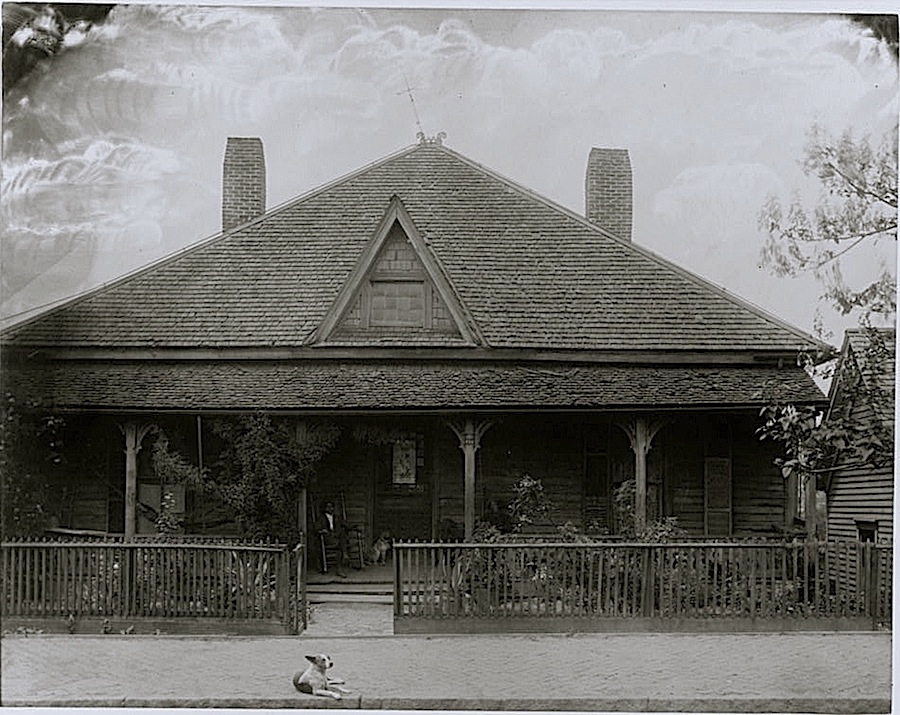
The Sunday porch: Georgia

House with picket fence, man and dog seated on the porch.“[H]ouse with picket fence, man and dog seated on porch and a dog lying on the sidewalk,” Georgia, ca. 1899, photographer unknown, via Library of Congress Prints and Photographs Division.

This photo was in one of the several albums depicting African-American life that W. E. B. Du Bois compiled to exhibit at the 1900 Paris World’s Fair.

Click on the image for a little better view.