Fairfield, Alabama

“Garden – lot 9, block 11. . . .  Garden of $20 a month home,” Fairfield, Alabama, 1917,
via Frank and Frances Carpenter Collection, Library of Congress Prints and Photographs Division.

Fairfield was a planned community built in 1910 for the workers of U.S. Steel’s plants in the Birmingham area. Its (mostly white) residents could either rent or purchase modern houses with indoor plumbing and central heating. There were also parks and playgrounds, churches, a public library, and 30,000 newly planted trees and shrubs.

The photograph is one of over sixteen thousand created or collected by Frank G. Carpenter and his daughter, Frances, to illustrate his geography textbooks and popular travel books.

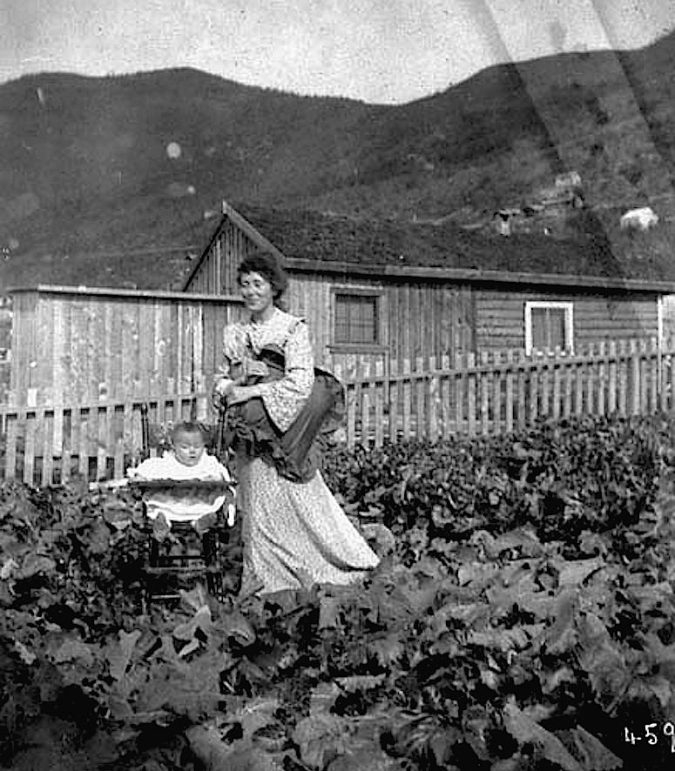
Dawson, Yukon

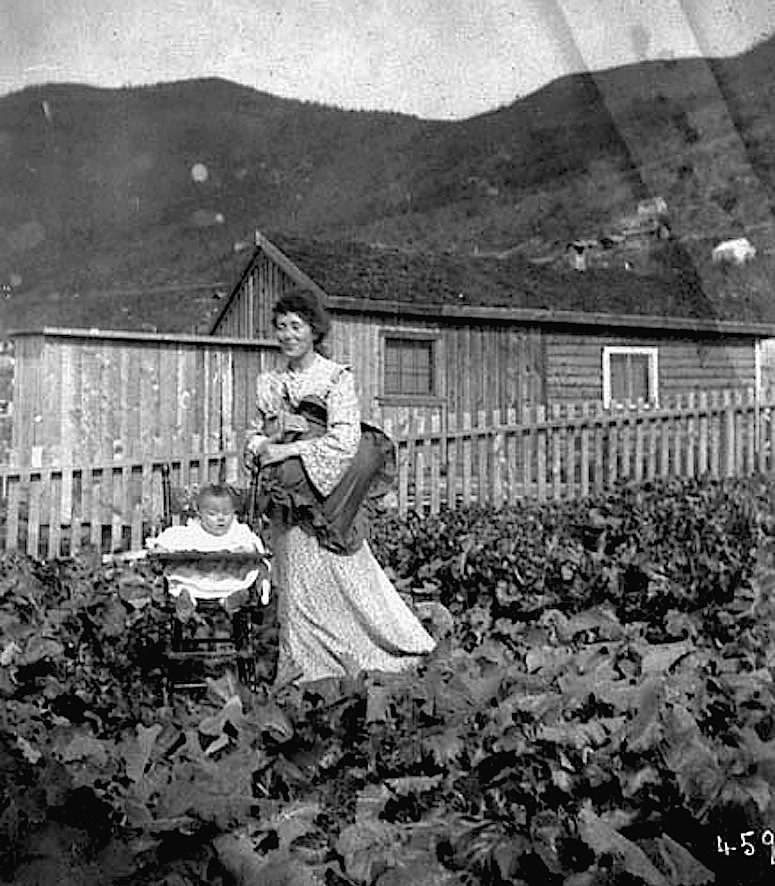
G. M. Woodworth’s beet garden, 8th Avenue, Dawson, Yukon, date and photographer unknown, via Library and Archives Canada on flickr (used under CC license).

Dawson was founded in 1896 and was the center of the Klondike Gold Rush. It became a city of 40,000 people in only two years. By 1899, however, the rush was over and the number dropped to 8,000. Today, about 1,300 people live there.

The region has a subarctic climate, and the town is built on a layer of frozen earth. The average temperature in July is 60.3 °F (15.7 °C) and in January is −14.8 °F (−26.0 °C).

I wonder if the picture above was one of a few photos taken that day. The woman (Mrs. Woodworth ?) is carrying a cushion. Perhaps she meant to sit or kneel down among the beet leaves for another image.

The family would have had reason to show off its garden. At the turn of the 20th century and for decades afterward, fresh vegetables were in high demand and brought good prices.

In 1896, when gold was discovered in the Klondike River drainage, there was no time to farm, and the population . . . relied on supplies shipped up the Yukon River.

But in 1897-98, serious experimentation began. . . . Market gardens were established around Dawson, on the banks of the Yukon and Klondike Rivers, and on various islands in the Klondike. Even so, the supply of fresh vegetables was limited and there were many cases of scurvy in Dawson in 1898.

But by the next year there were a dozen market gardens selling vegetables in Dawson City. . . . Farms were small, about four or five acres, or just the right size to be worked by two men.

The yield from these small acreages was impressive. The Fox and Daum farms, both on Klondike Island, produced between them thousands of pounds of potatoes, celery, cabbage, turnips, cauliflower and cucumbers, plus radishes, greens and lettuce.

At Sunnydale Slough John Charlais harvested 1,000 cauliflowers. One of his cabbages weighed 30 pounds and spread its leaves five feet in diameter, and he displayed it proudly in Dawson.

from “Constant Gardeners: The Early Days of Yukon Agriculture,” Yukon News.

Lens, France


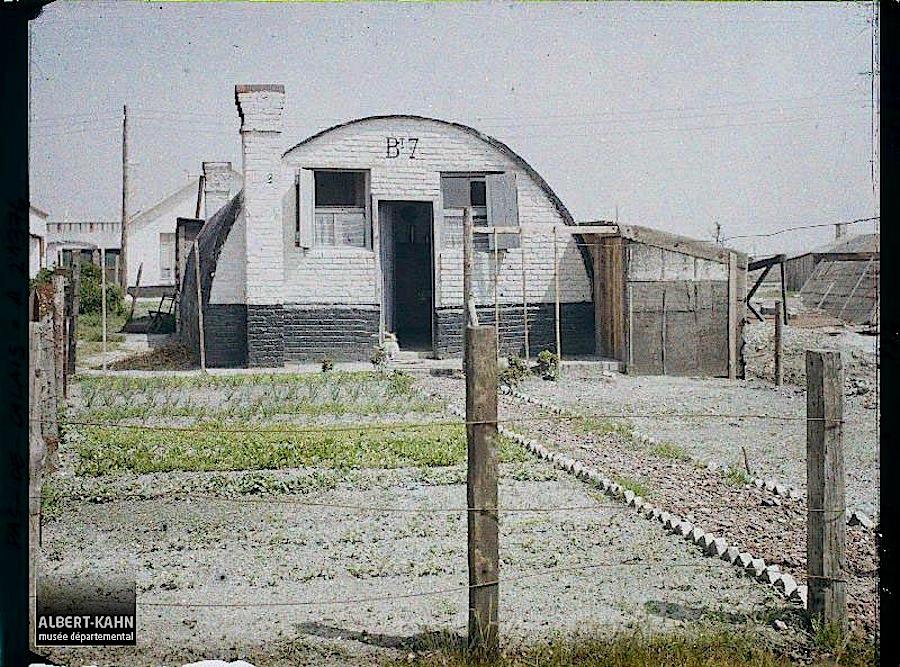
Little house and garden of a coal minerLens, France, May 16, 1920, by Frédéric Gadmer, via Archives of the Planet Collection – Albert Kahn Museum /Département des Hauts-de-Seine (all three photos).

The city of Lens, once home to the Lens Mining Company, was largely destroyed in World War I. The photo above shows post-war temporary workers’ housing.

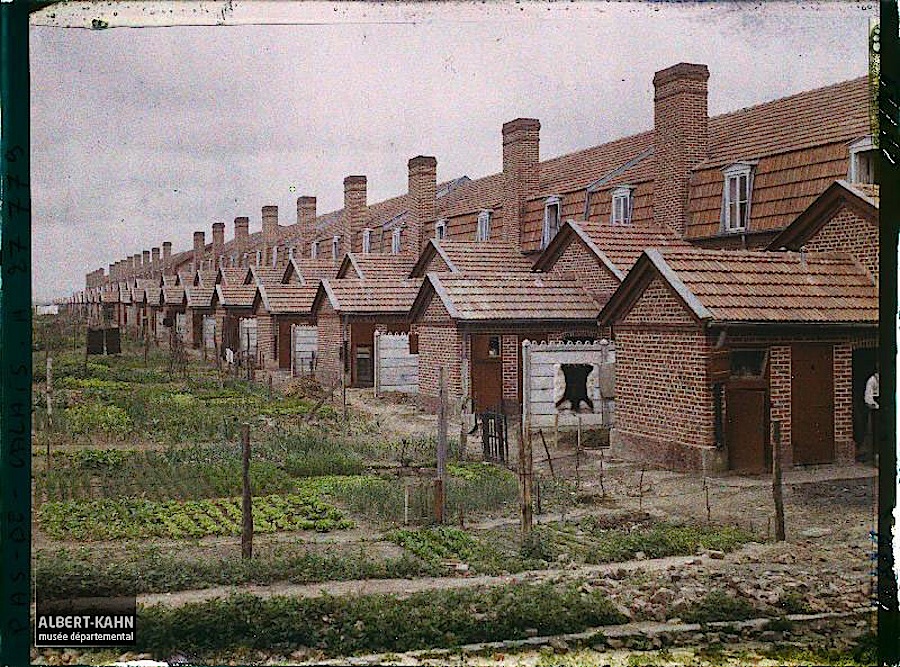
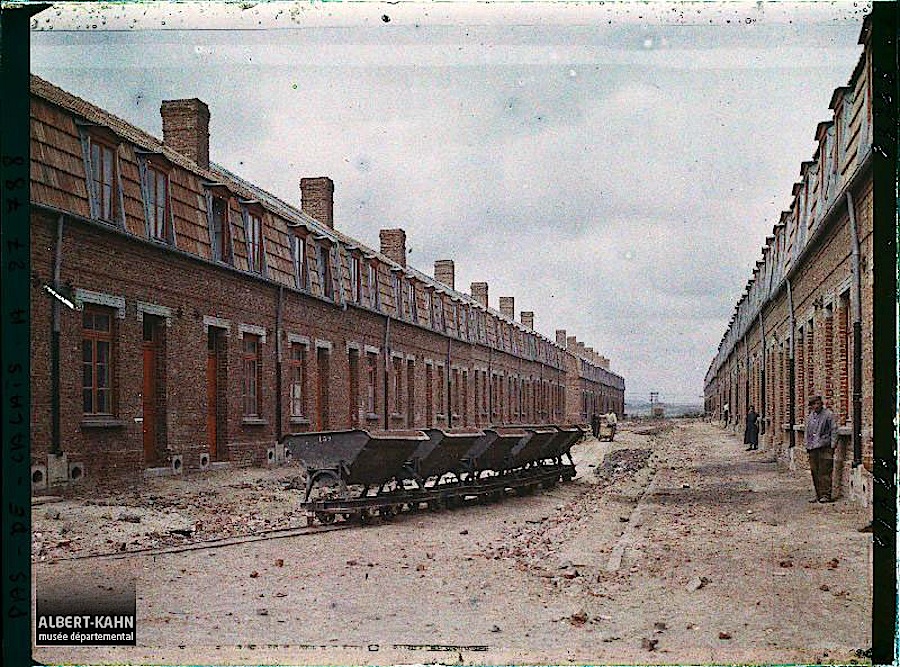
Avion, just south of Lens, was similarly devastated. The photos above and below show new houses on Rue Pascal on June 14, 1921.

The front sides of the new houses on Rue Pascal.

Avion was un coron (a mining village) of the Liévin Company, which had 9,695 employees at the start of WWI.

You can see these homes today here.

These autochromes are three of about seventy-two thousand that were commissioned and then archived by Albert Kahn, a wealthy French banker and pacifist, between 1909 and 1931. Kahn sent thirteen photographers and filmmakers to fifty countries “to fix, once and for all, aspects, practices, and modes of human activity whose fatal disappearance is no longer ‘a matter of time.'”* The resulting collection is called Archives de la Planète and now resides in its own museum at Kahn’s old suburban estate at Boulogne-Billancourt, just west of Paris. Since June 2016, the archive has also been available for viewing online here.


*words of Albert Kahn, 1912. Also, the above photos (A 21 376, A 27 779, A 27 788) are © Collection Archives de la Planète – Musée Albert-Kahn and used under its terms, here.

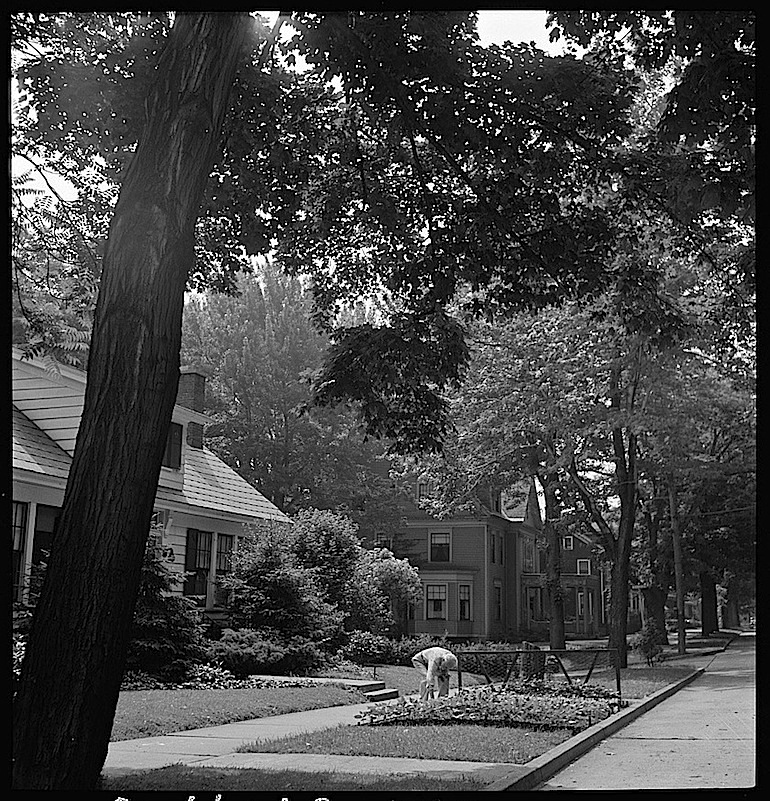
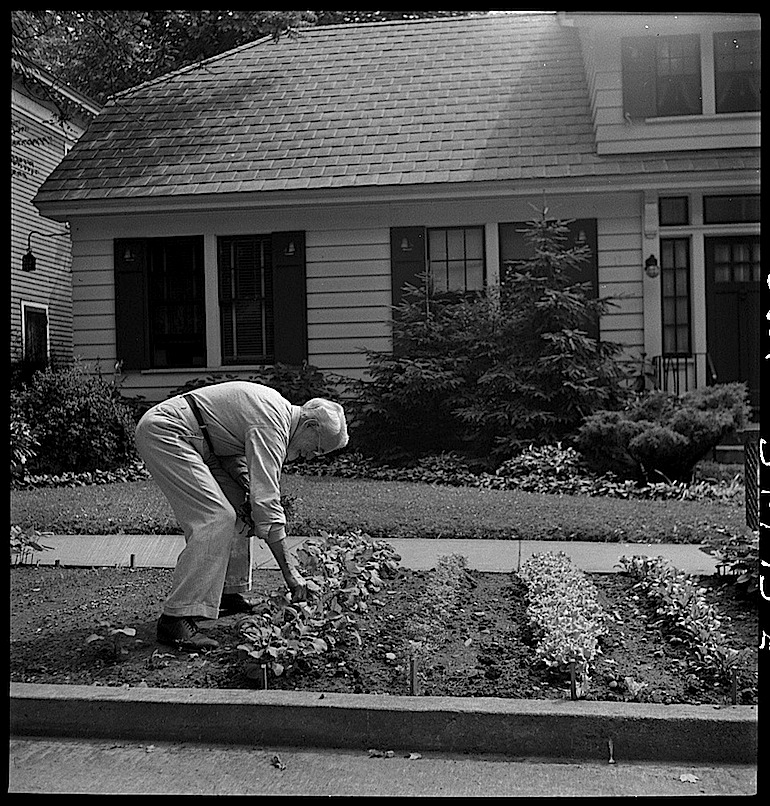
Oswego, N.Y.

“A citizen working on Sunday morning in the victory garden he has made on the edge of the street,” Oswego, New York, June 1943, by Marjory Collinsvia Library of Congress Prints and Photographs Division (all photos here).

“Reports estimate that by 1944, between 18-20 million families with victory gardens were providing 40 percent of the vegetables in America,” according to Smithsonian Gardens.

Showing his wife vegetables as she starts on her way to church.

Tilba Tilba portrait

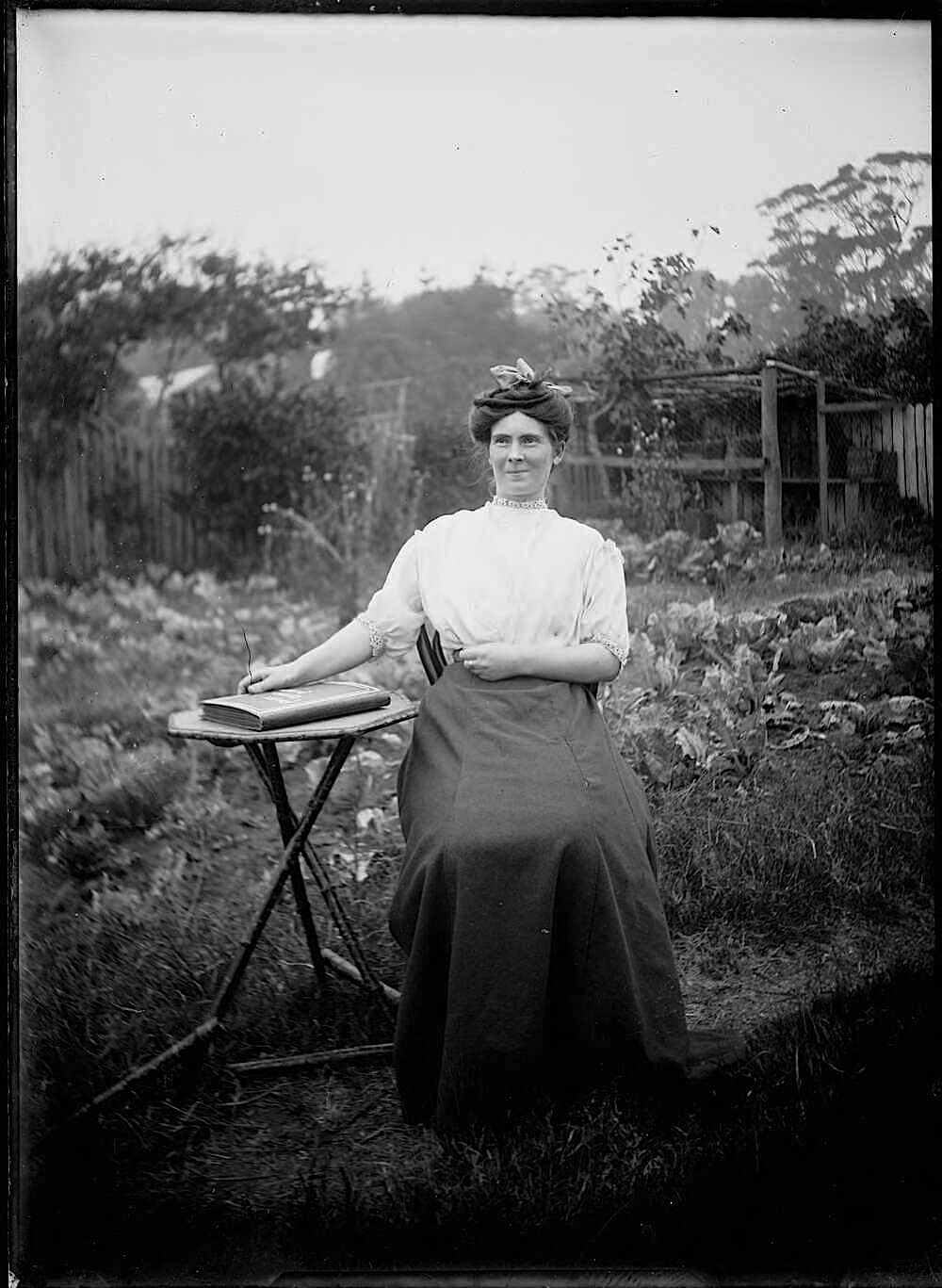
“Charlie Ferguson’s sister,” Tilba Tilba, New South Wales, ca. 1895, by William Henry Corkhill, via Trove of the National Library of Australia.

I love this formal pose in front of a vegetable garden — and it’s very typical of the photographer’s work.

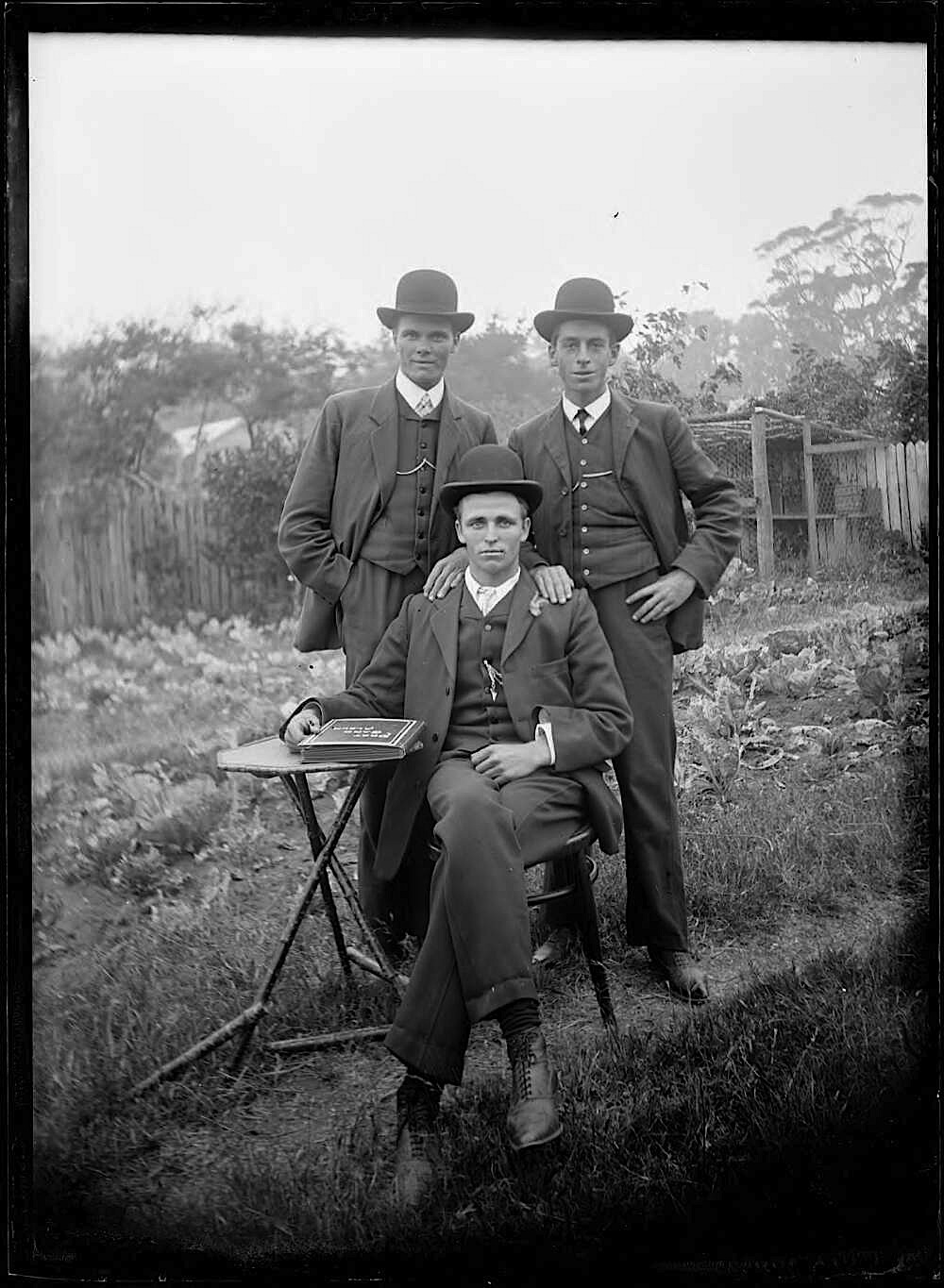
“Charlie Ferguson and William (Wallaga) Arthur Mead with an unidentified man. Click to enlarge.

Corkhill was an amateur who took thousands of pictures of his prosperous dairy farming community between 1890 and 1910.

His images were rediscovered in 1975, when his daughter gave his surviving glass plate negatives to the National Library. Among the 840 that could still be printed were portraits of family and neighbors of a “special intensity and intimacy,” according to the book, Taken at Tilba.

For the natural light, Corkhill had to work outside, in gardens and farmyards. But he often posed his subjects as if they were in a studio, with small tables, chairs, and books. His backdrops were sometimes shrubs and flowers, but he also seemed satisfied with rough fences, water tanks, or the space between two farm sheds. Occasionally, the sitters look a little amused by the process, but the photographer’s approach is not ironic.

“Corkhill’s familiarity with and affection for his subjects is evident . . . and imbues his photographs with a strange combination of authority and informality. He has a rather casual approach to the backgrounds in his portraits, as if his familiarity with the scenes he records makes him impervious to some of their oddities,” according to his biography on the Library’s website.

You can click on the linked titles below to see more of his pictures, or you can browse through the online catalog here.

Woman with a dog
Woman by a cane table
Daisy Mead
Boy by a chair
Mrs. Elizabeth Kendall Bate, aged about 83
Man sitting in a garden
Two young men
Frank Stanley Griffiths
Corkhill’s wife and their children
Byrnes family
Young woman by a table
Two children
Two young men