
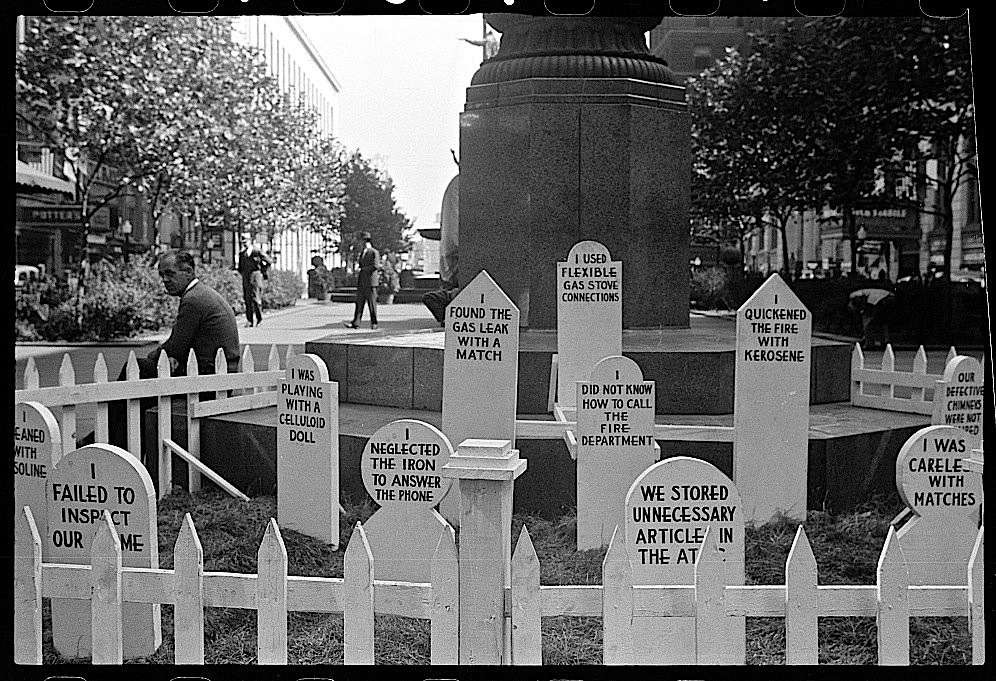
 “Fire prevention week in Cincinnati, Ohio,” October 1938, by John Vachon for the U.S. Farm Security Administration, via Library of Congress Prints and Photographs Division.
Tag: U.S. Farm Security Administration photos
The Sunday porch: storefront
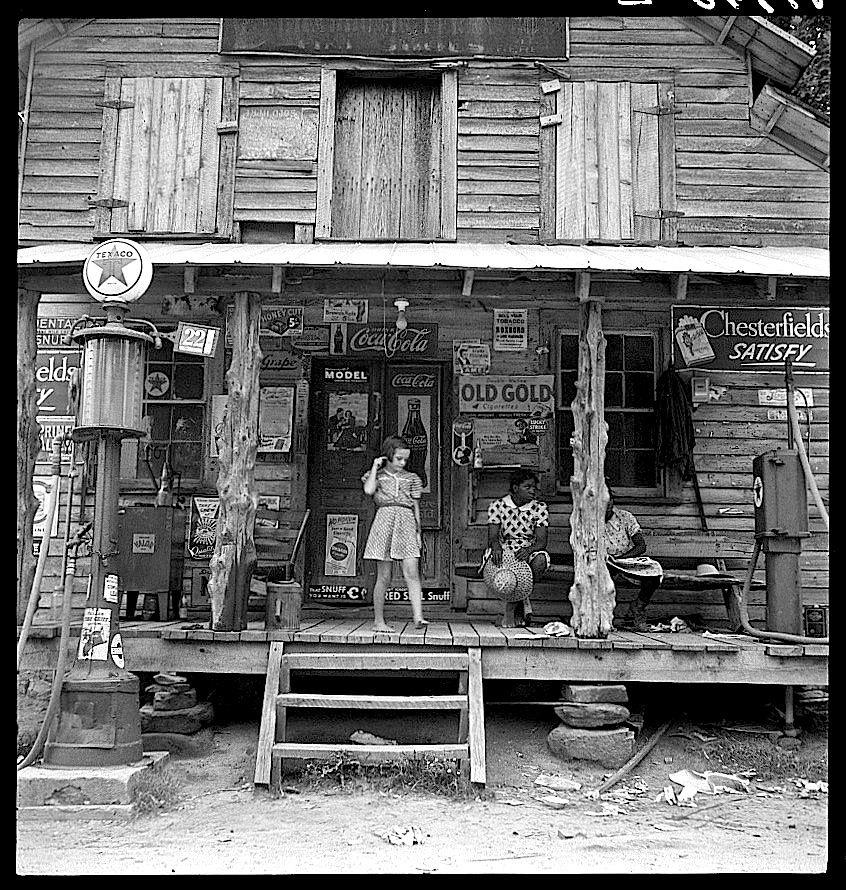 Country store with rough tree trunk columns, Person County, North Carolina, 1939, by Dorothea Lange for U.S. Farm Security Administration, via Library of Congress Prints and Photographs Division.
The Sunday porch: Iowa view
 View from front porch of house on the bluff, Dubuque, Iowa, April 1940, by John Vachon, via Library of Congress Prints and Photographs Division.
Dubuque is located along the Mississippi River, at the junction of Iowa, Illinois, and Wisconsin. It is Iowa’s oldest city and one of the few with hills.
At the time of the photo, mill working was an important industry in Dubuque. Vachon, on assignment in Iowa for the U.S. Farm Security Administration, wrote home, “This is the biggest sash mill and door center in the U.S. Little things fly around and get in your eye all day. Lots of smoke too.”
He may have taken this photo on April 18, when he wrote again, “Today was a good day. I walked miles and climbed awfully steep hills and got terribly tired.”
The Sunday porch: Kentucky
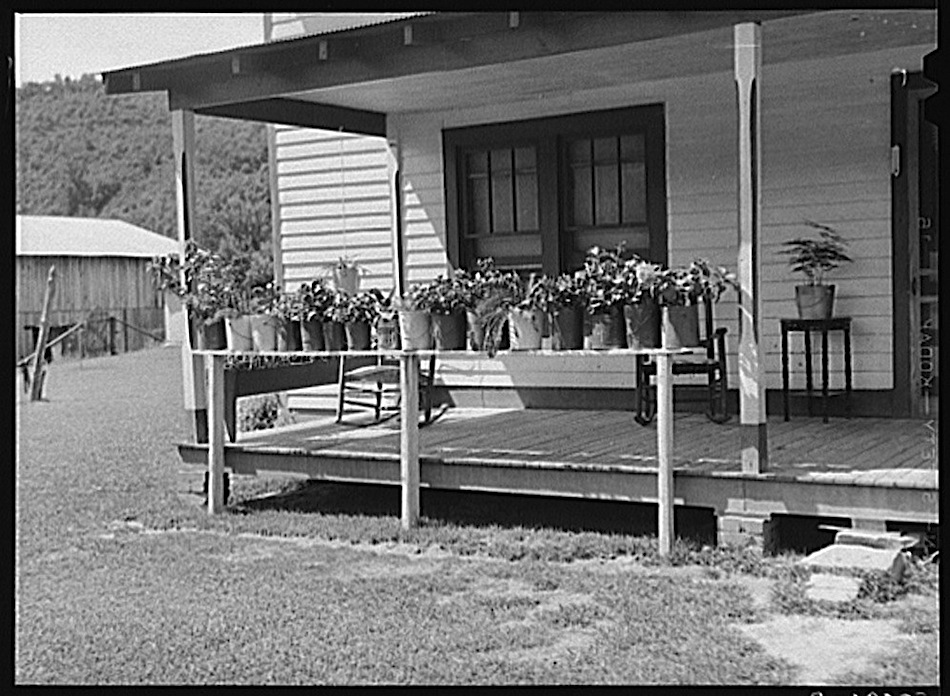 Farmhouse porch with plants in painted lard buckets, Morehead, Kentucky, 1940, by Marion Post Wolcott for U.S. Farm Security Administration/Office of War Information, via Library of Congress Prints and Photographs Division.
I wish we could see the colors of the painted* containers.

Two special supports were built along the front of the porch to display the plants. (There’s a third view of the house here.)
*Here, here, and here are examples of 1930s interior paint color combinations.
The Sunday porch: Dyess Colony
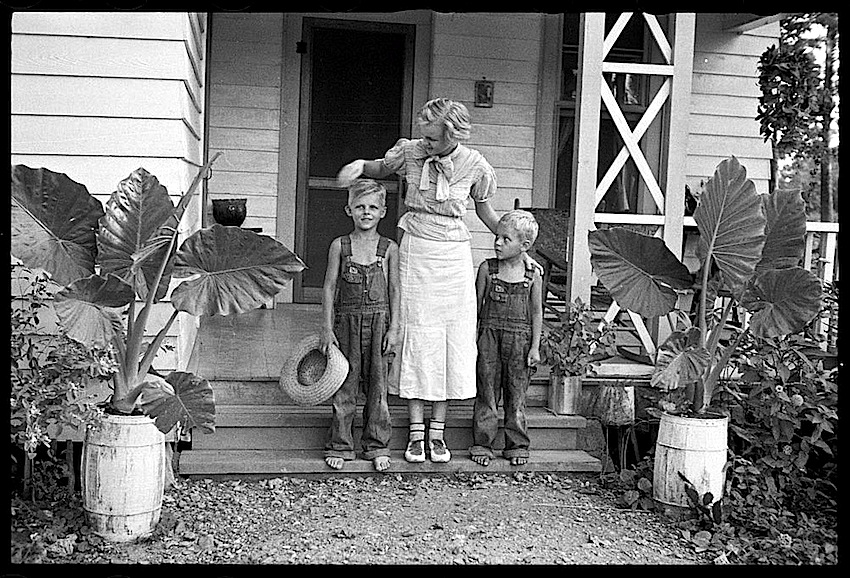 Beautiful elephant ears. This porch belonged to a farming family who were “resettled” in “Colonization Project No. 1” in Mississippi County, Arkansas.
The photos* were taken in August 1935 by Arthur Rothstein. He was on assignment for the U.S. Farm Security Administration.
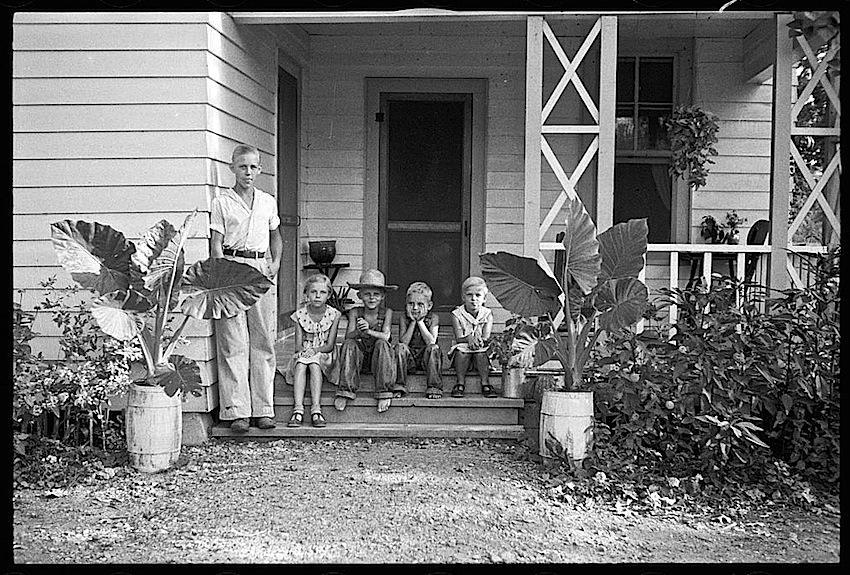
The government-sponsored agricultural community had just been established the year before — the brainchild of local cotton planter William Reynolds Dyess, who was also Director of the Arkanasas Emergency Relief Administration.
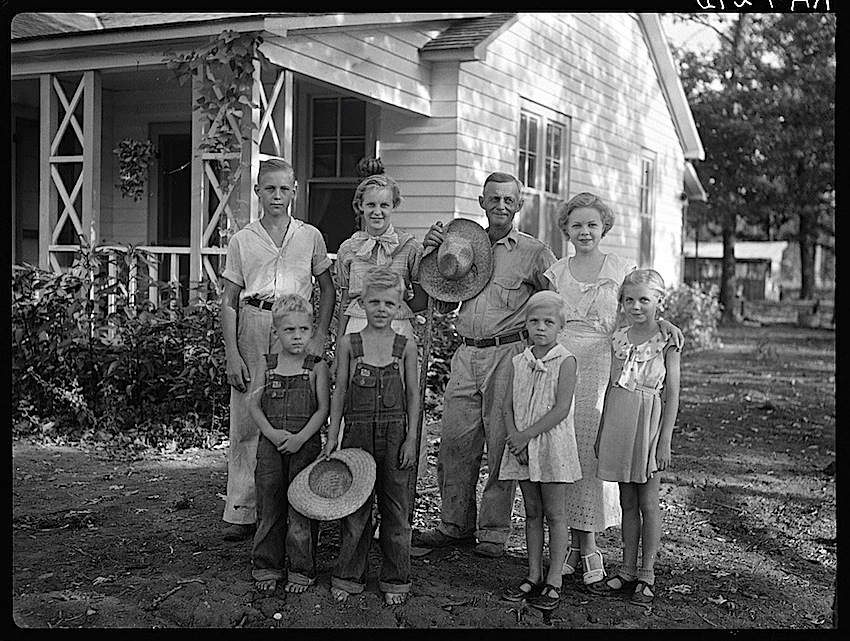
Dyess wanted to provide aid to displaced tenant farmers and sharecroppers. His idea was to put 800 families on 20 to 40-acre uncleared bottomland plots with new houses.
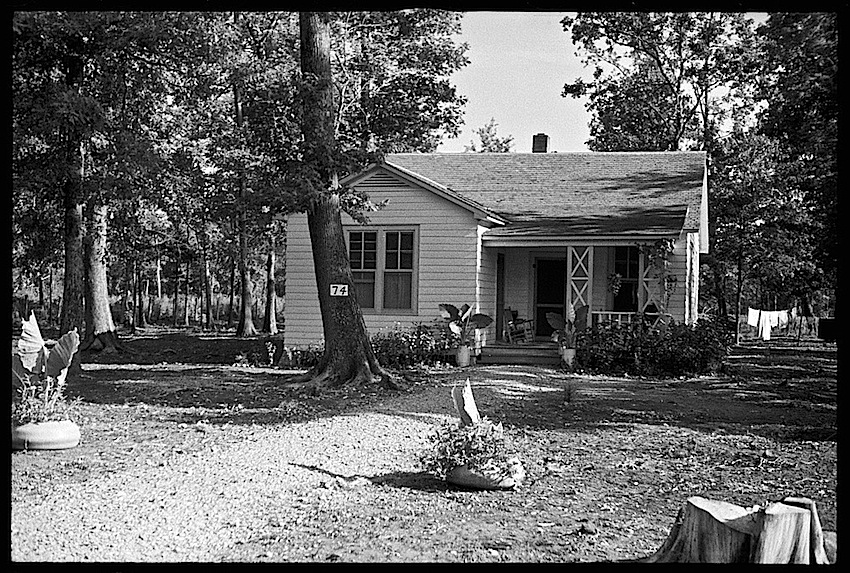
The project — scaled back to 500 families — was underwritten by the New Deal Federal Emergency Relief Administration. (It was absorbed by the Farm Security Administration in 1944 and made independent of the federal government in 1951. )
“The colony was laid out in a wagon-wheel design, with a community center at the hub and farms stretching out from the middle. . ,” according to the online Encyclopedia of Arkansas. “Each house had five rooms with an adjacent barn, privy, and chicken coop. . . , plus a front and back porch.”
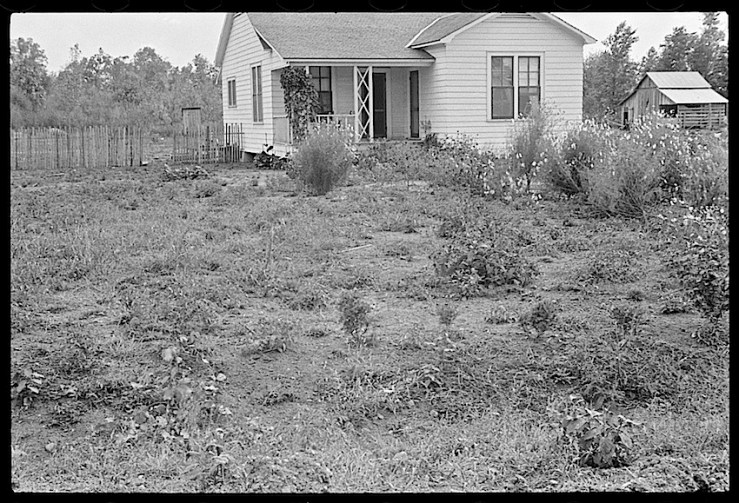
Dyess was killed in a plane crash in 1936, and the colony was given his name.
Among the resettled farmers — all of whom were white — was the father of country singer Johnny Cash. Cash lived in house #266 from the age of three until his high school graduation in 1950.
Today, Arkansas State University has restored the Cash home (open to the public) and is working on an adjacent original colony home, as well as the administration building and theater.
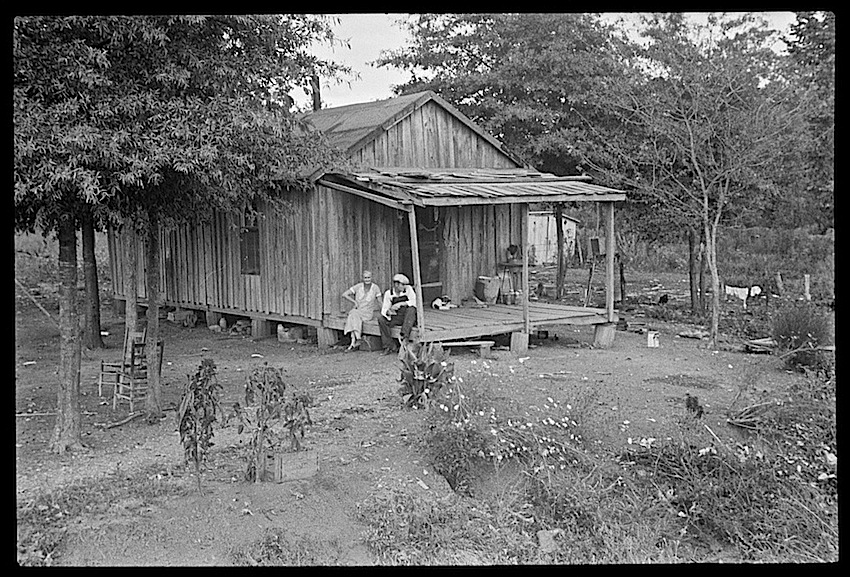
The 1935 photo above by Ben Shahn was captioned, “Sharecropper’s house optioned. Dyess Colony, Arkansas.” I’m not sure what that means, but the picture gives an example of original local farm housing.
I like the small semi-circle of trees and the two chairs facing out on the left side.
*All photos but the last were by Rothstein, taken in August 1935. All are via Library of Congress Prints and Photographs Division.
 enclos*ure