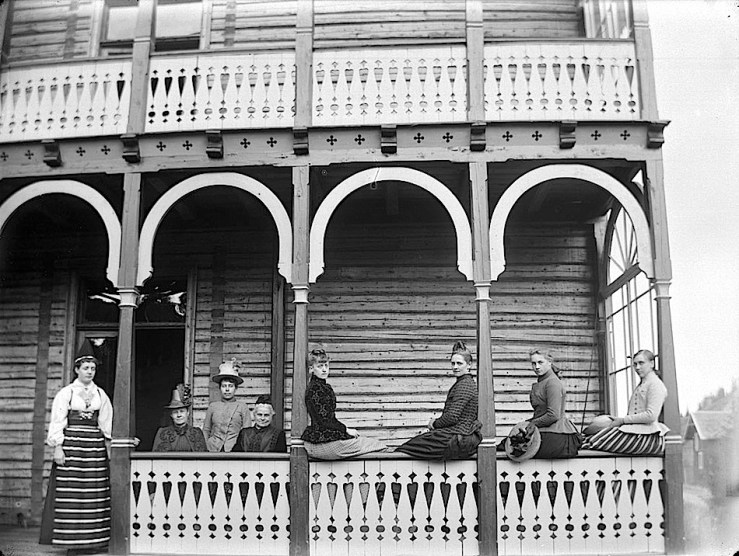
 Women on a veranda at Tonsåsen Sanatorium (the woman on the left is wearing a traditional costume similar to the one in this photo), Valdres, Norway, ca. 1890, by Carl Curman, via Swedish National Heritage Board Commons on flickr (all three photos).

Tonsåsen Sanatorium was established for the treatment of tuberculosis in 1881 — the same year that the bacillus causing the disease* was identified by Robert Koch. Like similar facilities, just about the only treatment it could offer was a combination of nutritious food, rest, and plenty of fresh air. However, it also had thermal baths, and the photographer, Carl Curman, was a physician, specializing in the science of health baths (balneology).
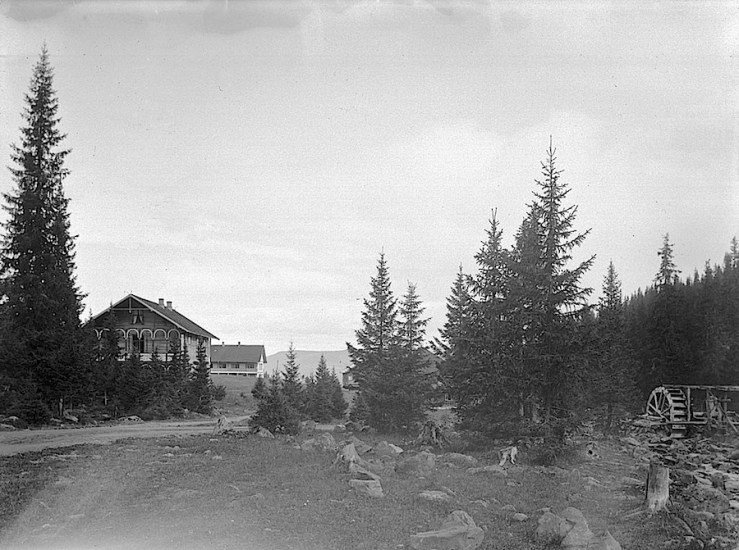
Even at the better sanatoriums, fifty percent of patients were dying within five years in 1916. It was only after the development of antibiotics after World War II that it was possible to treat and cure TB reliably. Tonsåsen closed in the 1960s.
*TB was proven to be communicable in 1869.

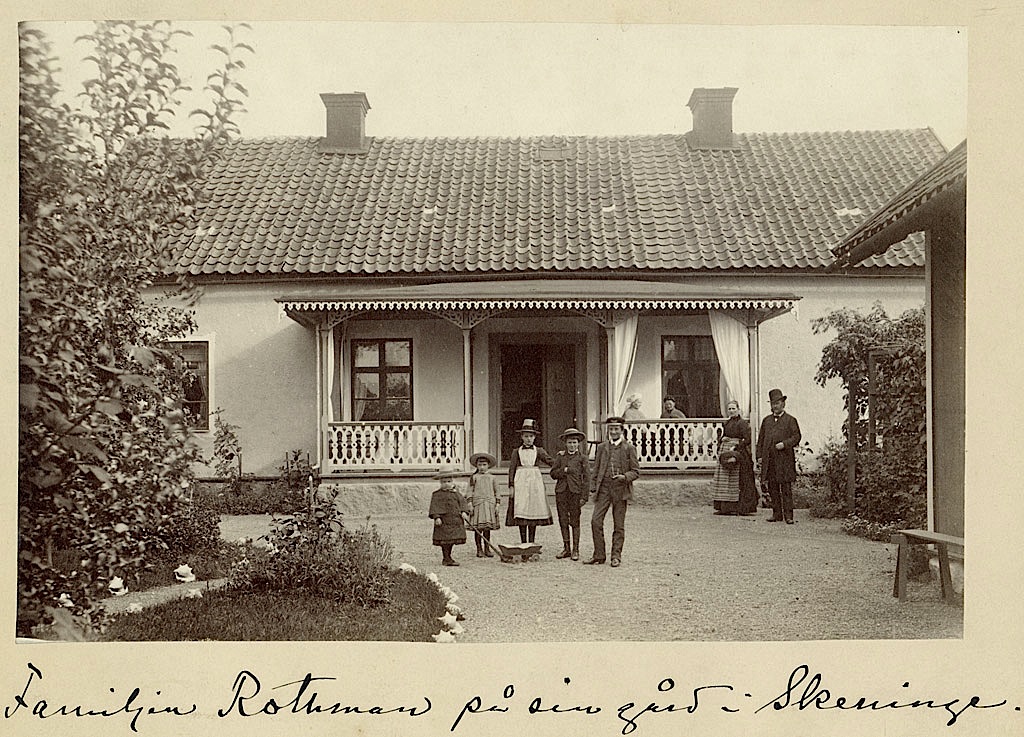 “Rothman family at their home in Skänninge, Sweden,” 1880s, by Carl Curman, via Swedish National Heritage Board Commons on flickr.


 enclos*ure