“Group of women having a tea party in Queensland, Australia,” ca. 1887, photographer unknown, via State Library of Queensland.
Beautiful Platycerium or staghorn ferns on the wall and columns. These could be Platycerium superbum, which are native to Australia. The one on the left seems to be supporting another plant — maybe a coleus.
How quiet it is, how silent,
like an afternoon in Pompeii.
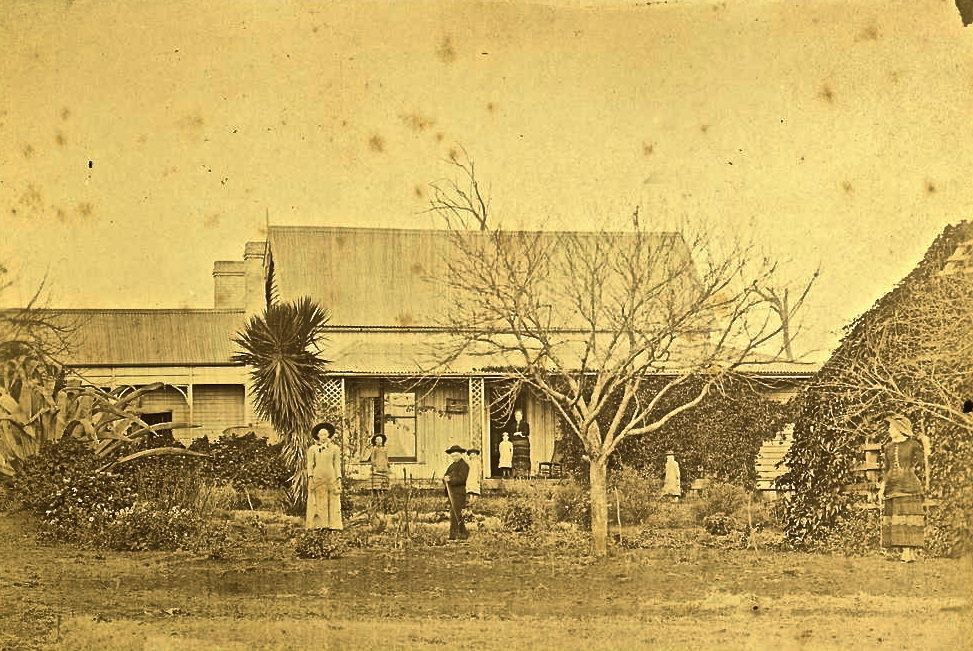
“Reading the paper in a Gympie[, Queensland,] garden,” ca. 1871, by Edward H. Forster, via State Library of Queensland Commons on flickr.
Edward Forster was a professional photographer who worked in and around Gympie, a gold-mining town in eastern Australia, during the 1870s. Many of his photos feature local families in front of their cottages.
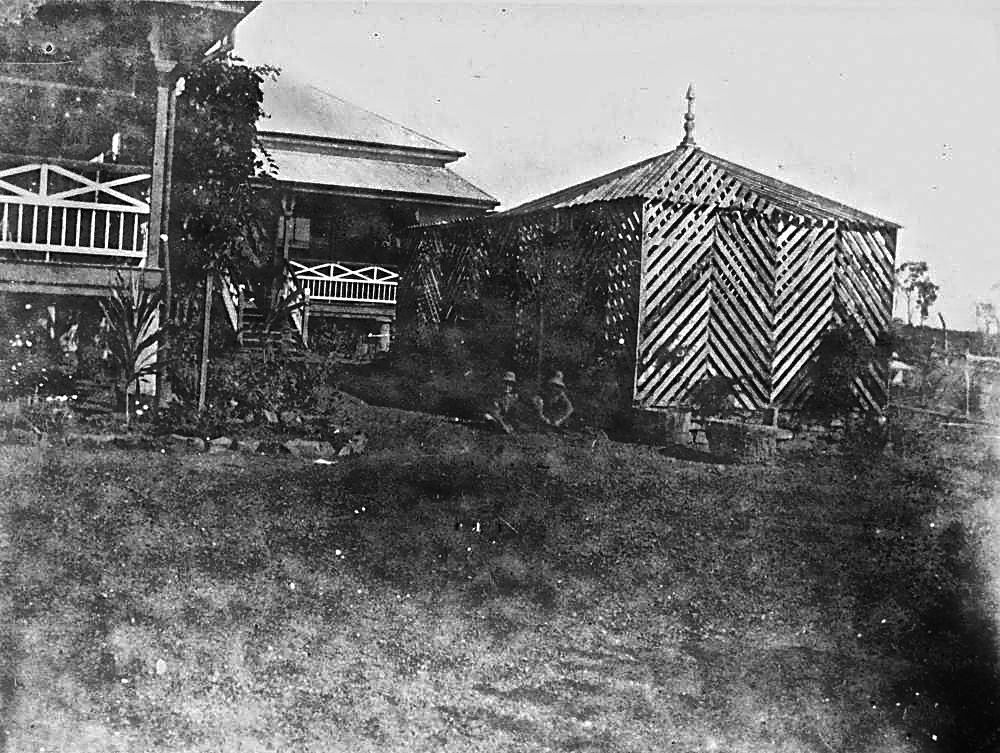
Bush- or shade-house at Toowoomba residence, Roslyn, ca. 1900.
I recently came across these photos of an Australian vernacular garden structure: the bush-house.
Fernery at ‘The Hollow,’ Mackay, ca. 1877, by Edmund Rawson.
Bush-houses (also called shade-houses or ferneries) were built to protect tropical plants from the sun. By the late 1800s, many Australian gardeners were as enthusiastic about amassing and displaying these plants as Victorian hothouse collectors in Great Britain and North America.
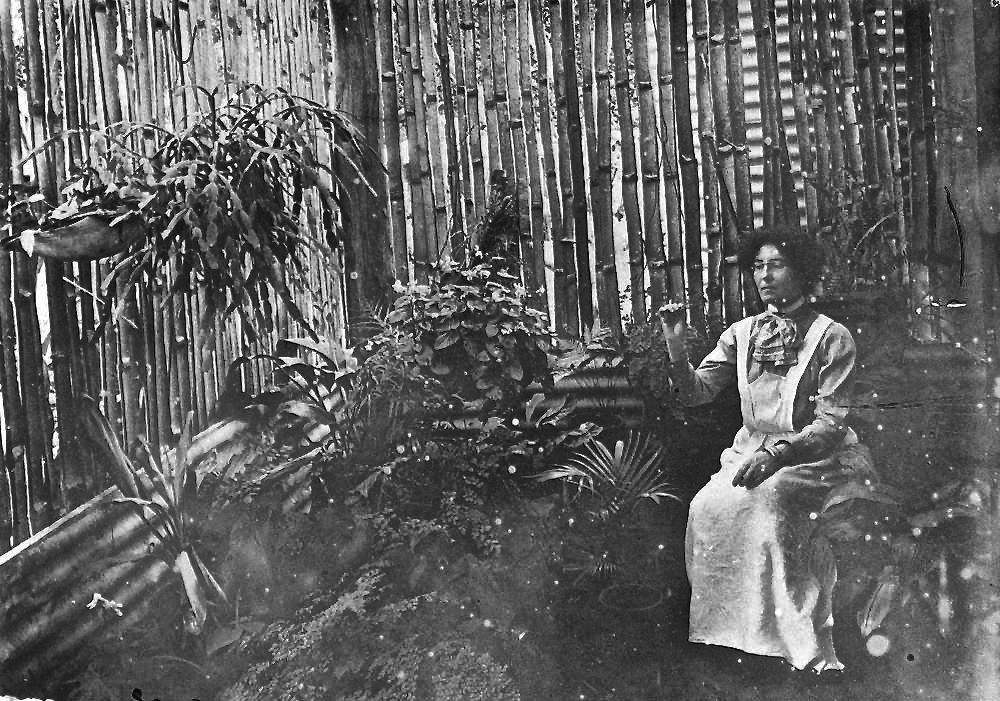
Florence Reid in a bamboo bush-house at Bainagowan Station, ca. 1900.
The bush-house was modeled on the English glassed-in greenhouse or conservatory, but built with less costly, local materials.
Gardening at the front of Aloe Villa, Toowoomba, ca. 1900. There is a bush-house on the right (and a massive agave on the left).
In a 2003 article for Queensland Review, “Tropicalia: Gardens with Tropical Attitude,” Jeannie Sim wrote that, by the end of the 19th century, a number of international exhibitions in Australia were showing off “high-quality examples of tropicalian gardening” in bush-houses.
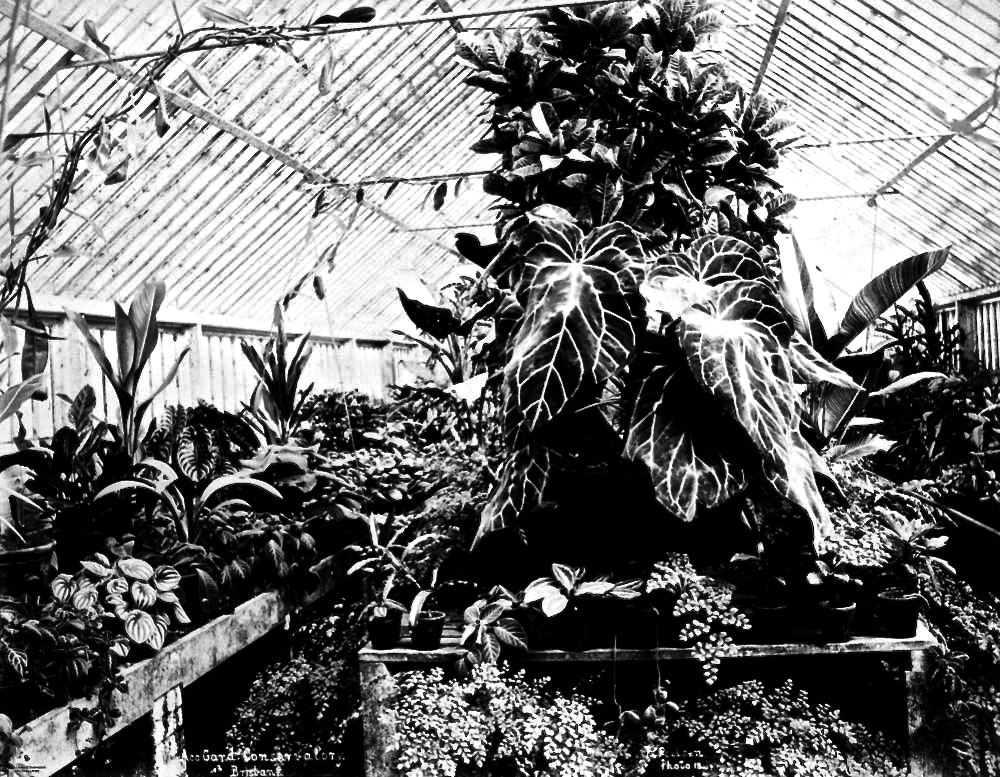
Fern-filled conservatory at Bowen Park, Brisbane, ca. 1890, by P.C. Poulsen.Shade-house in the garden at Merthyr House, Brisbane, ca. 1908.
“The most extraordinary of these kinds of structures,” she wrote, “[was] arguably the one built in 1897 for the Queensland Colonial and Indian Exhibition in Brisbane. . . . Covering the walls and pillars of the bush-house were more than 3000 staghorn, bird’s nest and elkhorn ferns collected from the Blackall Range . . . . The exhibition guide [noted that] . . . Queenslanders ‘could gain a more vivid idea than ever before of the unequalled luxuriance of their scrubs.’ These horticultural displays marked both local pride and individuality, and promoted the use of native plants and bush-houses in gardens.”
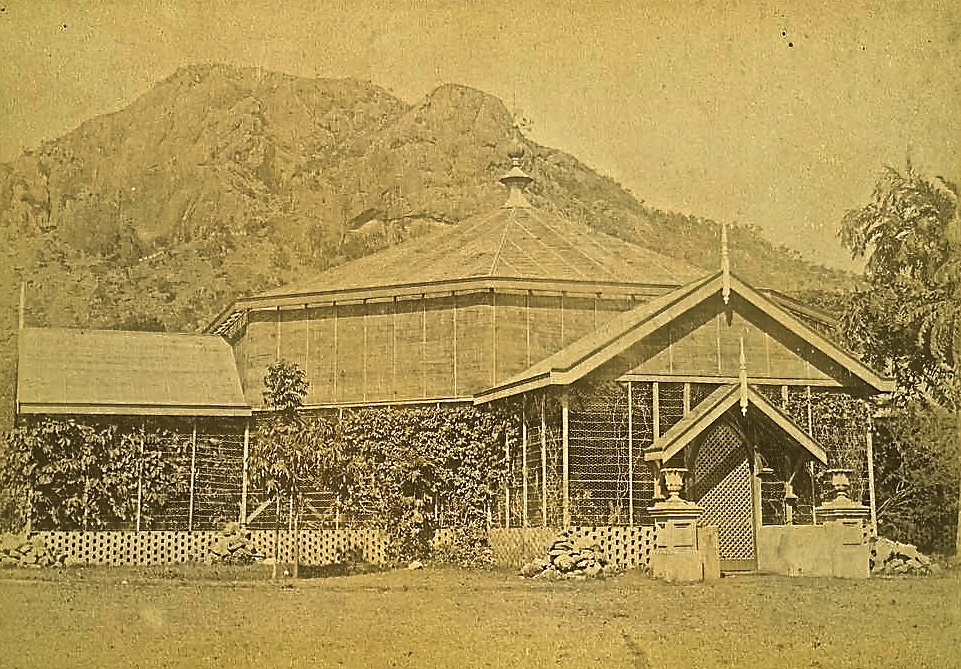
Bush-house at the Townsville Botanical Gardens, ca. 1900.
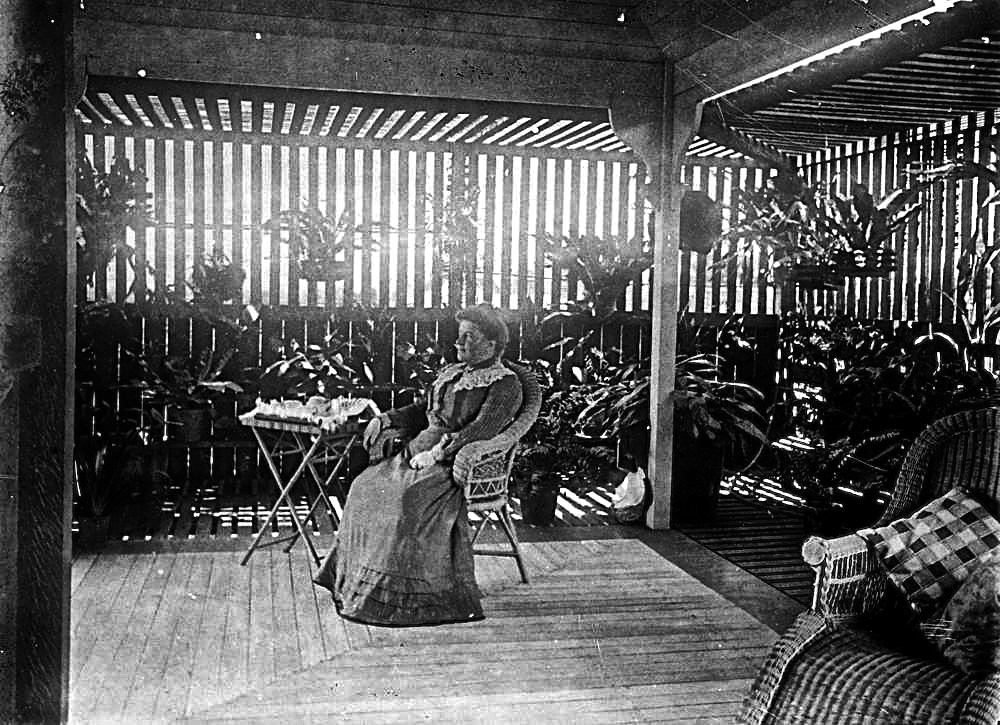
According to Sim, many of the plants cared for and protected in the bush-houses were also displayed in popular verandah gardening. “The verandah was the public showcase for the gardener’s bush-house skills.”
Milton residence, Holly Dean on River Road, Milton, ca. 1900. While it’s hard to see any plants, there is an interesting lath structure on the left side of the porch.
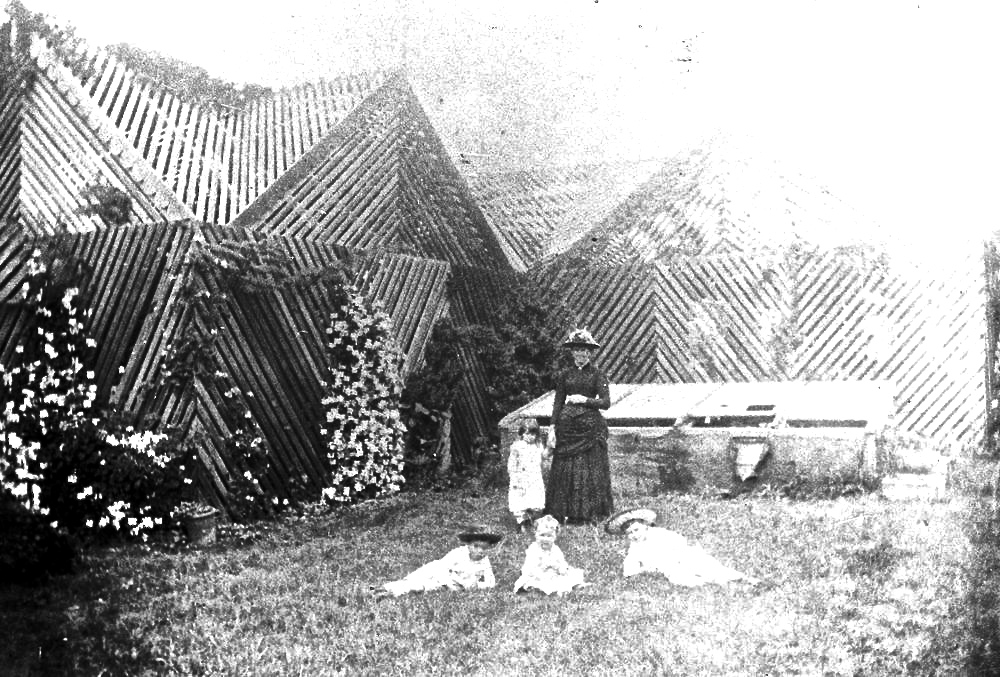
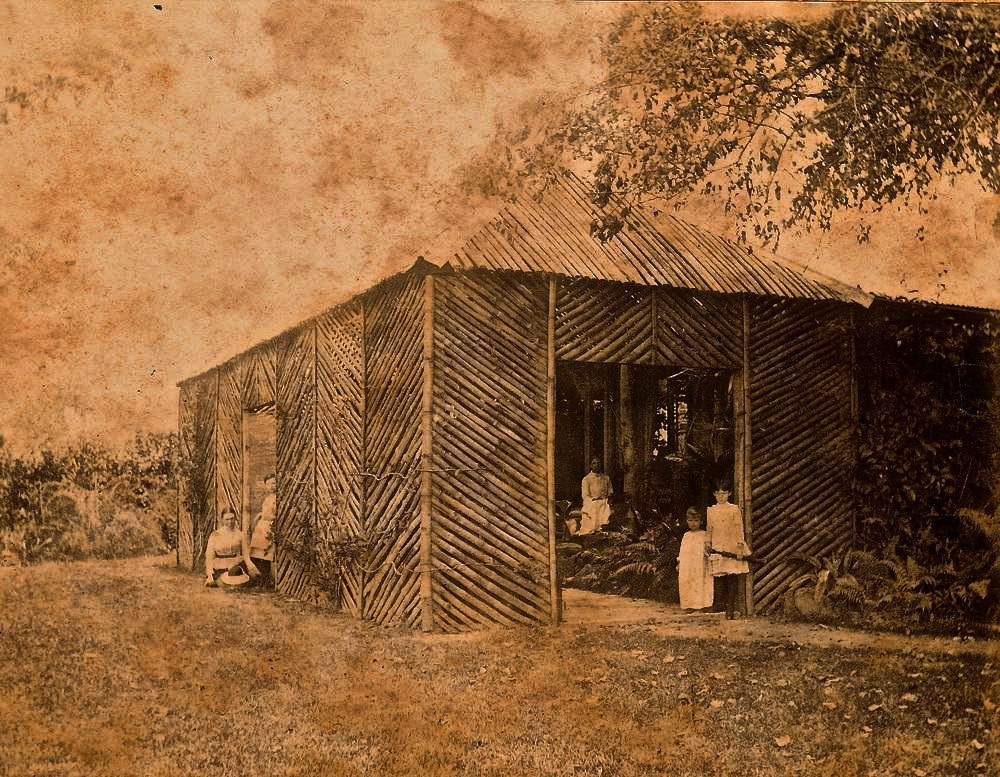
Judging from these photos, bush-houses seem to have been frequently constructed of panels of wood or bamboo lath set at decorative angles.
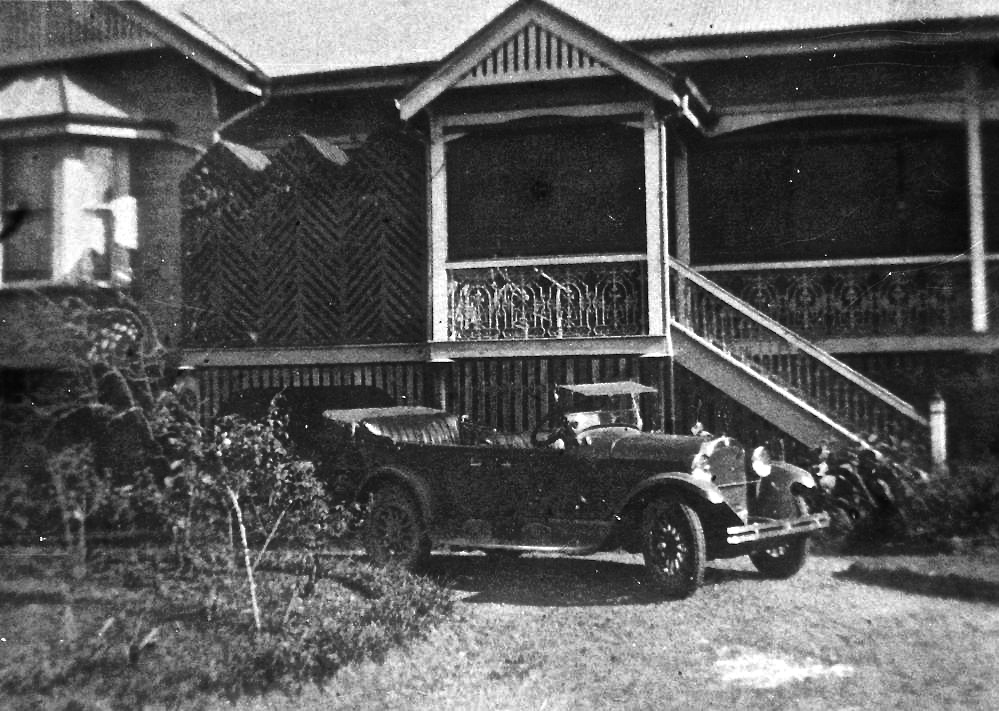
Bush-house at Greenmount Station, ca. 1927.
It also appears that many bush- or shade-houses were used as cool(er) places to entertain and relax.
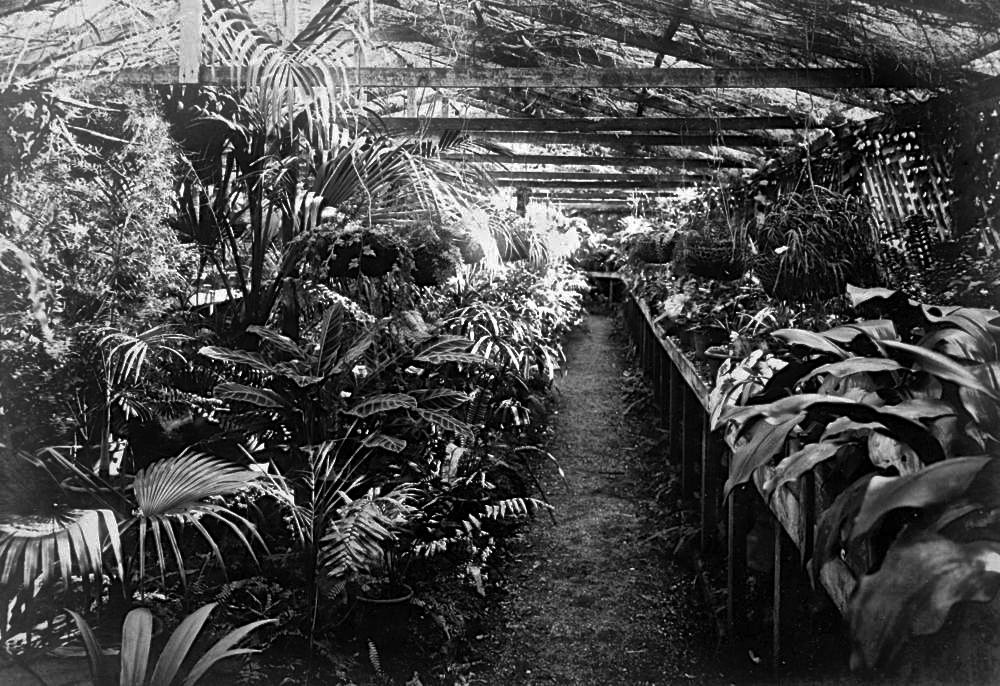
Fernery in the Clayfield residence, Elderslie, in the Brisbane suburb of Clayfield, ca. 1900.
All of these photos are via the Commons Flickr photostream of the State Library of Queensland, Australia.
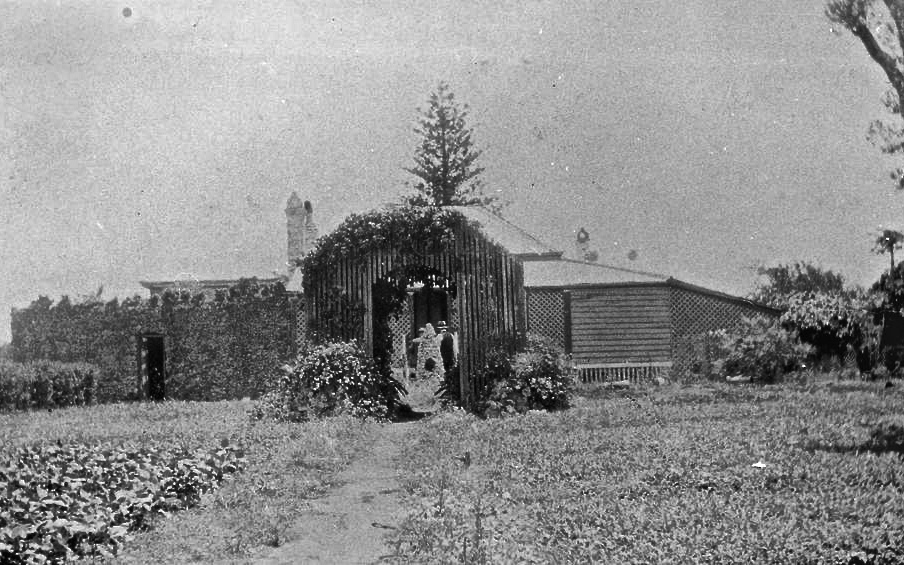
Garden of the old prison superintendent house, St. Helena, 1928. There is a small lath summer house in the center of the path and trellis around the perimeter of the home behind it — perhaps enclosing a verandah around interior rooms?
To scroll through larger versions of the pictures, click on ‘Continue reading’ below and then on any of the thumbnails in the gallery.

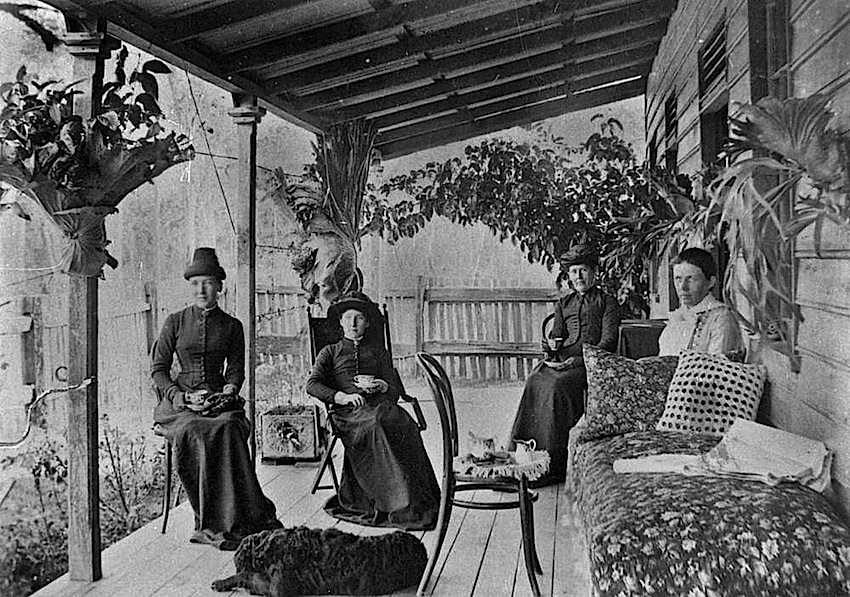 “Group of women having a tea party in Queensland, Australia,” ca. 1887, photographer unknown, via State Library of Queensland.
 enclos*ure