The Sunday porch: Estero, Florida


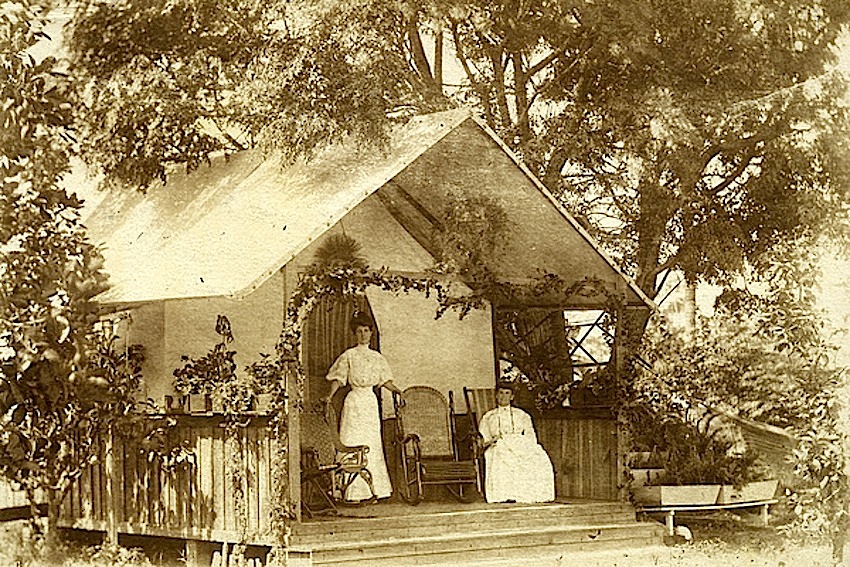
“Tent house on Koreshan property in Estero, Florida,” 1895, via Koreshan Unity Collection, Florida Memory Commons on flickr (State Library and Archives of Florida).

The Koreshan Unity was a late 19th and early 20th century utopian community whose members believed in a god that was both male and female, as well as in reincarnation, celibacy, collectivism, equality of the sexes, and cellular cosmogony.* It was founded by Cyrus Teed in upstate New York in the 1870s, and later there were also followers in Chicago and San Francisco. In 1894, the community began moving to a donated 320-acre property in Estero, Florida. During the next decade, it purchased over 5,000 additional acres and began building a settlement that “included a sawmill, cement works, bakery, machine shop, general store, art gallery, symphony, theater troupe, plant nursery and more,” according to USA Today. Its population peaked at 250 residents between 1903 and 1908; the majority were well-educated middle-class women, seven of whom managed the day-to-day affairs of the commune.

When Teed died in 1908 — and his body was not resurrected as he had promised — the commune began to decline; there were 10 members left in 1948. The last Koreshans deeded the site of its village to the state of Florida in 1961. It is now a state park.


*”Among the most interesting beliefs of Koreshan Unity was the cellular cosmogony, or the hollow earth,” according to Florida Memory.  “According to the cellular cosmogony, the earth was not a convex sphere but instead a hollow, concave cell containing the entire universe with the sun at its center and Earth’s populace living on the inside surface of the hollow cell.”
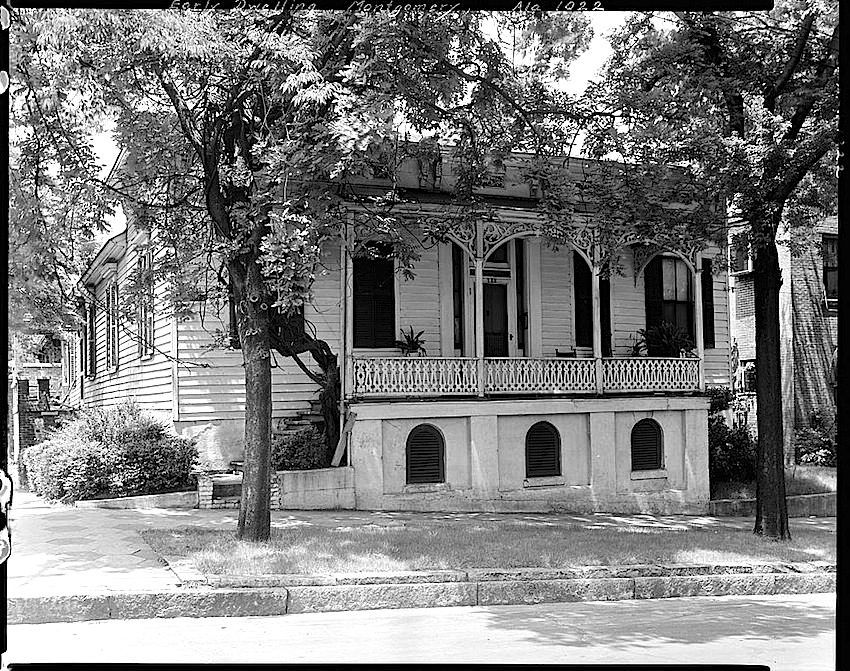
The Sunday porch: Montgomery, Alabama

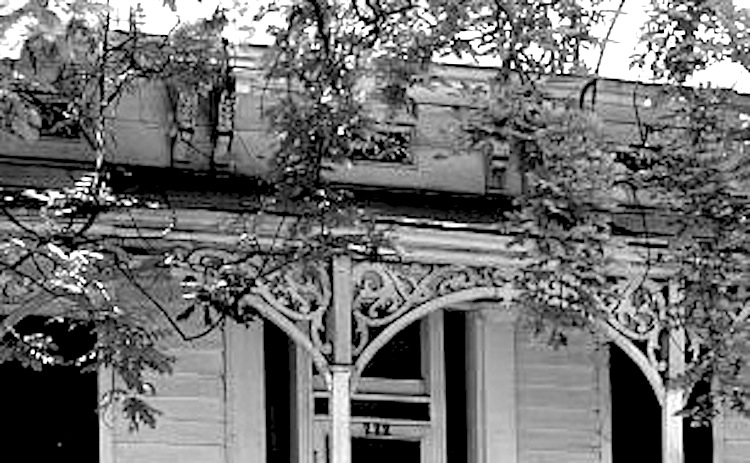
“Early dwelling, 222 S. Perry St.,” Montgomery, Alabama, 1939, by Frances Benjamin Johnstonvia Library of Congress Prints and Photographs Division.

The porch woodwork pattern is echoed in the little attic windows. Click to enlarge.

A huge vine is growing beside the steps, but it seems to go up into the tree on the left, rather than onto the porch.

The sidewalk is tiled in a simple geometric pattern. The effect, with the arches of the porch and basement windows, is a little Moroccan/Andalusian.

The house no longer stands.

The flower sellers, Paris

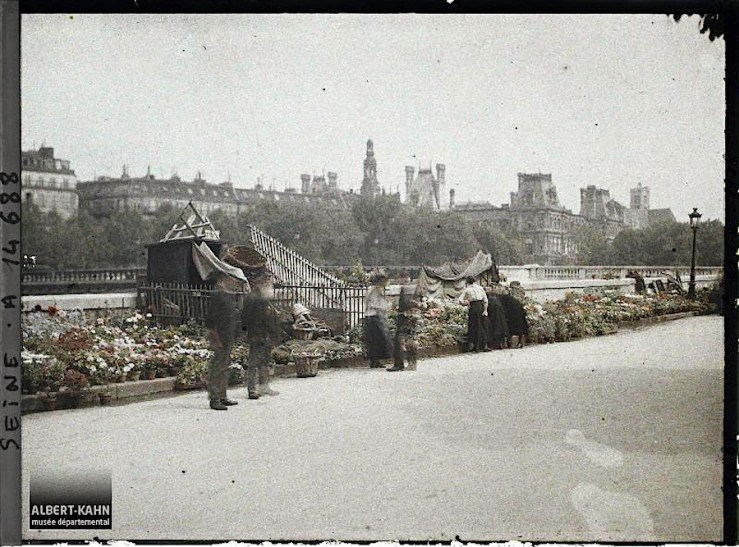
Flower sellers at Place Louis-Lépine on the l’île de la Cité, at Quai de la Corse, Paris, France, May 2, 1918, by Auguste Léon, via Archives of the Planet Collection – Albert Kahn Museum /Département des Hauts-de-Seine (both photos).

There has been a flower market on or near this spot since 1808. Since June 2014, it has been called Queen Elizabeth II Flower Market, to commemorate the visit of the British queen just prior to the 70th anniversary of D-Day.

Behind the sellers, on the other side of the river, is the Palmier Fountain and Châtelet Theater.

France, Paris, Marché aux fleurs
Looking the other directions, with the Hotel de Ville in the background across the river.

These autochromes are two of about seventy-two thousand that were commissioned and then archived by Albert Kahn, a wealthy French banker and pacifist, between 1909 and 1931. Kahn sent thirteen photographers and filmmakers to fifty countries “to fix, once and for all, aspects, practices, and modes of human activity whose fatal disappearance is no longer ‘a matter of time.'”* The resulting collection is called Archives de la Planète and now resides in its own museum at Kahn’s old suburban estate at Boulogne-Billancourt, just west of Paris. Since June 2016, the archive has also been available for viewing online here.


*words of Albert Kahn, 1912. Also, the above photos (A 13 994, A 14688) are © Collection Archives de la Planète – Musée Albert-Kahn and used under its terms, here.

The Sunday porch: Alberta

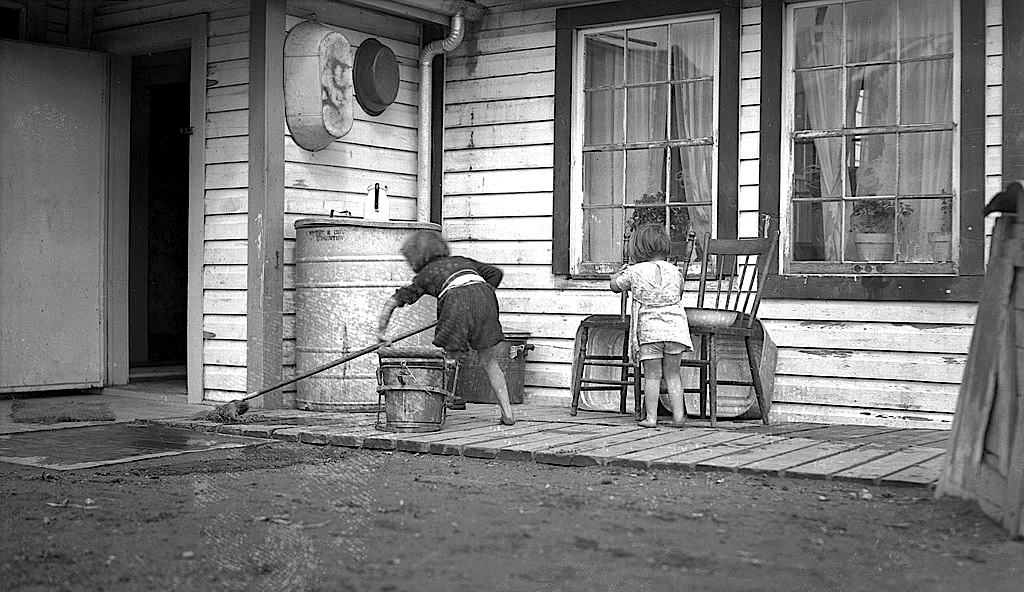
Mary and Sandy Lee (daughters of the photographer) cleaning the porch, Mountain Park, Alberta, 1935, by Charles Leevia Provincial Archives of Alberta Commons on flickr.

Cleaning should probably be in quotation marks. I think their mom was in the house having some quiet time.

The girls’ father, Charles Lee, emigrated from England to Mountain Park, Alberta, in 1919. There, he worked for the coal mine as a delivery person, steam engineer, and watchman. He also became a photographer and created postcards of Mountain Park. The mine closed in 1950, and the Lee family moved on.  Mountain Park is now a ghost town.

The Sunday porch: Minden, Louisiana

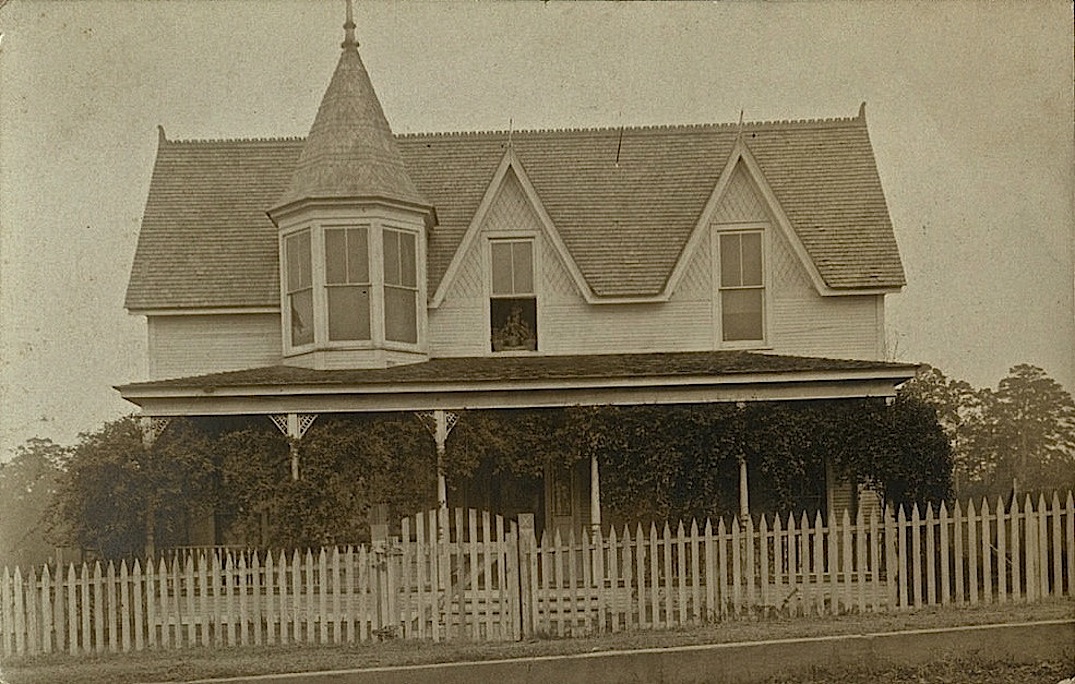
The home of George and Rosa Lee Woodbridge, Minden, Louisiana, ca. 1907, via Tyrrell Historical Library (Beaumont, Texas) Commons on flickr.

A definite “best in vines” contender. I also like the trio of potted plants in the upper window and the decorative woodwork at the tops of the columns. (You may want to click on the photo for a better look.)

Detail of above.

George Woodbridge was a Presbyterian minister, and Rosa Lee was a former teacher. She died in the house in 1907, age 41.

Johnny and Edgar Winter, blues and rock musicians, are the direct descendants of Rosa Lee’s sister, Sarah.