A repeat post from September 2013. . .
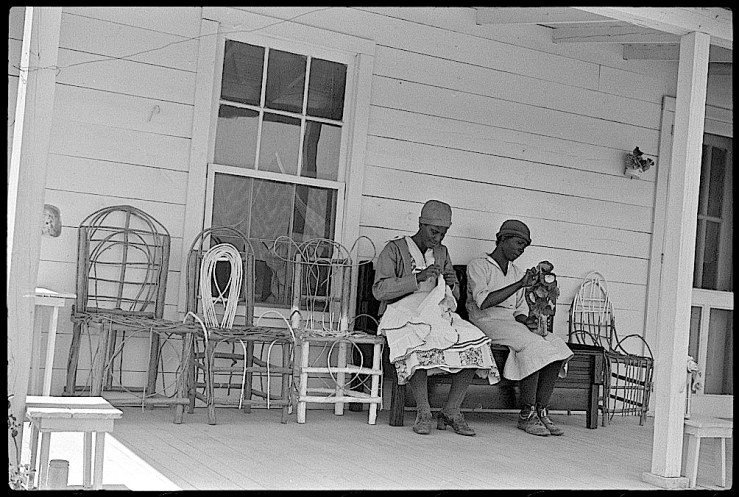 “Jorena Pettway and her daughter making [a] chair cover out of bleached flour sacks and flower decorations from paper. She also made the chairs and practically all the furniture in the house.”*
The photo was taken in Gee’s Bend [Boykin], Alabama, 1939, by Marion Post Wolcott, via Library of Congress Prints and Photographs Division.
Gee’s Bend is an African-American community located in a large bend of the Alabama River. It became famous about 15 years ago for its remarkable quilts.
In 1816, Joseph Gee brought slaves to the area and started a cotton plantation, which was sold in 1845 to the Pettway family. After the Civil War, the farm’s freed slaves remained on the land as sharecroppers, and many took the last name of Pettway.
In the winter of 1932-33, the community’s particular isolation — with only a small ferry to the east and a bad road to the west — and its dire poverty came to the attention of the Red Cross, which sent it a boatload of flour and meal. It began receiving Resettlement Agency assistance in 1935, and the Agency purchased the plantation in 1937. By 1939, when the Farm Security Administration sent Wolcott to take photos, there had been a number of improvements, including new homes (like the one pictured above).
In 1962, when residents began trying to register to vote, the local government eliminated the ferry service, which connected Gee’s Bend to the county seat of Camden. Without it, people of the community had to drive more than an hour to reach the town. The ferry service remained closed until 2006.
In 2002, an exhibition of quilts made by the women of Gee’s Bend opened at the Museum of Fine Arts in Houston and then traveled to the Whitney Museum in New York City. Another show in Houston and at the Smithsonian Institution followed in 2006. The New York Times art critic, Michael Kimmelman, called the quilts on display “some of the most miraculous works of modern art America has produced.”
*Library of Congress caption, possibly written by Wolcott.

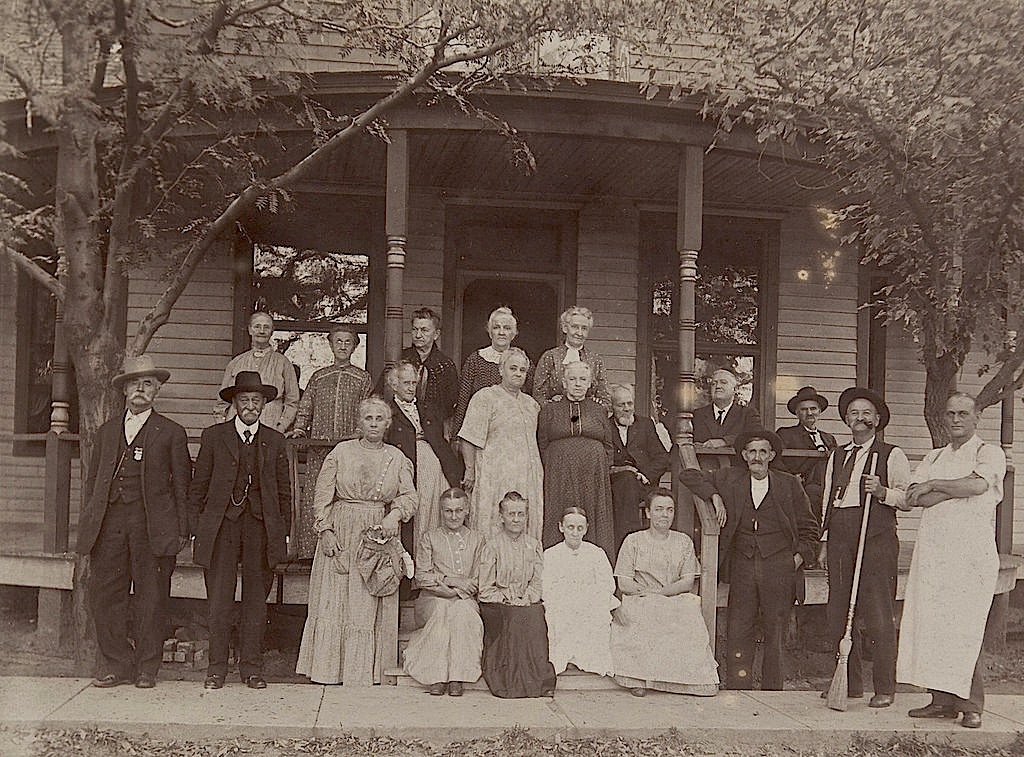 “American Group Portrait,” ca. 1910, unknown location and photographer, via Museum of Photographic Arts Commons on flickr.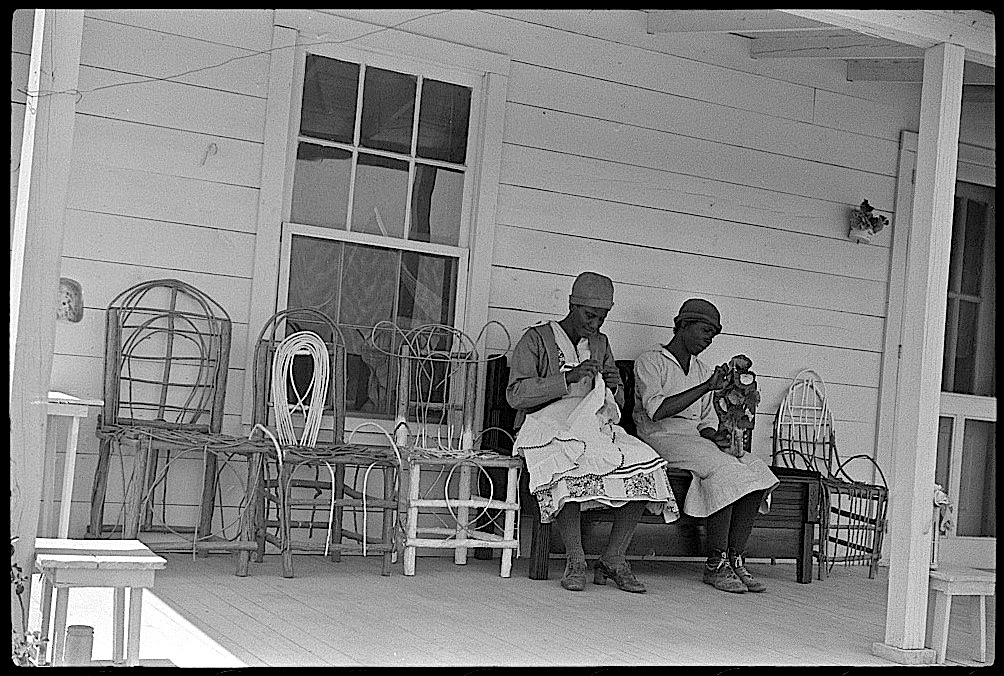

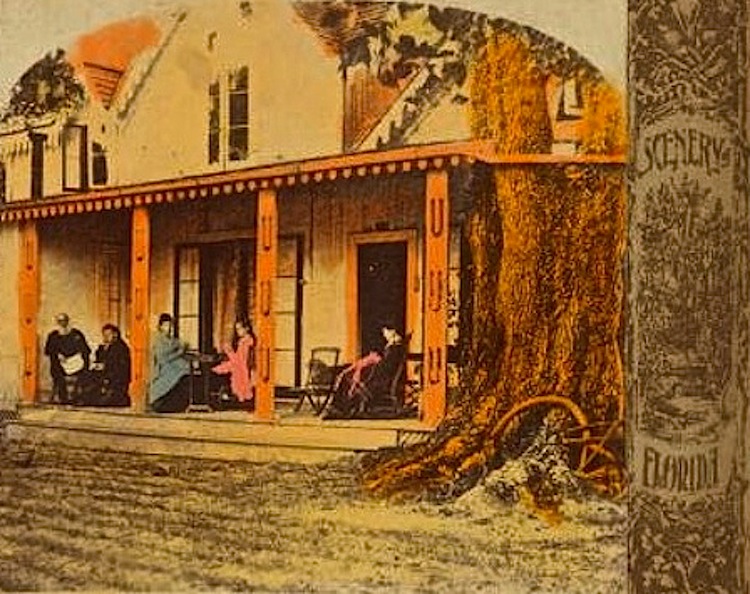
 enclos*ure