
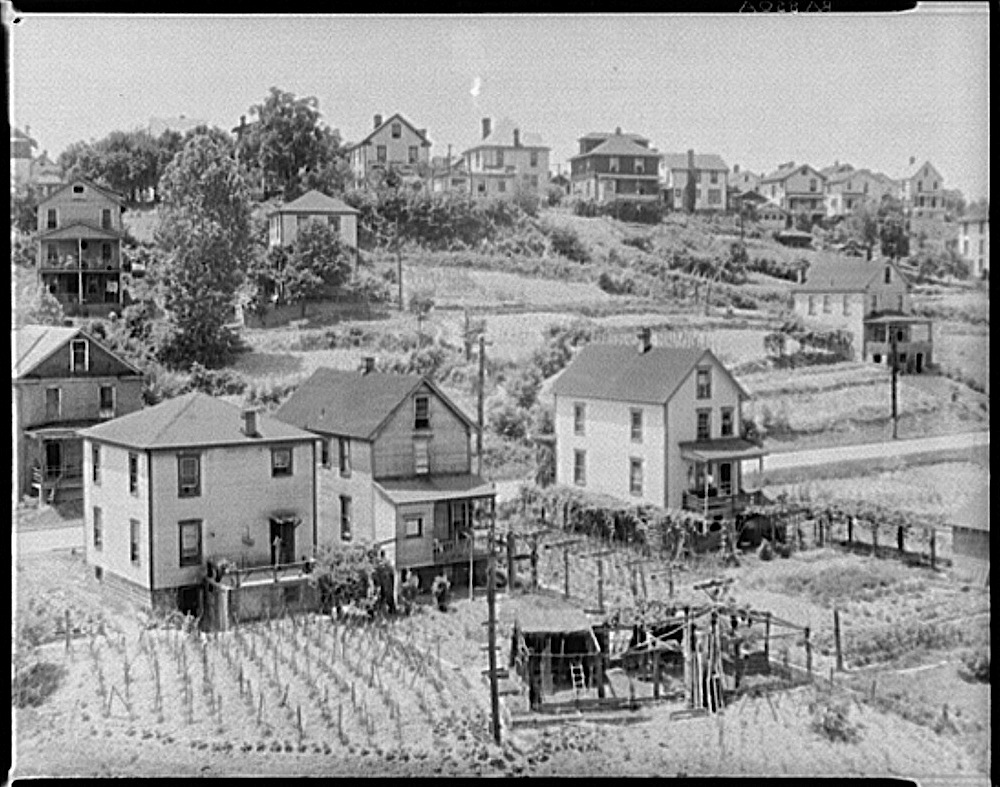
 “Typical houses of Morgantown, West Virginia,” June 1935, by Walker Evans, via Library of Congress Prints and Photographs Division.
Evans may have taken the photo from an electric post like this one.
“Typical houses of Morgantown, West Virginia,” June 1935, by Walker Evans, via Library of Congress Prints and Photographs Division.
Evans may have taken the photo from an electric post like this one.
 “Garden – lot 9, block 11. . . . Garden of $20 a month home,” Fairfield, Alabama, 1917,
via Frank and Frances Carpenter Collection, Library of Congress Prints and Photographs Division.
Fairfield was a planned community built in 1910 for the workers of U.S. Steel’s plants in the Birmingham area. Its (mostly white) residents could either rent or purchase modern houses with indoor plumbing and central heating. There were also parks and playgrounds, churches, a public library, and 30,000 newly planted trees and shrubs.
The photograph is one of over sixteen thousand created or collected by Frank G. Carpenter and his daughter, Frances, to illustrate his geography textbooks and popular travel books.
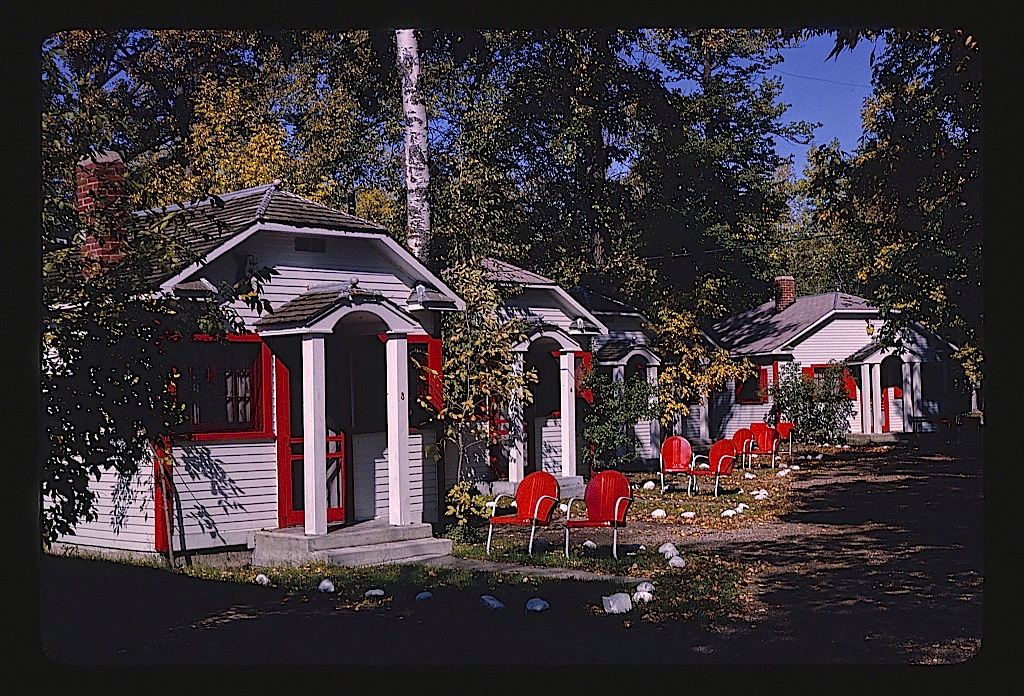 Fairyland Cottages, West Lake Lane, Detroit Lakes, Minnesota, 1980, by John Margolies, via John Margolies Roadside America archive, Library of Congress Commons on flickr.
The twelve cabins were built in 1938, modeled (roughly) after the cottage in Disney’s Snow White and the Seven Dwarves. They were placed on the National Register of Historic Places in 1989. Unfortunately, this did not protect them from demolition in 2008 — burned by the fire department in a training exercise. There are two condominium buildings on the site now.
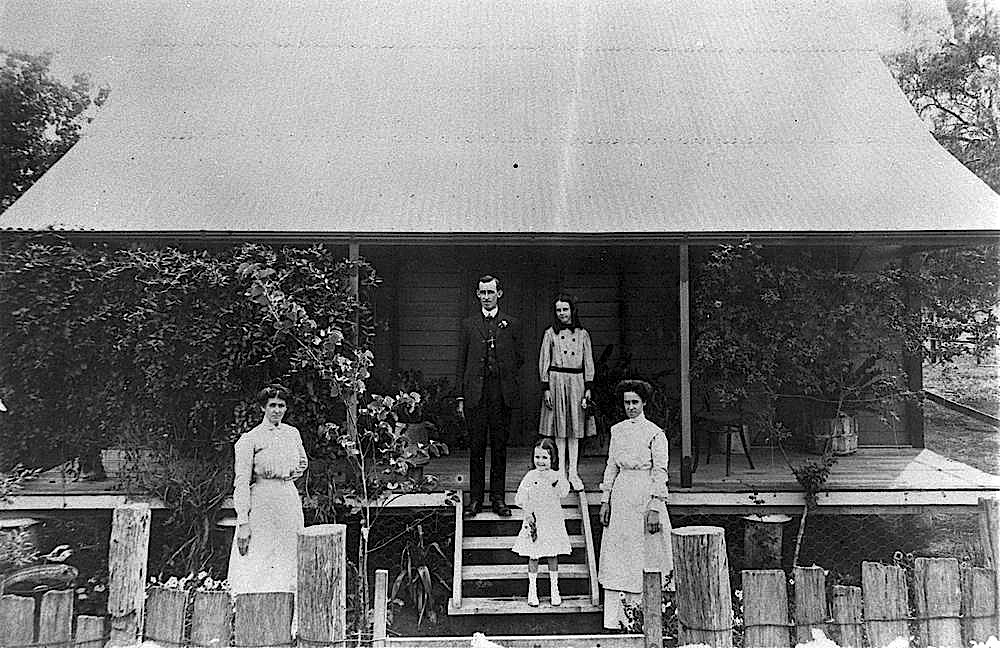 Unidentified family at Mount Sylvia, Queensland, ca. 1901, photographer unknown, via State Library of Queensland Commons on flickr.
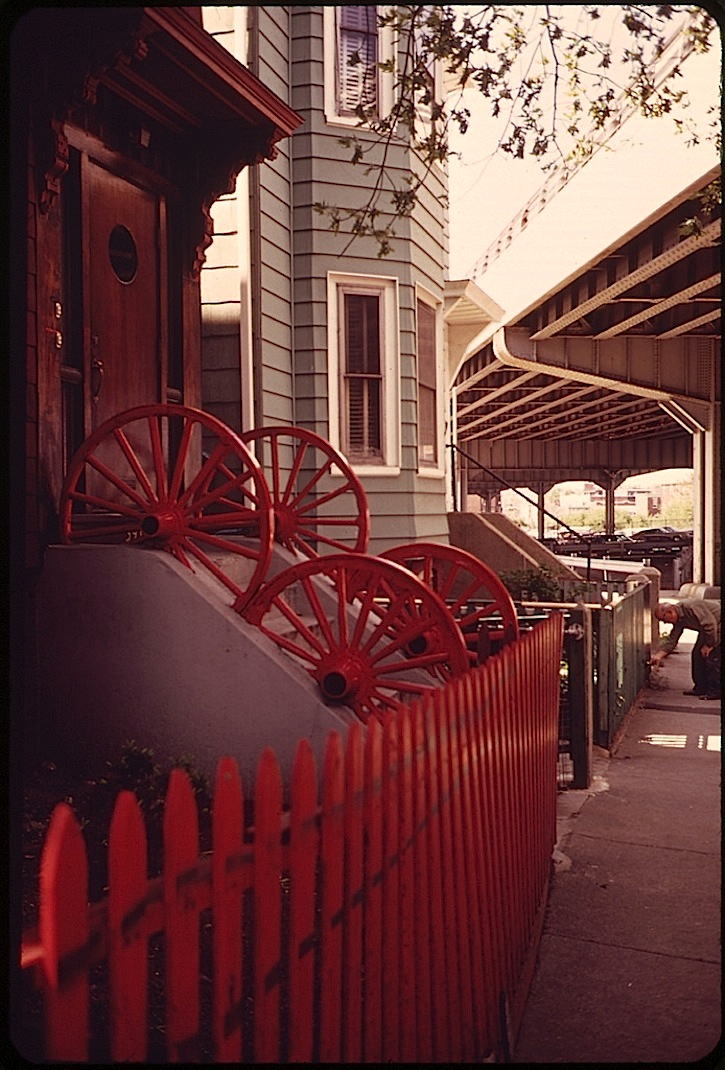 An unusual front stoop on Bennington Street in East Boston, near Logan Airport, next to the elevated East Boston Expressway, May 1973, by Michael Philip Manheim for DOCUMERICA, via The U.S. National Archives Commons on flickr.
I think the site of these houses is now the end of the Vienna Street exit from the expressway.
DOCUMERICA was a 1970s photography program of the U.S. Environmental Protection Agency (EPA). Manheim recorded the disruption to the lives of East Boston residents due to the expansion of Logan Airport.
There are more of his photos here.
 enclos*ure