The Sunday porch: Capels, West Virginia

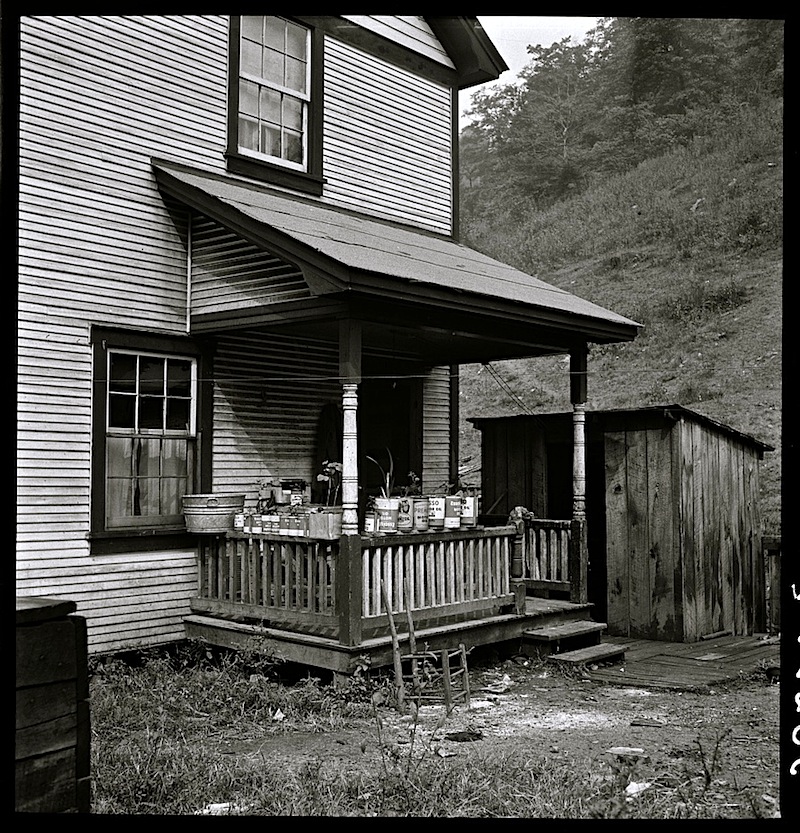
The Sunday porch/enclos*ure: miner's house in Capels, W.V.,1938, by Marion Post Wolcott, via Library of Congress“Plants and flowers in oil cans on back porch of [coal] miner’s house. Capels, West Virginia,” September 1938, by Marion Post Wolcott, via Library of Congress Prints and Photographs Division.*

Capels is an unincorporated community located in McDowell County, the southernmost county in West Virginia.

The homes shown here were “coal camp” houses, owned by Central Pocahontas Coal Co.
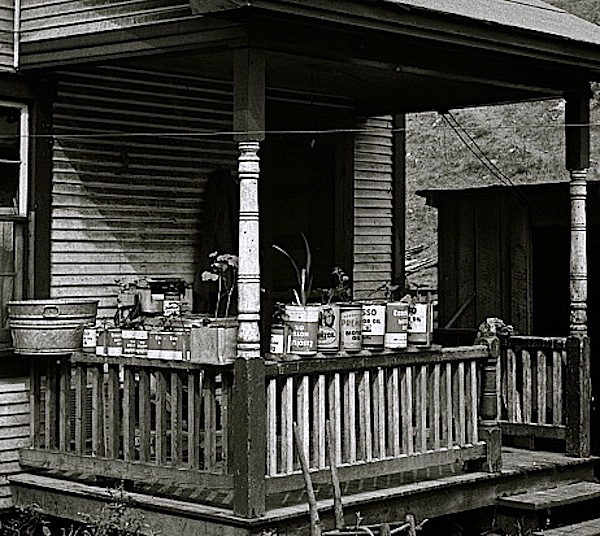
The Sunday porch/enclos*ure: detail, miner's house in Capels, W.V.,1938, by Marion Post Wolcott, via Library of CongressAbove, detail from previous photo:  perhaps the beginning of a winter garden on a windowsill.

Wolcott took a large series of photos of coal miners and their families in West Virginia.  I think the house on the right below may be the same as the one above.
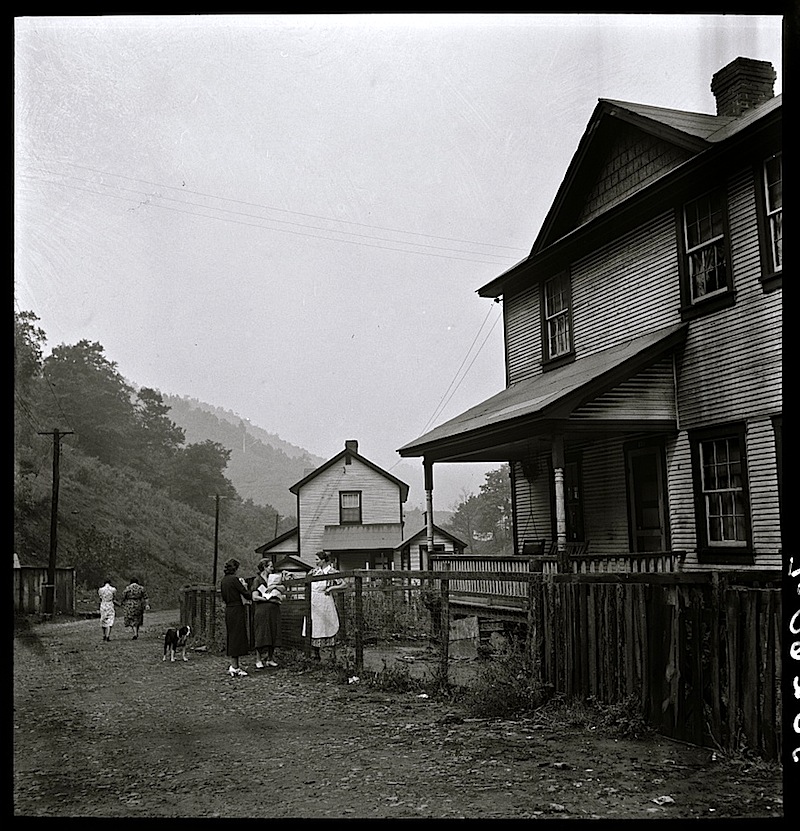
The Sunday porch/enclos*ure: miner's house in Capels, W.V.,1938, by Marion Post Wolcott, via Library of Congress“Wives of coal miners talking over the fence.”

“The women in this photo [above] are dressed up, perhaps for their walk to the company store and back,” according to an online photo exhibit about West Virginia coal miners. “Miners’ wives often led difficult lives and relied on each other for support.”
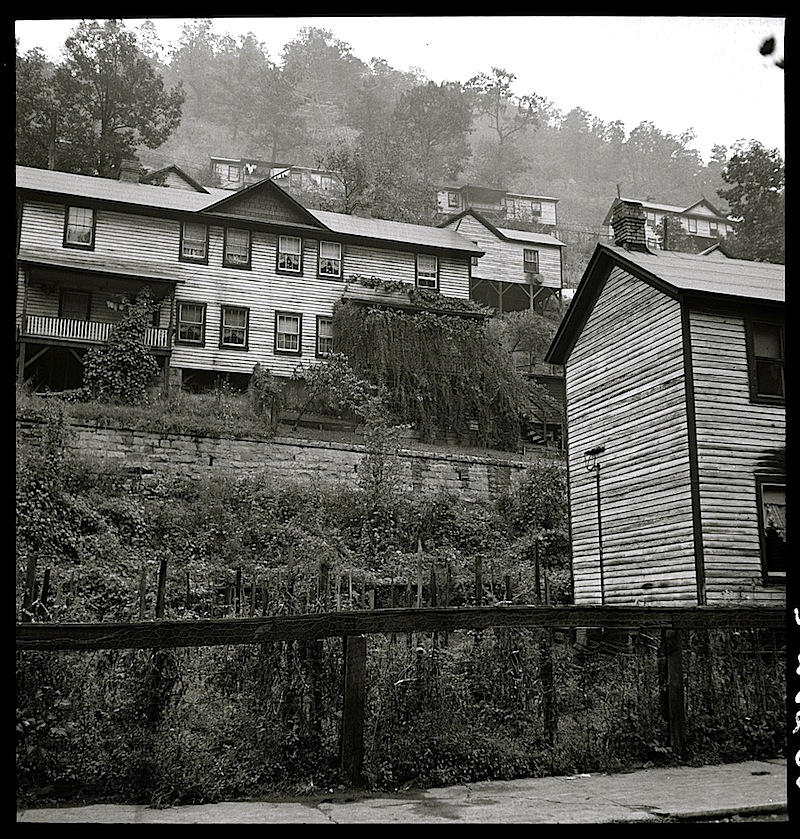
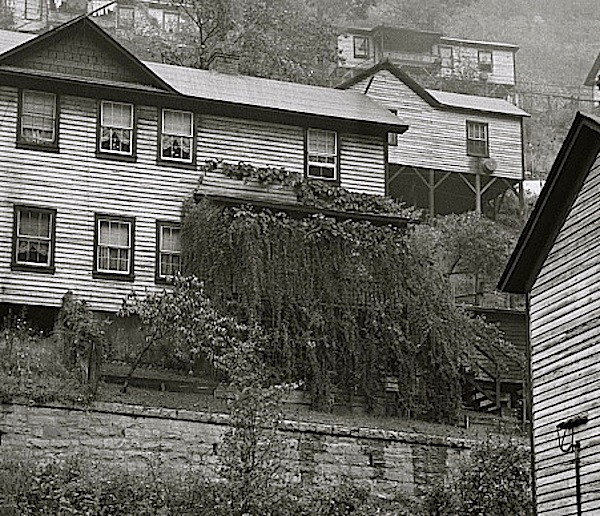
The Sunday porch/enclos*ure: miner's house in Capels, W.V.,1938, by Marion Post Wolcott, via Library of Congress“Better homes in coal mining town.”

The Sunday porch/enclos*ure: detail, miner's house in Capels, W.V.,1938, by Marion Post Wolcott, via Library of CongressAbove, detail from previous photo: impressive vines on this porch.  Note the house beyond and how it is built out from the hillside.
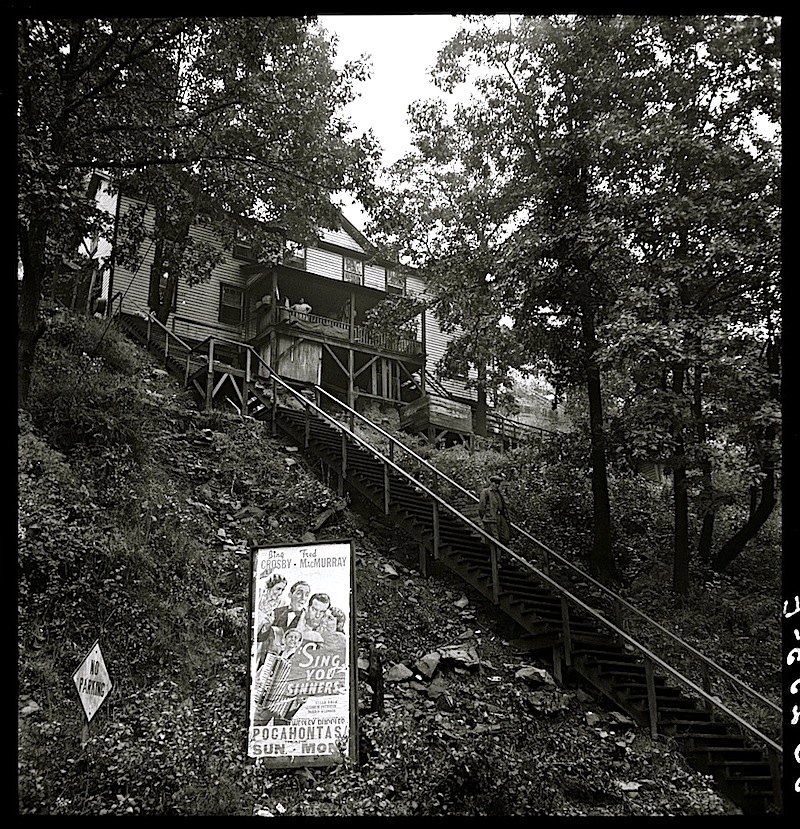
The Sunday porch/enclos*ure: miner's house in Capels, W.V.,1938, by Marion Post Wolcott, via Library of Congress“Home of Negro families.”  I count about 70 steps.
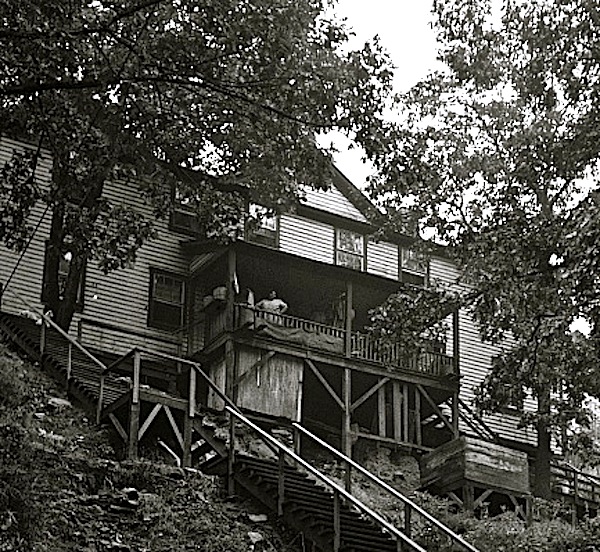
The Sunday porch/enclos*ure: detail, miner's house in Capels, W.V.,1938, by Marion Post Wolcott, via Library of CongressAbove, detail from previous photo: African-Americans moved to the county to work in the mines, as the coal industry grew at the turn of the 20th. century.**

Immigrants also came from Greece, Italy, Poland, Russia, and Hungary.

McDowell County once set records for coal production in the state and country, but since the decline of the industry in the 1980s, it has lost thousands of jobs and has the highest poverty rate in the state.  The mine in Capels (by then owned by Semet-Solvay) closed in the 1980s.

Photos of Capels in 2005 are here. There are photos of McDowell County in 2012 here (and more vintage pictures here).

A number of Wolcott’s West Virginia photographs can be found in the book  New Deal Photographs of West Virginia, 1934-1943.


*All photos here were taken in Capels, September 1938, by Marion Post Wolcott, via Library of Congress Prints and Photographs Division.  The captions in quotation marks are from the Library’s online catalogue and were probably written by Wolcott.

** “McDowell, which had no slave population and no free blacks after emancipation, became the state’s center of African-American population in the industrial era,” according to The West Virginia Encyclopedia“McDowell County blacks established a power base within the state and local Republican Party. . . . A fourth of the population was black in 1950.”
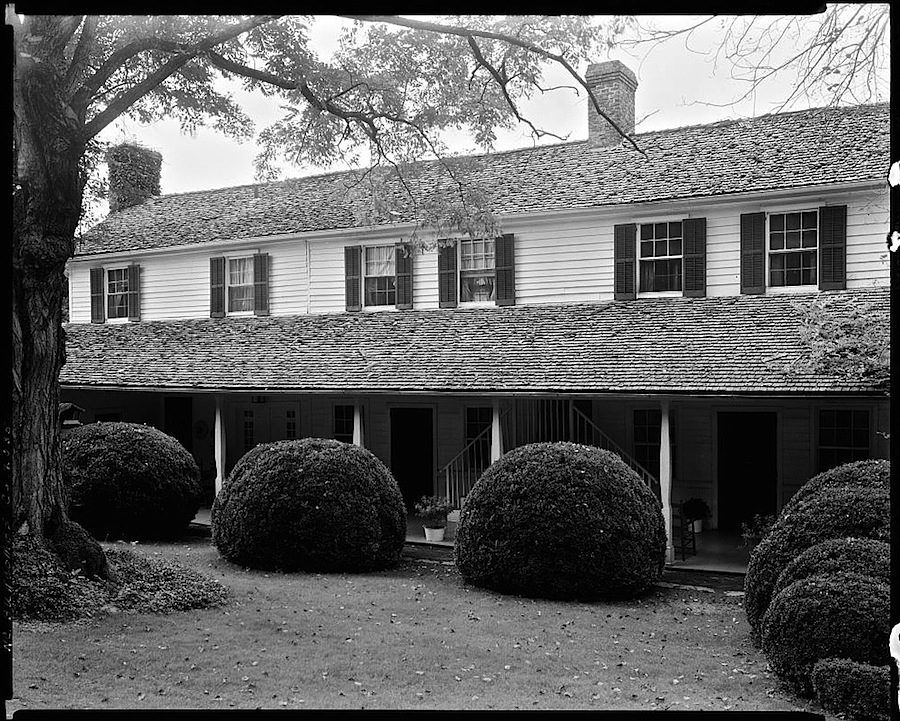
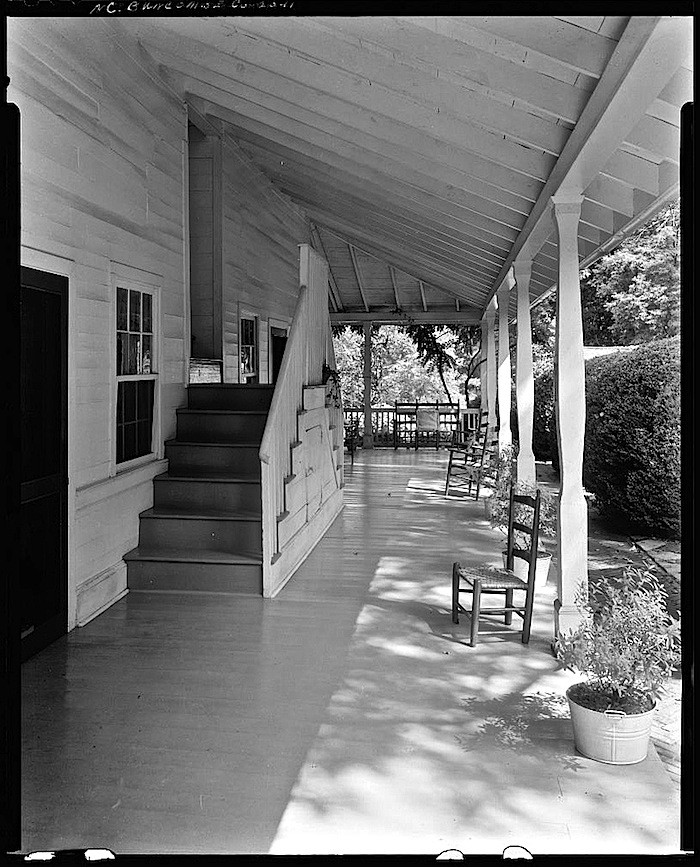
The Sunday porch: Sherrill Inn

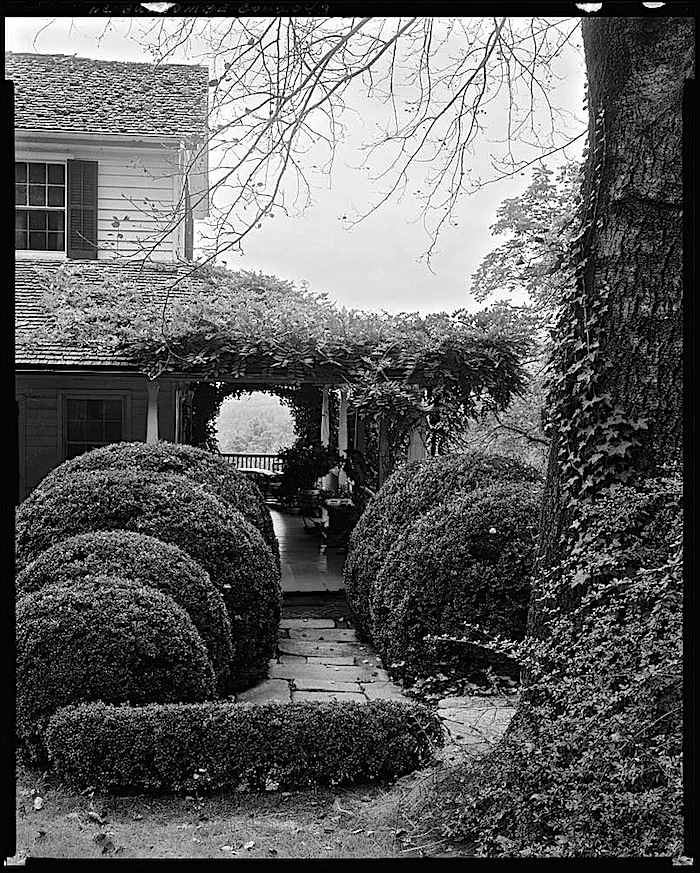
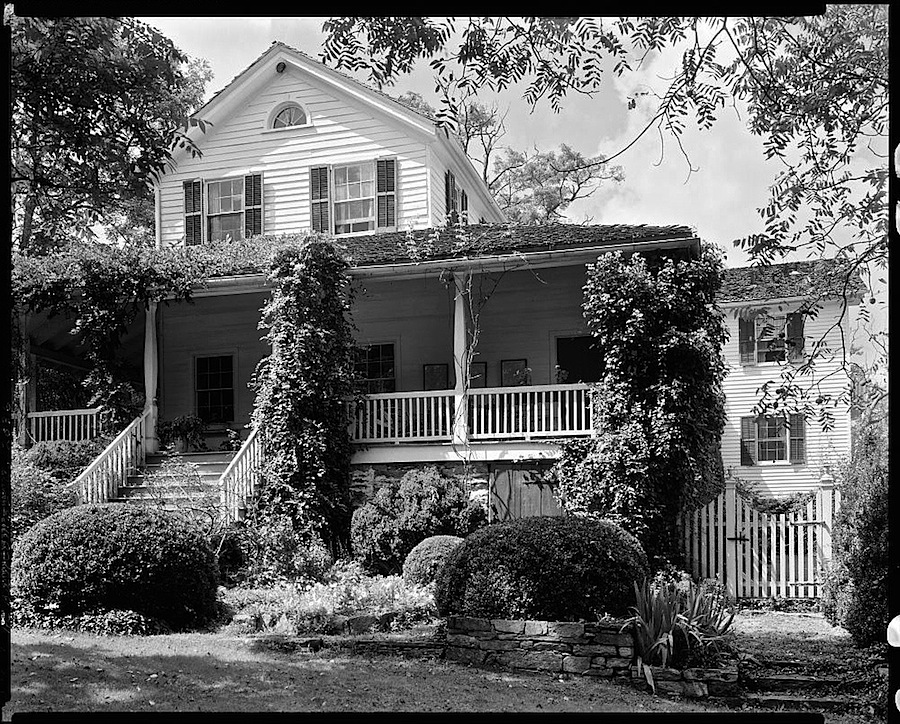
1 Sherrill Inn, North Carolina, 1938, via Library of CongressSherrill Inn, Hickory Nut Gap, Buncombe County, North Carolina, in 1938, by Frances Benjamin Johnston, via Library of Congress Prints and Photographs Division (all photos here).

I know, and even better. . .

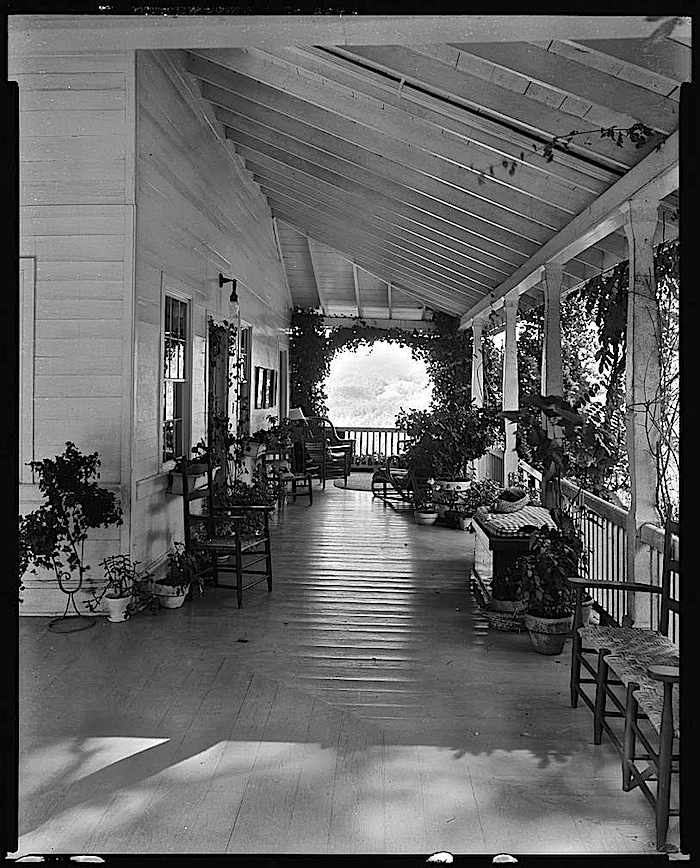
1a Sherrill Inn, North Carolina, 1938, via Library of CongressThis is what’s behind the boxwoods. (There’s another photo of this section of the porch here.)

In the nomination form for inclusion in the National Register of Historic Places, the porch columns were described thusly:

The porch is supported by gracefully tapered posts each rising without interruption from rectangular bases to approximately balustrade level, where it is quickly cinched in on all four sides; above, the post gently flares out to original width near eye level and then back in, until near the top the taper reaches its conclusion to flare quickly into a cap for the porch roof supporting plate to rest upon.

2bb Sherrill Inn, North Carolina, 1938, via Library of Congress

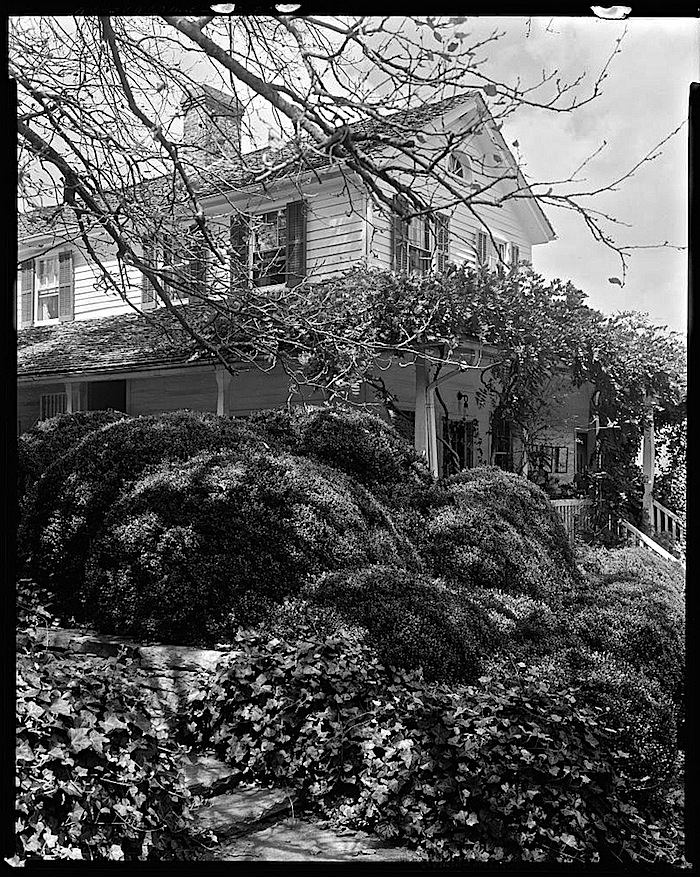
At the corner of the L-shaped porch,

2 Sherrill Inn, North Carolina, 1938, via Library of Congress

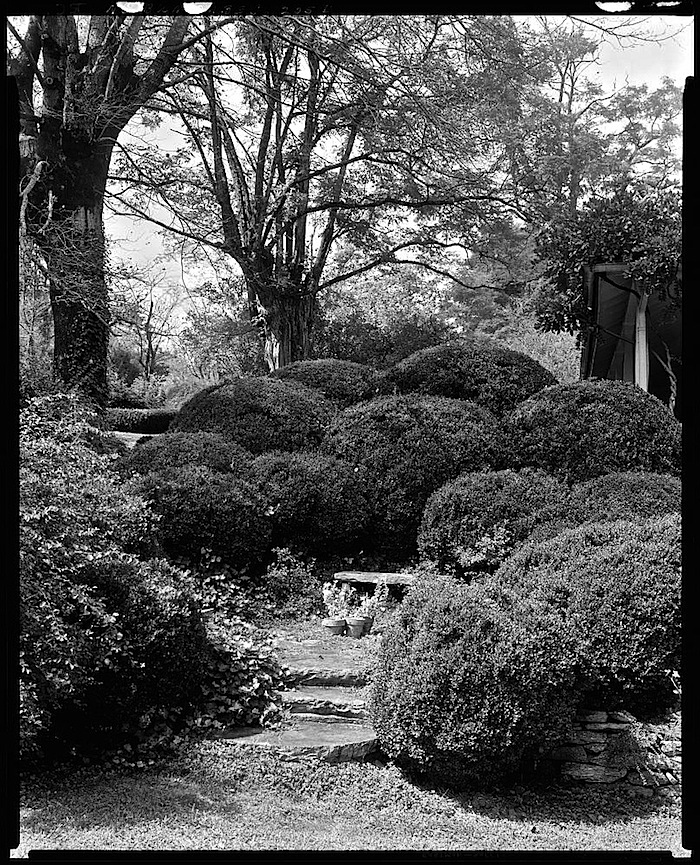
. . .the boxwoods cover the slope like giant boulders.

2a Sherrill Inn, North Carolina, 1938, via Library of Congress

And below is the porch after the turn,2b Sherrill Inn, North Carolina, 1938, via Library of Congress

2ba Sherrill Inn, North Carolina, 1938, via Library of Congress

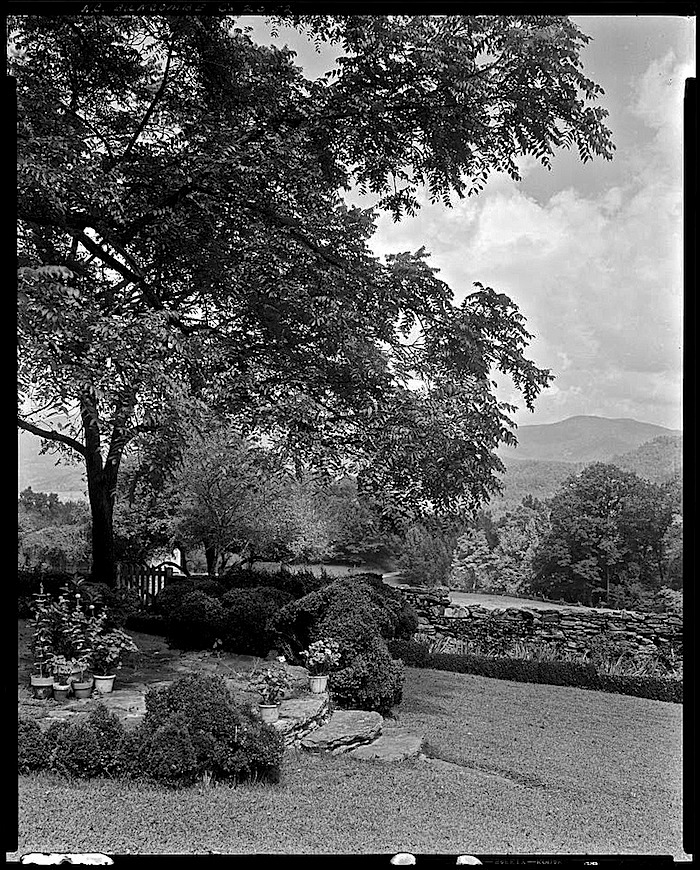
and a view of the mountains.5a Sherrill Inn, North Carolina, 1938, via Library of Congress

A bit of heaven.

Best of all, it seems that most of the old boxwoods are still in place.  The property is being run as an organic farm by descendants of the McClures, the couple who owned the Inn when Johnston took these photos.

Pictures of a beautifully styled wedding held at the Inn in recent years show it to have been in loving hands over the decades.

The house began as two log structures, possibly built by 1806 or maybe even earlier.  Between 1839 and 1850, Bedford Sherrill connected and enlarged those buildings to make an inn for travelers on the “Hickory Nut Turnpike,” an early stage route to western North Carolina.

There are many more details about the history and design of the house and grounds here.

The Sunday porch: airing the quilts

I’m afraid I have a bad cold, so today’s porch is a repeat from August 2012. 

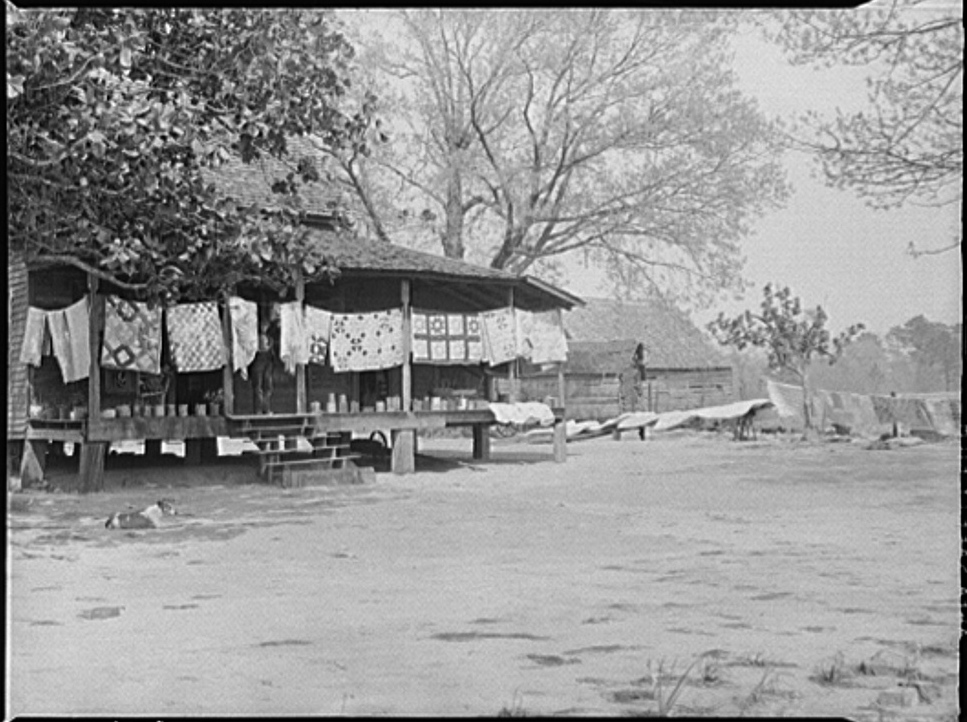
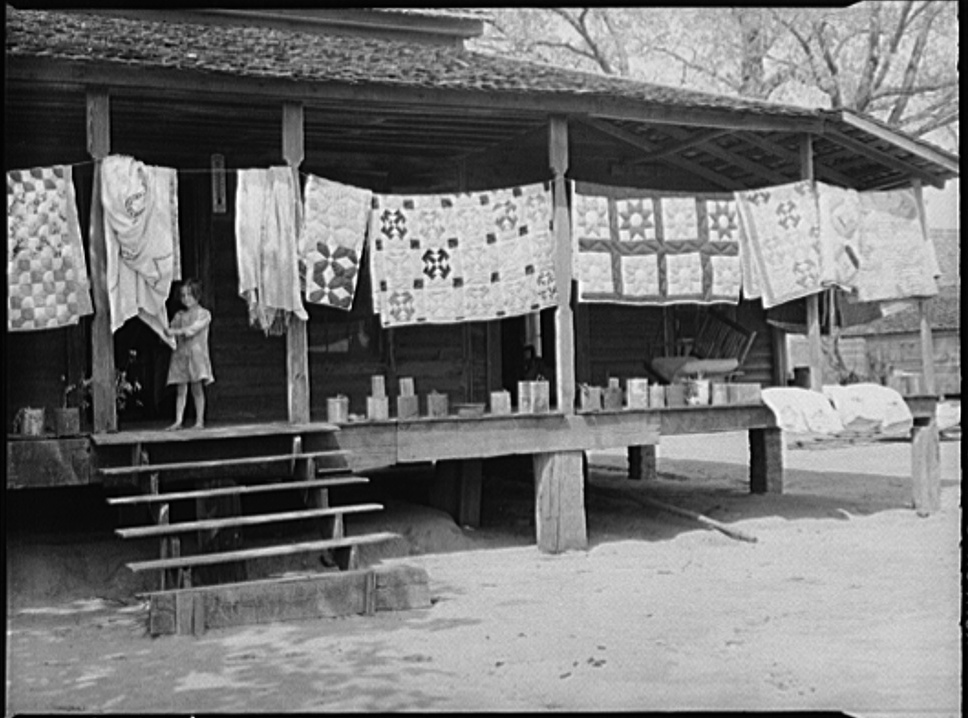
“Typical farmhouse, spring housecleaning, homemade quilts and bedding in sun. Coffee County, Alabama.” Photos taken April 1939 by Marion Post Wolcott.

Via Farm Security Administration/Office of War Information Black and White Negatives Collection, Library of Congress Prints and Photographs Division.

The Sunday porch: Palo Alto, Louisiana

. . .lovely, dark and deep.

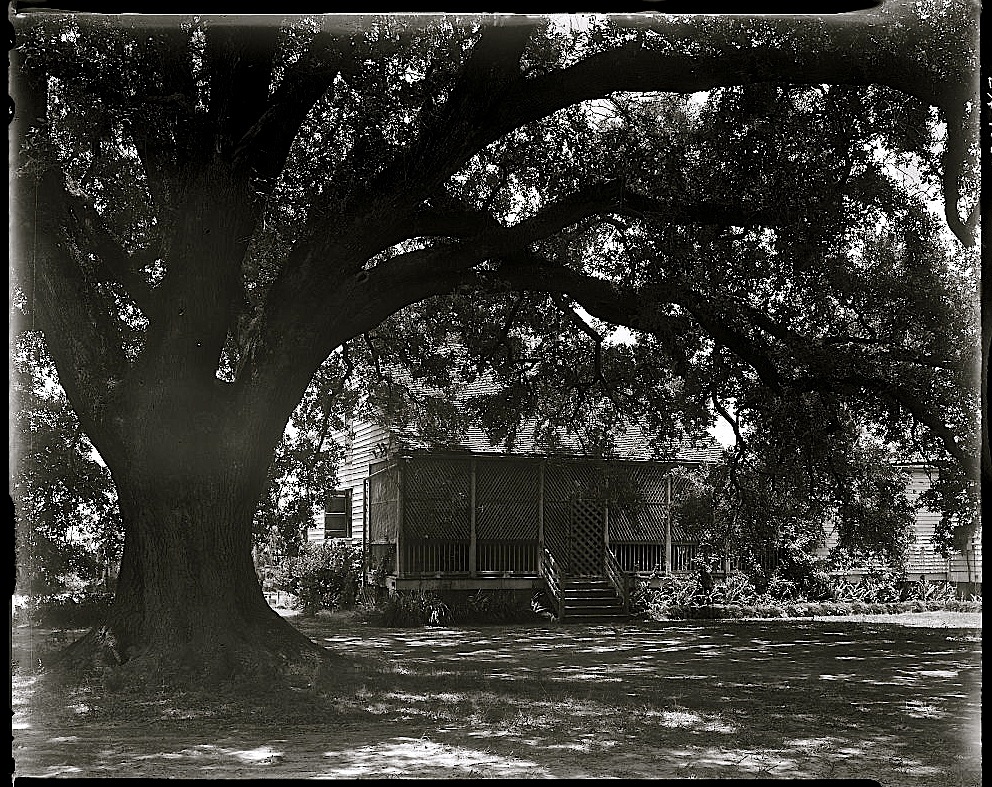
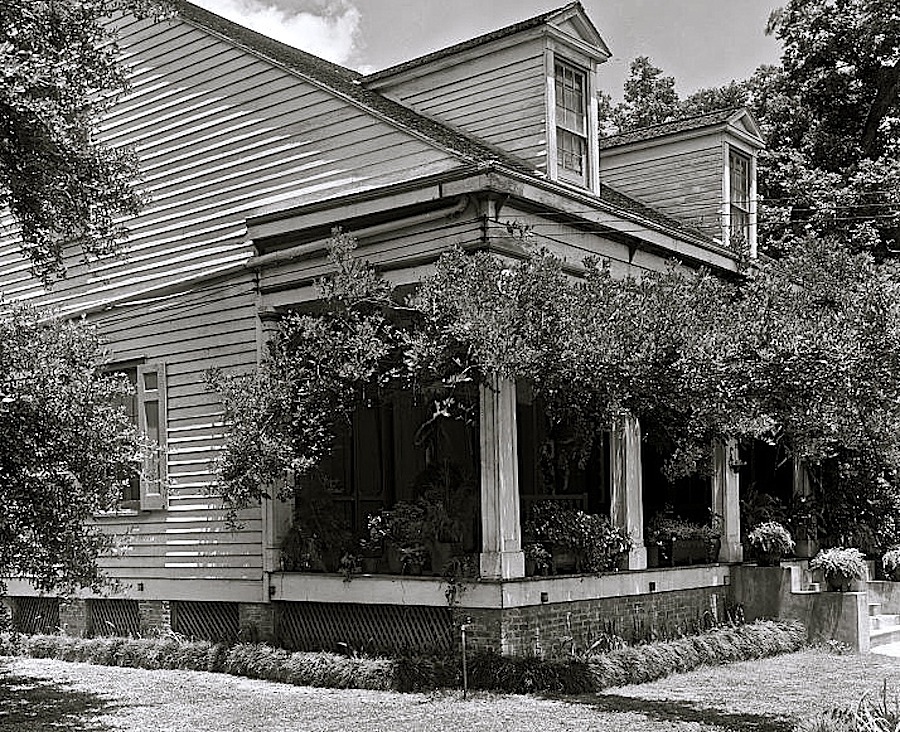
Palo AltoThe old kitchen wing of Palo Alto Plantation House near Donaldsonville, Louisiana, in 1938, by Frances Benjamin Johnston, via Library of Congress Prints and Photographs Division.

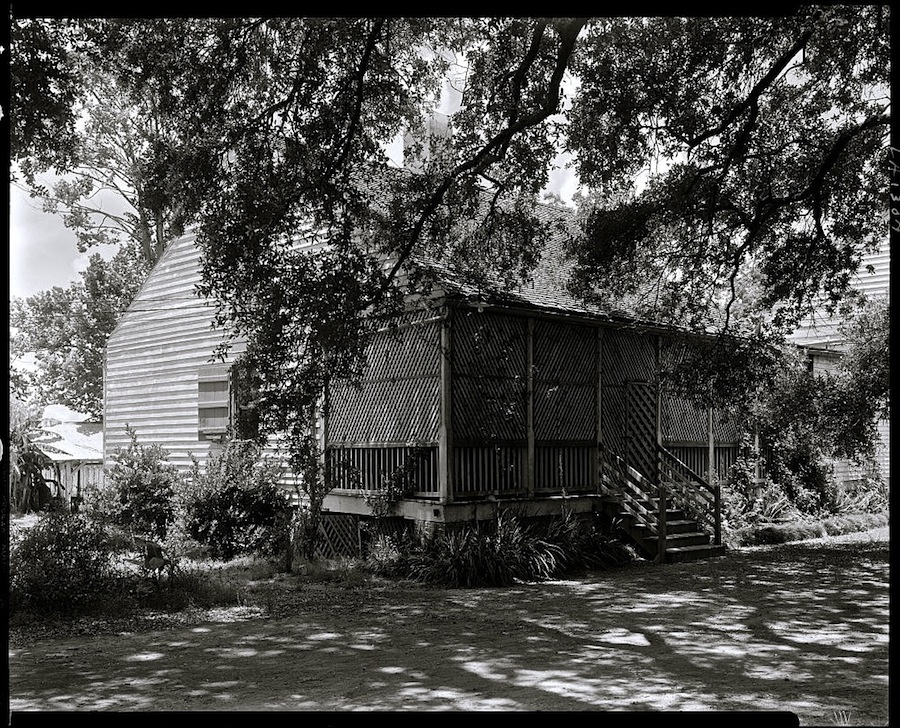
It’s almost too dark and deep to see very well in the above picture. However, this shaded, lattice-enclosed porch must have been the best possible place to sit and snap beans during Louisiana summers.

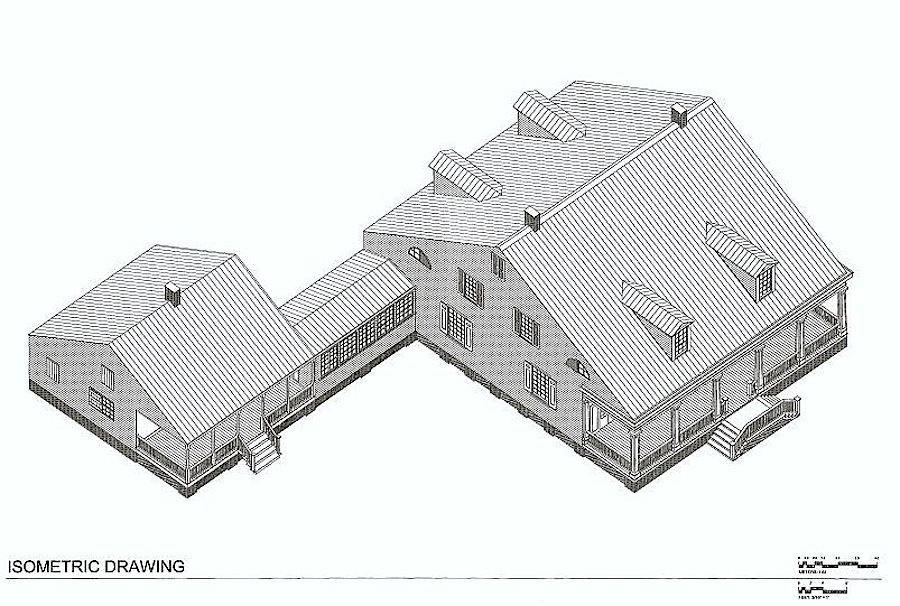
dark and deep 2The kitchen building was originally free-standing, about 22′ from the house. Later, it was connected to the main house by a breezeway.

Drawing by Max Miller of the entire Palo Alto Plantation House, 2003, HABS, via Library of Congress.
The entire Palo Alto Plantation House, 2003, HABS, via Library of Congress.

A 2003  Historic American Buildings Survey (HABS) drawing of the property seems to indicate that the enormous Quercus Virginiana or live oak tree at the right in the top photo was still standing at that time. Over 15 live oaks are shown in the area immediately in front of the house.

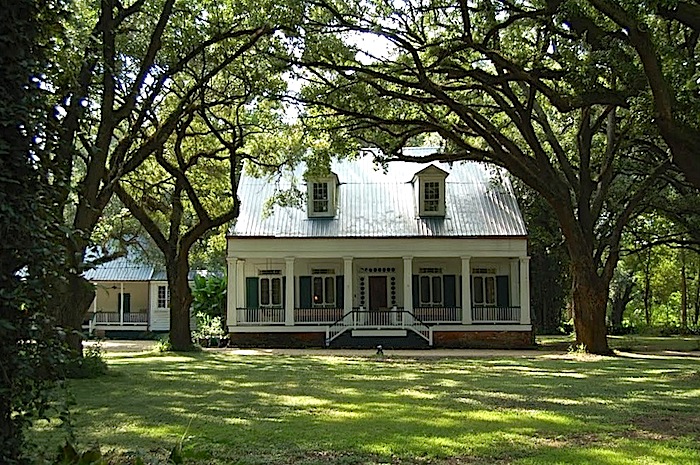
The principal part of the house is described in the HABS as an “Anglo-Creole type Louisiana plantation cottage decorated in Greek Revival style.” It was built in the mid to late 1850s and faces Bayou La Fourche, off the Mississippi River.

P.A. croppedIts porch, above,* is a “deeply undercut Acadian gallerie,” according to The Planter’s Prospect: Privilege and Slavery in Plantation Paintings.

In a c.1860 painting of Palo Alto shown and discussed in the book, the main porch originally had railings and double front steps.

2010, by cajunscrambler, Palo Alto, LAThe steps and railings were restored (and the lattice removed from the old kitchen porch) by the time of the HABS and this 2010 photo† above. The plantation (with 6,000 acres, according to one source) belongs to a family that has owned it for several generations. They now offer stays in a “Log Cabin” lodge and guided hunting trips on the property.

. . . the tree implies a quiet place
where pendulums might rest,
the heart decline to beat, a place
of time disclosing the lattice of time. . . .

John Beer, from “The Waste Land

*Photo (cropped by me) from 1938, by Frances Benjamin Johnston, via Library of Congress.

†Photo by cajunscrambler, via Panoramio.

The Sunday porch: Georgia

While he was a professor of sociology at Atlanta University, W. E. B. Du Bois compiled 363 photographs of African American life in Georgia into several albums — which he displayed at the 1900 Paris Exposition Universelle.

The pictures* here, taken in 1899 or 1900, were part of his collection. Click on any thumbnail in the gallery to scroll through larger photos.

Du Bois’s exhibited albums particularly featured middle-class African Americans and their homes and institutions, and dozens of fine individual portraits were included.

“The photographs of affluent young African American men and women challenged the scientific ‘evidence’ and popular racist caricatures of the day that ridiculed and sought to diminish African American social and economic success,” according to the Library of Congress’s online catalogue.

In 2003, the Library of Congress published a book of 150 of the images, entitled A Small Nation of People.  You can listen to a good NPR interview with its co-author, historian Deborah Willis, here.  In it, she mentions porches being photographed for the exhibit, as places “central to family gatherings.”


*All via Library of Congress Prints and Photographs Division.