
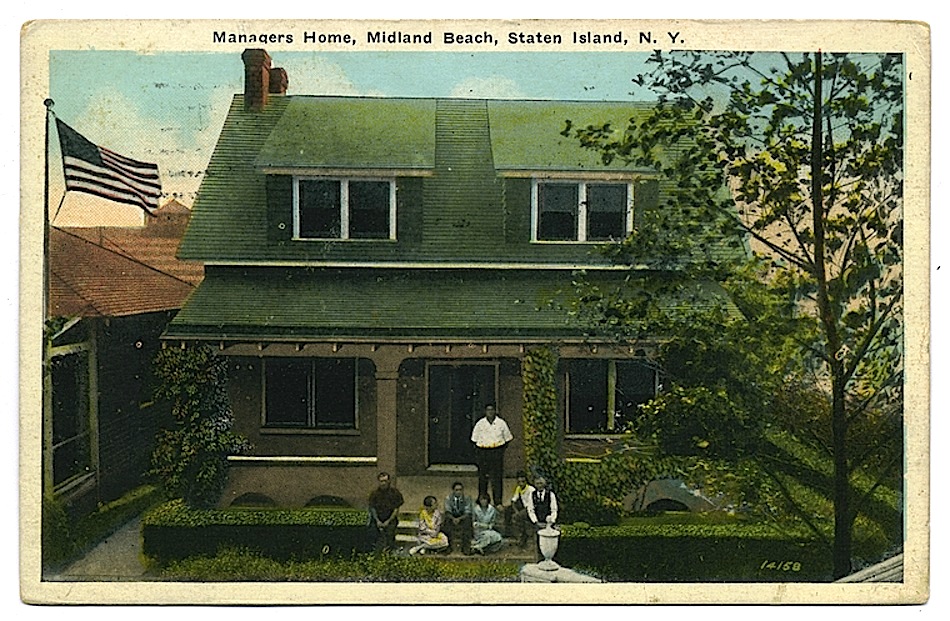
 “Managers(sic) Home, Midland Beach, Staten Island, N.Y.,” ca. 1920s or 30s, via New York Public Library Digital Collections.
Midland Beach (or Woodland Beach) was a popular resort in the late 19th and early 20th centuries.
“Managers(sic) Home, Midland Beach, Staten Island, N.Y.,” ca. 1920s or 30s, via New York Public Library Digital Collections.
Midland Beach (or Woodland Beach) was a popular resort in the late 19th and early 20th centuries.
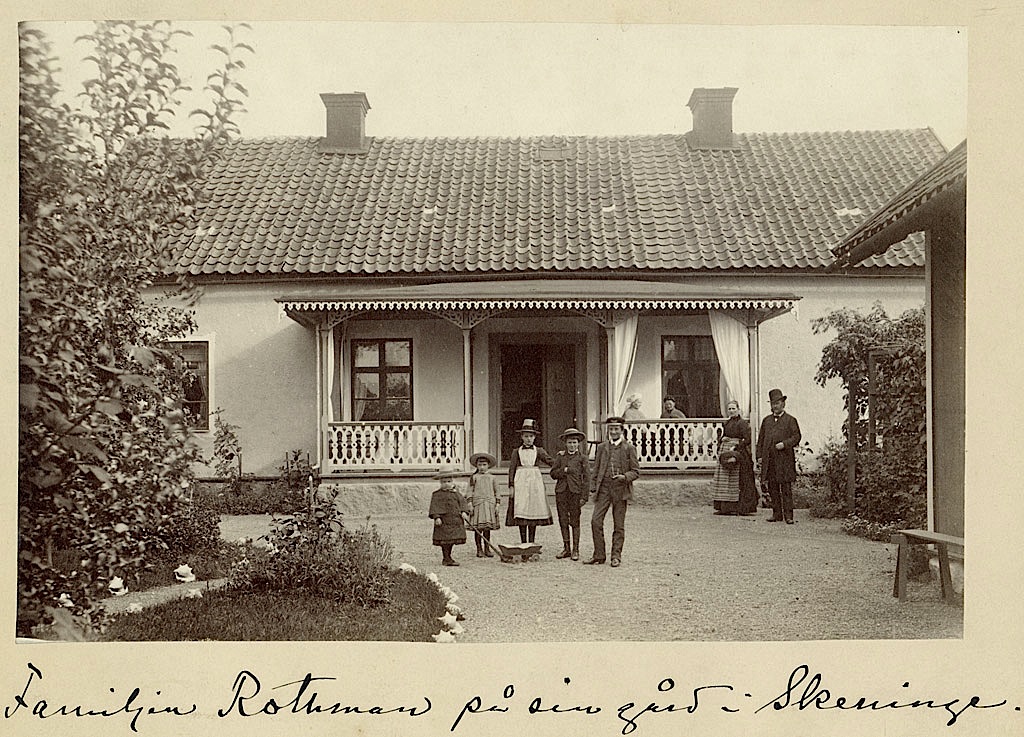 “Rothman family at their home in Skänninge, Sweden,” 1880s, by Carl Curman, via Swedish National Heritage Board Commons on flickr.
The photo shows Anders Nicolaus Rothman (who was town mayor) and his wife, Maria Charlotta (sister of the photographer), on the right. Their children are standing in the center. Notice the conch shells bordering the grass.
You can click on the picture to enlarge it.
 “Ray Allen family near Black River Falls, Wisconsin,” June 1937, by Russell Lee, via Library of Congress Prints and Photographs Division.
In the early summer of 1937, Lee took a number of photos around the community of Black River Falls. Most were related to a land use project of the U.S. Resettlement Administration, for which he was a photographer.
The principal employment in Black River Falls, since its founding in 1839, was logging and sawmills. However, many of the people Lee photographed there were farming cut-over areas.
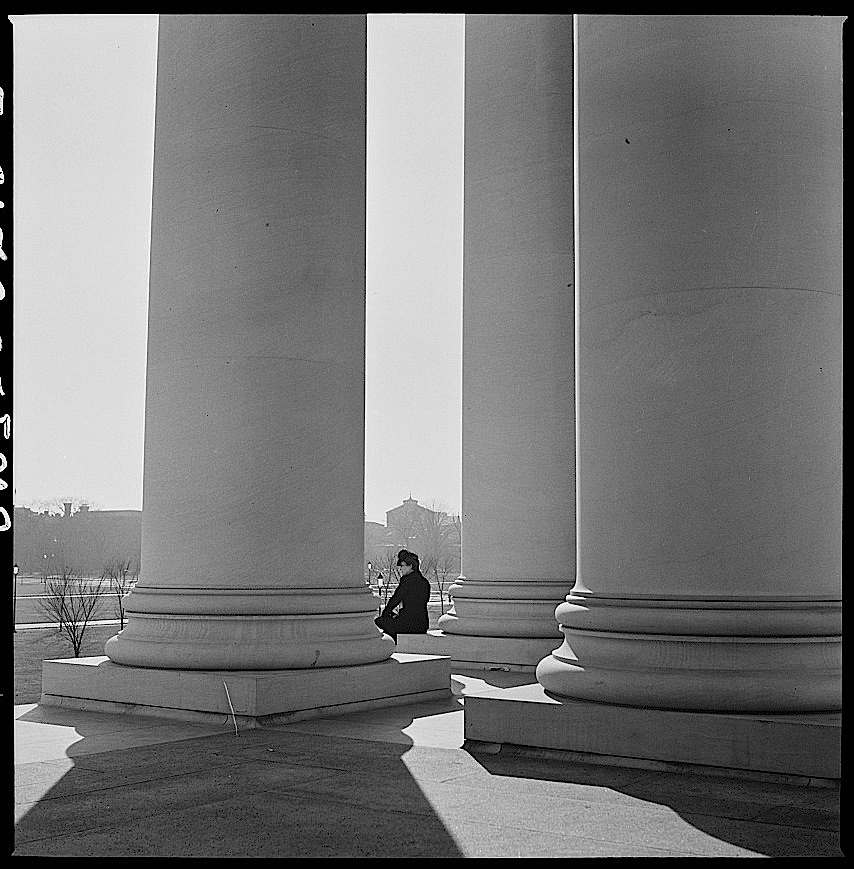 Portico of the National Gallery of Art, Washington, March 1943, by Esther Bubley, via Library of Congress Prints and Photographs Division.
The captions of similar Bubley photos indicate that the image was taken on a Sunday afternoon as she was following sightseeing servicemen around The Mall taking pictures for the Office of War Information Service.
An encore porch from 2013. . .
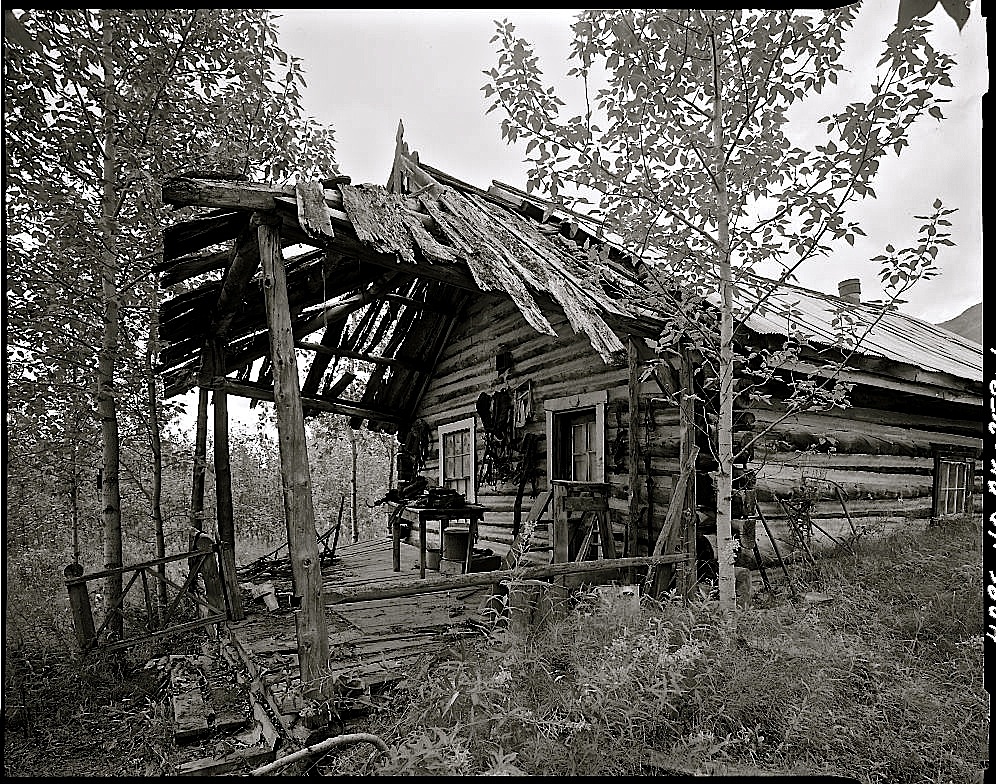 Front porch, near the Koyukuk River at Wiseman Creek, Wiseman, Alaska, July 1984, by Jet Lowe for an Historic American Buildings Survey (HABS), via Library of Congress Prints and Photographs Division (all photos here).
For over six decades, this little porch sheltered many hours of masculine conviviality. In 1913, it fronted the Siverly and Bowker Saloon. The following year, the building was sold to a fraternal organization, Pioneers of Alaska, and then used as one of its local chapters — an “Igloo;” it was Igloo No. 8.
By 1972, the building had been sold again. At the time of these photos, it was the home of the owner’s son.
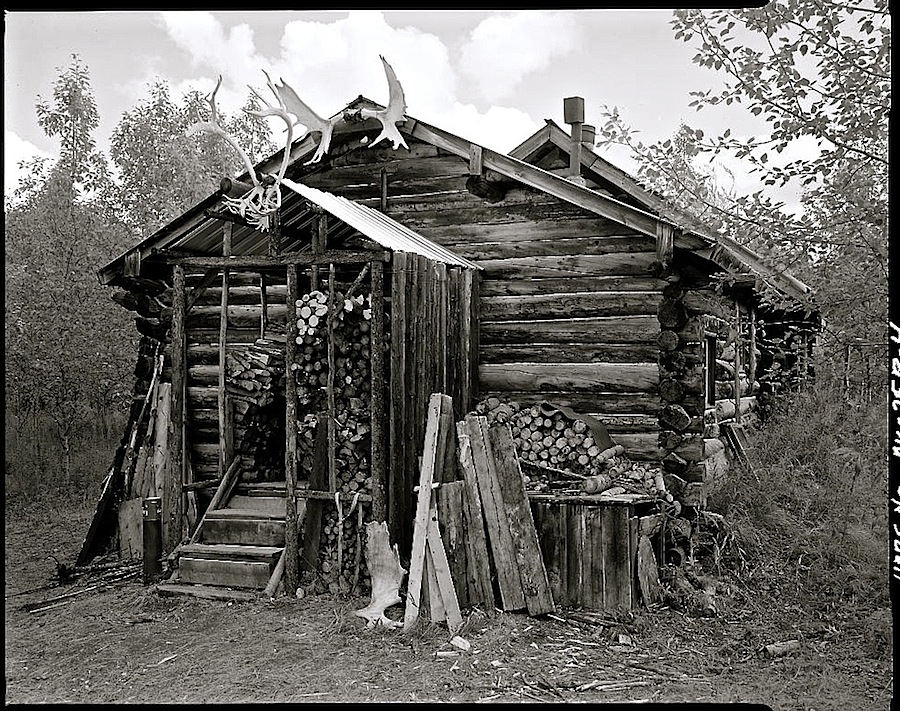 Above: the back porch and entrance to the kitchen.
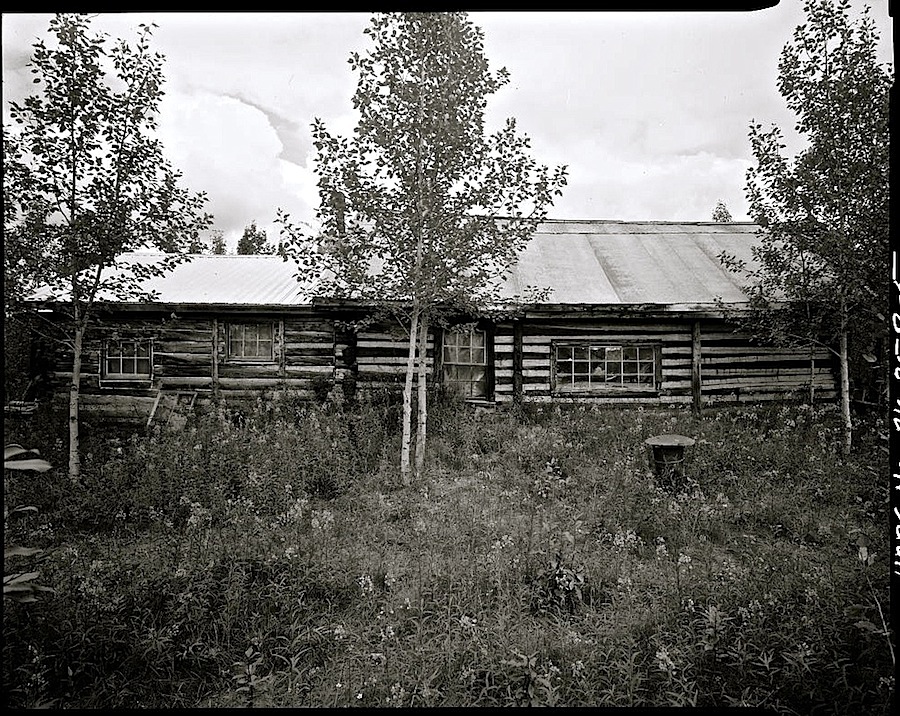 Above: the side view.
 enclos*ure
