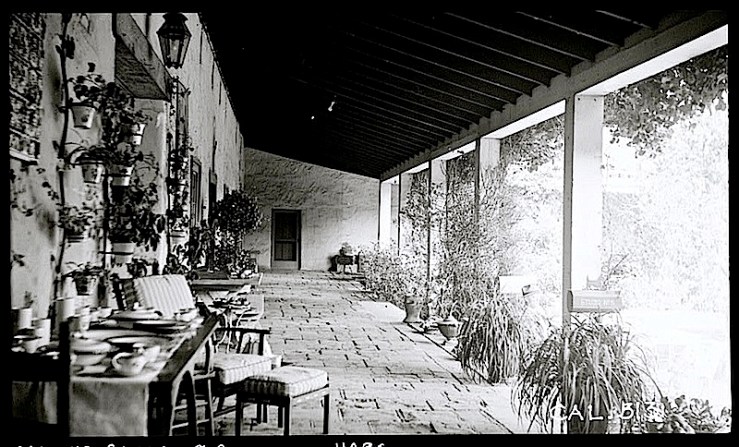
 La Casa de la Guerra, Santa Barbara, California, September 1936, by Henry F. Withey for an Historic American Buildings Survey (HABS), via Library of Congress Prints and Photographs Division.
The adobe house was built between 1819 and 1826 by José de la Guerra y Noriega. His descendants lived in parts of the house until 1945 (other parts were renovated as offices or shops after 1919).
“It is unquestionably the major monument of the Spanish and Mexican period in Santa Barbara. Architecturally it is also of great significance for the part it played in the creation of the 20th century Spanish Colonial revival in southern California,” according to the 1937 HABS report.
The house still stands and is open to the public as a museum.

 “Self and Dog family. Mrs. D’s house,” between 1880 and 1891, photographer unknown, Pontotoc County, Mississippi, via Mississippi Department of Archives and History Commons on flickr.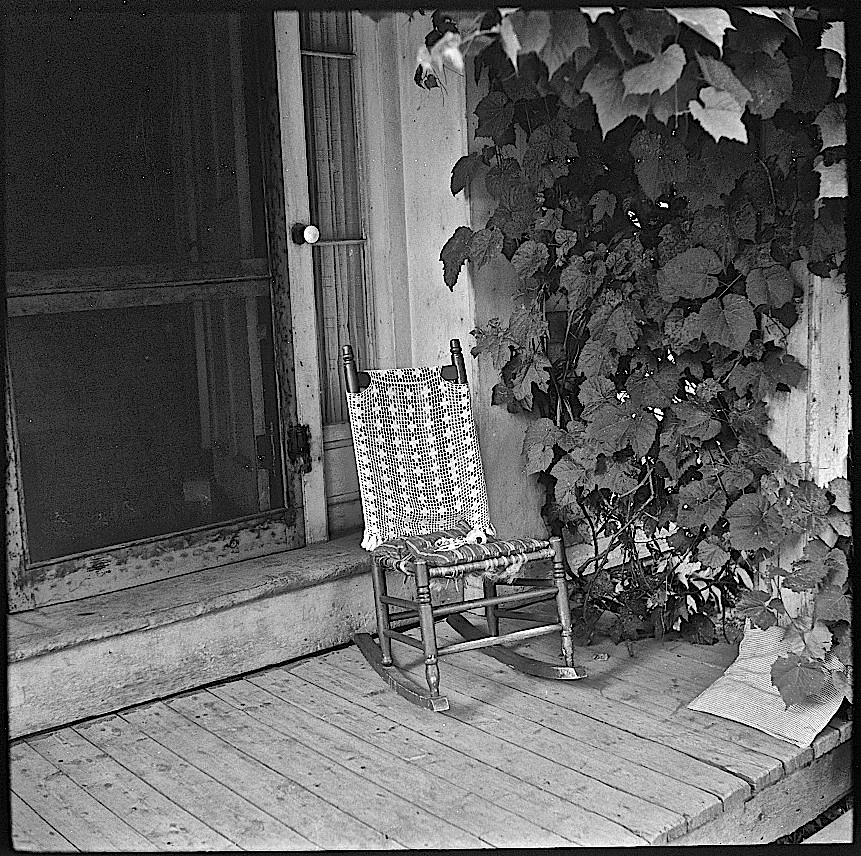

 enclos*ure