Old Lodge

painter-in-english-garden-nationaal-archiefs-netherlands

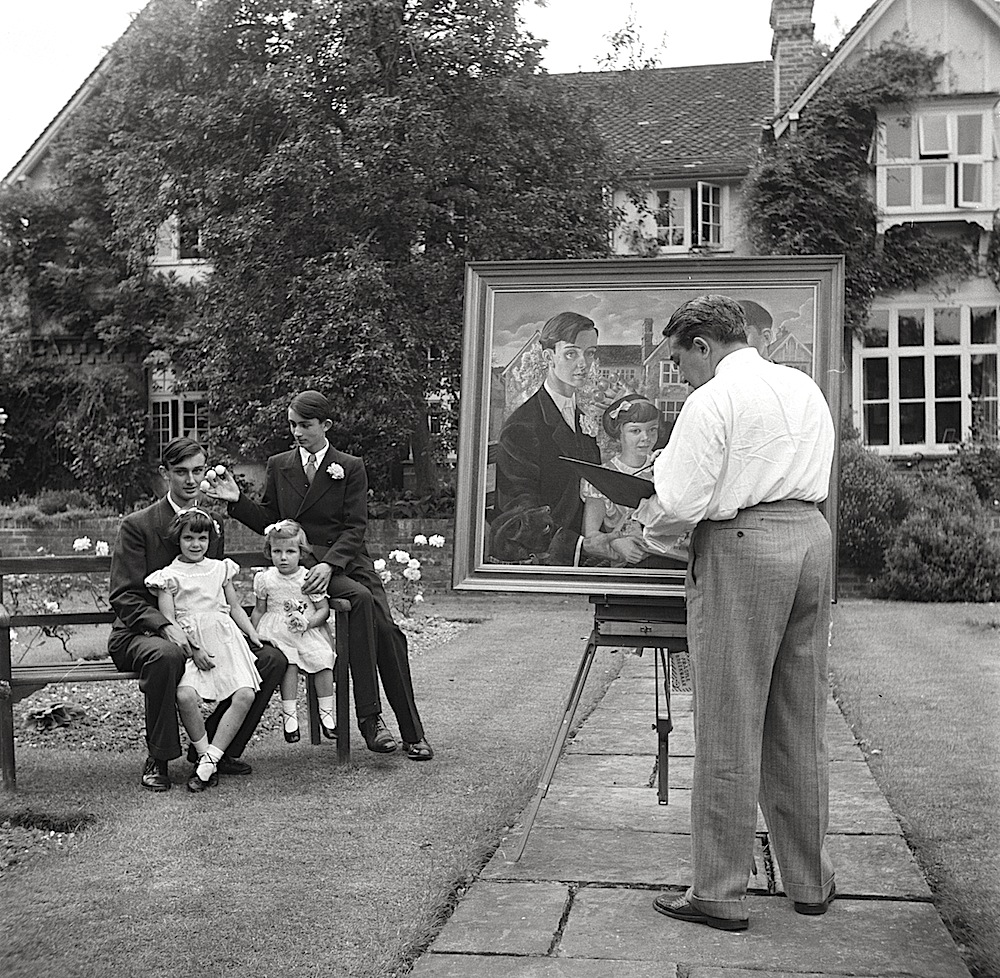
The artist Eppo Doeve painting the Martineau children at “Old Lodge in Terlow (Buckinghamshire),” Great Britain, July 1954, by Willem van de Pollvia Nationaal Archief (Netherlands).

I have not been able to find out anything about these siblings or the home. I cannot find an Old Lodge in Terlow, Buckinghamshire, or indeed a Terlow anywhere in Great Britain. The Martineau family is quite important in Birmingham (an ancestor of the Duchess of Cambridge was a Martineau), but apparently not in Buckinghamshire.  Perhaps the photographer made some mistake in his notes.

The son on the right seems to have three golf balls between his fingers. A young amateur champion?
Aalst, the Netherlands

two-women-in-garden-nationaal-archief-netherlands
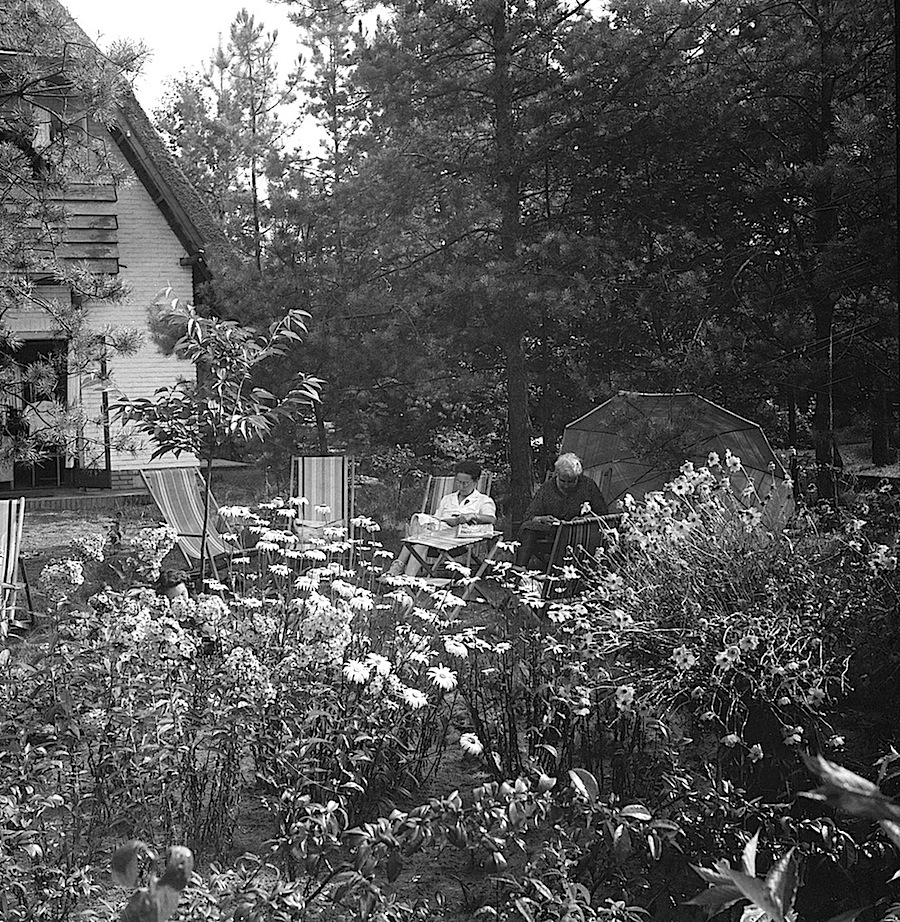
Three women in the garden; the one on the right is probably the mother of the photographer, Aalst, Gelderland, the Netherlands, undated, by Willem van de Pollvia Nationaal Archief (Netherlands).

Tulip fields

Having a picnic near the tulip bulb fields of Aalsmeer, the Netherlands, 1960, via Collectie SPAARNESTAD, Nationaal Archief Commons on flickr.

The largest flower auction in the world is in Aalsmeer. There’s an interesting video clip of it here.

Spring in Berlin


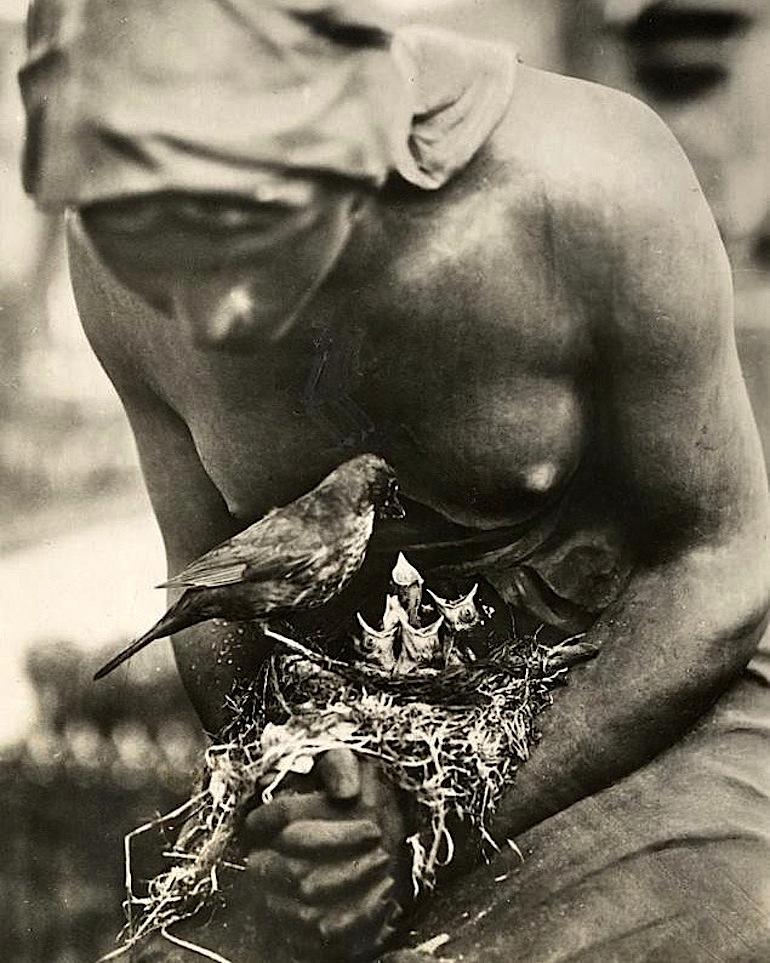
“Blackbird’s nest in the folded hands of a statue on a graveyard in Berlin, Germany,” 1932, Het Leven photographer, via Nationaal Archief (Netherlands) Commons on flickr.

Western Front

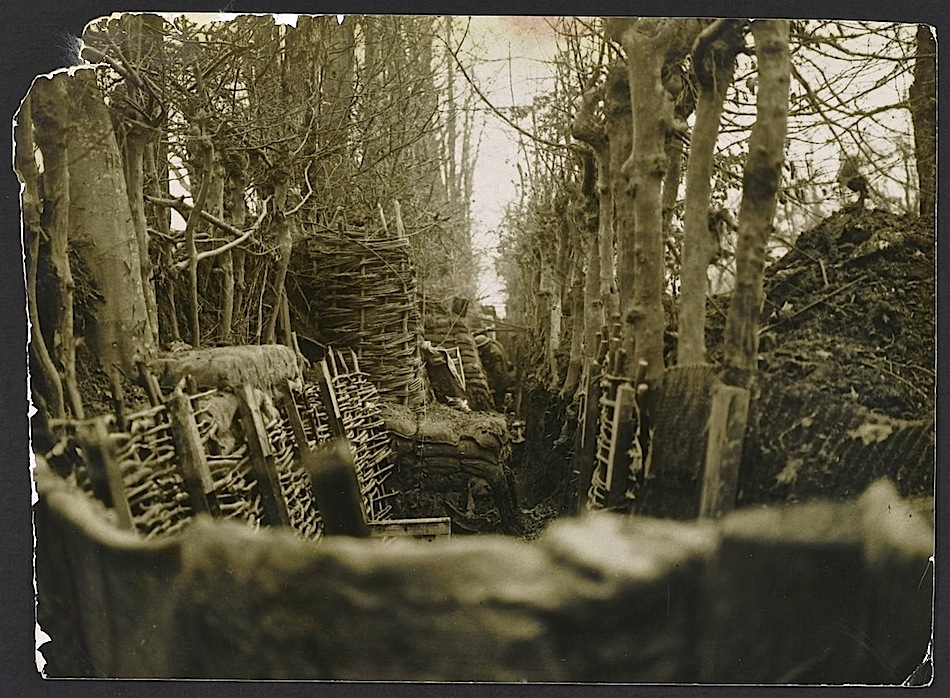
wwi-british-trench-nationaal-archief-on-flickrOfficial photo of the recent English progress at the Western Front. A well hidden trench,” between 1914 and 1918, via Nationaal Archief (of the Netherlands) Commons on flickr.

It occurred to me that some, or a lot, of the wattle could have been woven by men who were gardeners before the war.

WWI trenches were not actually straight, but zigzagged to prevent enemy soldiers from firing down the axis. They were normally about 4 m. (12′) deep.