

Hand-colored photographs by the American Colony of Jerusalem taken between 1900 and 1946, showing the Jordan River, olive trees, and “Bethlehem, Juda, and Blue Galilee.”

All photos via the Matson Collection of the Library of Congress.

Hand-colored photographs by the American Colony of Jerusalem taken between 1900 and 1946, showing the Jordan River, olive trees, and “Bethlehem, Juda, and Blue Galilee.”
All photos via the Matson Collection of the Library of Congress.
I’ll take one more pass at the interesting photographs of the Library of Congress Matson Collection (American Colony of Jerusalem).

The American Colony photographers took many pictures of the Garden of Gethsemane during the first half of the 20th century. Presumably, they were big sellers in the Colony’s tourist shop near Jaffa Gate.

‘Gethsemane’ is a Greek word derived from an Aramaic word for ‘oil-press.’ The Roman Catholic-administered garden is located at the foot of the Mount of Olives. It is one of four locations in the area currently claimed by different religions as the place where Jesus prayed the night before the crucifixion.

In the gospels of Matthew and Mark, it is called by a word meaning ‘place,’ ‘property,’ or ‘estate.’ In the gospel of John, the Greek word ‘kepos’ is used; it can mean ‘garden,’ but also ‘cultivated tract of land.’
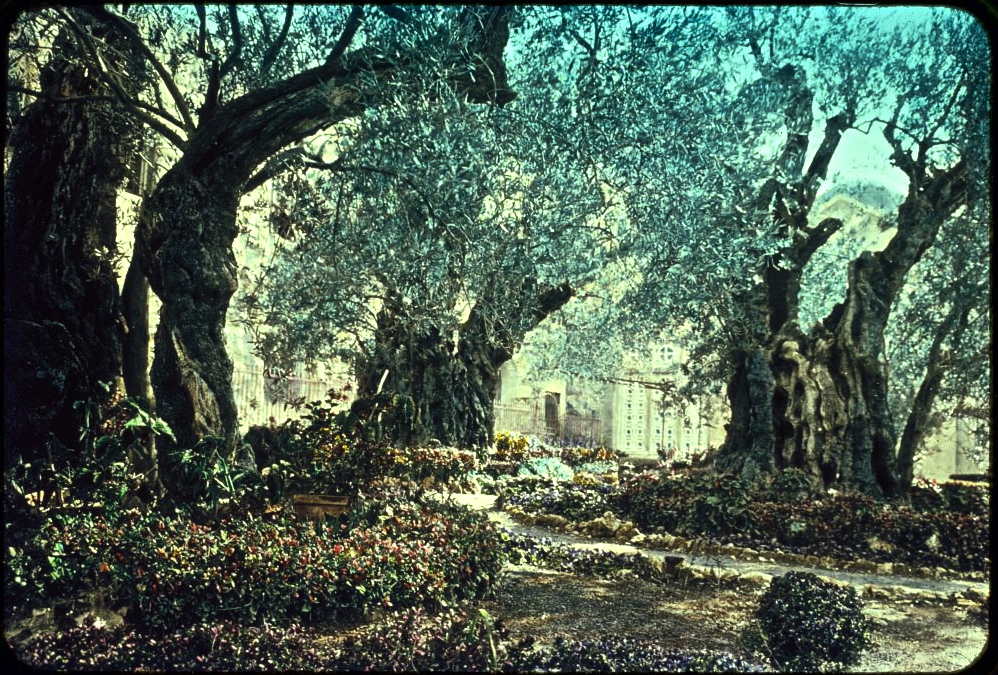
The first recorded pilgrimage to the site was made in 333 A.D. by the anonymous “Pilgrim of Bordeaux,” who recorded his travels in the Holy Land in Itinerarium Burdigalense.

The building attached to the garden, the Church of All Nations, was built in the 1920s. The garden’s olive trees are said to be 2,000, 1,000, or 900 years old, depending on the source.
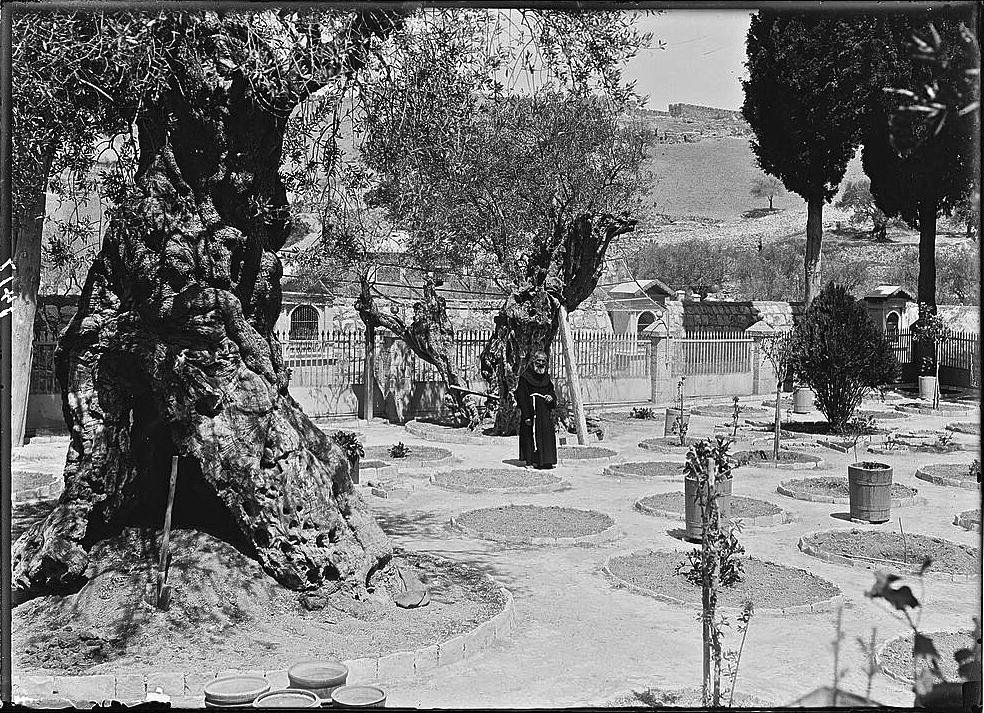
In 1915, a plague of locusts swept through Palestine, stripping areas — including the garden — of all vegetation. The American Colony was asked to photograph the devastation, which caused food shortages, by the Ottoman-Turkish governor for “Syria and Arabia.”
The Garden of Gethsemane remains a popular tourist and pilgrimage destination today.
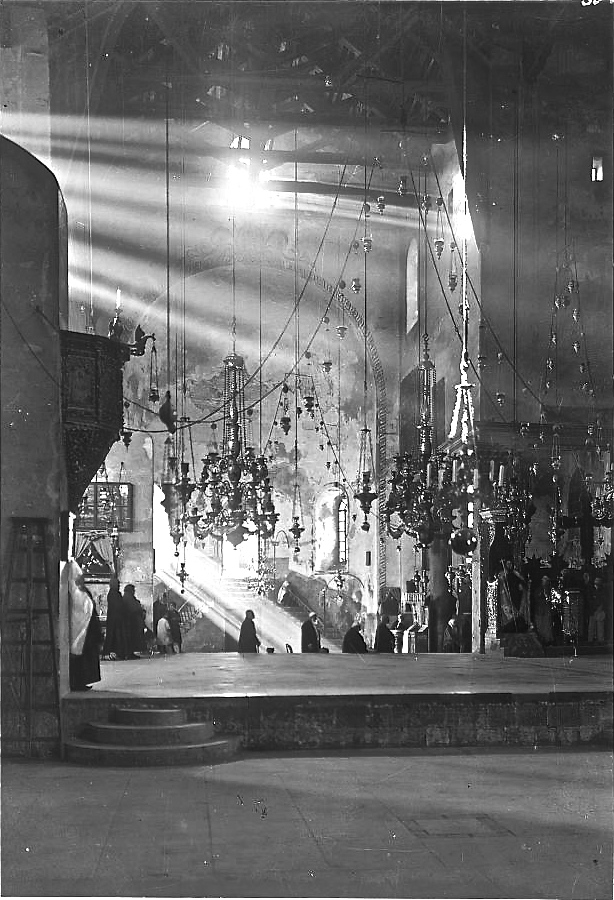
“Bethlehem Church of the Nativity,” c. 1925-1946, American Colony of Jerusalem, via the Library of Congress Prints and Photographs Division.
While looking through the online catalogue of the Library of Congress for photos of gardens and landscapes, I keep coming across pictures by the American Colony of Jerusalem.

Around 1898, a member of the colony, Elijah Meyers, began photographing places and events around the region and eventually formed a photography service that earned income for the group. He was later joined in the endeavor by Lewis Larsson and G. Eric Matson, among others. When the colony dissolved in the early 1930s, Matson and his wife took over the studio and its archives and renamed it the Matson Photo Service.

Matson moved to California in 1946. He began donating negatives and contact sheets to the Library of Congress in the 1960s.
Among the over 20,000 images in the Matson Collection are about 200 photos of “wild flowers of Palestine.” In 1907, the Colony had published The Plants of the Bible and, in 1912, The Jerusalem Catalogue of Palestine Plants. The group also sold photographs and stereographs from its Jerusalem store and contributed pictures to National Geographic articles.

The photos that I’ve chosen are best seen in a larger size, so please click on the first thumbnail below to scroll though them. The plant names come from the images’ original labels.


![Flowers [cyclamen], c. 1898-1946.](https://i0.wp.com/enclosuretakerefuge.com/wp-content/uploads/2012/05/14021v.jpg?ssl=1 "14021v")
![Flowers [cyclamen], c. 1898-1946.](https://i0.wp.com/enclosuretakerefuge.com/wp-content/uploads/2012/05/10199v.jpg?ssl=1 "10199v")


![Flowers [wild garlic -- Allium ampeloprasum L.], c. 1898-1946.](https://i0.wp.com/enclosuretakerefuge.com/wp-content/uploads/2012/05/10205v.jpg?ssl=1 "10205v")


![Golden Gate and east wall seen through group of century plants [agave], c. 1900-1920.](https://i0.wp.com/enclosuretakerefuge.com/wp-content/uploads/2012/05/19021v.jpg?ssl=1 "19021v")

I think about pomegranates, as I put the seeds on my oatmeal every morning. The tree in our garden has been producing fruit pretty steadily since September.
Wikipedia says, “In the Northern Hemisphere, the fruit is typically in season from September to February. In the Southern Hemisphere, the pomegranate is in season from March to May.” Perhaps because Rwanda is pretty much on the equator, we get both seasons.
Looking for poems about pomegranates, I found this poem by Billy Collins. It has only a little to do with the fruit, but it’s funny.
 enclos*ure