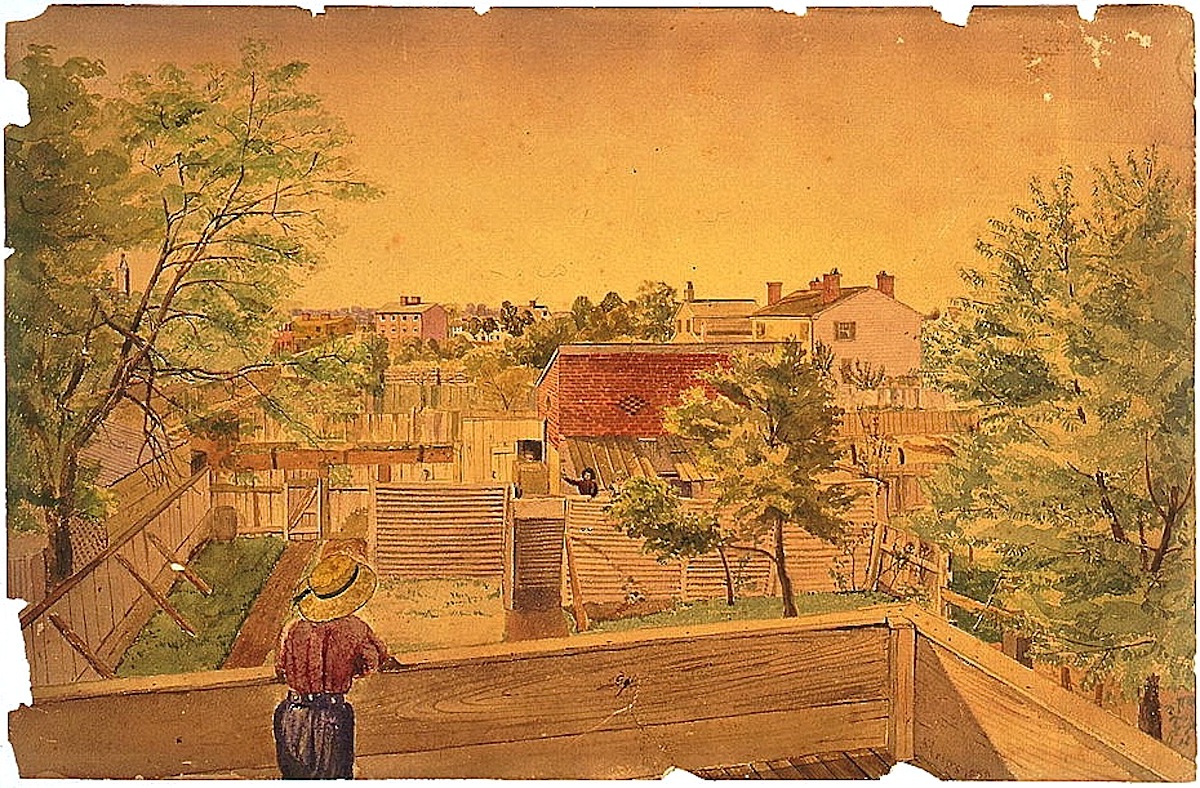
View from the second story of the home of Mrs. John Rodgers at Franklin Row, K Street, N.W., between 12th and 13th Streets, in Washington, D.C.
The watercolor* depicts the backyard and adjacent neighborhood and shows children standing on balconies.
It was painted by Montgomery C. Meigs. Mrs. Rodgers was Meigs’s mother-in-law and the widow of Commodore John Rogers, a naval hero.
Despite the modest appearance of the yard and surroundings, Mrs. Rodgers was wealthy and socially well-connected. Even well-to-do Washington in the 1850s seems to have had a somewhat ramshackle look.
You will need to click on the image to get a larger view. Here’s what the downtown city block looks like now.
As a military engineer, Meigs left his mark on the capital. In the 1850s, he supervised the building of the Washington Aqueduct and the Union Arch Bridge, as well as the wings and dome of the Capitol Building. He also played an important role in the early design of Arlington National Cemetery, and he designed and supervised the construction of the Pension Building (now the National Building Museum).
*Via Library of Congress Prints and Photographs Division.
“Fruit jars being sterilized on old lady Graham’s back fence in berry season. Near Conway, Arkansas,” June 1938, by Dorothea Lange, via Library of Congress Print and Photographs Division.
We just gather and can peas, beans, berries, and sausage when we butcher the hogs in the winter. We put up seventy-five quarts of berries, sixty of beans, sixty of kraut, thirty of grapes and twenty of peaches. I swapped two bushels of grapes and got two bushels of peaches and I swapped one bushel of grapes for one bushel of apples.
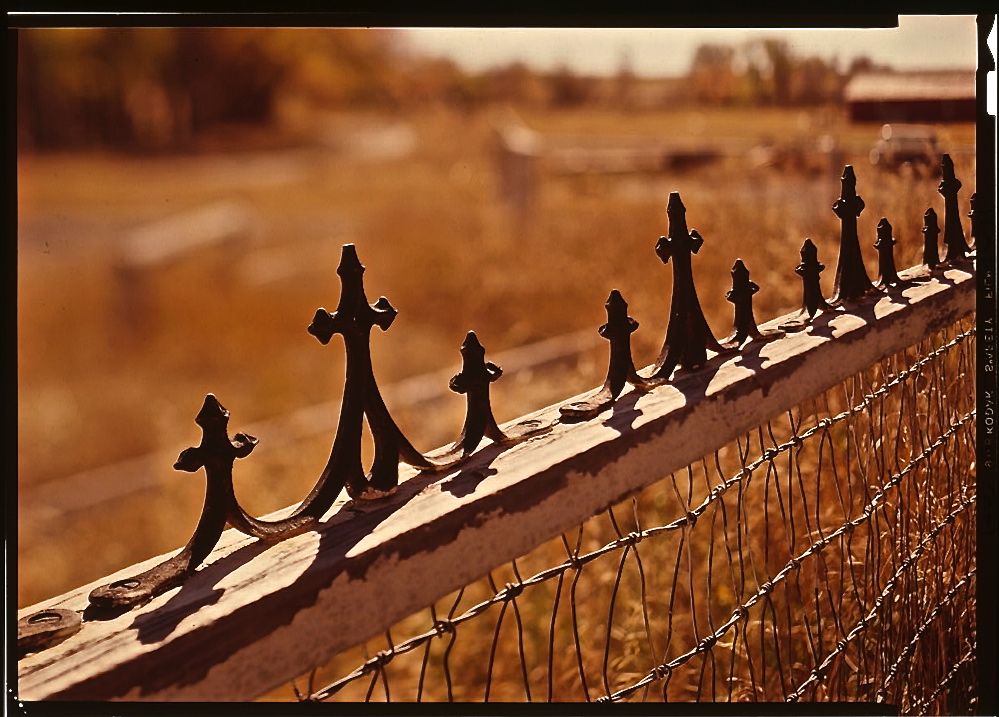
Cast iron fence detail, by Jack Boucher, via Library of Congress Prints and Photographs Division.
The photo is part of a 1974 Historic American Buildings Survey (HABS) of Swan Land and Cattle Company, Platte County, Wyoming, a large cattle ranch operation founded in 1884.
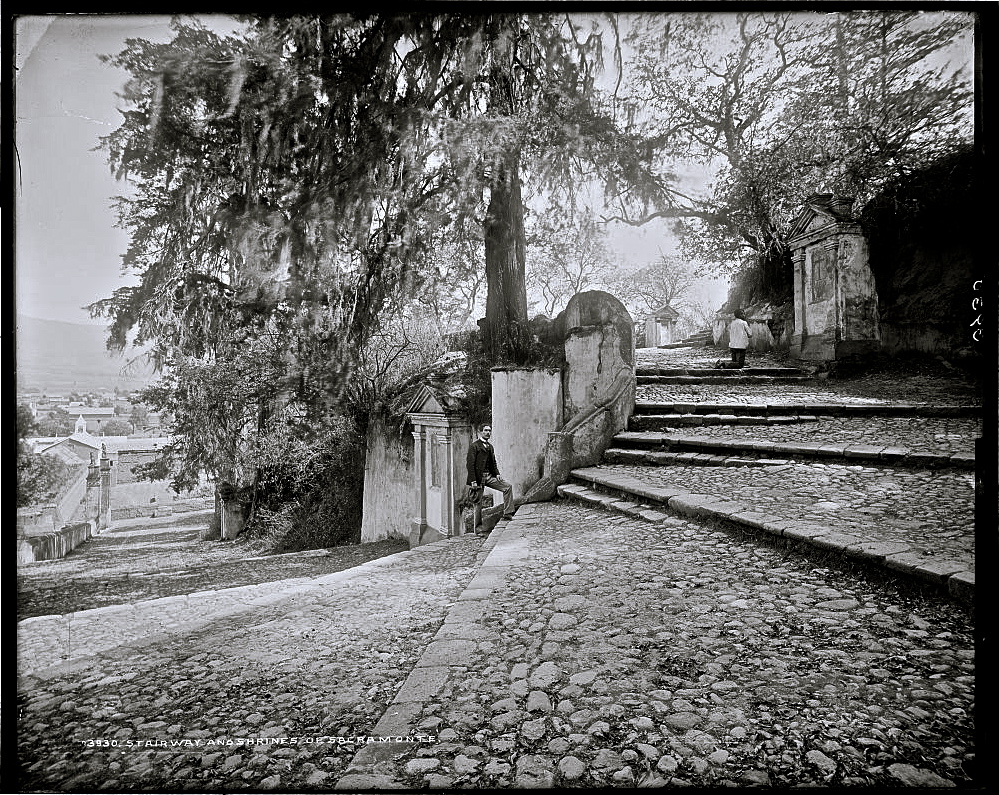
Stairway and shrines of Sacromonte, near Amecameca, Mexico, ca. 1880-1897, by William Henry Jackson, via Library of Congress Prints and Photographs Division.
View from an upstairs window of the house. All photos via the Library of Congress Prints and Photographs Division.
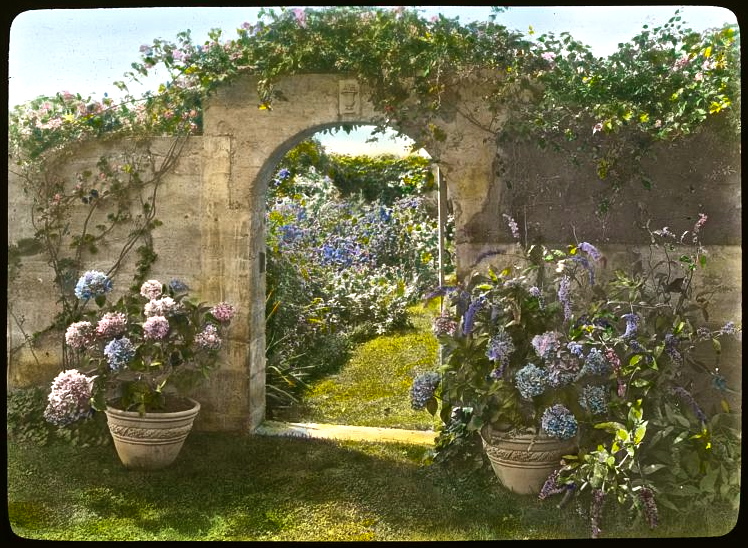
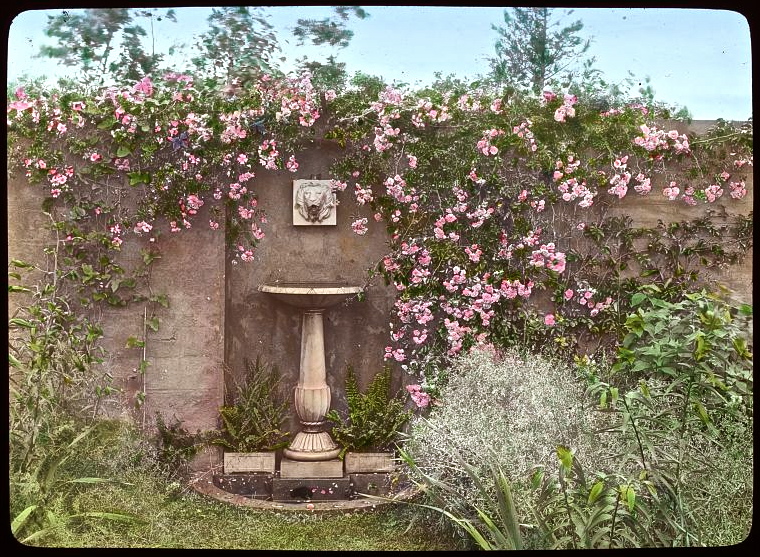
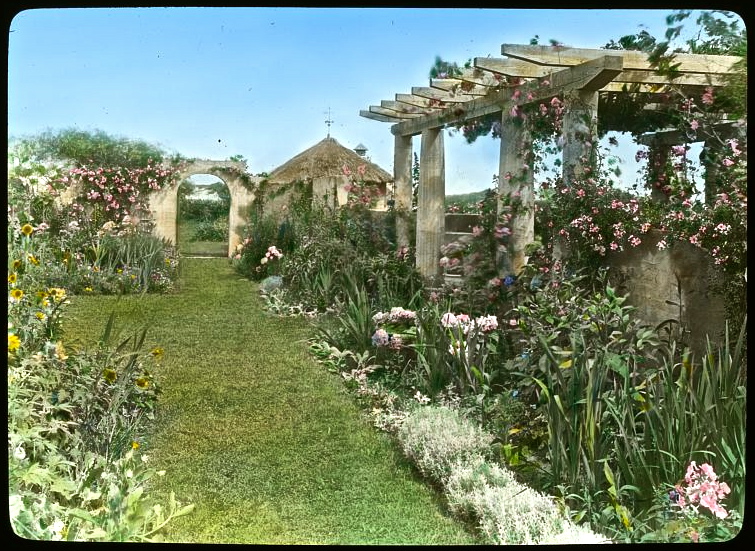
This was Grey Gardens in 1914 — long before it was made famous by the 1975 documentary.
The walled garden section of the four-acre estate in East Hampton, N.Y., was designed by Anna Gilman Hill and landscape architect Ruth Bramley Dean.
Anna and her husband, Robert Carmer Hill, had purchased the property in 1913. They sold it to Phelan and Edith Bouvier Beale (whose daughter was Little Edie) in 1927.
The northeast gate to the walled garden.
Hill imported the concrete walls from Spain. She took the name for the house and garden from its environment.
It was truly a gray [sic] garden. The soft gray of the dunes, cement walls and sea mists gave us our color scheme as well as our name… nepeta, stachys, and pinks… clipped bunches of santolina, lavender and rosemary made gray mounds here and there. Only flowers in pale colors were allowed inside the walls, yet the effect was far from insipid….I close my eyes and sense again the scent of those wild roses, the caress of the hot sun on our backs as we sauntered to and fro from our bath and lazy mornings on the beach.
Beyond the property is the Atlantic Ocean. The walled garden was 70′ x 40′.
A plan of the garden, artist unknown.
The estate (now two acres) has been owned by Ben Bradlee (formerly editor-in-chief of The Washington Post) and Sally Quinn since 1979. They have restored both the house and garden.
Now the land between the walled garden and the ocean is filled with newer houses and gardens, and there is a very tall hedge just behind the far wall and the pergola.
The northeast gate.The original photograph before hand coloring.The bench inside the northeast gate.Looking west to pergola.Birdbath on west wall.Pergola and tool house gate.East gate to the tool house.The garden tool house.Sunroom in the house overlooking the walled garden.
The open doorway in the photo above lined up with the pergola. It seems that, at the time of this photo, there was an opening in the garden wall between the house and pergola. But I can’t tell if the opening was there before or after the time of the other photographs.

 View from the second story of the home of Mrs. John Rodgers at Franklin Row, K Street, N.W., between 12th and 13th Streets, in Washington, D.C.






 enclos*ure