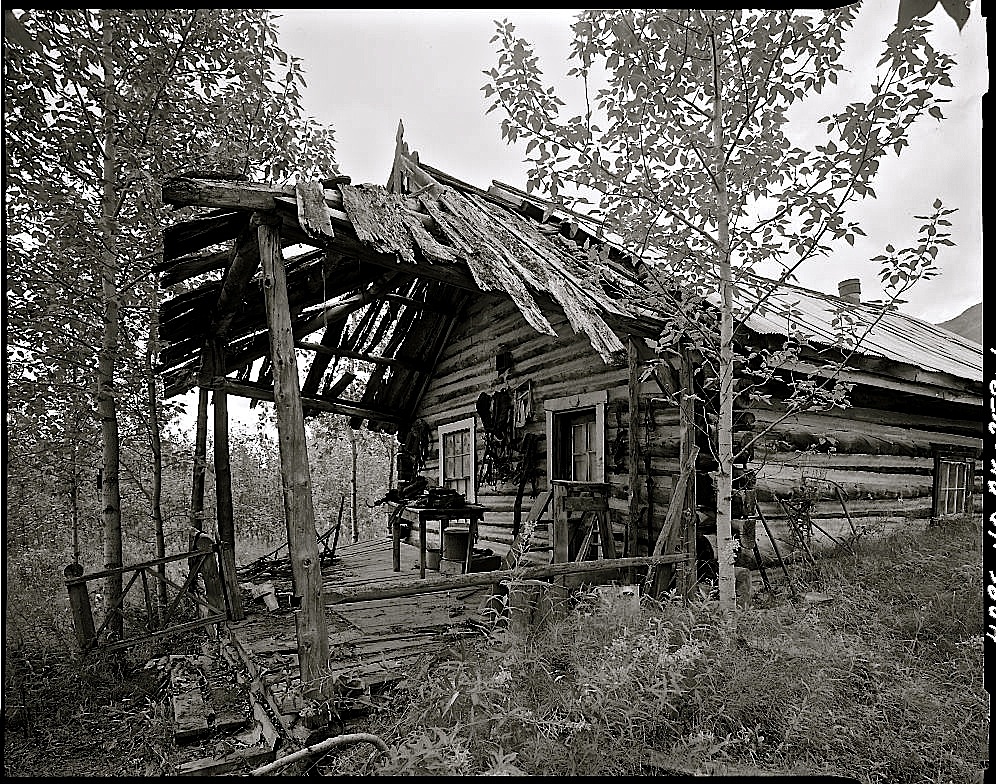
The Sunday porch: Wiseman, Alaska

Igloo No. 8 by Jet Lowe, Library of CongressFront porch near the Koyukuk River at Wiseman Creek, Wiseman, Alaska, July 1984. Photo by Jet Lowe for an Historic American Buildings Survey (HABS), via the Library of Congress Prints and Photographs Division.

For over six decades, this little porch sheltered many hours of masculine leisure and conviviality. In 1913, it fronted the Siverly and Bowker Saloon.  The following year, the building was sold to the Pioneers of Alaska and used as one of its local chapters — an ‘Igloo;’ it was Igloo No. 8.   The Pioneers, a fraternal organization, was formed in 1907 “for social purposes to keep alive the memories of the early trailblazers.”

By 1972, the building had been sold again.  At the time of these photos, it was the home of the owner’s son.
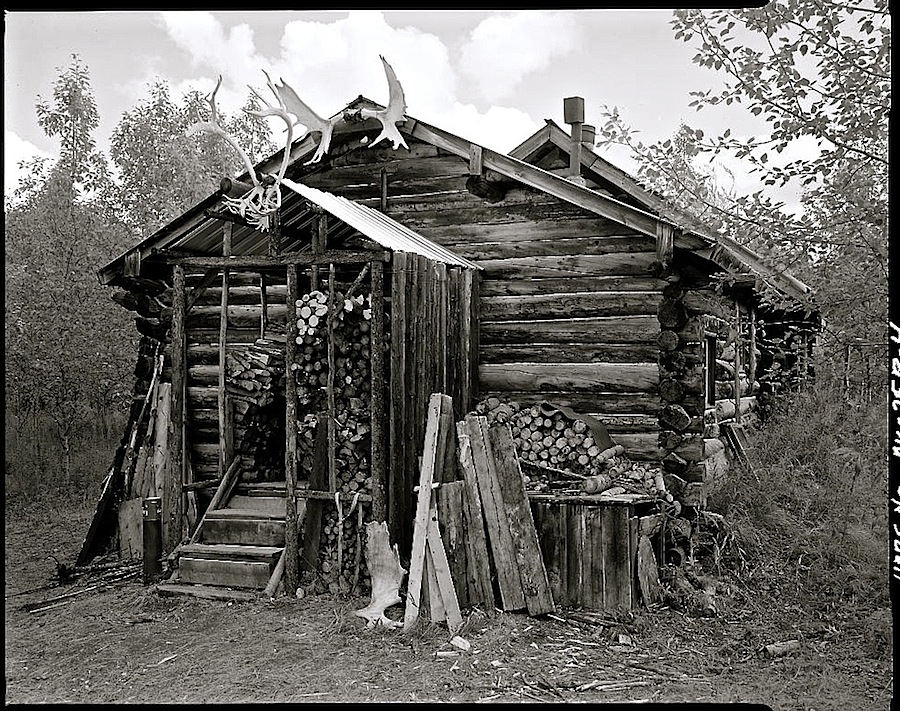
Igloo No. 8, HABS, Library of CongressAbove is the back porch and entrance to the kitchen.
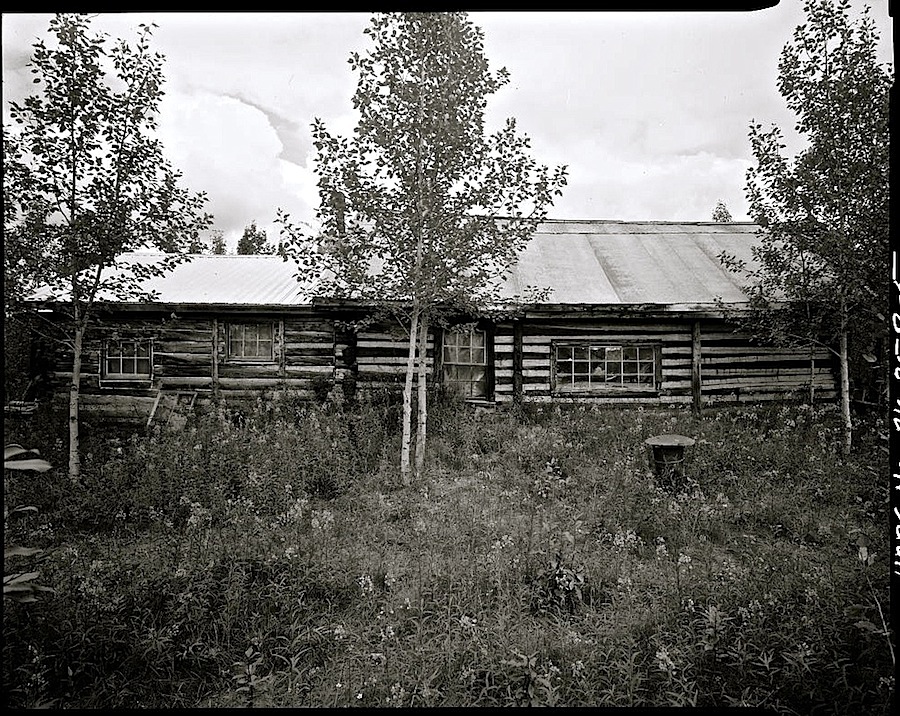
Igloo #8, HABS, Library of CongressAbove is the side view. The flowers and birch trees are so pretty; it’s a pity we don’t have a picture of the view from the front porch. All photos by Jet Lowe.
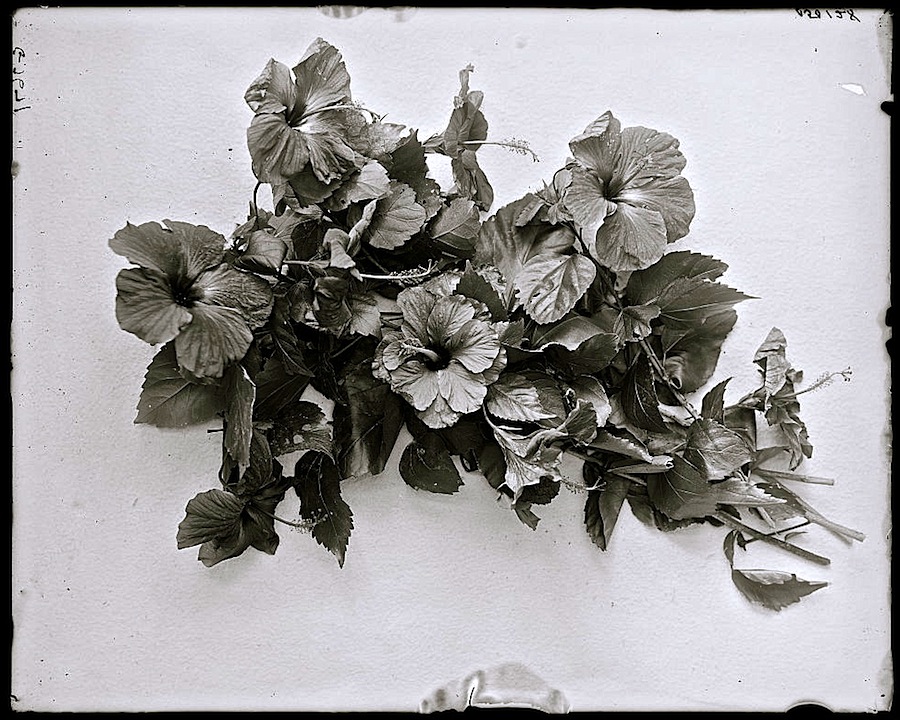
Vintage hibiscus blossoms

Wordless Wednesday at enclos*ure -- Hibiscus blossoms, ca. 1900-15, Detroit Publishing Co., via Library of CongressPalm Beach, Florida, ca. 1900-15, by Detroit Publishing Co., via Library of Congress Prints and Photographs Division.

Where the hibiscus flares would cymbals clash. . . .

— Grace Hazard Conkling, from “Symphony of a Mexican Garden

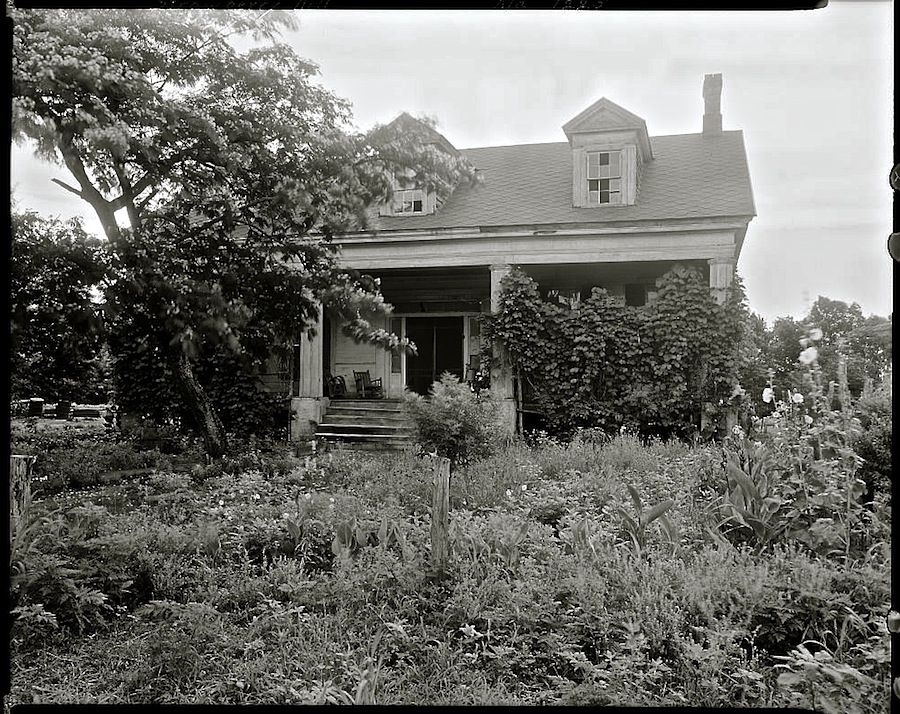
The Sunday porch: Strawberry Hill

Vintage Photo of Strawberry Hill, Forkland vic., Greene County, Alabama, via Library of Congress Prints and Photographs Division Strawberry Hill, Greene County, Alabama, in 1939.  Photo by Frances Benjamin Johnston, via the Library of Congress Prints and Photographs Division. (Click on the image for a larger view.)

I’ve been looking at and bookmarking a lot of old photographs of beautiful porches lately, so today, I’m starting a Sunday series for these pictures.

The porch, particularly the front porch, connects — with a pause — the private interior of the house with the communal landscape beyond it.   Andrew Jackson Downing wrote:

A porch strengthens or conveys expression of purpose, because, instead of leaving the entrance door bare, as in manufactories and buildings of inferior description, it serves both as a note of preparation, and an effectual shelter and protection to the entrance. . . .

The unclouded splendor and fierce heat of our summer sun, render this general appendage a source of real comfort and enjoyment; and the long veranda round many of our country residences stands instead of the paved terraces of the English mansions as the place for promenade; while during the warmer portions of the season, half of the days or evenings are there passed in the enjoyment of cool breezes, secure under the low roofs supported by the open colonnade, from the solar rays, or the dews of night.

In his pattern books of the 1840s and 50s, Downing popularized the front porch for the American home as a link to nature.

I see it as a box seat for the theater of the garden or of the street.  Although the one above seems to have half drawn its curtains against the buzzing and chirping action of the cottage garden below.

The porch — and 1821 house attached — still exist, although without the vines and flowers.  The surrounding land is now a cattle ranch. In fact, it is currently for sale for about $3.8 million.

Picturing D.C. (year by year)

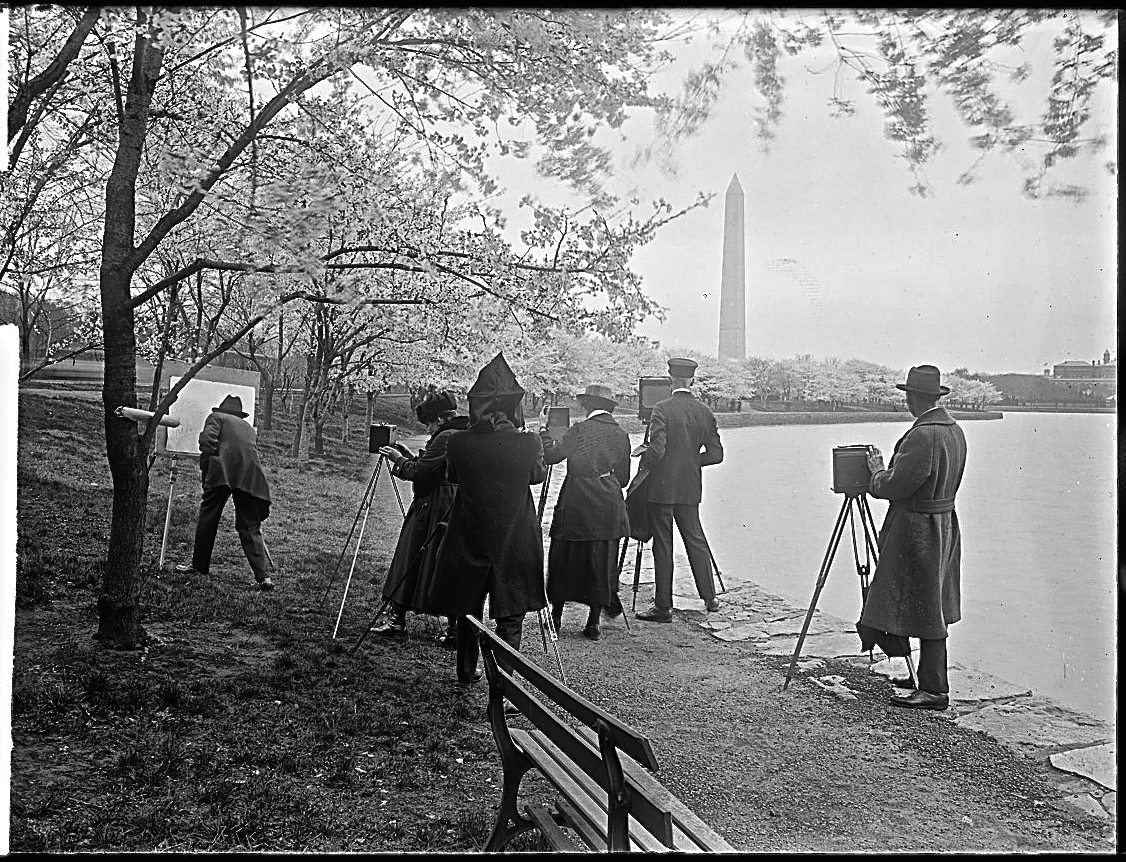
"Photographers shooting cherry blossoms, Washington D.C., April 7, 1922," by National Photo Company, Library of Congress Prints and Photographs Division.
“Photographers shooting cherry blossoms, Washington D.C., April 7, 1922,” by National Photo Company, Library of Congress Prints and Photographs Division and D.C. Past.

I want to share my recent discovery of D.C. Past, a tumblr blog that is “curating the photographic history” of Washington, D.C.

Kate Birmingham and Guillermo Esteves choose 19th and 20th century photos from the online catalogues of the Library of Congress and the National Archives.  However, when shown on D.C. Past, the images are generally much larger and (pretty darn) sharp.

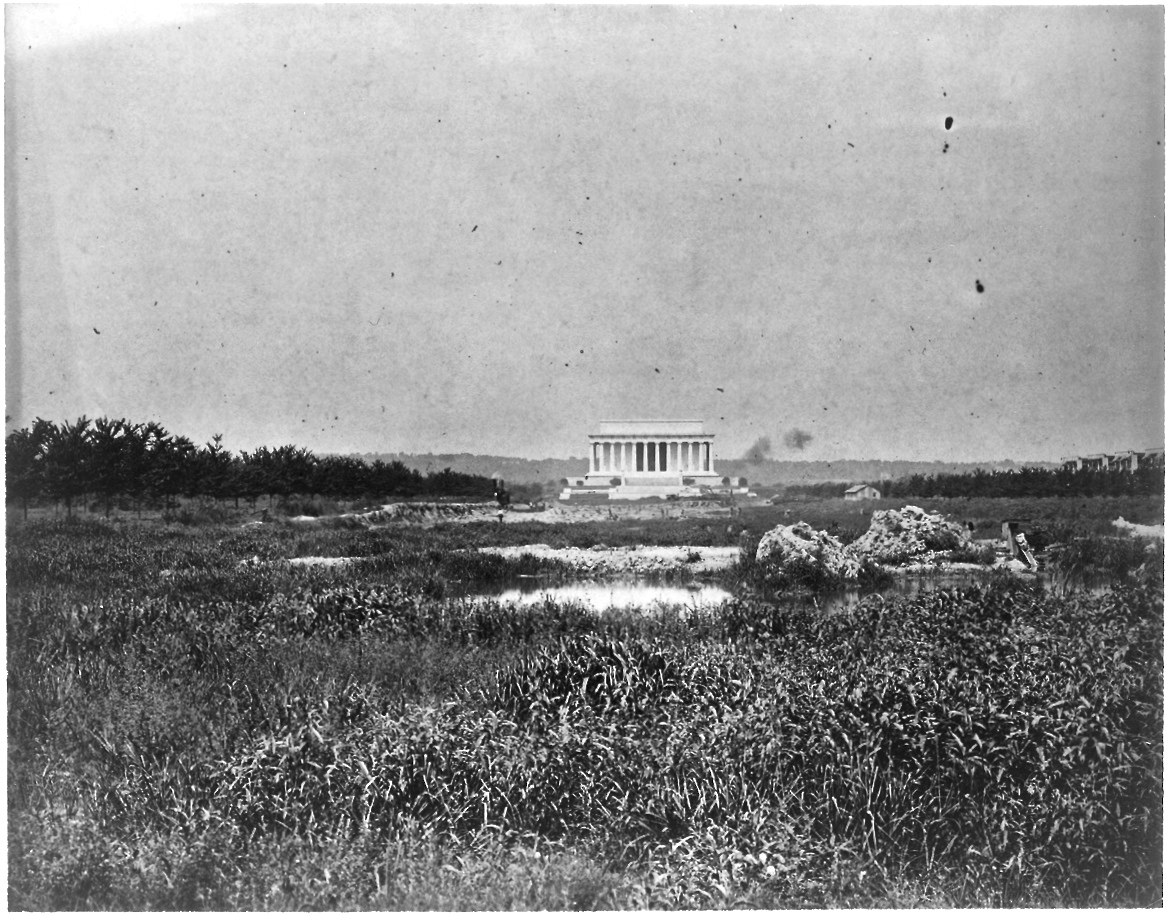
I love this early shot, below, of the Lincoln Memorial — the Reflecting Pool is still only a wetland.

"Lincoln Memorial with Marsh in foreground," 1917, by National Photo Company, Library of Congress Prints and Photographs Division.
“Lincoln Memorial with marsh in foreground,” 1917, by National Photo Company, Library of Congress Prints and Photographs Division and D.C. Past.

Four years later. . .

"Lincoln Memorial from Monument," May 30, 1922, by National Photo Company, Library of Congress Prints and Photographs Division.
“Lincoln Memorial from Monument,” May 30, 1922, by National Photo Company, Library of Congress Prints and Photographs Division and D.C. Past.

You’ll have to go to D.C. Past, here and here, for the “much larger” part.

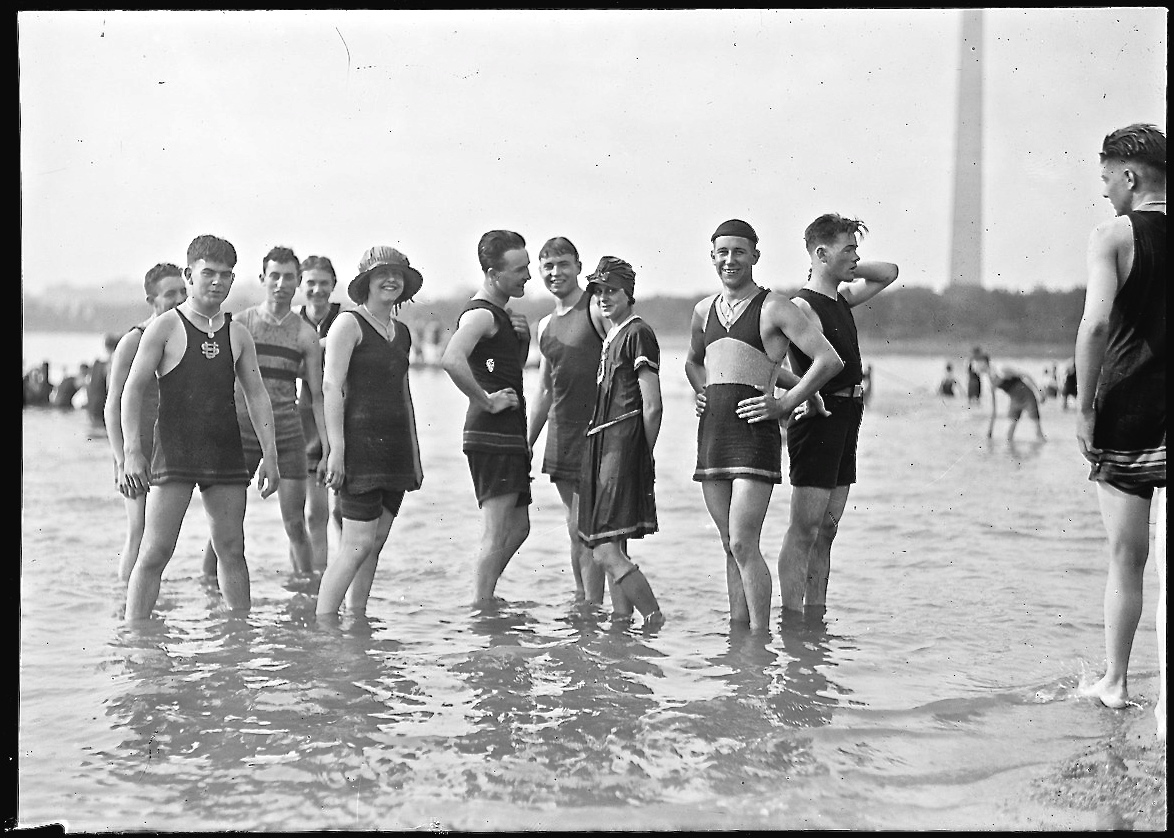
I like these swimmers below too.  They’re in the Tidal Basin.  And yesterday’s post was interesting — look at the (lack of) height of the fence.

"Bathing Beach,"  Washington, D.C., Tidal Basin, ca. 1912-1930, by National Photo Company, Library of Congress Prints and Photographs  Division.
“Bathing Beach,” Washington, D.C., Tidal Basin, ca. 1912-1930, by National Photo Company, Library of Congress Prints and Photographs Division and D.C. Past.

(A link to the photo at the top is here.)

D.C. Past is still rather new; its first picture was posted in March 2013.  But this makes it easy to catch up and get hooked.

There is also a NYC Past here and a Chicago Past here.

Vintage landscape: small side porch

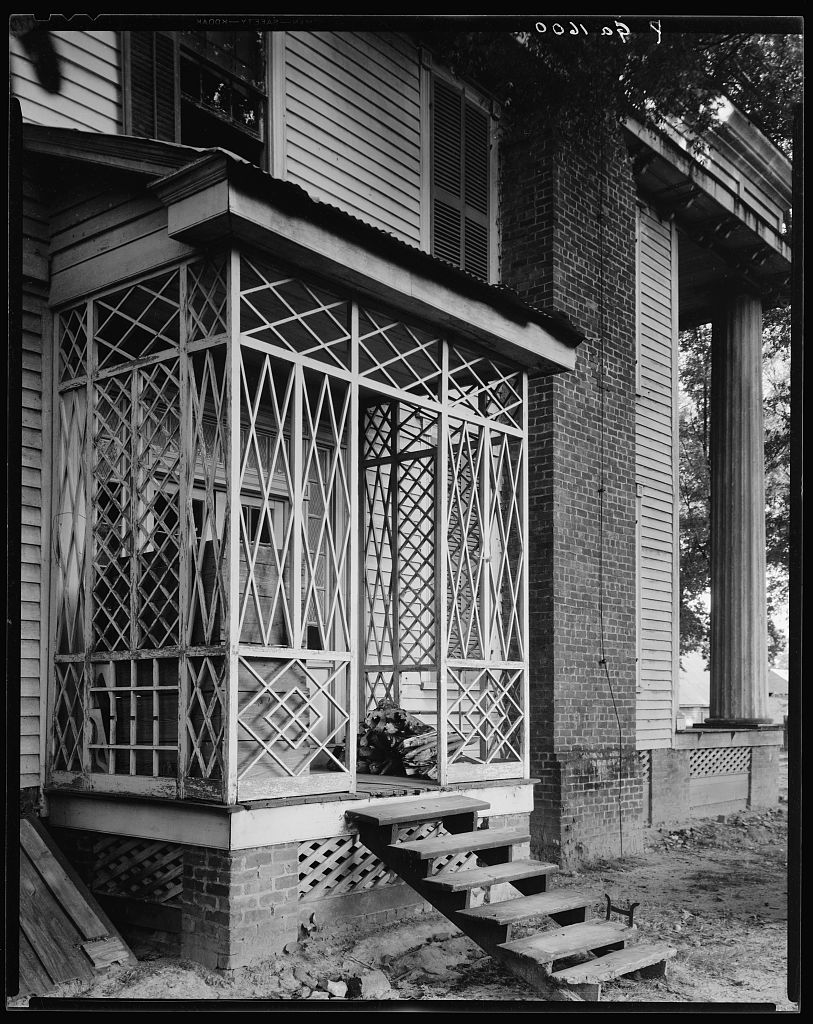
Latticework on side porch in Georgia, 1939 or 1944, by F.B. Johnston, Library of Congress/enclos*ure

Hill Plantation, Wilkes County, Georgia, 1939 or 1944, by Frances Benjamin Johnston, via Library of Congress Prints and Photographs Division.

I love the latticework on this old side porch.