
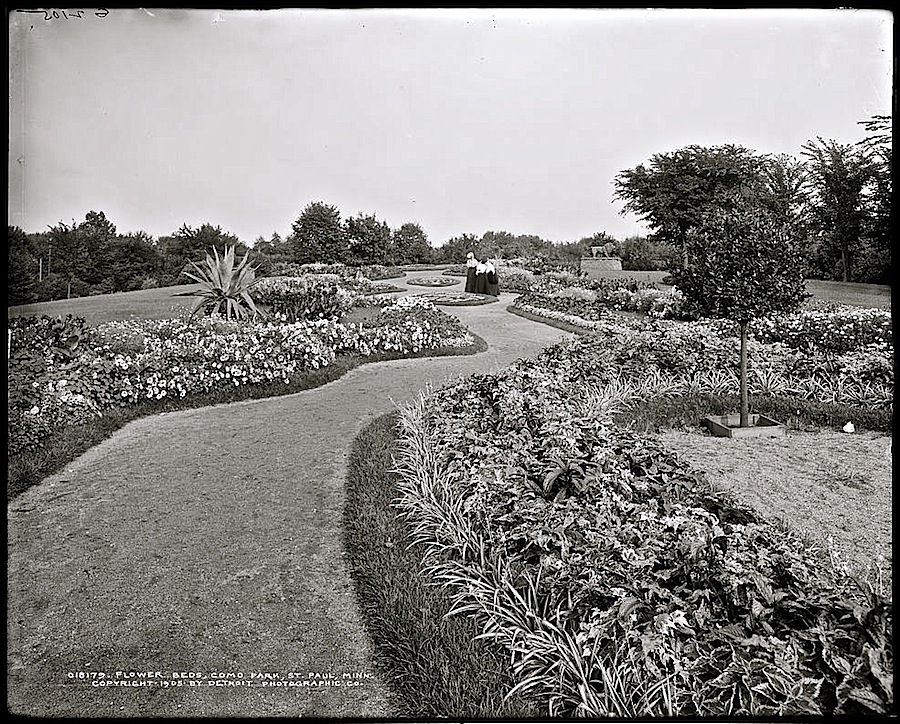
 Ah, bedding out. . . . This is Como Park in St. Paul, Minnesota, ca. 1905. Photo by Detroit Publishing Co. via Library of Congress Prints and Photographs Division.
Tag: Library of Congress Prints and Photographs Division
The Sunday porch: Palo Alto, Louisiana
. . .lovely, dark and deep.
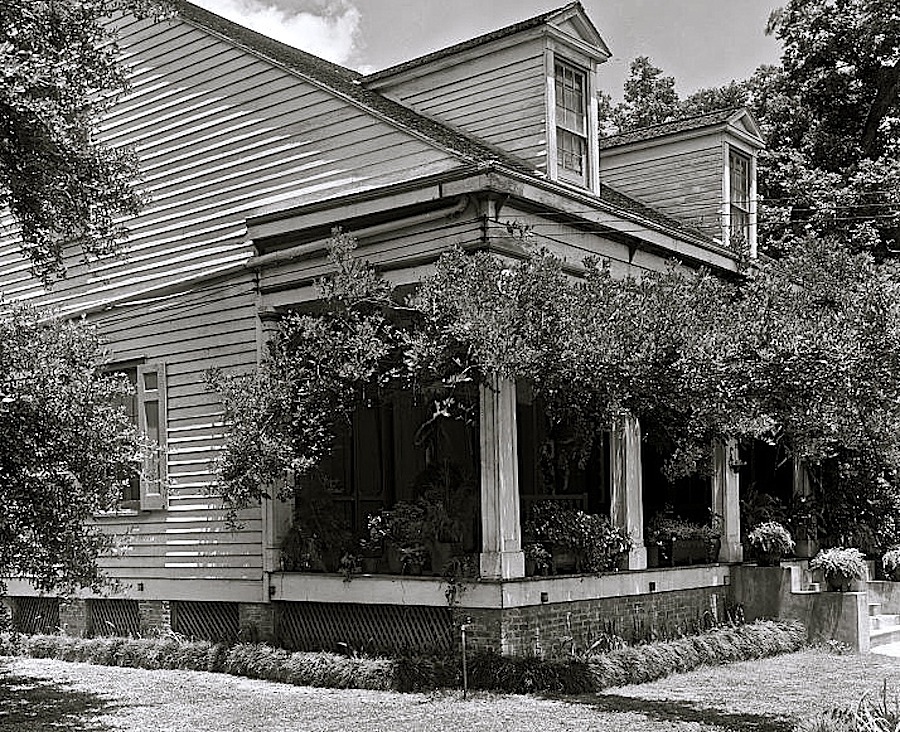
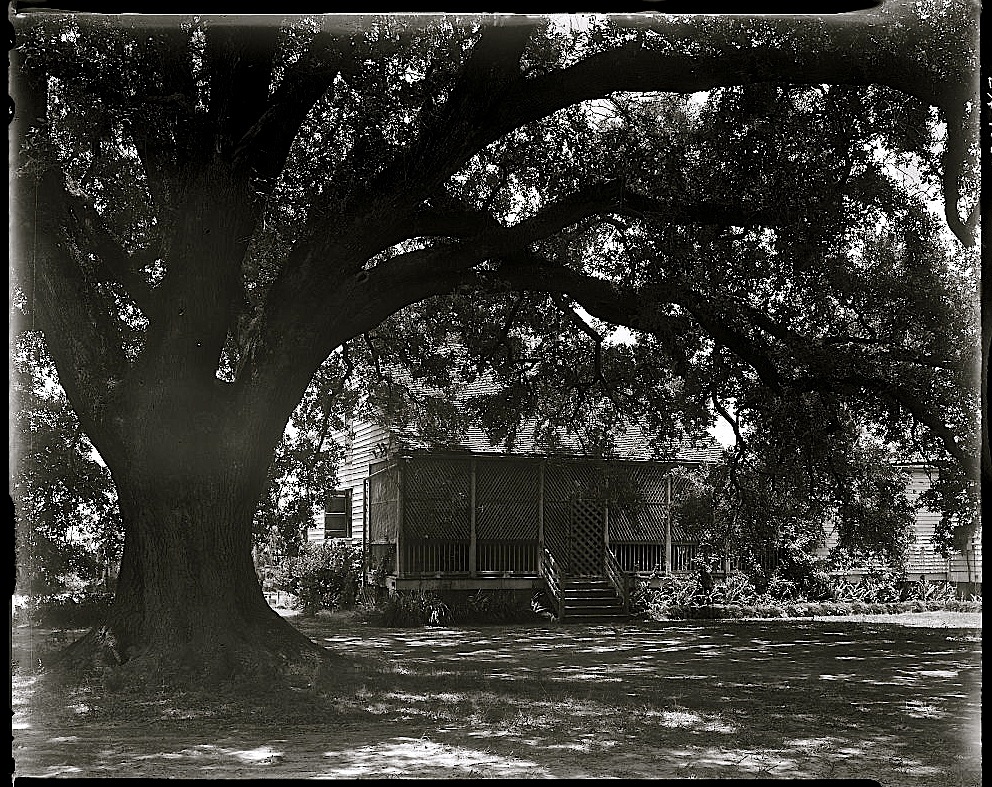 The old kitchen wing of Palo Alto Plantation House near Donaldsonville, Louisiana, in 1938, by Frances Benjamin Johnston, via Library of Congress Prints and Photographs Division.
It’s almost too dark and deep to see very well in the above picture. However, this shaded, lattice-enclosed porch must have been the best possible place to sit and snap beans during Louisiana summers.
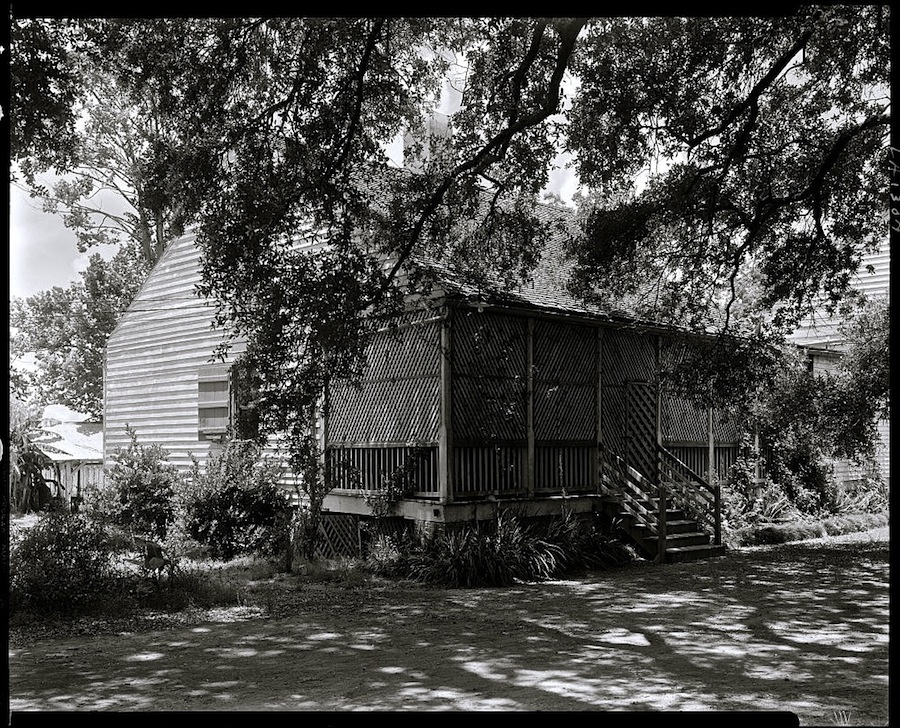 The kitchen building was originally free-standing, about 22′ from the house. Later, it was connected to the main house by a breezeway.
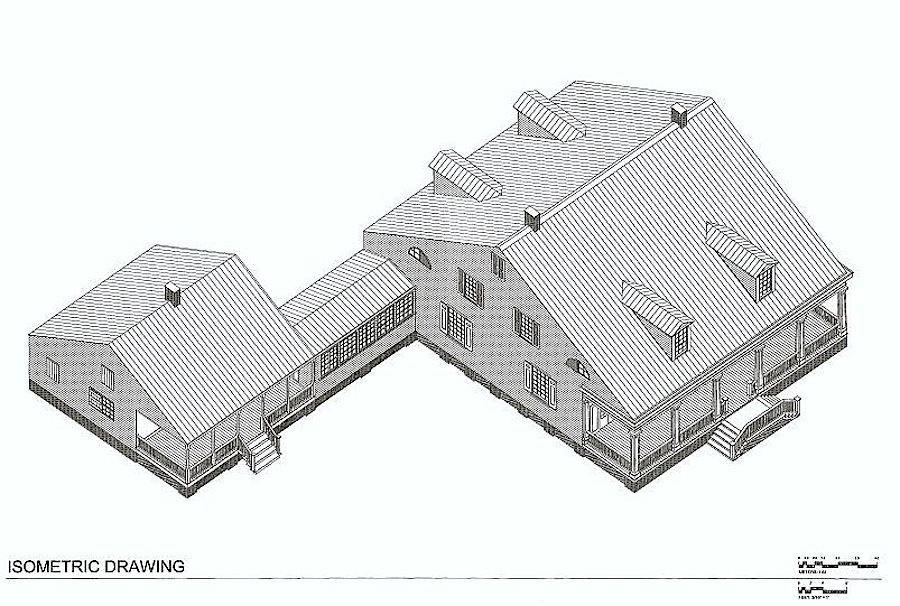
A 2003 Historic American Buildings Survey (HABS) drawing of the property seems to indicate that the enormous Quercus Virginiana or live oak tree at the right in the top photo was still standing at that time. Over 15 live oaks are shown in the area immediately in front of the house.
The principal part of the house is described in the HABS as an “Anglo-Creole type Louisiana plantation cottage decorated in Greek Revival style.” It was built in the mid to late 1850s and faces Bayou La Fourche, off the Mississippi River.
 Its porch, above,* is a “deeply undercut Acadian gallerie,” according to The Planter’s Prospect: Privilege and Slavery in Plantation Paintings.
In a c.1860 painting of Palo Alto shown and discussed in the book, the main porch originally had railings and double front steps.
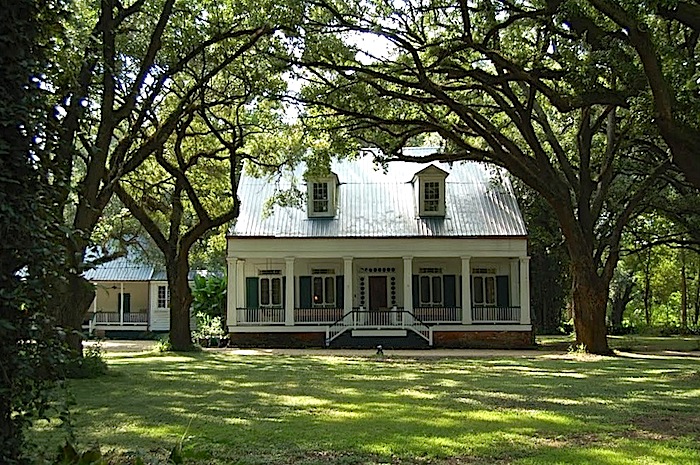 The steps and railings were restored (and the lattice removed from the old kitchen porch) by the time of the HABS and this 2010 photo† above. The plantation (with 6,000 acres, according to one source) belongs to a family that has owned it for several generations. They now offer stays in a “Log Cabin” lodge and guided hunting trips on the property.
. . . the tree implies a quiet place
where pendulums might rest,
the heart decline to beat, a place
of time disclosing the lattice of time. . . .— John Beer, from “The Waste Land“
*Photo (cropped by me) from 1938, by Frances Benjamin Johnston, via Library of Congress.
†Photo by cajunscrambler, via Panoramio.
Vintage landscape: Georgia Avenue gate
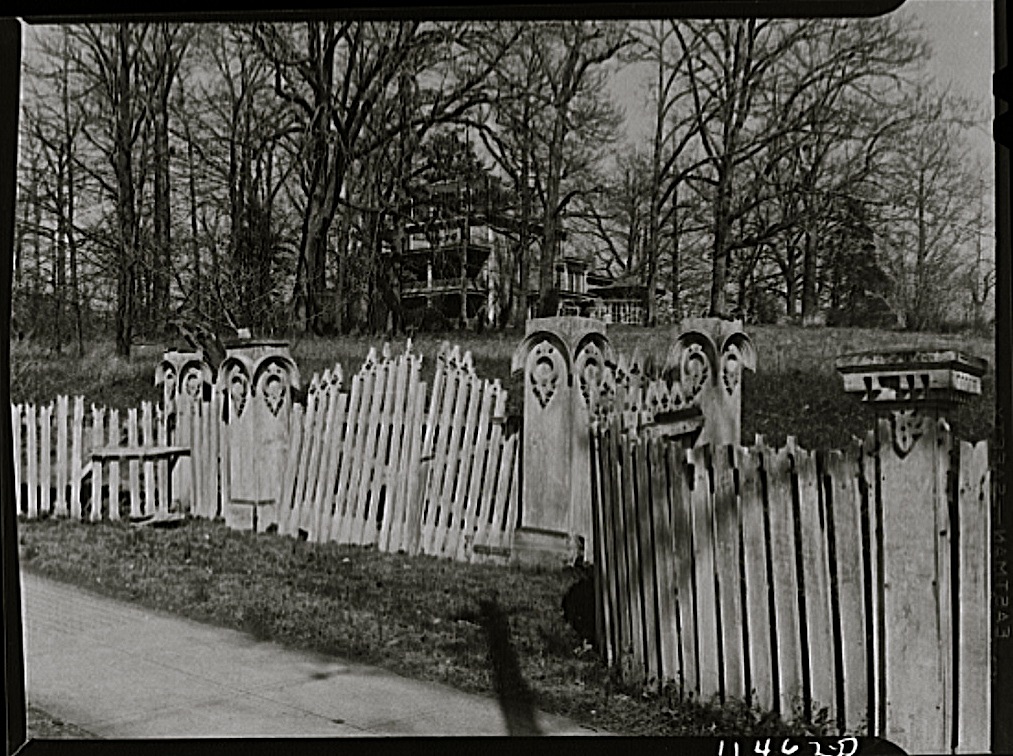 “Washington, D.C., gateway to an old house on Georgia Avenue, N.W.,” March 1942, by John Ferrell, via Library of Congress Prints and Photographs Division.
That was some gate, although it was in pretty bad shape at the time of the photo (click the image to get a larger view). I think the style is gothic.
And some house too. Does anyone know if it’s still standing?
The Sunday porch: behind Randolph Street
Looking through a “slat screen” from the back porch of a house on Randolph Street (probably N.W.), Washington, D.C., May 1942, by John Ferrell, via Library of Congress Prints and Photographs Division.
OK, it’s possible that I’m easily amused.
Also, I have holiday shopping to do. . . and it’s Bloom Day. (So more later.)
John Ferrell was a photographer for the Farm Security Administration when he took these photos.
Randolph Street, N.W., runs east-west through the Petworth neighborhood of Washington, D.C.
I’ve stayed in the front yard all my life.
I want a peek at the back. . .— Gwendolyn Brooks, from “a song in the front yard“
The Sunday porch: Georgia

Photo from W.E.B. Du Bois collection for 1900 Paris Exhibition, 1899 or 1900, via the Library of Congress.

A group on the front porch of the Atlanta home of an African American lawyer, by Thomas E. Askew. He took many of the portraits in the albums.

Interestingly, this house anticipates the decrease in the size of the American porch in the coming two decades, possibly because home owners would become more interested in their backyards, according to Michael Dolan in “The American Porch.”
While he was a professor of sociology at Atlanta University, W. E. B. Du Bois compiled 363 photographs of African American life in Georgia into several albums — which he displayed at the 1900 Paris Exposition Universelle.
The pictures* here, taken in 1899 or 1900, were part of his collection. Click on any thumbnail in the gallery to scroll through larger photos.
Du Bois’s exhibited albums particularly featured middle-class African Americans and their homes and institutions, and dozens of fine individual portraits were included.
“The photographs of affluent young African American men and women challenged the scientific ‘evidence’ and popular racist caricatures of the day that ridiculed and sought to diminish African American social and economic success,” according to the Library of Congress’s online catalogue.
In 2003, the Library of Congress published a book of 150 of the images, entitled A Small Nation of People. You can listen to a good NPR interview with its co-author, historian Deborah Willis, here. In it, she mentions porches being photographed for the exhibit, as places “central to family gatherings.”
*All via Library of Congress Prints and Photographs Division.
 enclos*ure