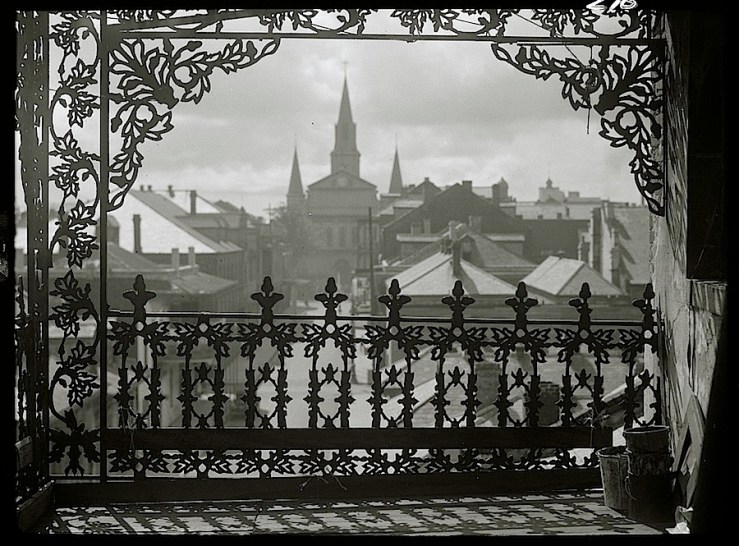
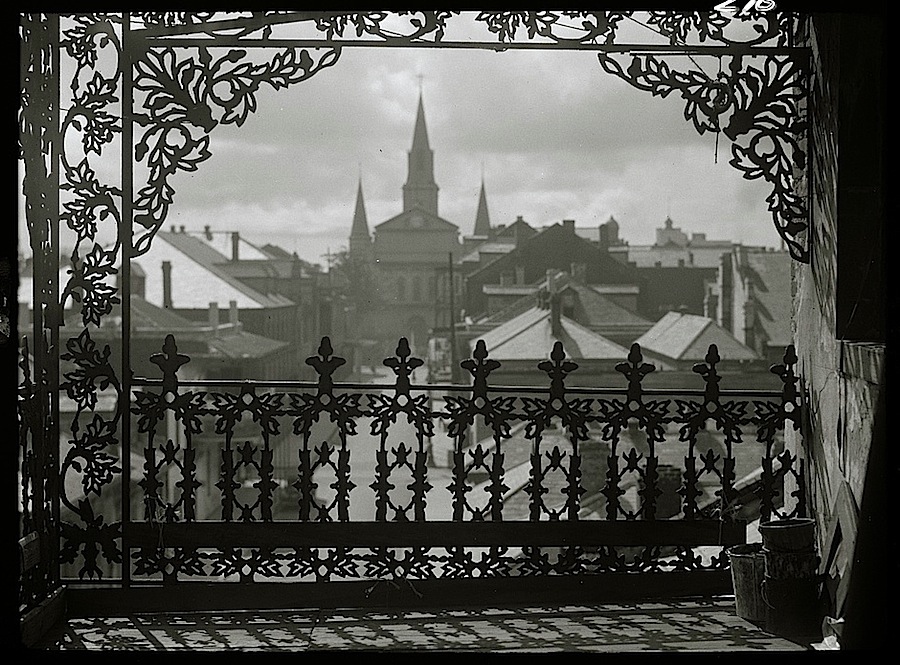
 “A vista through iron lace, New Orleans,” ca. 1920-26, by Arnold Genthe, via Library of Congress Prints and Photographs Division.
This is a covered third floor balcony, and it has a wonderful view of the back of St. Louis Cathedral in the French Quarter.
The 1836 house still stands* — wrought iron intact — at 716 Orleans Street. It is now light pink with dark green shutters and is known as the Le Pretre Mansion, for one of its first owners.
It was on the market as recently as this past April — for $2.65 million. Here’s a 1937 photo of the entire house.
An exotic horror/ghost story goes with the mansion:
In the 19th century, a Turk, supposedly the brother of a sultan, arrived in New Orleans and rented the house. He was conspicuously wealthy, with an entourage of servants and beautiful young girls — all thought to have been stolen from the sultan.
Rumors quickly spread about the situation, even as the home became the scene of lavish high-society parties. One night screams came from inside; the next morning, neighbors entered to find the tenant and the young beauties lying dead in a pool of blood. The mystery remains unsolved. Local ghost experts say you can sometimes hear exotic music and piercing shrieks.
— “Walking Tour in New Orleans,” Frommer’s(.com)
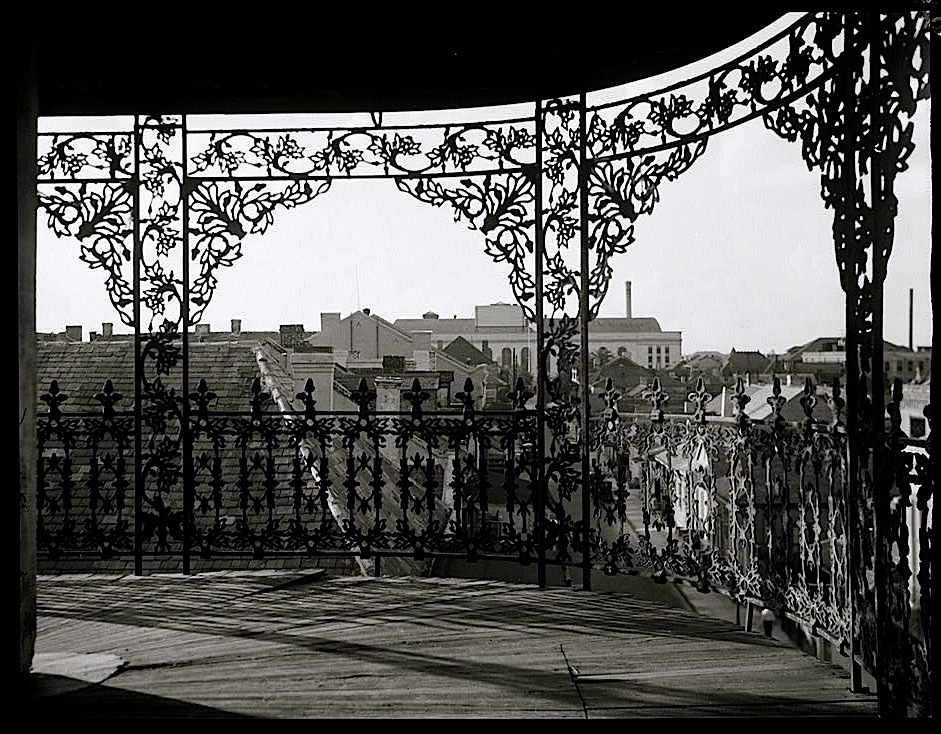
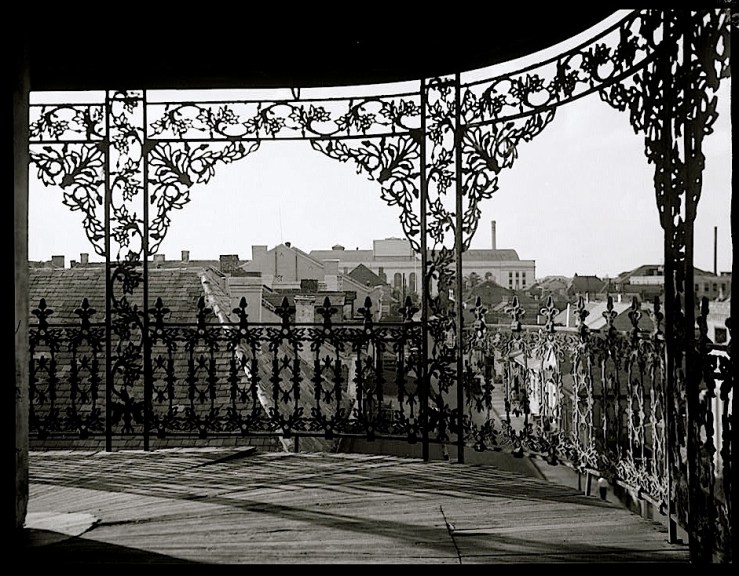 The view above, from the same balcony, looking northeast on Orleans Street, was photographed in 1936, by Richard Koch for a Historic American Buildings Survey, via Library of Congress Prints and Photographs Division.
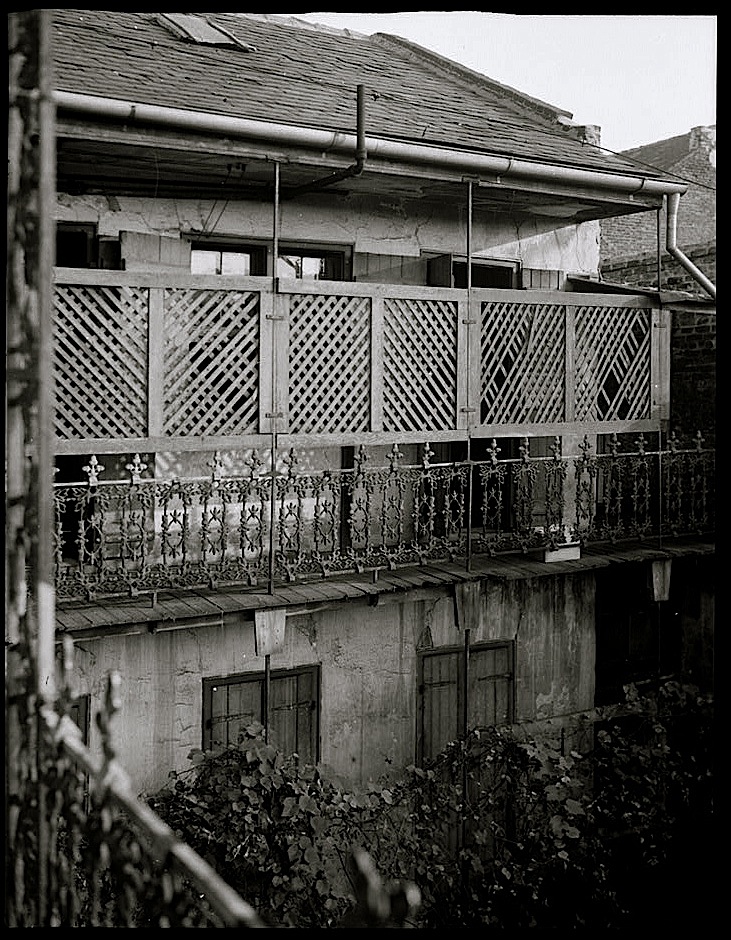 This privacy panel along the second floor balcony of the service wing, overlooking the courtyard, is interesting too. Photo also by Richard Koch for HABS.

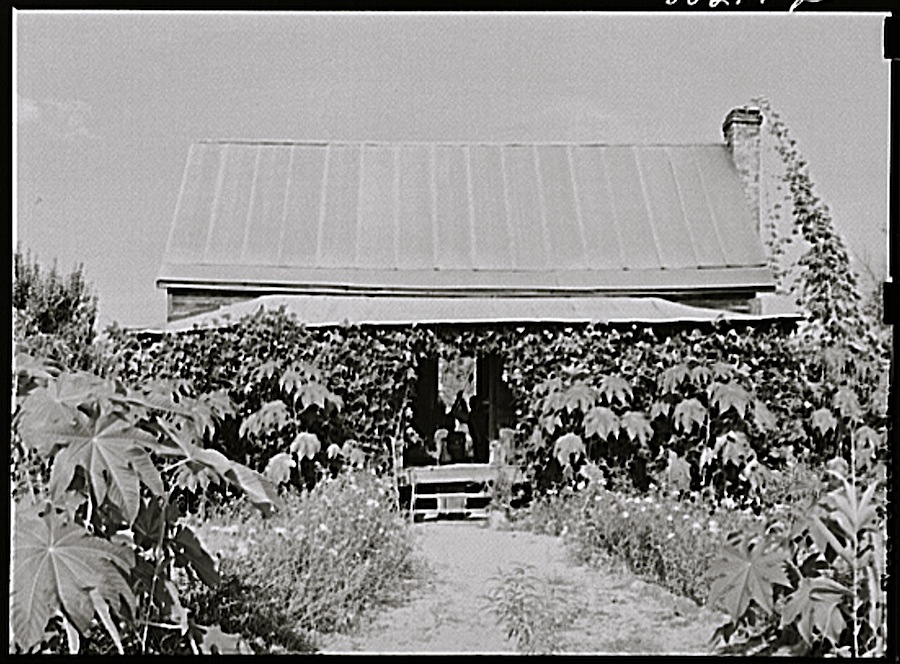 “James F. Drigger’s farmhouse. Coffee County, Alabama,” August 1941, by John Collier, via Library of Congress Prints and Photographs Division.



 enclos*ure