Vintage landscape: Yorktown, Va.

More big (boxwood) love.  .  .
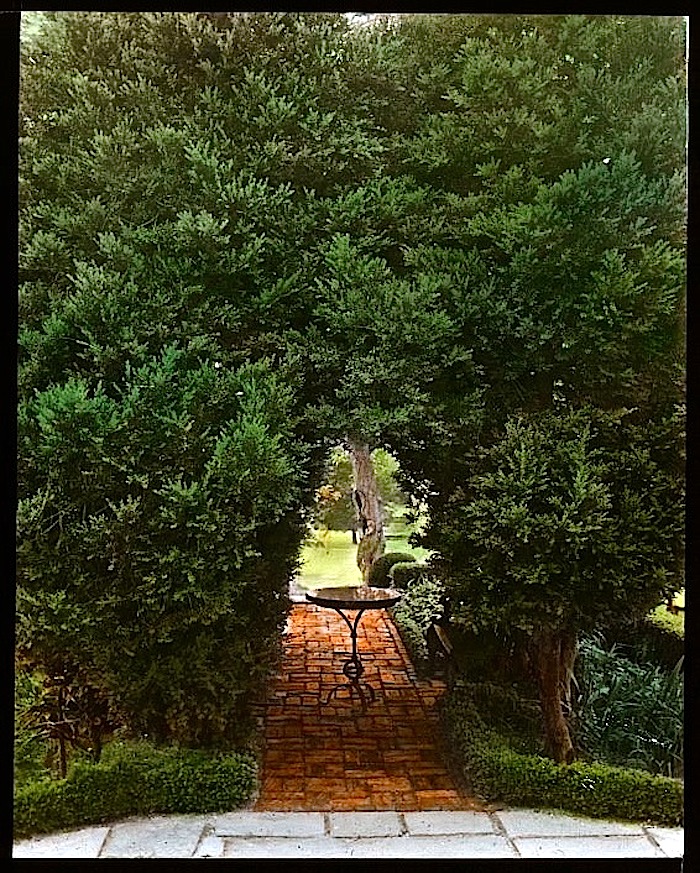
#1, Nelson Hse. garden, ca. 1930, FBJohnston, LoC“‘York Hall,’ Captain George Preston Blow house, . . . Main Street, Yorktown, Virginia. Table in boxwood garden,” 1929, by Frances Benjamin Johnston.*

The house is more often called the Nelson House for the family that built it in the 1740s and owned it throughout the 19th century.  George and Adele Blow purchased it and began to restore it in 1914.  In 1968, it became a National Park Service site.

#2, Nelson hse., 1903, WHJackson, LoCThe front of the house and Main Street as it appeared about 1902. Photo by William Henry Jackson for Detroit Photographic Co.
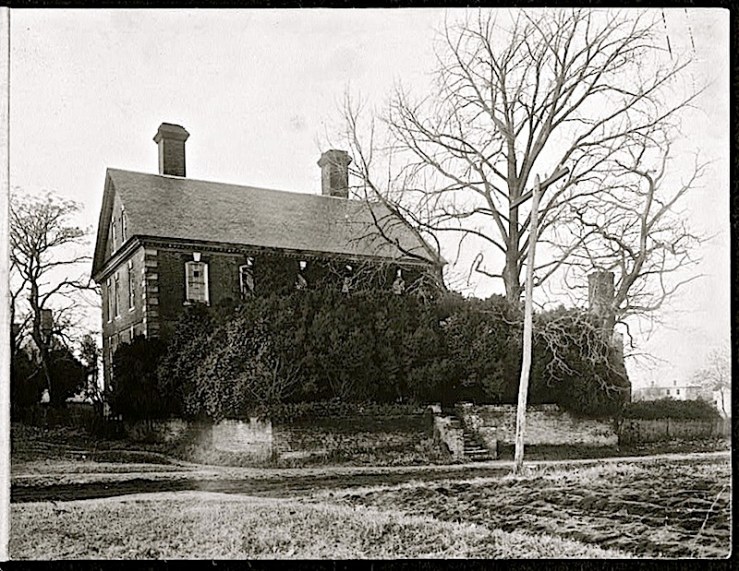
#4, Nelson Hse., c. 1915, HABS, LoC The front of Nelson House in 1915. This photo is part of an Historic American Buildings Survey (HABS).

(There’s a photo of the front of the house and the younger boxwoods in 1862 here.)

#5, Nelson Hse., c. 1915, HABS, LoCThe front door, inside the boxwood hedge, 1915, HABS.

#9, view from hall, Nelson house, ca. 1915, LoCThe center hall, looking out the front door, 1915, HABS (photo cropped by me).
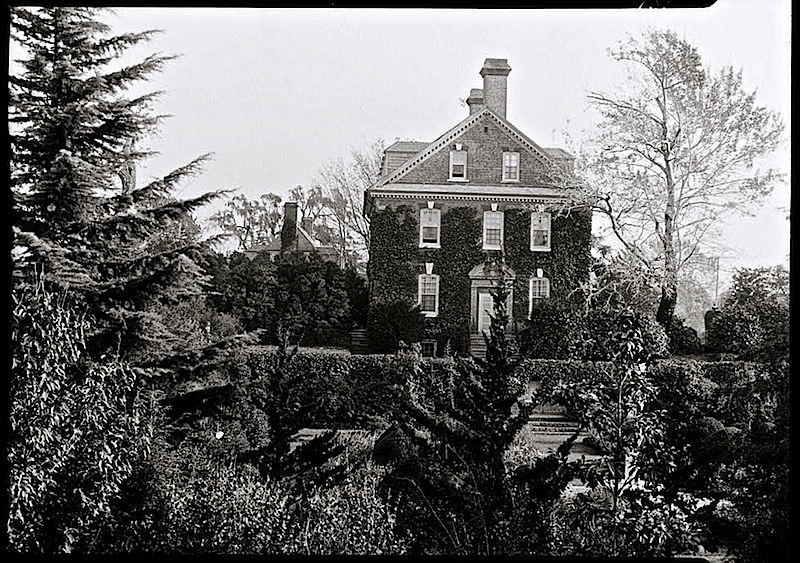
#6, Nelson Hse., c. 1915, HABS, LoCThe side view of the house, ca. 1915 (I think it may be later), HABS.  The front boxwood hedge is on the left.
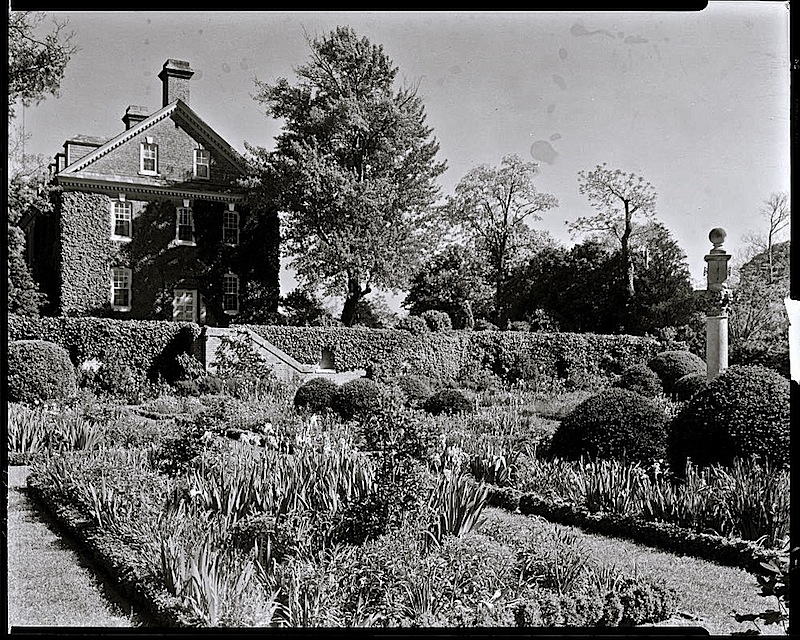
#16, Nelson Hse, ca. 1930s, FBJohnston, LoCThe side garden in the 1930s by Frances Benjamin Johnston.

The garden during the Blow’s ownership was designed by Charles Freeman Gillette, a landscape architect known for working in the Colonial Revival style. Today, little remains.  The giant boxwoods at the front of the house are gone.
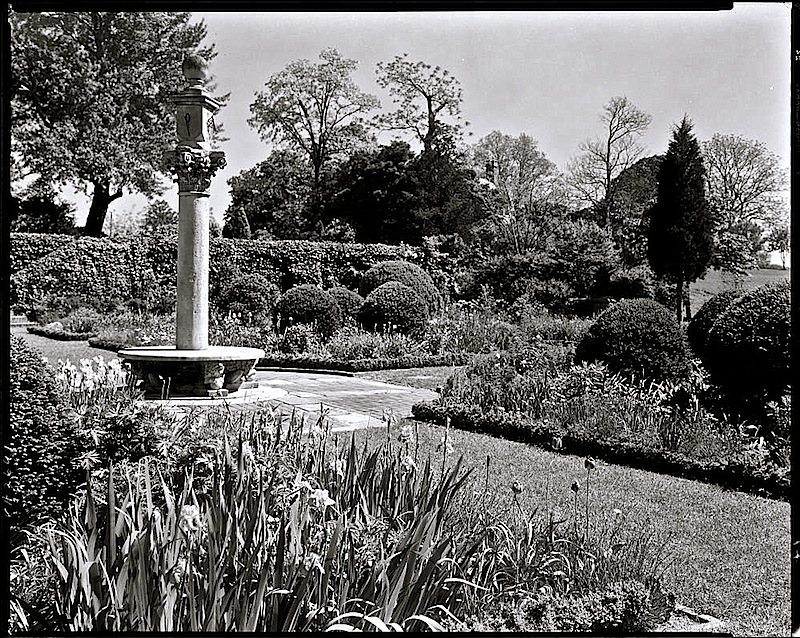
#19, Nelson Hse, ca. 1930s, FBJohnston, LoCAnother view of the side garden in the 1930s by  Frances Benjamin Johnston.

More big boxwood photos here and here and here and here.


*All photos here via Library of Congress Prints and Photographs Division.


Vintage landscape: brick walk

genthe autochrome, steps, via LoC
“Women on the steps of a multi-story white building with dark timbering,” between 1906 and 1942 (I think before 1920), an autochrome by Arnold Genthe, via Library of Congress Prints and Photographs Division.
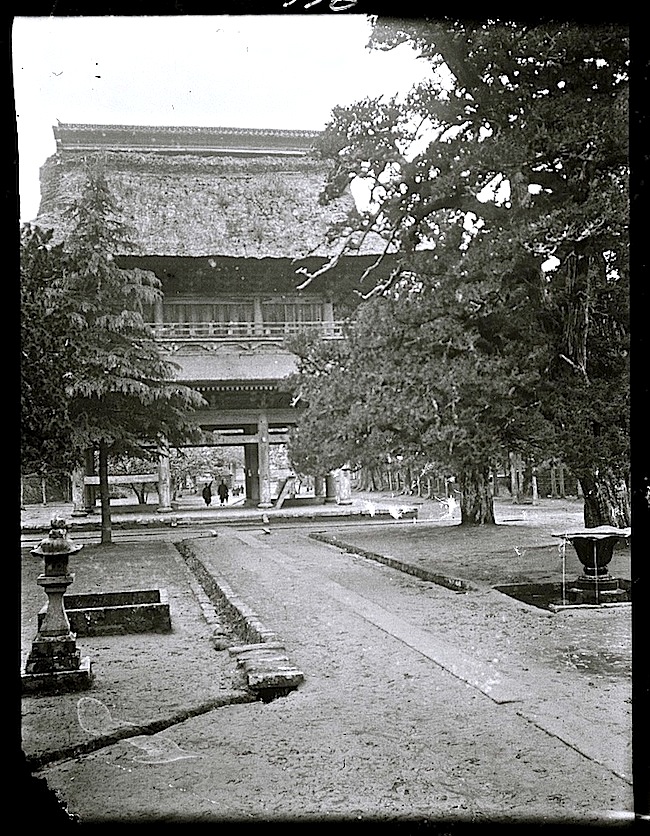
The small size of the digital copy of this image makes it difficult to be sure whether the walk areas are brick (like the steps). But I believe they are. (They could be something like decomposed granite.) I love how the tree has been preserved as part of the space.

Vintage landscape: Smiley Heights

Smiley Heights, via LoCRoadside view from Smiley Heights, Redlands, California, between 1898 and 1905, a photochrom by Detroit Photographic Co., via Library of Congress Prints and Photographs Division.
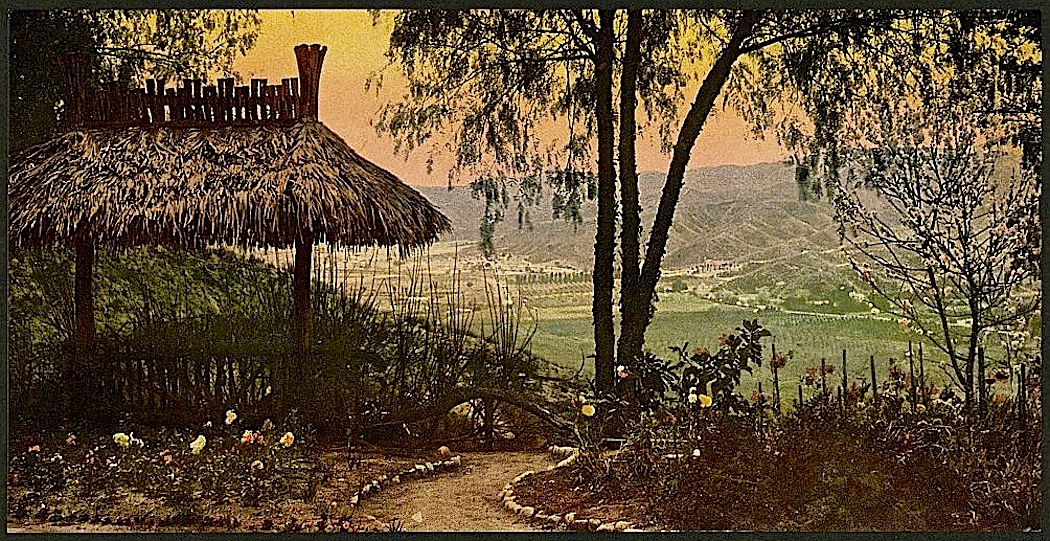
(Click on the image to enlarge it.)

Alfred and Albert Smiley — twin brothers — were wealthy New York hotel owners who came to California in their sixties:

In 1889, while in California, the brothers became so impressed with the beautiful scenery and surroundings of Redlands that they purchased for a winter home 200 acres of the heights south of the town, through which tract they caused to be constructed a beautiful series of roads, both for driving and walking, and on the summit and along the northern declivities started a thousand or more species of rare plants and flowers of such varieties as flourish in this semi-tropical climate. Each of the brothers erected a beautiful and substantial residence on the crest of the hill. This property called the Canon Crest Park, commonly known as Smiley Heights, was thrown open to the public and the park has become famous throughout the land, being visited by thousands of Eastern tourists annually.

History of San Bernardino and Riverside Counties (1922) by John Brown, Jr., and James Boyd

The Smiley estate is now “covered by McMansions,”  according to this article about Redlands in The Atlantic.

Below the garden the hills fold away.
Deep in the valley, a mist fine as spray,
Ready to shatter into spinning light,
Conceals the city at the edge of night.

Yvor Winters, from “On a View of Pasadena from the Hills

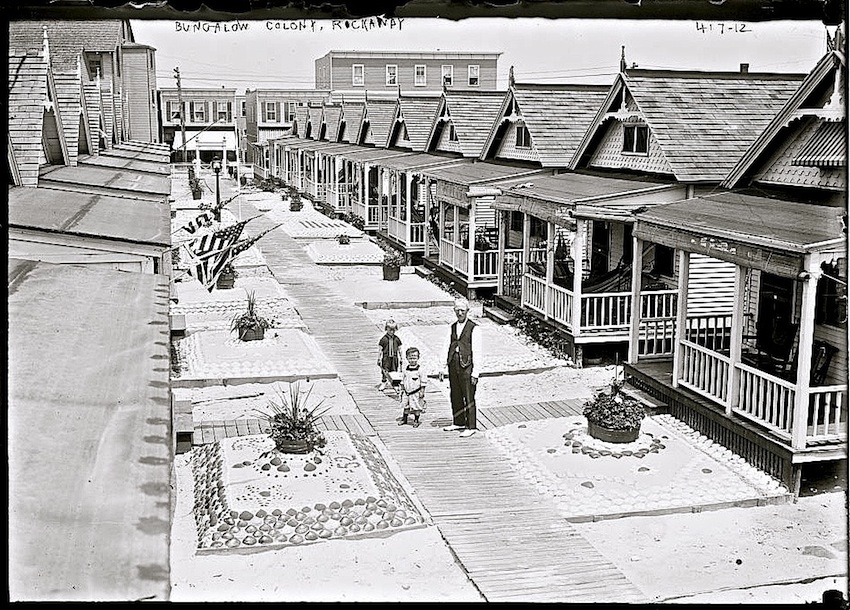
The Sunday porch: Rockaway, N.Y.

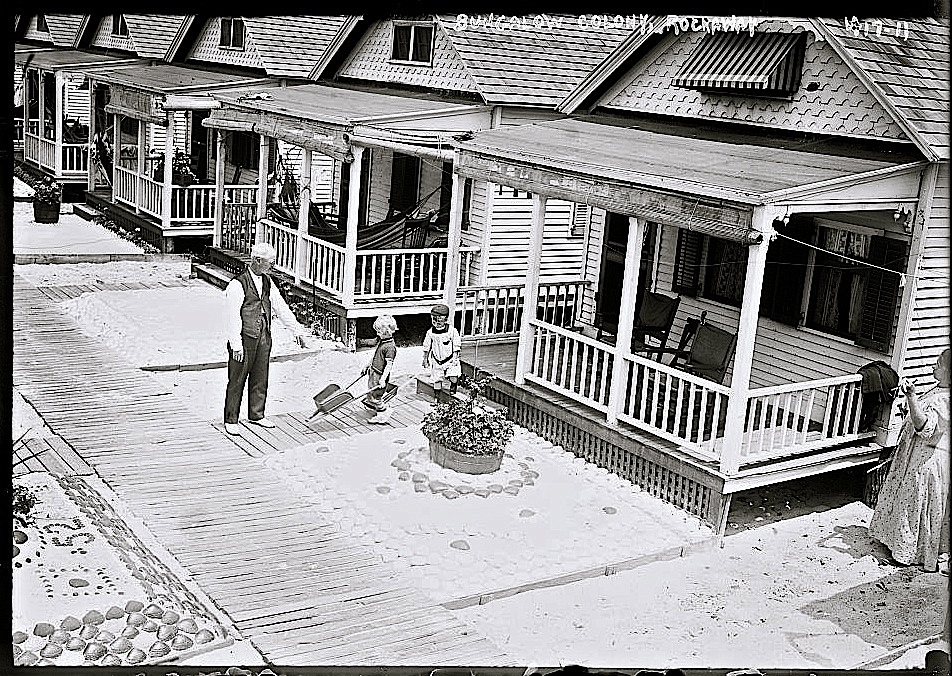
Bungalow, Rockaway NY, via LoC“Porches and front lawns of row of bungalows, Rockaway, N.Y.,” between 1908 and 1911, by Bain News Service, via Library of Congress Prints and Photographs Division.
Bungalow front, Rockaway NY, via LoC

Rockaway (or The Rockaways) is a peninsula of Long Island within the New York City borough of Queens. It became a popular beach resort in the 1880s, when a commuter rail line from Manhattan opened a stop there.

Small summer bungalows were prolific in Rockaway during the first half of the 20th century — there were over 7,000 in the area by 1933. Most were torn down, however, during 1960s urban development. The preservation of those that remain is the subject of a 2010 documentary, The Bungalows of Rockaway. You can see the trailer here — and more pictures of Rockaway bungalow life here.