Green space

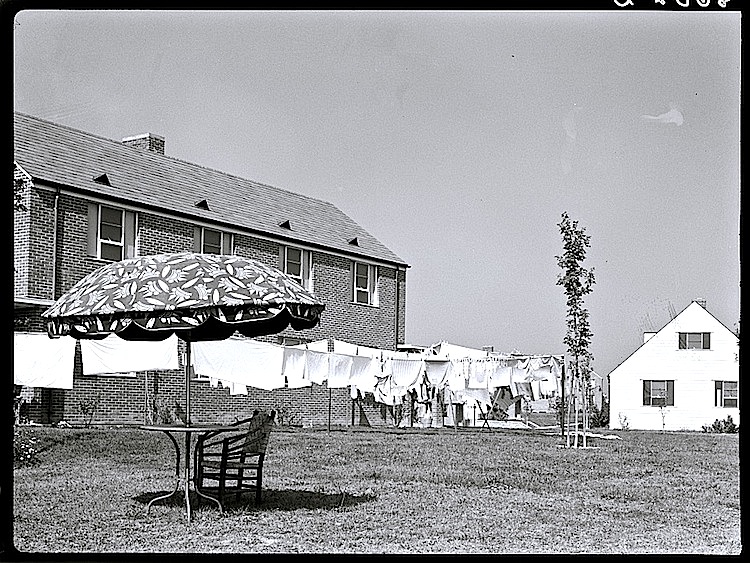
Greenhills, Ohio, 1938, J. Vachon, via Library of CongressGreenhills, Ohio, October 1938, by John Vachon for the U.S. Resettlement Administration, via Library of Congress Prints and Photographs Division.

Greenhills, Ohio is one of only three “Greenbelt Towns” built [by the federal government] in the United States. The other two are Greenbelt, Maryland, and Greendale, Wisconsin. The three towns had their start during the Depression Era.*

.  .  . The building of these towns provided much needed jobs for those in the trades (brick layers, plumbers, carpenters, electricians, etc.), as well as people not in the trades who worked at clearing land, digging trenches, etc.

.  .  . The most important aspect of these towns was to provide low income families with affordable housing to raise their children in and a safe environment with access to large open “green” spaces. Pathways were created in each section of homes to connect the sections to each other, as well as provide a pathway to the Village center.

— The Village of Greenhills website

There are more Library of Congress photos of Greenhills here.


*The first residents moved in in April 1938.
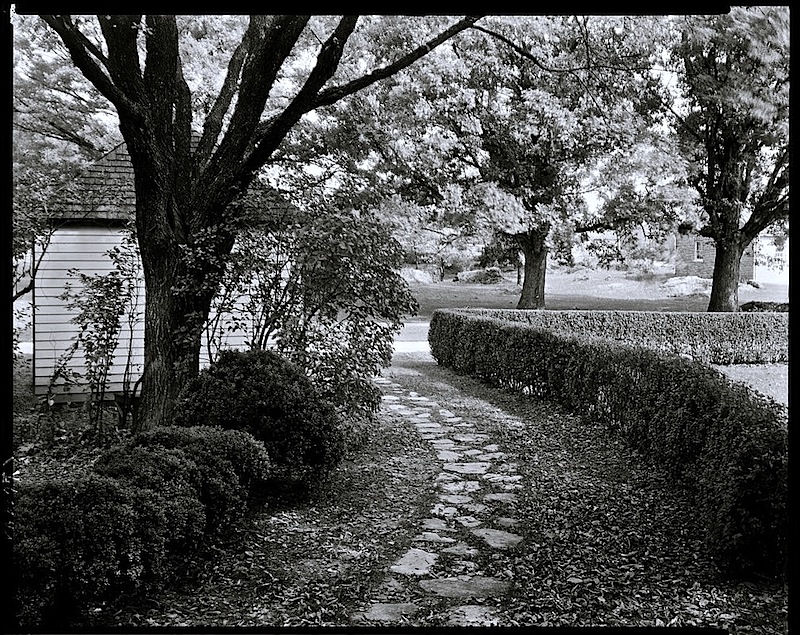
Wordless Wednesday: flagstone path

Rockland, Leesburg, Va.Rockland, near Leesburg, Virginia, 1929, by Frances Benjamin Johnston, via Library of Congress Prints and Photographs Division.

Life in gardens: dance!

This slideshow requires JavaScript.

It’s the first day of the last month of summer.

In observance of this moment, you might want to put on something gauzy, go outdoors, and cavort {gambol, caper, dance, frisk, frolic, rollick, romp, leap and skip about playfully} — as many were apparently wont to do in the first decades of the 20th century.

These performers were certainly influenced by American dancer Isadora Duncan, who, by 1900, was performing and teaching a “natural” modern dance. “With free-flowing costumes, bare feet, and loose hair, she took to the stage inspired by the ancient Greeks, the music of classical composers, the wind and the sea,” according to the Isadora Duncan Dance Foundation.

All photos here via Library of Congress Prints and Photographs Division, except for “Sisters of the Sun,” which is via Shorpy.

What mattered in Isadora’s Hellenic dances was not the Greek themes or the gauzy costumes, but the uninhibited vitality, the sense of a glorious nakedness.”

— Lewis Mumford, 1905

The Sunday porch: New York City

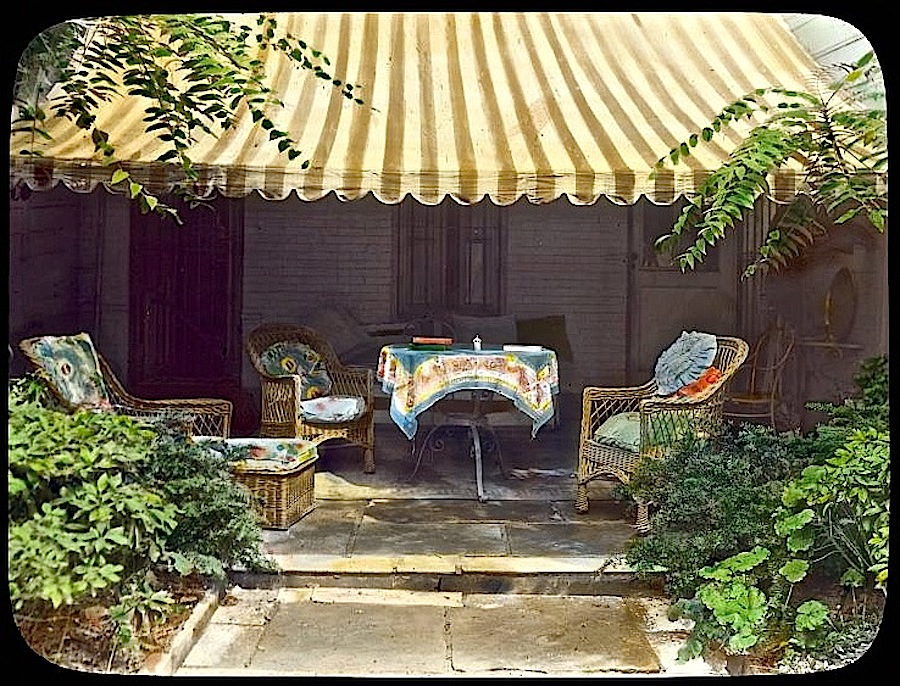
Murray house, 1922, NYC, by Frances B. Johnston, via Library of CongressAwning-covered back terrace of the Murray house, 129 East 69th Street, New York City, 1922. Hand-colored glass lantern slide by Frances Benjamin Johnston, via Library of Congress Prints and Photographs Division.

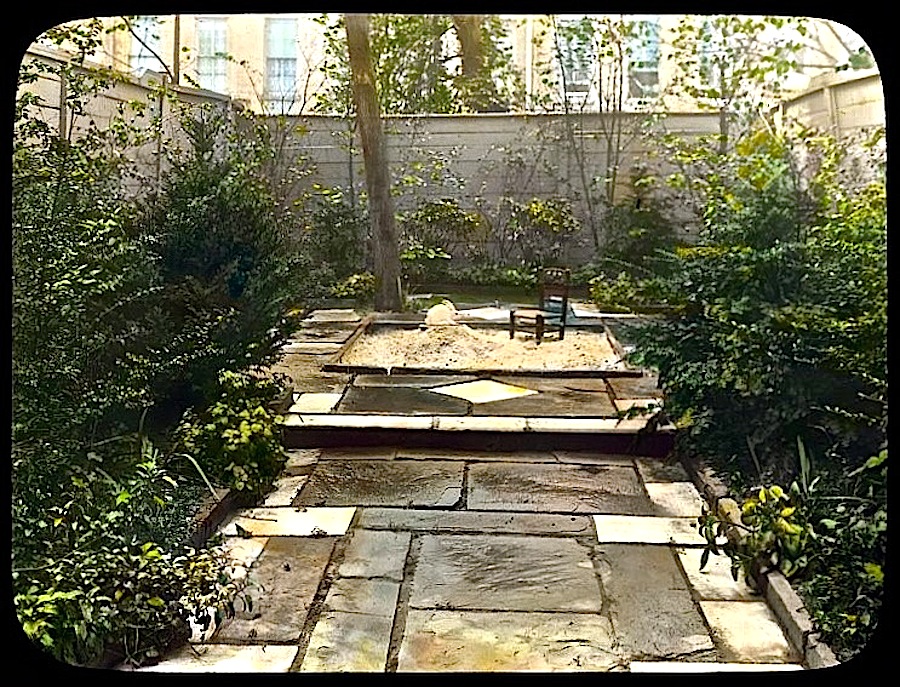
This looks so pleasant, but I also like the view in the other direction.

Murray house, 1922, NYC, by Frances B. Johnston, via Library of CongressLooking from the terrace to the sandbox, same house, photographer, and source.

What a nice-looking small outdoor space for both the parents and a child. (For grass, they had Central Park only three blocks away.)

According to the Library’s online catalogue, this garden was designed by Clarence Fowler. It was awarded the second prize for a city garden at the 1922 City Gardens Club of New York City photography exhibition at the New York Camera Club. Today, the house and garden no longer exist.

Johnston used these slides in her lectures on city and suburban gardens.

The Sunday porch: Airlie, N.C.

This slideshow requires JavaScript.

“Miss Lula Thorne’s house,” Oakland Plantation, Airlie in Halifax County, North Carolina, between 1935 and 1938, by Frances Benjamin Johnston, via Library of Congress Prints and Photographs Division.

Beautiful vines and interesting columns.  And I really like the four small sconces — one on each side of the door and one at each corner.

There were similar vines and sconces on this other North Carolina house here.

Oakland house was probably built between 1823 and 1828 for Elizabeth Williams Thorne Drake and either her first or second husband. It still stands, but, at some point after the 1930s, the porch was rebuilt to match the late Federal “temple form” style of the rest of the house. You can see it about 2012 here and here.