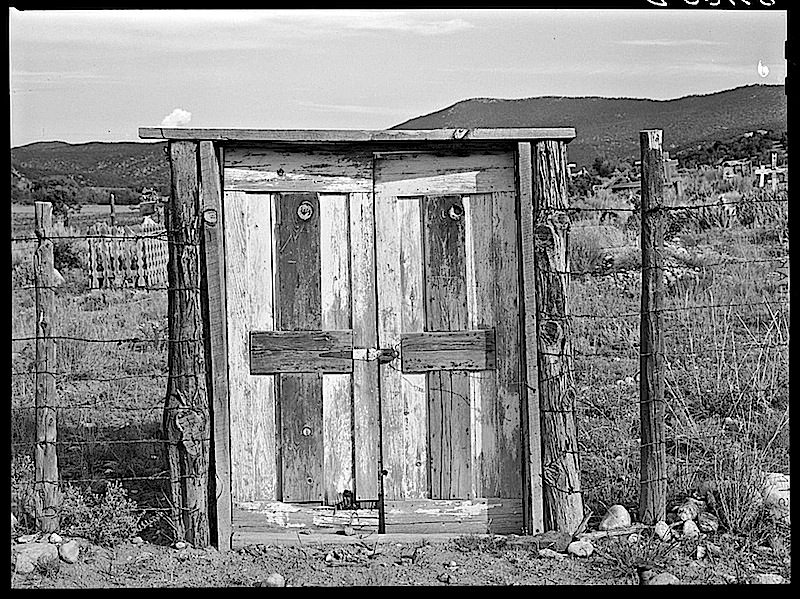
Vintage landscape: Penasco gate

Cemetary gate, New Mexico, Library of Congress“Entrance to the cemetery at Peñasco, New Mexico (along the High Road to Taos), July 1940, by Russell Lee, via Library of Congress Prints and Photographs Division.
Lee and his wife, Jean, spent two weeks in Chamisal and Peñasco documenting the lives of the towns’ Hispanic small farmers and ranchers. The area was settled by Spanish colonists in the late 18th century.

Hark, hark! the lark at heaven’s gate sings…

— William Shakespeare, from Cymbeline

Life in gardens: Chamisal

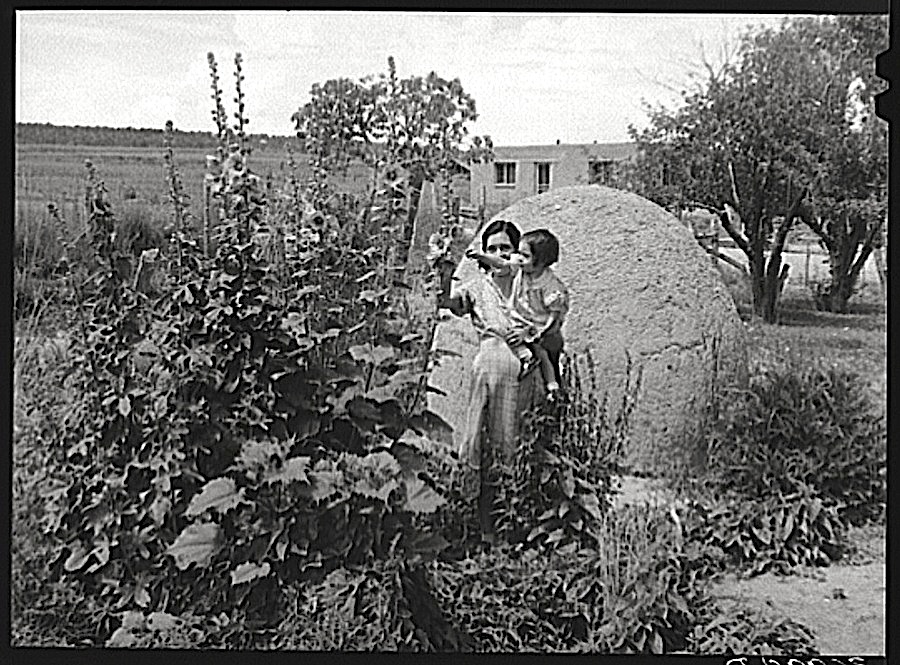
New Mexico, R. Lee, via LoCWoman and baby in a flower garden in front of an adobe oven, July 1940, Chamisal, New Mexico, (along the High Road to Taos) by Russell Lee, via Library of Congress Prints and Photographs Division.

Chamisal was settled by Spanish colonialists in the 18th century.  The name may come from the “chamois” shrub  (Chrysothamnus or rabbitbrush).

Lee and his wife, Jean, spent two weeks in Chamisal and Peñasco documenting the lives of the towns’ Hispanic small farmers and ranchers.

The winding High Road to Taos begins in Santa Fe and crosses the Sangre de Cristo Mountains.  The landscape includes high desert, forest, farms, and historic Spanish Land Grant and Pueblo Indian villages.

The Sunday porch: lattice and brick

This slideshow requires JavaScript.

“William Windom house, 1723 de Sales Place, Washington, D.C., Terrace,” ca. 1925, four hand-colored glass lantern slides by Frances Benjamin Johnston, via Library of Congress Prints and Photographs Division.

Johnston used these slides in her “Gardens for City and Suburb” lectures. (You can scroll through larger version by clicking on ‘Continue reading’ below.)

De Sales Place (now Row) is an alleyway between L and M Streets, N.W. (It connects 18th and 19th Streets.) The house is gone; an office building occupies the site.

The William Windom who gave his name to the home was twice Secretary of the Treasury, as well as a Congressman and Senator from Minneasota. He died in 1891. His son, also a William, may have been living in the house at the time of these photos.  He died in 1926.

[We] usually learn that modesty, charm, reliability, freshness, calmness, are as satisfying in a garden as anywhere else.

— Henry Mitchell, from The Essential Earthman

Continue reading “The Sunday porch: lattice and brick”

A little more. . .

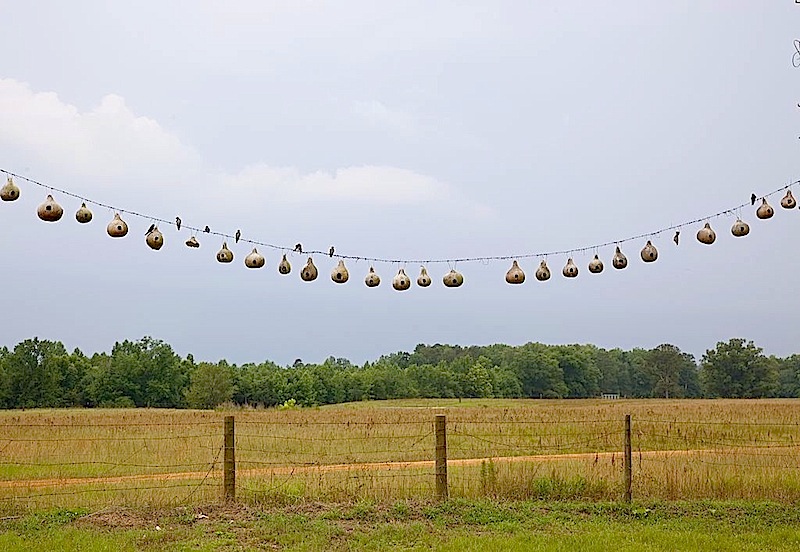
"Purple Martin gourd bird nests in rural Alabama," 2010, by Carol Highsmith via Library of Congress Prints and Photographs Division.
Purple martin gourd nests in Alabama, 2010, by Carol Highsmith, via Library of Congress.

About purple martins (see Tuesday’s post, “gourds and cans”): they have become entirely dependent on humans for nests in which to breed along the North American east coast.

Susie at pbmGarden sent me the link to a short (about 8 mins.) NPR documentary about the songbirds and the threats they face in the modern world (the fault is partly in Shakespeare).

Check it out here: “The Mystery of the Missing Martins” by Adam Cole

Life in gardens: for the birds

birdhouse-competition-winners-washington-dc-library-of-congress
“Birdhouse Group,” 1922, by National Photo Company, via Library of Congress Prints and Photographs Division (all pictures here).

I’m not certain, but I believe this happy group of young designers/builders were Washington, D.C., schoolchildren taking part in an annual “American Forestry Association National Bird House Contest.”

The Library of Congress  has a set of 1921 photos  labeled as such (and also as “bird house story”). You can scroll through them by clicking on any thumbnail in the gallery below.

Unfortunately, I could find almost no other information about the competition. Today, the American Forestry Association is known as American Forests. Their website does not mention the event.

The event must have continued until at least April 15, 1924, when Senator George W. Pepper made the presentation on the Capitol grounds.

Sen. Pepper, Birdhouse Contest, 1924, Library of Congress