The Sunday porch: recorded

Lomax Collection 2, Library of Congress“Mrs. Alberta Kimball, Mrs. Minnie Smith, and Mrs. Emily Elizabeth Fulks, at the home of Mrs. Fulks, Prairie Lea,* Texas,” September 1940, by Ruby Terrill Lomax, via Lomax Collection, Library of Congress Prints and Photographs Division.

The three women were folk musicians. Alone or in duets, they sang songs like “Swedes Blessing,” “There was a Wealthy Merchant,” “Way Out West in Texas,” “Barbara Allen,” and “The Gypsy’s Warning.”  Unfortunately, I can’t find an online recording of them. They look delightful in these pictures, however, particularly in those flowered dresses.

Lomax Collection 31, Library of Congress
Mrs. Minnie Smith, Mrs. Elizabeth Fulks, Mrs. Albertina Kimball, at Mrs. Fulks’s home.

These are four snapshots from four hundred made during the sound recording expeditions of the Lomax family.  From 1934 to around 1950, John Avery Lomax, Ruby Terrill Lomax, and Alan Lomax traveled the southern United States and the Bahamas collecting folk music and folklore for the Library of Congress.

Lomax Collection 4, Library of Congress
Mrs. Fulks on her porch.
Lomax Collection 5, Library of Congress
Mrs. Fulks in her garden.

There’s a previous “Sunday porch” from the Lomax Collection here.

Our world, so worn and weary,
Needs music, pure and strong,
To hush the jangle and discords
Of sorrow, pain, and wrong.

Frances Ellen Watkins Harper, from “Songs for the People


*These photos were labeled with the location as Prairie Lea or Prairie Lea R.F.D., but also as Stanton, Texas.  Prairie Lea and Stanton are in different parts of Texas, and I have been unable to find out which town is correct.  The labels on the sound recordings the women made say “Prairie Lea” — which certainly sounds like a place in a folk song.

Life in gardens: boy and book

Boy reading a book, 1920, Library of Congress“Unidentified boy, seated on park bench, probably in Washington, D.C., holding book,” ca. 1920, by National Photo Company, via Library of Congress Prints and Photographs Division.

I wonder if this isn’t a courtyard or garden corner of a college or university, rather than a park. Behind the boy are two adult coats, as well as books and files and at least one briefcase. Maybe he’s the son of a professor?

I love his wonderful sweaters and tweed shorts.

The Sunday porch: the frame

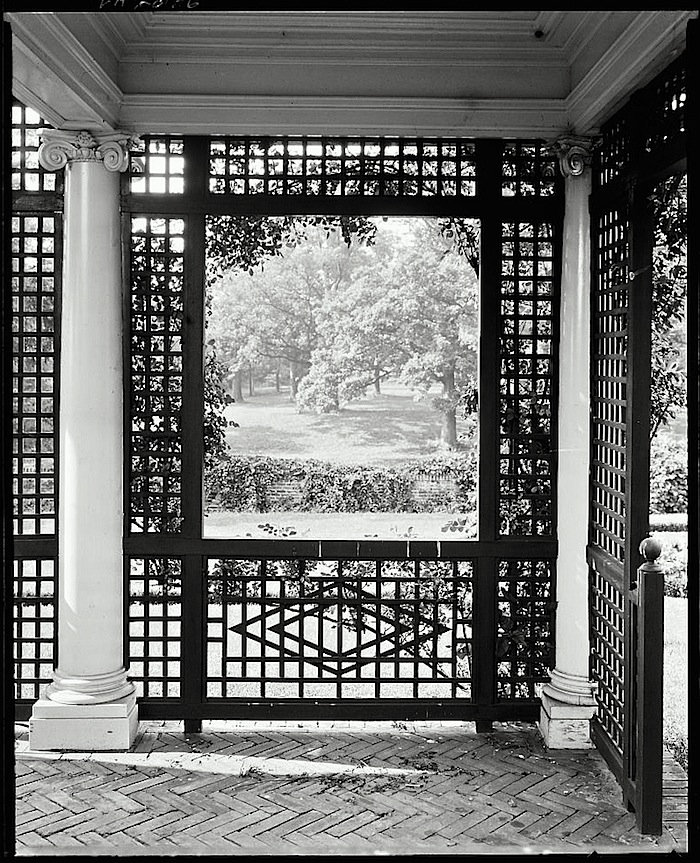
Oatlands, Leesburg, VA, Library of CongressA view from the summer house at Oatlands, Loudoun County, Virginia, in the 1930s, by Frances Benjamin Johnston, via Library of Congress Prints and Photographs Division.

Oatlands Plantation was established in 1798 by a member of Virginia’s prominent Carter family. In 1903, it was sold to William and Edith Corcoran Eustis, and  Mrs. Eustis began to revive the old gardens in the Colonial Revival style. Since 1965, the property has been a site of the National Trust for Historic Preservation. It is open to the public from April 1 to December 30.

Life in gardens: blossom time

Under cherry blossoms, H. Hyde, via Library of Congress“Blossom time in Tokyo,” ca. 1914, a woodcut print by Helen Hyde, via Library of Congress Prints and Photographs Division.

Helen Hyde grew up in the San Francisco Bay area and studied at the California School of Design and in Europe. While in Paris, she was influenced by Mary Cassatt’s early works, which made use of  Japanese perspective and pattern and featured the intimate lives of women and children. In 1899, she moved to Tokyo, where she studied woodblock printing techniques. She lived there until 1914.

The Sunday porch: Kalaupapa, Hawaii

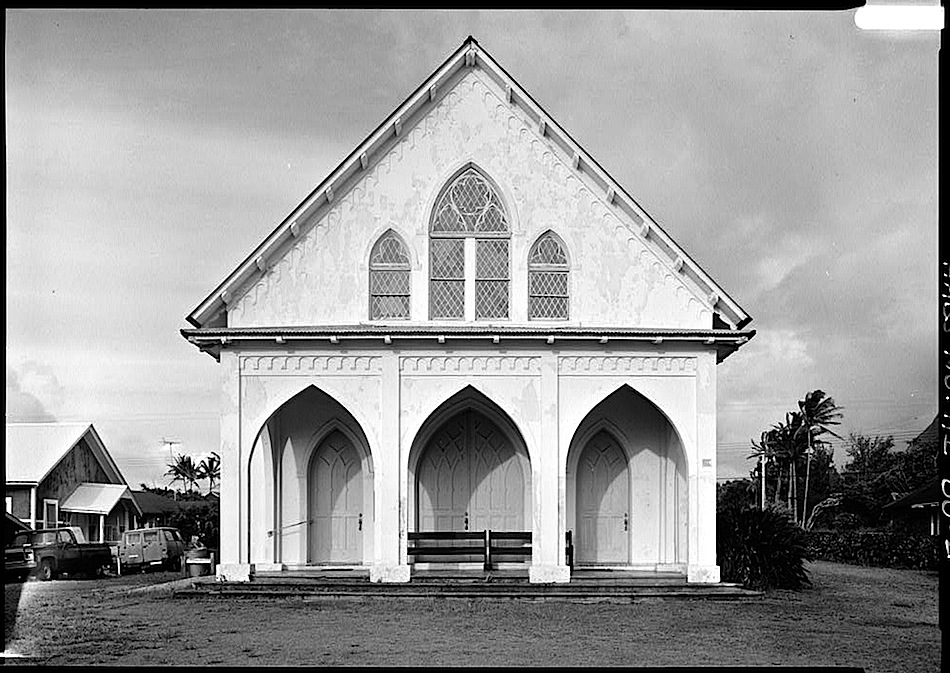
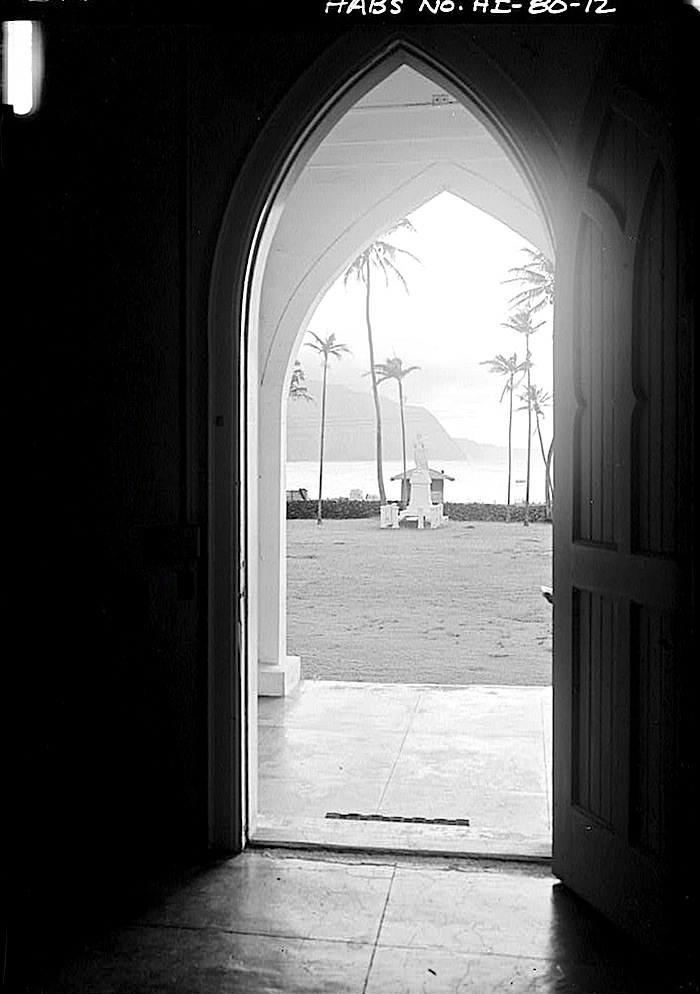
1 St. Francis Catholic Church, Kalaupapa, HI, HABS, Library of CongressThe west front of St. Francis Catholic Church, Moloka’i Island, Kalaupapa, Hawaii, July 1991, by Jack E. Boucher for an Historic American Buildings Survey (HABS), via Library of Congress Prints and Photographs Division (all photos here).

2 St. Francis Catholic Church, Kalaupapa, HI, HABS, Library of Congress

The church was built in 1908 to serve the Kalaupapa Leprosy Settlement, now part of Kalaupapa National Historical Park.

3 St. Francis Catholic Church, Kalaupapa, HI, HABS, Library of Congress

4 St. Francis Catholic Church, Kalaupapa, HI, HABS, Library of Congress

The word porch — “1250-1300; Middle English porche < Old French < Latin porticus porch, portico” — was originally used to indicate the covered entrance to a church, usually on the south side.